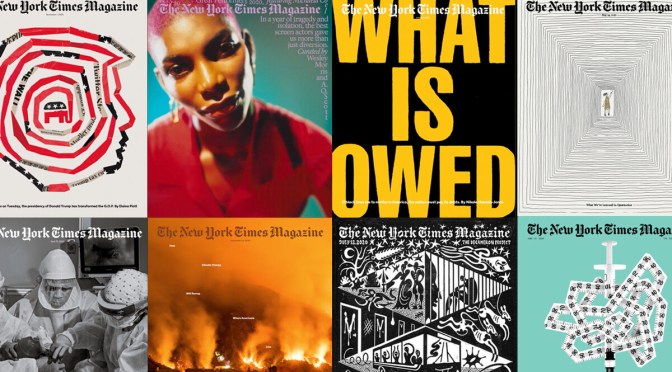
THE NEW YORK TIMES MAGAZINE: The 10.18.26 Issue features Brooke Jarvis walks across 20 islands near Stockholm on the archipelago trail; Dan Duane processes his father’s death by climbing in Yosemite; Jonathan Gluck goes fly fishing with 10 fellow cancer patients; Blair Braverman writes about an adventurer who set out to cross Canada and only his dogs came back; and more.
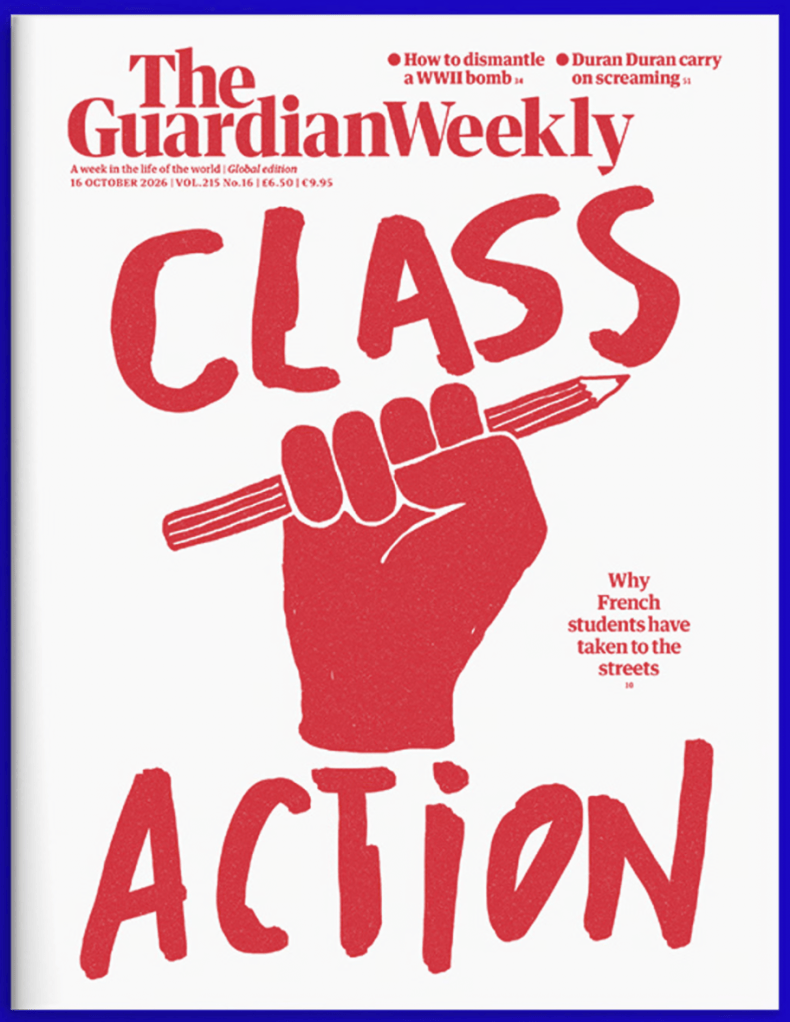
France has been rocked by huge youth protests in recent weeks over the state of high school education, bringing tens of thousands of people on to the streets.
The movement began with outrage over shoddy school conditions in a Paris banlieue, but has spread across the country as pupils voice their anger about a system they say is failing them.
For this week’s big story, Paris correspondent Angelique Chrisafis hears from protesters who feel abandoned by the French state. Angelique also looks at the evidence on students’ complaints of dilapidated buildings, teacher shortages, inequality and low investment.
Then, Alexander Hurst says fixing the broken education system should be just the start for an aloof political class if it is to finally pay attention to a generation who feel neglected.
Spotlight| The future of the death penalty Donald Trump has used the full might of the presidency to supercharge executions but, writes Ed Pilkington, an avalanche of mishaps has put the system’s flaws in the spotlight
Science| Sweet time A flurry of recent studies suggests that spending the first 1,000 days of life under sugar rationing may have left traces on people’s health more than seven decades later. Linda Geddes reports
Feature| The art of dismantling a second world war bomb British bomb disposal squads are being called to more unexploded devices than ever – and they risk their lives each time. Samira Shackle recounts the challenge they faced when two bombs were discovered on the same day
Opinion| A new era of instability The latest attack by Houthi rebels on Saudi Arabia may prove to be more calamitous for the region than the world imagines, says Nesrine Malik
Culture| Hungry like the werewolf Duran Duran talk to Alexis Petridis about 80s excess, tabloid scrutiny and their Halloween glow-up
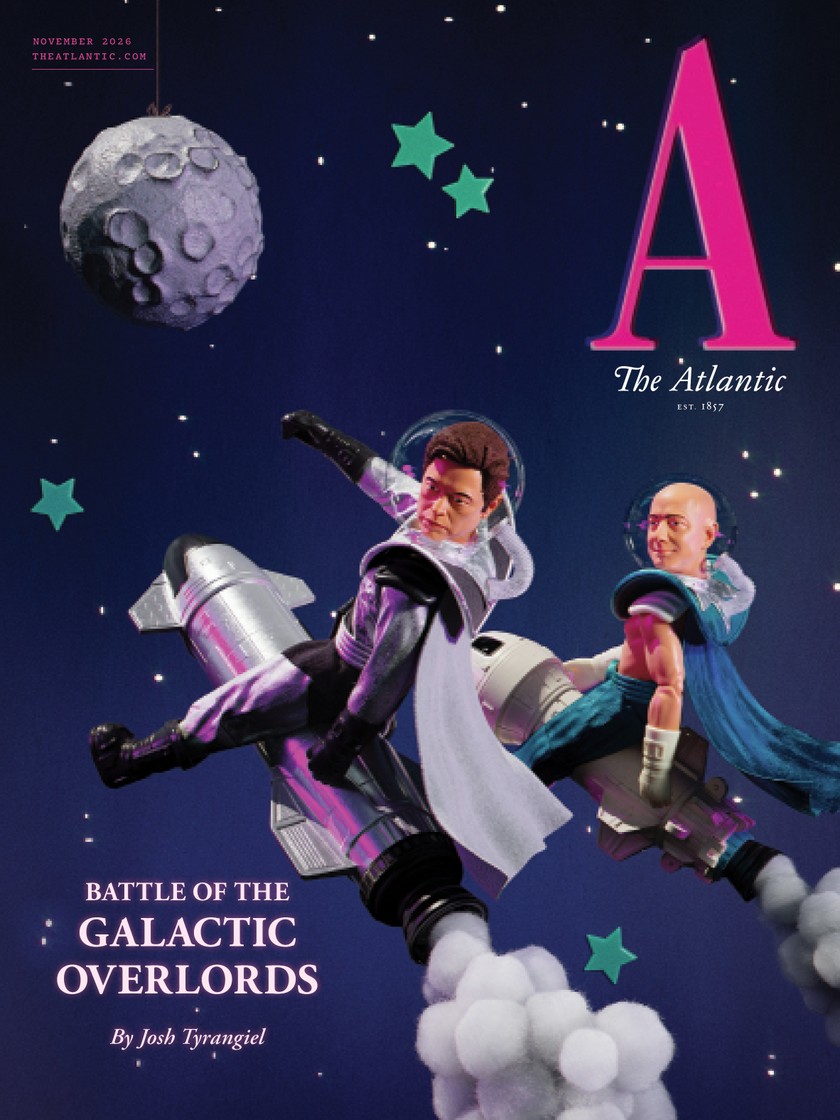
The Adriatic has been crossed by Odysseus and Caesar, by Venetian fleets and Napoleon’s navy, by countless men bent on dominating the world. It has seen its share of courage and folly. But one day in June 2025, off the island of Cres, it witnessed something genuinely new: a man worth $240 billion standing waist-deep in bubbles on the deck of a $500 million yacht, wearing a white bucket hat.
Clinton, Iowa, is topographically flat and economically declining. The sawmills that made the city rich in the late 19th century have been repurposed as a museum. One of the Victorian mansions long since abandoned by the old lumber barons is open for tours, but tourists are scarce. Clinton has shrunk to about 24,000 people, and the town center, along the Mississippi River, feels nearly empty. On the west side, miles of deep-green corn and soy fields are crisscrossed with transmission wires and zoned for heavy industrial use. The city’s economic activity includes corn processing, pet-food production, and methamphetamines. With available land and a dire need for investment, Clinton seems like the perfect place for a gigantic data center.
ne evening this summer, in the village of Bezdonys, in eastern Lithuania, I watched as a platoon of riflemen arrived at a train station occupied by enemy forces. Some of the Lithuanians let out a burst of gunfire from across the tracks, pinning the adversary in place as the rest of the unit advanced on the station. As the firefight intensified, wounded riflemen were evacuated to makeshift medical tents. An enemy soldier lay slumped against the station’s yellow clapboard siding.
My first day ever in New York, age sixteen, I got stuck in the middle of Central Park in the pouring rain with no umbrella and zero sense of direction. Drenched, cold, and hopelessly wandering from the Alice in Wonderland statue to the steps of the Met, I was in remarkably high spirits. I had read Just Kids earlier that summer and regarded this trip as a rite of passage in my Patti Smith pilgrimage. The city was not a stranger to me: there was Washington Square Park, where Patti had slept during her first few weeks, she and Robert Mapplethorpe surviving on lettuce sandwiches. Sure, each face I passed on Fifth Avenue was unfamiliar, but I could imagine Patti and just know I belonged. Even the comically overpriced T-shirts at the John Varvatos store on the Bowery shimmered with Patti and CBGB-era spirit.
Patti wasn’t my first author/guide. I’d opted for books over a social life throughout much of high school and had long approached new destinations through the eyes of a beloved author. When I began at Smith College, I knew from Sylvia Plath’s journals to write in my own on the porch of Haven/Wesley. I assumed this author-as-friend-guide was my own (mal)adaptive quirk. That is, until I read Deborah Levy’s My Year in Paris with Gertrude Stein.
The Netflix series Bridgerton features a plotline about a nineteenth-century noblewoman desperately seeking a sexual “pinnacle” that coitus withholds from her yet not her husband. Meanwhile, the New York TimesWirecutter product review site recommends vibrators you can buy at Walgreens.
My, times have changed.
Fifty years ago, when feminist writer Shere Hite (1942–2020) published The Hite Report: A Nationwide Study of Female Sexuality, one of the best-selling books of all time, conventional wisdom dictated that plain old intercourse was the ticket to orgasm for women as well as men. Any woman who needed clitoral stimulation was deviant or trapped in her “phallic” stage; a mature woman achieved orgasm through the vagina (thanks, Freud). Hetero men didn’t know that what felt good for them didn’t necessarily feel good for women. Many women chose to fake pleasure rather than speak up because they were embarrassed or, rightly, worried about being belittled as pushy and slutty.
I had anticipated that Rachel Cusk’s latest would be a captivating work of big ideas. The premise—a nameless narrator encounters one of the great and celebrated film actors of the era and then attempts to write an “autobiography” of said star—is both juicy and think-y, a stage upon which brilliant observations can mingle with feminine angst and glamour.
If the coming election does result in a blue wave, Trump will be faced with the fact of his diminishment. The rest of us will be faced with the wreckage. By David Remnick
The F.B.I. director’s hockey team, the Dons, faced their rivals in a beer league. With rogue slap shots and hovering security agents, Patel was in the zone—or, at least, next to it. By Richie McGinniss
My Education on the Border of the Syrian War
In the last Turkish town on the road to Aleppo, jihadis and spies mixed with reporters trying to prove themselves. By Ben Taub
THE NEW YORK TIMES MAGAZINE: The 10.11.26 Issue features Daniel Kolitz on the rise of microdramas; Janet Reitman on a group of Texans accused of being Antifa terrorists; Marcela Valdes on the author Min Jin Lee; and more.
With fewer than 30 days until the US midterm elections, Donald Trump seems determined to still be centre stage despite poll fears that after 3 November he may end up a lame-duck president as a Democratic blue wave sweeps the country. Our Washington bureau chief, David Smith, has been watching how the president is playing to Republican voters at the start of a blitz of cross-country rallies. It’s, at best, a mixed picture.
As David reports, Trump’s self-belief and message to voters to “pretend” his name is on the ballot reveal a man out of touch with ordinary Americans’ worries about the cost of living and whose promises that the war with Iran will soon be over ring ever more hollow. And then there are the candidates, more of whom are shying away from their earlier allegiances to a president whose approval ratings continue to slide.
Spotlight| An education crisis in France As school and university protests intensify, Paris correspondent Angelique Chrisafis finds out why students feel the government is ignoring their complaints about the state of education
Spotlight| Greendivision and diversion Peter Walker reports on the English and Welsh Green party’s annual conference in which a motion equating Zionism with racism was passed, and analyses how this reveals weaknesses in the way the party is run
Feature| The big business of porn Why not analyse the porn industry just like any journalist would the oil business? That was the premise behind Patricia Nilsson’s new book. An approach that, as Amelia Gentleman finds out, yields new insights into how pornography’s imperatives have seeped into all our online lives
Opinion| Putin won’t bomb Ukraine into submission Kyiv may now be under almost constant attack but, says Rajan Menon, history shows that bombing doesn’t crush morale
Culture| There’s beauty in bits and pieces A novel exhibition in Florence puts broken sculptures on display and, as Philip Oltermann discovers, reveals their profound allure
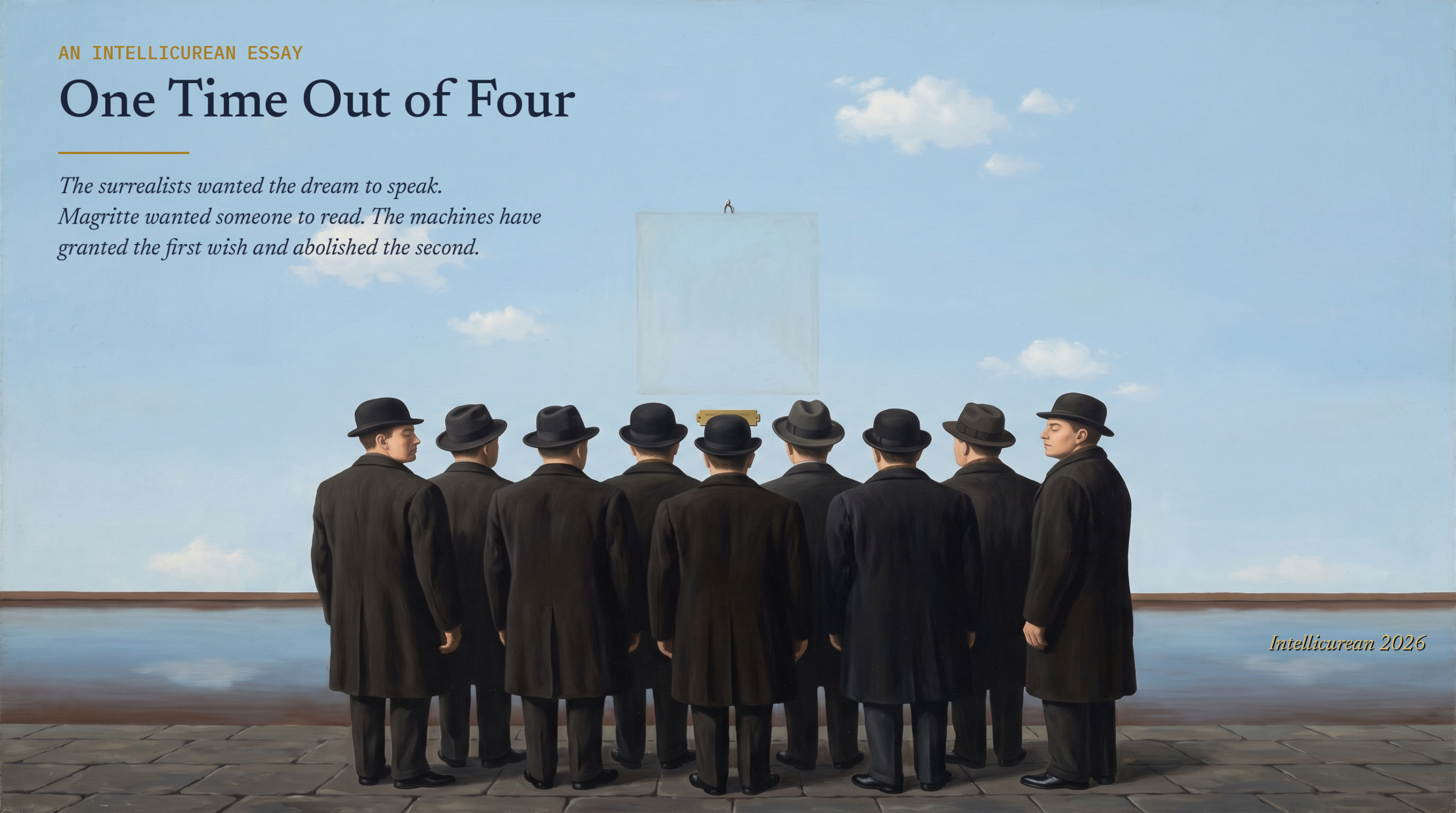
Sixteen surrealists photographed with their eyes shut, round a painting of a woman the sentence says they do not see. A table of four pictures and four words, three of them wrong. Magritte built that table three times, and the one true word in it was a wager on a reader.
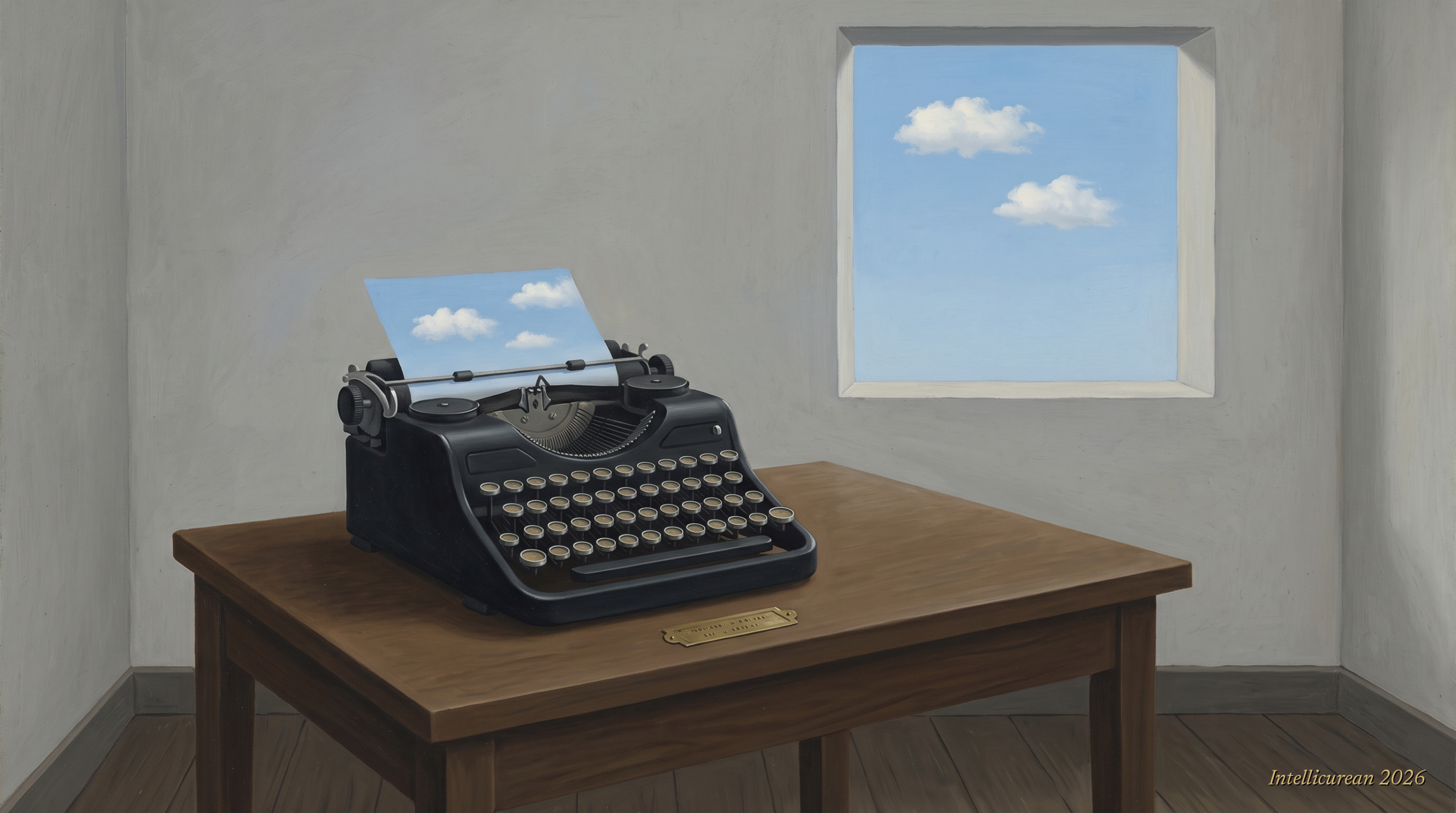
The caption is up. The picture hasn’t arrived, made for the essay.
Why we’re pointing you there
The essay starts from Jonathan Jones’s Guardian review of Gagosian’s “This Is Still Not a Pipe,” which hunts Magritte’s heirs among forty living artists, and puts his four-panel Clef des songes back among the surrealists instead: painted first in Breton’s Paris in 1927 while the movement wrote down its dreams, painted again in 1929 with no true word in it, in the year of the pipe and of the review that printed his axioms on words and images and the page of sixteen closed eyes, and painted last in Brussels in 1935, in English, for New York. In Brussels his friends proposed his titles round a table.
Then it reads the machines beside the first Manifesto. Writing with no author at its centre is what the surrealists asked for, and a captioner writing ninety-five sentences in every hundred of a training set is that wish granted; when the dream spoke at scale it said “actor on the red carpet.” The machines are Breton’s heirs, not Magritte’s, and they have done one thing the surrealists did not: put the caption before the picture, so that an image made from a prompt is an illustration of its title, which Magritte is said to have ruled out. The rival reading, that Magritte’s subject was the folly of decoding, is given at full strength and conceded. What is left is a question, not a verdict: who is reading the sentence under the picture now.
Once upon a time, the export crop of Martha’s Vineyard and Nantucket was whale oil. Nowadays it is money, harpooned by visiting campaigns from deep-pocketed donors at anchor in their summer seaside retreats. In the peak season of July and August, the islands’ social rhythms are dictated by money-harvesting events, wrangled by local hosts jostling for the social éclat that comes from securing a high-profile honoree. By late August this year, the territory had already been worked over by a series of hopeful visitors with hands outstretched, such as the rising Texas Senate hopeful James Talarico, Hakeem Jeffries in eager pursuit of the House Speakership that is almost in his grasp, Maryland Governor Wes Moore and others questing the donor dollar.
The world has become strangely numb to terror. Sometimes an atrocity will be sufficiently horrifying – the murder of Charlie Kirk, say – to cause mass shock and anguish. Yet now reports of car rammings or knife rampages or foiled Islamist plots feel almost routine. We have become inured to ideological violence. In the quarter-century since 9/11, the specter of terrorism has almost become a fact of modern life. Last year, America was one of the few western countries to see a rise in terrorism, with 13 recorded attacks and 28 deaths. Today even the most appalling acts generate only a brief sense of widespread outrage. And then the news cycle moves on. No mass killing has come close to the scale of the Twin Towers attacks.
America’s war with Iran is in its eighth month and stuck. On September 26, Donald Trump confirmed that he had rejected Tehran’s offer to reopen the Strait of Hormuz in return for lifting the American naval blockade and easing sanctions. He has reportedly told his staff that renewed bombing is likely after the midterm elections on November 3. He is reluctant to