
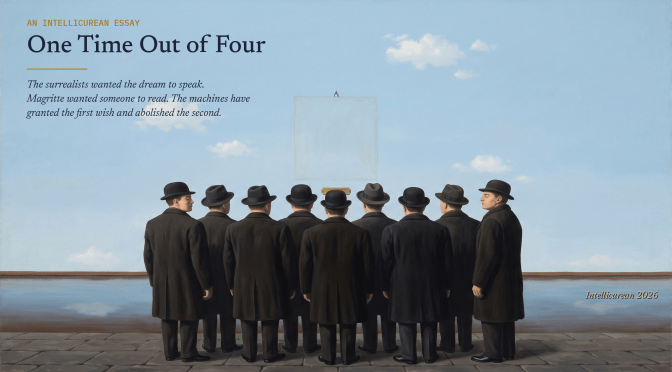

Sixteen surrealists photographed with their eyes shut, round a painting of a woman the sentence says they do not see. A table of four pictures and four words, three of them wrong. Magritte built that table three times, and the one true word in it was a wager on a reader.
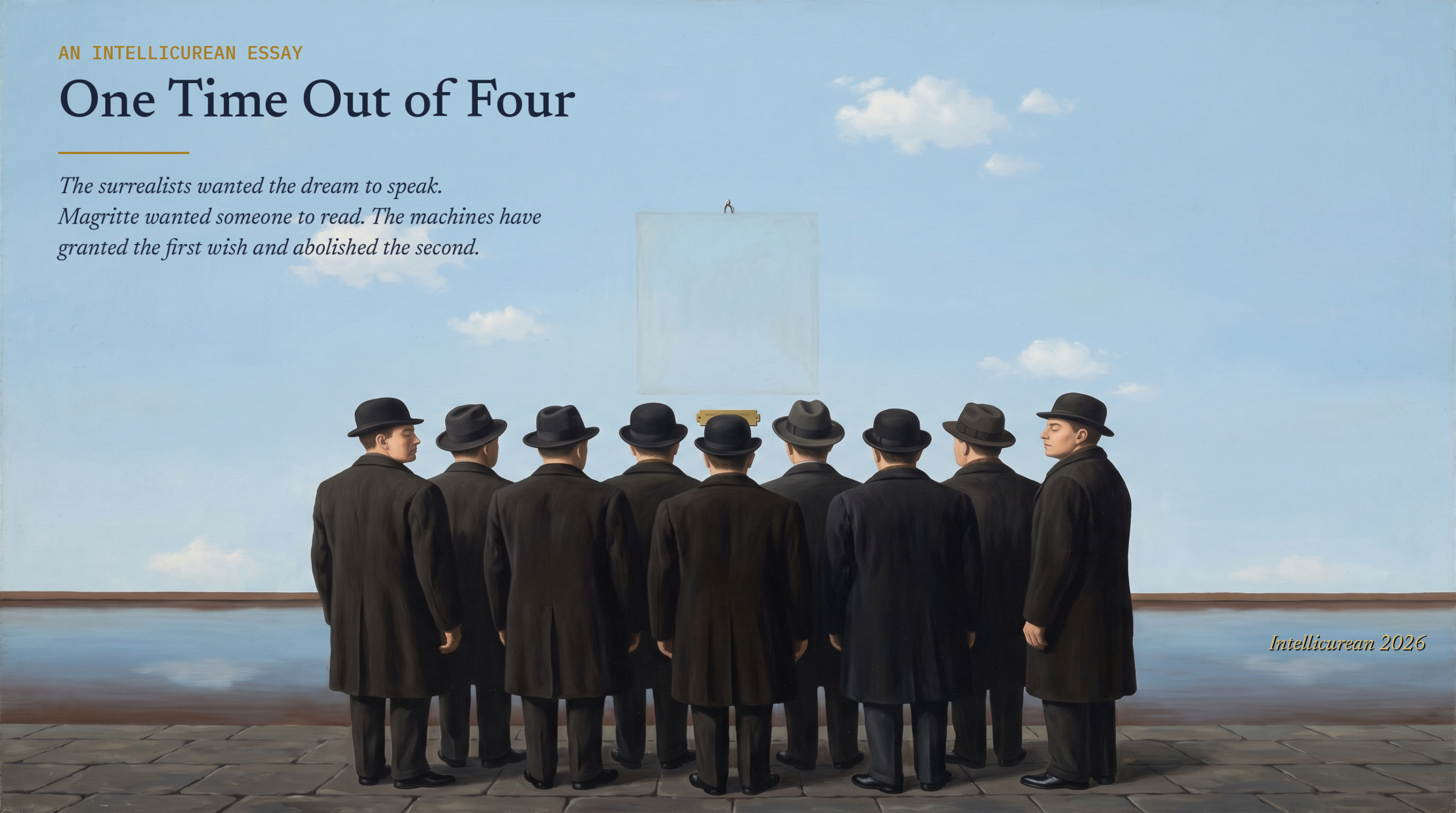
Why we’re pointing you there
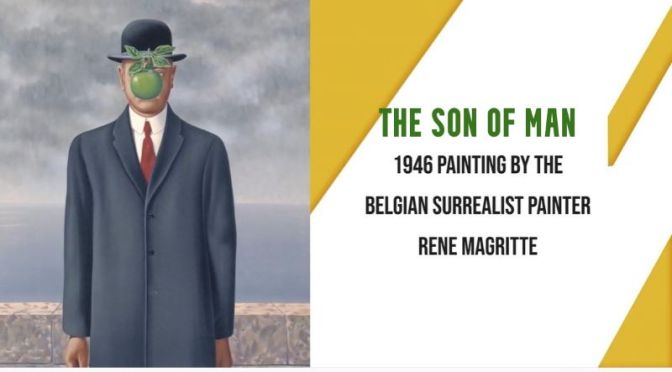
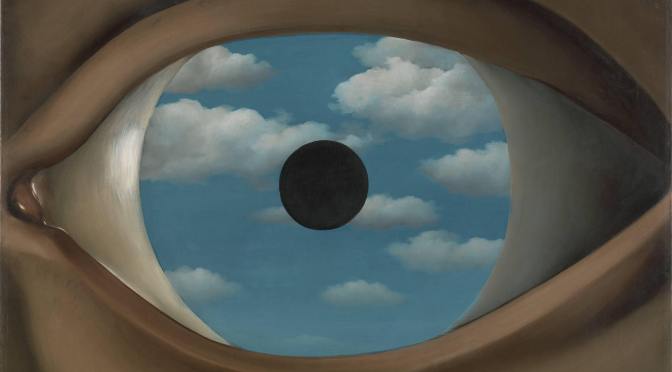
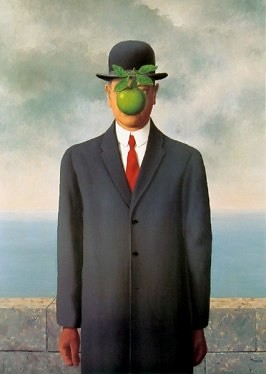
The essay starts from Jonathan Jones’s Guardian review of Gagosian’s “This Is Still Not a Pipe,” which hunts Magritte’s heirs among forty living artists, and puts his four-panel Clef des songes back among the surrealists instead: painted first in Breton’s Paris in 1927 while the movement wrote down its dreams, painted again in 1929 with no true word in it, in the year of the pipe and of the review that printed his axioms on words and images and the page of sixteen closed eyes, and painted last in Brussels in 1935, in English, for New York. In Brussels his friends proposed his titles round a table.
Then it reads the machines beside the first Manifesto. Writing with no author at its centre is what the surrealists asked for, and a captioner writing ninety-five sentences in every hundred of a training set is that wish granted; when the dream spoke at scale it said “actor on the red carpet.” The machines are Breton’s heirs, not Magritte’s, and they have done one thing the surrealists did not: put the caption before the picture, so that an image made from a prompt is an illustration of its title, which Magritte is said to have ruled out. The rival reading, that Magritte’s subject was the folly of decoding, is given at full strength and conceded. What is left is a question, not a verdict: who is reading the sentence under the picture now.
Read the full essay at Intellicurean →
Essays & Reviews for the Intellectually Curious
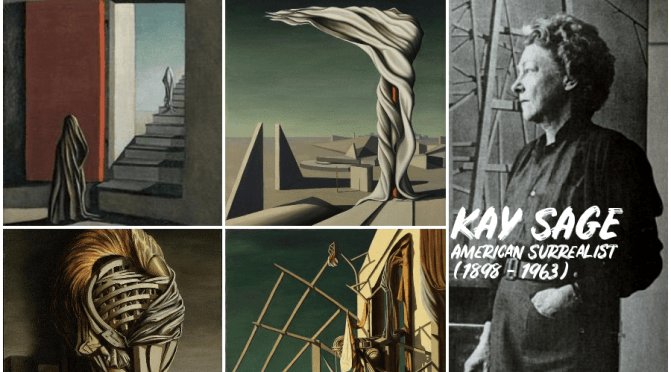
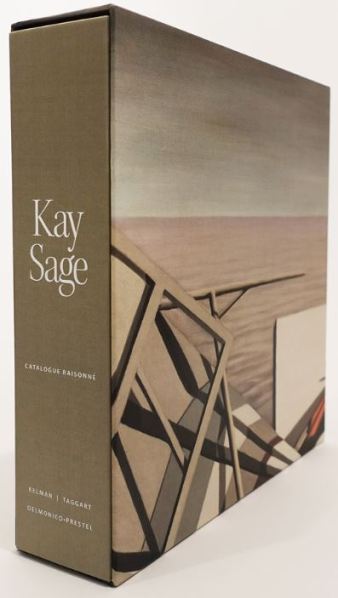 Sage is renowned for her empty, enigmatic, eerily lit landscapes. Human figures are markedly absent — their presence felt only by the monolithic, architectural structures and unidentifiable, draped objects they seem to have left behind. In this respect, 1945’s Other Answers is a quintessential Sage painting.
 In the summer of 1940, Sage had her first solo show, at the influential Pierre Matisse Gallery in Manhattan. Then, in early 1943, she was part of the landmark Exhibition by 31 Women, curated and staged by Peggy Guggenheim in her Art of This Century Gallery.
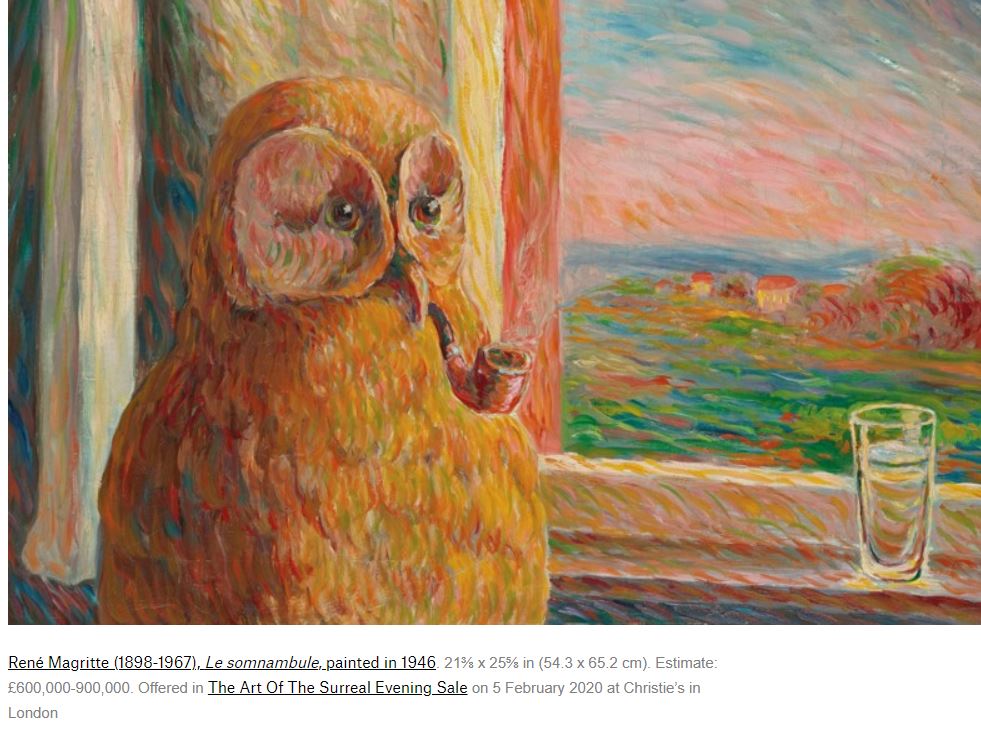
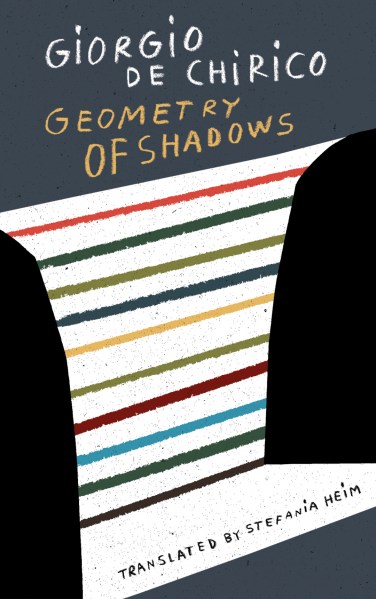 “Everywhere is the wait and the gathering,” concludes “Resort.” A kind of soporific haze has seeped into de Chirico’s imagination, asserted through evocations of sleeping and dreaming. Even the violence and ambiguous sexual imagery of “The Mysterious Night” yield to a final note of definitive somnolence: “Everything sleeps; even the owls and the bats who also in the dream dream of sleeping.”
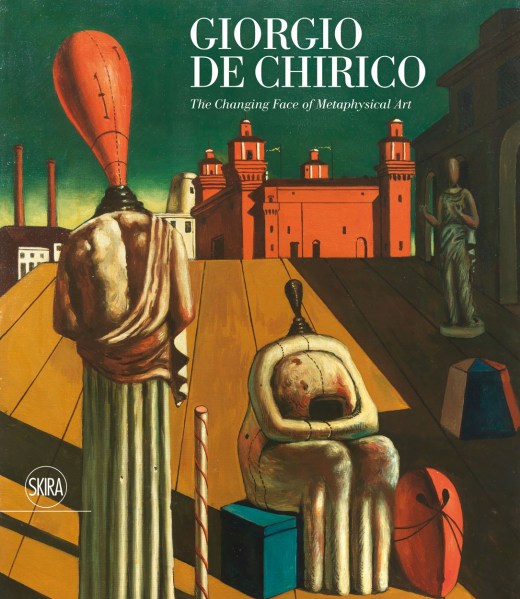 He daydreams of Mexico or Alaska and invokes a future-oriented “avant-city” and a distant day where he is immortalized, albeit in an old-fashioned mode as a “man of marble.”

