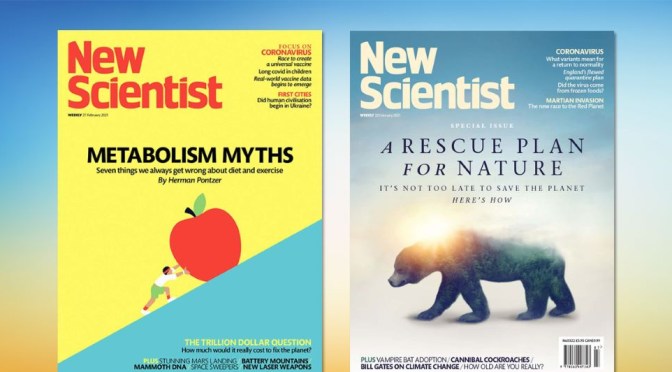
We know that this monster El Niño will bring floods, droughts, cyclones and wildfires, but some governments aren’t putting in the necessary resources to prepare for disaster
This El Niño is forecast to end around June next year after smashing all records, but its impacts could persist indefinitely in some parts of the world By Michael Le Page
In The Nerd Reich Gil Durán shows how Silicon Valley billionaires have pushed a fringe ideology—what is popularly called techno-fascism but is closer in aspiration to straight-up totalitarianism—into the affairs of state.
The Nerd Reich: Silicon Valley Fascism and the War on Democracy by Gil Durán
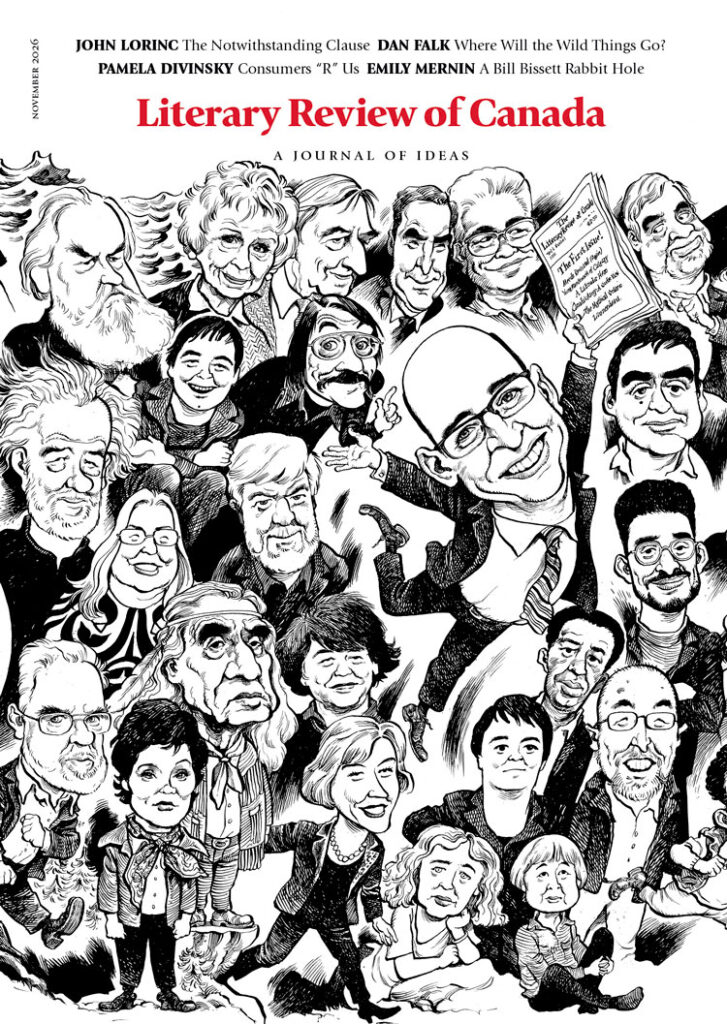
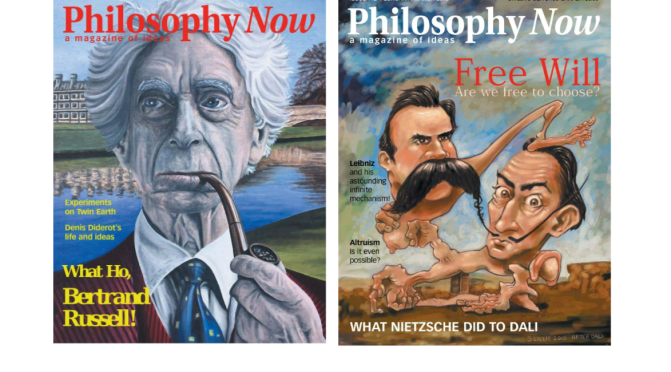
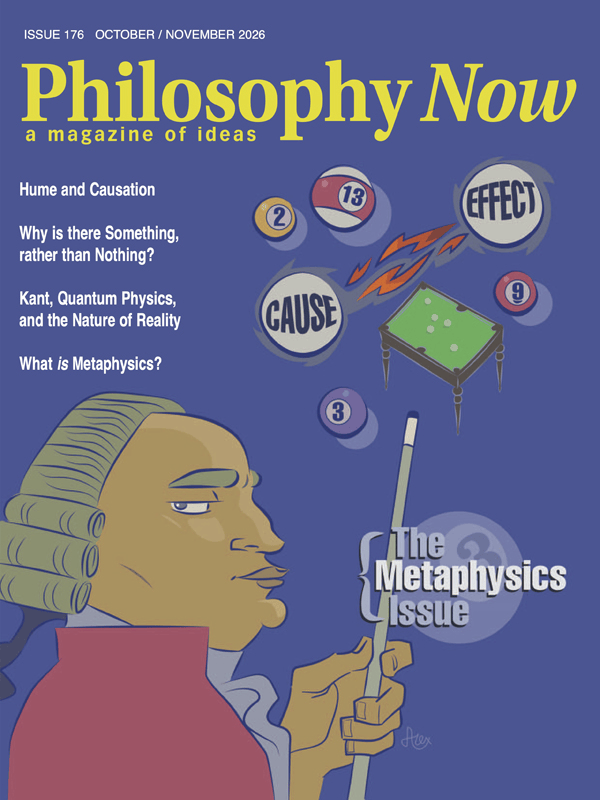
My heart sank when I first saw the magazine’s thirtieth-anniversary issue on paper. My managing editor back then, Michael Strizic, and I had spent the morning pacing in our small, dark office — anxious to receive several heavy boxes from Ottawa. Eventually I couldn’t stand the anticipation, so I walked ten minutes or so to Harbord Bakery to distract myself. The magazines had arrived by the time I returned.
Thirty-five years ago, in the inaugural issue of this magazine, I reviewed the newly published diary of André Laurendeau, written from 1964 to 1967 during the Royal Commission on Bilingualism and Biculturalism. The timing was apt: politicians, scholars, and journalists were speculating heavily on how to fix the “Canadian crisis” following the collapse of the Meech Lake Accord the year before.
“By Authority of Parliament: The Constitutional Boundaries of Legislative Power in Canada” by Ryan Alford
In 2017, during the early days of Donald Trump’s first term, the world was riveted both by his reality TV presidency and by the salacious rumours about the way he had obtained it. Insistent tales circulated about how Vladimir Putin’s troll army had engineered the Republican candidate’s victory by hacking into the Democratic Party’s servers and then releasing thousands of embarrassing emails on the eve of Hillary Clinton’s nomination. What followed was a stormy season of investigations and counter-accusations about Trump’s Russian proclivities.
President Volodymyr Zelensky made the announcement in an interview with The Financial Times. He had paused the strikes to comply with a demand from the United States.
Ukrainian engineers are rushing to perfect A.I.-guided, jet-driven interceptors. Their goal: to stop a fast Russian threat in the latest round of a deadly tech duel.
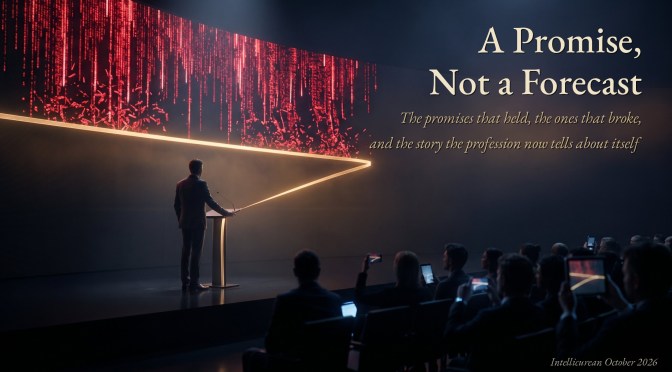
On a July morning in 2012, the head of the European Central Bank told a room in London that he would do whatever it took to save the euro, and then added two words: believe me. The program he went on to design was never used. A new essay asks how a sentence can do the work of a policy, and what it costs to keep one.
A line made of nothing, holding back the market, and a room recording it. Made for the essay.
Why we’re pointing you there
This week’s Nobel in economics went to Robert Hall and Michael Woodford, and Michael Cummins reads their theory as a theory of promising. Hall showed in 1978 that tomorrow is already inside today’s spending. For forty-six years he also chaired the committee that dates America’s recessions, the economy’s official narrator, always speaking after the fact. Woodford built the model central banks now use, and wrote that guidance must offer “a ‘promise’ and not merely a ‘forecast.’” Three years later Janet Yellen said of the Fed’s dot plot, “that’s not a promise.” Between those two sentences the essay sets the promises that held and the one that broke: the Swiss National Bank’s floor under the franc, called the cornerstone of its policy three days before it was abandoned, when the franc jumped almost 30 percent in minutes.
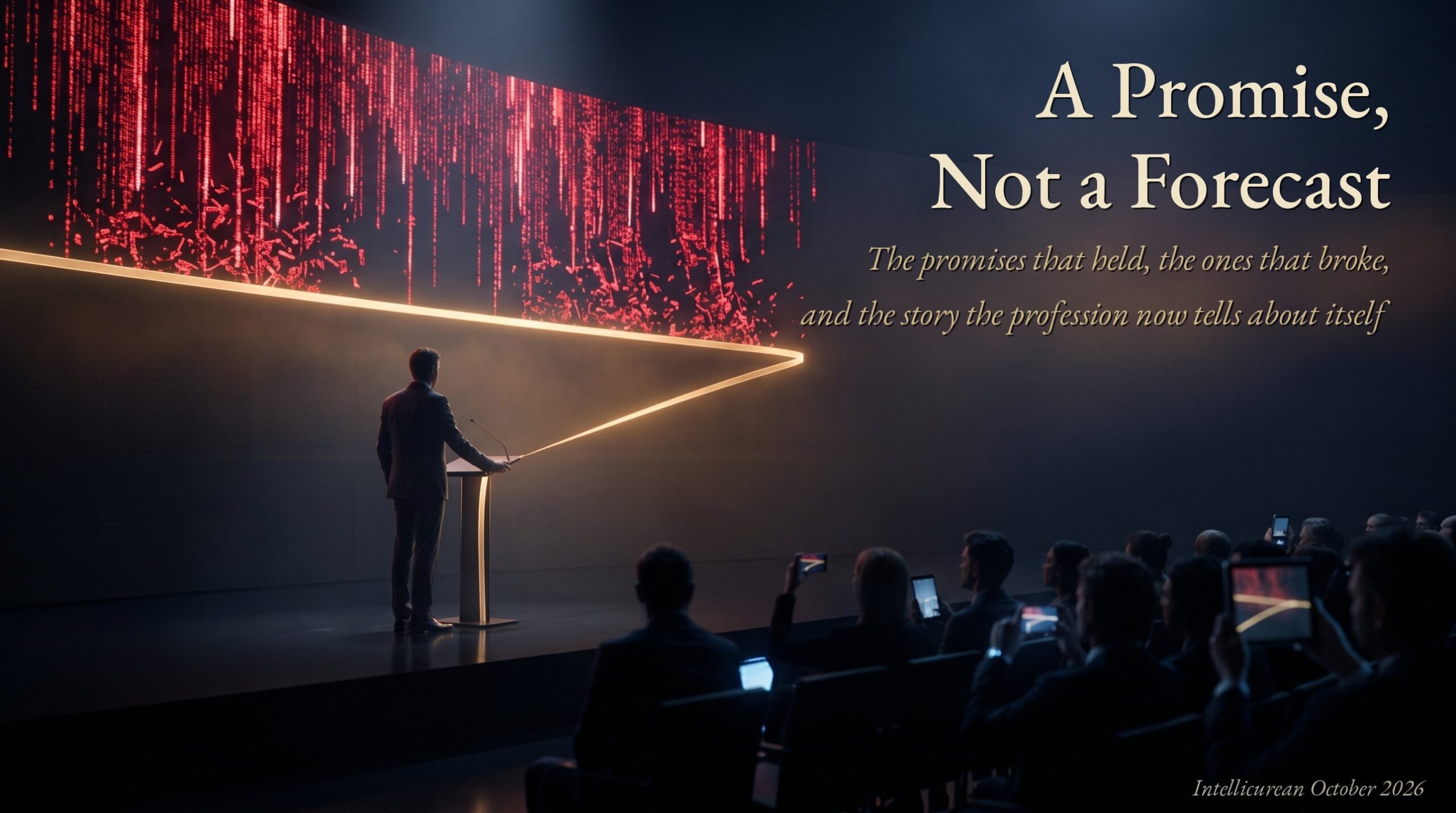
Then the turn. The fall in inflation after 2022 is being told as the theory’s triumph, but the economists who have studied it most closely disagree about why it happened, and the laureate himself spent the 2010s building a listener who believes less. Meanwhile the listener is changing: from a television anchor reading the thickness of Alan Greenspan’s briefcase to futures trading three milliseconds after a Fed release. The essay says plainly that it was drafted and edited with Claude, and it ends on one question: if the listener a central bank speaks to has read every promise it has ever made, what is a promise still worth?
A hall with no one in it, listening. Made for the essay.
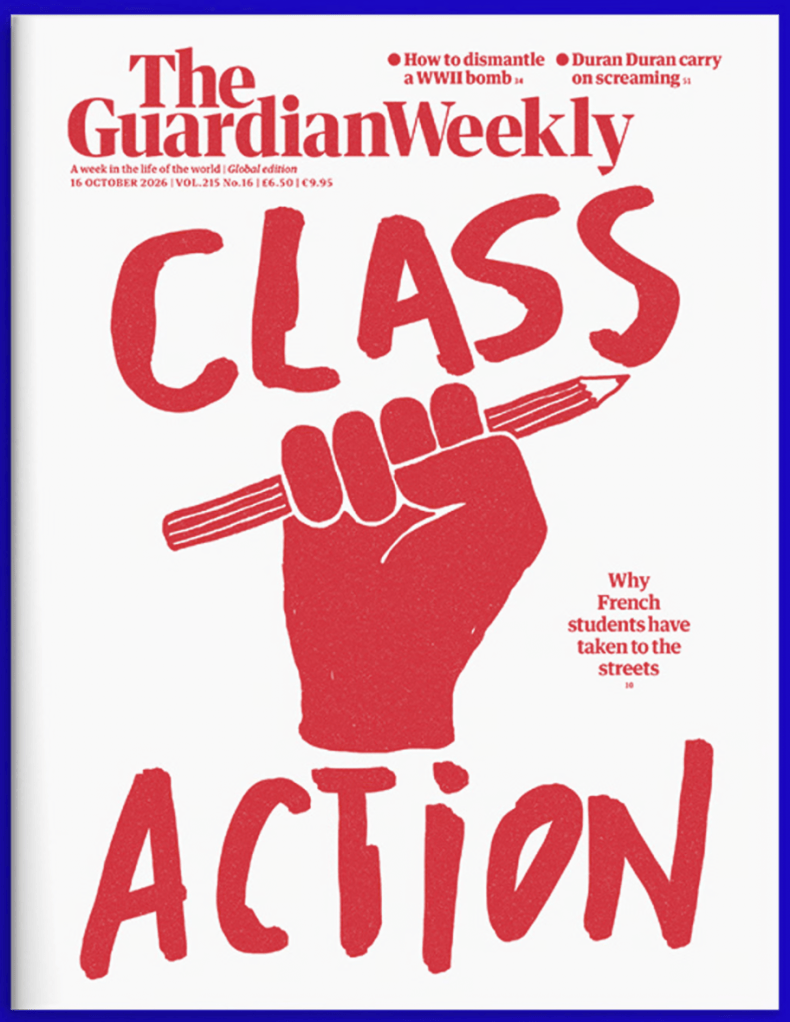
France has been rocked by huge youth protests in recent weeks over the state of high school education, bringing tens of thousands of people on to the streets.
The movement began with outrage over shoddy school conditions in a Paris banlieue, but has spread across the country as pupils voice their anger about a system they say is failing them.
For this week’s big story, Paris correspondent Angelique Chrisafis hears from protesters who feel abandoned by the French state. Angelique also looks at the evidence on students’ complaints of dilapidated buildings, teacher shortages, inequality and low investment.
Then, Alexander Hurst says fixing the broken education system should be just the start for an aloof political class if it is to finally pay attention to a generation who feel neglected.
Spotlight| The future of the death penalty Donald Trump has used the full might of the presidency to supercharge executions but, writes Ed Pilkington, an avalanche of mishaps has put the system’s flaws in the spotlight
Science| Sweet time A flurry of recent studies suggests that spending the first 1,000 days of life under sugar rationing may have left traces on people’s health more than seven decades later. Linda Geddes reports
Feature| The art of dismantling a second world war bomb British bomb disposal squads are being called to more unexploded devices than ever – and they risk their lives each time. Samira Shackle recounts the challenge they faced when two bombs were discovered on the same day
Opinion| A new era of instability The latest attack by Houthi rebels on Saudi Arabia may prove to be more calamitous for the region than the world imagines, says Nesrine Malik
Culture| Hungry like the werewolf Duran Duran talk to Alexis Petridis about 80s excess, tabloid scrutiny and their Halloween glow-up
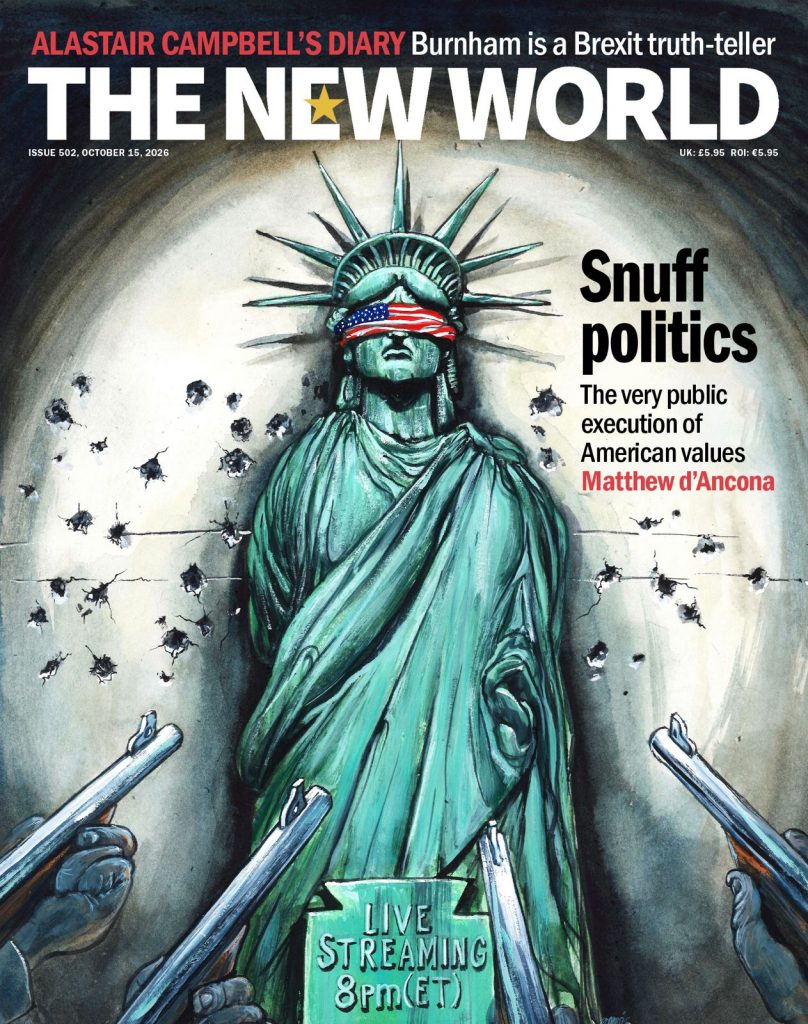
The president is using barbaric spectacle as a political weapon – and the damage will go on long after he has gone
Let us call it what it is: snuff politics. In an interview with far right conspiracy theorist Jack Posobiec posted by streaming channel Real America’s Voice last Thursday, US defense secretary Pete Hegseth announced the first state-sanctioned public execution in America for 90 years.
The godmother of ‘alternative facts’ assured me the president loved Zelensky – just as he was stabbing him in the back with Putin
I met Kellyanne Conway for the first time last week, when she and I were on a panel together, looking ahead to next month’s US midterm elections. She, you may recall, was the Trump senior aide who, on Term 1 Day 1, as the newly elected US president was falsely claiming more people attended his inauguration than Barack Obama’s, let us know we would have to get used to “alternative facts,” whatever truth photographic or any other evidence might reveal.
The shrieks of fury from Johnson, Badenoch, Farage and co speak volumes as the prime minister confronts the disaster they wrought
It’s an old truism in sport and in politics that the best defence is a good attack. That’s certainly something the UK’s leading Brexiteers seem to have taken to heart over the last decade – not least in their relentless fury at anyone who disagrees with their own personal vision for Brexit, or even anyone who just points out that none of them seem to agree on what, exactly, that looks like.