Thirty robots made up the first class at a robot school in Hangzhou, east China’s Zhejiang Province. After more than two months of training, four have graduated and landed formal jobs.
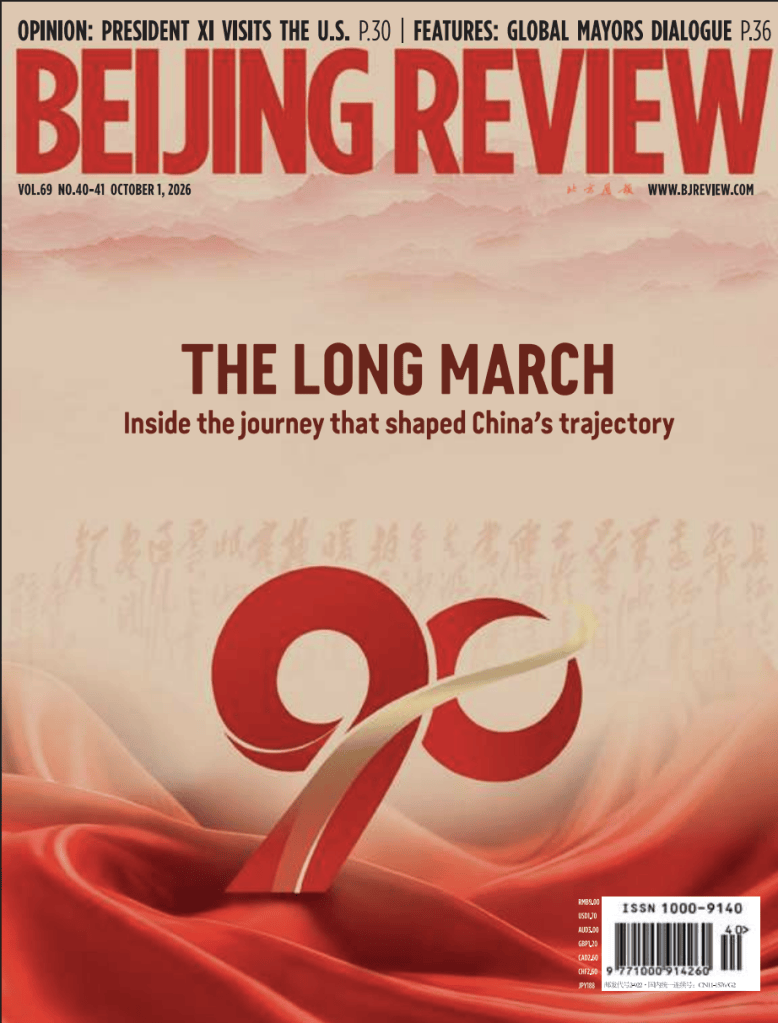
When the idea of the new Long March experience was first presented to me, I was enthusiastic. From early June through late July, we would spend six weeks following part of the route of the original Long March (1934-36) in honor of the journey’s conclusion 90 years ago this October.
The Long March was one of the seminal historical events of the 20th century. It had a transformative impact on the history of modern China.
At the World Intelligence Expo 2026 in Tianjin, I emphasized in my speech the principle that should guide every conversation about artificial intelligence (AI) today, namely without transparent, responsible, and ethical governance frameworks, the transformative potential of AI would be undermined by fragmentation and mistrust. The world now stands at a crossroads. A unified global AI governance framework remains elusive, so the question is no longer whether the EU and China should cooperate, but where and how they can do so most effectively.
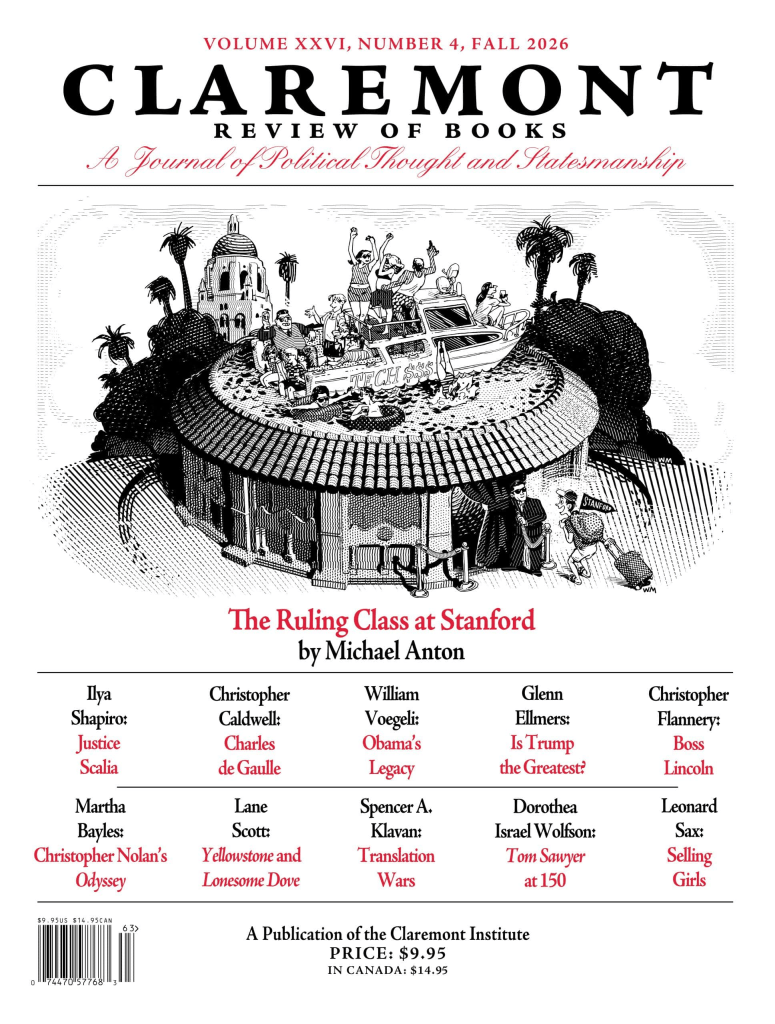
Because I’m going to be quite critical of Theo Baker’s How to Rule the World, it feels only right to start with three pieces of sincere praise: the book held my attention all the way to the end, I learned things from it, and I read it twice. These are not reactions I expect most new books to generate, let alone one written by someone not yet of legal drinking age. Hence on this basis alone, I would have to concede that Rule (borrowing Baker’s shorthand for a “secret” Stanford class, about which more below) is a real achievement.
The first marriage in Tuscan history was not between a man and a woman but between a vine and a tree. Before the Etruscans cleared these hills, they were dense with oakwood, through which wild grape vines climbed naturally toward the canopy, wedded to the forest in which they grew. The Etruscans formalized that marriage. Vines were trained up living maples, elms, and poplars. Grapes were cut from ladders or with long sickles. Later Italians called it the vite maritata—the married vine.
After watching Christopher Nolan’s The Odyssey in a sold-out IMAX theater, my husband and I were heading for the exit when we were attacked by smiling employees brandishing free rolled-up posters. Raising our shields, we broke through their phalanx, leaped aboard our vessel moored in the parking lot, and sailed homeward with only a few posters glancing off the moonroof.
Consumer sentiment is sagging, yet the economy is powering forward, driven by an AI investment boom and people still spending despite the strain of higher prices.
With Sense and Sensibility returning to cinemas this month and ‘set-jetting’ on the rise, Britain’s grand Georgian houses are ready for their close-up. From a London townhouse once owned by Jane Austen’s brother to sweeping country estates in Bath, Somerset and Devon, these are the historic stays that bring Austen’s world vividly to life.
Travel from Turin to Trieste on one of Europe’s most remarkable rail journeys, passing eight UNESCO World Heritage Sites acrossnorthern Italyin just over five hours.
From five-star camping and boutique Adriatic retreats to luxury spa resorts on Punta Skala, here’s where to stay in Zadar and discover Croatia’s spectacular Dalmatian Coast.
Donald Trump’s behavior cannot be called unexpected at this point. What was noteworthy last week, however, was the way that the media responded. By Jelani Cobb
My father dedicated his life to studying the Guna people of Panama, and they may soon allow unprecedented development through their land. I went on a trek through the jungle to find out why. By Ben Ryder Howe and Federico Rios
THE LONDON MAGAZINE: Despair – its causes, symptoms and consequences – becomes something of a theme across the issue. At least according to its etymological root, to despair is to be without hope (de-sperare), and in Mavis Gallant’s 1965 story ‘Paola and Renata’, published in the issue, mothers have no hope of controlling their inscrutable, insolent daughters.
‘While it must be stressed that Rankine’s lyric practice is capacious and stylistically thrilling, that her insights are always valuable in isolation, I am left slightly unsure of what Triage’s greater intentions are.’
‘Partly due to critical neglect, partly due to the single-minded determination to be a poet who survived on nothing but his poetry, Harrison’s prose is doomed to be a footnote in his career.’
‘Might there be something, beyond backwater nihilism, in the vanishing of the Tree at Sycamore Gap that speaks to us about a country increasingly unable to protect its social and civic structures in the most basic ways?’
News, Views and Reviews For The Intellectually Curious