
Tag Archives: Magazines

SCIENCE MAGAZINE NOVEMBER 5, 2026

SCIENCE MAGAZINE: The latest issue features ‘GLP-1 AND BEYOND’ – Targeting metabolism….

Going Beyond GLP-1

The growing complexity of targeting metabolism

Until recently, people with obesity were generally expected to manage their weight through diet and exercise, and pharmacological interventions were developed for comorbid conditions such as diabetes and cardiovascular disease. Some drugs were available to promote weight loss, but they did not become established therapies owing to intolerable side effects, limited effectiveness, or both. By far, the most reliable intervention to treat obesity was bariatric surgery, but it was reserved for the most severely affected patients because of the risks associated with the surgery itself as well as lifelong side effects.

GLP-1 receptor agonists in addiction therapy

Use of GLP-1–based therapies for addiction could provide a bridge toward whole-person health care

Glucagon-like peptide-1 receptor agonist (GLP-1RA) medications have transformed the landscape of obesity and diabetes treatment. Evidence is accruing that they also might reduce cravings for alcohol, nicotine, opioids, and stimulants. Most research into the mechanisms by which GLP-1RAs might help to treat substance use disorders has focused on their ability to modulate the dopamine reward system in the brain, which also contributes to suppressing the consumption of highly palatable food. However, emerging understanding about the biology of GLP-1RAs suggests that a neurocentric framework might be too narrow to interpret their effects, which arise from complex interactions between brain processes and other aspects of an individual’s physiology. As such, these medications provide an opportunity to reconsider the effects of drugs and addiction through a whole-person health lens. This framework considers how the brain’s reward pathway interacts with metabolic, inflammatory, hormonal, and cardiovascular processes throughout the body.

The scramble for your brain data

Companies are using wearable neurotechnologies to train AI models of the brain—without telling users

THE NEW STATESMAN MAGAZINE – NOV. 6, 2026

THE NEW STATESMAN: The latest issue features Emily Lawford’s cover story shows how Nigel Farage, by calling mass deportation “impossible” in 2024, drove young online nationalists to Rupert Lowe’s Restore Britain, whose small but growing vote now splits Reform’s and has pulled Farage and the mainstream right toward harder ethnic politics; Gideon Levy argues that Israel’s anti-Netanyahu bloc, which reaches 67 Knesset seats only by counting Arab parties that won a record 19 but that almost no one will govern with, has handed Benjamin Netanyahu a deadlock he can ride as caretaker or turn into a unity government; and Chris Thornton recounts how the five McCartney sisters’ campaign over their brother Robert’s 2005 murder in Belfast carried them to the White House and helped push the IRA to put its weapons beyond use, even though his killers were never convicted.

Nigel Farage’s bastards

How the Reform leader spawned a new generation of far-right opponents. By Emily Lawford

Israel’s change that never came

In an election defined by absurdities, the opposition coalition could hand victory to Benjamin Netanyahu. By Gideon Levy

A murder like no other

How five sisters’ brave battle over their brother’s slaying forced the IRA to lay down arms. By Chris Thornton

THE GUARDIAN WEEKLY NOVEMBER 6, 2026

THE GUARDIAN WEEKLY: The latest issue features ‘BUILDING BLOCS’ – Can Israel puzzle out a new government?

I’m writing this as the world wakes up to news of a blue wave of Democrat wins in the US midterms. What they mean for America and the world will be the subject of next week’s issue but this week we are focusing on Israel.

As seasoned Knesset watchers know, the plethora of parties on the ballot and proportional representation rarely produce immediate clear winners and a new government in short order. But as Jonathan Freedland puts it in this week’s cover story, the 2026 election presents a philosophical as well as a political puzzle.

Benjamin Netanyahu may have lost his parliamentary majority, but the opposition bloc needs more than Jewish parties to take control of the Knesset and offer Gadi Eisenkot the premiership. As Jonathan explains, Netanyahu’s loss contains the path to a possible win, while the road to success for Eisenkot means working with Palestinian parties, a red line many Jewish voters and MPs may not be willing to cross.

Spotlight | Connected through chaos
As Donald Trump fans the flames of a world on fire with his vengeful foreign policy, can rational actors on the diplomatic stage douse the conflagration, asks Patrick Wintour

Science | The tales one fish can tell
Pioneering research into the tambaqui has shown that it is a vital canary in the coalmine to monitor the effects of global heating and oxygen loss in the Amazon, reports Mac Margolis

Feature | A spectrum of opinion on autism
Why have the numbers of people diagnosed with the condition ballooned over the past 20 years: is it overdiagnosis or an overly expansive definition? John Harris investigates

Opinion | Serbia deserves to succeed
But the victorious Student List’s ability to consolidate democracy relies on a future in Europe and Brussels must court these new leaders, argues Srđjan Cvijić

Culture | Still on the line
Jimmy Webb, who wrote the ever poignant Wichita Lineman for Glen Campbell as well other classic American hits, tells Dave Simpson about a new album and why, at 80, he still loves playing live

THE BURLINGTON MAGAZINE NOVEMBER 2026

The Burlington Magazine: The latest issue features the upcoming 150th anniversary of Liverpool’s Walker Art Gallery in 2027, honors the career of late Victoria and Albert Museum jewelry curator Richard Edgcumbe, and reviews the monumental realism and modernist influence of nineteenth-century French painter Gustave Courbet.

Liverpool 2027

The Walker Art Gallery in Liverpool will be 150 years old in 2027. It was named after the local brewer Andrew Barclay Walker (1824–93), who donated £20,000 for the creation of the gallery. It opened in September 1877 and welcomed over 300,000 visitors during the next four months. Walker was not a collector of art but appears to have displayed an aesthetic sensibility through the high standards he insisted on for the design of his public houses. read more

Richard Edgcumbe (1951–2026)

A gifted curator who specialised in jewellery, Richard Edgcumbe pursued a successful career at the Victoria and Albert Museum, London, and notably published on gold chasing in the eighteenth century. read more

I, Gustave Courbet

Gustave Courbet (1819–77) was arguably the most important artist in nineteenth-century France. Over almost four decades, he created paintings of monumental achievement and innovation in all genres and changed how art was exhibited and sold – mostly in Paris, the capital of the international art world. He launched an aesthetic of realism that emphasised painterly facture and set the stage for modernist art in the decades that followed. read more

THE SPECTATOR WORLD MAGAZINE – NOV. 9, 2026

THE SPECTATOR WORLD: The latest issue features ‘The divorce evangelists’ – Peachy Keenan on the anti-marriage brigade….

Meet the divorce evangelists

American women’s most listened-to podcast is Call Her Daddy. It is hosted by the glamorous Alex Cooper, whose shtick is grilling female celebrities on their sex lives. For example, she made Gwyneth Paltrow rank all her boyfriends according to their sexual skills. I hope her husband and kids didn’t bother listening to that episode. She recently hosted an actress named Sophia Bush. They discussed Sophia’s multiple divorces while Alex declared breathlessly that if a woman is questioning whether she can do better than her current husband, “the answer is always yes.” Sophia agreed. “The answer is always yes, and this idea that it’s too late or you’re too old, or who are you to want more – that’s patriarchy. That is crazy!” Something around here is crazy, yes, Ms. Bush.

The presidency is J.D. Vance’s to lose

Donald Trump has so dominated the news over the past decade that it is hard to imagine American politics without him. Yet now we are in the last 27 months of his presidency. And as this year ends and the next approaches, the national conversation turns toward the looming election cycle of 2028 and the vital question of who comes next. The Democratic nomination seems destined to be a complicated struggle between various factions and candidates. The outgoing Governor of California, Gavin Newsom, is a figure of ridicule yet strangely unsquashable. He remains the betting favorite. Senator Jon Ossoff, this magazine’s last cover star, is a contender. Alexandria Ocasio-Cortez is a telegenic and increasingly influential force – and Kamala Harris just won’t take no for an answer.

Am I the most hated man in liberal America?

I’ve had hexes put on me by a university professor, had online vigilantes send packages of dogshit to my childhood home in New Jersey and been hounded by the trauma-informed journalists of the New York Times. CNN, Reuters, Agence France-Presse and other estimable sources have credited me with starting a dark…

How politics became Jerry Springer

In the fall of 2017, Virginia was going through its quadrennial tradition of giving the nation an electoral check-in on the president by holding an off-year gubernatorial election. The nation’s mood was, to say the least, heated. Four months earlier, at a baseball field in Alexandria, a radicalized and mentally imbalanced left-wing activist had nearly killed House whip Steve Scalise and three others in a shooting. So it was with some recklessness that Latino Victory Project, in

LITERARY REVIEW MAGAZINE NOVEMBER 2026

LITERARY REVIEW : The latest issue features ‘SAKI’S SECRETIVE LIFE’…..

Laughter in the Margins

Super-Beast: The Mysterious Life of Saki By Oliver Soden

In some ways all you really need to know about Hector Hugh Munro (1870–1916) can be gleaned from the short story ‘Sredni Vashtar’, first published in the Westminster Gazette in the summer of 1910. Conradin – Munro’s heroes nearly always have these hifalutin names – is a sickly small boy quartered on a tyrannical guardian called Mrs de Ropp. Denied much in the way of freedom or material comfort, in particular the hot buttered toast he craves, Conradin makes a fetish out of a savage polecat-ferret hidden in the garden shed, worships it as a god and looks to it for vengeance.

Here in the World

Letters: 1944–1959 By Albert Camus & Maria Casarès (Edited by Béatrice Vaillant, translated from French by Sandra Smith & Cory Stockwell)

What an amazing behemoth of a book! I’ve been lugging it around for weeks. Nearly a thousand letters: the intimate correspondence of Albert Camus and Maria Casarès. When they first met in Paris – on D-Day, 1944 – Camus had already published L’Etranger (1942; The Outsider). Born and raised in Algeria, he was in Paris when the Second World War broke out, and later joined the French Resistance. Camus’s wife, Francine Faure, a mathematician and pianist, remained in Algeria. Maria Casarès was originally from Galicia, the daughter of an exiled former prime minister of Spain, Santiago Casares Quiroga. In 1944, Casarès was already known as an actress, having played the titular role in J M Synge’s Deirdre of the Sorrows. She later starred in Les Enfants du paradis (1945), Cocteau’s Orphée (1950) and La Lectrice (1988), among other films and plays.

Talk to the Animals

Minds I’ve Met: From Denying to Embracing the Inner Lives of Animals By Frans de Waal

Some years ago, a prominent animal-behaviour scientist hosted a colleague at his field station devoted to the study of chimpanzees. Talking together on top of the observation tower, the pair glanced at the apes but mostly stayed absorbed in conversation. Then a female chimpanzee named Thai began to scream and hit herself in dramatic fashion. In response to her outburst, other chimpanzees rushed to embrace, hold and kiss her.

POLITICO MAGAZINE NOVEMBER 1, 2026

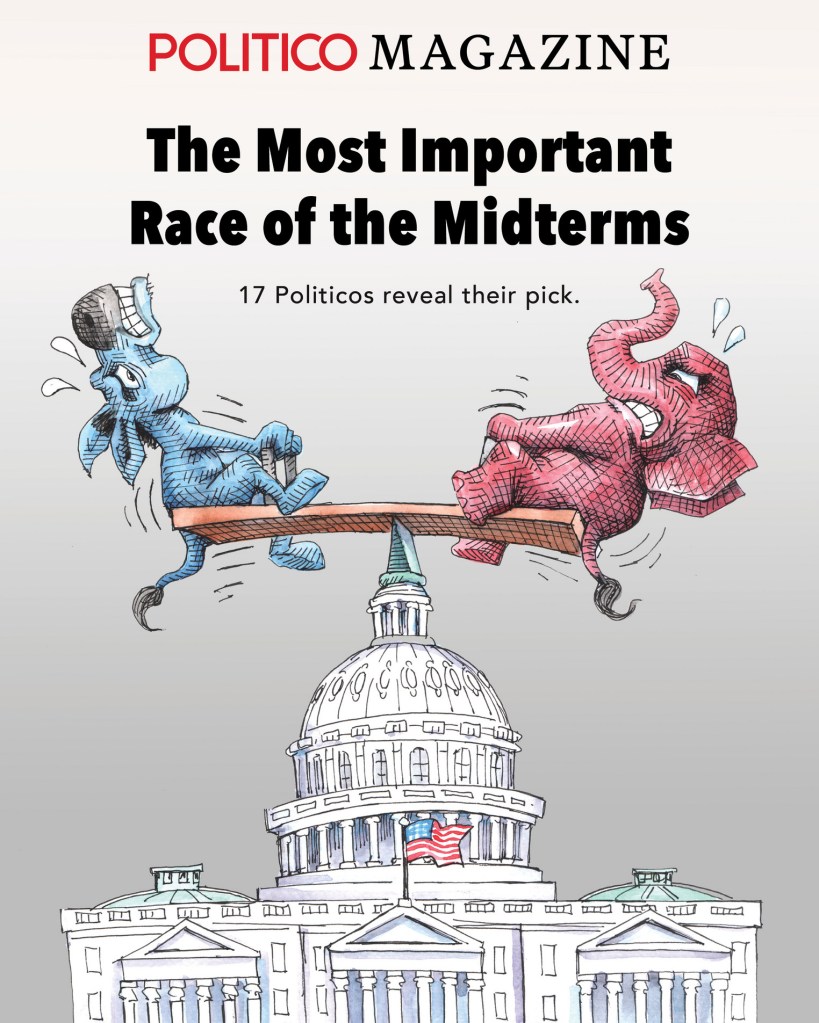
POLITICO MAGAZINE: The latest issue features ‘The 2026 Election That Matters Most of All’ – 17 Politicos reveal their pick.

‘A lot of Republicans have held their tongues’: Anger at Trump is growing

Few Republicans are willing to publicly lambast the president. But they’re more blunt in private. By Alec Hernandez, Meredith Lee Hill, Erin Doherty and Andrew Howard

The ‘Blacklash’ Is Here

Anger at Trump is driving a surge in Black turnout across the South.

The first hint appeared in the 2025 elections, when Democrats won larger-than-expected margins in Virginia and New Jersey. Then, beginning early this year, the turnout numbers in primaries were unmistakable. And now, the story is blaring in neon as early and absentee votes soar.

No clear challengers for Chuck Schumer’s post, barring a midterm catastrophe

If there’s a Democratic majority in the Senate, the New Yorker will almost certainly lead it. If not, buckle up.

What Hakeem Jeffries’ Albany years reveal about how he’d lead the House

The moderate Democrat developed a signature style in the New York capital that will be put to the test next year if his party wins the House.

MONTHLY REVIEW MAGAZINE NOVEMBER 2026 PREVIEW

MONTHLY REVIEW MAGAZINE: The latest issue features the United States as the world’s chief enemy of sovereign elections.

Citing Dov Levin’s research, it counts 128 U.S. interventions in foreign elections from 1946 to 2014, rising after the Cold War, increasingly overt, and successful about 60 percent of the time before 2000. Methods include funding right-wing campaigns, dirty tricks, lawfare, social-media bots, aid threats, and CIA surrogates posing as “democracy assistance” groups. Recent examples include Venezuela, ending in Maduro’s abduction; $20 billion tied to electing Milei’s allies in Argentina; and Honduras, where Trump declared Asfura the winner. Leaked “Hondurasgate” tapes exposed regional manipulation schemes.

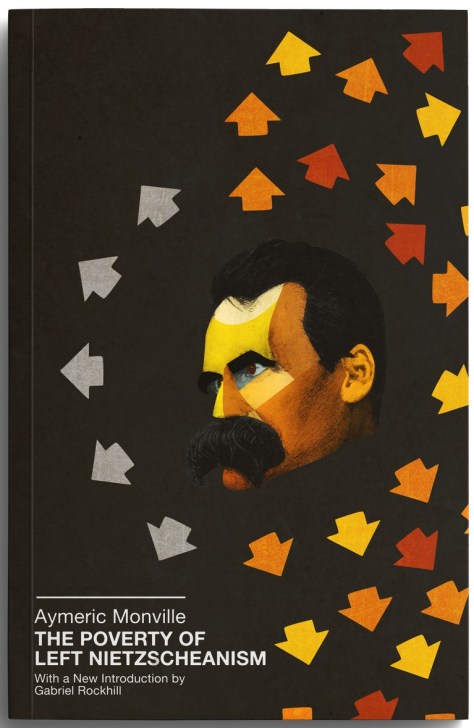
Nietzsche’s French Legacy

The Poverty of Left Nietzscheanism by Aymeric Monville

MR is pleased to be able to share with readers Gabriel Rockhill’s Introduction to The Poverty of Left Nietzscheanism by Aymeric Monville (Iskra Books, 2026). Rockhill provides readers with a thorough account of the rehabilitation of Nietzsche within French Theory and its consequences within the non-communist left. Fascism, Rockhill argues, “can only be understood and contested through materialist analysis and anticapitalist praxis”—a fitting preamble to a book that acts as “an insightful indictment of the dominant capitalist ideologies while clearly articulating the political path forward.”

THE NEW YORKER MAGAZINE NOVEMBER 9, 2026 PREVIEW

A figure wearing a leaftrimmed coat struts in a forest.

THE NEW YORKER MAGAZINE: The latest issue cover features ‘Carter Goodrich’s “Leaf Chic”’ – Costume drama for the season.

Corruption on the Ballot

Corruption is always an issue, but this year will it finally catapult from a topic of chronic bellyaching to an actual mechanism for changing votes? By Ruth Marcus

Why Immigration Agents Don’t Quit in Protest

How a culture of dehumanization and denial keeps ICE and Border Patrol personnel “at war with an enemy that does not fight back.” By Francisco Cantú

Did the World Just Gain Hundreds of Millions of Alzheimer’s Patients?

A new definition of Alzheimer’s includes people without symptoms. Experts are fiercely divided over whether that makes sense—and whether the new drugs really help. By Manvir Singh

Roy Lichtenstein’s Witty Critiques of Masculinity

The artist’s best work, in a new retrospective at the Whitney Museum, directs his campy humor at gender stereotypes. By Hilton Als

THE SUN LITERARY MAGAZINE – NOVEMBER 2026

THE SUN LITERARY MAGAZINE: The latest issue features an interview with Jason Baldes on restoring the North American buffalo as a keystone species, Laura Maylene Walter’s fiction piece “Rare Species,” Charles Hood’s essay examining the historical nuances of General Custer’s death, Amy Butcher’s memoir on personal boundary issues titled “Red Light, Green Light,” and a collection of reader-submitted reflections centered on the concept of “Too Much”.

The Healers – Jason Baldes on Restoring the North American Buffalo

Returning the buffalo to its ecological role as a keystone species, bringing back plant and animal biodiversity, is in itself healing. We take care of the buffalo, the buffalo takes care of the land, and both take care of us. By Leath Tonino

Aage eighteen, Jason Baldes, a member of the Eastern Shoshone Tribe, traveled with his father, a US Fish and Wildlife Service biologist, from the Wind River Indian Reservation in Wyoming to the Serengeti Plain of East Africa. In addition to lions and zebras and hyenas, Baldes witnessed the migration of 1.5 million wildebeests—one of the planet’s last remaining examples of a huge population of terrestrial mammals roaming freely over the land. “That was the light bulb moment for me,” he says today, reflecting on his decades of effort as an ecologist and activist. Watching the beautiful and awe-inspiring spectacle, he understood that the mega herd represented a mere fraction of the number of bison—or buffalo, as Baldes prefers to call them—that would have been visible in North America a few short centuries ago, when they numbered in the tens of millions and inhabited the majority of the continent.

The Many Deaths of George Armstrong Custer

In popular tradition General Custer was the last to die, though there is no way to know the final sequence of events. He reportedly had been shot twice: once in the left temple and once just below the heart. ByCharles Hood

The first time US Army general George Armstrong Custer died was on Sunday, June 25, 1876, a centennial year in Anglo-European America. He died in the late afternoon along with 267 other soldiers, civilians, and Native American scouts in the Little Bighorn Valley of Montana. These deaths took place during what are now called the “Indian Wars,” although for most of American history it’s hard to think of a time when there wasn’t an Indian war.

The Seventh Cavalry, which Custer led, had split into multiple columns, and all came under attack, though only Custer’s portion—made up of five out of eleven total companies—was wiped out completely. That outcome was more or less inevitable, given that Custer had misjudged the size of the coalition of Lakota, Dakota, Sioux, and Northern Cheyenne his two-hundred-odd men were facing. Or maybe he hadn’t wanted to admit to himself that he was up against a combined force of at least a thousand, and perhaps as many as three or even five thousand, depending on which source you asked. Once the battle started, there was no way Custer and his men would not all be killed. The only question was whether they would die before or after they had used up all of their water and ammunition.

Rare Species

I walked back to my sister’s room and stood in the doorway and listened to her breathe. Maybe some of those seahorse facts weren’t even true. ByLaura Maylene Walter