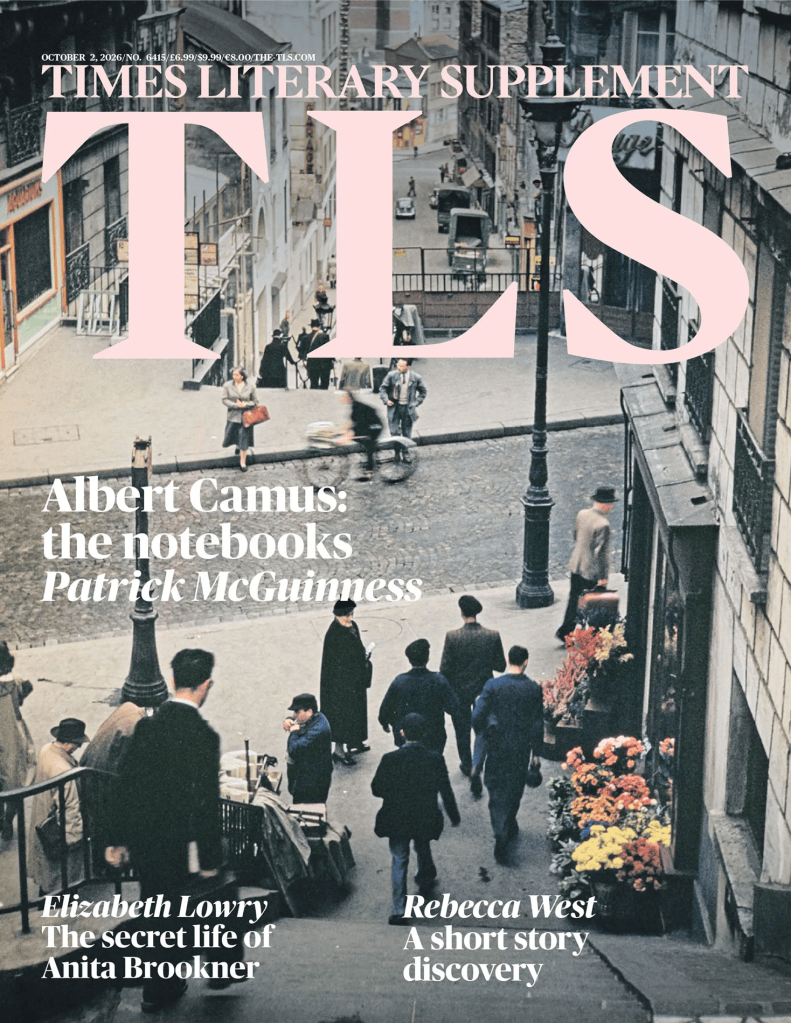
“Sadness of success”, writes Albert Camus in a notebook entry for June 25, 1947: “If everything were more difficult for me, as before, I’d have much more right to say what I say”. The success in question was winning the Prix des Critiques for La Peste (The Plague), published a fortnight earlier. It could be worse, the reader wants to tell him by way of consolation: you could have won the Nobel. Fast-forward ten years and the entry for October 17, 1957, reads: “Nobel. Strange feeling of overwhelming weight and melancholy. At 20 years old, poor and naked, I knew true glory. My mother”.
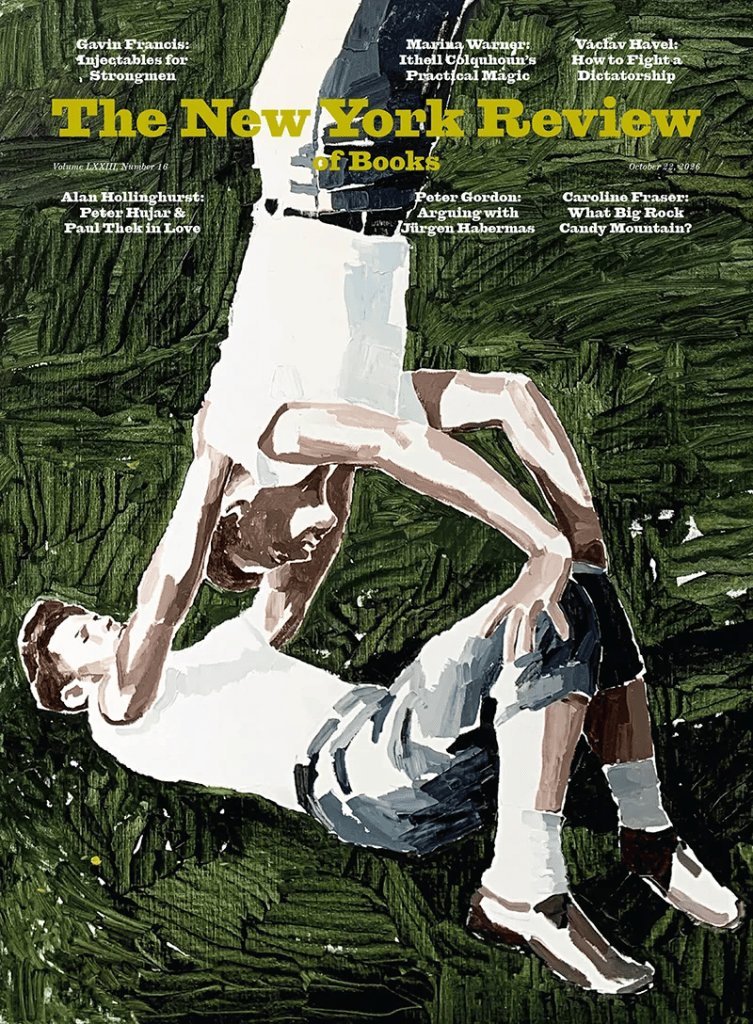
From its origins in the classical physique and homoerotic spectacle, bodybuilding today often involves the use of steroids whose dangers are not properly understood.
When Fitness Went Global: The Rise of Physical Culture in the Nineteenth Century by Conor Heffernan
A Genealogy of Male Bodybuilding: From Classical to Freaky by Dimitris Liokaftos
Muscle Works: Physical Culture and the Performance of Masculinity by Broderick D.V. Chow
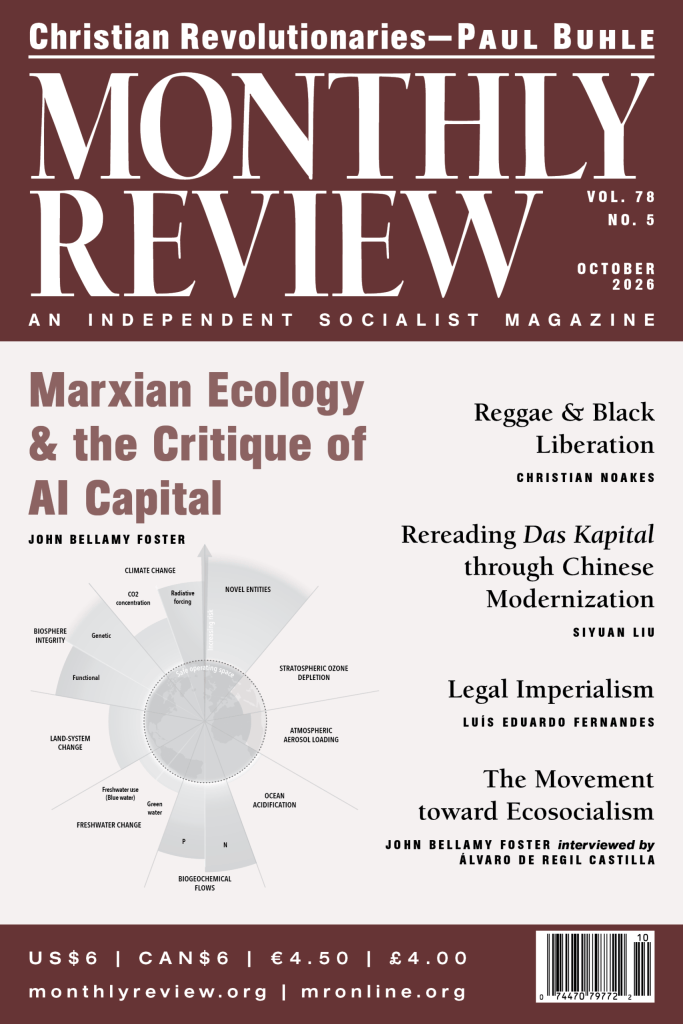
What is the rise of AI capital, and what does it mean for contemporary work, culture, and the ecological state of our planet? John Bellamy Foster dispels the myth of a “hyperorganized AI capitalism.” As Foster writes: “We are not entering a stable new age…but rather a new, capitalist-engendered global disorder in which humanity, according to climate science, is headed ever more rapidly toward a planetary ‘point of no return.'” The only way out—the only way, that is, to ensure the survival of humanity—is a radical shift away from the catastrophically destructive regime of capital accumulation and toward sustainable human development through socialism.
Paul Buhle reviews The Radical Jewish Tradition by Donny Glickstein and Janey Stone. The book, Buhle writes, is a window onto “the antinomies of nineteenth-century Jewish life”—including the growing movement against Zionism and for socialism among Eastern European Jews. This authors, Buhle notes, also tells the story of Jewish communists in Britain, the United States, and beyond, taking into account the wide sweep of Jewish left activity globally, situating the present struggles against genocide in Palestine squarely within the legacy of radical Jews everywhere.
Today’s resurgence in U.S. imperialist interventions abroad and the concomitant so-called crisis of the “rules-based order” can be explained, Luís Eduardo Fernandes argues, through the category of “legal imperialism, which refers to how the international juridical form is internalized within societies and in the context of dependency, colonialism, unequal exchange, and monopoly capital. “International law and imperialism,” Fernandes writes, “do not stand as opposing poles. They are part of the same unity.… Violence is constitutive of the juridical form.”
Despite a hard-and-fast refusal to discuss Lilith for nearly six years on my social media platform, Jewitches, she remains the most popular question, request, and topic of discussion…Many know her as merely Adam’s first wife, the prequel to Eve, but her history is far more complex.
King’s Secretary: William Paget and the Last Years of the Reign of Henry VIII By Andrew Johnston
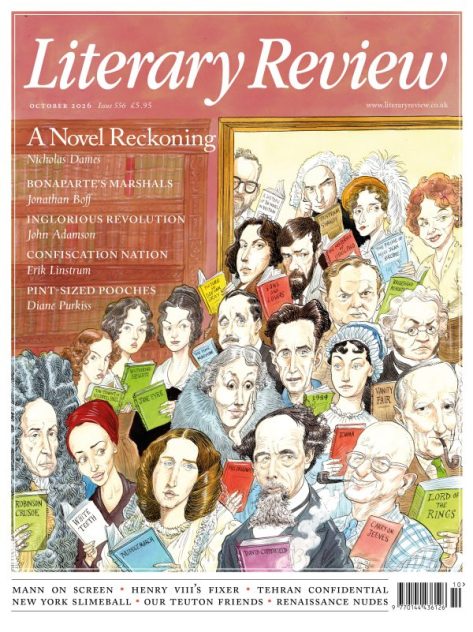
Tudor history buffs and attentive readers of Hilary Mantel’s Wolf Hall trilogy will recognise the name William Paget. Others will require some words of introduction. Paget (1505/6–63) was an able and influential diplomat and administrator who rose to become principal secretary to Henry VIII. ‘Rose’ is the operative word. Paget, like his predecessor and mentor Thomas Cromwell, was a self-made man, though his father, a sergeant serving the sheriff of London, was able to provide him with a grammar school and Cambridge education.
The Last Invasion of England: 1688 and the Dutch Armada By Arthur der Weduwen
Much is exceptional about the Bayeux Tapestry currently on magnificent display in the British Museum, but nothing is quite so exceptional as the event itself. As the museum’s website reminds us, 1066 ‘was the last time England was successfully invaded’. Our sea-girt immunity from foreign invasion has been at the centre of ‘Our Island Story’ ever since, with the Channel confounding the hubris of Philip II in 1588 and 1596, of Napoleon in 1803 and of Hitler in 1940.
Imperial Predator: Britain and the Destruction of the Ottoman Empire By David S Tonge
In his survey of the collapse of the Ottoman Empire in the late 19th and early 20th centuries, David S Tonge sees Britain as an aggressive superpower, hence the title of his excellent book. My one quibble is zoological. ‘Predator’ may not be quite the right word. For in much of Tonge’s story Britain is less lion than vulture: what zoologists call an obligate scavenger – or a necrophagous power – feeding on carrion. The Ottoman carcass had already been wounded by Russian aggression, nationalist revolt, indebtedness and internal decay. There were exceptions, and Britain could be predatory when circumstances demanded, notably in Cyprus and Alexandria, but its more characteristic pose was to sniff the odour of mortality and arrive in time for lunch.
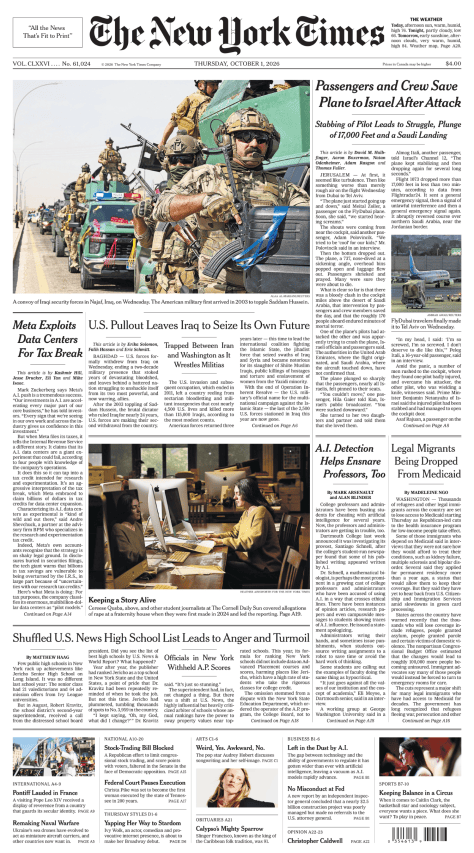
“I don’t deserve to die like this,” said one passenger on Flight 1073 from Dubai to Tel Aviv. The motive of the cockpit stabbing remains unknown, officials said.
Prime Minister Benjamin Netanyahu praised the flight’s injured captain, Israeli passengers and reserve pilots, who helped secure the plane and land it safely. The attacker has not been identified.
Christa Pike was convicted of murdering a classmate in 1995. It was not clear what went wrong in the execution or what her current medical condition was.
In 1638 the king’s jester asked an archbishop, “Who’s fool now?” and was thrown out of court the same day. The fool’s license to mock has changed hands ever since. It has rarely been the fool’s to keep.
The fool’s coat set down and the pen taken up, made for the essay.
Why we’re pointing you there
Archibald Armstrong had jested for two kings when he mocked Archbishop Laud over the Scottish prayer-book revolt. The Privy Council sentenced him to have his coat pulled over his head and be banished the court. Michael Cummins starts there and asks who has held the fool’s license since kings stopped keeping fools. He follows it through Shakespeare’s “allowed fool,” a caricaturist on a party pension, and a Victor Hugo play banned after a single night. Then a British cabinet minister takes a cartoonist to lunch, and in January 2025 a Pulitzer Prize winner walks out of the Washington Post.
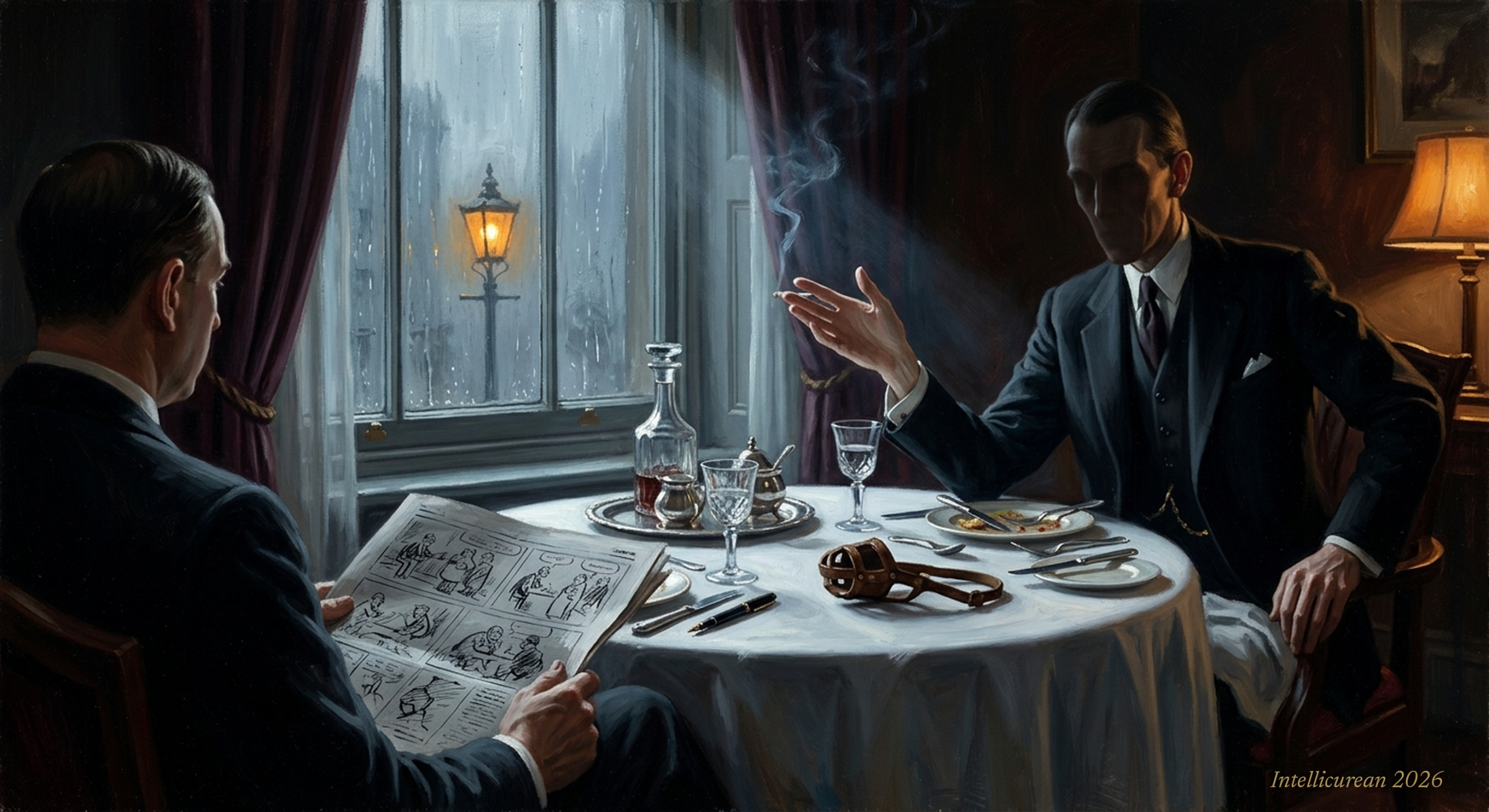
What we liked most is the centerpiece. In 1937 Goebbels complained about David Low’s cartoons, and Lord Halifax carried the complaint home. The newspaper said it couldn’t control Low, so the minister had to ask the cartoonist himself. Low agreed to ease off, and answered with a new character whose name was a pun on what had just happened to him. The essay grants that the cost of losing the license has fallen a long way since Armstrong’s day. It ends by asking whether a paying public is a freer master than a king, or only a larger court.
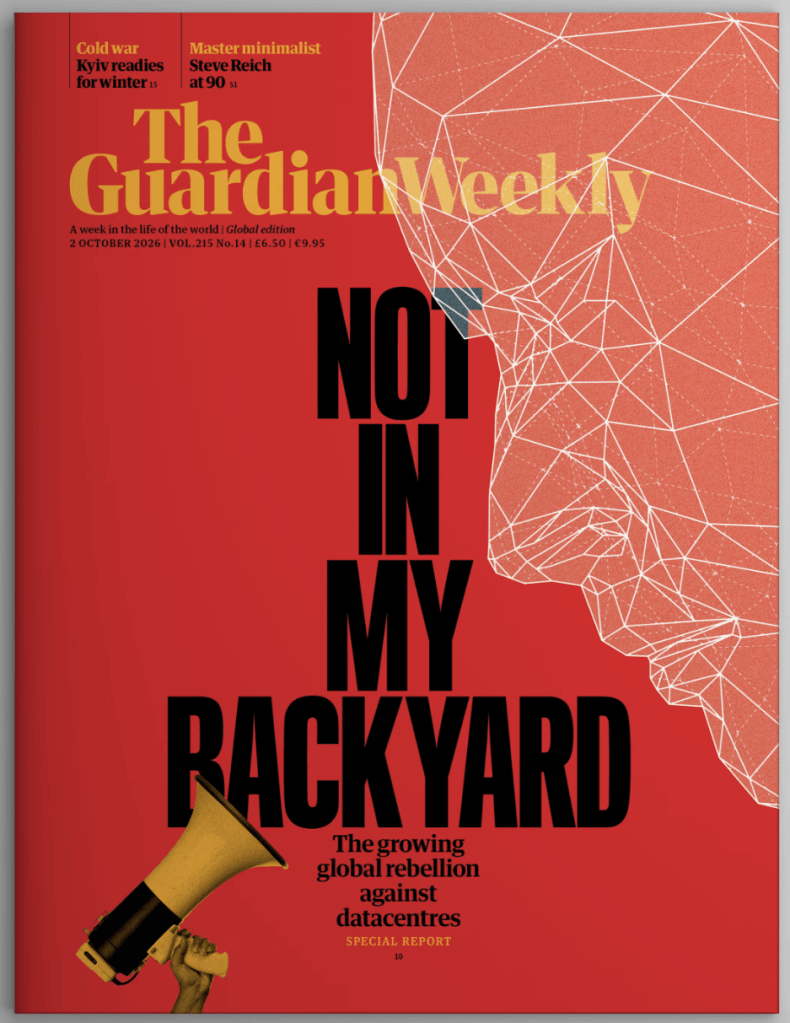
As the alarm bells sound ever louder about the potentially existential threat of breakneck AI development, people far removed from Silicon Valley debates about the future of the artificial intelligence revolution are voicing other more immediately tangible worries about the building of the vast datacentres that power these entities.
For this week’s cover story, economics and political writer Eduardo Porter, analyses why communities are pushing back against AI and the future that the big tech plutocrats want to create. These fears, based around environmental concerns over resource use and rapid societal change, are, he argues, far more complex than luddite attitudes or nimbyism.
It’s a position exemplified by reporting from two rural communities in India and the UK where vast datacentres are already under construction or being planned. As Hannah Ellis-Petersen and Aakash Hassan find out, the villagers of Tarluvada, in Andhra Pradesh, feel that government promises of a “golden age” that a hyperscale Google datacentre would bring them have been broken. Meanwhile, Sandra Laville meets protesters in Great Torrington, Devon, who sense that they are being kept in the dark about plans for an AI campus, one of Europe’s largest, in a Unesco-designated nature reserve.
Spotlight| Kyiv’s cold front is approaching Charlotte Higgins reports on how residents are preparing for winter, stocking up on food and determination, as Russia increases its attacks on energy infrastructure
Environment| What Nepal has taught Argentina What can the Patagonian town of El Chaltén at the foot of the Torre glacier do to avoid an event similar to the disaster in Nepal? María de los Ángeles Orfila finds out
Feature| Andy Burnham: a man with a plan As the first Labour conference with Andy Burnham as prime minister takes place, Hettie O’Brien finds out just how radical his policies could be
Opinion| Macron’s brave swansong In his final speech to the UN, Emmanuel Macron told the world how to stand up to Trump, says Steve Bloomfield
Culture| A minimalist at 90 As he prepares to celebrate a milestone birthday, Steve Reich tells Flora Willson how he developed his musical ideas and why he wants others to take up the baton of performing his works
News, Views and Reviews For The Intellectually Curious