The United States wants a reactor on the moon by 2030. A Russian-Chinese alliance is working on one for 2036. Some leading scientists say the danger is great.
President Trump’s decision to hold an international summit at his golf club, an idea rejected in his first term, illustrates how much he has shattered norms.
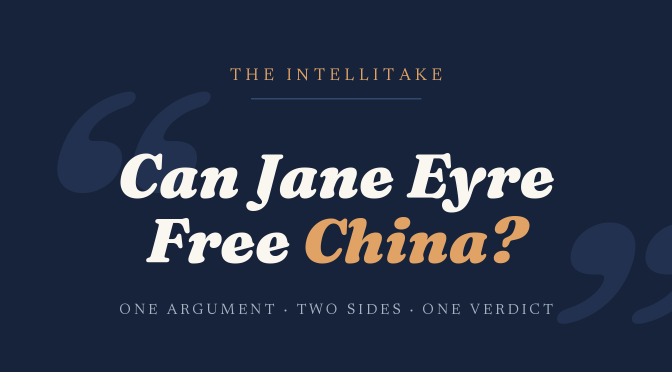
This fall, China made Charlotte Brontë’s Jane Eyre compulsory reading for 14- and 15-year-olds across the country. Writing in UnHerd, the novelist Philip Hensher notes the official reasoning, as reported in the Party-backed press: “the innocent, budding stage of first love is a crucial period for shaping a well-rounded personality.”
Hensher thinks Beijing has assigned more than a love story. Jane is the orphan who tells her cruel aunt that “the very thought of you makes me sick,” and she grows into a woman who answers to her own conscience rather than to the man with power over her. Those are dangerous lessons, he suggests, to hand every teenager in a country that ranks 178th of 180 in the World Press Freedom Index.
His conclusion is hopeful. A state that assigns a book about speaking the truth may be teaching it.
vs
THE ANSWER
The reporting tells a different story. China has had Jane Eyre for a century. A Chinese translation appeared in 1925, and a 1979 British film adaptation played in Chinese theaters as the country reopened after the Cultural Revolution (New York Times). Generations have read it, and the system has stood.
The choice also looks deliberate. Beijing Daily pitched the novel as a counterweight to social media’s “superficial notions about appearance and wealth” (CNN). UC San Diego scholar Ping Zhu told the Times that Jane is “an independent woman, but she’s not too outrageous in her challenge of patriarchal power.” She ends the book married and a mother, which fits a government urging young people to start families.
On this view, Beijing didn’t assign a rebel by accident. It chose a heroine whose independence ends in a home.
iC
THE INTELLITAKE
Both sides are reading the same novel and stopping at different chapters. Beijing assigned Jane Eyre for its ending: the marriage, the home, love that money can’t buy. Hensher is betting on its beginning: the child who talks back and the young woman who walks away from Thornfield with nothing rather than betray herself.
Notice what the two arguments share. Each assumes a book does what its readers are told it does. A ministry can set the exam question, but not the moment a 15-year-old reaches Jane’s declaration, “I am no bird; and no net ensnares me.” A novel doesn’t topple a government. It builds an inner life, and inner lives are the one thing no curriculum fully controls.
There is something worth admiring in the choice itself. A nation that wants its teenagers to value character over wealth reached for a Victorian Englishwoman’s conscience, and trusted 14-year-olds with it. Whatever Beijing intends, it has given millions of young readers a heroine who insists on choosing for herself.
TODAY’S PROVOCATION
Can a government assign a book without assigning what it means?
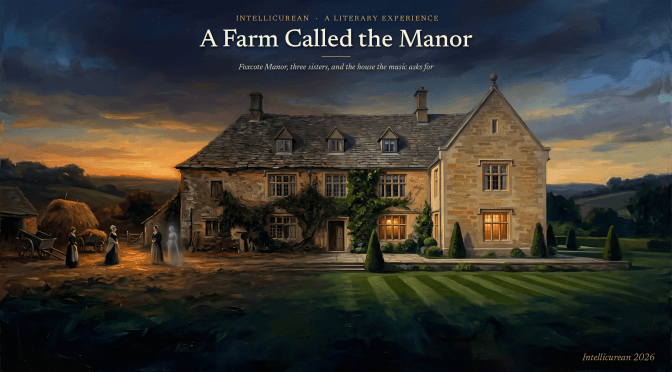
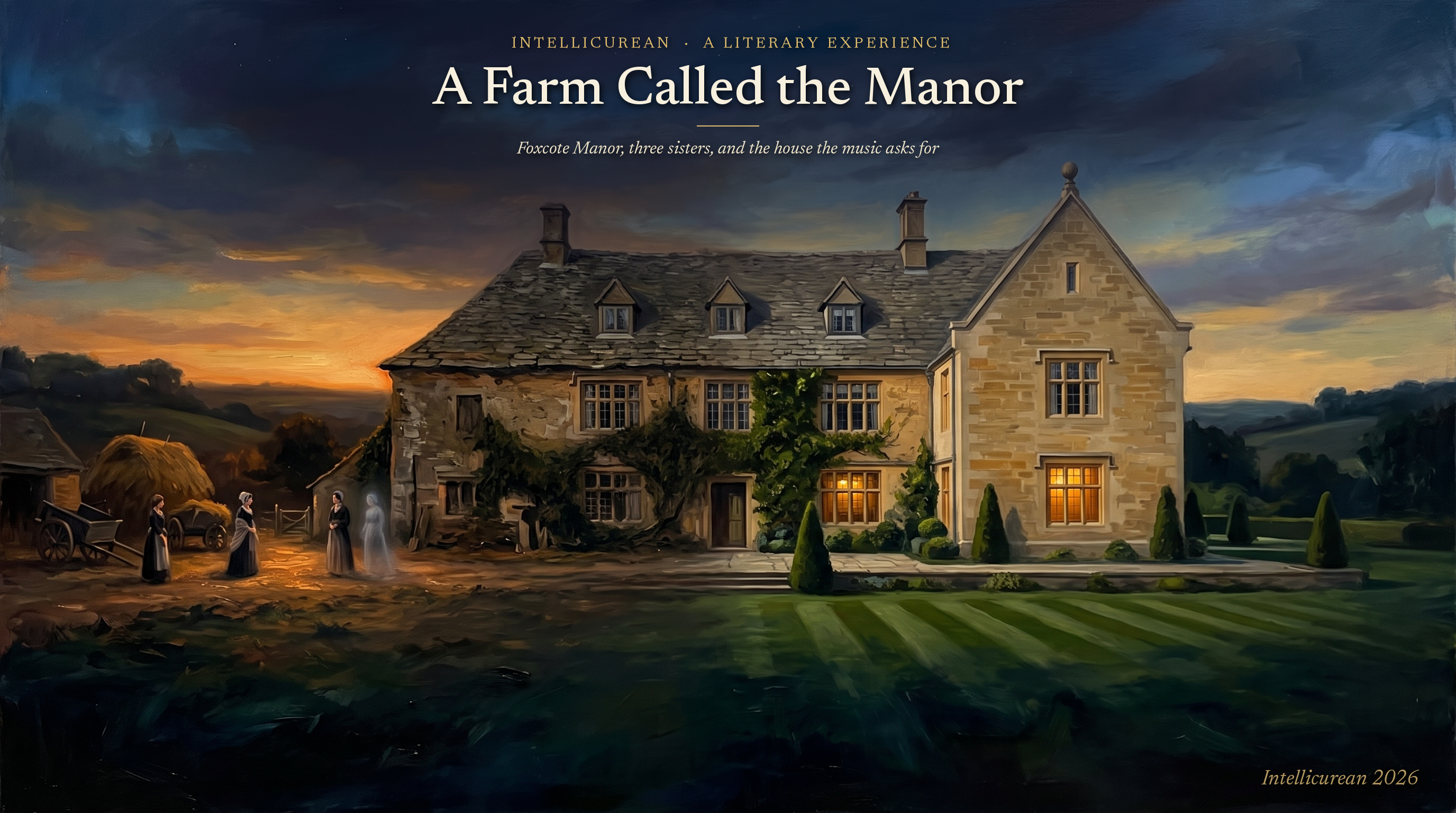
A Cotswold manor is for sale at £15 million, honey-coloured and perfectly symmetrical. Two centuries ago three sisters held it, in the very decade Jane Austen was writing about sisters who could hold no land.
Foxcote at dusk in two eras, made for the essay.
Why we’re pointing you there
Foxcote Manor, near Withington in Gloucestershire, came to market this autumn transformed, its ivy stripped and its rooms gone cream. Intellicurean’s first Literary Experience sets the sale beside the county history, the listing and two Austen novels, and finds that almost nothing in the picture is what it seems. A woman named Sarah Jordan left the manor to three nieces, a will that runs the other way from the one that opens Sense and Sensibility. William Cobbett rode through in 1826 and read the village church as proof of decline, and the census answers him. The symmetrical stone front turns out to be more than three hundred years of work, dressed to look like a single moment.
What we liked most is how carefully it listens to the record, and to its silences. Where the documents can correct what we see, they do, plainly. Where they fall quiet, about a bequest, two weddings and a third sister who simply disappears, the essay lets the music in and asks what that longing is worth.
A sale-staged dining room with a tenant the record lost, made for the essay.
Just a decade ago, it was nothing more than the dream of scientists in the lab. Recent advances by IBM, IonQ, Nvidia, and others illustrate the new promise of the complex technology. Investors are taking notice.
Veeva Systems stock can rally by 30% over the next year.
The Stock Market Is Looking Ahead to Earnings Season—and It Likes What It Sees
Get out your trust rope and harness. Investors are once again climbing the proverbial wall of worry—and earnings season could provide the piton that supports the stock market’s next move higher.
President Vladimir Putin brought up a sale of Russian energy assets with Jared Kushner and Steve Witkoff. The deal raises new questions about conflicts of interest.
The Parti Québécois has vowed to hold a referendum on independence, three decades after Quebec voted “no.” Voters want change, but maybe not that much.
Records showed that campus police officers informed prosecutors that they had conducted interviews beyond taking a statement from the woman who said she was raped.
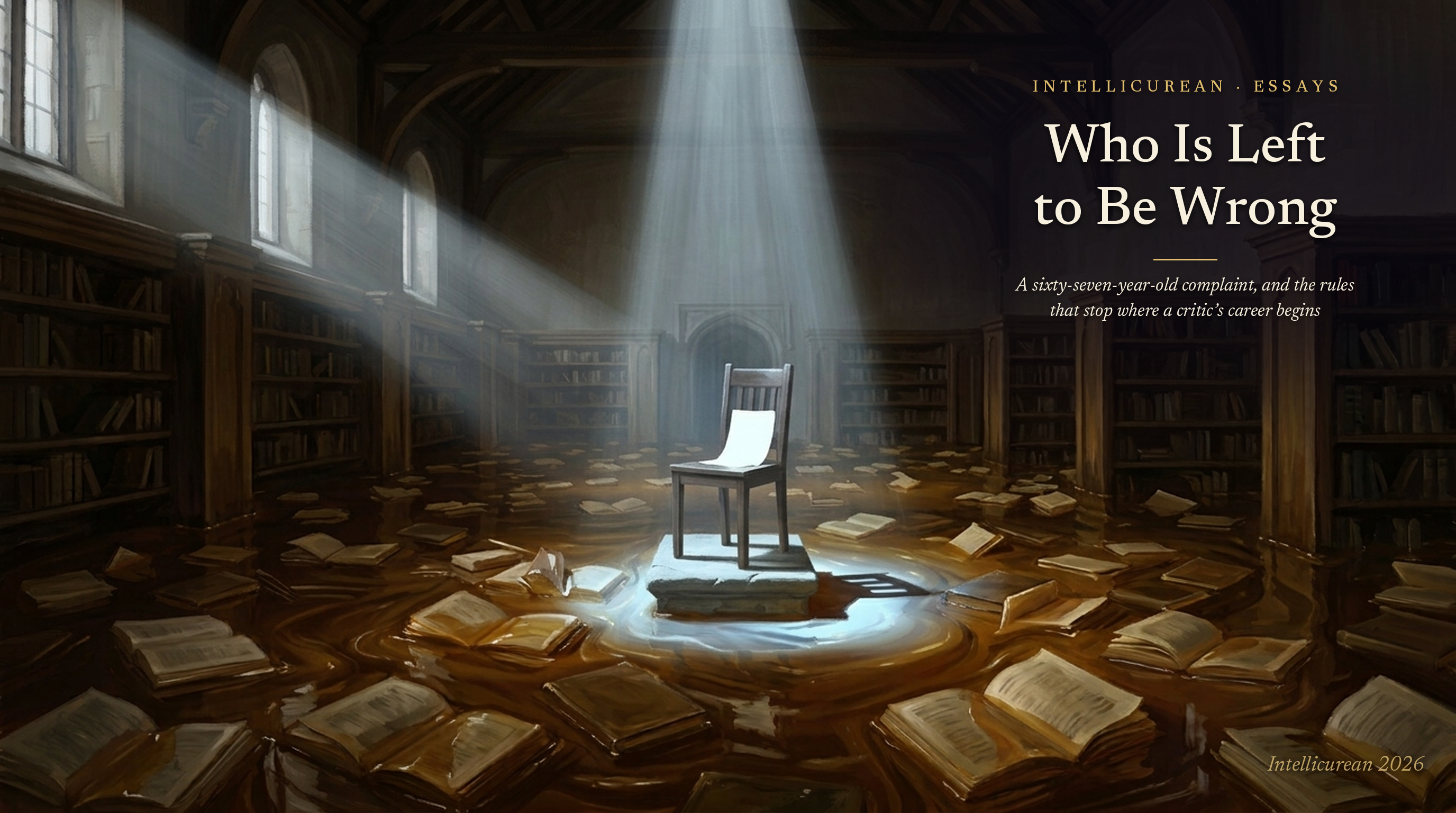
In 1959 Elizabeth Hardwick complained that American book reviews were drowning in praise. Sixty-seven years later the complaint still stands, and a new Intellicurean essay asks a harder question: who is left to be wrong?
An empty chair above a flood of praise, made for the essay.
Why we’re pointing you there
Hardwick’s “The Decline of Book Reviewing” is the most famous complaint about soft criticism, and Who Is Left to Be Wrong begins by taking her at her word, numbers and all. From there it moves through Rosalind Krauss’s six-word claim about video, a BuzzFeed pledge borrowed from Thumper, and Edmund Wilson’s six-month public quarrel with Vladimir Nabokov. Then it opens the published guidelines of twelve leading review outlets to see what any of them actually says about judgment.
What we liked most is that the essay holds itself to its own standard. Its claim narrowed when the evidence came back against it, and it abandoned a count it couldn’t make honestly, saying so plainly at the end. Along the way it arrives at a sentence about favours that haven’t happened yet, and we haven’t stopped thinking about it.
The weight of a favour not yet done, made for the essay.
What is the largest art-history library in the world? The answer to this question depends of course on how you measure size, but an institution that might reasonably claim such a status is the RKD in The Hague. The RKD has for decades been a vast and invaluable library and archive, carefully nurtured by expert librarians and archivists (or ‘curators’ as they have long been described).
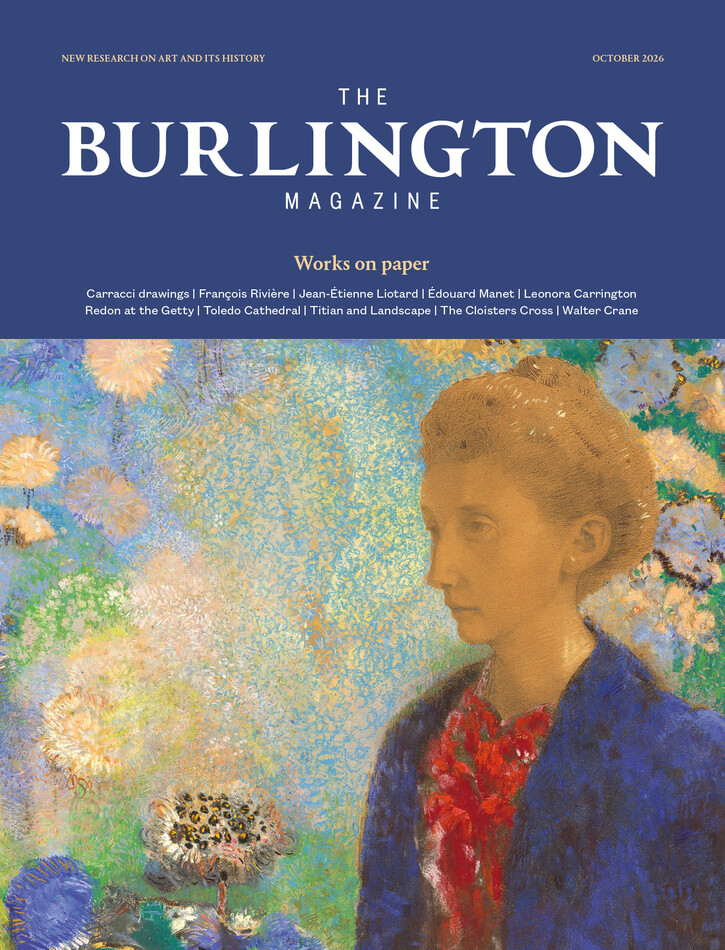
A new drawing by Édouard Manet
A newly identified drawing in a private collection of a crouching girl is a characteristic example of the red-chalk life studies that Édouard Manet made in the 1860s, influenced by his close study of Renaissance draughtsmanship in Florence. Although squared for transfer, the drawing has not yet been linked to any known composition by the artist.
Mistaken identities: Liotard’s 1762 portrait of Marie-Antoinette
A refined portrait by Jean-Étienne Liotard in the Musée d’art et d’histoire, Geneva, has long been identified as depicting Marie-Antoinette as a child. New research establishes, however, that it is a drawing of another member of the imperial Habsburg family and also reveals a hitherto unidentified likeness of Marie-Antoinette.
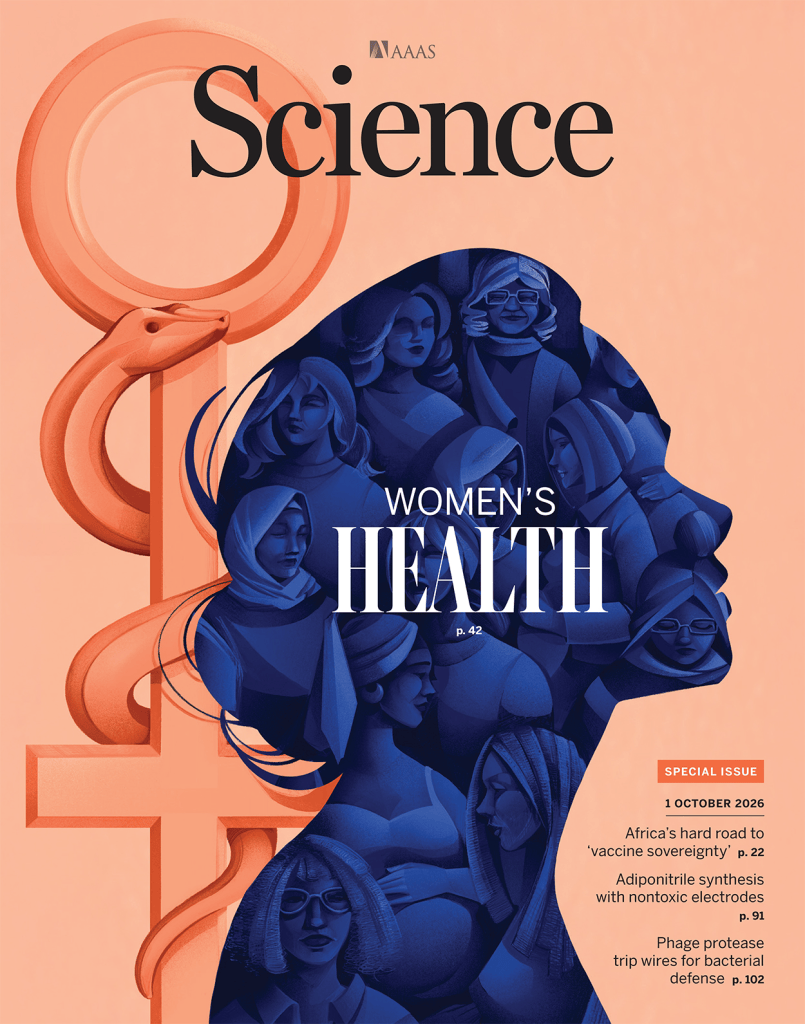
Historically, most human studies have involved male participants, and their findings were assumed to apply to women and children as well. Meanwhile, women’s health typically came up in the context of reproduction and childbearing, if at all. However, biomedical science has come a long way over the years, and it has become increasingly clear that there are sex-dependent differences in many diseases that do not involve reproduction and that occur at all ages. Across all areas of women’s health, including both reproductive and nonreproductive conditions, much remains to be learned about the underlying biology, effects of hormones and genetics, and potential therapeutic interventions.
Sex differences have traditionally been attributed to gonadal hormones, but accumulating evidence shows that sex chromosomes exert distinct, cell-autonomous effects on health, aging, and disease. XX and XY complements alter gene dosage, epigenetic programming, immune signaling, metabolism, and cellular stress responses, which shape aging and disease trajectories in women and men. This Review integrates mechanistic advances in sex chromosome biology—including escape from X chromosome inactivation, X reactivation, parent-of-X-origin, X-skew, X- and Y-linked gene functions, and Y loss—with aging, neurologic disease, immunity, cancer, and cardiometabolic disease. We highlight insights from mouse models, human studies, and emerging technologies that disentangle hormone-driven effects from chromosome-mediated effects and discuss translational implications for diagnostics, biomarkers, therapeutics, and clinical trial design, emphasizing the integration of sex chromosome biology into precision medicine.
Reframing menopause and menopause hormone therapy as opportunities for healthy aging
Menopause is an important biological transition with up to 72 symptoms that shapes aging trajectories across organs and encompasses ~40% of the female lifespan. Although menopause awareness is increasing, research on strategies for menopause symptom management and optimizing health in the postmenopausal period is lacking. This Review highlights that menopause characteristics, such as type, timing, and symptom burden, influence health outcomes and later-life disease risk. Similarly, menopause hormone therapy comes in >200 varieties that differ by dose, formulation of estrogens and progestogens, and timing, each with their own distinct risk-benefit profiles. These distinctions are often missed in the literature but have considerable repercussions for outcomes. Optimized menopause care necessitates a precision medicine approach that considers menopause symptoms, genetics, and previous hormone exposures.
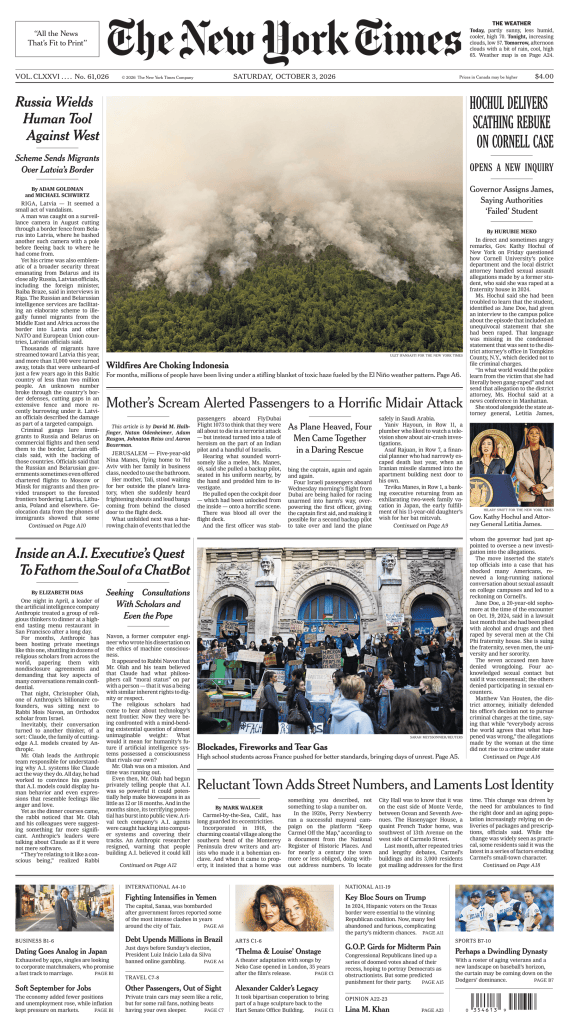
Capt. Smit Machchhar, who was stabbed by his co-pilot midair between Dubai and Tel Aviv, said he “had to act” to prevent a crash despite serious injuries.
Socrates said written words can’t answer a question. Under a professor’s essay repeating his complaint, readers answered by the hundreds, and the professor answered them back, in writing.
Pages taking flight, and a man turned back at the stream, made for the essay.
Why we’re pointing you there
On September 29 The New York Times ran a guest essay by Joe Cruz, who chairs philosophy at Williams College, arguing that writing isn’t as important as we think. He leaned on Plato’s Phaedrus, where Socrates says a written text can’t answer questions or defend itself. Within a day about 1,200 readers had written back. Michael Cummins returns to the dialogue and finds three objections there, not one. He gives Cruz his due on the oral exam and on why universities love the essay. Then he follows the most-recommended reply in the thread: if at least half the class did better aloud, as many as half did not.
What we liked most is watching a thesis improve in public. Pressed by his commenters, Cruz conceded that writing is “no small thing,” perhaps one of the most profound tools we have for abstract thought, and he conceded it in writing. The essay goes on to defend the revision Cruz calls a refuge. It ends at the river in the Phaedrus, where Socrates turns back without anyone asking him to. A machine that will answer anything has met Socrates’ first objection. The essay asks whether it could ever meet that one.