Category Archives: Reviews

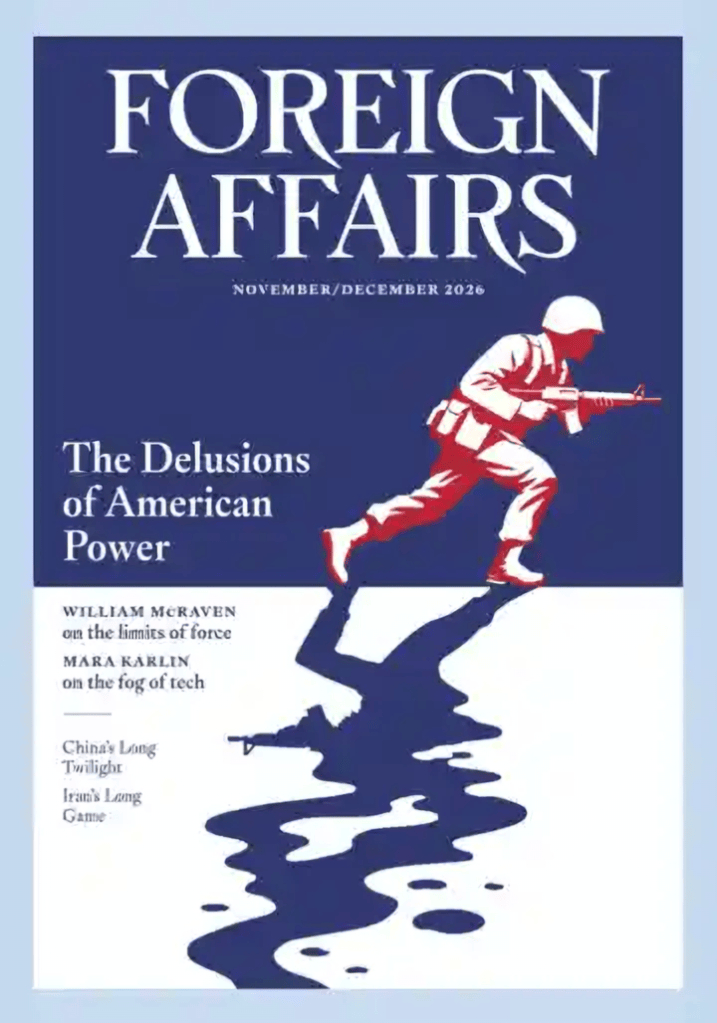
FOREIGN AFFAIRS MAGAZINE NOVEMBER/DECEMBER 2026

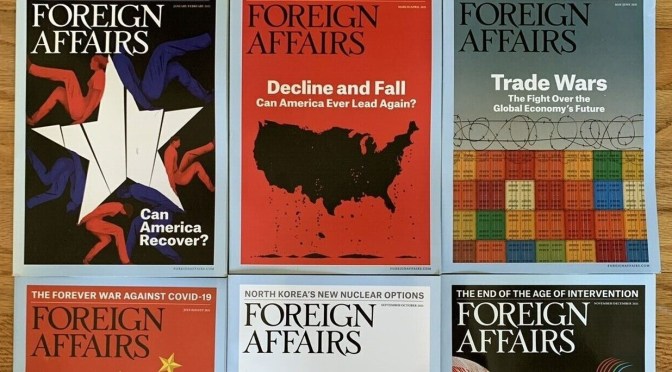
FOREIGN AFFAIRS MAGAZINE: The latest issue features ‘THE DELUSIONS OF AMERICAN POWER’….

The Limits of American Power

U.S. Strategy and the Delusion of Force By William H. McRaven

The war in Iran is far from the first time that U.S. policymakers have failed to appreciate the limits of American power. But the Trump administration’s use of military force against the Islamic Republic since February 28 offers a particularly glaring example of a mistake that has often characterized American strategy in recent decades. The war was launched without a clear rationale and with a constantly shifting set of objectives—from changing Tehran’s regime and squelching its nuclear ambitions to, more recently, reopening the Strait of Hormuz, which wasn’t closed until the war started. The results, not surprisingly, have been bad both for U.S. interests and for the Middle East.

The Fog of Tech

Why the Future of War Can’t Escape the Past By Mara Karlin

China’s Long Twilight

Demographic Decline, Political Paralysis, and the Fate of Great Powers By Carl Minzner

The Chokepoint Trap

How the Search for Economic Security Will End in Geopolitical Calamity By Henry Farrell, Abraham Newman, and Yeling Tan

The Case for Economic Espionage

America Should Spy On Foreign Companies to Help Its Own By David S. Cohen

Empires of AI

The Rise and Fall of a New Global Order By Niall Ferguson, Lisa Klaassen, and Eric Schmidt

THE NEW YORKER MAGAZINE – OCTOBER 26, 2026 PREVIEW

The Knicks lean in for a huddle break at the beginning of a new season.

THE NEW YORKER MAGAZINE: The latest issue cover features Mark Ulriksen’s “Make It Two” – Game on.

The Danger of Getting Too Close to a Source

Richard Darman was my source in the Reagan and Bush Administrations—and my best friend. By Bob Woodward

Computer Chips Are the Most Magnificent Things Humanity Has Ever Made

They power our phones, cars, dishwashers—and the A.I. systems that prop up the economy. They’re also at the heart of fierce geopolitical rivalry. By Gideon Lewis-Kraus

The New Age of Reading

Alarm about declining interest in books is perpetual. But, as bookselling reaches unexpected heights, James Daunt, the chief executive of Barnes & Noble, thinks a different future is at hand. By Nathan Heller

Facing the Death Penalty

The cases of Christa Pike and Nidal Hasan show how vanishingly fine the line is between a routine execution and an unbearable one. By Amy Davidson Sorkin

AMERICAN HERITAGE MAGAZINE – FALL 2026

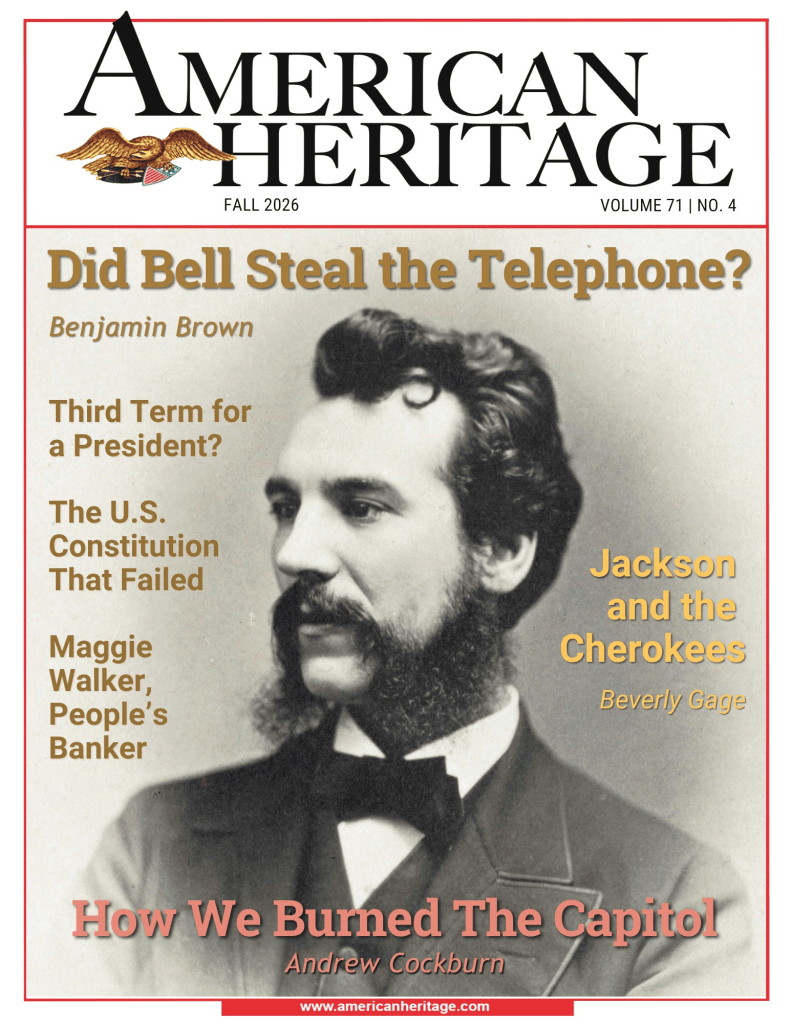
AMERICAN HERITAGE MAGAZINE: The Fall 2026 issue of American Heritage magazine features articles that address historic debates and legacies, including new evidence regarding whether Alexander Graham Bell stole the telephone patent from Elisha Gray, an ancestor’s account of Admiral Cockburn burning Washington while freeing 6,000 slaves, a guide to Southeast historic sites evaluating the complex democratic and brutal legacy of Andrew Jackson, an analysis of perceived ambiguities in the 22nd Amendment regarding presidential term limits, and the story of Maggie Walker, the first Black woman to open a bank to help underserved individuals.

Did Bell Steal the Telephone?

New evidence finally settles the 150-year-old debate as to whether Alexander Graham Bell or Elisha Gray first invented the telephone. Benjamin Lathrop Brown

The Truth About the Telephone Invention

Some writers ignore a mountain of evidence contrary to their theories about the telephone’s development. Edwin S. Grosvenor

How We Burned Washington

In 1814, my ancestor Admiral Cockburn destroyed the Nation’s Capital. He also freed some 6,000 slaves. Andrew Cockburn

Searching for Andrew Jackson

Museums and historic sites across the Southeast help us better understand Andrew Jackson, who helped define American democracy but also championed the brutal treatment of indigenous peoples. Beverly Gage

Third Term for a President?

Some observers see ambiguity in the 22nd Amendment. Joseph Connor

Maggie Walker, Banker to the People

Maggie Walker, the first Black woman to open a bank, helped thousands of individuals who could not borrow from traditional lenders. Norah O’Donnell, Kate Brower Andersen

THE NEW CRITERION – NOVEMBER 2026

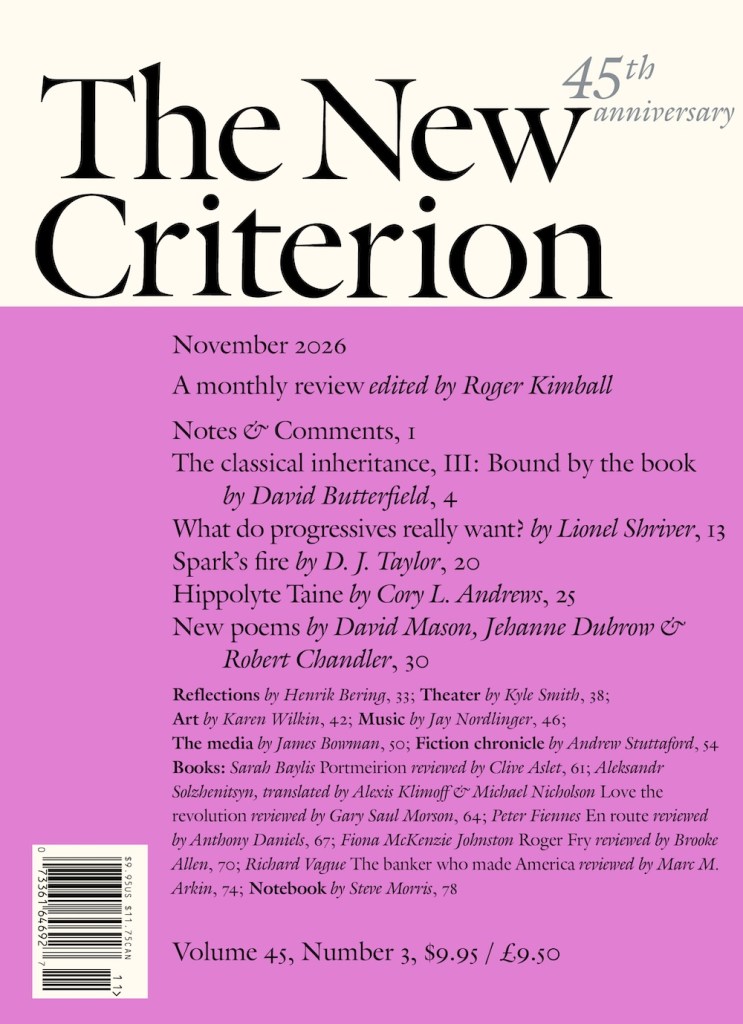
THE NEW CRITERION: The November 2026 issue, edited by Roger Kimball, features major pieces including “Notes & Comments,” David Butterfield’s “The classical inheritance, III: Bound by the book,” Lionel Shriver’s “What do progressives really want?,” D. J. Taylor’s “Spark’s fire,” Cory L. Andrews’s “Hippolyte Taine,” and a collection of “New poems” by David Mason, Jehanne Dubrow, and Robert Chandler, alongside dedicated columns covering reflections, theater, art, music, media, fiction, book reviews, and a notebook segment.

Bound by the book by David Butterfield

What do progressives really want? by Lionel Shriver

Spark’s fire by D. J. Taylor

Hippolyte Taine & the haunting persistence of history by Cory L. Andrews

THE LONELINESS THING

Intellicurean Essays on Intellicurious

Everyone knows what an Edward Hopper painting is about. He didn’t. A new biography says he was an unreliable narrator of his own work; the account books in the Whitney say he was hardly the narrator at all.

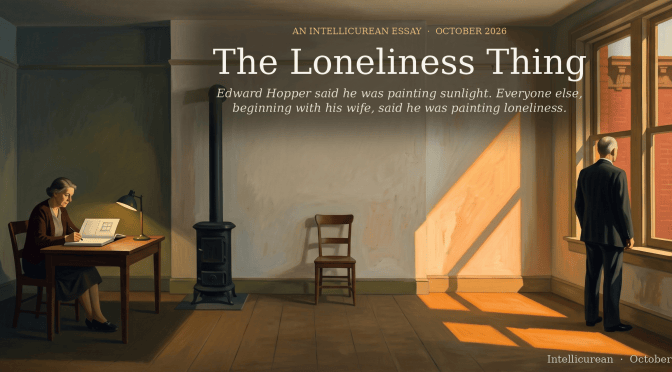
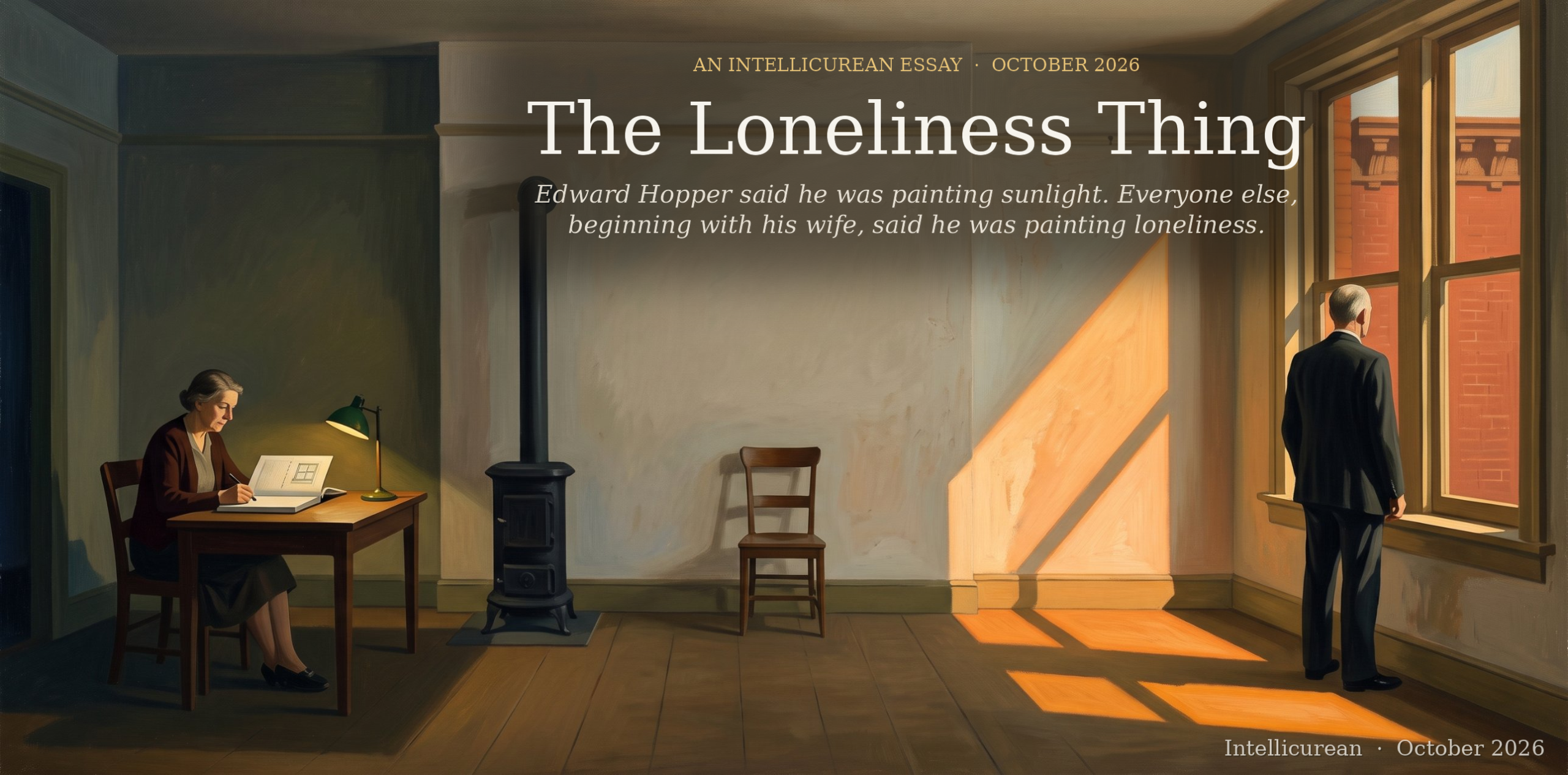
The Loneliness Thing — a studio in late afternoon: a woman writing in a ledger under a green lamp, a man in a dark suit at the sunlit window, an empty chair between them
Two people, two kinds of light, made for the essay.

Why we’re pointing you there

Louis Shadwick’s Edward Hopper: A Life came out from Yale this week, the first full biography in thirty-one years, and its claim is that the solitary American original was a career-long act of self-invention. Intellicurean takes the claim seriously and then goes somewhere the biography doesn’t: to five dime-store account books in which Hopper drew each finished picture beside its price while his wife, Josephine, wrote down what it was about, naming the figures and inventing their evenings. From there the essay follows the caption outward: to the one letter in Hopper’s own hand that uses the word “lonely,” and what he used it of; to a tweet in the first week of lockdown that turned four sunlit pictures into images of confinement; and to the image models that will now produce “a Hopper” on request and always make it sad.

What we liked most is the patience of the looking. The essay takes three famous canvases and reads them with the margins cut off, asking what is actually in the paint and what has been written beside it for ninety years, and it treats the painter’s own shrug, that the loneliness thing is overdone, not as evasion but as the most honest thing an artist can say about meaning. Where it ends, with what became of the account books and of the woman who kept them, we’ll leave to the essay.

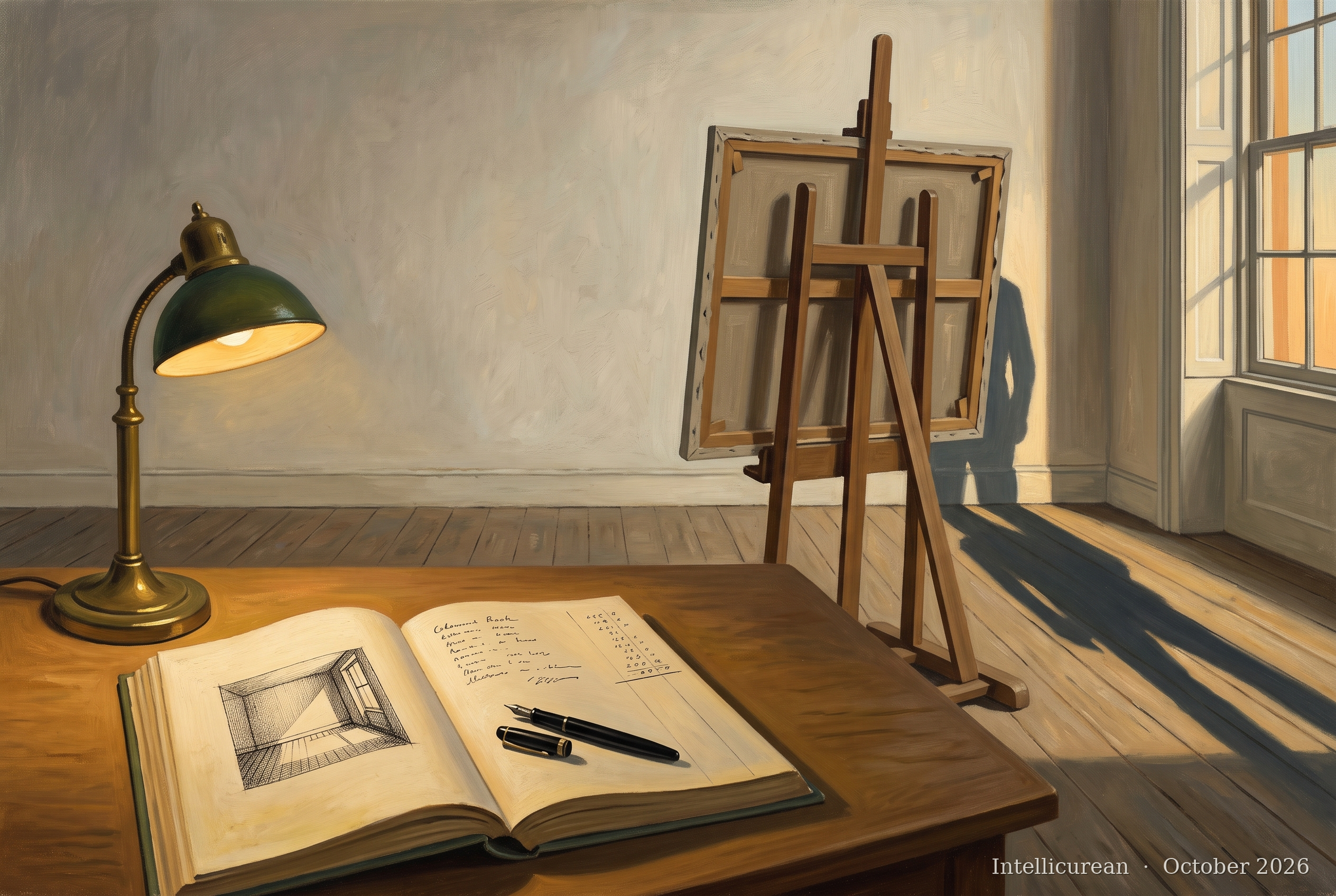
An open account book under a green lamp, its left page a pen sketch of a bare room with a window; beyond it an easel with its canvas turned away, and the long shadow of a standing man across the floorboards
Her words, his canvas, and the painter as the light left him, made for the essay.

Read the full essay at Intellicurean →

Essays & Reviews for the Intellectually Curious

THE NEW YORK TIMES MAGAZINE-OCTOBER 18, 2026

Current cover

THE NEW YORK TIMES MAGAZINE: The 10.18.26 Issue  features Brooke Jarvis walks across 20 islands near Stockholm on the archipelago trail; Dan Duane processes his father’s death by climbing in Yosemite; Jonathan Gluck goes fly fishing with 10 fellow cancer patients; Blair Braverman writes about an adventurer who set out to cross Canada and only his dogs came back; and more.

Is Anyone Actually in Charge of the Democratic Party? And Does It Matter?

This year’s midterm elections are a test of whether a party can be a success and a failure at the same time.

Processing My Father’s Death by Climbing in His Footsteps

Yosemite is where my father taught me to climb. It’s also where he made a mistake that nearly cost me my life. By Daniel Duane

How ‘Alignment’ Took Over the Worlds of Business and Tech

Whether an A.I. or a human, you’re encouraged to be aligned. How did we get here? By Nitsuh Abebe

How California’s Ultrarich Are Trying to Stop the World’s First Billionaire Tax

Billionaires feel like they “have become piñatas for politicians.” Instead of taking a hit, they’re swinging back. By Michael Steinberger

WASHINGTON EXAMINER MAGAZINE – OCT. 21, 2026

October 21, 2026

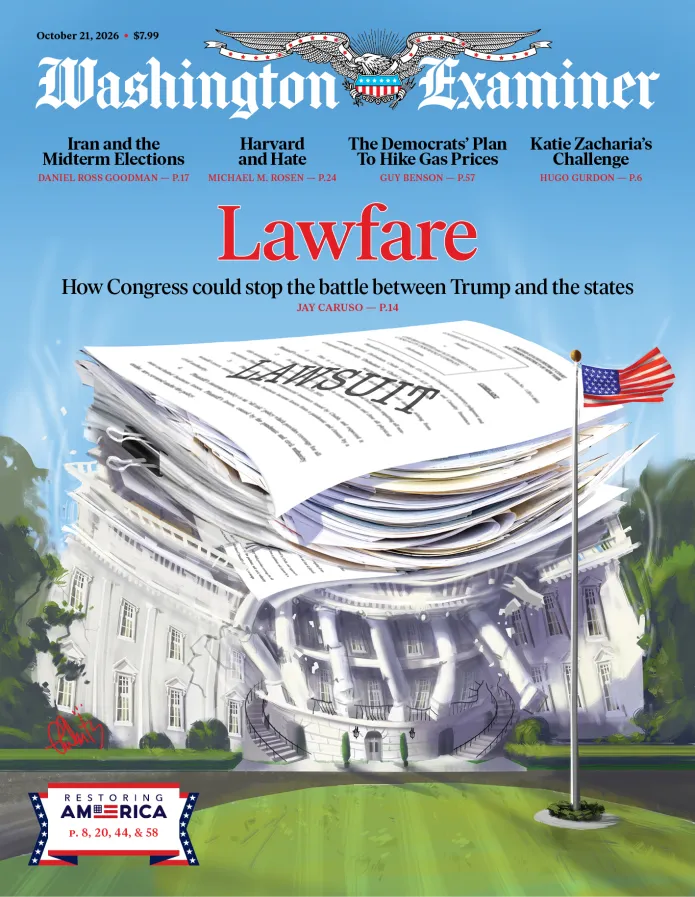
WASHINGTON EXAMINER MAGAZINE: ‘LAWFARE’ – How Congress could stop the battle between Trump and the states….

AGs v. Trump: How an AWOL Congress made hundreds of lawsuits possible

For decades, Congress passed broad, vague statutes, leaving the executive branch with ample room to decide how those laws are applied. By Jay Caruso

On gambling, the NFL has no integrity

Like Captain Renault in Casablanca, the NFL is shocked to discover that people are irresponsibly gambling on football… By Conn Carroll

California: Where attempted murder is worth one day in jail

There is nothing quite like the backward, incoherent nature of the criminal “justice” system in California. Case in… By Zachary Faria

Why France’s financial crisis foreshadows what will come in the US without King Dollar and reform

Because it’s a day ending in “y,” the French are rioting again. Nominally, the latest crusade… By Tiana Lowe Doescher

POETRY LONDON MAGAZINE – AUTUMN 2026 PREVIEW

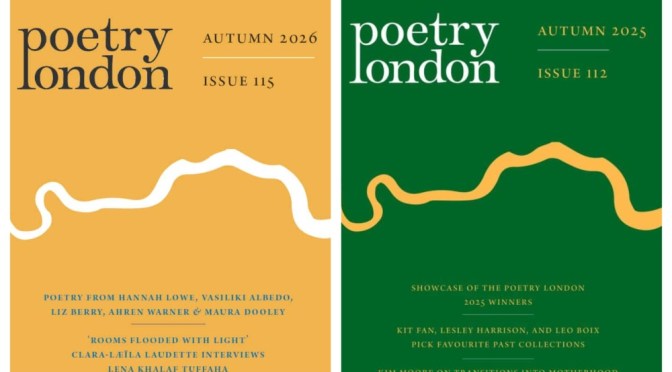
POETRY LONDON MAGAZINE: The latest issue features new work from Liz Berry, Hannah Lowe, Ahren Warner, and Maura Dooley. We also have prose by Joey Connolly, an interview between Clara–Læïla Laudette and Lena Khalaf Tuffaha, and reviews of Helen Mort, Dean Browne, Karen Solie, and Jorie Graham.

Rooms Flooded with Light

Lena Khalaf Tuffaha explains that her poems—written over a decade from a position of relative safety in the US—did not target a specific reader, but rather reflect an evolving, non-linear attempt to communicate across a broad and complex readership profoundly shaped by ongoing trauma and genocide.

Under Pressure

In her new collection Killing Spree, poet Jorie Graham evokes the dual-headed Roman deity Janus to confront a precarious present by looking back at an out-of-reach past while facing a distressing, violent future.

‘it been really interesting is good to talk face to face isn’t it’

Blown Rose and Dialect Press sum up some small press publishing. By Julia Bird, Mike Sims, Juliette Morton

DISCOVER MAGAZINE – FALL 2026 PREVIEW

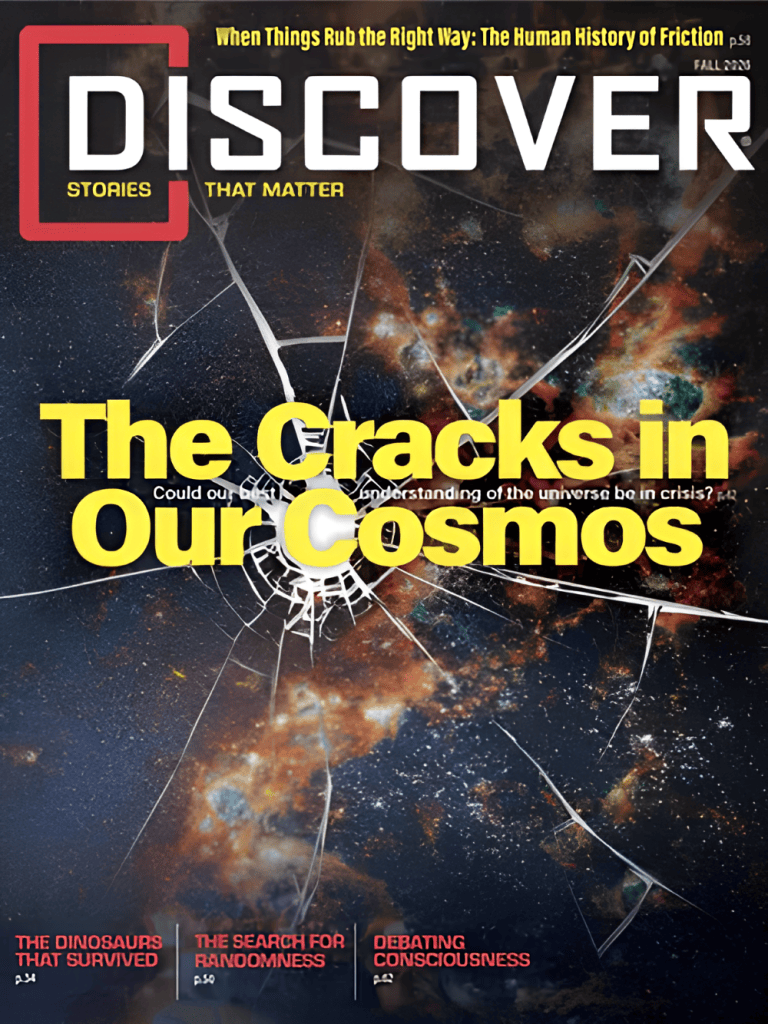
Discover Magazine: The latest issue features ‘THE CRACKS IN OUR COSMOS’ – Could our best understanding of the universe be in crisis?

Drones Help Find Three Aboriginal Rock Shelters With Red Hand Stencils

Learn how Aboriginal custodians and archaeologists are using aerial maps to locate rock shelters and protect traces of past life in Australia.

NASA Sends Brain and Heart Tissue Models to the ISS in Latest Resupply Mission

Learn about the experiments that have been delivered to the International Space Station, including projects that may advance brain and heart health.

A 230,000-Year-Old Homo sapiens Fossil Reveals Early Humans Were More Robust Than Once Thought

Learn more about Omo I, whose skeleton provides key details on the origins of modern humans.

TIMES LITERARY SUPPLEMENT – OCTOBER 16, 2026

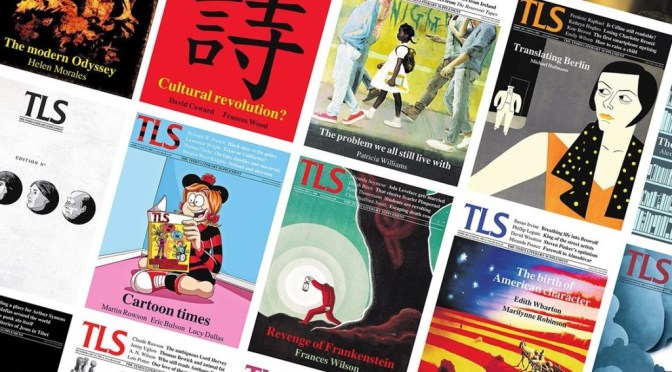
TIMES LITERARY SUPPLEMENT: The latest issue features ‘The Glory of the Garden’ – Jonathan Bate’s cultural history….

A Nobel for new forms

Anne Carson’s juggling act By Tristram Fane Saunders

Bowers of bliss

The story of gardens and their cultural significance By David E. Cooper

Appalachian variations

Buried dreams of a small-town prodigy By Beejay Silcox

Myth and man

A flawed but brilliant poet ‘dealt a cruel hand by fate’ By Gabriel Josipovici