
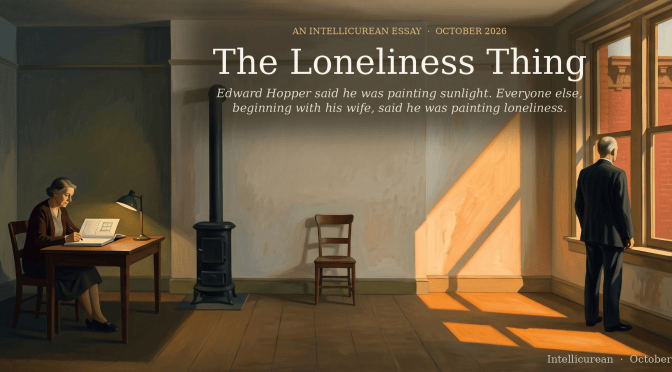

Everyone knows what an Edward Hopper painting is about. He didn’t. A new biography says he was an unreliable narrator of his own work; the account books in the Whitney say he was hardly the narrator at all.
Why we’re pointing you there
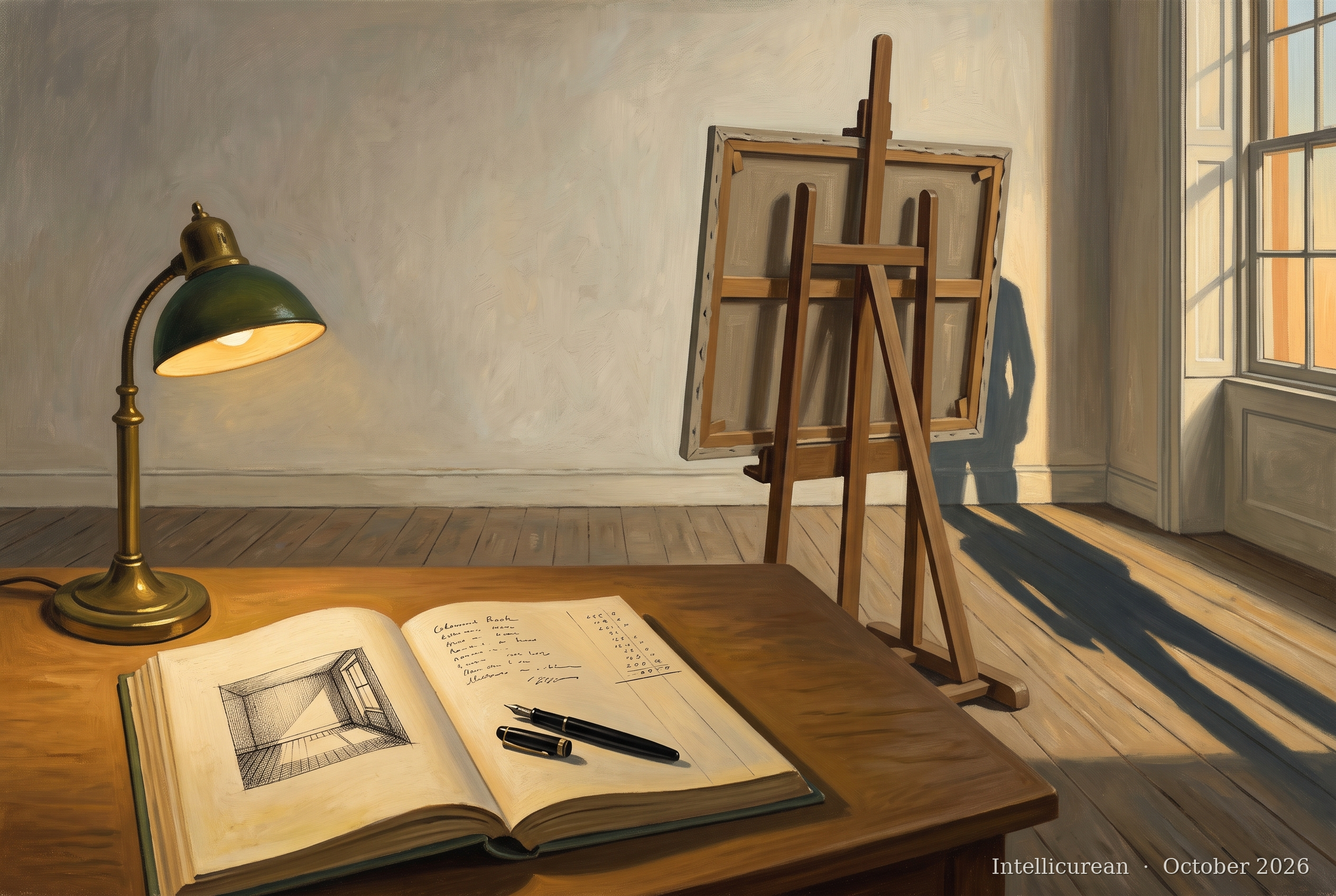
Louis Shadwick’s Edward Hopper: A Life came out from Yale this week, the first full biography in thirty-one years, and its claim is that the solitary American original was a career-long act of self-invention. Intellicurean takes the claim seriously and then goes somewhere the biography doesn’t: to five dime-store account books in which Hopper drew each finished picture beside its price while his wife, Josephine, wrote down what it was about, naming the figures and inventing their evenings. From there the essay follows the caption outward: to the one letter in Hopper’s own hand that uses the word “lonely,” and what he used it of; to a tweet in the first week of lockdown that turned four sunlit pictures into images of confinement; and to the image models that will now produce “a Hopper” on request and always make it sad.
What we liked most is the patience of the looking. The essay takes three famous canvases and reads them with the margins cut off, asking what is actually in the paint and what has been written beside it for ninety years, and it treats the painter’s own shrug, that the loneliness thing is overdone, not as evasion but as the most honest thing an artist can say about meaning. Where it ends, with what became of the account books and of the woman who kept them, we’ll leave to the essay.
Read the full essay at Intellicurean →
Essays & Reviews for the Intellectually Curious

