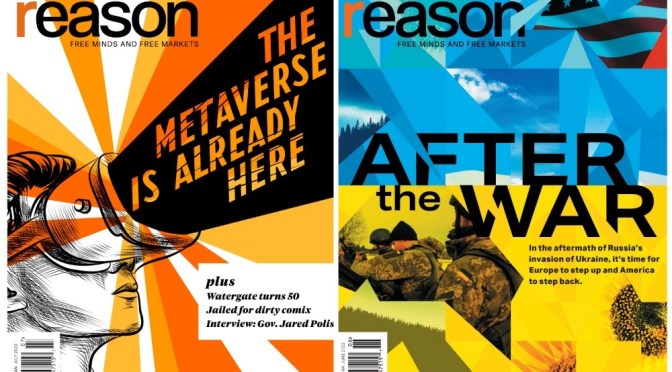
REASON MAGAZINE: The latest issue features… Nearly three years ago, Javier Milei became Argentina’s president, promising deep spending cuts, mass layoffs of government workers, and radical change. He’s made impressive progress, but the job isn’t finished.
How Milei Won
It took three ingredients: an offbeat candidate, a bombastic campaign, and a public hungry for something new. By Daniel Raisbeck
Rents, Internet Speeds, and Airfares: 3 Deregulation Success Stories From Milei’s Argentina
Javier Milei is showing the world how deregulation can slash prices and improve services.
Fortunately, we do better on overall economic freedom, despite losing ground.
Politicians may not like it, but the countries they misgovern compete with one another for businesses, people, and capital. To attract startups, entrepreneurs, and investors, governments have to offer attractive environments, or else lose out to friendlier nations. When it comes to tax competitiveness, a new report says that Estonia leads the way in first position, with the United States lagging at 17th.
Jorge Luis Borges Against the State
Freedom, literature, and politics in the work of Jorge Luis Borges By Alejandara M. Salinas
Centrist rulers have fallen dangerously short—and are now paying the price
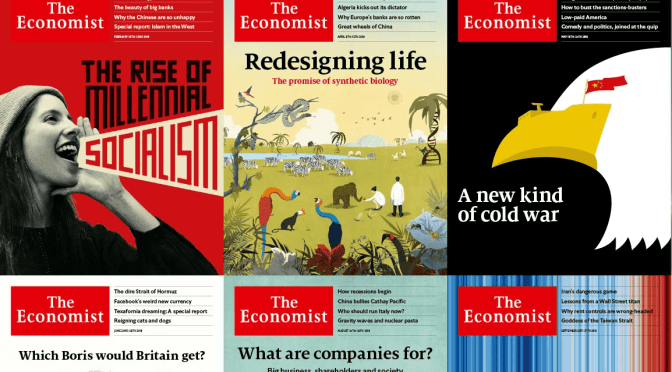
“The first steps into the Unrest seem straightforward enough—anger at the fall of real wages, at capitalist aggression, at the unwillingness of Parliament; anger fomented by agitators…reason wars with instinct.” Few of those who mobbed French cities this week would recognise those words. But many would agree with George Dangerfield, the British-American journalist who wrote them. The demonstrators were consumed by rage. Rage at the failure of the state and against the floundering centrist politicians who govern. Rage at high prices and economic dysfunction. And for some, rage against the idea of centrist politics at all.
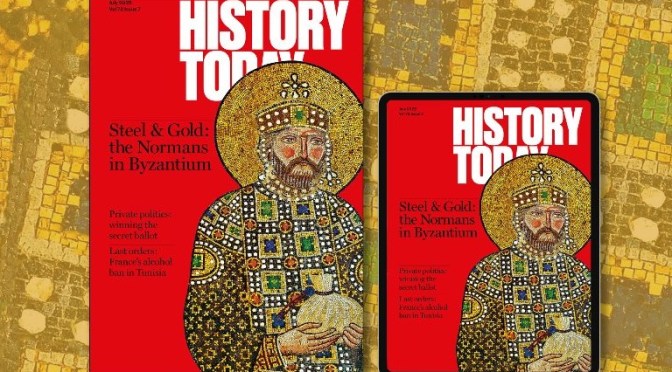
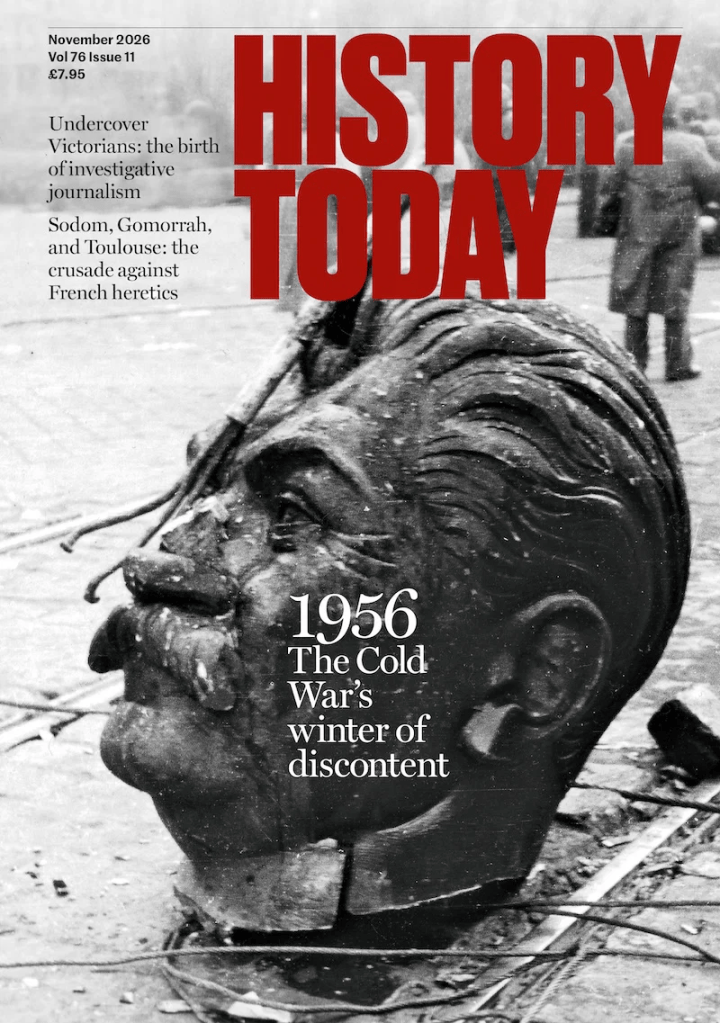
In late 1956 hundreds of thousands of Hungarians joined an uprising against the country’s Moscow-oriented government. 70 years on, the revolution’s meaning is still unclear.
For much of its modern history state lotteries were seen as antithetical to Britain’s moral values. The introduction of the Premium Savings Bond in 1956 was a major shift in government policy. What had caused it?
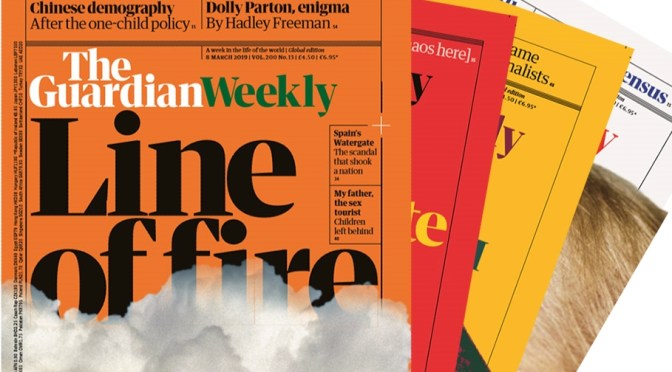
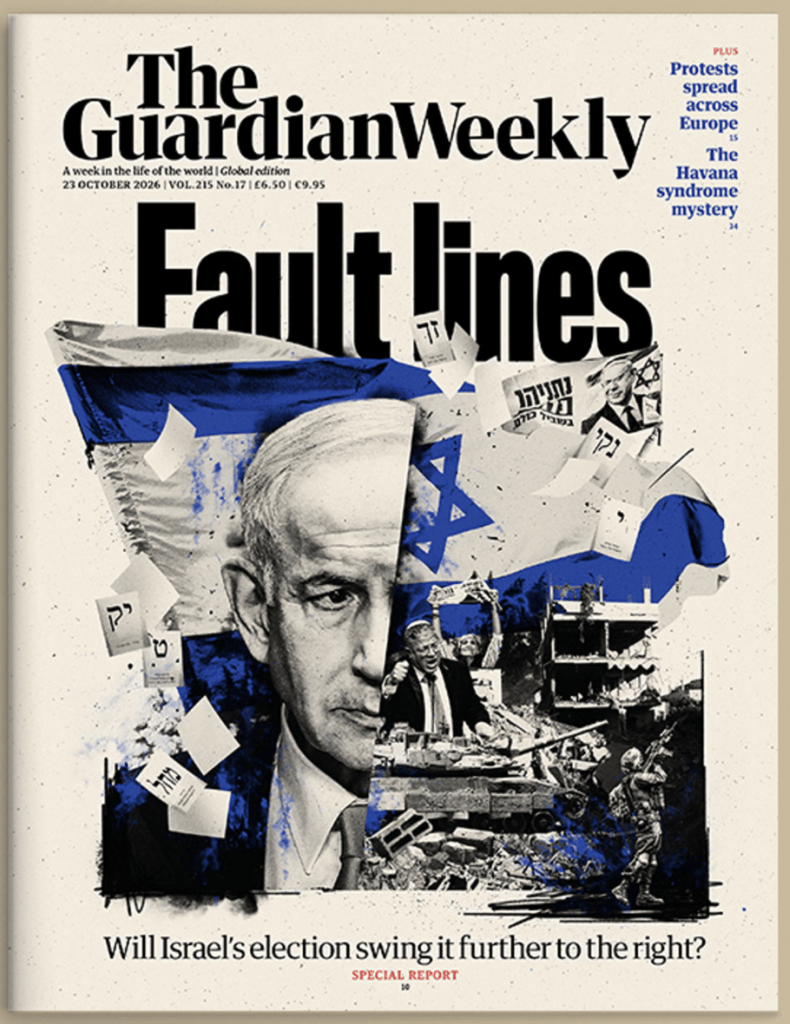
Israel is holding national elections next week, giving its citizens their first chance to pass judgment on Benjamin Netanyahu and his coalition since the Hamas-led attacks of 7 October 2023.
For our big story this week, chief Middle East correspondent Emma Graham-Harrison says that whether or not the prime minister can hold on to power, a more rightwing Knesset is expected to be voted in. More than half a million Israelis have reached voting age since the last election in 2022 and, according to polls, three-quarters of first-time Jewish voters define themselves as right or centre-right.
Peter Beaumont profiles opposition candidate Gadi Eisenkot. The former general contrasts with Netanyahu when it comes to style and character, he writes, yet on key policy points retains a studied ambiguity.
Then Israeli pollster and political analyst Dahlia Scheindlin argues that after three disastrous years, Israel needs to rethink itself, but only a clear opposition victory would let the country begin to heal, strengthen democracy and establish Palestinian rights.
Spotlight| ‘We are suffocating’ As protests that have convulsed Spain and France in recent weeks spill over to Italy and Portugal, Sam Jones reports on the rising wave of anger over the housing crisis and cost of living
Science| Taking a shot Could a drug to prevent shingles also protect our brains against dementia? The possibility, writes Ian Sample, is driving a boom in vaccinations
Feature| The Havana syndrome mystery Dozens of CIA officers have been afflicted by debilitating symptoms over the past decade. Are they the result of “mass hysteria” or are they from attacks with an energy weapon, asks Shaun Walker
Opinion| Another EU referendum? Not just yet The omertà on the UK rejoining has now been broken, but it would be folly to move too soon, says Polly Toynbee
Culture| Shygirl’s slog to the top She has opened for Beyoncé, writhed in a cubicle for Madonna – and is poised to take over the mainstream with her new rock sound. The pop auteur talks to Simran Hans about cash, class – and finding true love
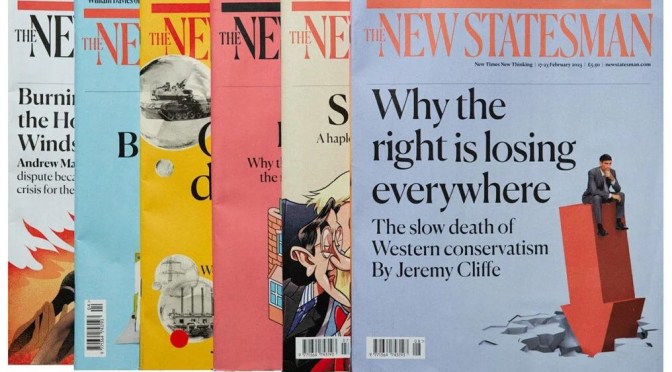
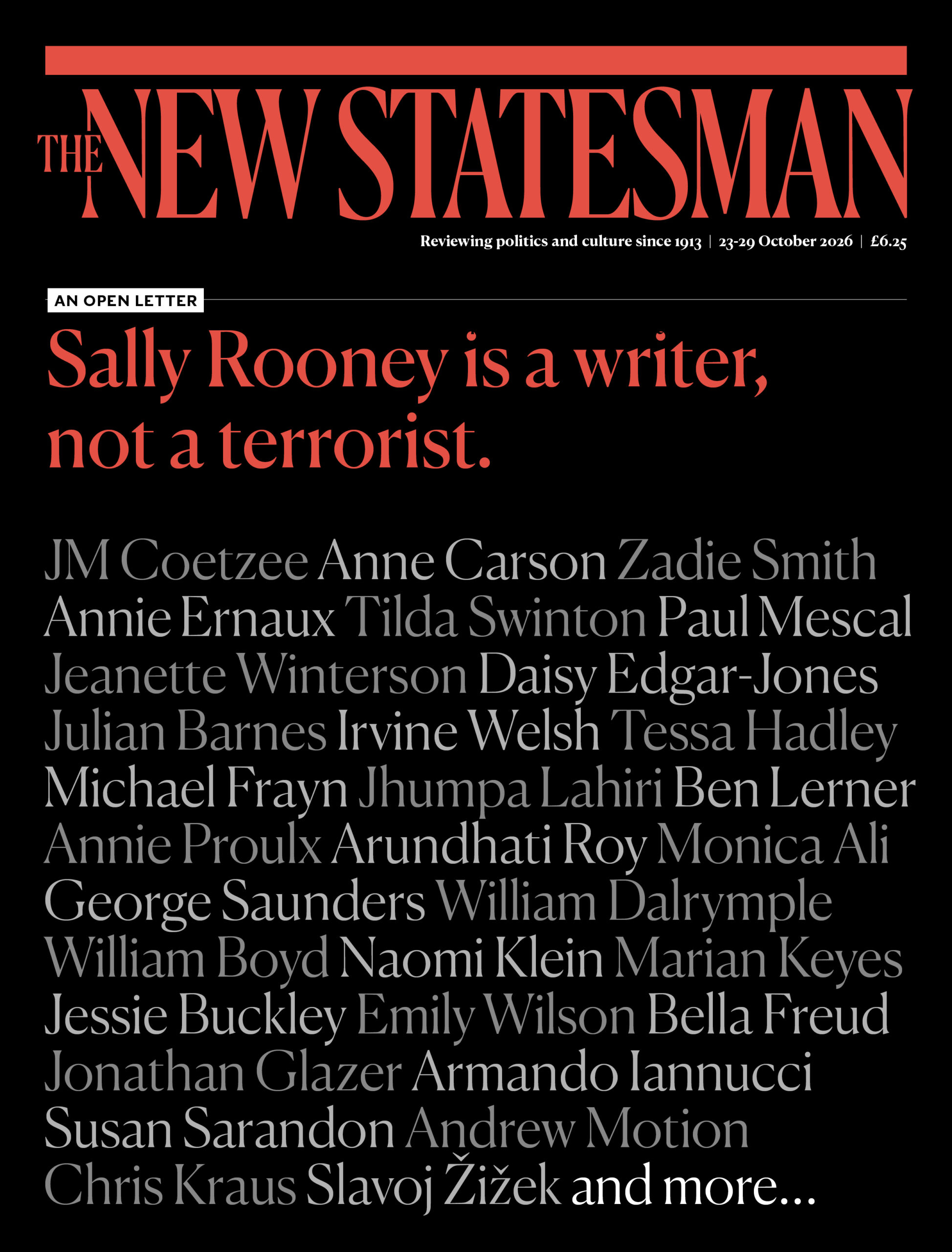
THE NEW STATESMAN: The latest issue features a sharp analysis of contemporary culture, politics, and media by critiquing public backlash against authors like Sally Rooney, examining systemic censorship through Tanjil Rashid’s commentary, and exploring intellectual viewpoints like Carlo Rovelli’s shifting perspectives and Martin Lewis’s reflections on his role as a public advocate, while simultaneously addressing major geopolitical developments including how trauma shapes the upcoming Israeli election and what Katie Zacharia’s departure reveals about women in Donald Trump’s political orbit.
An open letter to the government from leading authors, artists and public figures. By New Statesman
Sally Rooney is a writer, not a terrorist. Her books must be available to the public. Their withdrawal from sale, on the basis of ill-conceived and draconian anti-terror legislation, is an affront to basic principles of free speech and expression so long taken for granted in this country. We categorically reject censorship – whether direct or indirect – and urge the government to change course, amending the legislation which has led us to this point of repressive absurdity.
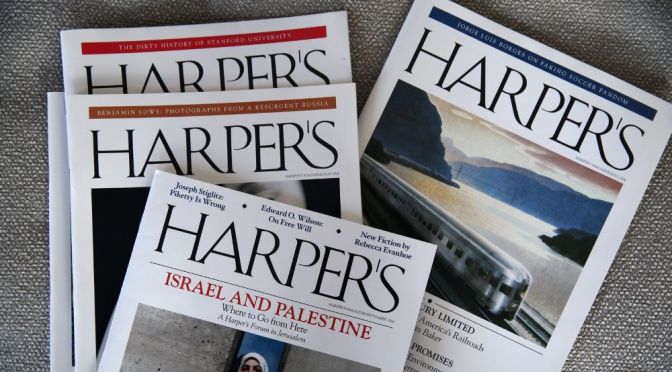
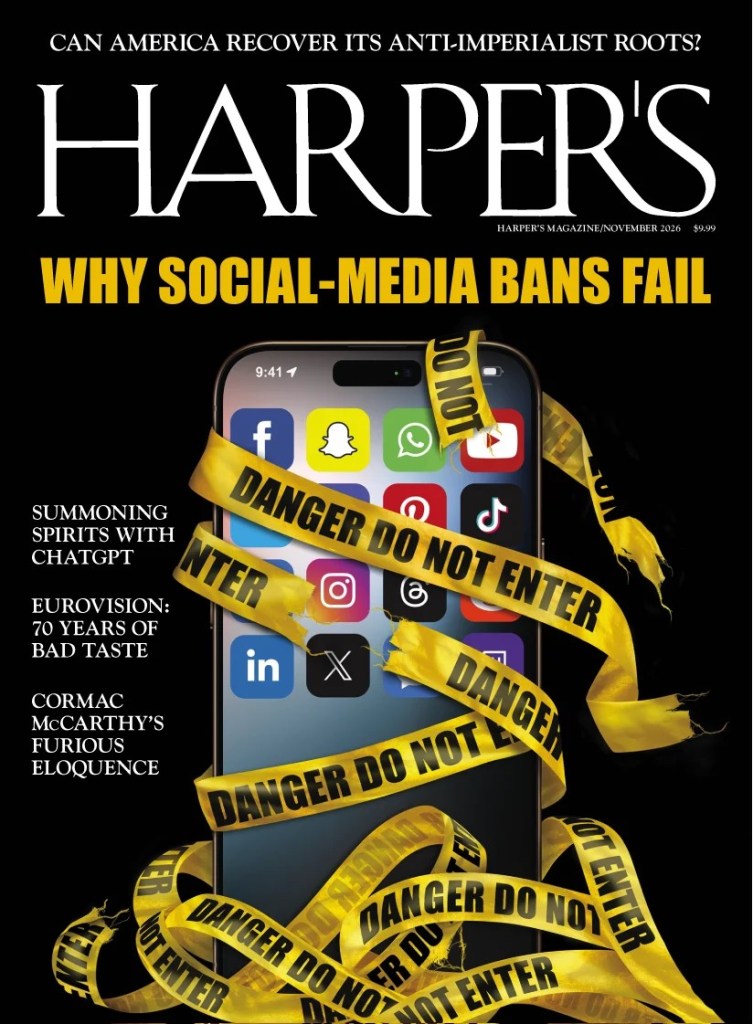
HARPER’S MAGAZINE: The latest issue features ‘WHY SOCIAL MEDIA BANS FAIL’, contemporary regulatory, ideological, and cultural shifts by featuring Oscar Schwartz’s investigative report on the making of Australia’s social-media restrictions, Jackson Lears’s historical essay advocating for a return to the nation’s foundational anti-imperialist principles, Sam Kestenbaum’s miscellany piece examining the intersection of artificial intelligence and spirituality at the dawn of a large language model New Age, a retrospective commemorating seventy years of bad taste at the Eurovision Song Contest, and a critical evaluation of Cormac McCarthy’s furious eloquence.
The making of Australia’s social-media ban by Oscar Schwartz
When I arrived last September at Northcote High, a public school perched on the grassy banks of Melbourne’s Merri Creek, I was surprised by how little had changed in the twenty years since I’d graduated from a high school nearby. The scene was intensely familiar: The girls with their long ponytails, hunched together in tight semicircles of avid conversation. The boys with their pimply faces, kicking balls or slouching against redbrick walls, their hands thrust deep into their pockets. The occasional shrieks, the awkward glances, the sexual frustration, the dim threat of violence—it was all the same.
Recovering America’s anti-imperialist roots by Jackson Lears
For many of the Founders of the American republic, the worst fate imaginable for the state they were envisioning was for it to become an empire. Republics and empires were fundamentally incompatible, they believed. Opposition to empire, in fact, was the keystone of their thought—but one would never know that from the hoopla surrounding America’s two-hundred-fiftieth birthday. The occasion provides an opportunity to celebrate the Founders’ ingenuity in fashioning a system of checks and balances and their audacity in claiming a universal right to “life, liberty, and the pursuit of happiness” in 1776—as well as to condemn their hypocrisy, especially with regard to racial equality. But in all the tumult of commemoration, rarely, if at all, have we heard of the Founders’ anti-imperialism.
Onstage before us is a man dressed in baggy raver pants, his blond hair slicked back. He has just sauntered in, waving, smiling, greeting the crowd of several hundred, and now stands in front of a dark-purple curtain that undulates in the air-conditioning. He settles into his seat and prepares to address the topic of today’s panel: artificial intelligence and the future of humanity.
COUNTRY LIFE MAGAZINE: The latest issue features a diverse array of articles, including Emma Hughes’s tribute to Ronald Searle, a unique leader piece by Nigel Molesworth, and a dive into MI5’s secret archives, alongside international travel and luxury features, an analysis of William Morris, structural and artistic highlights like No 22 Parkside and Elizabeth Lady Templetown’s Wedgwood designs, and practical guides on country-house history, interior lighting, seasonal fashion, and culinary traditions.
The legacy
Emma Hughes hails Ronald Searle, creator of Molesworth, the Curse of St Custard’s ; plus in the leader article, Nigel Molesworth shares his observations on Country Life in his own inimitable style
Can you keep a secret?
A new book on MI5’s archives reveals a world of subterfuge and untold stories for Emma Hughes
Country LifeInternational
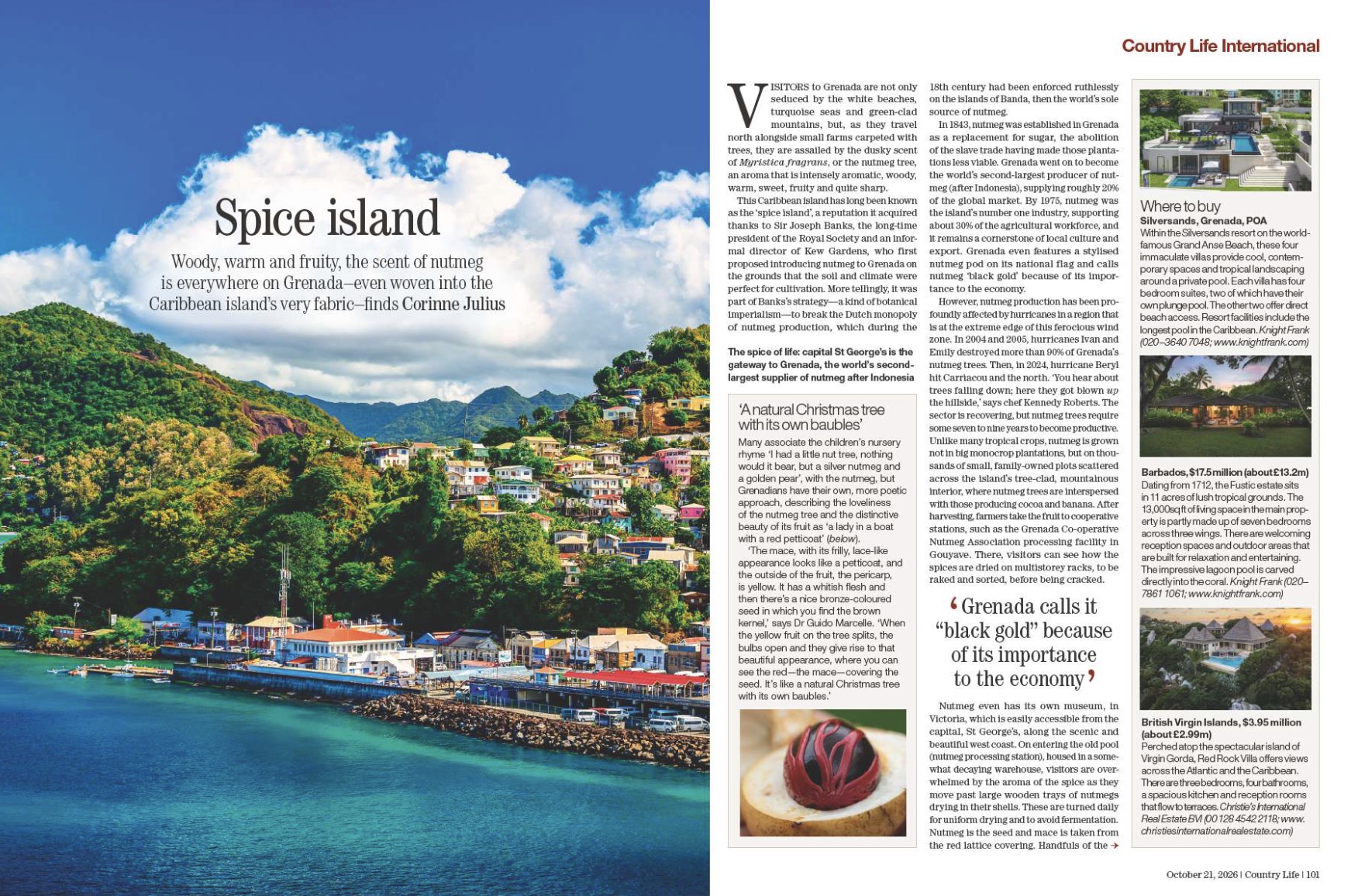
Julie Harding visits the historic Delft factory, Harry Pearson samples the best of Parisian macarons and confronts the monsters of Lake Geneva, Claire Jackson tunes up for the Concours de Genève, Corinne Julius finds the spice of life in Grenada and Holly Kirkwood highlights top properties for sale in sun-loving cities
A man of contradictions
A new exhibition examines the complex character of designer William Morris, reports Mary Miers
James Peill’s favourite painting
The Garter King of Arms picks the portrait of a man of means
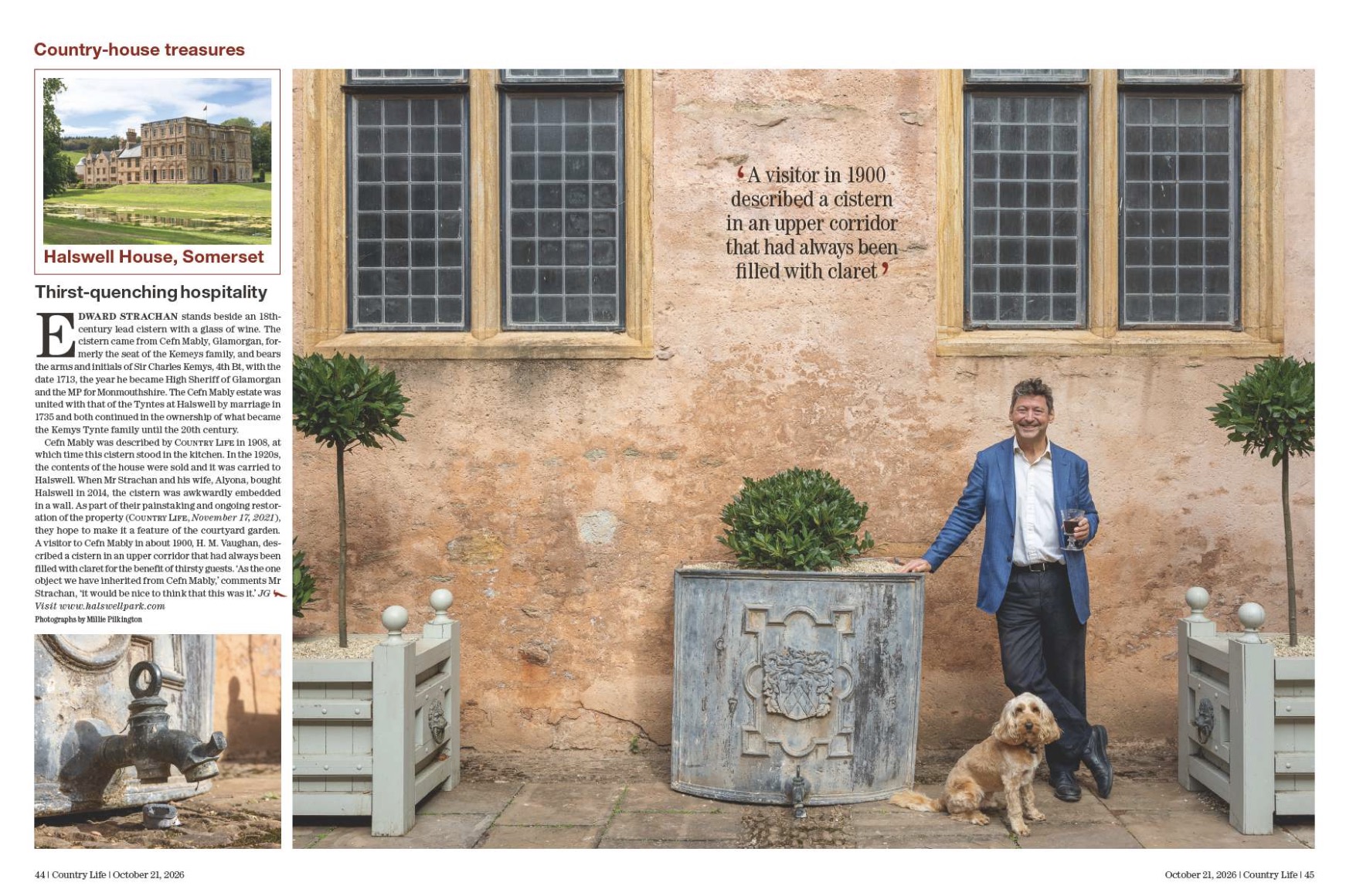
Country-house treasure
John Goodall toasts the thirst-quenching cistern in residence at Halswell House in Somerset
Rule the roast
Who first cooked up our famous Sunday lunch, asks David Ellis
Luxury
Justine Picardie admires the hum-orous style of Elsa Schiaparelli and Amie Elizabeth White seeks shades of suede for autumn
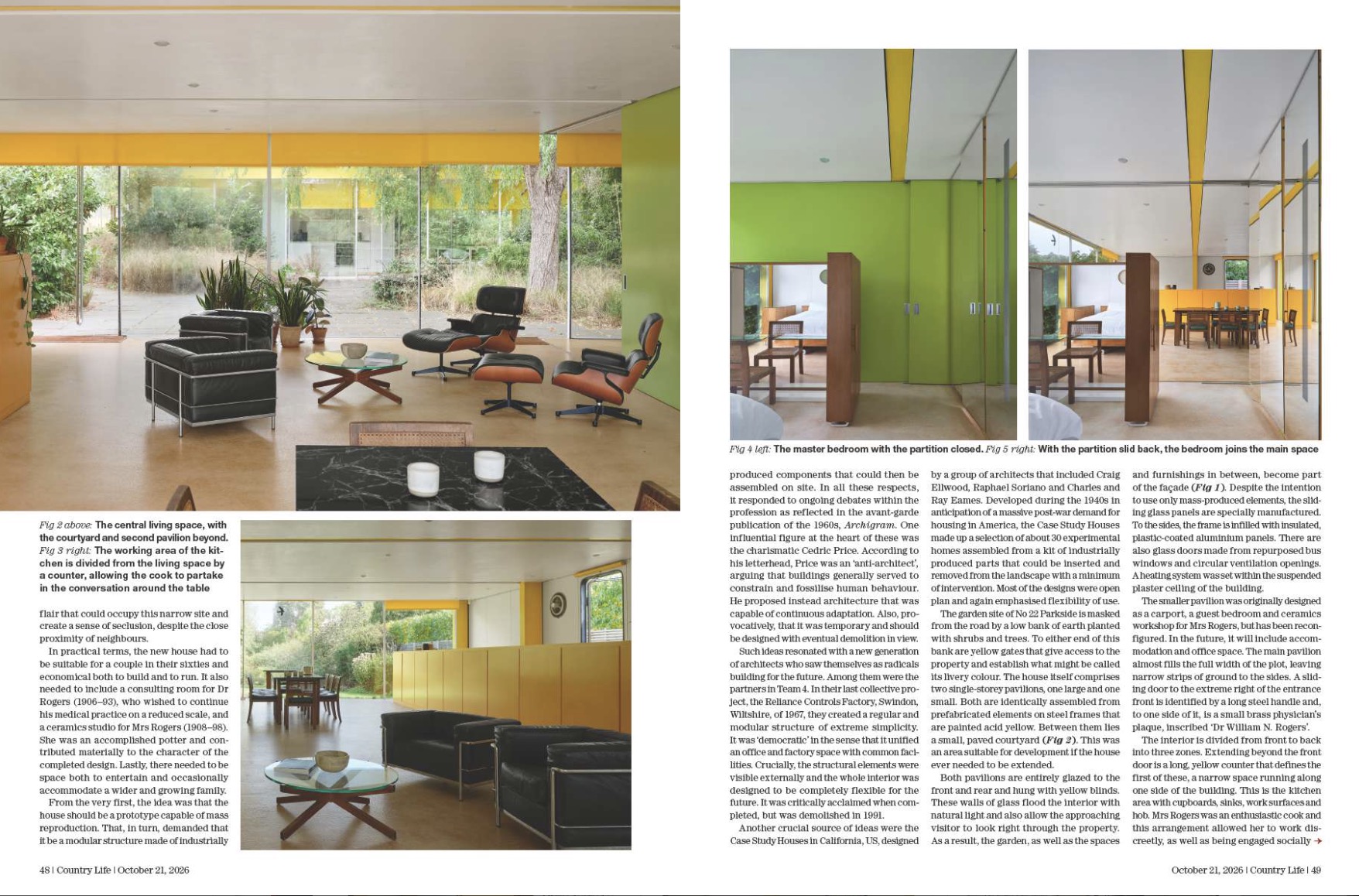
High-tech as history
John Goodall tours the yellow, Modernist masterpiece No 22 Parkside in London, recently acquired by the National Trust
Interiors
Arabella Youens takes a shine to warm lighting in a utility room and Amelia Thorpe eyes lovely lamps
Weaving dreams
Tilly Ware meets the designer of the mesmerising perennial meadow at Shillies Barn, Suffolk
She sells sea salt by the seashore
Jane Wheatley visits Halen Môn on Anglesey and finds a thriving family empire well worth its salt
Countryside mysteries
Broomrape, toothwort and other such parasitic plants catch the ever-curious eye of John Wright
Travel
Richard MacKichan sails the Indonesian Flores Sea in style
Just sew stories
The fungi and lichen of the Surrey Hills are the source of artistic inspiration for Amanda Cobbett, as she explains to Catriona Gray
Arts & antiques
Carla Passino explores how the charming designs of Elizabeth, Lady Templetown helped her become the darling of Wedgwood
Setting the standard
James Graham serves up the best new play of the year as Michael Billington applauds a star-studded stage offering
THE PHILOSOPHER MAGAZINE: This collection of essays explores diverse philosophical inquiries into culture, ethics, and human experience. Chloe Romanis uses ectogestation to evaluate the inherent value of pregnancy, while Jorge Sanchez-Perez addresses the methodological challenges of diversifying the philosophical canon through pre-colonial Andean philosophy. Laura Cecile Moore clarifies the boundaries between art and craft. Meena Dhanda advocates using Wittgensteinian reminders against injustice, and Grace Theodoly explores how psychological ideas challenge cognitive neutrality. Finally, Aanuoluwapo F. Sunday applies Yoruba environmental ethics, Tanya de Villiers-Botha maps artificial intelligence ethics, and Helga Varden navigates the complexities of transforming the Kantian tradition from within.
The recent trend of AI companies hiring philosophers has largely been celebrated as a vindication for the discipline. The Economist recently reported that American philosophy graduates now find work at higher rates than their computer science peers, and that leading AI laboratories are recruiting philosophers into senior roles -– not merely to sharpen a model’s chains of reasoning, but to draft the documents, such as Google’s published ‘AI Principles’, that are meant to govern how a system behaves. Where criticism of this trend exists, it has tended to focus on familiar concerns: ethics washing, the risk of philosophy becoming a public-relations exercise, and the migration of talent away from universities that Luciano Floridi has called a ‘haemorrhaging’. These concerns are real. But they may be missing a further, less visible risk, one that has nothing to do with where a philosopher’s paycheck comes from.
There is an old paradox at the heart of money: it seems to work best when left unexamined. When monetary trust holds, we barely notice it and rarely pause to ask what money is or what stands behind it. The moment we do – in monetary crises and periods of inflation – the very act of questioning can accelerate the unraveling. Money has a peculiarly oblique self-referential structure. Monetary systems depend on routine acceptance, on habits of trust that operate beneath conscious reflection. But as we shall see, this does not mean the right response is naïve ignorance or unreflective depoliticisation. Quite the contrary: for money to work reliably as institutionalised collective faith, it must remain anchored in shared social values and that requires the capacity for reflective, democratic engagement with questions of monetary power, who controls credit and, therefore, which futures are allowed to become possible.
I want to propose four ways to think about ‘finance,’ for those who want to critique it. Critics can think of finance as a parasite, as an organ, as an ongoing struggle, or as a decision. In what follows, I will explore these four different ways to think of finance, these different meanings, and the different possibilities they offer for mounting resistance to it.
Let’s divide talk about finance into two sides. Finance has meanings, but it also has a referent. Its referent is pretty evident to anyone who looks into it. Finance refers to economic functions that have to do with credit. The definition of credit is also pretty straightforward. Credit is value advanced on the promise of future increase. This makes it similar in structure to industrial capital, which is also value advanced on the promise of a future increase. The difference between capital and finance is production. Industrial capital receives its increase when value is invested in production. Say I am a capitalist. With my capital, however I obtained it, I found a company that produces microchips. As microchips roll off the line and are sold, the original value I advanced grows because workers work more than they are paid for and in the extra hours they make more microchips than I need in order to pay the costs.
News, Views and Reviews For The Intellectually Curious