Just a decade ago, it was nothing more than the dream of scientists in the lab. Recent advances by IBM, IonQ, Nvidia, and others illustrate the new promise of the complex technology. Investors are taking notice.
Veeva Systems stock can rally by 30% over the next year.
The Stock Market Is Looking Ahead to Earnings Season—and It Likes What It Sees
Get out your trust rope and harness. Investors are once again climbing the proverbial wall of worry—and earnings season could provide the piton that supports the stock market’s next move higher.
What is the largest art-history library in the world? The answer to this question depends of course on how you measure size, but an institution that might reasonably claim such a status is the RKD in The Hague. The RKD has for decades been a vast and invaluable library and archive, carefully nurtured by expert librarians and archivists (or ‘curators’ as they have long been described).
A new drawing by Édouard Manet
A newly identified drawing in a private collection of a crouching girl is a characteristic example of the red-chalk life studies that Édouard Manet made in the 1860s, influenced by his close study of Renaissance draughtsmanship in Florence. Although squared for transfer, the drawing has not yet been linked to any known composition by the artist.
Mistaken identities: Liotard’s 1762 portrait of Marie-Antoinette
A refined portrait by Jean-Étienne Liotard in the Musée d’art et d’histoire, Geneva, has long been identified as depicting Marie-Antoinette as a child. New research establishes, however, that it is a drawing of another member of the imperial Habsburg family and also reveals a hitherto unidentified likeness of Marie-Antoinette.
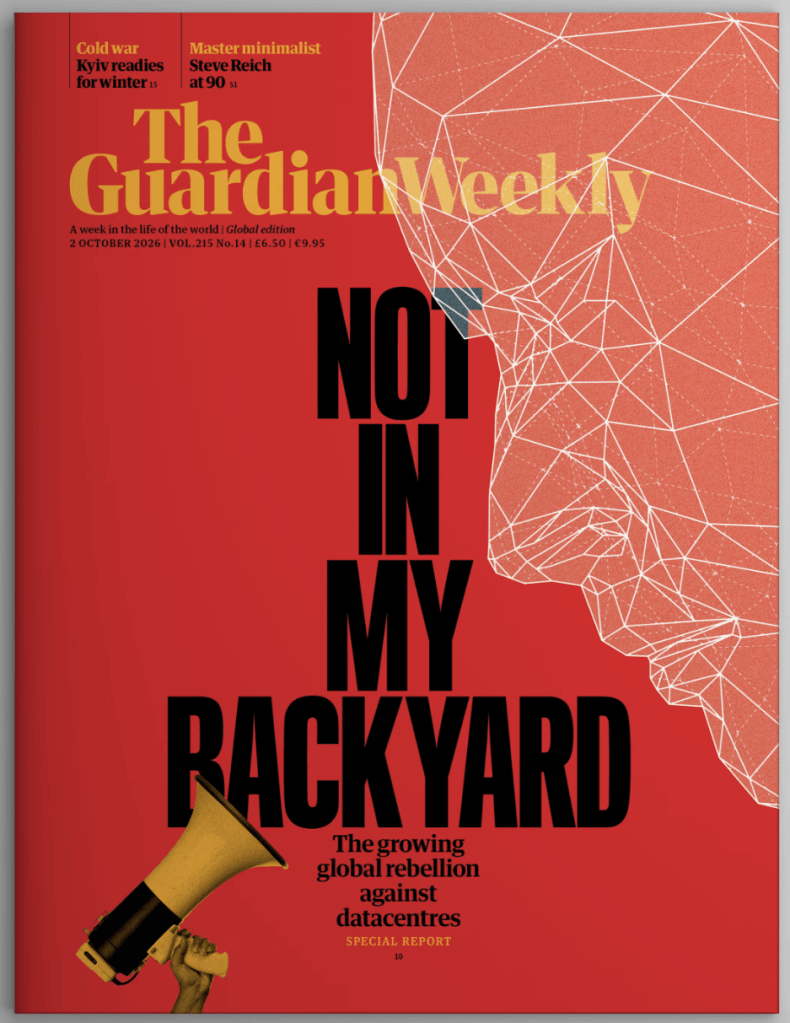
As the alarm bells sound ever louder about the potentially existential threat of breakneck AI development, people far removed from Silicon Valley debates about the future of the artificial intelligence revolution are voicing other more immediately tangible worries about the building of the vast datacentres that power these entities.
For this week’s cover story, economics and political writer Eduardo Porter, analyses why communities are pushing back against AI and the future that the big tech plutocrats want to create. These fears, based around environmental concerns over resource use and rapid societal change, are, he argues, far more complex than luddite attitudes or nimbyism.
It’s a position exemplified by reporting from two rural communities in India and the UK where vast datacentres are already under construction or being planned. As Hannah Ellis-Petersen and Aakash Hassan find out, the villagers of Tarluvada, in Andhra Pradesh, feel that government promises of a “golden age” that a hyperscale Google datacentre would bring them have been broken. Meanwhile, Sandra Laville meets protesters in Great Torrington, Devon, who sense that they are being kept in the dark about plans for an AI campus, one of Europe’s largest, in a Unesco-designated nature reserve.
Spotlight| Kyiv’s cold front is approaching Charlotte Higgins reports on how residents are preparing for winter, stocking up on food and determination, as Russia increases its attacks on energy infrastructure
Environment| What Nepal has taught Argentina What can the Patagonian town of El Chaltén at the foot of the Torre glacier do to avoid an event similar to the disaster in Nepal? María de los Ángeles Orfila finds out
Feature| Andy Burnham: a man with a plan As the first Labour conference with Andy Burnham as prime minister takes place, Hettie O’Brien finds out just how radical his policies could be
Opinion| Macron’s brave swansong In his final speech to the UN, Emmanuel Macron told the world how to stand up to Trump, says Steve Bloomfield
Culture| A minimalist at 90 As he prepares to celebrate a milestone birthday, Steve Reich tells Flora Willson how he developed his musical ideas and why he wants others to take up the baton of performing his works
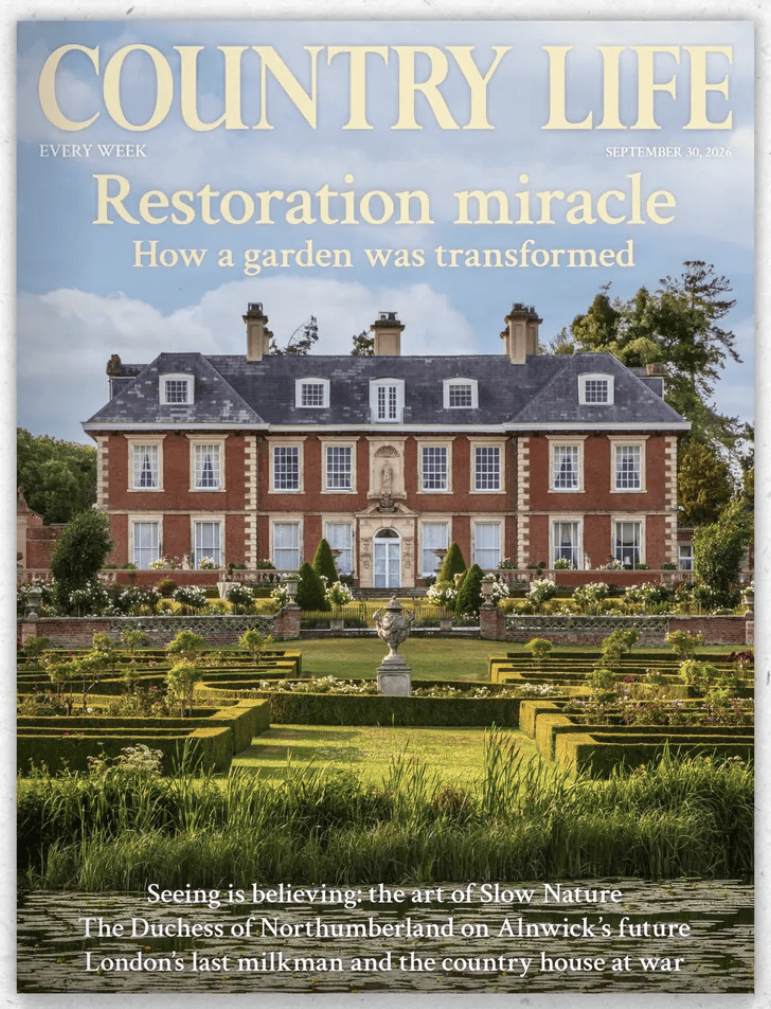
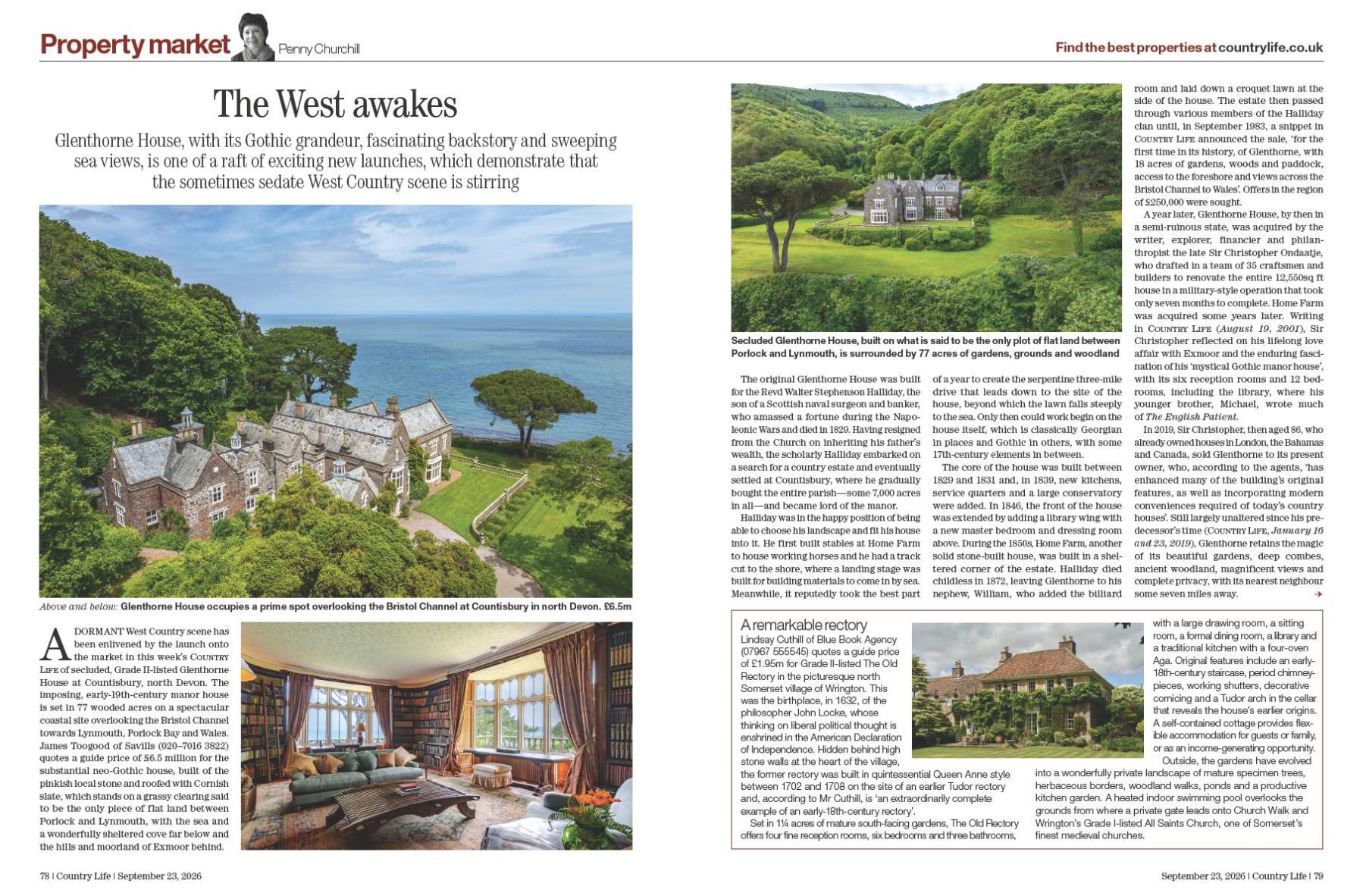
When the Englishman’s house was no longer his castle
Deborah Nicholls-Lee explores how the requisition of country houses played a crucial role in winning the Second World War
Look, listen, learn
Nature writer Mark Cocker delves into his new book to explain how we can open our eyes to the world around us
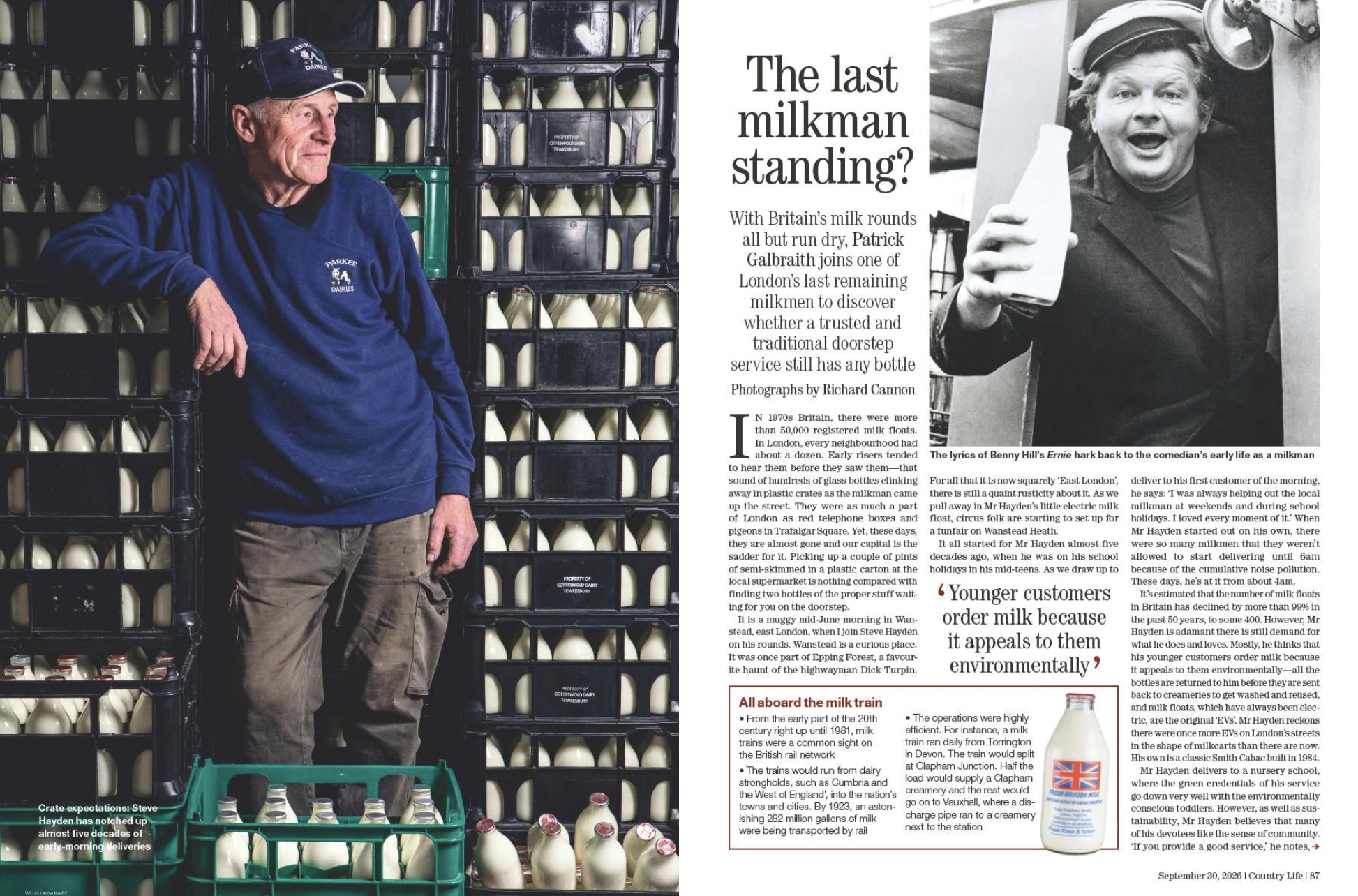
The last milkman standing?
Are doorstep dairy deliveries a thing of the past, asks Patrick Galbraith, as he joins one of the capital’s few remaining rounds
The restoration of ‘England’s green and pleasant land’
Timothy Mowl admires the revival of one of the finest and earliest Pulhamite gardens at Highnam Court in Gloucestershire
The Versailles of the north
The Duchess of Northumberland tells Charles Quest-Ritson of her plans for the Alnwick Garden as it celebrates its 25th anniversary
Tony Iommi’s favourite painting
The Black Sabbath founder chooses a work depicting beauty, strength and grace
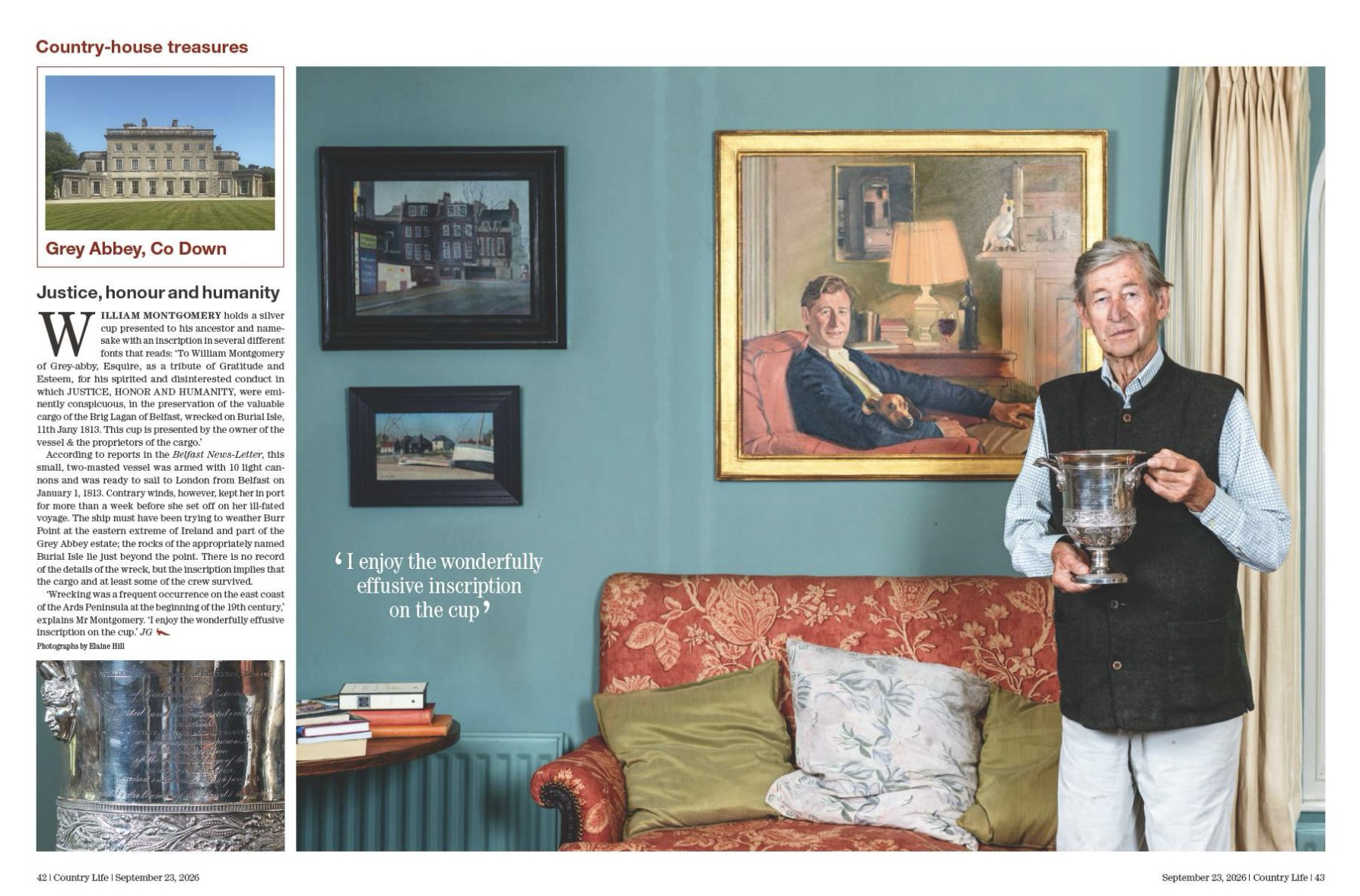
Country-house treasure
John Goodall raises a glass to the late-Victorian ‘Braxted Bar’ that dominates the entrance hall at Braxted Park in Essex
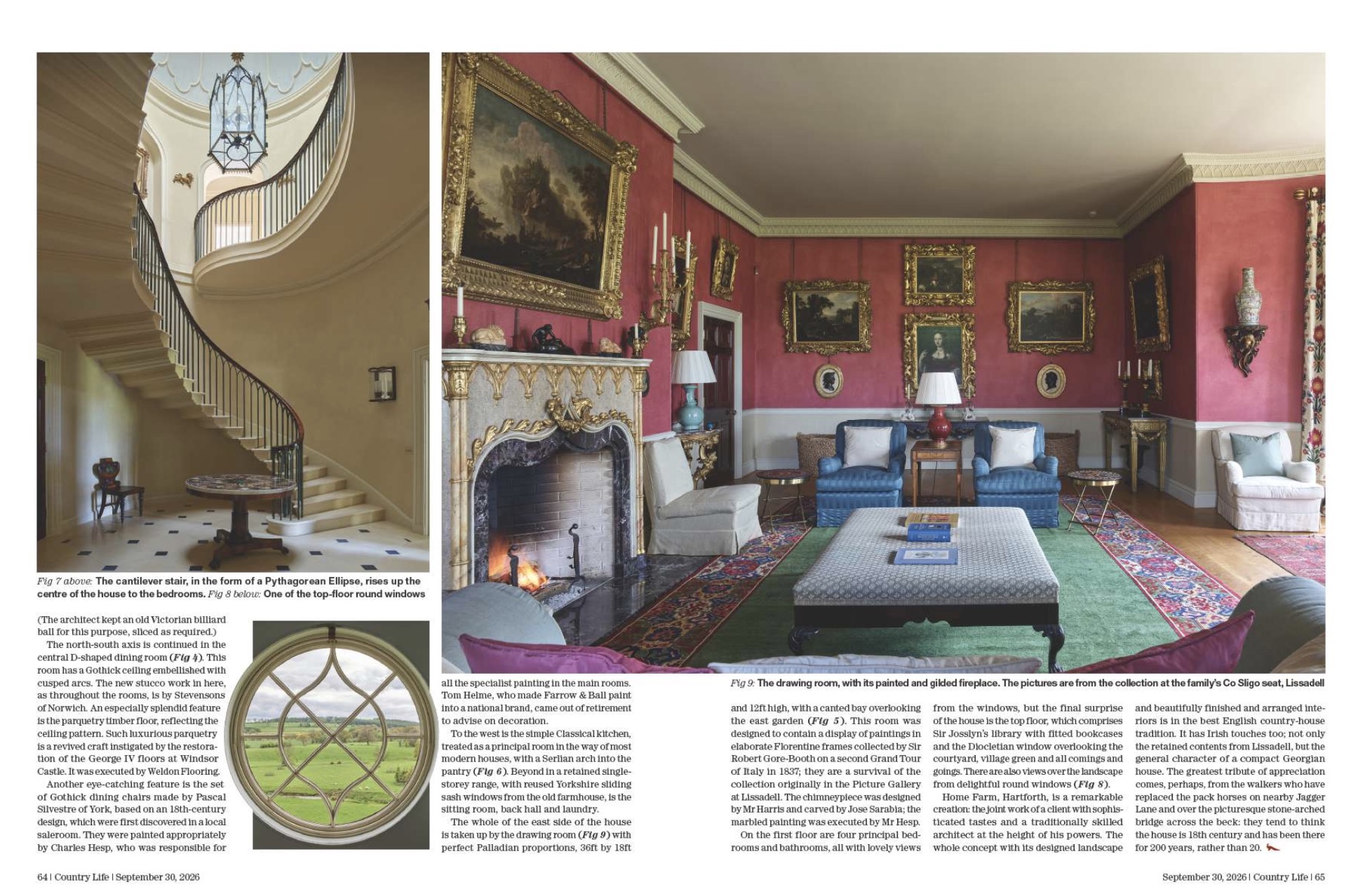
The genius of place
Classical and Gothic detailing are employed to dramatic effect at Home Farm in North Yorkshire, finds John Martin Robinson
On the brink of extinction
In a last call for the telephone exchange, Ptolemy Dean ponders the future of the obsolete edifices
The legacy
Octavia Pollock hails the vision of John Bateman, whose dams and reservoirs still serve us today
There goes summer
John Lewis-Stempel prepares to get hands-on with his flock as thoughts turn to tupping time with the transition to autumn
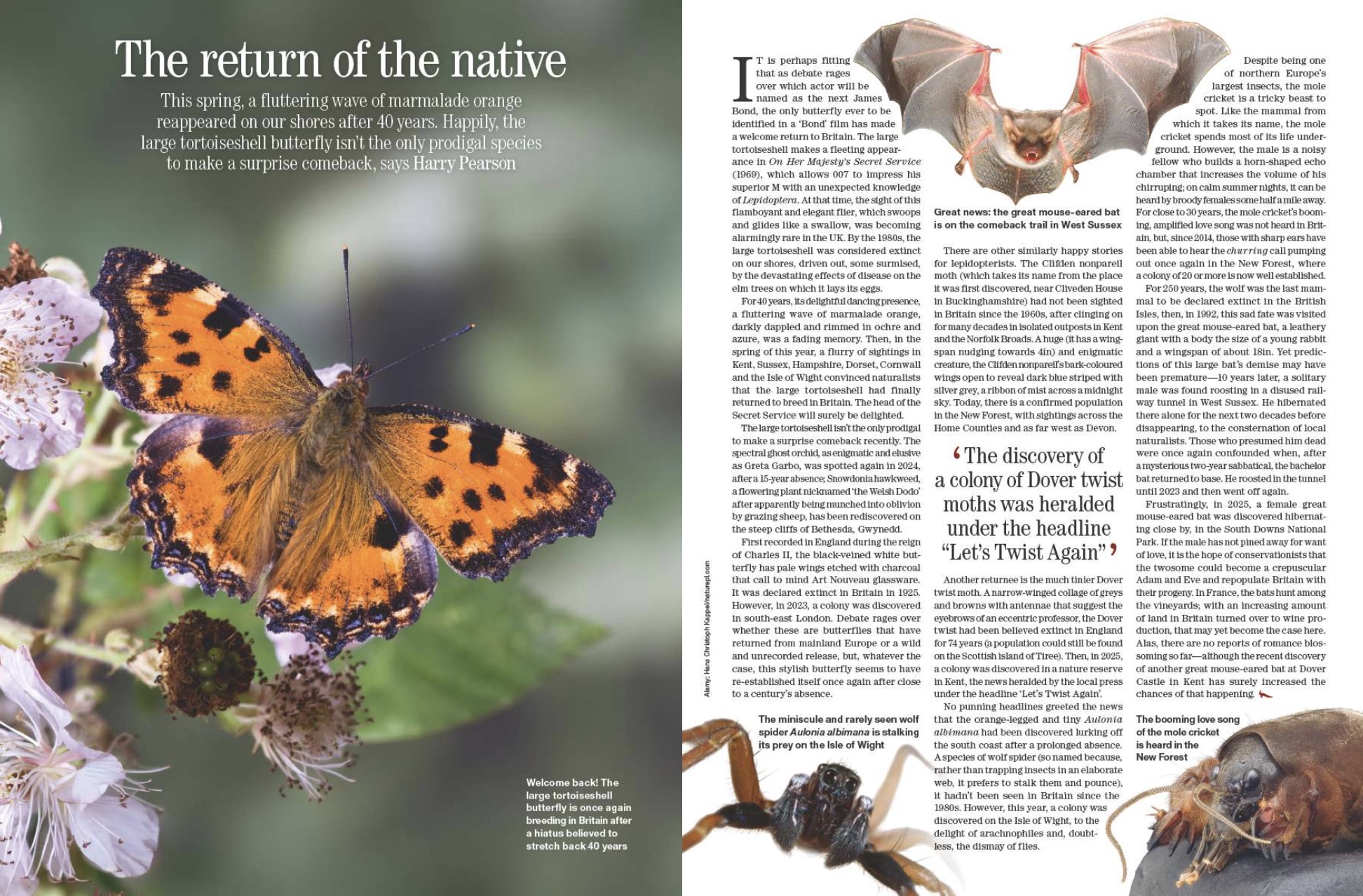
The return of the native
The large tortoiseshell butterfly is back. Harry Pearson hails British species risen from the dead
Luxury
Amie Elizabeth White showcases floral jewels and country classics, plus Rita Konig’s favourite things
Interiors
Amelia Thorpe picks companies that add a touch of craftsmanship to country-house renovations
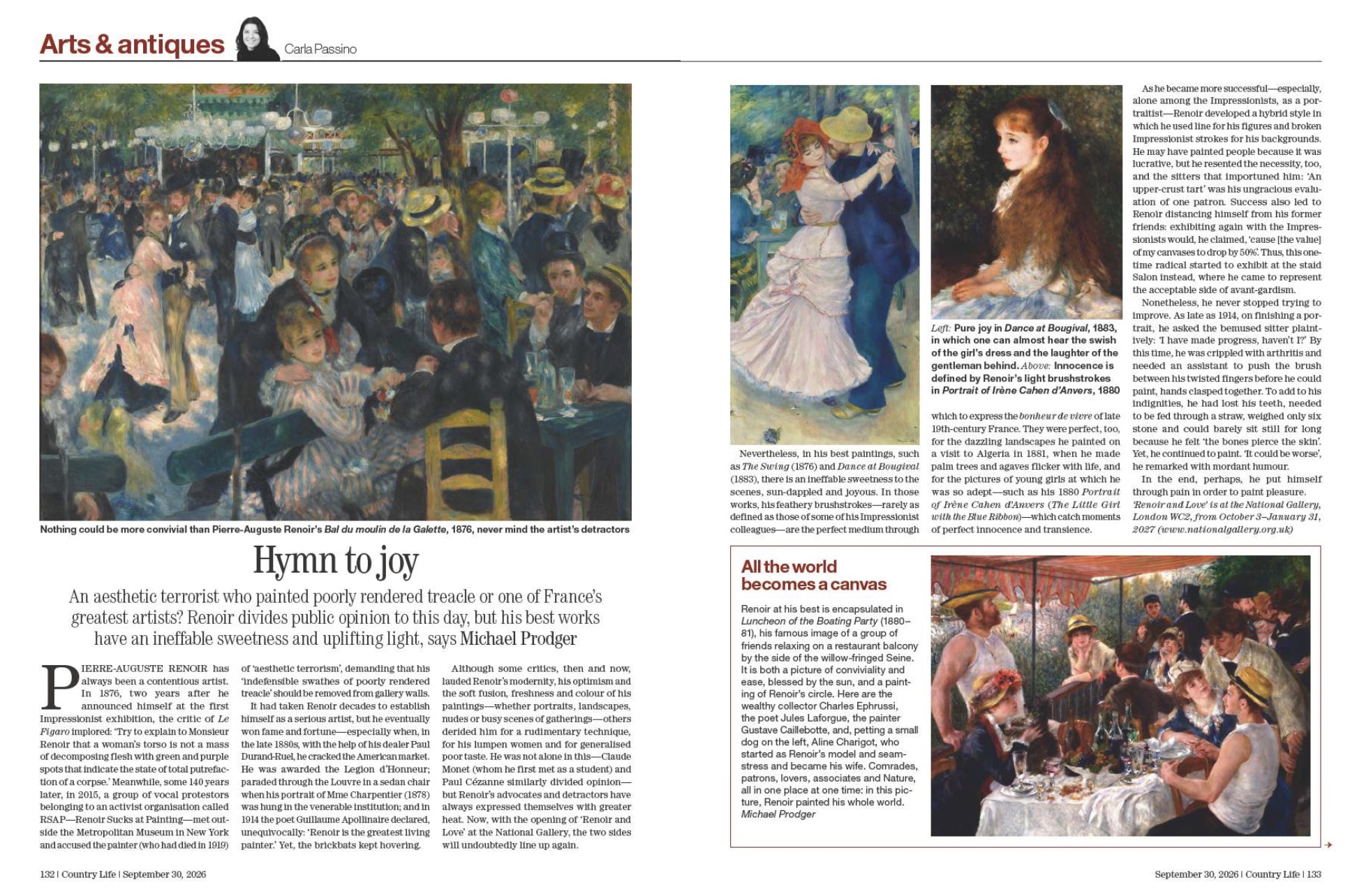
Arts & antiques
Ahead of a new Pierre-Auguste Renoir exhibition at the National Gallery, Michael Prodger looks at how the French Impressionist is still dividing critical opinion
Countryside mystery
Straying livestock could prove costly in the days of the village pound, as John Wright reveals
Travel
Rosie Paterson visits the Algarve in Portugal and finds a natural haven that is truly worth its salt
Ripe for the picking
From apples to pears and pomegranates, painters down the ages have used all manner of fruit as artistic symbols, as Michael Prodger discovers
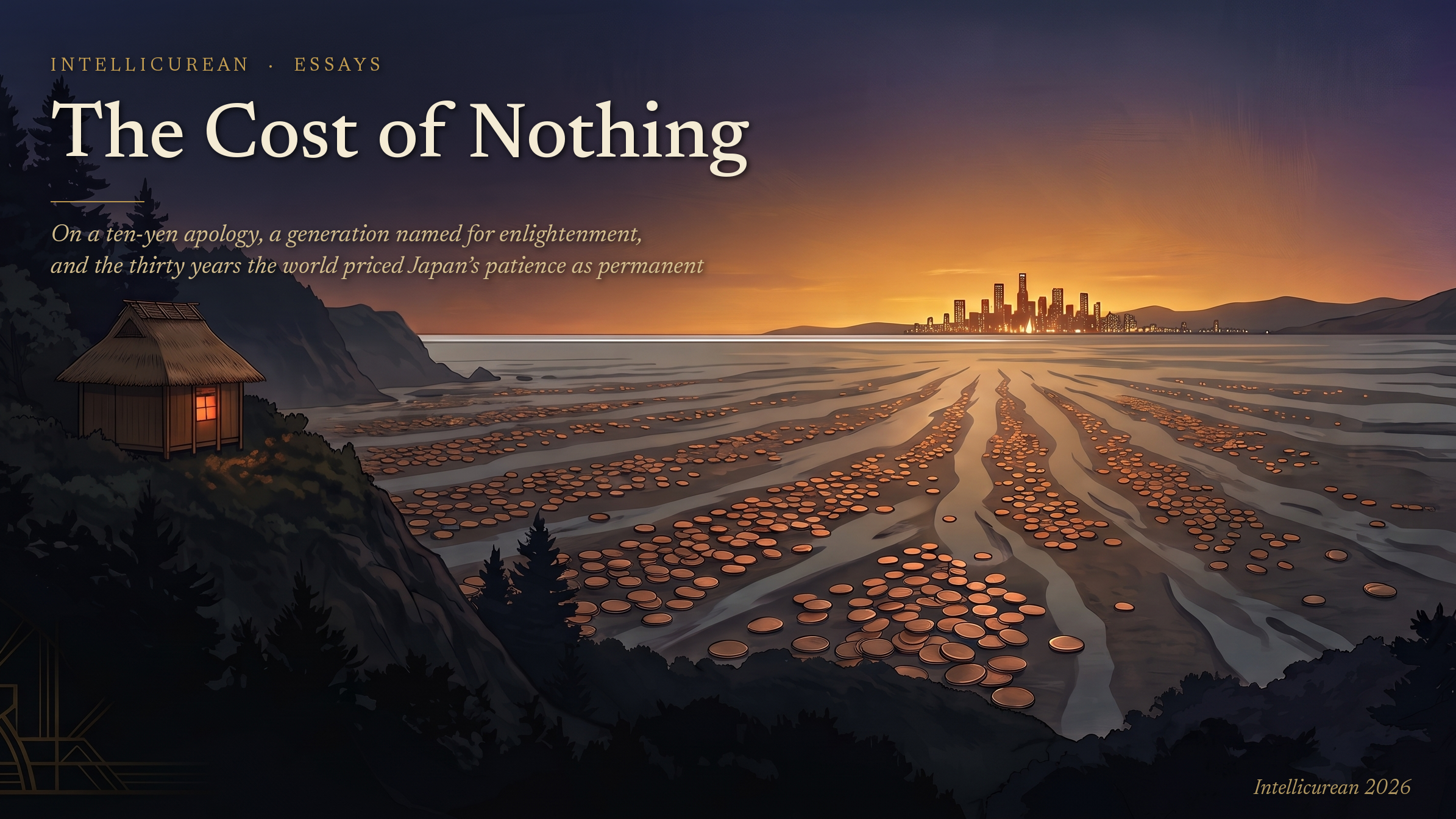
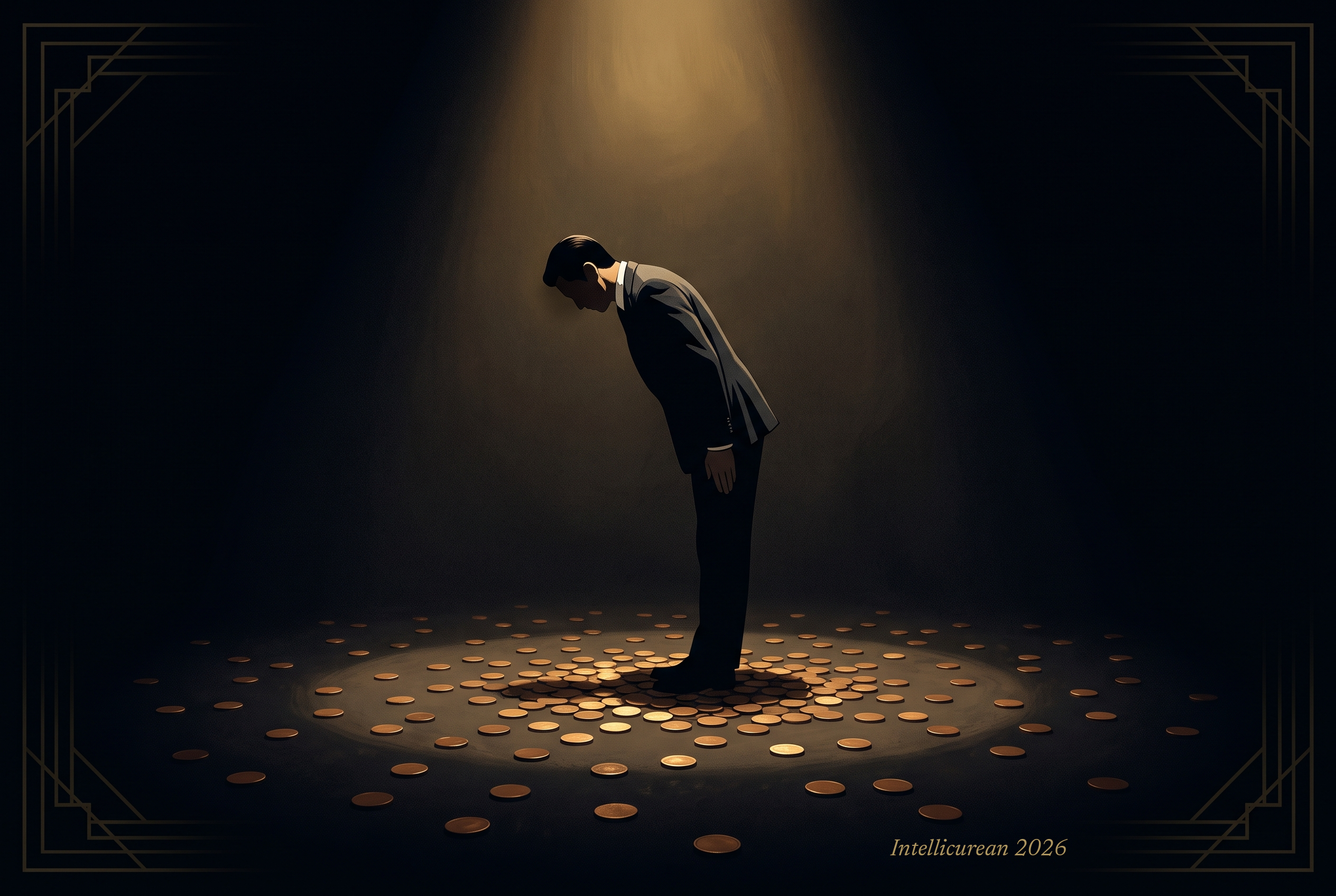
What nothing can cost: for thirty years Japan’s money was almost free to borrow, its young were told they had risen above wanting things, and the rest of the world quietly built on both. Now the tide is coming back in.
The hut, the coins and the city, painted for the essay. An invention, and disclosed as one there.
Why we’re pointing you there
A New York Times column this week warned that Japanese money, abroad for three decades, is starting to go home. Michael Cummins takes that market story and finds a second one underneath it. The same years that made yen the cheapest money on earth also produced a nickname for a whole generation: the satori sedai, the enlightened ones, young people said to want nothing. The essay is careful to keep the two apart. A central bank made the cheap money; a joke on an anonymous message board made the name. But the name was how the stillness got told, and the world priced it as if it would last forever.
What we liked most is how far back it reaches for its measure. It opens on an ice-pop company bowing on television to apologize for a ten-yen price rise, and it ends in a ten-foot hut built by a monk in 1212, who praised his reduced life and then, at the very end, doubted it. Between them come a young Natsume Sōseki translating that monk into English, a Texas hedge-fund manager ruined by being right too early, and one number about who owns Japan’s debt that explains three decades in a sentence. Both Japanese sources are translated fresh for the piece.
With Sense and Sensibility returning to cinemas this month and ‘set-jetting’ on the rise, Britain’s grand Georgian houses are ready for their close-up. From a London townhouse once owned by Jane Austen’s brother to sweeping country estates in Bath, Somerset and Devon, these are the historic stays that bring Austen’s world vividly to life.
Travel from Turin to Trieste on one of Europe’s most remarkable rail journeys, passing eight UNESCO World Heritage Sites acrossnorthern Italyin just over five hours.
From five-star camping and boutique Adriatic retreats to luxury spa resorts on Punta Skala, here’s where to stay in Zadar and discover Croatia’s spectacular Dalmatian Coast.
My father dedicated his life to studying the Guna people of Panama, and they may soon allow unprecedented development through their land. I went on a trek through the jungle to find out why. By Ben Ryder Howe and Federico Rios
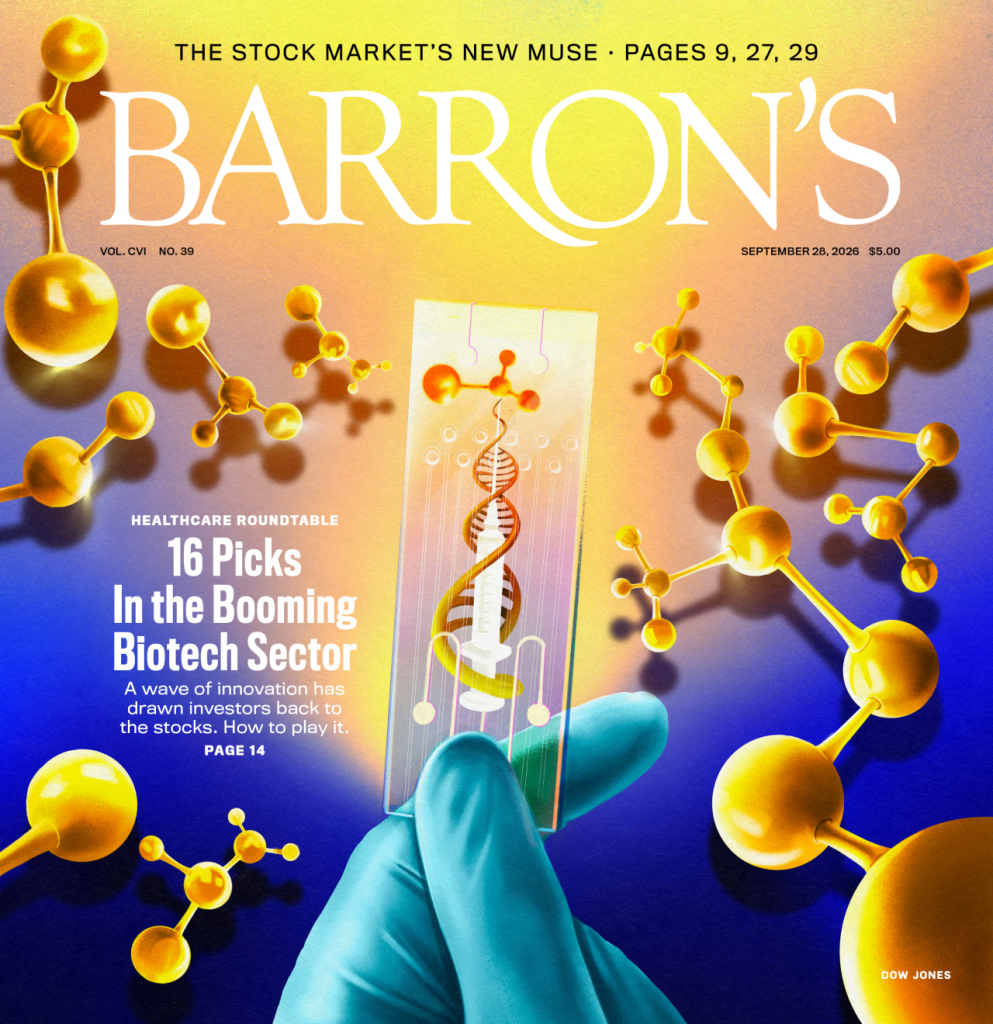
Biotechnology stocks are soaring this year as medical advances and merger activity rekindle investor interest. More gains lie ahead, our healthcare panel says.
The Buffett of Bonds isn’t retiring yet. Dan Fuss, on whom we bestowed that moniker decades ago, is still putting in a full week as vice chairman of Loomis Sayles. And he sounded as sharp as ever when we caught up with him this past week, just before he was to mark his 93rd birthday.
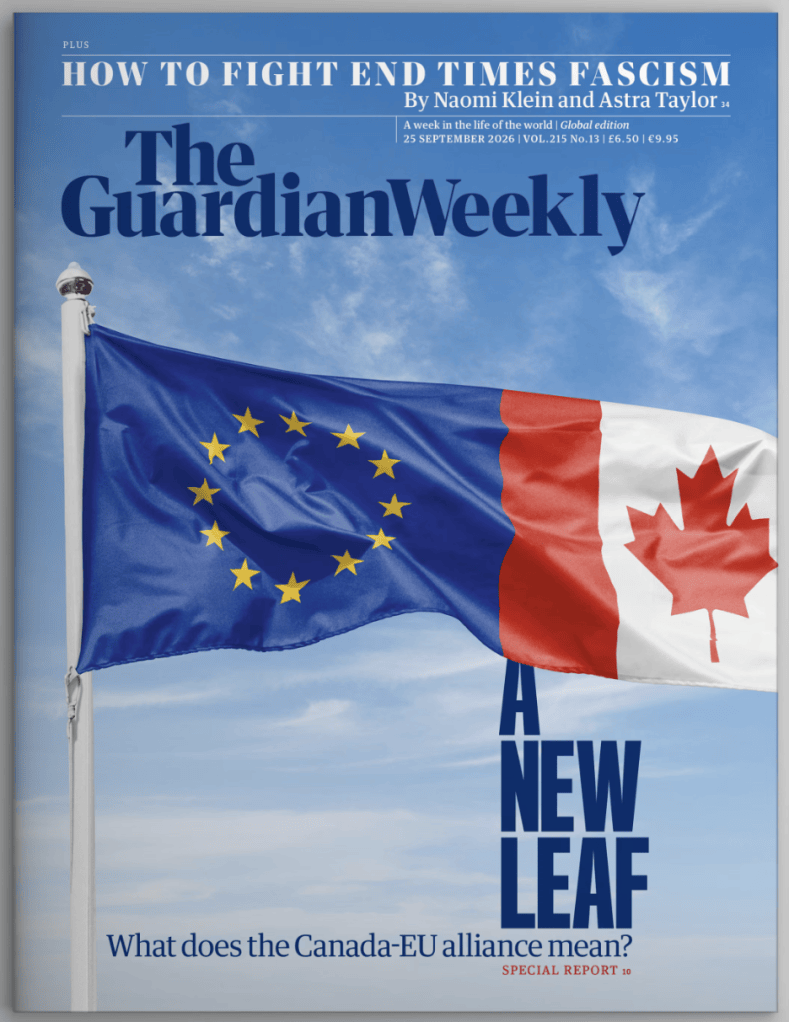
The European Commission president, Ursula von der Leyen, last week extended an unprecedented offer to Canada, inviting it to become the EU’s first “associate member”.
For our big story this week, Brussels correspondent Jennifer Rankin explores what the proposed alliance might mean. While there is a lot of common ground for the two parties, she writes, their agreement raises many questions and is clouded in uncertainty.
Meanwhile, senior correspondent Lisa O’Carroll examines the possible implications for the UK – asking whether it offers a blueprint for Britain, or a reminder it is out in the cold.
Then, former White House speechwriter Ted Widmer says Canadian prime minister Mark Carney’s remarks before the European parliament set out what a new west might look like, without its most powerful member – the US.
Spotlight| Yemeni families’ flight Fierce fighting has forced people to abandon their homes, leaving everything behind to seek shelter in refugee camps. Nasser Al-Sakkaf reports from Taiz
Science| ‘A map is never neutral’ The cartographers who took on centuries of western bias with the new Equal Earth projection speak to Oliver Holmes,Ana Lucía González Paz and Pablo Gutiérrez about their alternative to the 16th-century Mercator display
Feature| How to fight end times fascism An unholy alliance is working toward an apocalyptic future from which only a chosen few will emerge unscathed. It’s becoming clear how we stop them, say Naomi Klein and Astra Taylor
Opinion| This Israeli election could be the country’s last Spend time on the ground and you see how high the stakes are for next month’s contest – for Israelis and Palestinians alike, writes Jonathan Freedland
Culture| Present and correct Author Jonathan Franzen talks to Sophie McBain about a new TV adaptation of his bestseller The Corrections, the future of reading and why creating new work is “horrible”