Tag Archives: Reviews

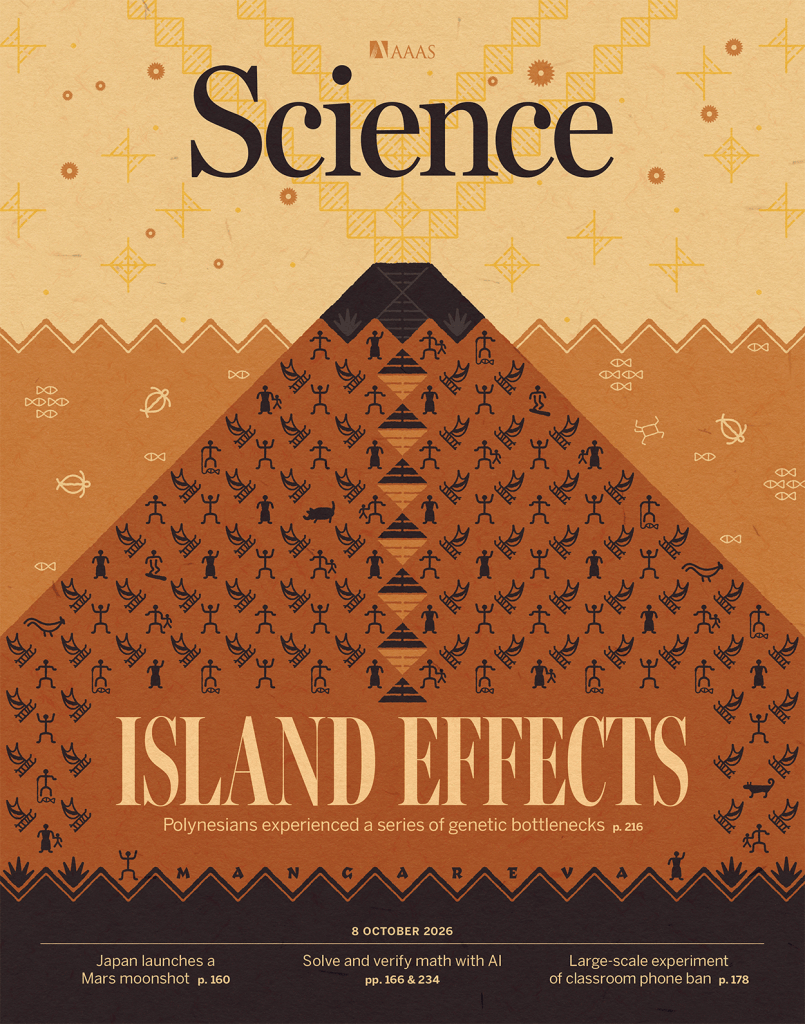
SCIENCE MAGAZINE – OCTOBER 8, 2026

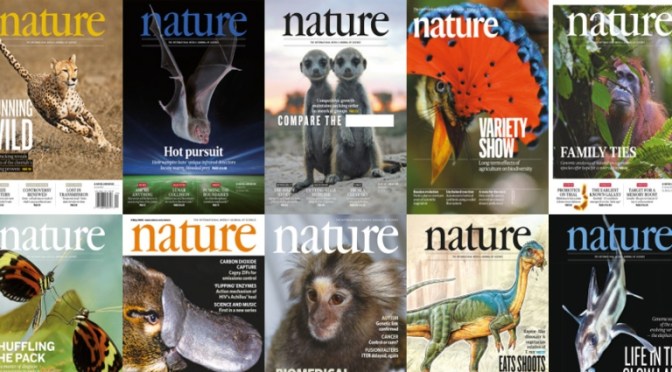
SCIENCE MAGAZINE: The latest issue features ‘ISLAND EFFECTS’ – Polynesians experienced a series of genetic bottlenecks.

Menopause puts the brain at risk. Researchers are starting to learn why

Shifts in blood proteins could point to ways to fight menopause “brain fog” and prevent later dementia

Women are more likely than men to develop dementia, and not just because they tend to live longer. One reason may be menopause, the time in midlife when sex hormones drop and menstruation stops—and which some researchers are coming to see as a stress test for the brain.

Menopause “affects brain health, for sure,” says neurologist Riley Bove of the University of California (UC) San Francisco, who studies its impacts on multiple sclerosis and other neurological disorders. She and others want to protect the brain during and after this transition—but that means identifying just how menopause puts the brain at risk.

A study published last week in Nature Medicine has found clues in the blood of women in their 40s and 50s: proteins related to brain function, inflammation, and neurodegenerative disease that are elevated during menopause. Other ongoing studies are following groups of women over time—including during the lesser studied perimenopausal stage, from just before menstruation ends to 1 year after—to reveal processes leading to short- and long-term cognitive problems.

Nazi Germany had no hope of making an atomic bomb, uranium cubes reveal

Experimental reactor needed much more uranium and heavy water than the country could muster

Neanderthals were skilled woodworkers, first-of-its-kind tool trove reveals

Find in Spanish cave provides rare window into the domestic lives of our closest relatives
THE ECONOMIST MAGAZINE – OCTOBER 10, 2026

THE ECONOMIST MAGAZINE: The latest issue features ‘Will bonds blow up?’….

Will bonds blow up?

A government-debt crisis is looming

A selfish ploy to break up Pakistan

Its military chief wants lots of small provinces, to fragment the opposition

How Europe should deal with the new China shock

Amassing “second-strike” trade weapons is not enough

A no-rules approach to AI is mad politics and worse policy

Do not let it rip

Britain’s Greens have voted, shamefully, to say Zionism is racism

It is a damning moment for a political party with pretensions to power

Brazil is a right-wing country now

The Bolsonaro clan promises to align with Donald Trump, and to attack democratic institutions

WASHINGTON EXAMINER MAGAZINE – OCTOBER 7, 2026

October 7, 2026

WASHINGTON EXAMINER MAGAZINE: ‘ISRAEL AND ITS ENEMIES’ – Still under siege three years after Oct. 7….

In moral inversion, many refuse to see Jews as victims of 2023 Hamas attack

The past three years, including the highly destructive war in Gaza, have changed nothing in Palestinian attitudes or intentions. By Hugo Gurdon

It could have been Israel’s 9/11. The media called it a ‘midair altercation’

A FlyDubai flight headed toward Tel Aviv, Israel, nearly crashed on Wednesday after its Omani co-pilot allegedly stabbed… By Peter Cordi

The war on European Jews and the new reality of American Jewish life

By Daniel Ross Goodman

Israel’s long quest for defensible borders

By Sean Durns

NATURE MAGAZINE – OCTOBER 8, 2026

Volume 658 Issue 8135

NATURE MAGAZINE: The latest issue features ‘Cortical Transfer’ – Human organoid replaces mouse cortex to make model for neurological disease.

Location, location, location: how to edit genes only in the cells you want

Gene-editing CRISPR enzymes controlled by light and sound target tissues of interest. Research Highlight

A black hole’s jets have a halo effect

Observations confirm jets’ expected effect on the gas cloud that surrounds a galaxy. Research Highlight

Who’s the loudest of them all? The bare-throated bellbird vies for the prize

The bellbird’s extra-large gape helps it to achieve pneumatic-drill-level volume. Research Highlight

Emissions after the Paris accord made Europe’s heatwaves more severe

A heatwave in 2025 would have been one-third of a degree cooler without the greenhouse gases released since 2015.

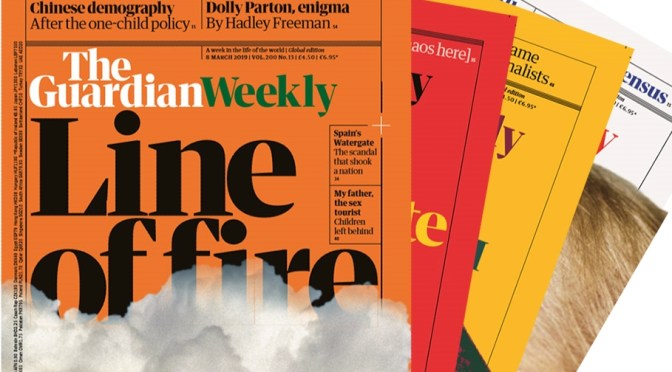
THE GUARDIAN WEEKLY – OCTOBER 9, 2026

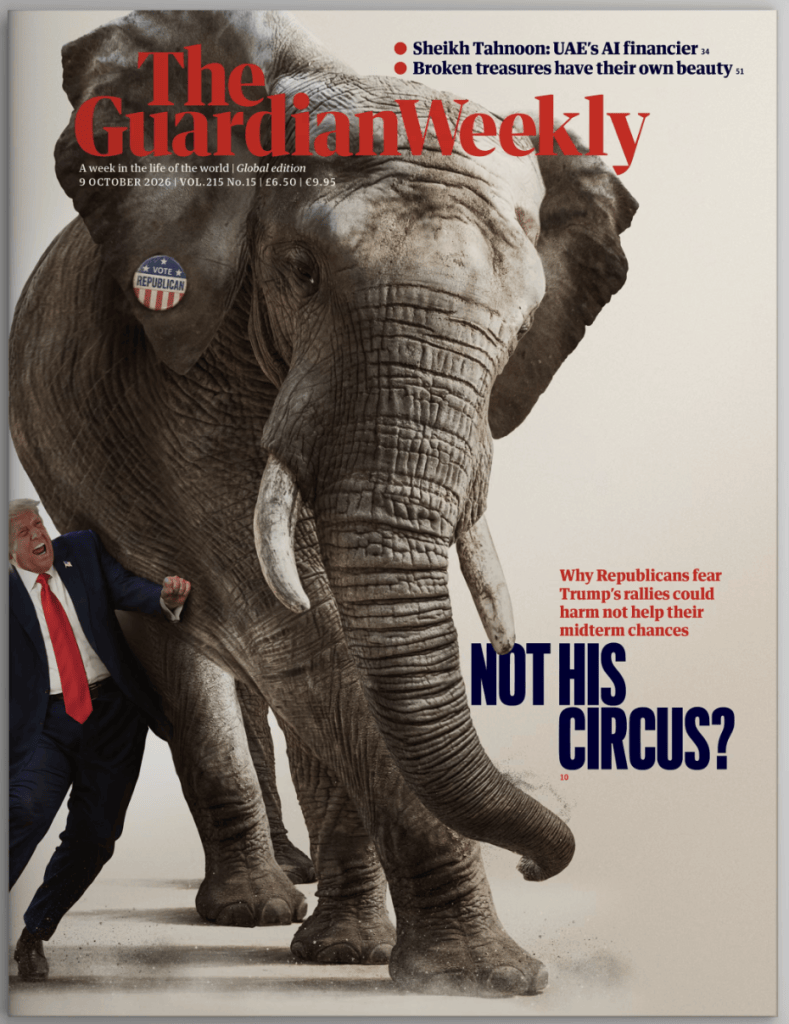
THE GUARDIAN WEEKLY: The latest issue features ‘NOT HIS CIRCUS?’ – Why Republicans fear Trump’s rallies could harm not help their midterm chances….

With fewer than 30 days until the US midterm elections, Donald Trump seems determined to still be centre stage despite poll fears that after 3 November he may end up a lame-duck president as a Democratic blue wave sweeps the country. Our Washington bureau chief, David Smith, has been watching how the president is playing to Republican voters at the start of a blitz of cross-country rallies. It’s, at best, a mixed picture.

As David reports, Trump’s self-belief and message to voters to “pretend” his name is on the ballot reveal a man out of touch with ordinary Americans’ worries about the cost of living and whose promises that the war with Iran will soon be over ring ever more hollow. And then there are the candidates, more of whom are shying away from their earlier allegiances to a president whose approval ratings continue to slide.

Spotlight | An education crisis in France
As school and university protests intensify, Paris correspondent Angelique Chrisafis finds out why students feel the government is ignoring their complaints about the state of education

Spotlight | Green division and diversion
Peter Walker reports on the English and Welsh Green party’s annual conference in which a motion equating Zionism with racism was passed, and analyses how this reveals weaknesses in the way the party is run

Feature | The big business of porn
Why not analyse the porn industry just like any journalist would the oil business? That was the premise behind Patricia Nilsson’s new book. An approach that, as Amelia Gentleman finds out, yields new insights into how pornography’s imperatives have seeped into all our online lives

Opinion | Putin won’t bomb Ukraine into submission
Kyiv may now be under almost constant attack but, says Rajan Menon, history shows that bombing doesn’t crush morale

Culture | There’s beauty in bits and pieces
A novel exhibition in Florence puts broken sculptures on display and, as Philip Oltermann discovers, reveals their profound allure

THE SPECTATOR WORLD MAGAZINE – OCT. 12, 2026

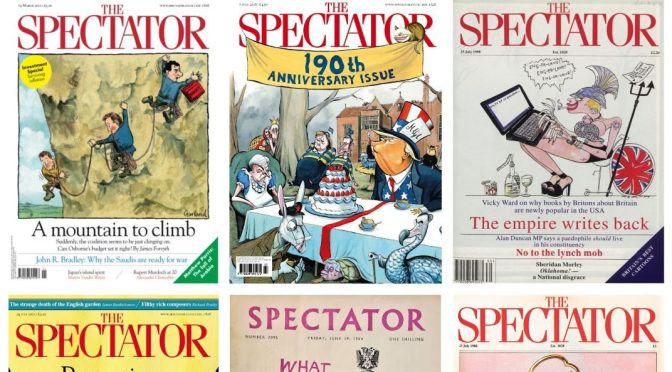
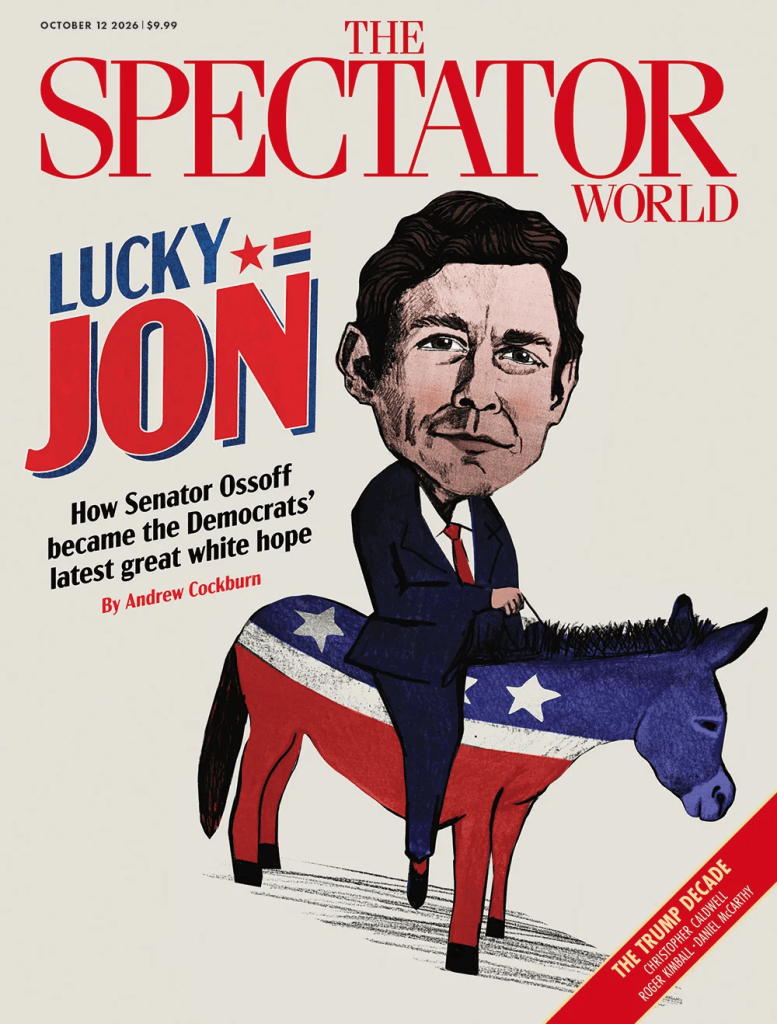
THE SPECTATOR WORLD: The latest issue features ‘Lucky Jon’ – How Senator Ossoff became the Democrats’ latest great white hope.

Will Jon Ossoff’s luck last long enough for a run at the presidency?

Once upon a time, the export crop of Martha’s Vineyard and Nantucket was whale oil. Nowadays it is money, harpooned by visiting campaigns from deep-pocketed donors at anchor in their summer seaside retreats. In the peak season of July and August, the islands’ social rhythms are dictated by money-harvesting events, wrangled by local hosts jostling for the social éclat that comes from securing a high-profile honoree. By late August this year, the territory had already been worked over by a series of hopeful visitors with hands outstretched, such as the rising Texas Senate hopeful James Talarico, Hakeem Jeffries in eager pursuit of the House Speakership that is almost in his grasp, Maryland Governor Wes Moore and others questing the donor dollar.

How Trump can confront the new age of terror

The world has become strangely numb to terror. Sometimes an atrocity will be sufficiently horrifying – the murder of Charlie Kirk, say – to cause mass shock and anguish. Yet now reports of car rammings or knife rampages or foiled Islamist plots feel almost routine. We have become inured to ideological violence. In the quarter-century since 9/11, the specter of terrorism has almost become a fact of modern life. Last year, America was one of the few western countries to see a rise in terrorism, with 13 recorded attacks and 28 deaths. Today even the most appalling acts generate only a brief sense of widespread outrage. And then the news cycle moves on. No mass killing has come close to the scale of the Twin Towers attacks.

America must shore up its missile-building capabilities

America’s war with Iran is in its eighth month and stuck. On September 26, Donald Trump confirmed that he had rejected Tehran’s offer to reopen the Strait of Hormuz in return for lifting the American naval blockade and easing sanctions. He has reportedly told his staff that renewed bombing is likely after the midterm elections on November 3. He is reluctant to

THE NEW YORKER MAGAZINE – OCTOBER 12, 2026 PREVIEW

The cover of the October 12 2026 issue of The New Yorker which features a muscular man jogging in Central Park with his...

THE NEW YORKER MAGAZINE: The latest issue cover features “Peter de Sève’s “Lapdog” – Trying to keep up. By Françoise MoulyArt by Peter de Sève

The Battle for the Post-Trump Right

For decades, the Heritage Foundation was a conservative powerhouse. Can it stay relevant in the influencer age? By Emma Green

ICE Is Everywhere and Acting with Impunity

Arrests have reached a record high—nearly fifty-one thousand in August alone—with agents conducting operations nationwide at hospitals, at airports, and outside schools. By Jonathan Blitzer

The Battle to Pass a Billionaire Tax

Most Democratic voters say that they favor a wealth tax, but a California ballot initiative has plenty of liberal opponents. By Nicholas Lemann

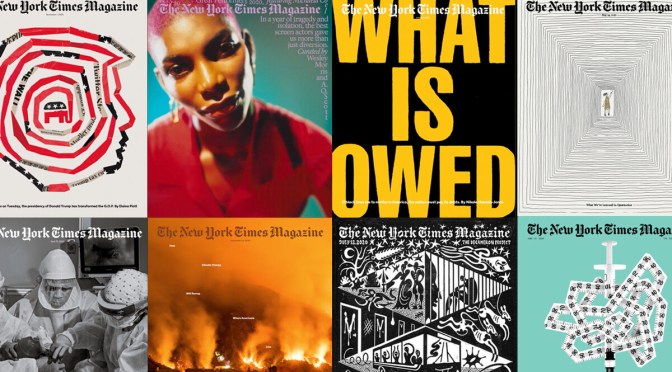
THE NEW YORK TIMES MAGAZINE- OCTOBER 4, 2026

THE NEW YORK TIMES MAGAZINE: The latest issue features Trisha Thadani’s cover essay on alternative medical clinics targeting cancer patients with misinformation, alongside Max Read’s examination of Silicon Valley products adopting the logic of gambling, and Kwame Anthony Appiah’s Ethicist column on sponsoring a caregiver’s career.

Min Jin Lee Was Underestimated for Half Her Life. Then She Started to Write.

A torch bearer for the great 19th-century tradition of social realism, she’s become one of the most important novelists of her generation.

When Did Everyone Start Talking Like a Hollywood Windbag?

The phrase “the X of it all” started as a joke to mock the vague lingo of studio bosses. But there’s something widely appealing about speaking “casually, broadly and vaguely in order to reduce friction.” By Nitsuh Abebe

They Kept Outsiders Away for 500 Years. Their World Is About to Change.

My father dedicated his life to studying the Guna people of Panama, and they may soon allow unprecedented development through their land. I went on a trek through the jungle to find out why. By Ben Ryder Howe and Federico Rios

How Everything Became Gambling

It’s not just DraftKings and Polymarket — the logic of gambling undergirds everything coming out of Silicon Valley.

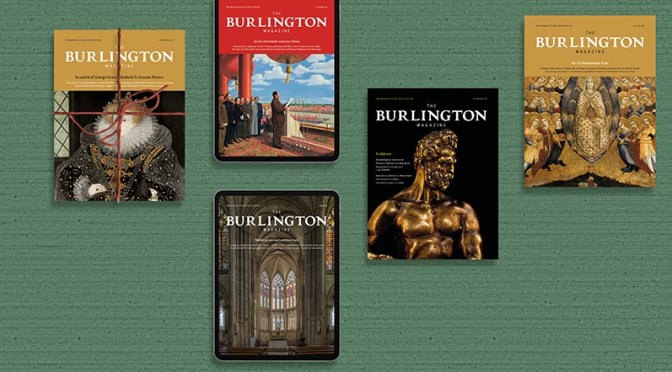
THE BURLINGTON MAGAZINE – OCTOBER 2026 PREVIEW

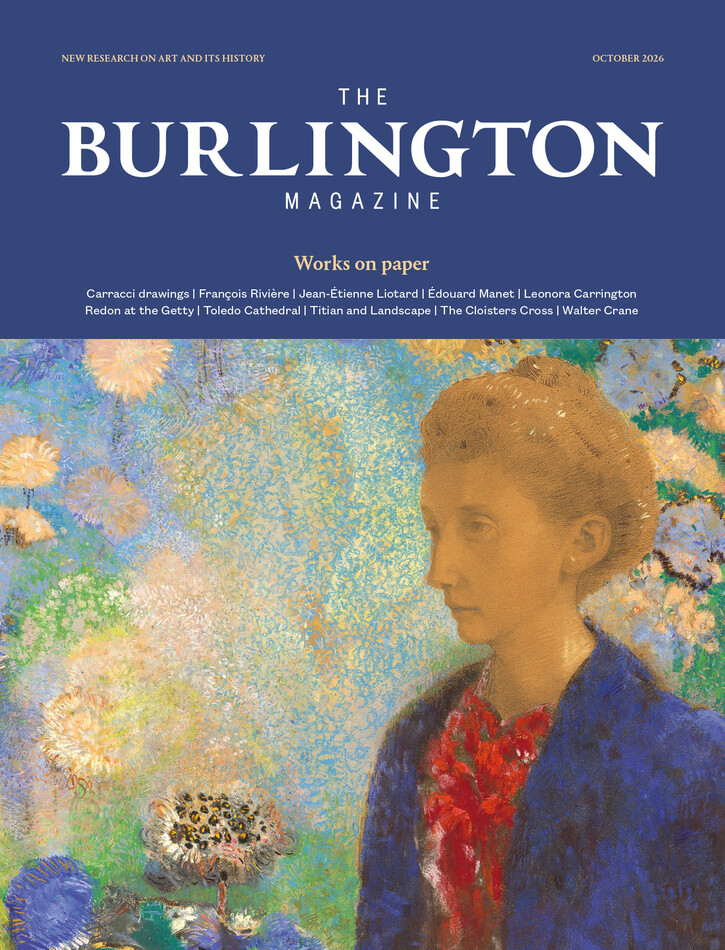
The Burlington Magazine: The latest issue features standout articles exploring a 1762 portrait of Marie-Antoinette by Jean-Étienne Liotard, watermarks on Carracci drawings, François Rivière’s rediscovered Ottoman drawing, and the Thompson collection of modern Chinese woodblock prints.

The RKD as a ‘knowledge centre’

What is the largest art-history library in the world? The answer to this question depends of course on how you measure size, but an institution that might reasonably claim such a status is the RKD in The Hague. The RKD has for decades been a vast and invaluable library and archive, carefully nurtured by expert librarians and archivists (or ‘curators’ as they have long been described).

A new drawing by Édouard Manet

A newly identified drawing in a private collection of a crouching girl is a characteristic example of the red-chalk life studies that Édouard Manet made in the 1860s, influenced by his close study of Renaissance draughtsmanship in Florence. Although squared for transfer, the drawing has not yet been linked to any known composition by the artist.

Mistaken identities: Liotard’s 1762 portrait of Marie-Antoinette

A refined portrait by Jean-Étienne Liotard in the Musée d’art et d’histoire, Geneva, has long been identified as depicting Marie-Antoinette as a child. New research establishes, however, that it is a drawing of another member of the imperial Habsburg family and also reveals a hitherto unidentified likeness of Marie-Antoinette.

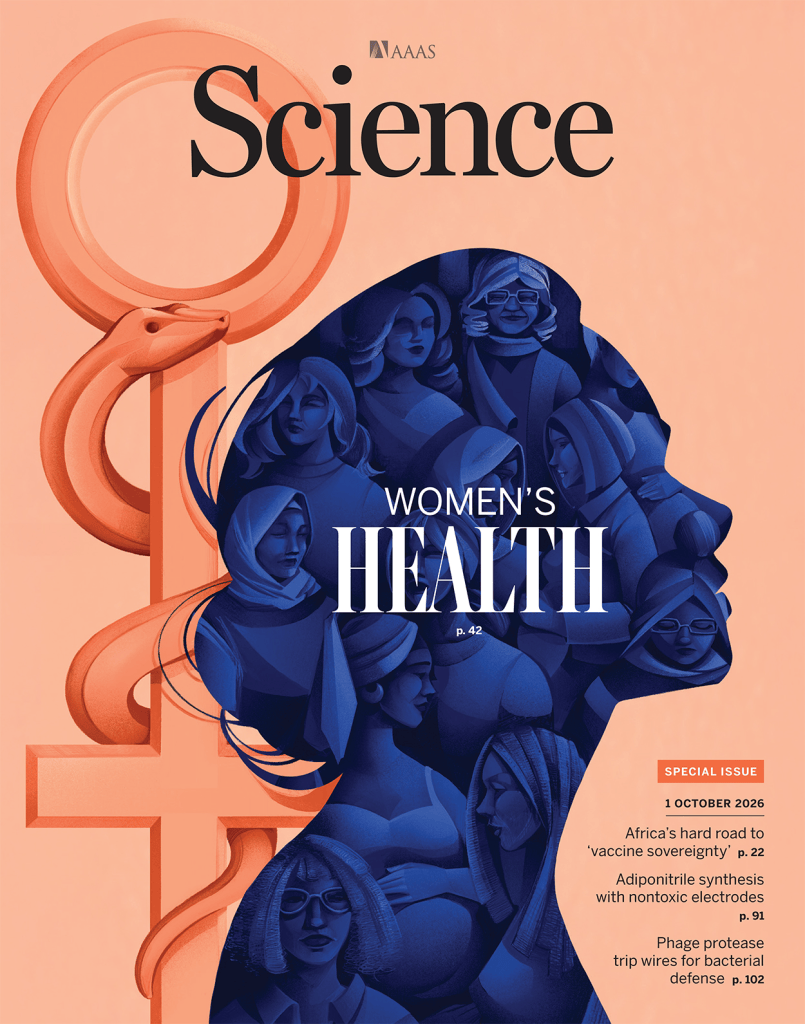
SCIENCE MAGAZINE – OCTOBER 1, 2026

SCIENCE MAGAZINE: The latest issue features ‘WOMEN’S HEALTH’….

A Lifelong Focus on Women’s Health

Historically, most human studies have involved male participants, and their findings were assumed to apply to women and children as well. Meanwhile, women’s health typically came up in the context of reproduction and childbearing, if at all. However, biomedical science has come a long way over the years, and it has become increasingly clear that there are sex-dependent differences in many diseases that do not involve reproduction and that occur at all ages. Across all areas of women’s health, including both reproductive and nonreproductive conditions, much remains to be learned about the underlying biology, effects of hormones and genetics, and potential therapeutic interventions.

X and Y chromosomes as determinants of aging and disease

Sex differences have traditionally been attributed to gonadal hormones, but accumulating evidence shows that sex chromosomes exert distinct, cell-autonomous effects on health, aging, and disease. XX and XY complements alter gene dosage, epigenetic programming, immune signaling, metabolism, and cellular stress responses, which shape aging and disease trajectories in women and men. This Review integrates mechanistic advances in sex chromosome biology—including escape from X chromosome inactivation, X reactivation, parent-of-X-origin, X-skew, X- and Y-linked gene functions, and Y loss—with aging, neurologic disease, immunity, cancer, and cardiometabolic disease. We highlight insights from mouse models, human studies, and emerging technologies that disentangle hormone-driven effects from chromosome-mediated effects and discuss translational implications for diagnostics, biomarkers, therapeutics, and clinical trial design, emphasizing the integration of sex chromosome biology into precision medicine.

Reframing menopause and menopause hormone therapy as opportunities for healthy aging

Menopause is an important biological transition with up to 72 symptoms that shapes aging trajectories across organs and encompasses ~40% of the female lifespan. Although menopause awareness is increasing, research on strategies for menopause symptom management and optimizing health in the postmenopausal period is lacking. This Review highlights that menopause characteristics, such as type, timing, and symptom burden, influence health outcomes and later-life disease risk. Similarly, menopause hormone therapy comes in >200 varieties that differ by dose, formulation of estrogens and progestogens, and timing, each with their own distinct risk-benefit profiles. These distinctions are often missed in the literature but have considerable repercussions for outcomes. Optimized menopause care necessitates a precision medicine approach that considers menopause symptoms, genetics, and previous hormone exposures.