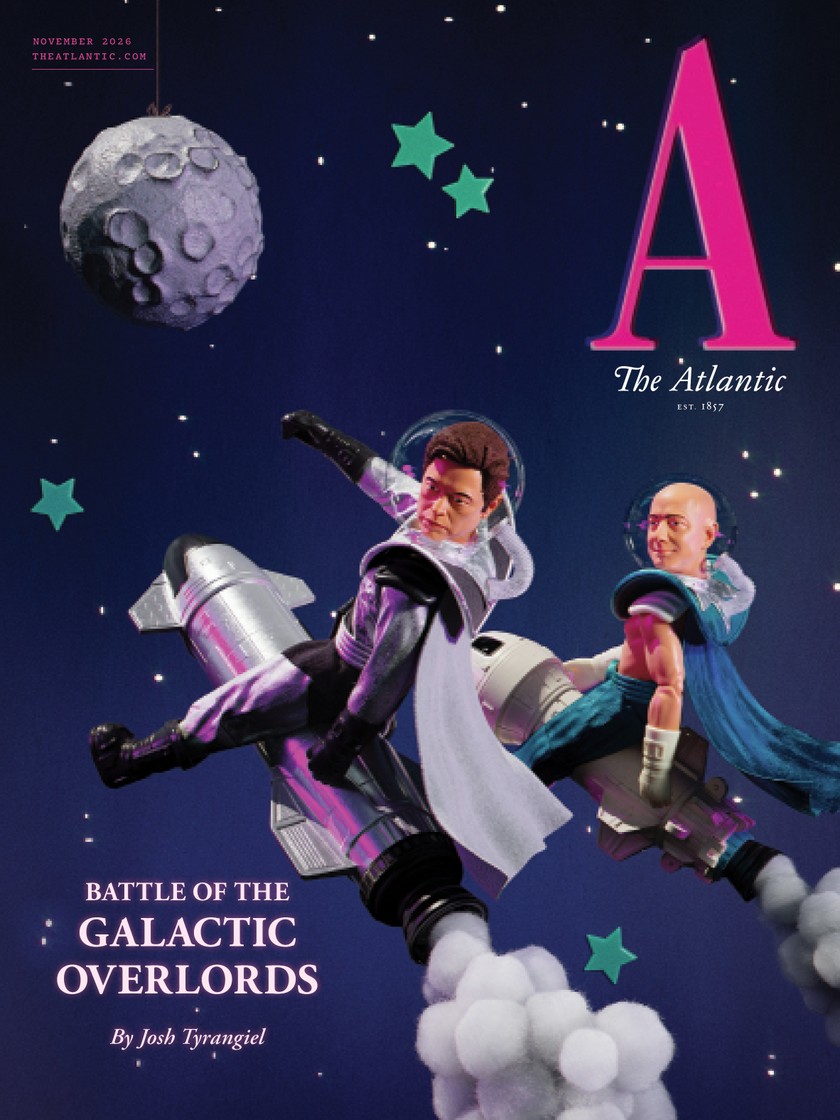
The Adriatic has been crossed by Odysseus and Caesar, by Venetian fleets and Napoleon’s navy, by countless men bent on dominating the world. It has seen its share of courage and folly. But one day in June 2025, off the island of Cres, it witnessed something genuinely new: a man worth $240 billion standing waist-deep in bubbles on the deck of a $500 million yacht, wearing a white bucket hat.
Clinton, Iowa, is topographically flat and economically declining. The sawmills that made the city rich in the late 19th century have been repurposed as a museum. One of the Victorian mansions long since abandoned by the old lumber barons is open for tours, but tourists are scarce. Clinton has shrunk to about 24,000 people, and the town center, along the Mississippi River, feels nearly empty. On the west side, miles of deep-green corn and soy fields are crisscrossed with transmission wires and zoned for heavy industrial use. The city’s economic activity includes corn processing, pet-food production, and methamphetamines. With available land and a dire need for investment, Clinton seems like the perfect place for a gigantic data center.
ne evening this summer, in the village of Bezdonys, in eastern Lithuania, I watched as a platoon of riflemen arrived at a train station occupied by enemy forces. Some of the Lithuanians let out a burst of gunfire from across the tracks, pinning the adversary in place as the rest of the unit advanced on the station. As the firefight intensified, wounded riflemen were evacuated to makeshift medical tents. An enemy soldier lay slumped against the station’s yellow clapboard siding.
This term the Supreme Court has plans to trample even more of our rights. But we, the people, are not powerless in the face of their power grab. Elie Mystal
My first day ever in New York, age sixteen, I got stuck in the middle of Central Park in the pouring rain with no umbrella and zero sense of direction. Drenched, cold, and hopelessly wandering from the Alice in Wonderland statue to the steps of the Met, I was in remarkably high spirits. I had read Just Kids earlier that summer and regarded this trip as a rite of passage in my Patti Smith pilgrimage. The city was not a stranger to me: there was Washington Square Park, where Patti had slept during her first few weeks, she and Robert Mapplethorpe surviving on lettuce sandwiches. Sure, each face I passed on Fifth Avenue was unfamiliar, but I could imagine Patti and just know I belonged. Even the comically overpriced T-shirts at the John Varvatos store on the Bowery shimmered with Patti and CBGB-era spirit.
Patti wasn’t my first author/guide. I’d opted for books over a social life throughout much of high school and had long approached new destinations through the eyes of a beloved author. When I began at Smith College, I knew from Sylvia Plath’s journals to write in my own on the porch of Haven/Wesley. I assumed this author-as-friend-guide was my own (mal)adaptive quirk. That is, until I read Deborah Levy’s My Year in Paris with Gertrude Stein.
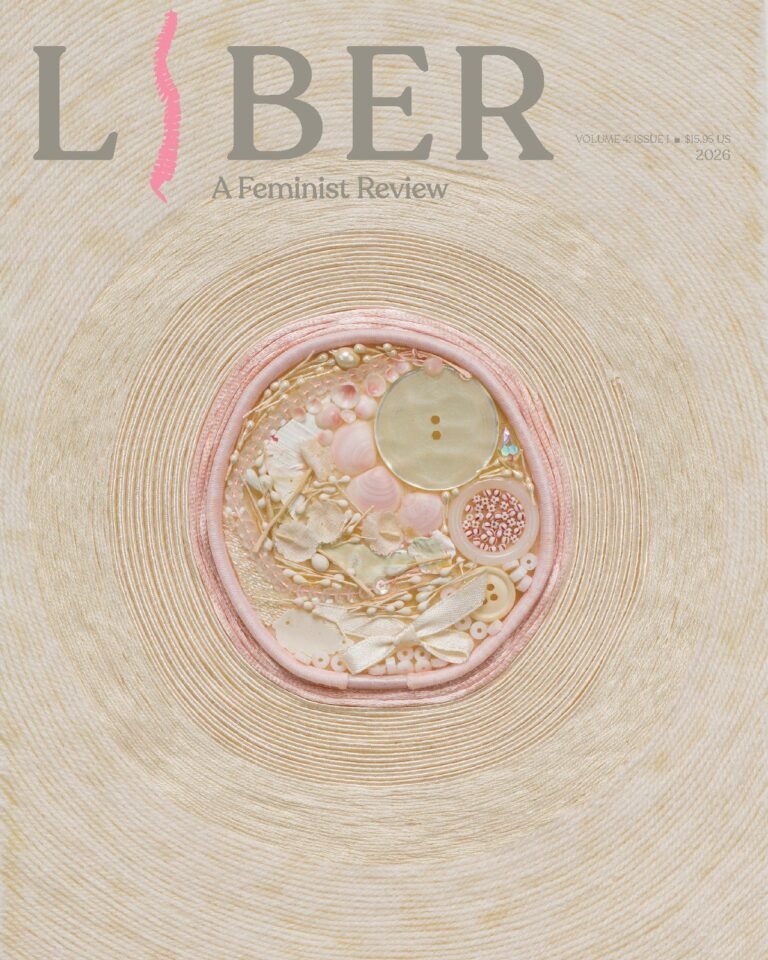
The Netflix series Bridgerton features a plotline about a nineteenth-century noblewoman desperately seeking a sexual “pinnacle” that coitus withholds from her yet not her husband. Meanwhile, the New York TimesWirecutter product review site recommends vibrators you can buy at Walgreens.
My, times have changed.
Fifty years ago, when feminist writer Shere Hite (1942–2020) published The Hite Report: A Nationwide Study of Female Sexuality, one of the best-selling books of all time, conventional wisdom dictated that plain old intercourse was the ticket to orgasm for women as well as men. Any woman who needed clitoral stimulation was deviant or trapped in her “phallic” stage; a mature woman achieved orgasm through the vagina (thanks, Freud). Hetero men didn’t know that what felt good for them didn’t necessarily feel good for women. Many women chose to fake pleasure rather than speak up because they were embarrassed or, rightly, worried about being belittled as pushy and slutty.
I had anticipated that Rachel Cusk’s latest would be a captivating work of big ideas. The premise—a nameless narrator encounters one of the great and celebrated film actors of the era and then attempts to write an “autobiography” of said star—is both juicy and think-y, a stage upon which brilliant observations can mingle with feminine angst and glamour.
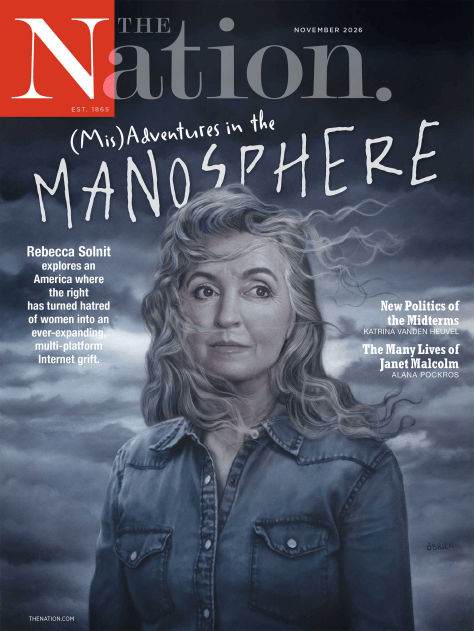
If the coming election does result in a blue wave, Trump will be faced with the fact of his diminishment. The rest of us will be faced with the wreckage. By David Remnick
The F.B.I. director’s hockey team, the Dons, faced their rivals in a beer league. With rogue slap shots and hovering security agents, Patel was in the zone—or, at least, next to it. By Richie McGinniss
My Education on the Border of the Syrian War
In the last Turkish town on the road to Aleppo, jihadis and spies mixed with reporters trying to prove themselves. By Ben Taub
On Afghanistan, empire, and American amnesia on the 25th anniversary of the US invasion. Leila Christine Nadir
Armando Ledezma writes on voguing with the House of Ruber in Caracas.
Alex Kitnick profiles Unmuzzled OX, a cult journal that seduced the best writers and artists in America.
Samuel Chu reports on Operation Yellowbird, the Umbrella Movement, and the dissidents of Hong Kong.
Andie Eisen considers the women taking over the funeral industry.
Jonah C. Sirott probes how the right stole the flying saucers and the Democrats lost the weirdos.
Michel Chaouli reflects on the history—and pleasures—of traveling and reading.
Essays by Amber Bal and Doyle D. Calhoun on a misunderstood masterpiece of African cinema, Rachel Cusk on the art of Joan Snyder, Issa Quincy on the 60th annual Angola Prison Rodeo, Yael Segalovitz on slumber, and Negar Azimi on Iranian art in the 2000s.
Fiction by Ingeborg Bachmann (transl. Philip Boehm and Tess Lewis). Scenes by Maya C. Popa, Sophia Le Fraga, Yuri Herrera, Jason Porter, Brandon Harris, and Sarah Ruhl.
I Come Here Often by Sarah Wang. Double Feature by Eugene Kotlyarenko. Poetry by Sara Eliza Johnson, Jose Hernandez Diaz, Jessica Fisher, Keith S. Wilson, Eileen G’Sell, Mary Jo Bang, and Eduardo Martínez-Leyva.
Scholar, author, and activist Tony Platt reviews the new narrative history by Miriam Pawel, “California Dreams: The Making and Remaking of the University of California.” Pawel’s narrow focus on five high-achieving alumni, argues Platt, elides both radical traditions and unethical…
Palestinian national poet Mahmoud Darwish’s “Mawwal” confronts immeasurable grief with unbending steadfastness: “the stabs of daggers I prefer / to being ruled by the vile.”
I lost a beautiful dream, I lost the scent of the lilies, and my night was long, upon the fences of gardens… But I never lost my way! The palm of my hand is now accustomed to the wounds of hope. Shake my hand hard and a river of songs will flow forth. Mother of my colt and sword: Mother mine, here’s a ditty of love! Mother mine, a ditty! The stabs of daggers I prefer, to being ruled by the vile.
Andrew Holter interviewed Tom Overton, author of a new biography, “John Berger: From Life,” out from Verso Books. In this fascinating discussion, Overton discusses his friendship with Berger, the biography’s literary approach, Berger on Palestine, and future plans for scholarship…
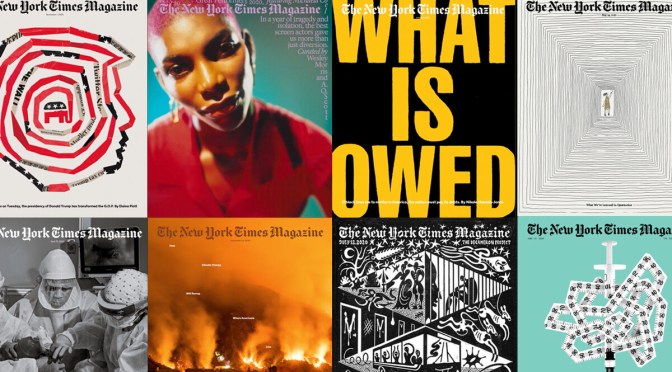
THE NEW YORK TIMES MAGAZINE: The 10.11.26 Issue features Daniel Kolitz on the rise of microdramas; Janet Reitman on a group of Texans accused of being Antifa terrorists; Marcela Valdes on the author Min Jin Lee; and more.
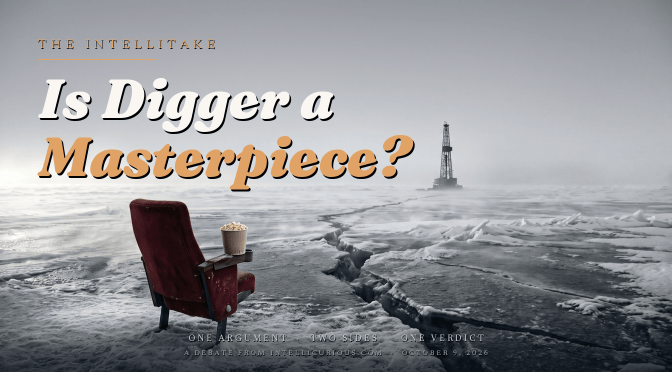
Digger, Alejandro Iñárritu’s $125 million satire, opened October 2 with Tom Cruise as an oil tycoon whose Arctic drilling sets off a planetary catastrophe. In UnHerd, the film historian David Thomson, author of The Biographical Dictionary of Film, calls it a flawed masterpiece and does not flinch from the flaws. The fable is “striking yet shallow.” Supporting characters are “introduced but not adequately explored.” Cruise, he writes, “is so terrified of being boring he cannot stoop to stillness or quiet.”
And yet. Thomson sees Cruise’s paunchy, manic Digger as a portrait of an age in which “the idiotic has become axiomatic,” a domineering, foolish authority convinced that power justifies whatever it wants. Beneath the performance is a look he finds more frightening than any horror film: “A look of gray ice pervades the movie; primary colors have been eliminated.” “There is no human touch any longer.”
A film about the end of the world, in other words, that looks the way the end of the world would look.
vs
THE ANSWER
Most American critics saw a different movie. At RogerEbert.com, Robert Daniels writes that “Digger chokes on its own ambitions, and very few of the picture’s participants emerge still breathing.” The film, he argues, never commits to its own high concept, and its dialogue preaches: “Every line explicitly explains the vapid evil espoused by craven industrialists against our fragile environment.”
William Bibbiani of TheWrap goes after the politics. A satire of billionaires that never threatens one is just flattery for the audience: “We are powerless to stop them, but we do get to point and giggle.” Of Cruise: he “hasn’t done this much caps-locked ‘ACTING’ in many years.”
On this reading, Digger is the thing it mocks: an expensive spectacle of the apocalypse that lets everyone go home feeling superior to it.
iC
THE INTELLITAKE
Read closely and the critics agree on every fact. The script is thin. Cruise is loud. The satire draws no blood. The look is extraordinary. The quarrel is over what a film is for. Daniels and Bibbiani grade Digger as an argument, and as an argument it fails: nobody leaves the theater changed about oil or billionaires. Thomson grades it as an artifact, something a future might dig up to learn what we looked like, and as an artifact it may be priceless.
Thomson’s tell is his title. He calls it the masterpiece “we deserve.” A culture that can only process its own ending as a $125 million entertainment starring Tom Cruise has made a film that is exactly that, and the film’s inability to be anything better is the most honest thing in it. The critics who wanted it to be smarter were asking the mirror to improve the face.
So: not a masterpiece, by the ordinary standard that a masterpiece knows what it is doing. But Thomson has the longer view, and he may be right that films of this scale and this nerve are ending. If so, Digger is less the last great film than the last great gesture, a studio spending a fortune to make a picture of the world with no human touch left in it. That is worth seeing, if only once.
TODAY’S PROVOCATION
Can a work of art about our stupidity be anything other than stupid, and would we recognize it if it were?