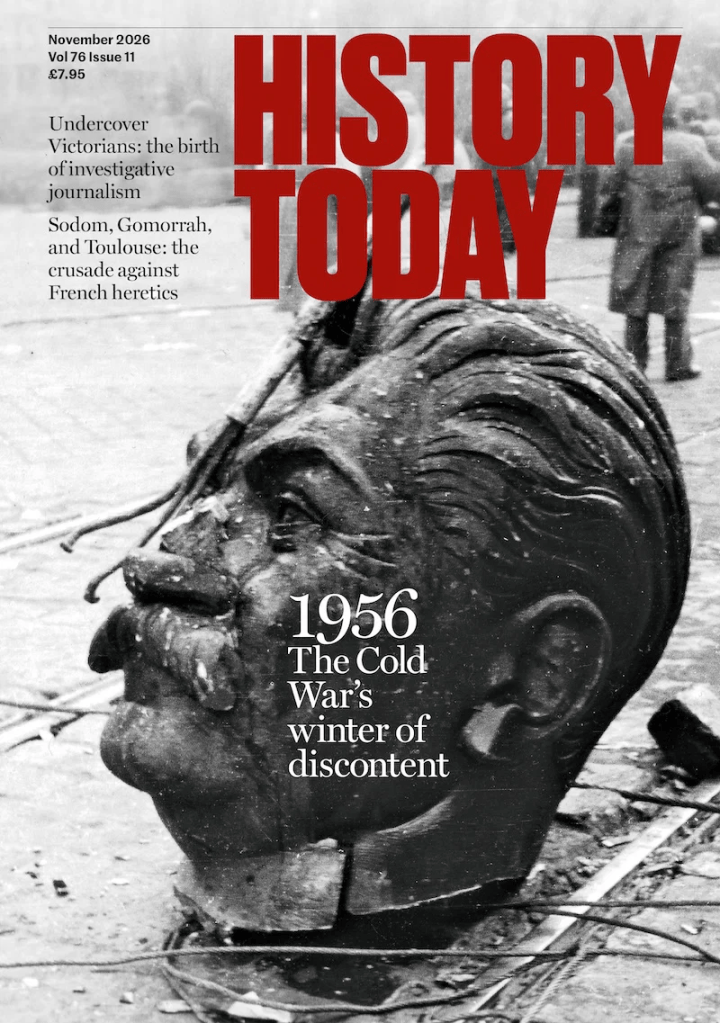
In late 1956 hundreds of thousands of Hungarians joined an uprising against the country’s Moscow-oriented government. 70 years on, the revolution’s meaning is still unclear.
For much of its modern history state lotteries were seen as antithetical to Britain’s moral values. The introduction of the Premium Savings Bond in 1956 was a major shift in government policy. What had caused it?
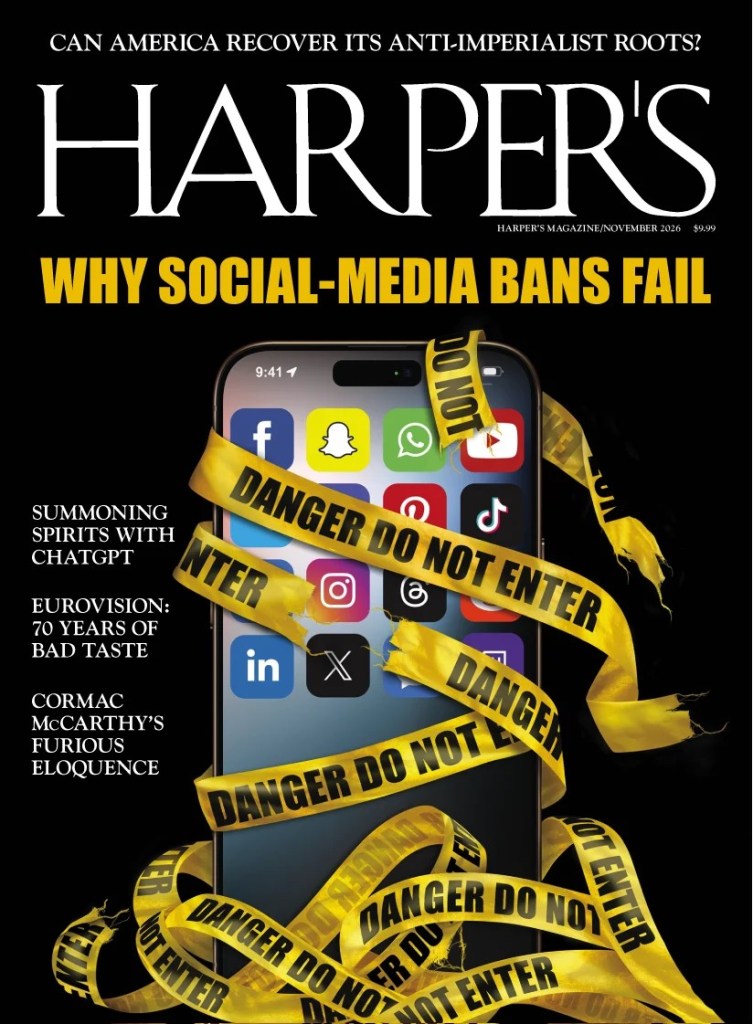
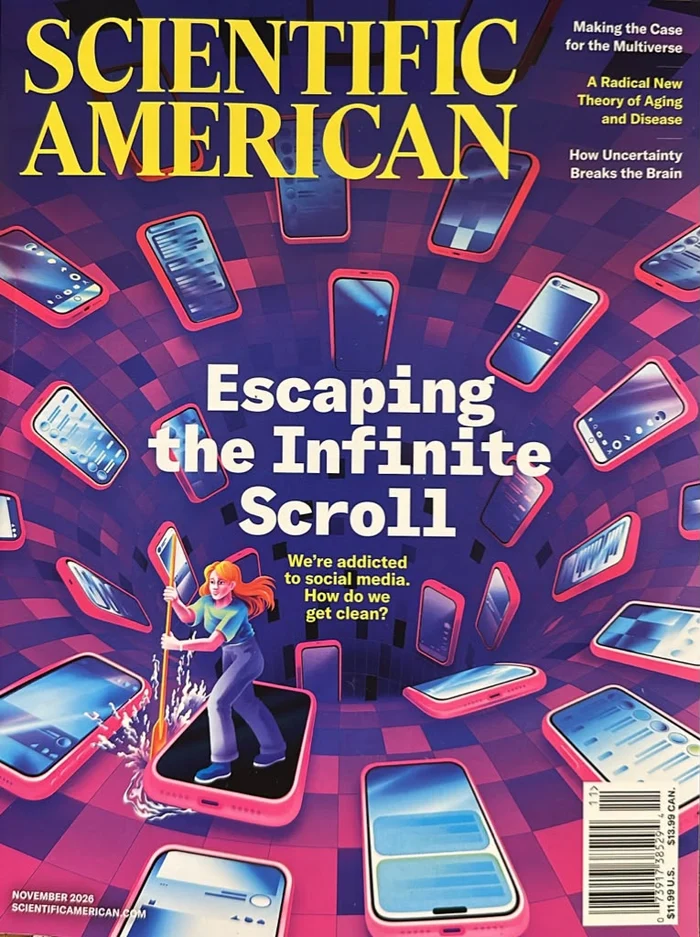
HARPER’S MAGAZINE: The latest issue features ‘WHY SOCIAL MEDIA BANS FAIL’, contemporary regulatory, ideological, and cultural shifts by featuring Oscar Schwartz’s investigative report on the making of Australia’s social-media restrictions, Jackson Lears’s historical essay advocating for a return to the nation’s foundational anti-imperialist principles, Sam Kestenbaum’s miscellany piece examining the intersection of artificial intelligence and spirituality at the dawn of a large language model New Age, a retrospective commemorating seventy years of bad taste at the Eurovision Song Contest, and a critical evaluation of Cormac McCarthy’s furious eloquence.
The making of Australia’s social-media ban by Oscar Schwartz
When I arrived last September at Northcote High, a public school perched on the grassy banks of Melbourne’s Merri Creek, I was surprised by how little had changed in the twenty years since I’d graduated from a high school nearby. The scene was intensely familiar: The girls with their long ponytails, hunched together in tight semicircles of avid conversation. The boys with their pimply faces, kicking balls or slouching against redbrick walls, their hands thrust deep into their pockets. The occasional shrieks, the awkward glances, the sexual frustration, the dim threat of violence—it was all the same.
Recovering America’s anti-imperialist roots by Jackson Lears
For many of the Founders of the American republic, the worst fate imaginable for the state they were envisioning was for it to become an empire. Republics and empires were fundamentally incompatible, they believed. Opposition to empire, in fact, was the keystone of their thought—but one would never know that from the hoopla surrounding America’s two-hundred-fiftieth birthday. The occasion provides an opportunity to celebrate the Founders’ ingenuity in fashioning a system of checks and balances and their audacity in claiming a universal right to “life, liberty, and the pursuit of happiness” in 1776—as well as to condemn their hypocrisy, especially with regard to racial equality. But in all the tumult of commemoration, rarely, if at all, have we heard of the Founders’ anti-imperialism.
Onstage before us is a man dressed in baggy raver pants, his blond hair slicked back. He has just sauntered in, waving, smiling, greeting the crowd of several hundred, and now stands in front of a dark-purple curtain that undulates in the air-conditioning. He settles into his seat and prepares to address the topic of today’s panel: artificial intelligence and the future of humanity.
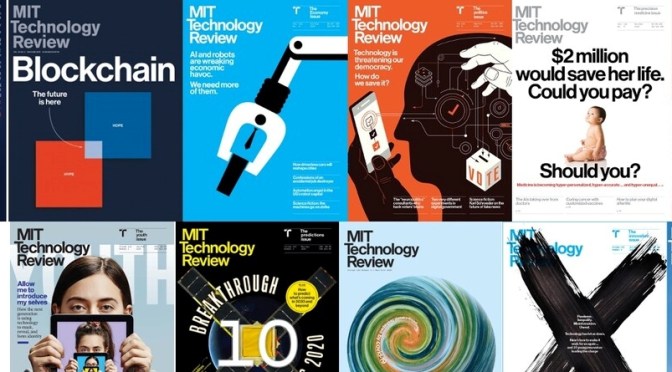
MIT TECHNOLOGY REVIEW: The Impossible issue features ‘Is it fun to dream about living on the moon or uploading our brains?’ For sure. But questing after the impossible is about way more than pipe dreams. This issue explores what we can do when we have the audacity to push for our most daring goals, from synthesizing blood to building AI with real guardrails. Plus: A bionic eye, the AI companies training models with dead startups’ data, and more.
Some transformative technologies have been “coming soon” for years. We ran progress reports on six big ideas to see how close they are to reality.
We ran progress reports on six potentially transformative technologies and ideas that have been “just around the corner” for years or, in some cases, decades. We called up experts with a bird’s-eye view of the fields to get a sense of what’s holding things back, and we chatted with folks running the studies, crunching the data, and building the prototypes that could make these dreams into realities. Then we placed each idea on a progress meter ranging from 0 to 10—0 being “We don’t even know where to begin” and 10 being “We did it!”
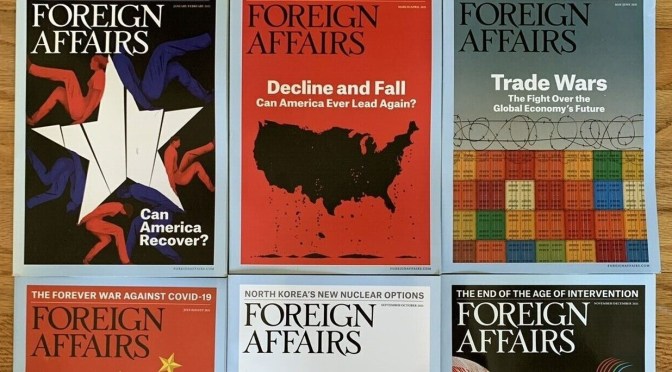
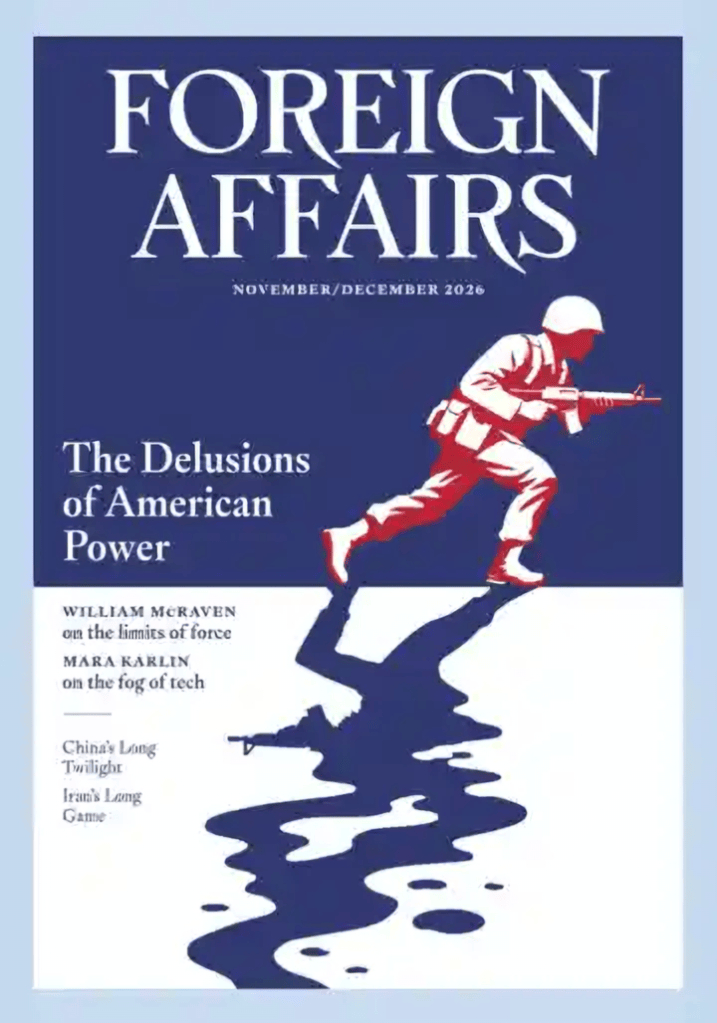
The war in Iran is far from the first time that U.S. policymakers have failed to appreciate the limits of American power. But the Trump administration’s use of military force against the Islamic Republic since February 28 offers a particularly glaring example of a mistake that has often characterized American strategy in recent decades. The war was launched without a clear rationale and with a constantly shifting set of objectives—from changing Tehran’s regime and squelching its nuclear ambitions to, more recently, reopening the Strait of Hormuz, which wasn’t closed until the war started. The results, not surprisingly, have been bad both for U.S. interests and for the Middle East.
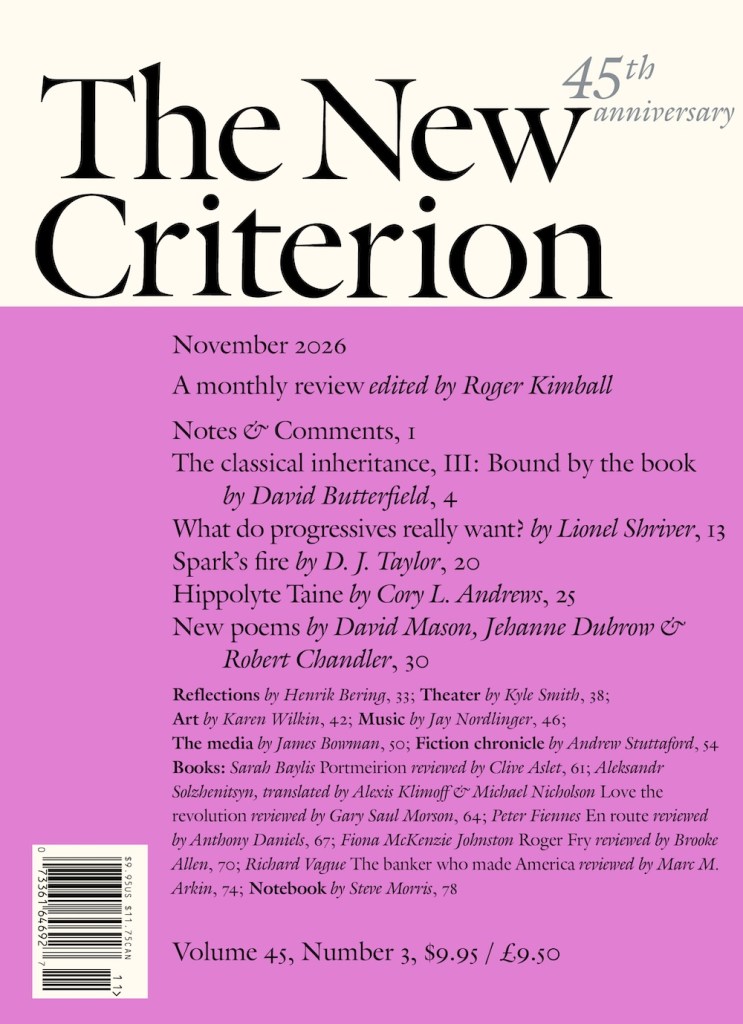
THE NEW CRITERION:The November 2026 issue, edited by Roger Kimball, features major pieces including “Notes & Comments,” David Butterfield’s “The classical inheritance, III: Bound by the book,” Lionel Shriver’s “What do progressives really want?,” D. J. Taylor’s “Spark’s fire,” Cory L. Andrews’s “Hippolyte Taine,” and a collection of “New poems” by David Mason, Jehanne Dubrow, and Robert Chandler, alongside dedicated columns covering reflections, theater, art, music, media, fiction, book reviews, and a notebook segment.
Bound by the book by David Butterfield
What do progressives really want? by Lionel Shriver
Spark’s fire by D. J. Taylor
Hippolyte Taine & the haunting persistence of history by Cory L. Andrews
In The Nerd Reich Gil Durán shows how Silicon Valley billionaires have pushed a fringe ideology—what is popularly called techno-fascism but is closer in aspiration to straight-up totalitarianism—into the affairs of state.
The Nerd Reich: Silicon Valley Fascism and the War on Democracy by Gil Durán
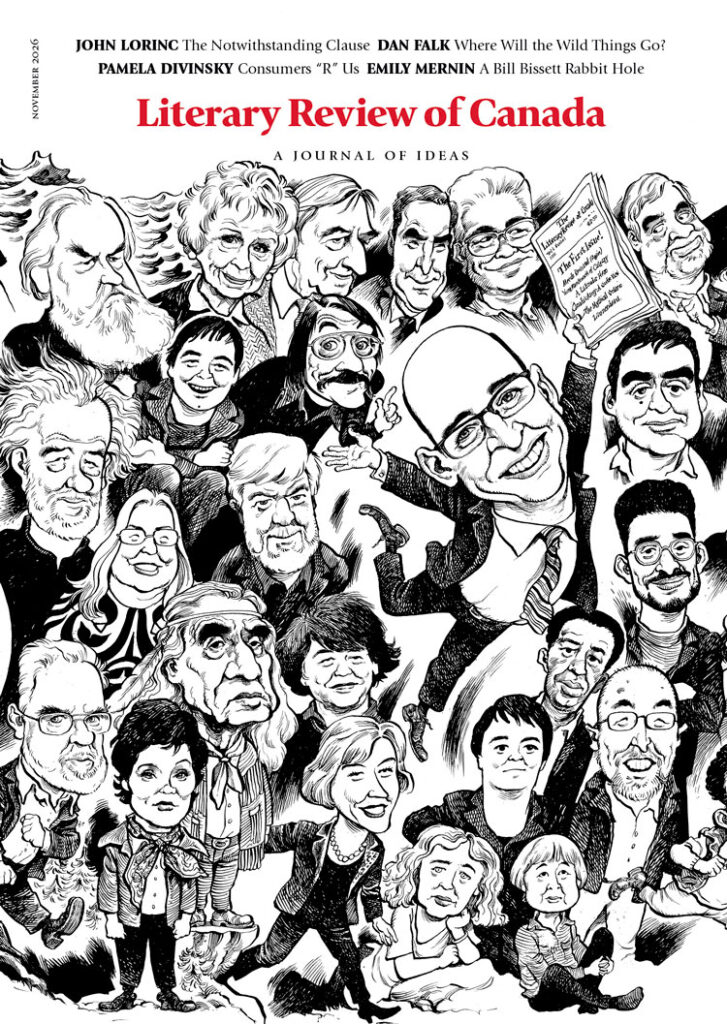
My heart sank when I first saw the magazine’s thirtieth-anniversary issue on paper. My managing editor back then, Michael Strizic, and I had spent the morning pacing in our small, dark office — anxious to receive several heavy boxes from Ottawa. Eventually I couldn’t stand the anticipation, so I walked ten minutes or so to Harbord Bakery to distract myself. The magazines had arrived by the time I returned.
Thirty-five years ago, in the inaugural issue of this magazine, I reviewed the newly published diary of André Laurendeau, written from 1964 to 1967 during the Royal Commission on Bilingualism and Biculturalism. The timing was apt: politicians, scholars, and journalists were speculating heavily on how to fix the “Canadian crisis” following the collapse of the Meech Lake Accord the year before.
“By Authority of Parliament: The Constitutional Boundaries of Legislative Power in Canada” by Ryan Alford
In 2017, during the early days of Donald Trump’s first term, the world was riveted both by his reality TV presidency and by the salacious rumours about the way he had obtained it. Insistent tales circulated about how Vladimir Putin’s troll army had engineered the Republican candidate’s victory by hacking into the Democratic Party’s servers and then releasing thousands of embarrassing emails on the eve of Hillary Clinton’s nomination. What followed was a stormy season of investigations and counter-accusations about Trump’s Russian proclivities.
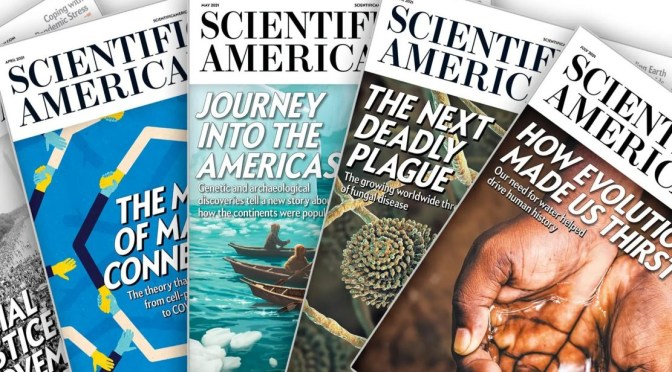
In the early 2000s, geneticists Helen Hobbs and Jonathan Cohen at the University of Texas Southwestern Medical Center launched an ambitious effort to investigate cardiovascular health in Dallas County. Their study was unusual for the time. Rather than largely focusing on people of European ancestry, the Dallas Heart Study deliberately recruited a diverse population that reflected the region’s demographics.
QUICK TAKE
Rare genetic changes in a gene called PCSK9 help control low-density lipoprotein (LDL) cholesterol, the “bad” cholesterol linked to heart disease.
People who naturally make less of the PCSK9 protein have much lower LDL levels, pointing researchers toward new possibilities for lowering cholesterol.
That insight led to a new class of cholesterol-lowering drugs and showed how studying diverse populations can uncover important clues about disease.
I spent much of my childhood in Colorado, which means that I, like millions of others living in the American West, grew up hearing warnings about the dangers of plague. People often find it shocking to learn that Yersinia pestis, the bacterium discovered in 1894 that is believed to have caused the mid-14th-century Black Death and other plague pandemics, is still around and dangerous, but that is one of many misperceptions about plague that need correcting. Plague’s multiple pandemics were not limited to the Black Death nor to Europe. And it is not a disease that disappears simply because no human cases are being reported at epidemic levels. Plague is not a thing of the past, and infections most definitely occur to this day.
QUICK TAKE
For centuries, our understanding of plague was riddled with assumptions based on a few historical accounts and data from modern plague victims.
Advances in genomics and bioarcheology now allow us to tie historical plague pandemics to human remains and even reconstruct the full plague family tree.
These data tell a new, broader story in which plague arrives earlier, stays later, and lurks in rural animal reservoirs before spilling over into human populations.
Seeking and evaluating explanations can shape the very process of learning. Just like tasting the soup as you’re cooking can shift the final product toward a closer approximation of soupy perfection, explaining as you learn can change the course of learning itself, pushing you to find a closer approximation of a truly great explanation: one that covers all the relevant observations in the simplest way possible. But how does that work?
QUICK TAKE
The process of explaining is a powerful learning tool.From a young age, humans ask “why”; answering that question can reveal deeper meanings and reveal hidden patterns.
Explaining can unlock abstraction, a complex thought process that allows people to generalize from specific examples to identify common themes.
The need to know why can unlock learning, but it can also drive some people to latch on to patterns that do not exist, such as conspiracy theories.
News, Views and Reviews For The Intellectually Curious