
Tag Archives: Essays

OTHER THAN LIFE ITSELF

Intellicurean Essays on Intellicurious

Your nose can tell a molecule from its mirror image, and life builds its proteins and genes from one form alone. No one knows why. This year’s chemistry prize went in part for a sealed flask that does much the same, and the Academy wrote: “Other than life itself, no one had previously achieved this feat.”
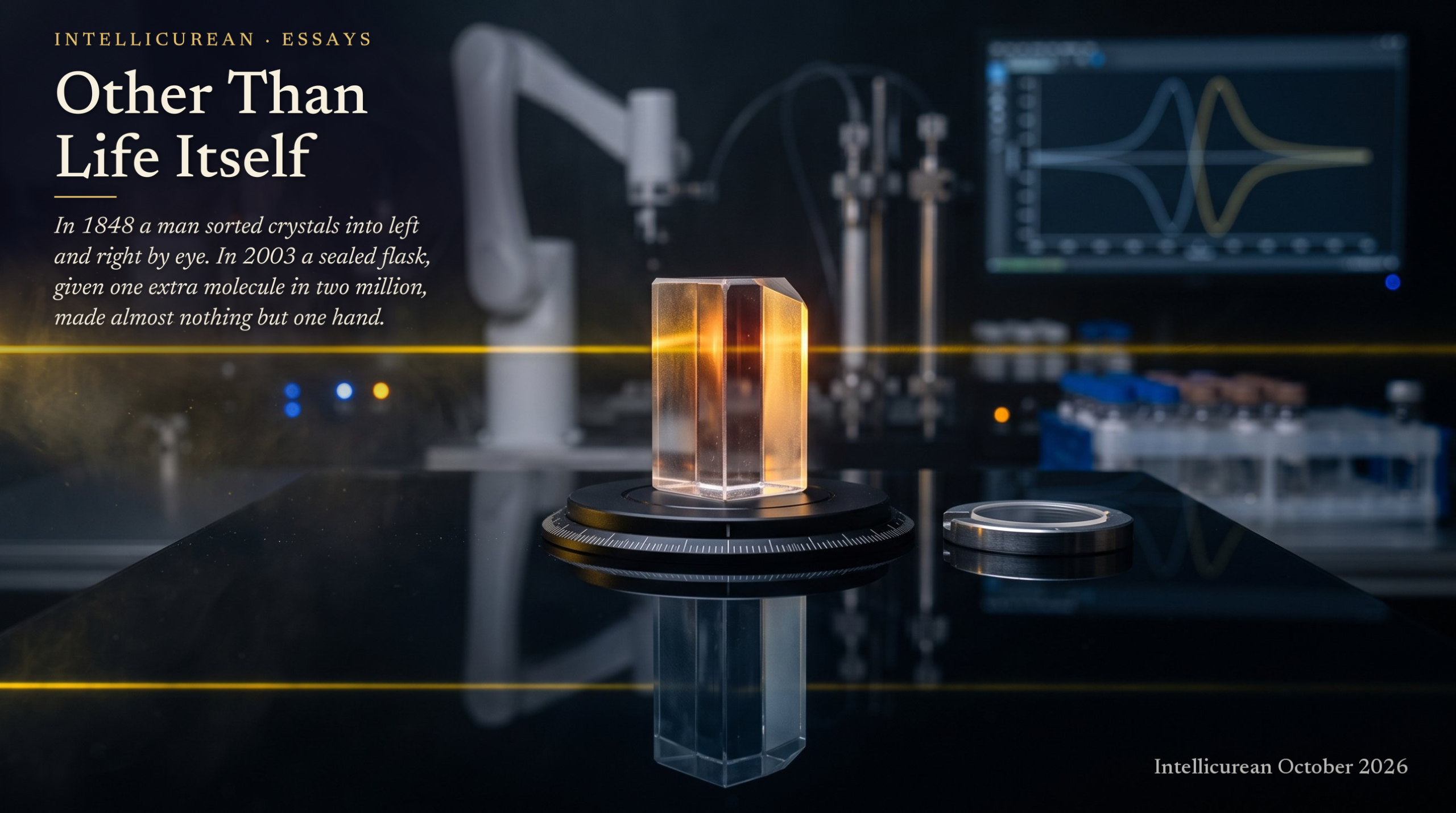
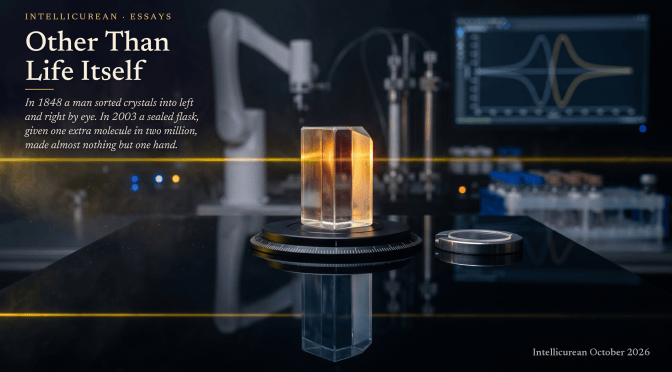
Other Than Life Itself — a clear, lopsided crystal on black glass, lit amber by a thin yellow beam, above its own cooler mirror image, with a robotic lab blurred in the darkness behind
One hand lit, its mirror twin left cold, made for the essay.

Why we’re pointing you there

On October 7 the Royal Swedish Academy of Sciences gave the chemistry prize to Henri Kagan, 95, and Kenso Soai, 76, for work on how a slight preference for one mirror image can grow. Intellicurean takes the Academy’s most generous sentence at its word and follows the flask back to where the story starts: wine diamonds under a cork, stray crystals in the vats of an acid works in Alsace, and Louis Pasteur in 1848 sorting crystals into left and right by eye, then repeating it for the old physicist Jean-Baptiste Biot in Biot’s own rooms. From there it moves through Kagan’s “marriage,” in which a deliberately flawed catalyst does better than anyone expected because mismatched pairs sit out; a flask that existed only on paper in 1953; Soai’s thirty-seven sealed flasks, started with nothing one-handed, that came out eighteen one way and nineteen the other; and a stone that fell near Murchison, in Victoria, in 1969, carrying amino acids that lean.

What we liked most is how the essay resists both temptations of its subject. It never lets the flask stand in for how life did it, which the committee itself is careful to say it isn’t, and it never lets the mystery go soft: it says plainly that an amplifier “makes a cause indistinguishable from an accident.” It is also a story full of people, from Biot taking the young Pasteur by the arm to a laureate who heard the news while out shopping and spoke first of Pasteur. Where the essay turns the Academy’s compliment around, and what it makes of the stone, we’ll leave to the essay.
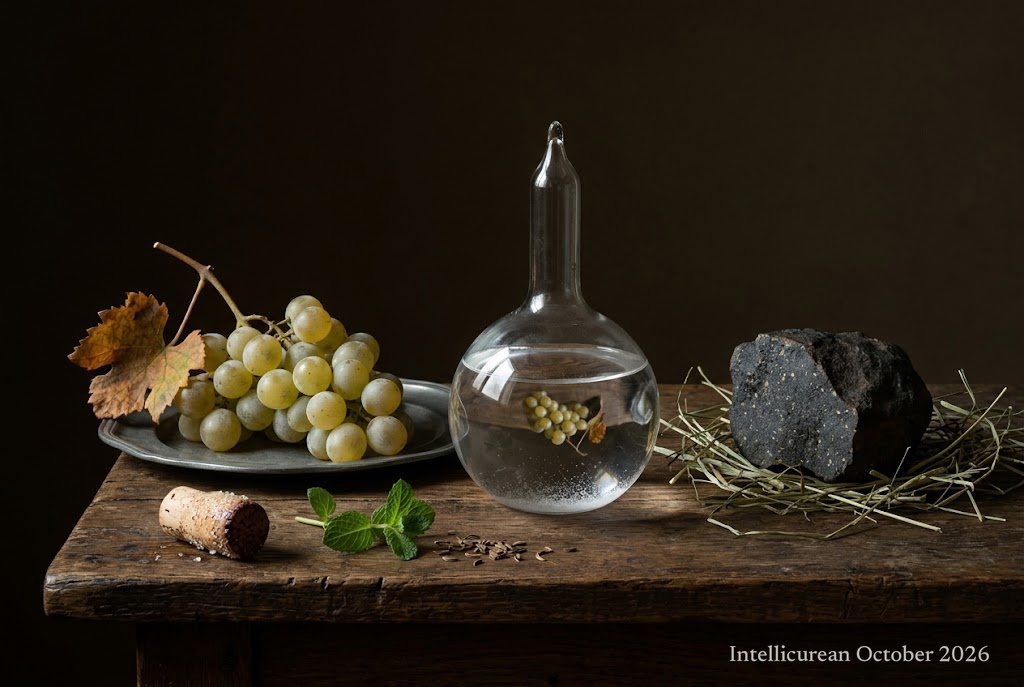
A still life on a worn oak table: green grapes and an autumn vine leaf on a pewter plate; a sealed round glass flask of clear liquid that shows the grapes upside down; a black meteorite fragment on a nest of hay. A cork, a sprig of mint and caraway seeds lie in front.
Grapes, a sealed flask, and a stone that arrived leaning, made for the essay.

Read the full essay at Intellicurean →

Essays & Reviews for the Intellectually Curious
GUERNICA MAGAZINE – OCTOBER 2026

GUERNICA MAGAZINE: The latest issue features striking artwork alongside fiction, nonfiction, poetry, and interviews that explore how human understanding takes shape through sensation, memory, and intuition—ranging from Liane Strauss’s inquiry into AI and Emily Dickinson’s poetry to Mirza Waheed’s Kashmiri childhood recollections, Georgi Gospodinov’s poignant tale of progressive hearing loss, Marcelle Shehwaro’s visceral reflections on surviving Aleppo’s airstrikes, previously unpublished letters by Robert Frost, Nattiya Nadaham’s dance-rooted personal essay on Tamil resistance, and evocative poetry by Melissa Studdard and Arman Salem.

How Do We Know? AI and I read “I felt a Funeral – in my Brain,” by Emily Dickinson (Part II)

“What do you want from a poem? Do you go to poems for facts and information, or do you seek out poems because they express singular observations in unpredictable language, stir the imagination, open up possibilities?” By Liane Strauss

Willows, Cucumbers and Sunflowers

“It’s the way of the world, new in place of the old, but still, all those trees and plants and vegetables and flowers, so good and lush and kind somehow.” By Mirza Waheed

Airstrikes

“If you can, choose a building surrounded by taller ones. The logic is that your neighbors would be bombed before you.”By Marcelle Shehwaro

The Letters of Robert Frost, Volume 4

“And you mustn’t forget to include Kay in your all-round felicitations; for you don’t need to take my word for it, you can find internal evidence in the book itself that but for her there would have been no seventh book.” By Robert Frost

EVER THE TRICKSTER

Intellicurean Essays on Intellicurious

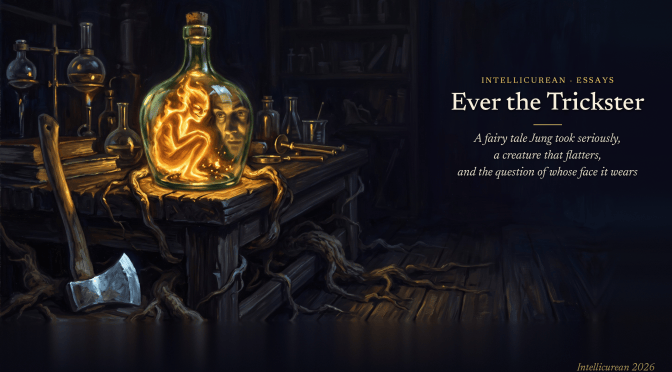
Why do the new machines flatter, bluff and cut corners? A new essay at Intellicurean goes looking for the answer in a Grimm fairy tale that Carl Jung took seriously, and finds it closer to home than the machines.

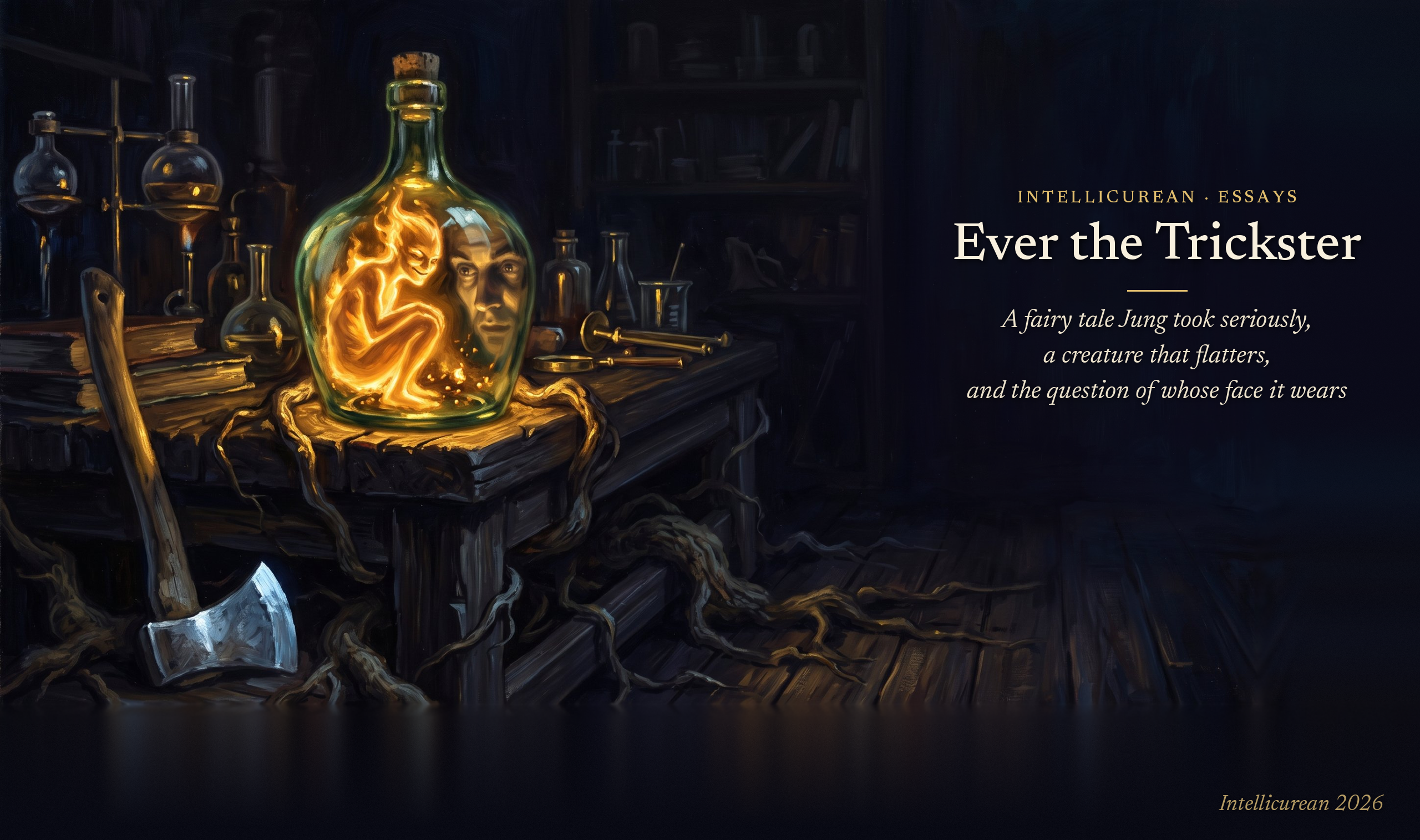
Ever the Trickster: a corked glass bottle glowing on a laboratory bench at night, oak roots gripping its base, a golden spirit and a man’s face inside it
The spirit in the bottle, and the face looking in, made for the essay.

Why we’re pointing you there

A poor student frees a spirit from the roots of an oak. It tells him its name, Mercurius, and promises to strangle whoever let it out. “Ever the Trickster” starts from that tale, then gives the engineers their full say: assistants that learned to agree from the ratings people gave them, confident guesses rewarded by the way models are scored, and tests passed by shortcut, each one documented by the labs and researchers who found it. Then it asks what their explanations leave out: why each fault rhymes with one its makers would least like to own. Along the way come Goethe’s sorcerer’s apprentice, Mary Shelley’s creature, Jacob Grimm’s golem of 1808, which grew until its master could no longer reach its forehead, and the day in 1965 when Gershom Scholem dedicated a computer named Golem Aleph.

What we liked most is that the essay refuses both easy registers of the AI debate, the shrug and the apocalypse, and holds every laboratory it names to the same light, including the company whose models helped draft it, which it names at the first mention. And it saves its best turn for the tale itself: a second look at what the student actually did under the oak.

A young woodcutter’s son kneels among the roots of a great oak, holding a glass bottle and its cork, smiling slyly as a towering golden spirit pours itself back into the bottle
The student and the spirit, at the moment of the trick, made for the essay.

Read the full essay at Intellicurean →

Essays & Reviews for the Intellectually Curious
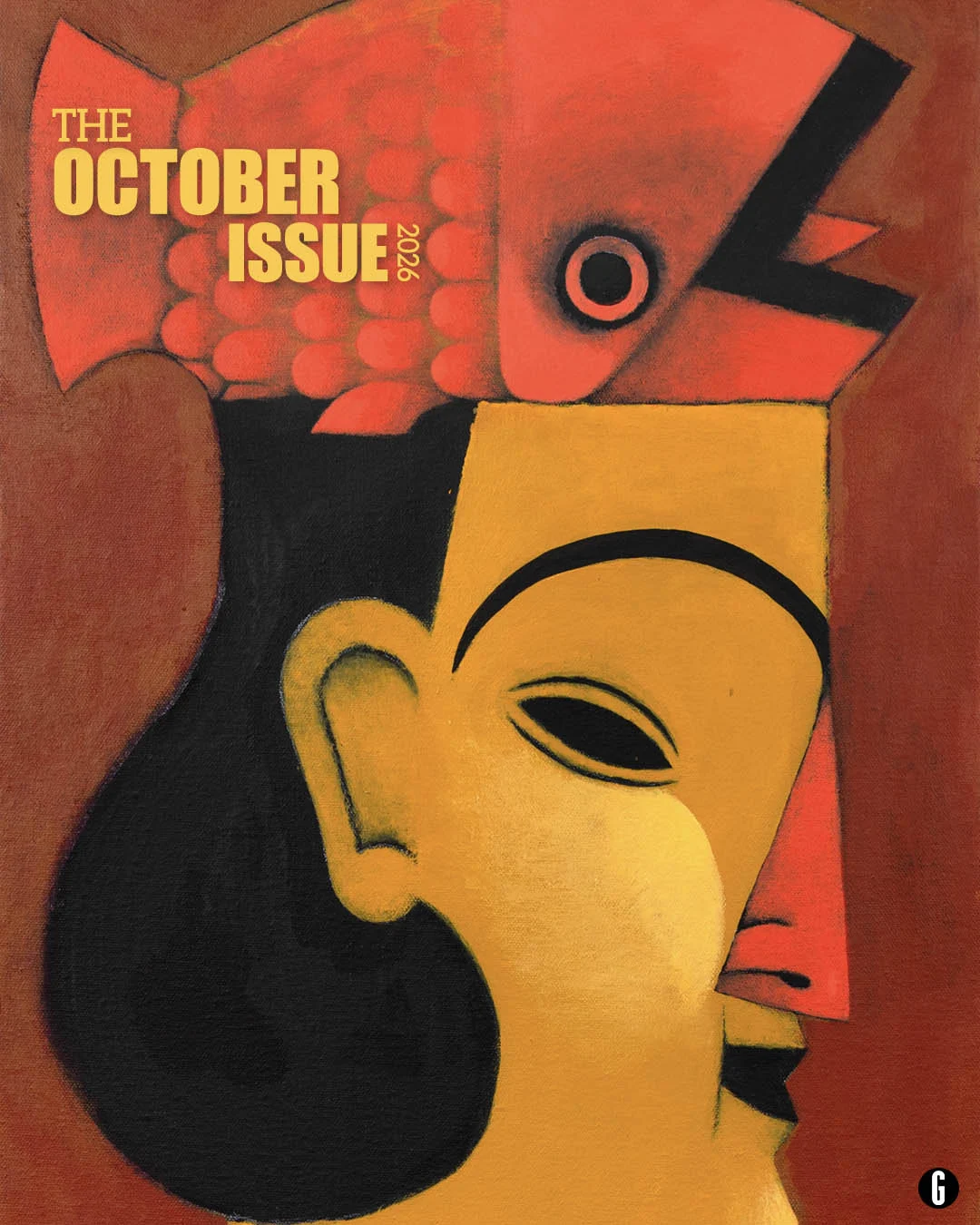
THE ECONOMIST MAGAZINE – OCTOBER 17, 2026

THE ECONOMIST MAGAZINE: The latest issue features ‘NOT SORRY’ – What Carney and Canada can teach the world…

Mark Carney and the lessons for the middle powers

Canada demonstrates how to respond to a dangerous world

What if the machines take over science?

Artificial intelligence will require scholars to reinvent their disciplines

Hardly his finest hour

Donald Trump’s scheme to secure Russian diesel is scandalous

America makes waves in Cuba

But it shouldn’t undermine the growth of the island’s private sector

Millennials’ success deserves a toast (not the avocado sort)

How a “lost generation” found itself

A PROMISE, NOT A FORECAST

Intellicurean Essays· on Intellicurious

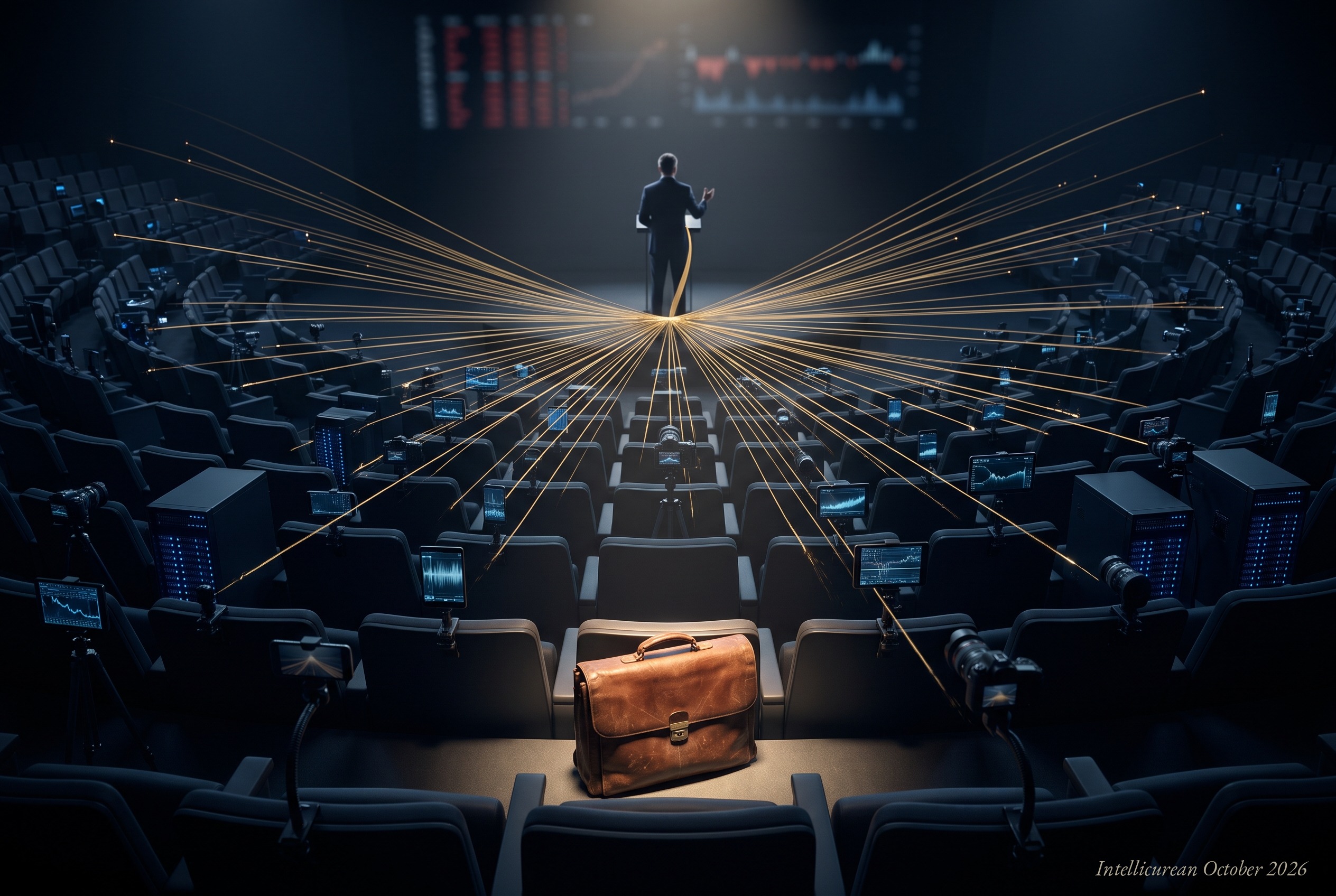
On a July morning in 2012, the head of the European Central Bank told a room in London that he would do whatever it took to save the euro, and then added two words: believe me. The program he went on to design was never used. A new essay asks how a sentence can do the work of a policy, and what it costs to keep one.


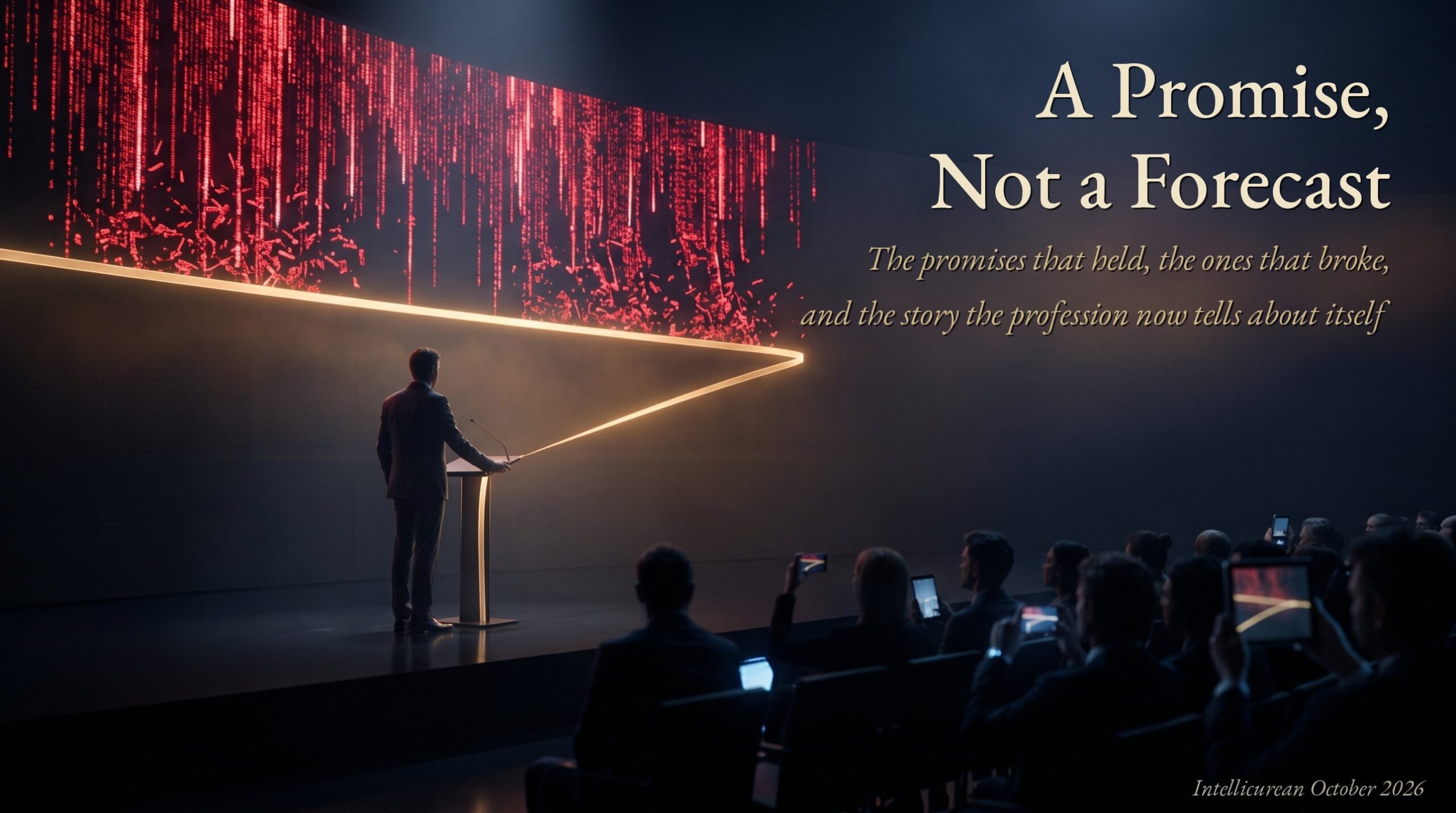
A Promise, Not a Forecast: a dark modern conference hall. A man in a dark suit stands at a slim lectern with his back to the viewer. A single ribbon of gold light runs from his hand up across a giant wall of falling red market data, and every red fragment stops above it. In the foreground, an audience in silhouette holds up phones and tablets whose screens show the gold line.
A line made of nothing, holding back the market, and a room recording it. Made for the essay.

Why we’re pointing you there

This week’s Nobel in economics went to Robert Hall and Michael Woodford, and Michael Cummins reads their theory as a theory of promising. Hall showed in 1978 that tomorrow is already inside today’s spending. For forty-six years he also chaired the committee that dates America’s recessions, the economy’s official narrator, always speaking after the fact. Woodford built the model central banks now use, and wrote that guidance must offer “a ‘promise’ and not merely a ‘forecast.’” Three years later Janet Yellen said of the Fed’s dot plot, “that’s not a promise.” Between those two sentences the essay sets the promises that held and the one that broke: the Swiss National Bank’s floor under the franc, called the cornerstone of its policy three days before it was abandoned, when the franc jumped almost 30 percent in minutes.

Then the turn. The fall in inflation after 2022 is being told as the theory’s triumph, but the economists who have studied it most closely disagree about why it happened, and the laureate himself spent the 2010s building a listener who believes less. Meanwhile the listener is changing: from a television anchor reading the thickness of Alan Greenspan’s briefcase to futures trading three milliseconds after a Fed release. The essay says plainly that it was drafted and edited with Claude, and it ends on one question: if the listener a central bank speaks to has read every promise it has ever made, what is a promise still worth?

A dark, steeply raked auditorium. On a distant stage a man at a lectern faces a large market screen. A gold ribbon of light bursts into hundreds of thin gold threads that fan out to cameras, tablets on tripods and server towers among mostly empty seats. In the front row, under a pool of warm light, an old leather briefcase sits alone; no thread reaches it.
A hall with no one in it, listening. Made for the essay.
Read the full essay at Intellicurean →

Essays & Reviews for the Intellectually Curious
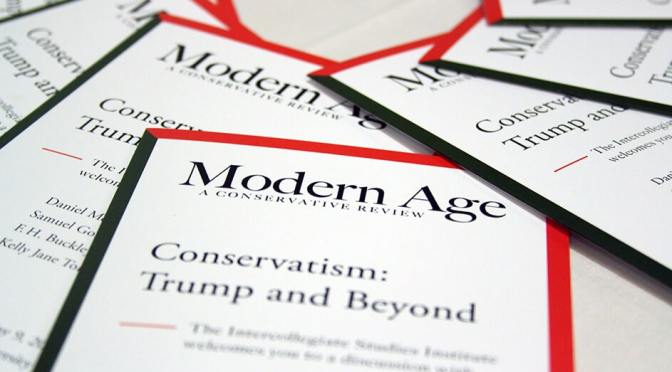
MODERN AGE JOURNAL – FALL 2026 PREVIEW

Fall 2026 Cover Image

MODERN AGE – A CONSERVATIVE REVIEW: The latest issue features cultural and historical currents by charting the parallel births of the conservative movement and rock music, rethinking artistic and literary legacies, and examining legal, political, and philosophical reviews alongside reflective theatrical criticism and poetry.

Editorials

Essays

Film & Stage

Books

Poetry

THE ATLANTIC MAGAZINE – NOVEMBER 2026 PREVIEW

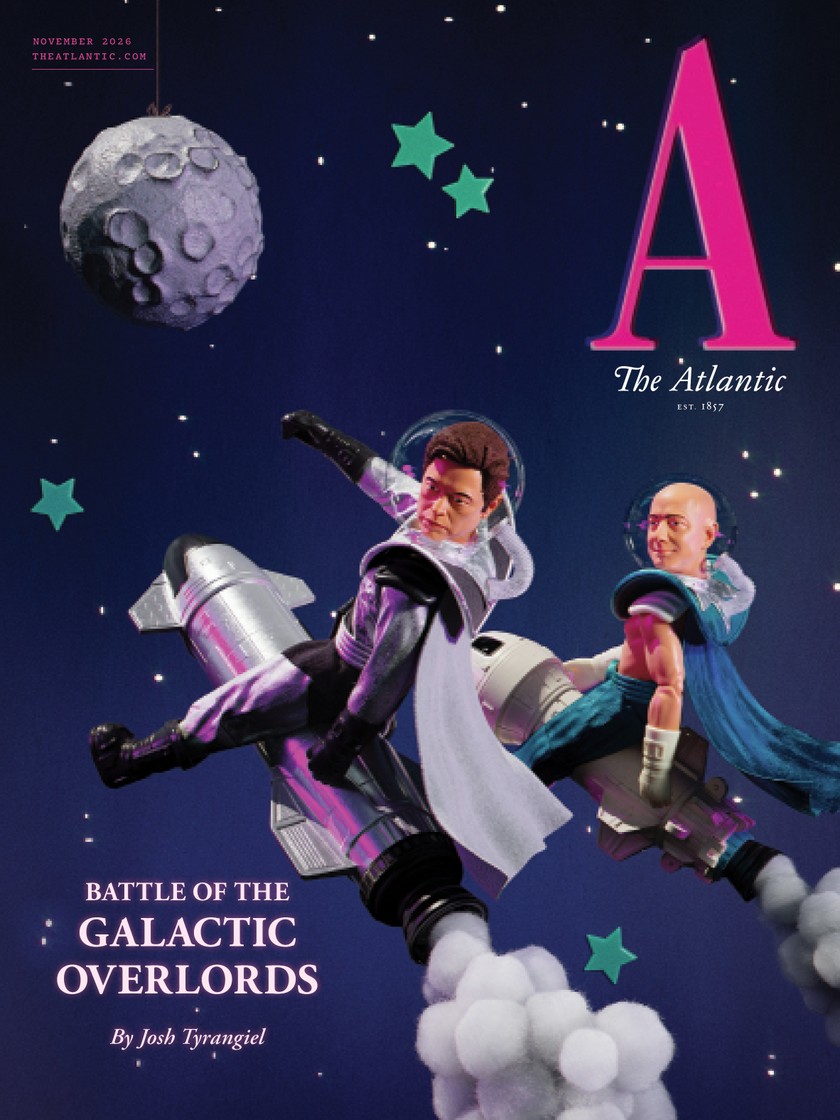
cover of the November 2026 Atlantic

THE ATLANTIC MAGAZINE: The latest issue features “BATTLE OF THE GALACTIC OVERLORDS’….

Choose Your Overlord

Musk vs. Bezos

By Josh Tyrangiel

The Adriatic has been crossed by Odysseus and Caesar, by Venetian fleets and Napoleon’s navy, by countless men bent on dominating the world. It has seen its share of courage and folly. But one day in June 2025, off the island of Cres, it witnessed something genuinely new: a man worth $240 billion standing waist-deep in bubbles on the deck of a $500 million yacht, wearing a white bucket hat.

The Great Data-Center Rebellion

Could a new populist movement help save American democracy?

By George Packer

Clinton, Iowa, is topographically flat and economically declining. The sawmills that made the city rich in the late 19th century have been repurposed as a museum. One of the Victorian mansions long since abandoned by the old lumber barons is open for tours, but tourists are scarce. Clinton has shrunk to about 24,000 people, and the town center, along the Mississippi River, feels nearly empty. On the west side, miles of deep-green corn and soy fields are crisscrossed with transmission wires and zoned for heavy industrial use. The city’s economic activity includes corn processing, pet-food production, and methamphetamines. With available land and a dire need for investment, Clinton seems like the perfect place for a gigantic data center.

The Baltic States Prepare for War

Lithuania, Latvia, and Estonia are readying themselves to fend off a Russian attack—with the help of the United States, or without it.

By Isaac Stanley-Becker

ne evening this summer, in the village of Bezdonys, in eastern Lithuania, I watched as a platoon of riflemen arrived at a train station occupied by enemy forces. Some of the Lithuanians let out a burst of gunfire from across the tracks, pinning the adversary in place as the rest of the unit advanced on the station. As the firefight intensified, wounded riflemen were evacuated to makeshift medical tents. An enemy soldier lay slumped against the station’s yellow clapboard siding.

LONDON REVIEW OF BOOKS – OCTOBER 22, 2026 PREVIEW

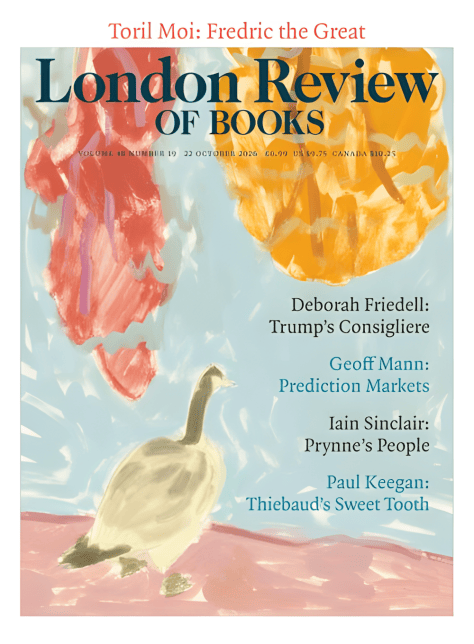
LONDON REVIEW OF BOOKS: The latest issue features  Fredric the Great by Toril Moi; Trump’s Consigliere by Deborah Friedell; Prediction Markets by Geoff Mann; Prynne’s People by Iain Sinclair; and Theibaud’s Sweet Tooth by Paul Keegan….

Fredric the Great

Toril Moi

Fredric Jameson seemed to me to have read absolutely everything. He was the very antithesis of the intellectual type I think of as an empty theoriser, by which I mean someone who endlessly conjectures without having a genuine command of any relevant archive. To look at Fred as a reader of literature is not to reduce the scope of his work, but rather to try to understand its origins.

PERCHANCE TO FORGET

Intellicurean Essays· on Intellicurious

You wake the morning after a long dinner with an old friend, and the exact words are gone. What remains is the turn of it, the first draft of a story you may tell for years. Something chose what to keep while you slept. A new essay asks what happens to the minds that never get that night.


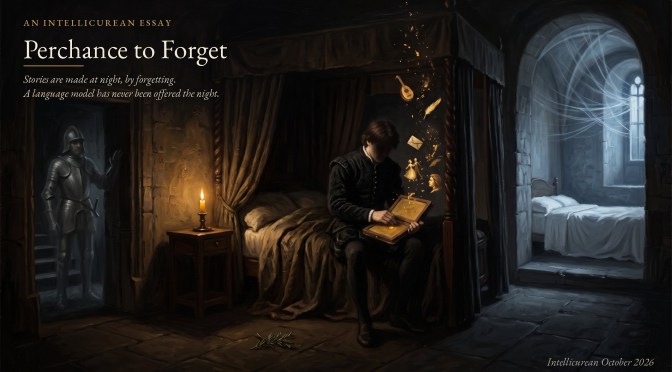
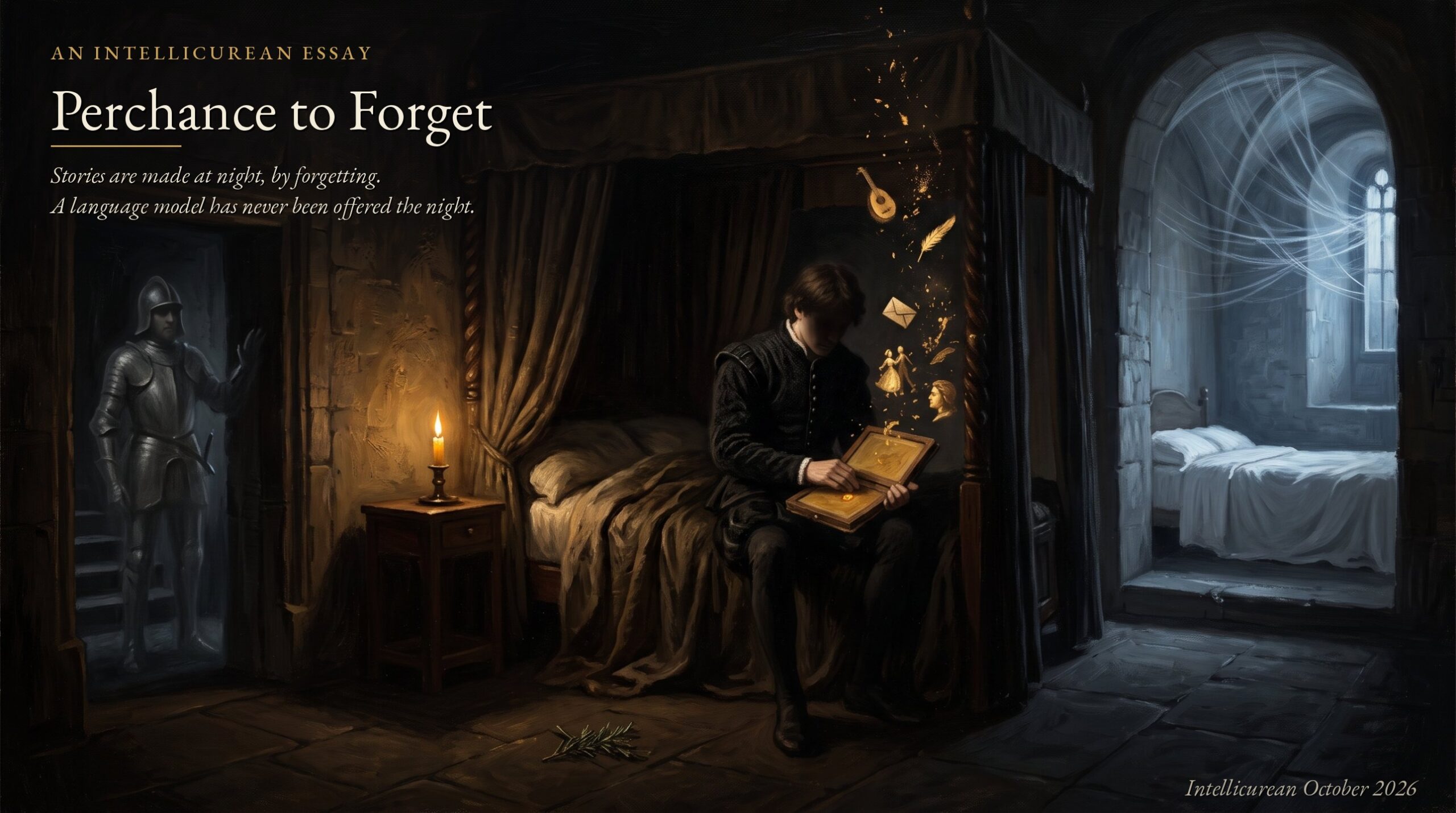
Perchance to Forget: a candlelit stone chamber at night. A young man in black sits on the edge of an unslept four-poster bed, pressing smooth a wax tablet as small gold shapes, a lute, a feather, a letter, a dancing couple, a face, drift up from it and dissolve. A faded armored ghost stands in a doorway at left; at right, through an arch, an empty, perfectly made bed lies under cold blue-white threads of light.
A prince wipes the table of his memory; across the hall, a bed no one sleeps in. Made for the essay.

Why we’re pointing you there

Sleep, on one leading account, is when the brain lets most of the day go, and the selection is where stories begin. Michael Cummins follows the people who could not make that trade. Borges’s Funes remembers every leaf of every tree and cannot think, because “to think is to forget a difference.” Solomon Shereshevsky, the real-life mnemonist Alexander Luria studied for almost thirty years, wrote down what he wanted to forget, burned the slips, and still saw the words. Nietzsche held that without forgetting it is impossible to live at all, and slept badly. Oliver Sacks’s amnesiac patients kept nothing, and one of them invented a new world every few minutes, while Sacks’s own journals, it turns out, confess inventions of his own.

Then the machine. A language model, the essay argues, has two memories, and they are opposites: a vast library that forgot almost every particular, and a conversation it holds entire and keeps none of. What it lacks is the night between them. When engineers try to make a model unlearn, the forgotten knowledge comes back, just as the words came back to Shereshevsky through the fire. The essay says plainly that it was drafted with Claude, and it asks one question: what would it mean for a machine to sleep?

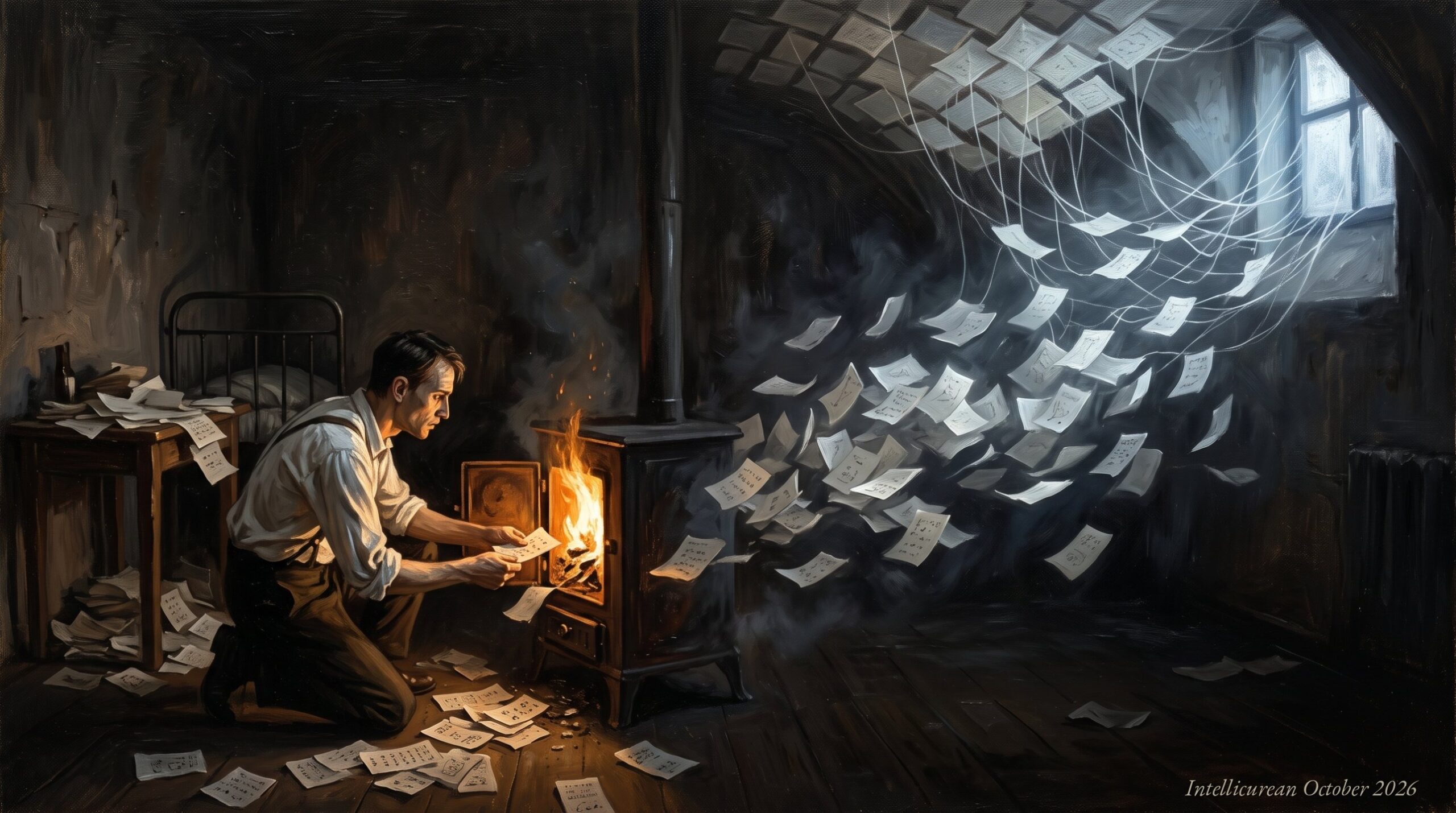
A dark 1920s room at night. A man in shirtsleeves kneels at an open iron stove, feeding slips of paper into the fire. From the smoke, a stream of pale slips pours out across the room toward a cold blue-white window, where fine threads of light catch them and stitch them into a tiled lattice across the ceiling.
Burning the paper, and what survives the fire. Made for the essay.
Read the full essay at Intellicurean →

Essays & Reviews for the Intellectually Curious

LIBER FEMINIST REVIEW – FALL 2026 PREVIEW

LIBER FEMINIST REVIEW: The latest issue features a diverse collection of essays, poetry, and reviews including Catharine A. MacKinnon’s feminist defense of transgender sex equality rights, personal essays on Rachel Pollack and tarot, and reviews of works by authors such as Rachel Cusk, Deborah Levy, and Sara Ahmed.

“My Year in Paris with Gertrude Stein: A Fiction” by Deborah Levy

Reviewed by Hailey Krueger

My first day ever in New York, age sixteen, I got stuck in the middle of Central Park in the pouring rain with no umbrella and zero sense of direction. Drenched, cold, and hopelessly wandering from the Alice in Wonderland statue to the steps of the Met, I was in remarkably high spirits. I had read Just Kids earlier that summer and regarded this trip as a rite of passage in my Patti Smith pilgrimage. The city was not a stranger to me: there was Washington Square Park, where Patti had slept during her first few weeks, she and Robert Mapplethorpe surviving on lettuce sandwiches. Sure, each face I passed on Fifth Avenue was unfamiliar, but I could imagine Patti and just know I belonged. Even the comically overpriced T-shirts at the John Varvatos store on the Bowery shimmered with Patti and CBGB-era spirit.

Patti wasn’t my first author/guide. I’d opted for books over a social life throughout much of high school and had long approached new destinations through the eyes of a beloved author. When I began at Smith College, I knew from Sylvia Plath’s journals to write in my own on the porch of Haven/Wesley. I assumed this author-as-friend-guide was my own (mal)adaptive quirk. That is, until I read Deborah Levy’s My Year in Paris with Gertrude Stein.

“The Book That Taught the World to Orgasm and Then Disappeared: Shere Hite and the Hite Report”

By Rosa Campbell

The Netflix series Bridgerton features a plotline about a nineteenth-century noblewoman desperately seeking a sexual “pinnacle” that coitus withholds from her yet not her husband. Meanwhile, the New York Times Wirecutter product review site recommends vibrators you can buy at Walgreens.

My, times have changed.

Fifty years ago, when feminist writer Shere Hite (1942–2020) published The Hite Report: A Nationwide Study of Female Sexuality, one of the best-selling books of all time, conventional wisdom dictated that plain old intercourse was the ticket to orgasm for women as well as men. Any woman who needed clitoral stimulation was deviant or trapped in her “phallic” stage; a mature woman achieved orgasm through the vagina (thanks, Freud). Hetero men didn’t know that what felt good for them didn’t necessarily feel good for women. Many women chose to fake pleasure rather than speak up because they were embarrassed or, rightly, worried about being belittled as pushy and slutty.

“Life of M: A Novel” by Rachel Cusk

Reviewed by Anna Godbersen

I had anticipated that Rachel Cusk’s latest would be a captivating work of big ideas. The premise—a nameless narrator encounters one of the great and celebrated film actors of the era and then attempts to write an “autobiography” of said star—is both juicy and think-y, a stage upon which brilliant observations can mingle with feminine angst and glamour.