
Category Archives: Magazines

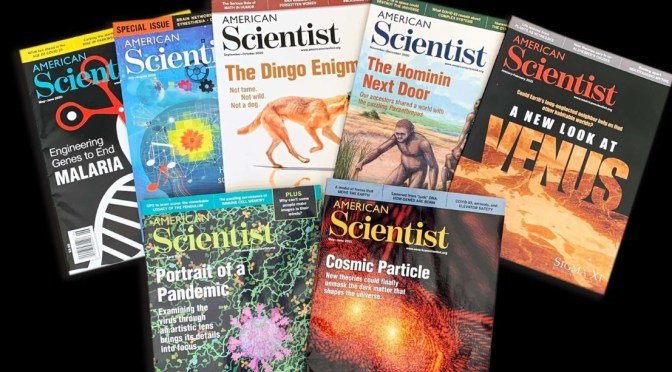
AMERICAN SCIENTIST – NOVEMBER/DECEMBER 2026

American Scientist Magazine: The latest issue features ‘Cellular Portraits’ – Detailed sketches helped reveal the function of chromosomes.

The Gene That Changed Cholesterol Treatment

Studies of rare mutations revealed a new way to lower LDL cholesterol—and led to an entirely new class of drugs.

By Philip A. Rea

In the early 2000s, geneticists Helen Hobbs and Jonathan Cohen at the University of Texas Southwestern Medical Center launched an ambitious effort to investigate cardiovascular health in Dallas County. Their study was unusual for the time. Rather than largely focusing on people of European ancestry, the Dallas Heart Study deliberately recruited a diverse population that reflected the region’s demographics.

QUICK TAKE
  • Rare genetic changes in a gene called PCSK9 help control low-density lipoprotein (LDL) cholesterol, the “bad” cholesterol linked to heart disease.
  • People who naturally make less of the PCSK9 protein have much lower LDL levels, pointing researchers toward new possibilities for lowering cholesterol.
  • That insight led to a new class of cholesterol-lowering drugs and showed how studying diverse populations can uncover important clues about disease.

Redrawing the Plague Maps

Ancient genomes are rewriting the history of Yersinia pestis infections across time and space.

By Monica H. Green

I spent much of my childhood in Colorado, which means that I, like millions of others living in the American West, grew up hearing warnings about the dangers of plague. People often find it shocking to learn that Yersinia pestis, the bacterium discovered in 1894 that is believed to have caused the mid-14th-century Black Death and other plague pandemics, is still around and dangerous, but that is one of many misperceptions about plague that need correcting. Plague’s multiple pandemics were not limited to the Black Death nor to Europe. And it is not a disease that disappears simply because no human cases are being reported at epidemic levels. Plague is not a thing of the past, and infections most definitely occur to this day.

QUICK TAKE

For centuries, our understanding of plague was riddled with assumptions based on a few historical accounts and data from modern plague victims.

Advances in genomics and bioarcheology now allow us to tie historical plague pandemics to human remains and even reconstruct the full plague family tree.

These data tell a new, broader story in which plague arrives earlier, stays later, and lurks in rural animal reservoirs before spilling over into human populations.

How Explanation Unlocks Deeper Understanding

The human drive to ask “why” can prompt abstract thinking and aid comprehension.

By Tania Lombrozo

Seeking and evaluating explanations can shape the very process of learning. Just like tasting the soup as you’re cooking can shift the final product toward a closer approximation of soupy perfection, explaining as you learn can change the course of learning itself, pushing you to find a closer approximation of a truly great explanation: one that covers all the relevant observations in the simplest way possible. But how does that work?

QUICK TAKE

The process of explaining is a powerful learning tool.From a young age, humans ask “why”; answering that question can reveal deeper meanings and reveal hidden patterns.

Explaining can unlock abstraction, a complex thought process that allows people to generalize from specific examples to identify common themes.

The need to know why can unlock learning, but it can also drive some people to latch on to patterns that do not exist, such as conspiracy theories.
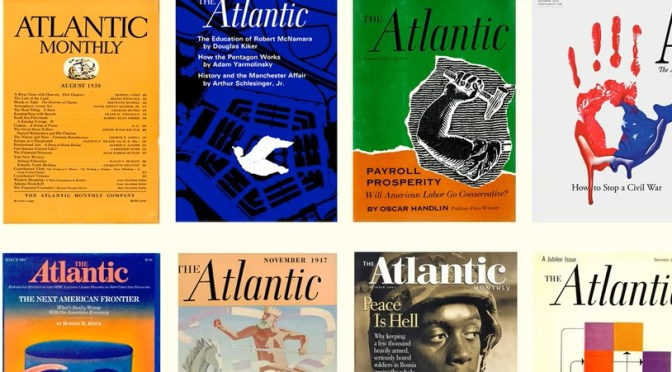
THE ATLANTIC MAGAZINE – NOVEMBER 2026 PREVIEW

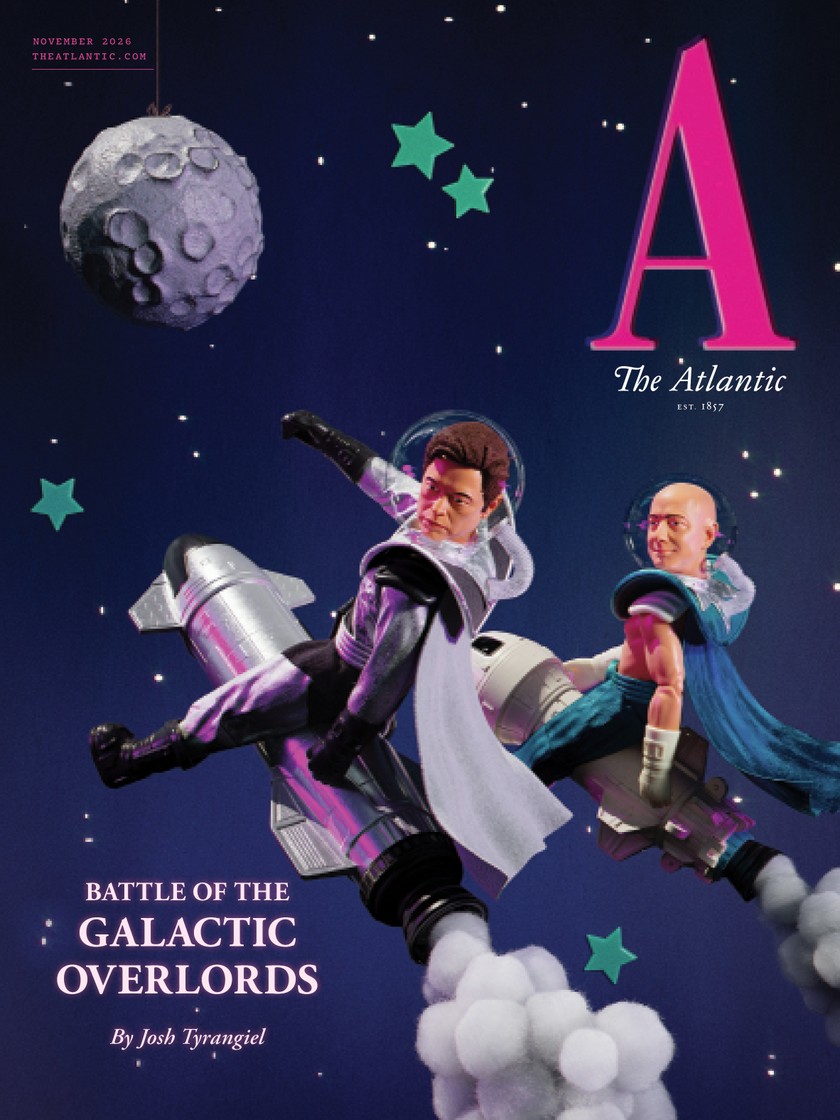
cover of the November 2026 Atlantic

THE ATLANTIC MAGAZINE: The latest issue features “BATTLE OF THE GALACTIC OVERLORDS’….

Choose Your Overlord

Musk vs. Bezos

By Josh Tyrangiel

The Adriatic has been crossed by Odysseus and Caesar, by Venetian fleets and Napoleon’s navy, by countless men bent on dominating the world. It has seen its share of courage and folly. But one day in June 2025, off the island of Cres, it witnessed something genuinely new: a man worth $240 billion standing waist-deep in bubbles on the deck of a $500 million yacht, wearing a white bucket hat.

The Great Data-Center Rebellion

Could a new populist movement help save American democracy?

By George Packer

Clinton, Iowa, is topographically flat and economically declining. The sawmills that made the city rich in the late 19th century have been repurposed as a museum. One of the Victorian mansions long since abandoned by the old lumber barons is open for tours, but tourists are scarce. Clinton has shrunk to about 24,000 people, and the town center, along the Mississippi River, feels nearly empty. On the west side, miles of deep-green corn and soy fields are crisscrossed with transmission wires and zoned for heavy industrial use. The city’s economic activity includes corn processing, pet-food production, and methamphetamines. With available land and a dire need for investment, Clinton seems like the perfect place for a gigantic data center.

The Baltic States Prepare for War

Lithuania, Latvia, and Estonia are readying themselves to fend off a Russian attack—with the help of the United States, or without it.

By Isaac Stanley-Becker

ne evening this summer, in the village of Bezdonys, in eastern Lithuania, I watched as a platoon of riflemen arrived at a train station occupied by enemy forces. Some of the Lithuanians let out a burst of gunfire from across the tracks, pinning the adversary in place as the rest of the unit advanced on the station. As the firefight intensified, wounded riflemen were evacuated to makeshift medical tents. An enemy soldier lay slumped against the station’s yellow clapboard siding.

THE NATION MAGAZINE – NOVEMBER 2026 PREVIEW

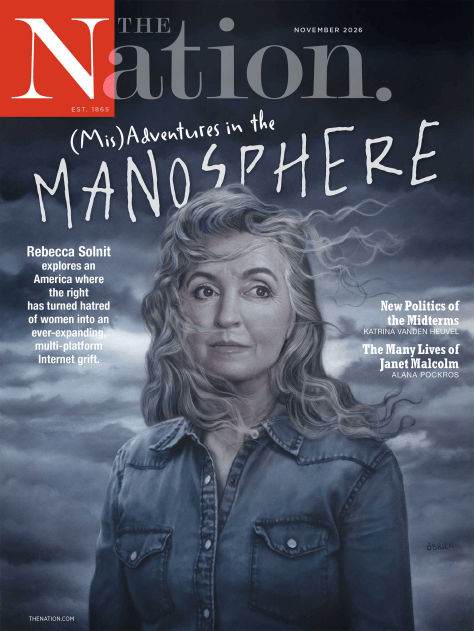
THE NATION MAGAZINE: The latest issue features ‘(Mis)Adventures in the MANOSPHERE’ – Rebecca Solnit explores an America where the right has turned hatred of women into an ever-expanding multi-platform internet grift.

Rebecca Solnit’s (Mis)Adventures in the Manosphere

Rebecca Solnit explores an America where the right has turned hatred of women into an ever-expanding, multi-platform Internet grift. Rebecca Solnit

The People vs. the Supreme Court

This term the Supreme Court has plans to trample even more of our rights. But we, the people, are not powerless in the face of their power grab. Elie Mystal

Why Democratic Leaders Keep Waging War on the Young

The party’s silver-haired establishment is caught up in an existential culture war. Elizabeth Spiers

ISSUES IN SCIENCE AND TECHNOLOGY – FALL 2026

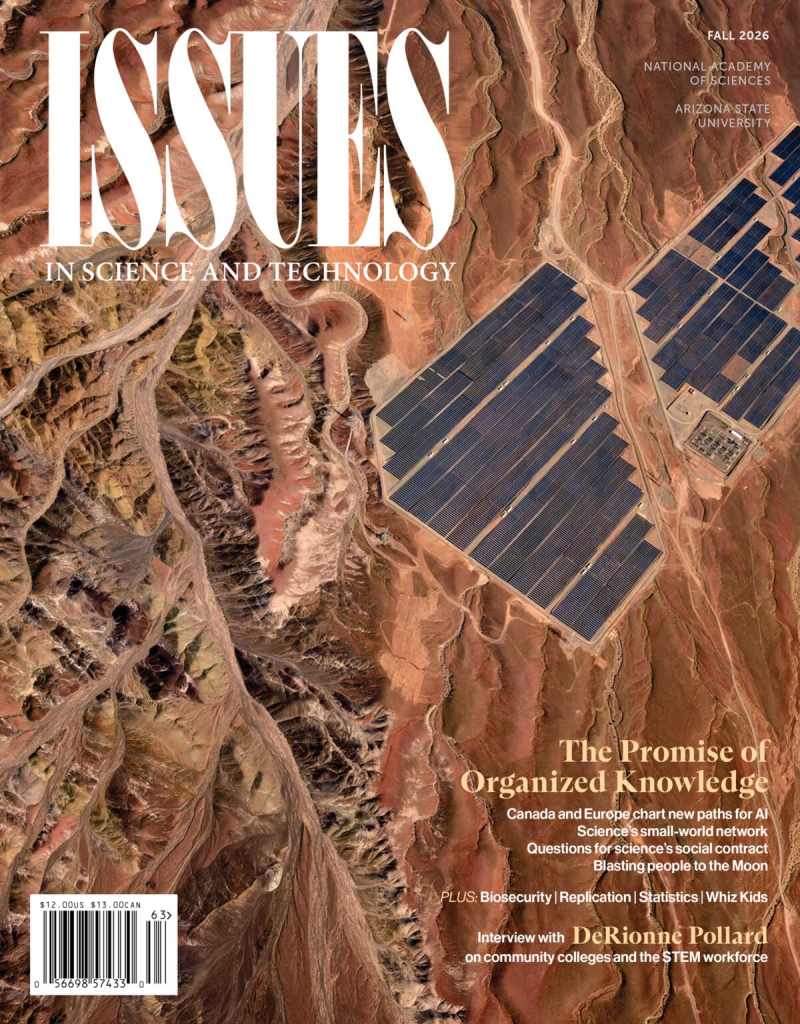
ISSUES IN SCIENCE AND TECHNOLOGY QUARTERLY MAGAZINE: The latest issue features ‘The Promise of Organized Knowledge’ – Canada and Europe chart new paths for AI Science’s small-world network; Questions for science’s social contract; Blasting people to the Moon….

The Promise of Organized Knowledge

The Fall 2026 issue explores how artificial intelligence might affect public policy in a variety of domains. Take biosecurity: Despite the fear that AI could be used to engineer dangerous pathogens, a former FBI special agent argues that the technology can also be used to uncover suspicious activity and possible bad actors before they become a threat. On economic policy: Spectacular wealth from AI will accrue to relatively few companies and individuals. What if a country were to create an AI sovereign wealth fund to distribute these profits more equitably? A group of Canadian scholars and legislators proposes to set up just such a fund. And when it comes to trust, a cultural anthropologist argues that CERN, the world’s most successful large-scale science collaboration, has many lessons to offer European regulators about how to build trust and transparency when using AI for science.

What Are the Goals for AI?

In “Escaping AI’s Measurement Trap” (Issues, Summer 2026), Urs Gasser, Viktor Mayer-Schönberger, and Fabienne Marco make a compelling case that governance of artificial intelligence faces a problem. Once benchmarks become targets, systems and their developers adapt to them, and measured performance may increasingly diverge from behavior in the real world. Their argument leads to a broader question: How can democratic societies not only improve the oversight of increasingly optimized AI systems, but shape what gets optimized in the first place?

A DISCUSSION OF

Escaping AI’s Measurement Trap

By Urs Gasser, Viktor Mayer-Schönberger, Fabienne Marco

Read Responses From

Biosecurity for the Age of AI

By Edward You

There is much discussion on how artificial intelligence poses threats to biosecurity; there should be at least as much focus on how AI can expand the solutions.

Today’s biosecurity approach is still grounded in a foundation laid nearly two decades ago. In 2008, when I reported to Federal Bureau of Investigation Headquarters as a newly minted supervisory special agent to support biosecurity policy, one important, emerging question was how providers of synthetic DNA should screen orders from customers. As commercial gene synthesis became increasingly accessible, many people worried that individuals could order genetic sequences coding for toxins and pathogens and then use them to cause harm.

LONDON REVIEW OF BOOKS – OCTOBER 22, 2026 PREVIEW

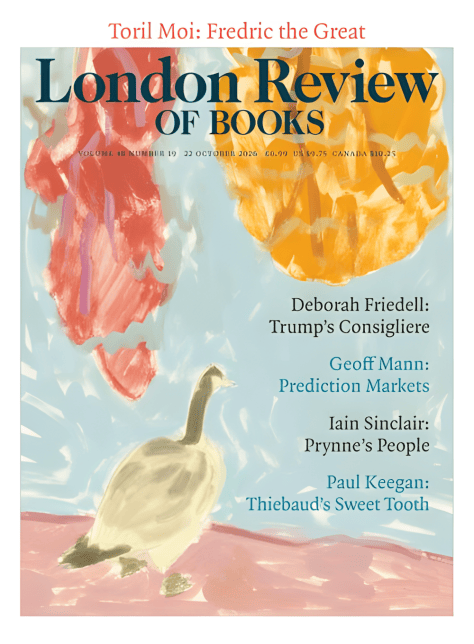
LONDON REVIEW OF BOOKS: The latest issue features  Fredric the Great by Toril Moi; Trump’s Consigliere by Deborah Friedell; Prediction Markets by Geoff Mann; Prynne’s People by Iain Sinclair; and Theibaud’s Sweet Tooth by Paul Keegan….

Fredric the Great

Toril Moi

Fredric Jameson seemed to me to have read absolutely everything. He was the very antithesis of the intellectual type I think of as an empty theoriser, by which I mean someone who endlessly conjectures without having a genuine command of any relevant archive. To look at Fred as a reader of literature is not to reduce the scope of his work, but rather to try to understand its origins.

HARVARD BUSINESS REVIEW – NOVEMBER/DECEMBER 2026

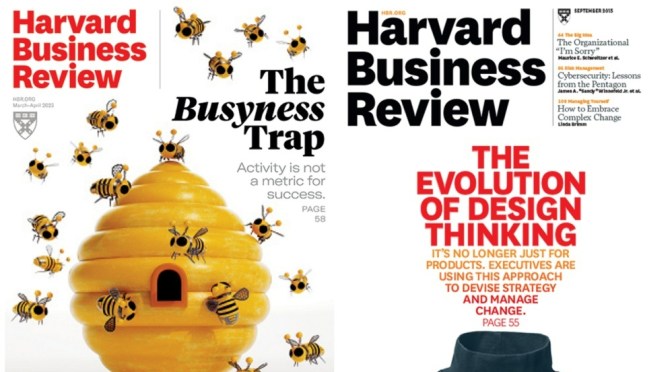
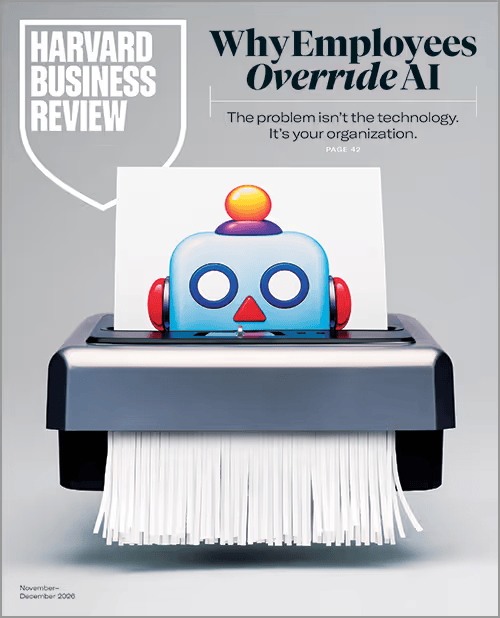
HARVARD BUSINESS REVIEW: The latest issue features ‘WHY EMPLOYEES OVERRIDE AI’ – The problem isn’t the technology. It’s your organization.

Why Even Your Best Employees Override AI Systems That Work

It’s not that they don’t trust the technology. It’s that they don’t trust your organization.

Summary

Companies are deploying AI systems faster than they are redesigning the governance surrounding them. As a result, many AI systems remain permanent advisers rather than actual decision-makers—not because the technology falls short but because the…more

In late 2022 a global bank approved an AI system designed to automate routine credit decisions. On paper it looked exactly like the kind of forward-thinking move experts had been urging companies to make. In pilots the system processed applications faster than humans did, reduced errors, and promised meaningful cost savings. The risk management team signed off on it, compliance approved it, and the CEO touted it publicly as proof that the bank was leaning into the future.

Your Chatbot Will Define Your Brand

As conversational interfaces begin to dominate the customer experience, relationship design becomes a strategic priority.

For Real Performance Gains with AI, Start by Mapping Your Workflows

That’s how to reveal the most promising opportunities.

CITY JOURNAL MAGAZINE – AUTUMN 2026 PREVIEW

CITY JOURNAL MAGAZINE: The latest issue surveys pivotal shifts across American technology, governance, and culture, featuring essays on the nuclear energy revival, the impacts of federal civil service cuts, municipal socialism in Chicago, and ideological conflicts in the arts and healthcare.

DEI in Medicine Hurts Black Patients Most

Protocols that regard metrics like BMI as racist or refuse to report drug use in pregnant women are not medically sound.

The Left’s War on Gig

Costly labor mandates are hurting the very workers they’re supposed to help.

Britain’s Crisis of Governance

Small groups of motivated ideologues have imposed their views on a hostile populace.

David Foster Wallace’s Infinite Scroll

The novelist’s 1990s vision of entertainment as addiction is more relevant than ever.

Missionaries to the Jobless

Mormon employment counseling offers everything from resumé writing and networking to moral support and

LIBER FEMINIST REVIEW – FALL 2026 PREVIEW

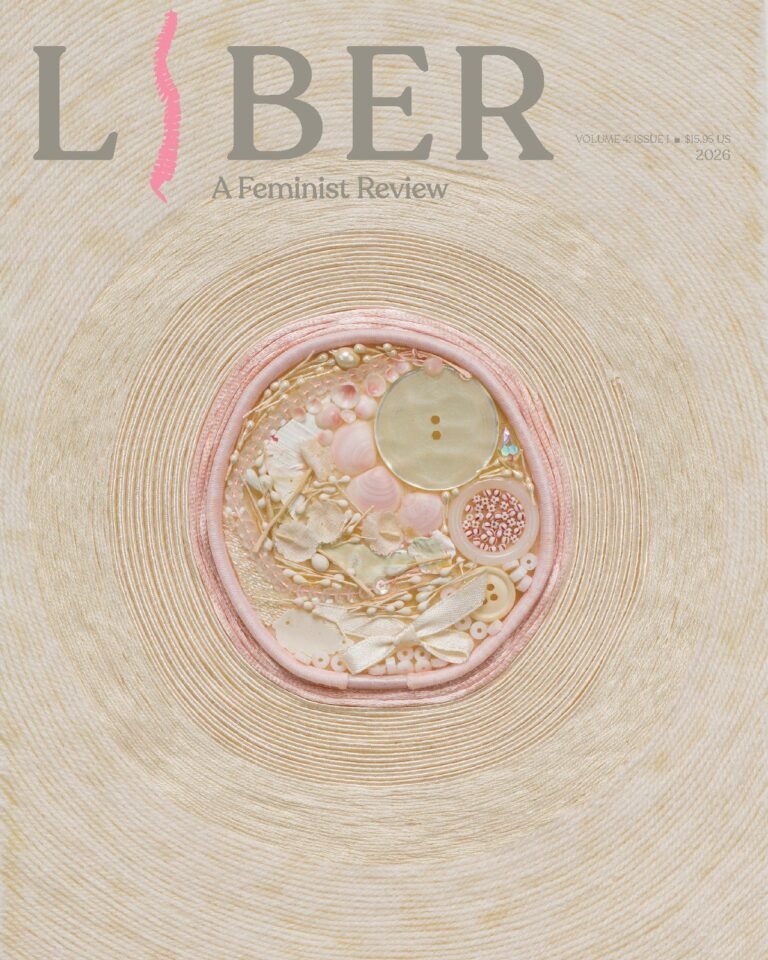
LIBER FEMINIST REVIEW: The latest issue features a diverse collection of essays, poetry, and reviews including Catharine A. MacKinnon’s feminist defense of transgender sex equality rights, personal essays on Rachel Pollack and tarot, and reviews of works by authors such as Rachel Cusk, Deborah Levy, and Sara Ahmed.

“My Year in Paris with Gertrude Stein: A Fiction” by Deborah Levy

Reviewed by Hailey Krueger

My first day ever in New York, age sixteen, I got stuck in the middle of Central Park in the pouring rain with no umbrella and zero sense of direction. Drenched, cold, and hopelessly wandering from the Alice in Wonderland statue to the steps of the Met, I was in remarkably high spirits. I had read Just Kids earlier that summer and regarded this trip as a rite of passage in my Patti Smith pilgrimage. The city was not a stranger to me: there was Washington Square Park, where Patti had slept during her first few weeks, she and Robert Mapplethorpe surviving on lettuce sandwiches. Sure, each face I passed on Fifth Avenue was unfamiliar, but I could imagine Patti and just know I belonged. Even the comically overpriced T-shirts at the John Varvatos store on the Bowery shimmered with Patti and CBGB-era spirit.

Patti wasn’t my first author/guide. I’d opted for books over a social life throughout much of high school and had long approached new destinations through the eyes of a beloved author. When I began at Smith College, I knew from Sylvia Plath’s journals to write in my own on the porch of Haven/Wesley. I assumed this author-as-friend-guide was my own (mal)adaptive quirk. That is, until I read Deborah Levy’s My Year in Paris with Gertrude Stein.

“The Book That Taught the World to Orgasm and Then Disappeared: Shere Hite and the Hite Report”

By Rosa Campbell

The Netflix series Bridgerton features a plotline about a nineteenth-century noblewoman desperately seeking a sexual “pinnacle” that coitus withholds from her yet not her husband. Meanwhile, the New York Times Wirecutter product review site recommends vibrators you can buy at Walgreens.

My, times have changed.

Fifty years ago, when feminist writer Shere Hite (1942–2020) published The Hite Report: A Nationwide Study of Female Sexuality, one of the best-selling books of all time, conventional wisdom dictated that plain old intercourse was the ticket to orgasm for women as well as men. Any woman who needed clitoral stimulation was deviant or trapped in her “phallic” stage; a mature woman achieved orgasm through the vagina (thanks, Freud). Hetero men didn’t know that what felt good for them didn’t necessarily feel good for women. Many women chose to fake pleasure rather than speak up because they were embarrassed or, rightly, worried about being belittled as pushy and slutty.

“Life of M: A Novel” by Rachel Cusk

Reviewed by Anna Godbersen

I had anticipated that Rachel Cusk’s latest would be a captivating work of big ideas. The premise—a nameless narrator encounters one of the great and celebrated film actors of the era and then attempts to write an “autobiography” of said star—is both juicy and think-y, a stage upon which brilliant observations can mingle with feminine angst and glamour.

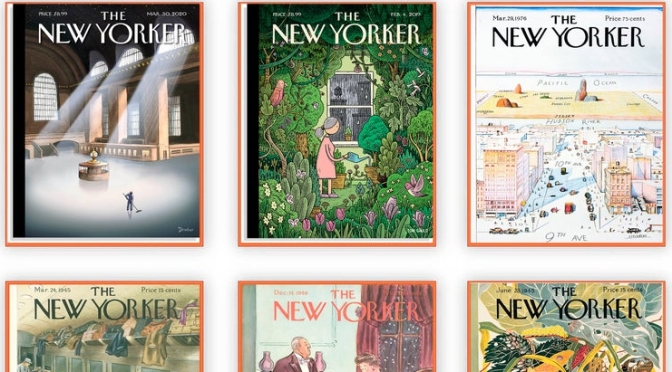
THE NEW YORKER MAGAZINE – OCTOBER 19, 2026 PREVIEW

The cover for the October 19 2026 issue of The New Yorker which features a person wearing a colorful patterned sweater...

THE NEW YORKER MAGAZINE: The latest issue cover features Malika Favre’s “Sweater Weather” – Comfortable patterns.

Donald Trump After the Midterms

If the coming election does result in a blue wave, Trump will be faced with the fact of his diminishment. The rest of us will be faced with the wreckage. By David Remnick

We’re Learning to Live with Waymos. It’s Going Weird

A view from the back seat. By Molly Fischer

Kash Patel’s Slap Shot

The F.B.I. director’s hockey team, the Dons, faced their rivals in a beer league. With rogue slap shots and hovering security agents, Patel was in the zone—or, at least, next to it. By Richie McGinniss

My Education on the Border of the Syrian War

In the last Turkish town on the road to Aleppo, jihadis and spies mixed with reporters trying to prove themselves. By Ben Taub

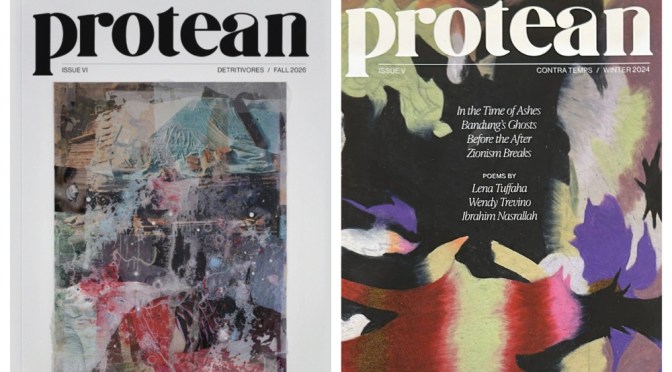
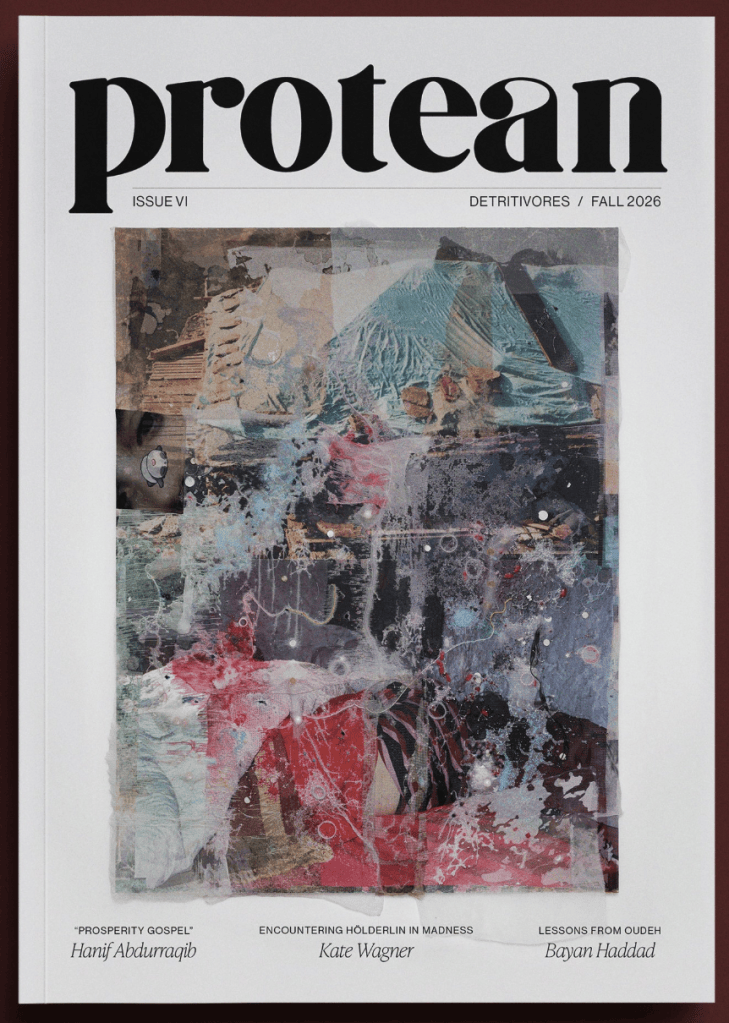
PROTEAN MAGAZINE PREVIEW – FALL 2026

PROTEAN MAGAZINE: The latest issue features a critique of the University of California’s institutional history, an interview exploring the life and politics of John Berger, an excerpt celebrating historical Palestinian revolutionary resistance literature, a poignant reflection honoring a murdered Palestinian community advocate, Palestinian poetry confronting immense grief with unyielding, steadfast resilience, and verses examining how modern capitalism structures contemporary family forms.

Institutional Optimism

Scholar, author, and activist Tony Platt reviews the new narrative history by Miriam Pawel, “California Dreams: The Making and Remaking of the University of California.” Pawel’s narrow focus on five high-achieving alumni, argues Platt, elides both radical traditions and unethical…

Mawwal

Palestinian national poet Mahmoud Darwish’s “Mawwal” confronts immeasurable grief with unbending steadfastness: “the stabs of daggers I prefer / to being ruled by the vile.”

I lost a beautiful dream,
I lost the scent of the lilies,
and my night was long,
upon the fences of gardens…
But I never lost my way!
The palm of my hand
is now accustomed to the wounds of hope.
Shake my hand hard
and a river of songs will flow forth.
Mother of my colt and sword:
Mother mine, here’s a ditty of love!
Mother mine, a ditty!
The stabs of daggers I prefer,
to being ruled by the vile.

Tom Overton on John Berger: From Life

Andrew Holter interviewed Tom Overton, author of a new biography, “John Berger: From Life,” out from Verso Books. In this fascinating discussion, Overton discusses his friendship with Berger, the biography’s literary approach, Berger on Palestine, and future plans for scholarship…