Tag Archives: October 2026

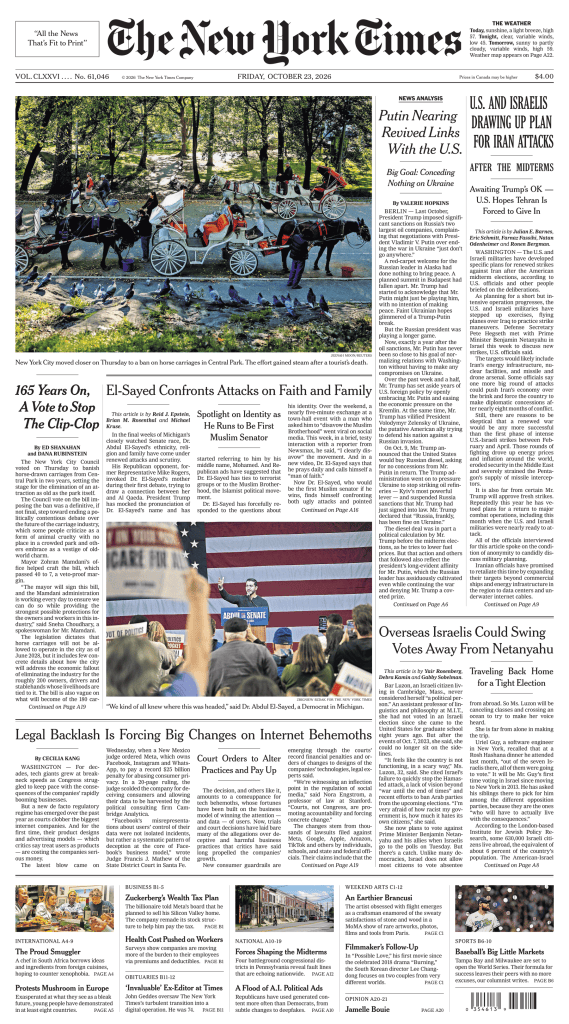
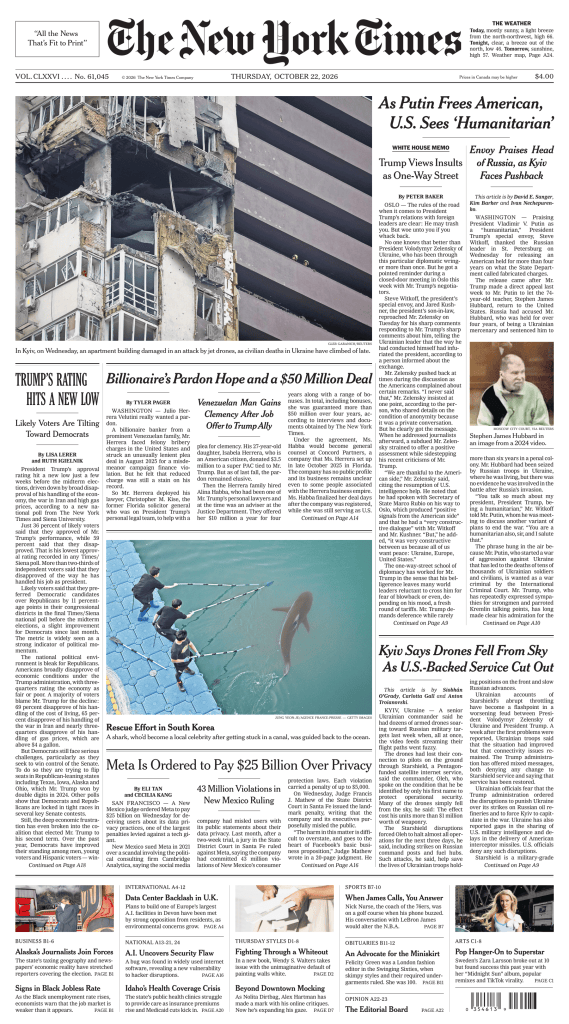
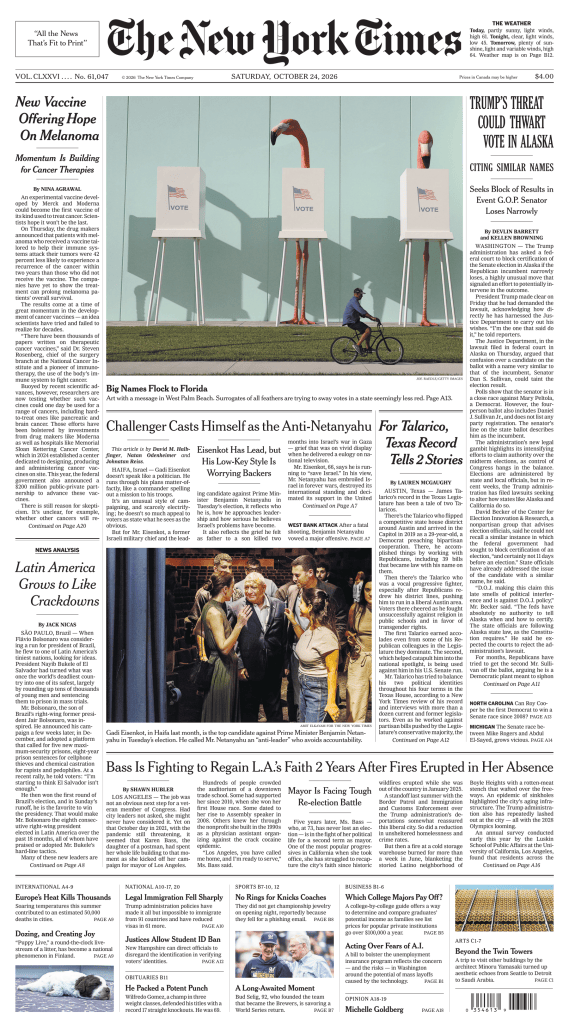
THE NEW YORK TIMES – SATURDAY, OCTOBER 24, 2026

Iran Is in ‘Advanced Stages’ of Planning Attacks Against Americans, Officials Say

The U.S. government has ordered diplomats and other federal employees to leave Saudi Arabia. It is also drawing down staff at other missions in the region.

France Deploys Vast Security Force in Effort to Prevent More Riots

About 70,000 police and security officers, mobilized ahead of mass protests, will try to avert the arson and looting that shocked the country last weekend.

Israel Launches Crackdown in West Bank City After Deadly Attack

The military demolished buildings and erected roadblocks in Hebron, the biggest city in the territory, a day after Palestinian gunmen killed two soldiers.

Ukraine’s Feeling of Moral Whiplash at the Hands of Trump

The United States once declared that Ukraine’s fight was the front line in a global battle for freedom. Now the Trump administration is sending money to Moscow.

On Trump’s Order, Justice Dept. Seeks to Block Alaska Vote if Republican Loses

In a highly unusual court filing, the Justice Department argued that confusion over candidates with similar names could taint the election results.

Trump’s ‘Smart Wall’ Is Watching the Border, and More Than a Million People

The administration is planning a vast expansion of the surveillance program. Here’s how much it can see.
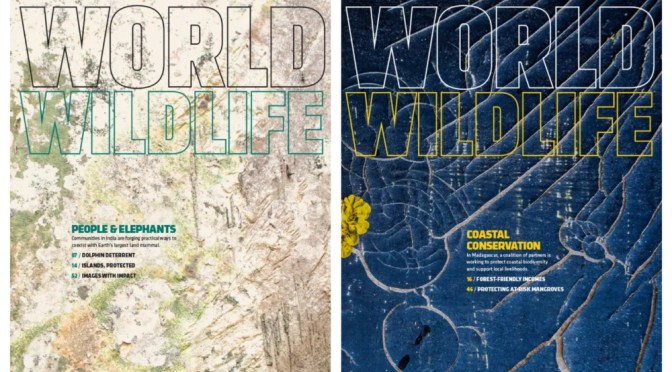

WORLD WILDLIFE MAGAZINE WINTER 2026-2027

What’s that on the cover? An aerial view of the Carrizo Plain, the largest native grassland in California.

WORLD WILDLIFE MAGAZINE: The latest issue features how five countries in southern Africa joined together to create the Kavango-Zambezi Transfrontier Conservation Area (KAZA), where WWF works to help communities coexist alongside lions, hyenas, and other iconic wildlife.

Carnivores in KAZA

In Southern Africa, five countries unite around a shared vision: A connected landscape where communities and free-roaming wildlife can thrive. By Erin Waite

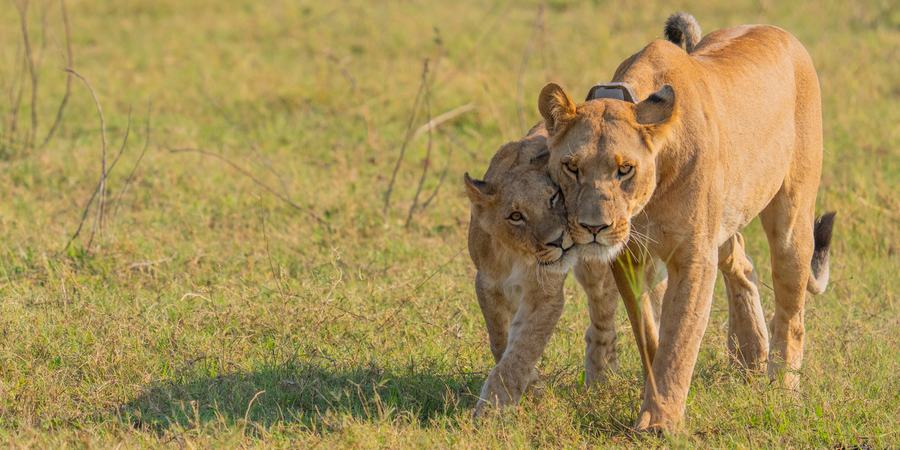
A collared female lion walks closely with her cub in the grass
Photography by Gareth Bentley

Across Africa, large carnivores evolved to roam vast, interconnected landscapes that enable them to hunt prey, find mates, and maintain large territories. But today, those movements have become constrained as human settlements, agriculture, and infrastructure have spliced habitats into ever-smaller fragments. Increasingly isolated and funneled toward spaces inhabited by people, many of the continent’s iconic predators face mounting pressures from habitat loss and human-wildlife conflict, which have fueled alarming declines across populations.

One of the greatest opportunities to reverse this trend lies in the Kavango-Zambezi Transfrontier Conservation Area (KAZA). Spanning 200,000 square miles across parts of Angola, Botswana, Namibia, Zambia, and Zimbabwe, KAZA is the world’s largest terrestrial transboundary conservation area. Here, significant numbers of lions, African wild dogs, leopards, cheetahs, and spotted hyenas still move freely across connected wetlands, savannas, grasslands, and forests—as well as through villages and community lands—helping to keep these important ecosystems in balance.

US Grasslands Campaign launches to protect this overlooked ecosystem

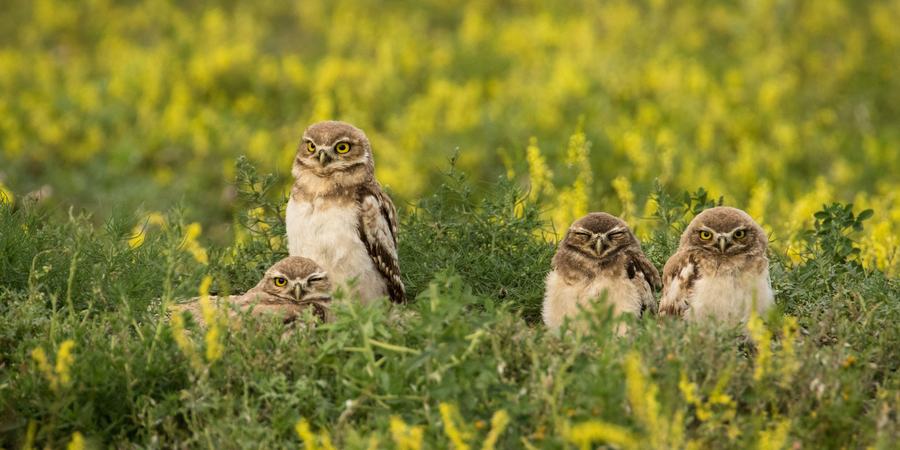
Several owls hiding in tall grass

Stretching from coast to coast, grasslands cover nearly a third of the lower 48 states. Yet almost half of Americans know almost nothing about them, according to a new national survey released by the America’s Grasslands Coalition.

Grasslands—large expanses of land dominated by grasses, shrubs, and other flowering plants—are a source of clean water for millions of people in the US and play a vital role in supporting wildlife, storing carbon, sustaining food systems and rural livelihoods, and maintaining ecosystem balance. They currently cover nearly 1 million square miles of the US, roughly half of their historical range—and are continuing to disappear at an alarming rate. This decline, due to plow-up for row-crop agriculture, the spread of invasive plants, and development, threatens wildlife, fresh water, and climate resilience.

THE NEW YORK TIMES – FRIDAY, OCTOBER 23, 2026

Palestinian Gunmen Open Fire on Israelis in the West Bank, Officials Say

Five people were wounded in the attack, days before national elections, health workers said. The Israeli military said its soldiers had killed two assailants.

Gadi Eisenkot Couldn’t Be Less Like Netanyahu. Can He Beat Him?

Mr. Eisenkot, an ex-military chief, is leading in the polls against Prime Minister Benjamin Netanyahu. But his campaigning style is worrying supporters.

Trump Asked Musk to Reverse Limits on Ukraine’s Military Internet Use

President Trump called Elon Musk, who owns the Starshield network, after officials in Ukraine reported that they found new limits on the use of military drones

How Long Will Russians Put Up With War? Here’s What They Told Us.

“Everything is fine” is a common refrain in a country used to adapting to a new normal.

He Put the Billionaire Tax on the Ballot. It Could Be His Last Stand.

The tax initiative is the most ambitious proposal that Dave Regan has ever qualified for the California ballot. Some Democrats hope it will be his final one.

The Bukeleization of Latin America Has Arrived

Nayib Bukele’s notoriously harsh and wildly popular security crackdown in El Salvador is spawning imitators and remaking the region.

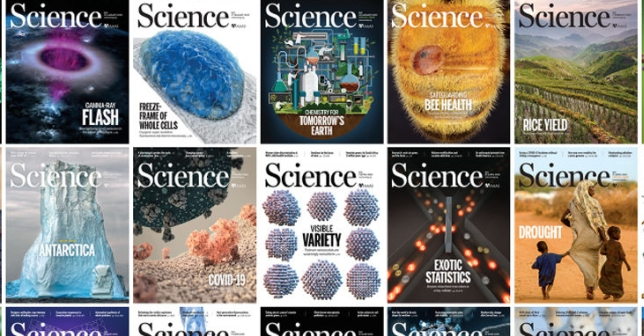
SCIENCE MAGAZINE – OCTOBER 22, 2026

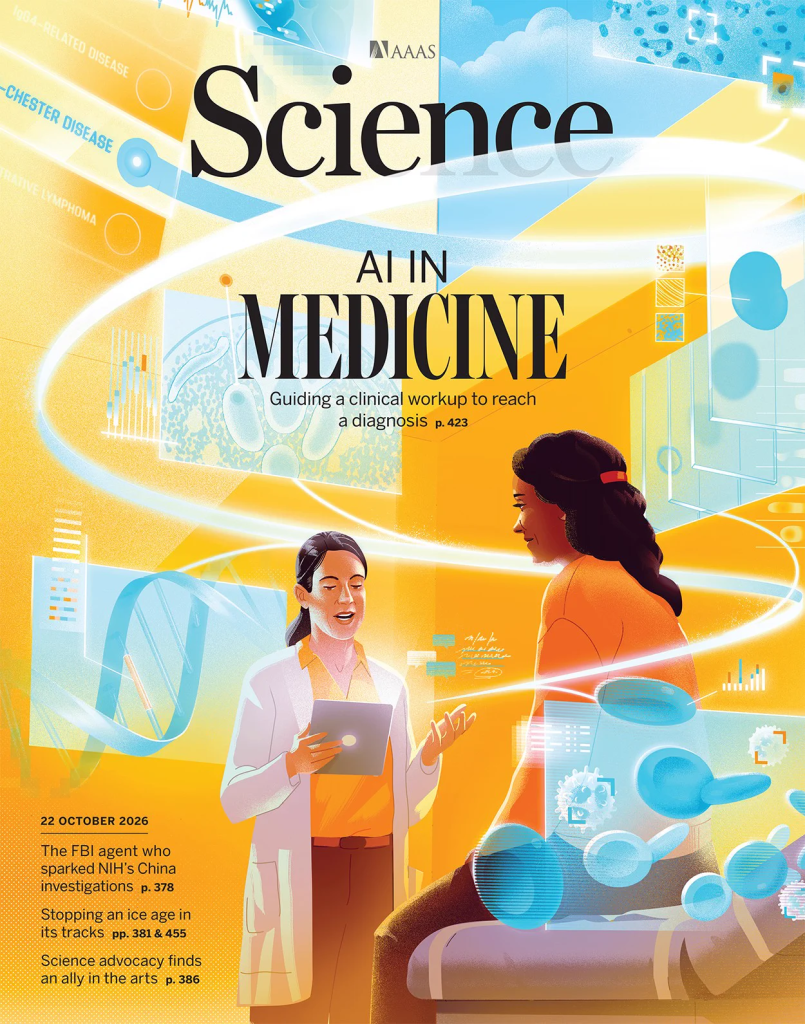
SCIENCE MAGAZINE: The latest issue features ‘AI IN MEDICINE’ – Guiding a clinical workup to reach a diagnosis….

Vaccine trial is a ray of hope in Congo’s Ebola epidemic

Study will first test “mismatched” vaccine but Bundibugyo-specific shots may be added soon

Across fields, AI finds solutions hiding in plain sight

“BootLoops” software enabled researchers to quickly find and attack problems in 22 disciplines

How the domestication of a killer bacterium led to Botox

Scientists inadvertently turned C. botulinum into a tool for medicine and the beauty industry, study finds

Microwave observatory peers into the infant universe

In Chile, Simons Observatory begins hunt for galaxy clusters and signs of cosmic inflation

Deep-sea life is still reeling from the BP oil spill

A 13-year study shows Gulf of Mexico ecosystems still haven’t recovered

Iron at Earth’s heart may take a surprising form

X-ray experiments reveal cubic crystals that could complicate the picture of the inner core

BIG THINK MAGAZINE ——– FALL 2026 PREVIEW

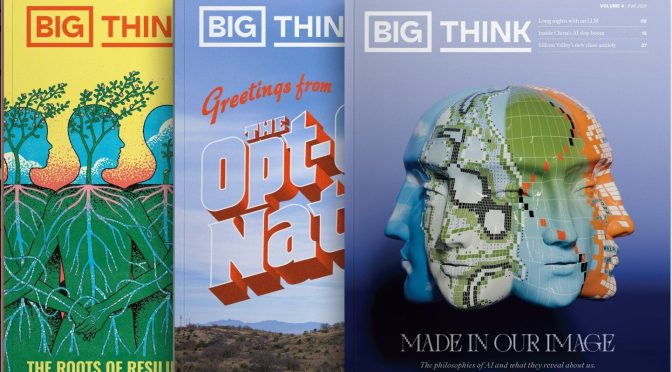
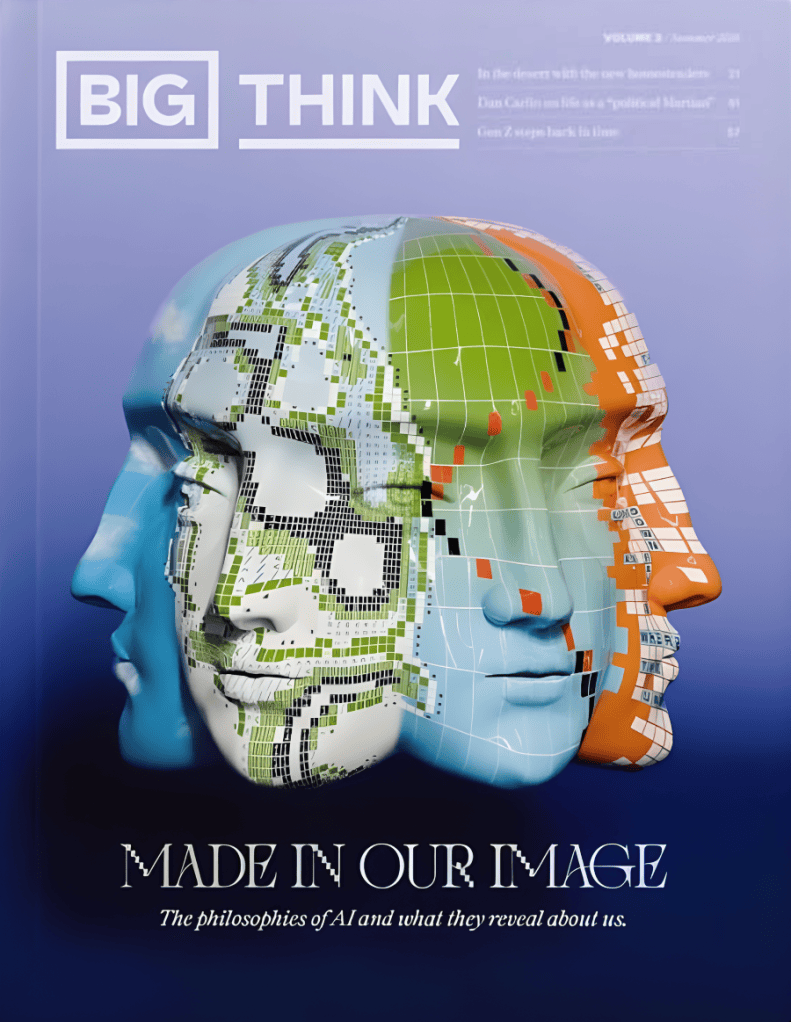
BIG THINK MAGAZINE: The latest issue features ‘MADE IN OUR IMAGE’ – The philosophies of AI and what they reveal about us….

Made In Our Image

The philosophies of AI and what they reveal about us.

We can’t predict the future of artificial intelligence, but we do know its origin: us. The models we use today were trained on unfathomably huge sums of human-generated text: our books and blogs, our science and myths, our jokes and lies. In the output of language models, we see glimpses of ourselves refracted through a strange new form of intelligence we’re only beginning to understand. This issue is an attempt to make sense of those refractions — to use philosophy to turn over hard questions until we start to see them more clearly.

10 perspectives that divide the AI world

AI will likely impact everything from the economy to the battlefield, but exactly how remains to be seen.

In November 2022, I took on a writing assignment that, looking back, may have had a bigger impact on my life than any other: interview ChatGPT. It was the first day that OpenAI’s tool was available to the public, and my goal was to try to make sense of the tech — and then help readers make sense of it — by asking it questions about itself.

Why the AI boom is creating a hunger for human connection

As AI makes life more efficient, people are seeking out real-world community — and all its messiness.

China is mass-producing slop at a scale the world has never seen

I thought China’s AI video boom was driven by creativity, innovation, and tech diffusion. I was wrong.

THE ECONOMIST MAGAZINE OCTOBER 24, 2026

THE ECONOMIST MAGAZINE: The latest issue features ‘The agony of liberal Europe‘…

The agony of liberal Europe

Centrist rulers have fallen dangerously short—and are now paying the price

“The first steps into the Unrest seem straightforward enough—anger at the fall of real wages, at capitalist aggression, at the unwillingness of Parliament; anger fomented by agitators…reason wars with instinct.” Few of those who mobbed French cities this week would recognise those words. But many would agree with George Dangerfield, the British-American journalist who wrote them. The demonstrators were consumed by rage. Rage at the failure of the state and against the floundering centrist politicians who govern. Rage at high prices and economic dysfunction. And for some, rage against the idea of centrist politics at all.

Will AI take over science?

Artificial intelligence will require scholars to reinvent their disciplines

Mysteries of the Musk Foundation

The world’s richest man disdains charity. His money is where his mouth is

How Britain’s lobbyists exploit suicide

Public policy is increasingly dictated by tragedy

Our interview with Alice Weidel

The populist-right politician says Ukraine has “already lost” against Russia and should sue for peace

THE NEW YORK TIMES – THURSDAY, OCTOBER 22, 2026

Strike on Saudi Airport Kills 2 as U.S. Tells Some Diplomats to Leave

For weeks, the Iran-backed Houthis have been attacking the kingdom’s aviation and energy sectors.

U.S. and Israel Draw Up Plans for Renewed Strikes on Iran After Elections

Renewed hostilities might not be any more successful than the war’s first phase, and President Trump has repeatedly canceled plans for a return to major combat.

Putin Nears a Prize: Restoring Ties With the U.S. While Giving Up Nothing

Russia has sought to separate the war in Ukraine from potential business deals and diplomacy with the United States. Its efforts now appear to be working.

Student Protests Mushroom Across Europe, Exposing Bleak Views of the Future

Since high school students began protesting in France in September, they’ve been joined by young demonstrators in at least seven other European countries.

Looted Goods From French Stores Flood Resale Sites After Riots

Officials in France are pressing online platforms like eBay and Vinted to remove items that were stolen during public disturbances over the weekend.

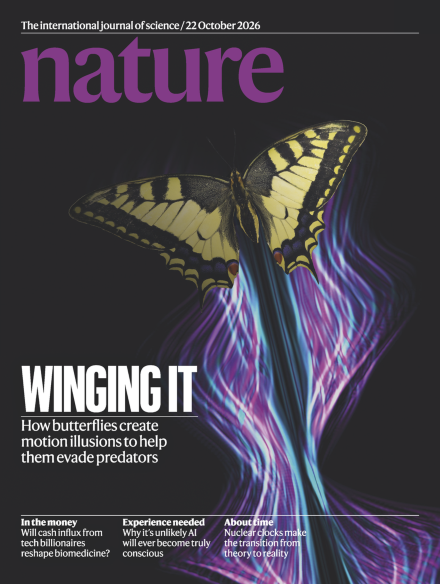
NATURE MAGAZINE – OCTOBER 22, 2026

Volume 658 Issue 8137

NATURE MAGAZINE: The latest issue features ‘WINGING IT’ – How butterflies create motion illusions to help them evade predators.

Light and mirrors move large quantum computers closer to reality

Scientists improve photon-collecting device that could be used to connect multiple quantum-computing arrays.

Lead-tainted teeth reveal medieval mines’ unequal toll

Burials in the United Kingdom’s Peak District, one of Europe’s largest lead-production regions in centuries past, hint at social inequality.

Orangutan mothers arrange play dates for their babies

Solitary primates spend energy and time travelling to patches of forest for get-togethers.

Growing plane and ship traffic degrade the air of western North America

Pollution from transport across the Pacific Ocean is raising ozone levels above a region whose own emissions have dropped.

THE GUARDIAN WEEKLY – OCTOBER 23, 2026

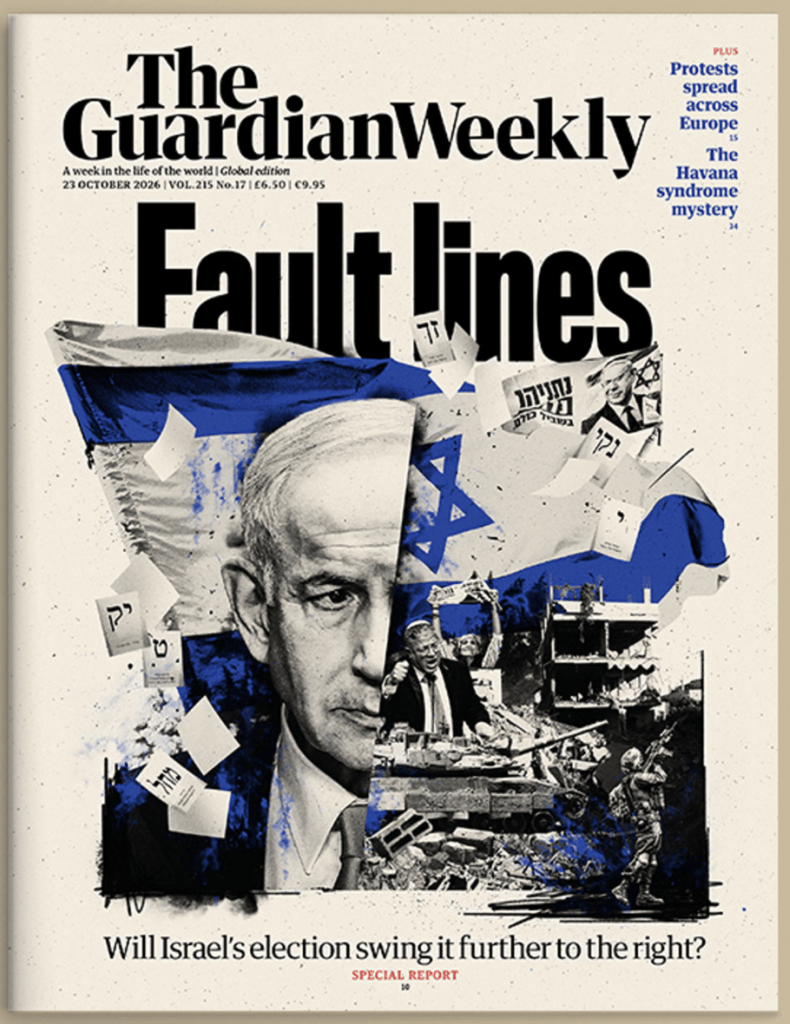
THE GUARDIAN WEEKLY: The latest issue features ‘FAULT LINES’ – Will Israel’s election swing it further to the right?…

Israel is holding national elections next week, giving its citizens their first chance to pass judgment on Benjamin Netanyahu and his coalition since the Hamas-led attacks of 7 October 2023.

For our big story this week, chief Middle East correspondent Emma Graham-Harrison says that whether or not the prime minister can hold on to power, a more rightwing Knesset is expected to be voted in. More than half a million Israelis have reached voting age since the last election in 2022 and, according to polls, three-quarters of first-time Jewish voters define themselves as right or centre-right.

Peter Beaumont profiles opposition candidate Gadi Eisenkot. The former general contrasts with Netanyahu when it comes to style and character, he writes, yet on key policy points retains a studied ambiguity.

Then Israeli pollster and political analyst Dahlia Scheindlin argues that after three disastrous years, Israel needs to rethink itself, but only a clear opposition victory would let the country begin to heal, strengthen democracy and establish Palestinian rights.

Spotlight | ‘We are suffocating’
As protests that have convulsed Spain and France in recent weeks spill over to Italy and Portugal, Sam Jones reports on the rising wave of anger over the housing crisis and cost of living

Science | Taking a shot
Could a drug to prevent shingles also protect our brains against dementia? The possibility, writes Ian Sample, is driving a boom in vaccinations

Feature | The Havana syndrome mystery
Dozens of CIA officers have been afflicted by debilitating symptoms over the past decade. Are they the result of “mass hysteria” or are they from attacks with an energy weapon, asks Shaun Walker

Opinion | Another EU referendum? Not just yet
The omertà on the UK rejoining has now been broken, but it would be folly to move too soon, says Polly Toynbee

Culture | Shygirl’s slog to the top
She has opened for Beyoncé, writhed in a cubicle for Madonna – and is poised to take over the mainstream with her new rock sound. The pop auteur talks to Simran Hans about cash, class – and finding true love

THE NEW STATESMAN MAGAZINE – OCT. 23, 2026

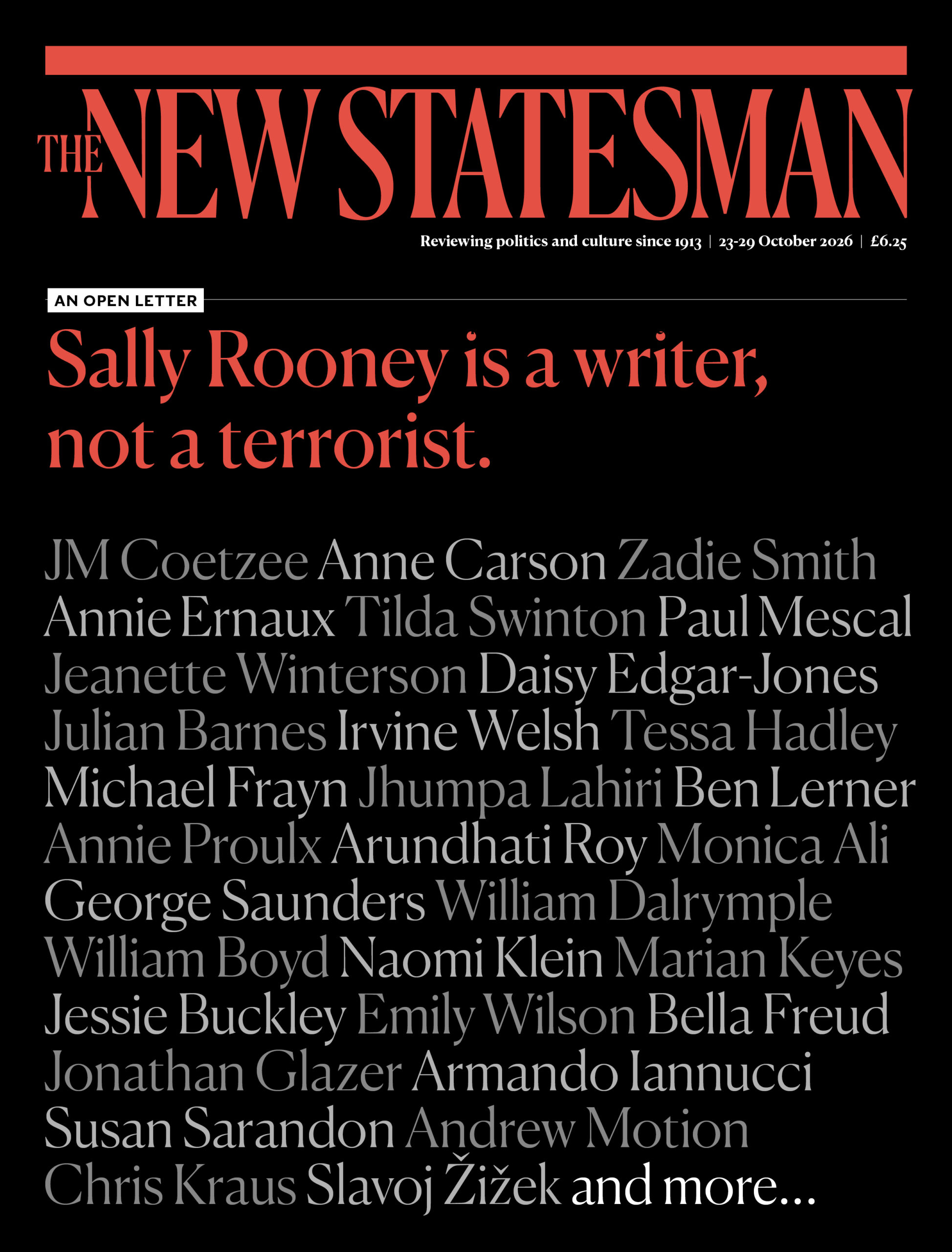
Sally Rooney is a writer, not a terrorist

THE NEW STATESMAN: The latest issue features a sharp analysis of contemporary culture, politics, and media by critiquing public backlash against authors like Sally Rooney, examining systemic censorship through Tanjil Rashid’s commentary, and exploring intellectual viewpoints like Carlo Rovelli’s shifting perspectives and Martin Lewis’s reflections on his role as a public advocate, while simultaneously addressing major geopolitical developments including how trauma shapes the upcoming Israeli election and what Katie Zacharia’s departure reveals about women in Donald Trump’s political orbit.

Sally Rooney is a writer, not a terrorist

An open letter to the government from leading authors, artists and public figures. By New Statesman

Sally Rooney is a writer, not a terrorist. Her books must be available to the public. Their withdrawal from sale, on the basis of ill-conceived and draconian anti-terror legislation, is an affront to basic principles of free speech and expression so long taken for granted in this country. We categorically reject censorship – whether direct or indirect – and urge the government to change course, amending the legislation which has led us to this point of repressive absurdity.

This is censorship by other means

The Sally Rooney affair shows how laws meant to target terrorism now suppress the freedom to dissent. By Tanjil Rashid

Carlo Rovelli’s flitting perspectives

Science’s leading evangelist challenges what we think we know – about the laws of physics and of human conflict. By Ray Monk

Martin Lewis: “I get criticised that I’m a sticking plaster”

How Martin Lewis became the real shadow chancellor. By Anoosh Chakelian