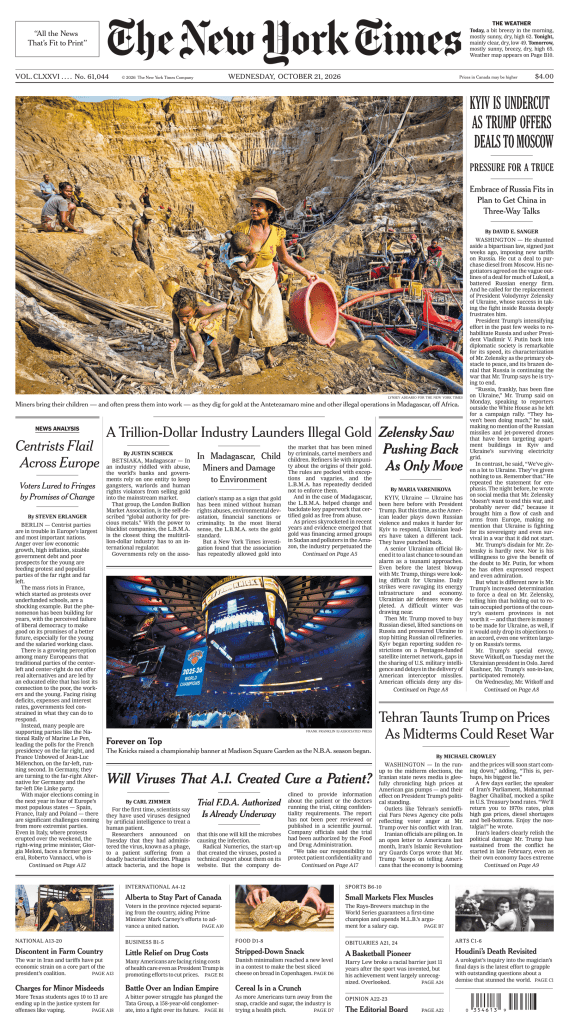
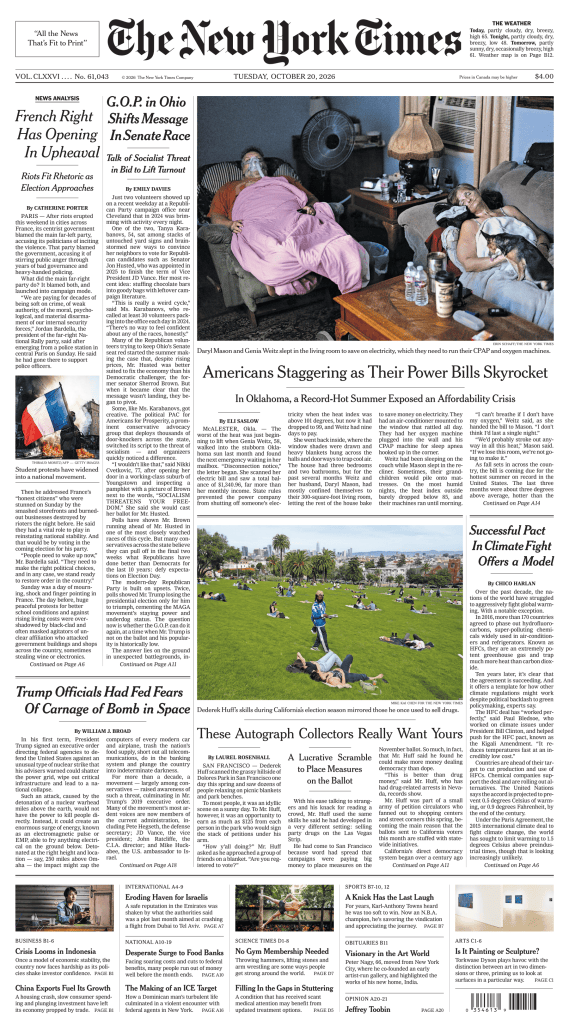
Likely voters favored Democratic candidates over Republicans by 11 percentage points in their congressional district, a New York Times/Siena poll found.
Many in Gaza and the West Bank are desperate to avoid more years of Prime Minister Benjamin Netanyahu’s right-wing government, which has made life close to unbearable.
The move to release a man held for over four years on what the U.S. called fabricated charges buys good will with President Trump while costing Vladimir Putin little.
A prominent Venezuelan was seeking clemency. He got it not long after his daughter gave Alina Habba, a lawyer close to President Trump, a lucrative job.
Much remains unclear about why a driver ran a car into Helen Haines, a lawmaker. Even so, fellow representatives, especially women, spoke of feeling threatened in a polarized atmosphere.
Brazil spent years targeting electoral lies on the internet. Now, artificial intelligence is stumping the election authorities and reshaping a high-stakes race.
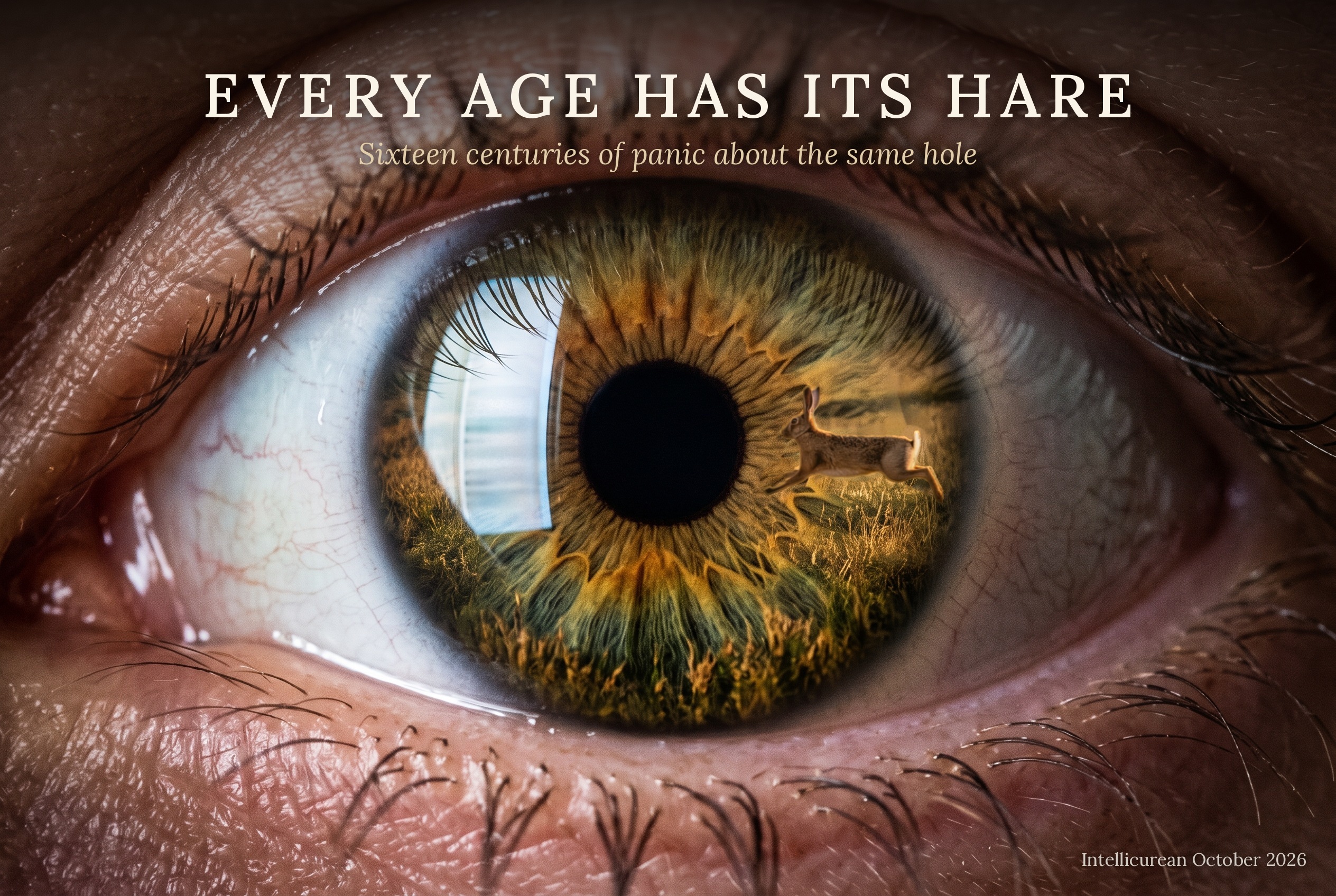
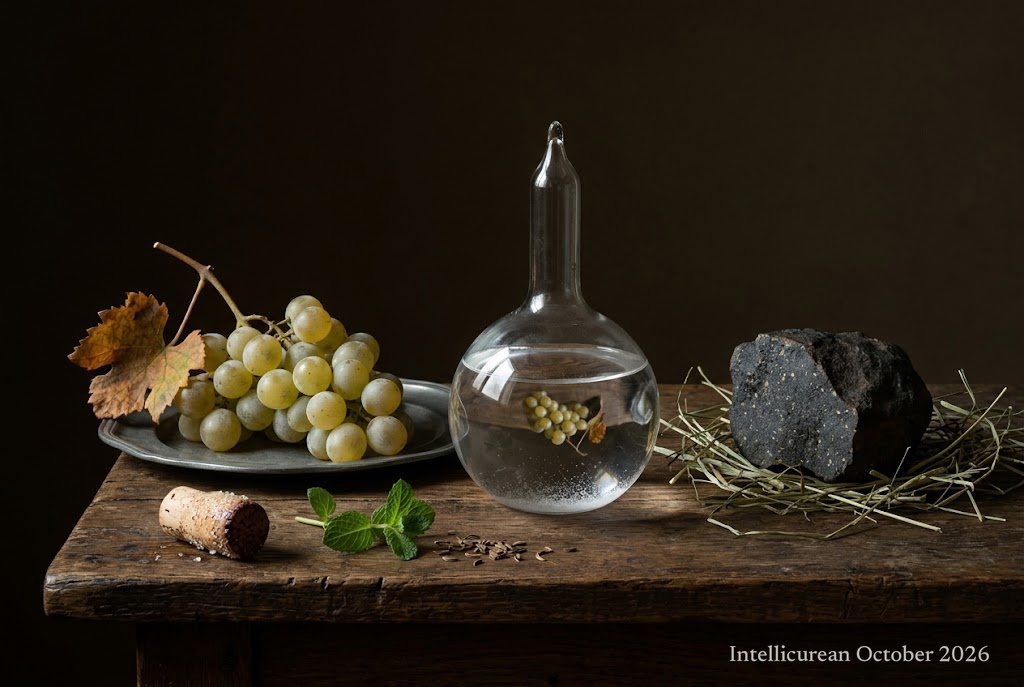
Put your phone face down and read to the end of this paragraph without touching it. Sixteen centuries ago a bishop in North Africa confessed that a dog chasing a hare across a field had turned him from some great thought. This month Scientific American asked how we get sober from the feed in our pockets. Every age has panicked about its hare, and no panic has ended in sobriety.
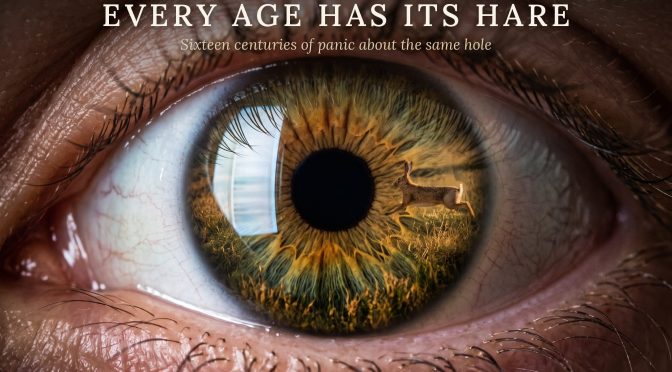
A hare in the field of an eye, running for the pupil, made for the essay.
WHY WE’RE POINTING YOU THERE
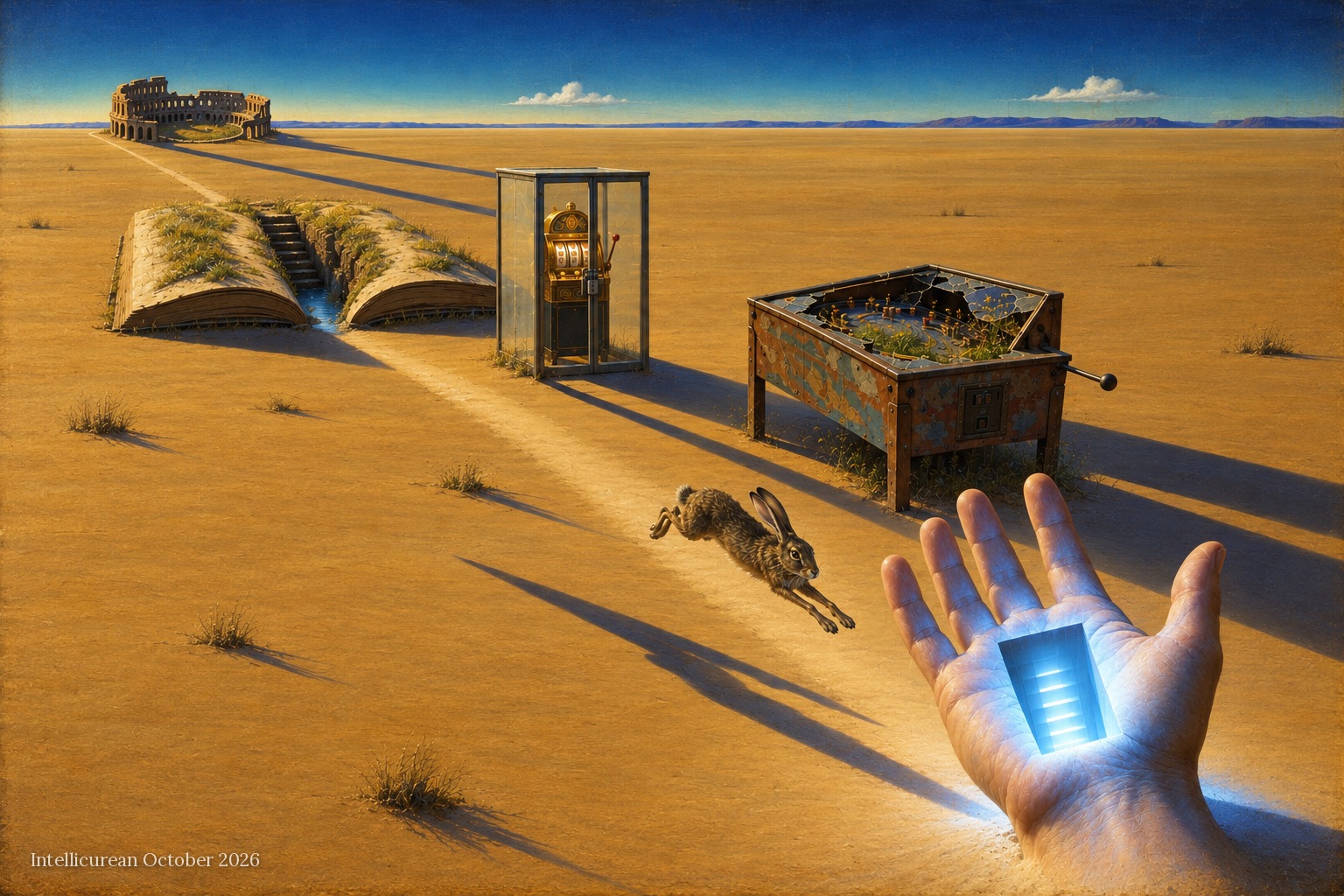
This month Scientific American asked whether we are addicted to social media and how we might get sober. Intellicurean’s essay answers by going back to the start of the complaint. It opens at the Roman games, on a young man who swore he would keep his eyes shut and was undone by the roar of the crowd. Then it follows the same hole through the centuries: a girl drowned in the river at Weimar in 1778, and the town blamed Goethe’s novel; London’s coffee houses, which a king tried to close and gave up on in eleven days; Dostoevsky at the roulette wheel, and the first slot machine; New York’s thirty-four-year ban on pinball; and a test account on TikTok that never searched for anything and was fitted to sadness in a little over half an hour.
It finds every earlier panic right about a few people and wrong about the many, and it finds the hole as old as the eye. What is new, it argues, is not the hole. It doesn’t scold anyone for their screen time, and it doesn’t pretend history hands us an easy answer.
The old holes became the floor. The new one is in the hand. Made for the essay.
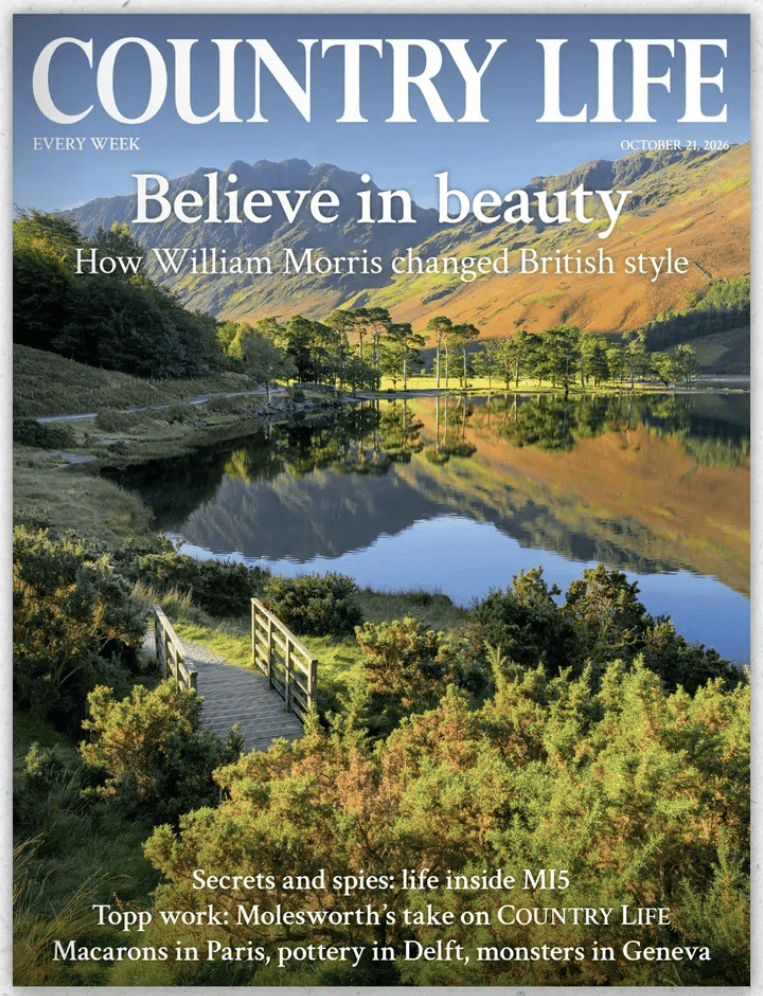
COUNTRY LIFE MAGAZINE: The latest issue features a diverse array of articles, including Emma Hughes’s tribute to Ronald Searle, a unique leader piece by Nigel Molesworth, and a dive into MI5’s secret archives, alongside international travel and luxury features, an analysis of William Morris, structural and artistic highlights like No 22 Parkside and Elizabeth Lady Templetown’s Wedgwood designs, and practical guides on country-house history, interior lighting, seasonal fashion, and culinary traditions.
The legacy
Emma Hughes hails Ronald Searle, creator of Molesworth, the Curse of St Custard’s ; plus in the leader article, Nigel Molesworth shares his observations on Country Life in his own inimitable style
Can you keep a secret?
A new book on MI5’s archives reveals a world of subterfuge and untold stories for Emma Hughes
Country LifeInternational
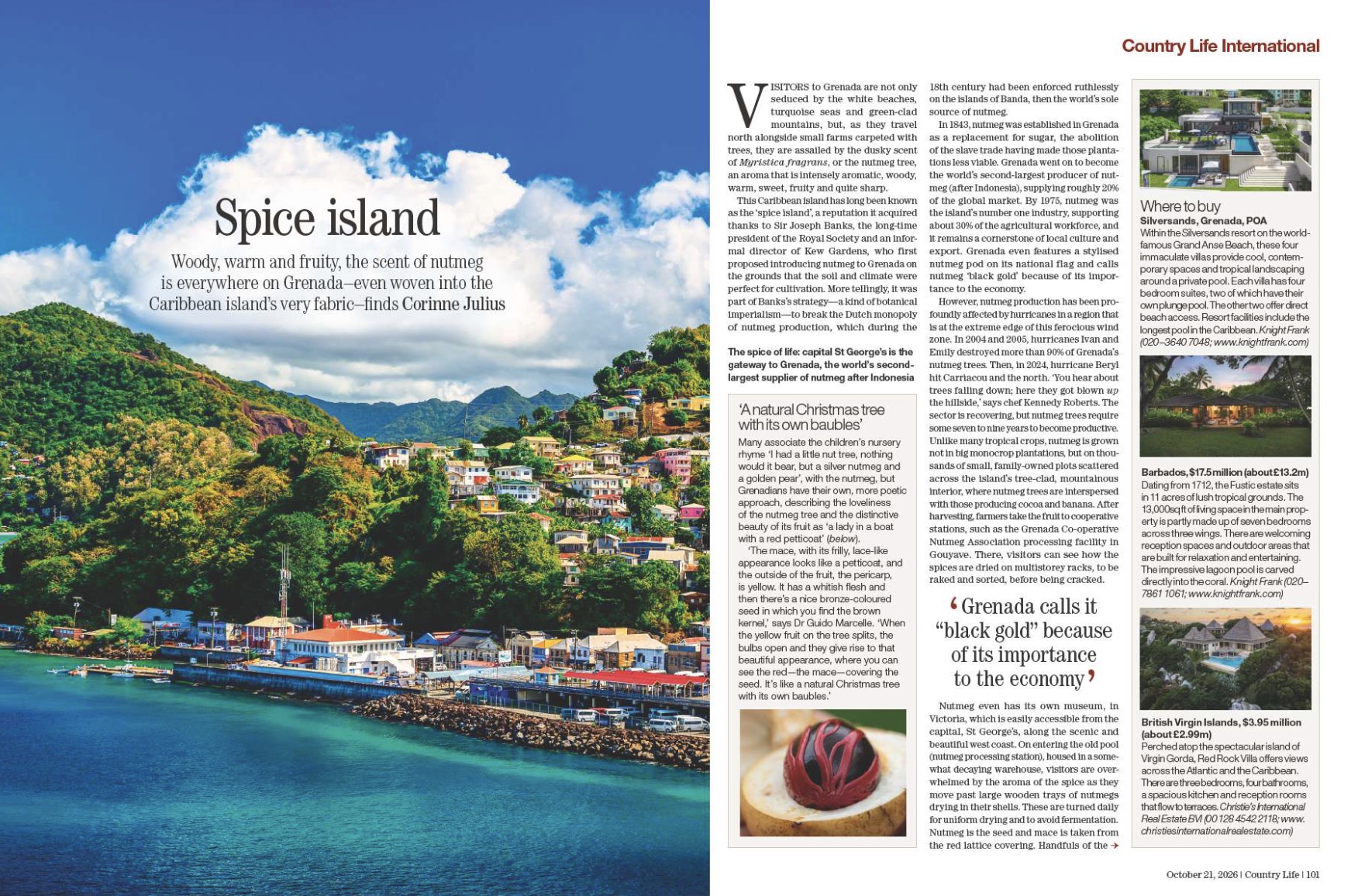
Julie Harding visits the historic Delft factory, Harry Pearson samples the best of Parisian macarons and confronts the monsters of Lake Geneva, Claire Jackson tunes up for the Concours de Genève, Corinne Julius finds the spice of life in Grenada and Holly Kirkwood highlights top properties for sale in sun-loving cities
A man of contradictions
A new exhibition examines the complex character of designer William Morris, reports Mary Miers
James Peill’s favourite painting
The Garter King of Arms picks the portrait of a man of means
Country-house treasure
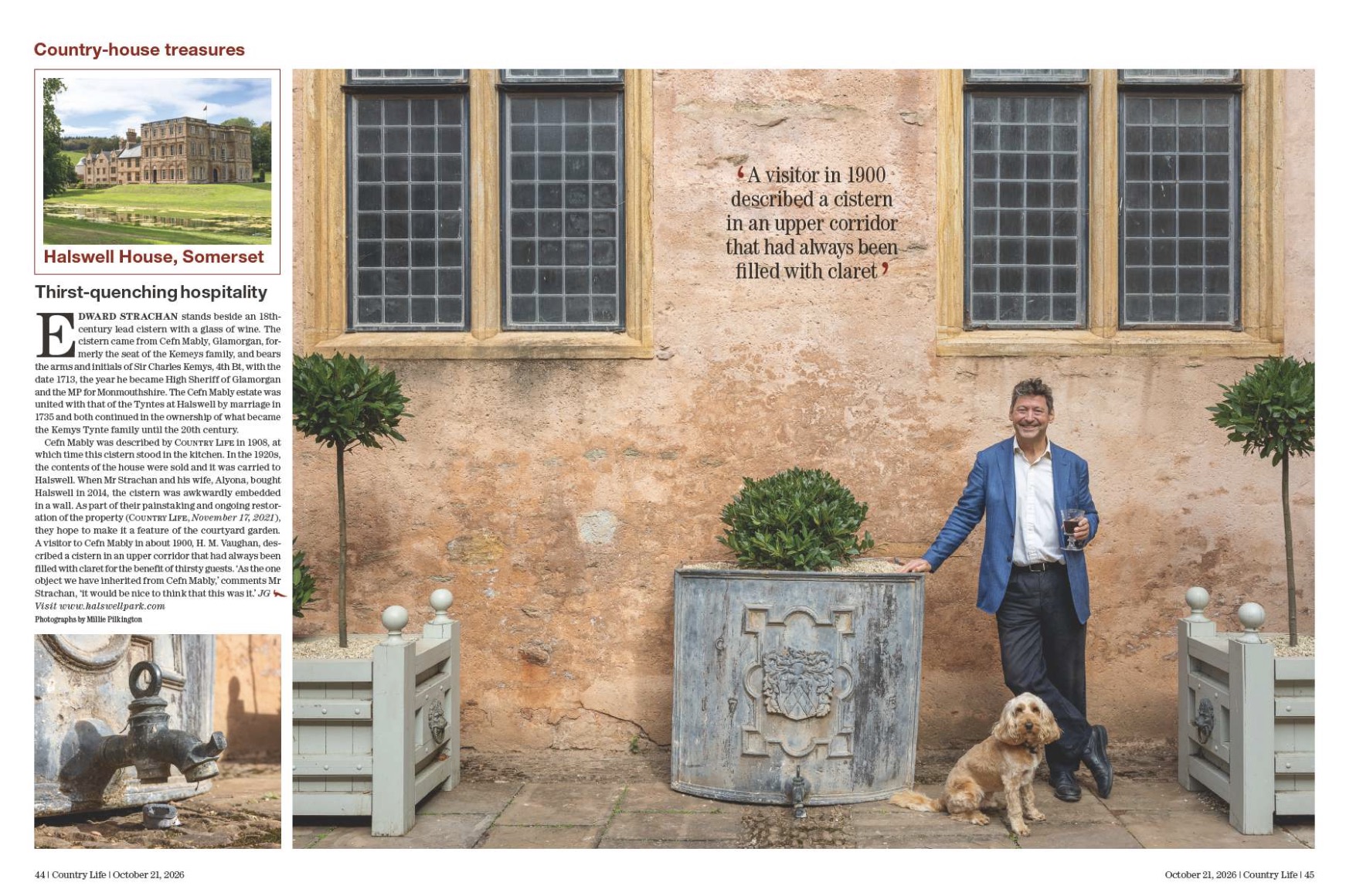
John Goodall toasts the thirst-quenching cistern in residence at Halswell House in Somerset
Rule the roast
Who first cooked up our famous Sunday lunch, asks David Ellis
Luxury
Justine Picardie admires the hum-orous style of Elsa Schiaparelli and Amie Elizabeth White seeks shades of suede for autumn
High-tech as history
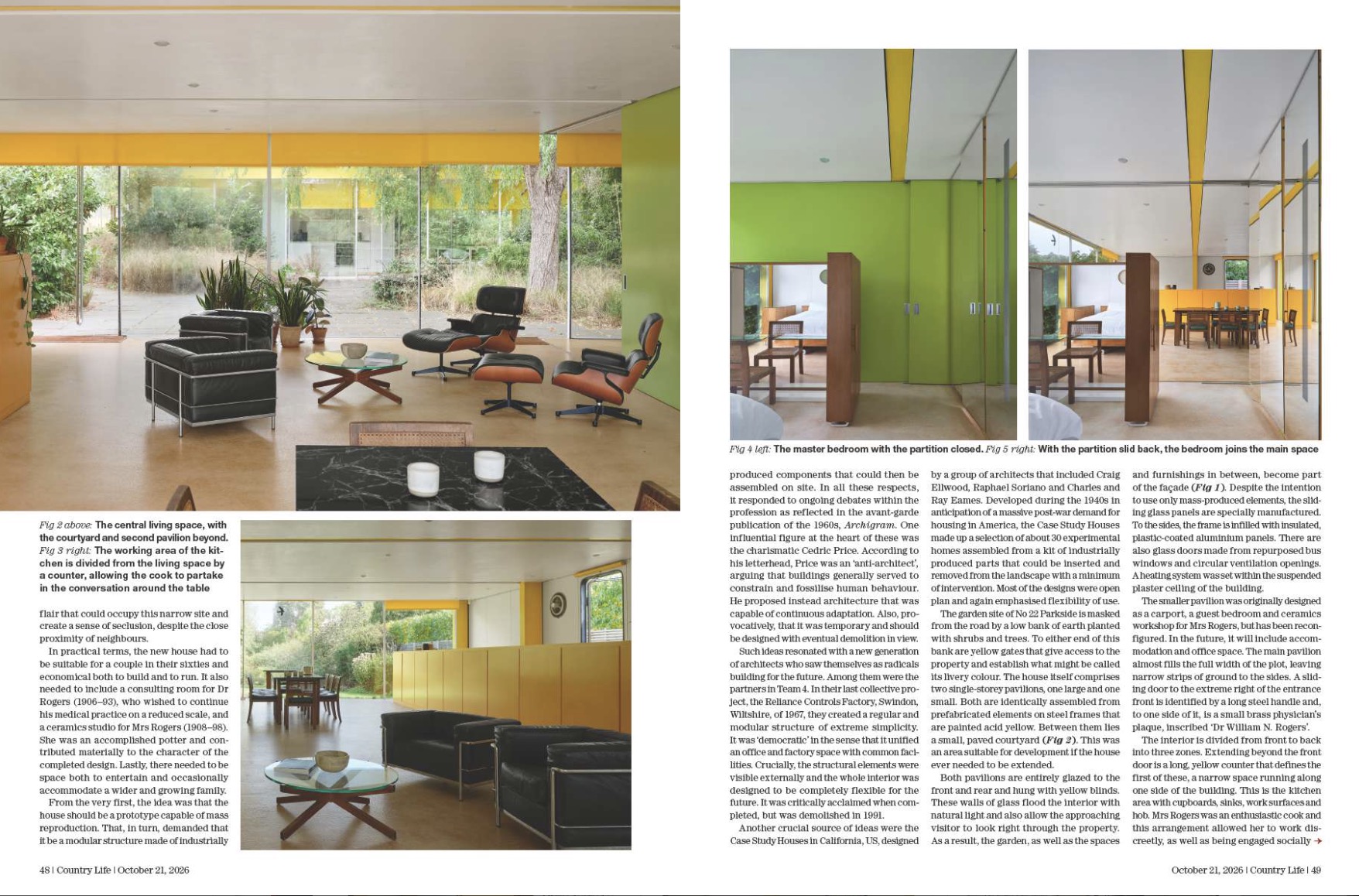
John Goodall tours the yellow, Modernist masterpiece No 22 Parkside in London, recently acquired by the National Trust
Interiors
Arabella Youens takes a shine to warm lighting in a utility room and Amelia Thorpe eyes lovely lamps
Weaving dreams
Tilly Ware meets the designer of the mesmerising perennial meadow at Shillies Barn, Suffolk
She sells sea salt by the seashore
Jane Wheatley visits Halen Môn on Anglesey and finds a thriving family empire well worth its salt
Countryside mysteries
Broomrape, toothwort and other such parasitic plants catch the ever-curious eye of John Wright
Travel
Richard MacKichan sails the Indonesian Flores Sea in style
Just sew stories
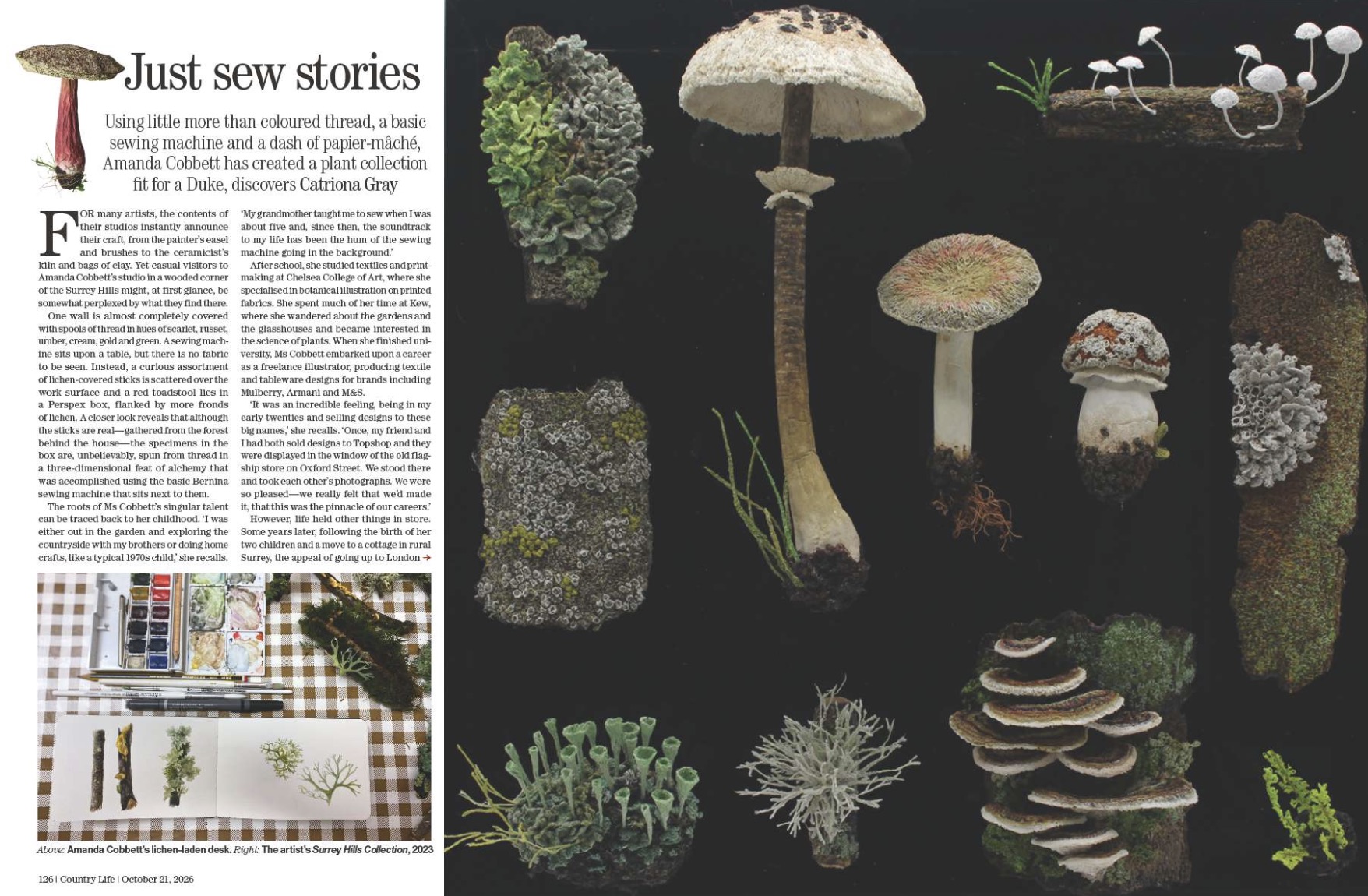
The fungi and lichen of the Surrey Hills are the source of artistic inspiration for Amanda Cobbett, as she explains to Catriona Gray
Arts & antiques
Carla Passino explores how the charming designs of Elizabeth, Lady Templetown helped her become the darling of Wedgwood
Setting the standard
James Graham serves up the best new play of the year as Michael Billington applauds a star-studded stage offering
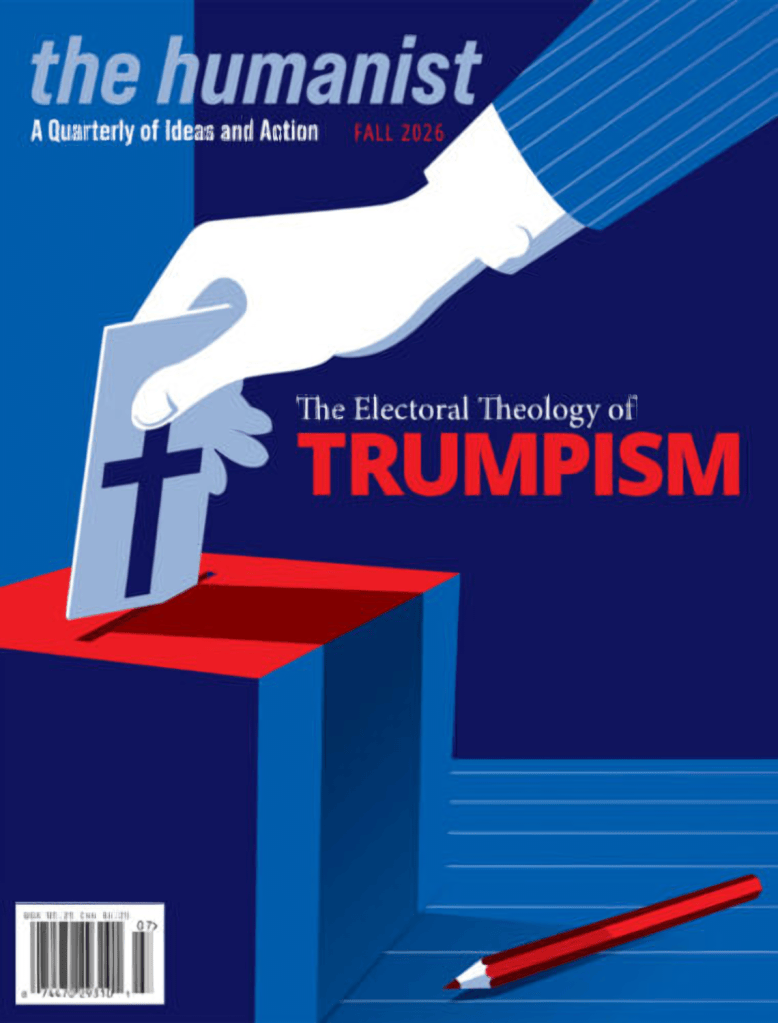
How White Evangelical Voters Made Trump’s Victory Possible—and Helped Legitimize Government by Certainty by Gordon Gamm
Donald Trump’s 2024 victory depended heavily on White evangelical or born-again Christian voters. National exit polling estimated that they constituted approximately 23 percent of voters and supported Trump over Kamala Harris by 82 percent to 17 percent.¹ Trump won the national popular vote by only about 1.5 percentage points—49.81 percent to Harris’s 48.34 percent.²
At the foot of burning Mount Doom, Samwise the gardener kneels beside his friend, Frodo, who can no longer walk. Frodo has been carrying a great weight– the One Ruling Ring, which grows heavier with every step. As Sam watches his friend press onward at a crawl, he knows he…
This piece was awarded first place in the Humanists of Greater Portland’s annual essay contest for high school seniors seeking funding for post-high school education. Every day reminds me how much we rely on tiny lines…
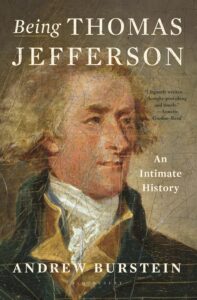
An Intimate Look at the Life of Thomas Jefferson in This Anniversary Year
“Being Thomas Jefferson: An Intimate History”by Andrew Burstein
Over a long life encompassed by countless books while a student, professor or a researcher, it is only “once in a blue moon,” this reviewer encountered a magnificent book. One such is Andrew Burstein’s latest, “Being Thomas Jefferson: An Intimate History.” I can only sing praises of this monograph. I had difficulty putting it down. This poignant book is a must read for those wishing to learn more about the author of several significant achievements that still ring the cause of freedom in the United States of America. Particularly in this 250th anniversary year of Jefferson’s Declaration of Independence, “well-armed with pulsating phrases,” one should spend time getting reacquainted with this man of particular talent and devotion to the cause of liberty. It is also the 200th anniversary of Jefferson’s death. Between these two anniversaries lie a testament to greatness, and devotion to his country. There are numerous history book offerings in this anniversary year, but surely this book stands apart from many others.
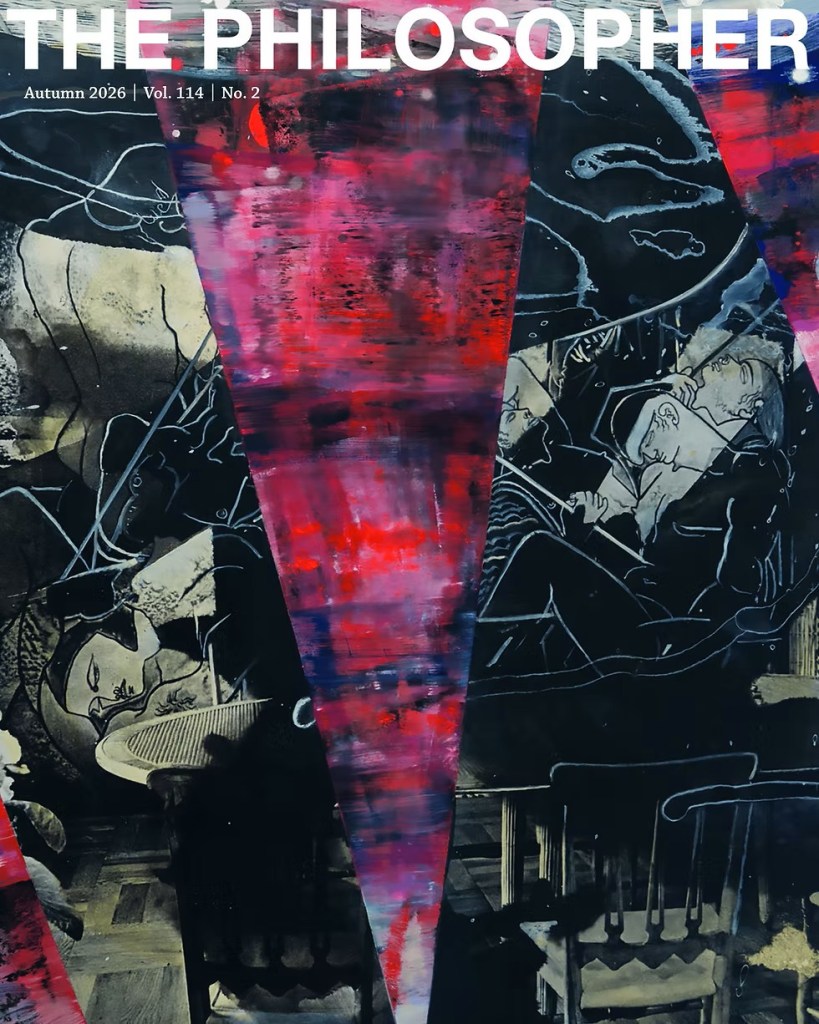
THE PHILOSOPHER MAGAZINE: This collection of essays explores diverse philosophical inquiries into culture, ethics, and human experience. Chloe Romanis uses ectogestation to evaluate the inherent value of pregnancy, while Jorge Sanchez-Perez addresses the methodological challenges of diversifying the philosophical canon through pre-colonial Andean philosophy. Laura Cecile Moore clarifies the boundaries between art and craft. Meena Dhanda advocates using Wittgensteinian reminders against injustice, and Grace Theodoly explores how psychological ideas challenge cognitive neutrality. Finally, Aanuoluwapo F. Sunday applies Yoruba environmental ethics, Tanya de Villiers-Botha maps artificial intelligence ethics, and Helga Varden navigates the complexities of transforming the Kantian tradition from within.
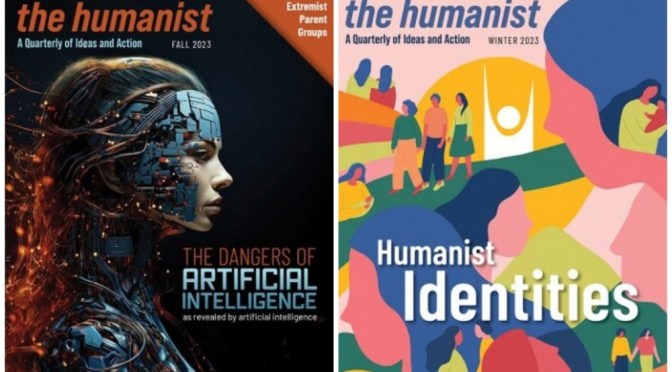
The recent trend of AI companies hiring philosophers has largely been celebrated as a vindication for the discipline. The Economist recently reported that American philosophy graduates now find work at higher rates than their computer science peers, and that leading AI laboratories are recruiting philosophers into senior roles -– not merely to sharpen a model’s chains of reasoning, but to draft the documents, such as Google’s published ‘AI Principles’, that are meant to govern how a system behaves. Where criticism of this trend exists, it has tended to focus on familiar concerns: ethics washing, the risk of philosophy becoming a public-relations exercise, and the migration of talent away from universities that Luciano Floridi has called a ‘haemorrhaging’. These concerns are real. But they may be missing a further, less visible risk, one that has nothing to do with where a philosopher’s paycheck comes from.
There is an old paradox at the heart of money: it seems to work best when left unexamined. When monetary trust holds, we barely notice it and rarely pause to ask what money is or what stands behind it. The moment we do – in monetary crises and periods of inflation – the very act of questioning can accelerate the unraveling. Money has a peculiarly oblique self-referential structure. Monetary systems depend on routine acceptance, on habits of trust that operate beneath conscious reflection. But as we shall see, this does not mean the right response is naïve ignorance or unreflective depoliticisation. Quite the contrary: for money to work reliably as institutionalised collective faith, it must remain anchored in shared social values and that requires the capacity for reflective, democratic engagement with questions of monetary power, who controls credit and, therefore, which futures are allowed to become possible.
I want to propose four ways to think about ‘finance,’ for those who want to critique it. Critics can think of finance as a parasite, as an organ, as an ongoing struggle, or as a decision. In what follows, I will explore these four different ways to think of finance, these different meanings, and the different possibilities they offer for mounting resistance to it.
Let’s divide talk about finance into two sides. Finance has meanings, but it also has a referent. Its referent is pretty evident to anyone who looks into it. Finance refers to economic functions that have to do with credit. The definition of credit is also pretty straightforward. Credit is value advanced on the promise of future increase. This makes it similar in structure to industrial capital, which is also value advanced on the promise of a future increase. The difference between capital and finance is production. Industrial capital receives its increase when value is invested in production. Say I am a capitalist. With my capital, however I obtained it, I found a company that produces microchips. As microchips roll off the line and are sold, the original value I advanced grows because workers work more than they are paid for and in the extra hours they make more microchips than I need in order to pay the costs.
The series of recent steps by the president that seem to favor Vladimir Putin reflect his intensifying desire to normalize the relationship with Moscow even if it means further undercutting Ukraine.
The restrictions are part of a state effort to reassert control after the country’s largest riots in years, as those arrested in the chaos face expedited trials.
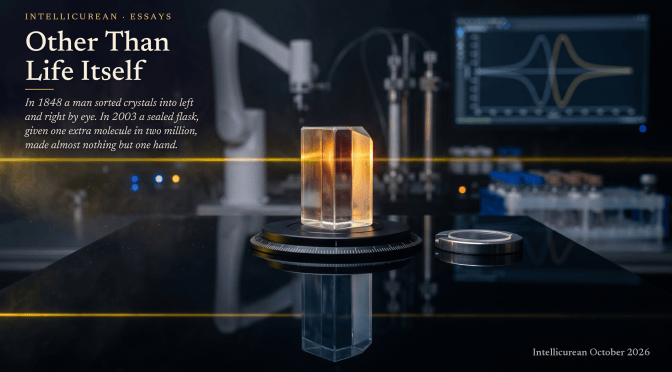
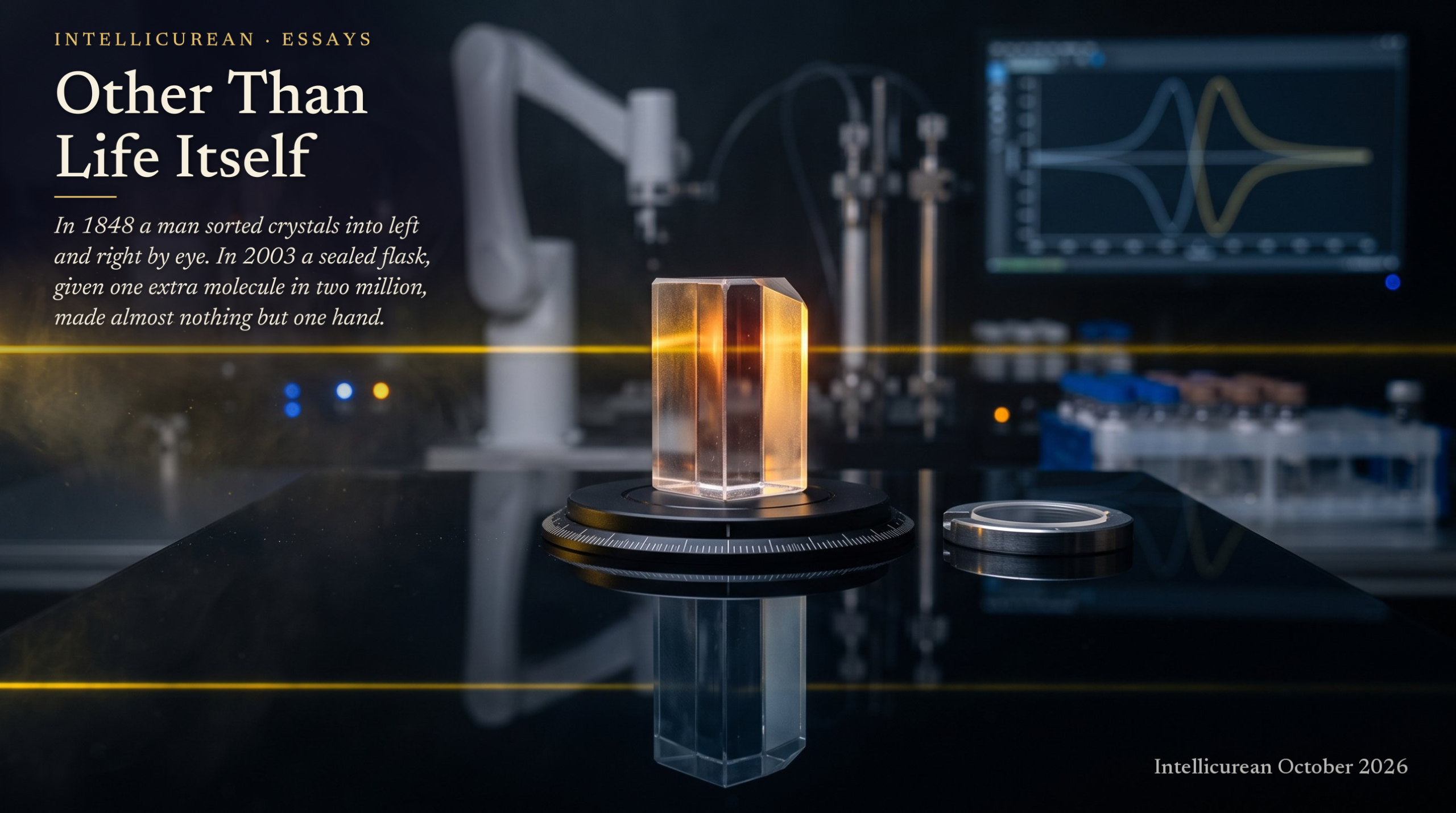
Your nose can tell a molecule from its mirror image, and life builds its proteins and genes from one form alone. No one knows why. This year’s chemistry prize went in part for a sealed flask that does much the same, and the Academy wrote: “Other than life itself, no one had previously achieved this feat.”
One hand lit, its mirror twin left cold, made for the essay.
Why we’re pointing you there
On October 7 the Royal Swedish Academy of Sciences gave the chemistry prize to Henri Kagan, 95, and Kenso Soai, 76, for work on how a slight preference for one mirror image can grow. Intellicurean takes the Academy’s most generous sentence at its word and follows the flask back to where the story starts: wine diamonds under a cork, stray crystals in the vats of an acid works in Alsace, and Louis Pasteur in 1848 sorting crystals into left and right by eye, then repeating it for the old physicist Jean-Baptiste Biot in Biot’s own rooms. From there it moves through Kagan’s “marriage,” in which a deliberately flawed catalyst does better than anyone expected because mismatched pairs sit out; a flask that existed only on paper in 1953; Soai’s thirty-seven sealed flasks, started with nothing one-handed, that came out eighteen one way and nineteen the other; and a stone that fell near Murchison, in Victoria, in 1969, carrying amino acids that lean.
What we liked most is how the essay resists both temptations of its subject. It never lets the flask stand in for how life did it, which the committee itself is careful to say it isn’t, and it never lets the mystery go soft: it says plainly that an amplifier “makes a cause indistinguishable from an accident.” It is also a story full of people, from Biot taking the young Pasteur by the arm to a laureate who heard the news while out shopping and spoke first of Pasteur. Where the essay turns the Academy’s compliment around, and what it makes of the stone, we’ll leave to the essay.
Grapes, a sealed flask, and a stone that arrived leaning, made for the essay.
Aaron Sorkin’s The Social Reckoning is in theaters, with Mikey Madison as the whistleblower Frances Haugen and Jeremy Strong as Mark Zuckerberg. Its case, as RogerEbert.com puts it, is that Facebook’s algorithms steered users rightward and that “the January 6 riots are the end product of the machinations the movie lays out.”
Writing in UnHerd, Matt Feeney says the film has the wrong villain. The scandal was never mainly about content. It was about design. Platforms were engineered to be habit-forming, drawing on the behavioral-design playbook of Nir Eyal’s Hooked and the variable reward schedule, and everything users produce becomes training data for machines.
Liberals missed this, he argues, because they mistook the platforms for instruments of liberation. “Idealizing social media platforms as tools of emancipatory expression was always naïve.” His verdict on the movie is brutal: “The film is a publicity coup for its ostensible villain, Mark Zuckerberg.”
vs
THE ANSWER
Content is not a distraction from the business model. It is the business model. The engagement machine Feeney describes has to be fed something, and what it learned to feed us was outrage, because outrage holds attention better than agreement does. Design and content are the same problem seen from two angles.
The practical case cuts the same way. “Extraction” is an abstraction with no remedy attached, while content decisions are things a company can actually change, a regulator can actually audit, and a whistleblower can actually document. Haugen brought out the internal research. Nobody can subpoena a dopamine loop.
And Feeney grants more than he means to. He calls the harm to teenagers’ mental health “appalling,” credits Haugen for proposing algorithmic fixes, and concedes Trump bears primary responsibility for January 6. Those are the content critics’ own points, conceded and then set aside.
iC
THE INTELLITAKE
Feeney is right about the movie and wrong about the remedy. A film in which the worst charge against a man is that his product made people vote badly is, as he says, a gift to that man. It flatters the audience, hands the problem to a content-moderation department, and lets everyone go home.
But “extractive, not extremist” is a false choice. Extraction is the engine; extremism is the exhaust. A machine built to hold attention at any cost will find that fury holds it best, and will serve fury without anyone deciding to. That is worse than a conspiracy, not better, because there is no one to subpoena.
The real force of Feeney’s essay is a shift in the question. Ask not what the platforms are doing to our politics but what they are doing to our capacity to attend to anything at all. Every hour of scrolling is an hour the machine learns from and the reader does not. A citizenry can recover from believing false things. It is harder to recover from losing the ability to sit with a true thing long enough to understand it.
TODAY’S PROVOCATION
Check your screen time, then ask what you would have done with those hours in 2006. Which answer bothers you more?
They power our phones, cars, dishwashers—and the A.I. systems that prop up the economy. They’re also at the heart of fierce geopolitical rivalry. By Gideon Lewis-Kraus
Alarm about declining interest in books is perpetual. But, as bookselling reaches unexpected heights, James Daunt, the chief executive of Barnes & Noble, thinks a different future is at hand. By Nathan Heller
The cases of Christa Pike and Nidal Hasan show how vanishingly fine the line is between a routine execution and an unbearable one. By Amy Davidson Sorkin
News, Views and Reviews For The Intellectually Curious