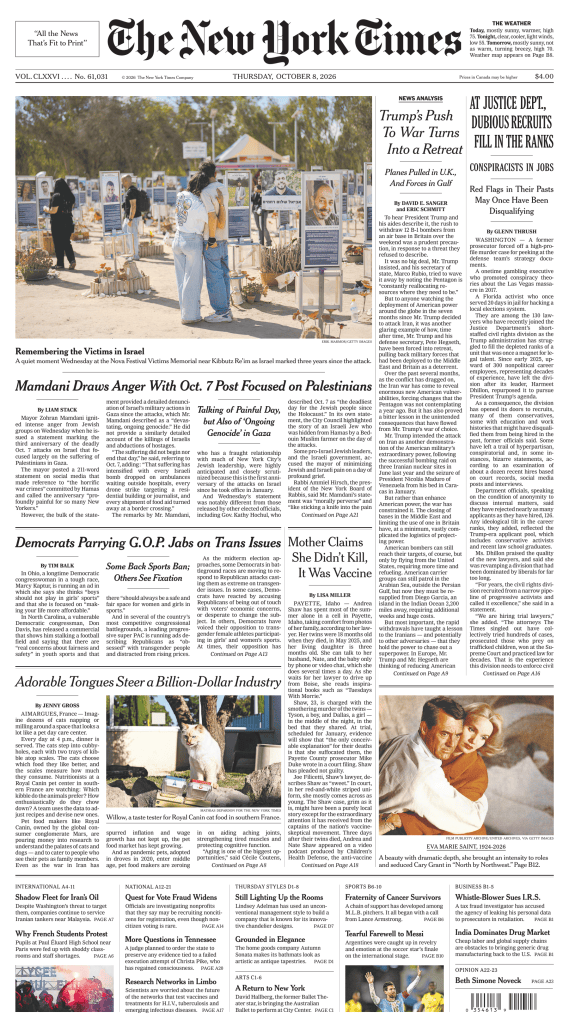
A top aide to Ambassador Mike Huckabee skewed information to portray the Netanyahu government in a favorable light, according to multiple officials and documents obtained by The Times.
After trading his military uniform for civilian clothes, Myanmar’s strongman president, U Min Aung Hlaing, is in Malaysia, his ninth stop on a search for international legitimacy.
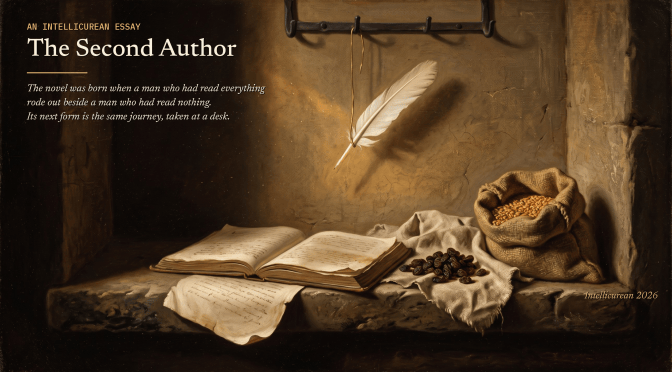
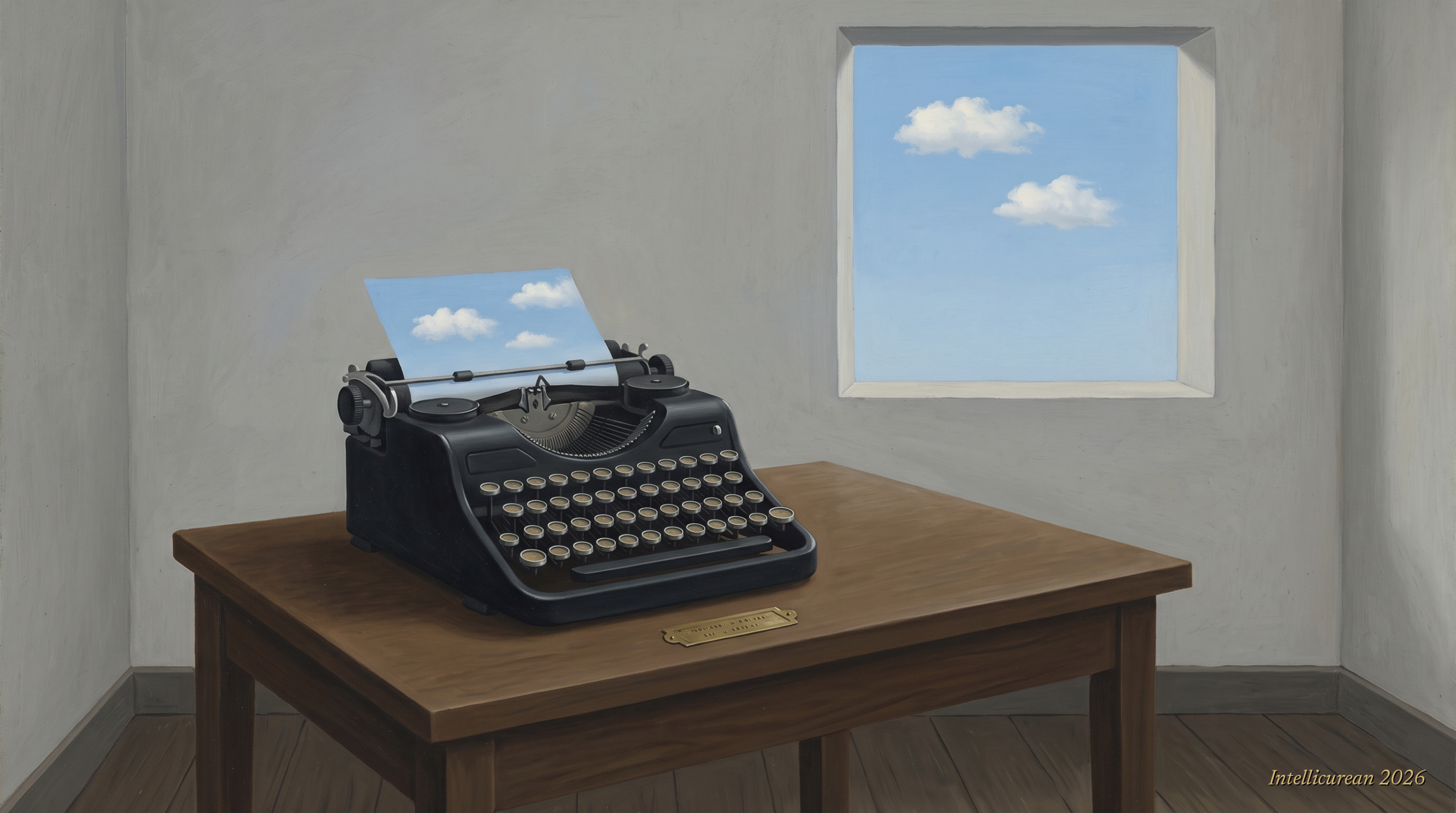
The first modern novel announces, a few dozen pages in, that it was not written by the man whose name is on it. Cervantes gave it a second author, a translator paid in raisins, and a source he told his readers not to trust. The pen has arrived in fact, and it writes in every language at once.
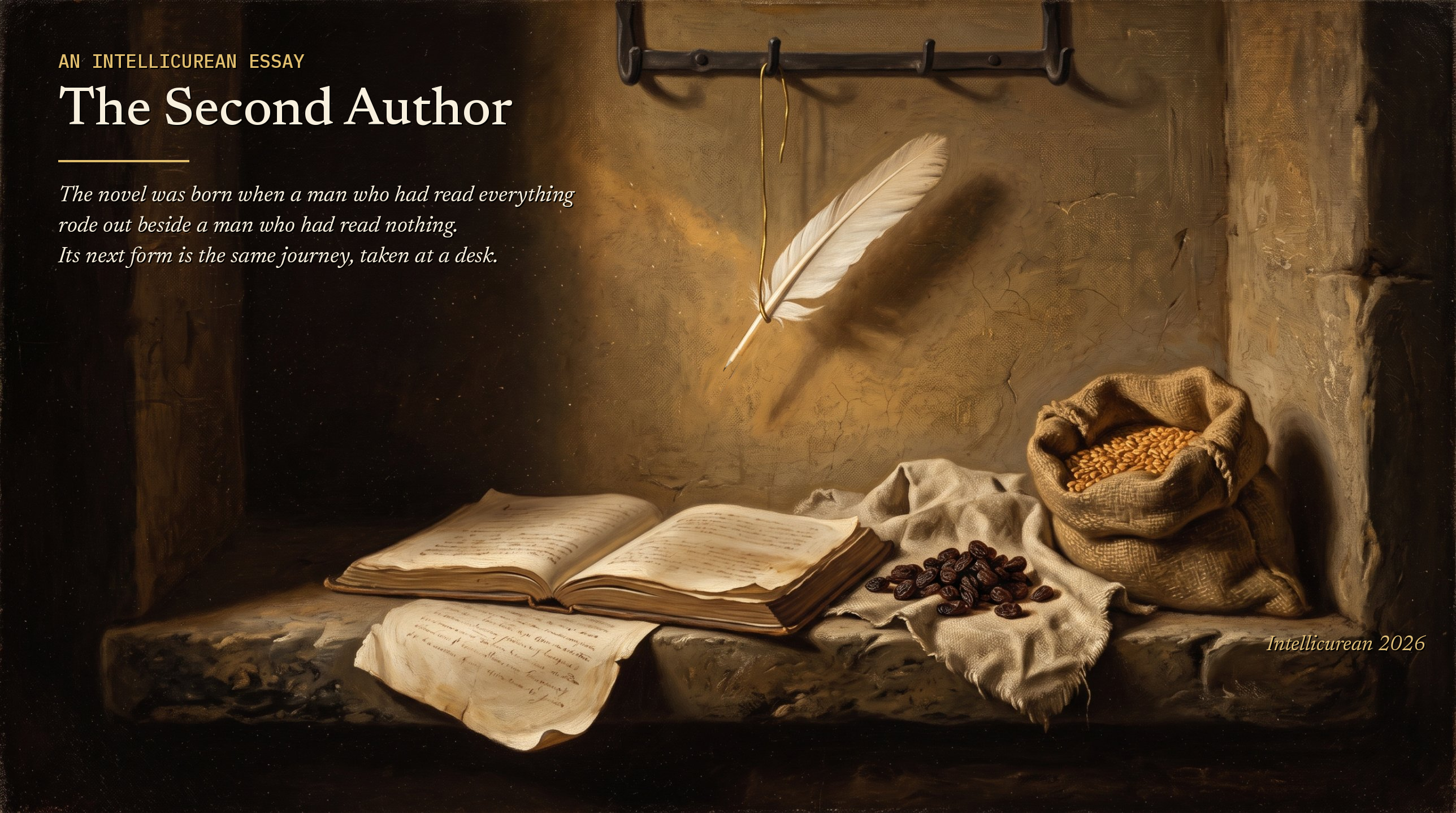
The pen on the rack, the manuscript, and the translator’s fee, made for the essay.
Why we’re pointing you there
The essay starts where the first modern novel stops: mid-sword-stroke, at the end of chapter eight of Don Quixote, because the author has run out of manuscript. In the next chapter the narrator buys the rest from a boy in the Toledo market, hires a Morisco to translate it for two arrobas of raisins and two bushels of wheat, and calls himself the book’s “second author.” Michael Cummins takes that machinery as the form’s founding fact. The novel was always written by more than one hand, about a man made of books riding beside a man who had read nothing, and working with a generative model is that same meeting, now happening at the desk. The model is Quixote. The novelist is Sancho.
The objections are given at full strength: the novel’s need for solitude, the measured sameness of AI-assisted writing, the pirated library behind the machines (the essay names its own conflict here: it was drafted with Claude, whose maker was the defendant), and a law that requires a human author. Each is answered, and one is conceded as unsolved. Then the essay goes to Cervantes’s last page, where the historian hangs up his pen and lets the pen claim the book, and finds the line the form has always drawn: not between human writing and machine writing, but between a text someone answers for and a text no one does. The question left open is who takes the pen down.
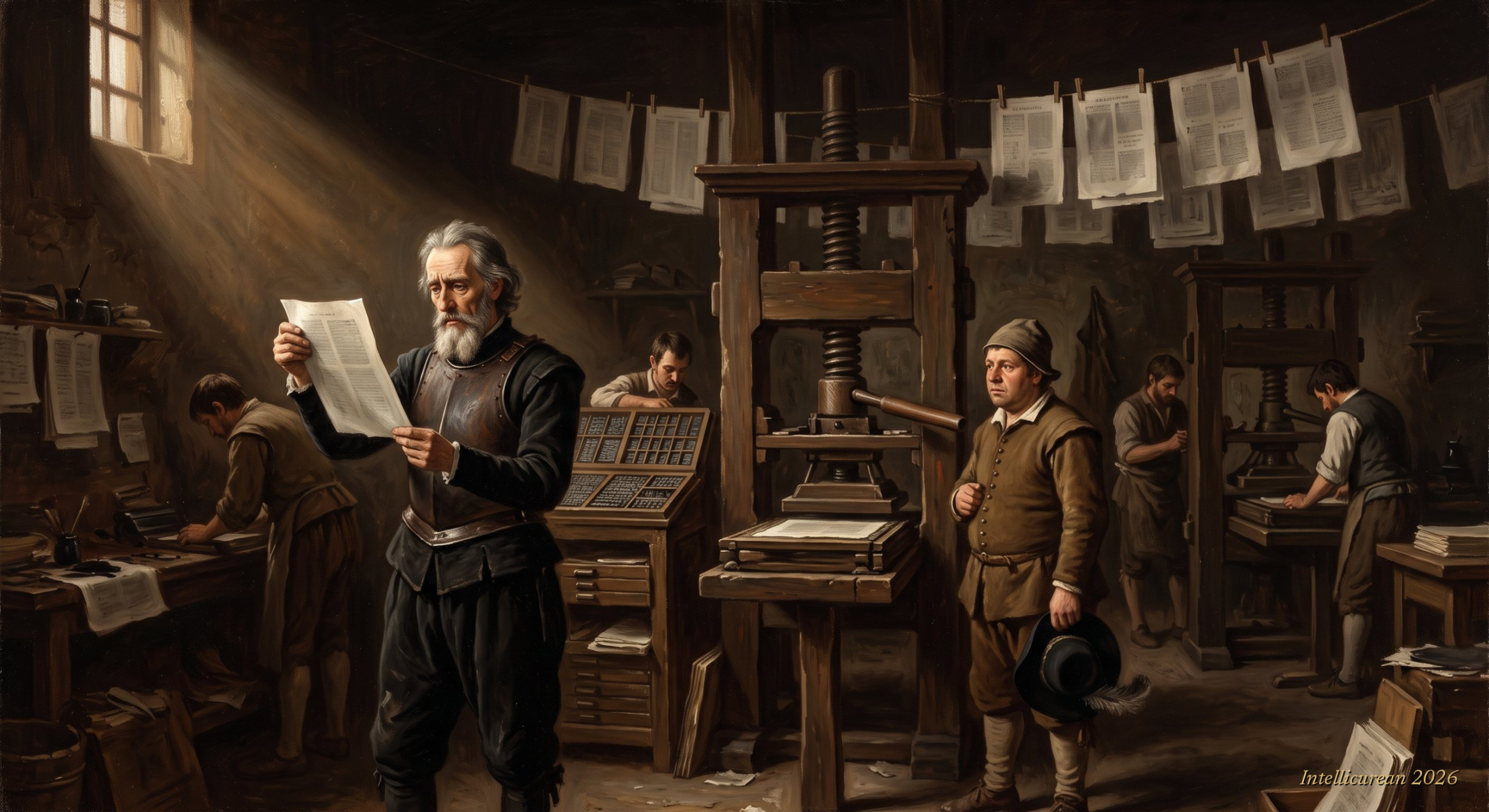
A knight reads the machine’s account of himself, made for the essay.
The Second Author continues on Wednesdays: on the library’s debt, on interiority with two voices in the room, on sameness, on what prizes and detectors can know, on novels about their own making, and on how a reader can tell where the choosing was done.
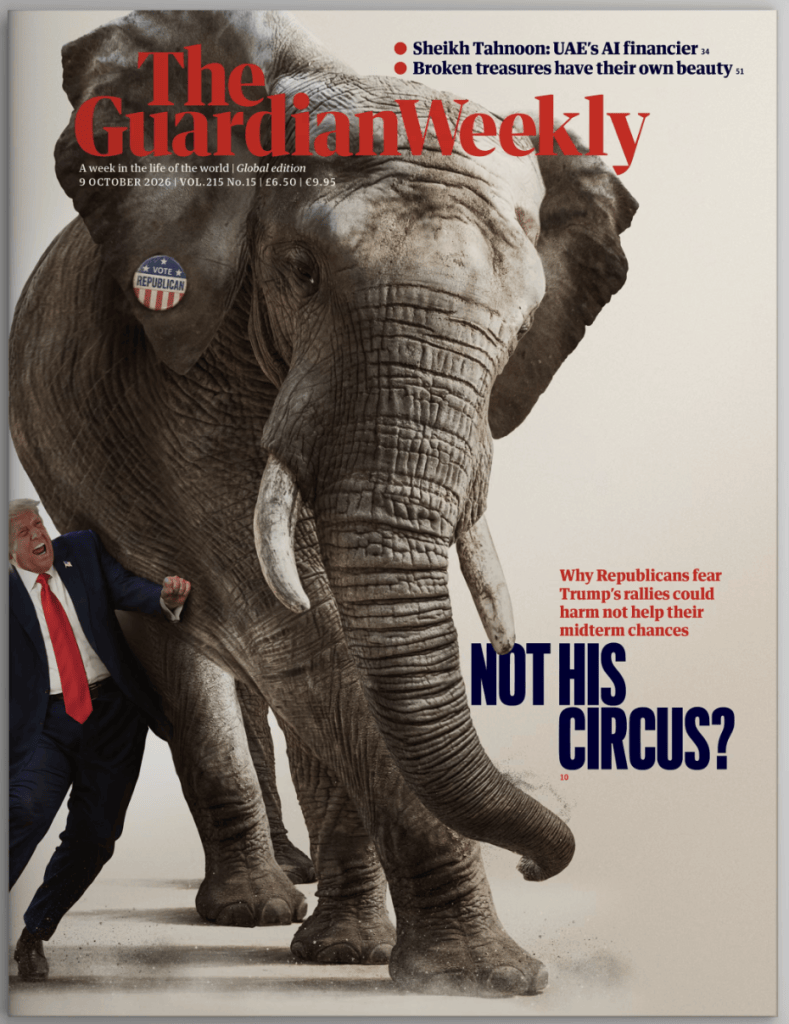
With fewer than 30 days until the US midterm elections, Donald Trump seems determined to still be centre stage despite poll fears that after 3 November he may end up a lame-duck president as a Democratic blue wave sweeps the country. Our Washington bureau chief, David Smith, has been watching how the president is playing to Republican voters at the start of a blitz of cross-country rallies. It’s, at best, a mixed picture.
As David reports, Trump’s self-belief and message to voters to “pretend” his name is on the ballot reveal a man out of touch with ordinary Americans’ worries about the cost of living and whose promises that the war with Iran will soon be over ring ever more hollow. And then there are the candidates, more of whom are shying away from their earlier allegiances to a president whose approval ratings continue to slide.
Spotlight| An education crisis in France As school and university protests intensify, Paris correspondent Angelique Chrisafis finds out why students feel the government is ignoring their complaints about the state of education
Spotlight| Greendivision and diversion Peter Walker reports on the English and Welsh Green party’s annual conference in which a motion equating Zionism with racism was passed, and analyses how this reveals weaknesses in the way the party is run
Feature| The big business of porn Why not analyse the porn industry just like any journalist would the oil business? That was the premise behind Patricia Nilsson’s new book. An approach that, as Amelia Gentleman finds out, yields new insights into how pornography’s imperatives have seeped into all our online lives
Opinion| Putin won’t bomb Ukraine into submission Kyiv may now be under almost constant attack but, says Rajan Menon, history shows that bombing doesn’t crush morale
Culture| There’s beauty in bits and pieces A novel exhibition in Florence puts broken sculptures on display and, as Philip Oltermann discovers, reveals their profound allure
Airfares Have Spiked. Is the Death of Spirit Airlines to Blame?
In the wake of the ultra-low-cost carrier’s closure, and with the cost of fuel and labor rising, domestic fares have become less competitive. But there are ways to parry higher prices.
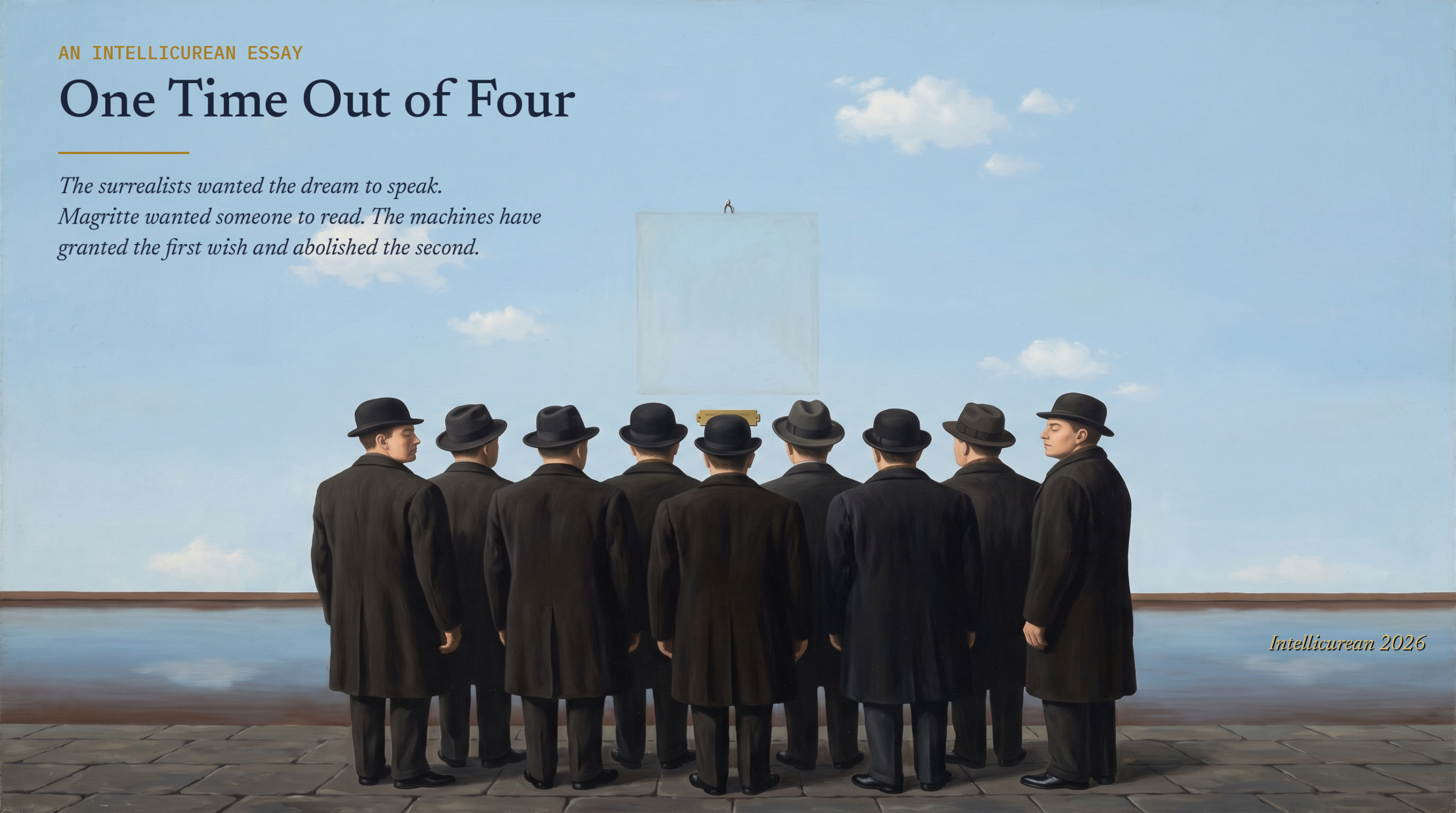
Sixteen surrealists photographed with their eyes shut, round a painting of a woman the sentence says they do not see. A table of four pictures and four words, three of them wrong. Magritte built that table three times, and the one true word in it was a wager on a reader.
The caption is up. The picture hasn’t arrived, made for the essay.
Why we’re pointing you there
The essay starts from Jonathan Jones’s Guardian review of Gagosian’s “This Is Still Not a Pipe,” which hunts Magritte’s heirs among forty living artists, and puts his four-panel Clef des songes back among the surrealists instead: painted first in Breton’s Paris in 1927 while the movement wrote down its dreams, painted again in 1929 with no true word in it, in the year of the pipe and of the review that printed his axioms on words and images and the page of sixteen closed eyes, and painted last in Brussels in 1935, in English, for New York. In Brussels his friends proposed his titles round a table.
Then it reads the machines beside the first Manifesto. Writing with no author at its centre is what the surrealists asked for, and a captioner writing ninety-five sentences in every hundred of a training set is that wish granted; when the dream spoke at scale it said “actor on the red carpet.” The machines are Breton’s heirs, not Magritte’s, and they have done one thing the surrealists did not: put the caption before the picture, so that an image made from a prompt is an illustration of its title, which Magritte is said to have ruled out. The rival reading, that Magritte’s subject was the folly of decoding, is given at full strength and conceded. What is left is a question, not a verdict: who is reading the sentence under the picture now.