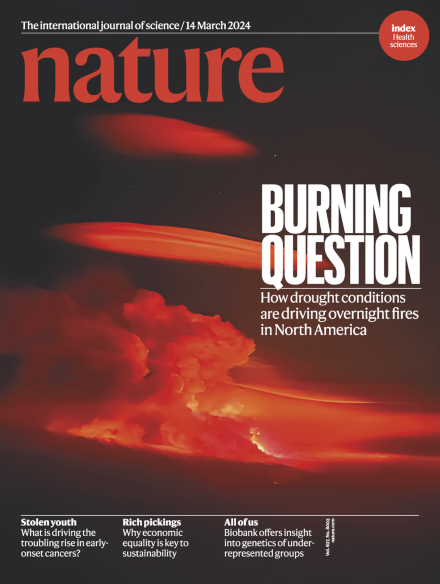
Nature Magazine – March 13, 2024: The latest issue cover features ‘Burning Question’ – How drought conditions are driving overnight fires in North America…
The de-extinction company Colossal is the first to convert elephant cells to an embryonic state, but using them to make mammoths won’t be easy, say researchers.
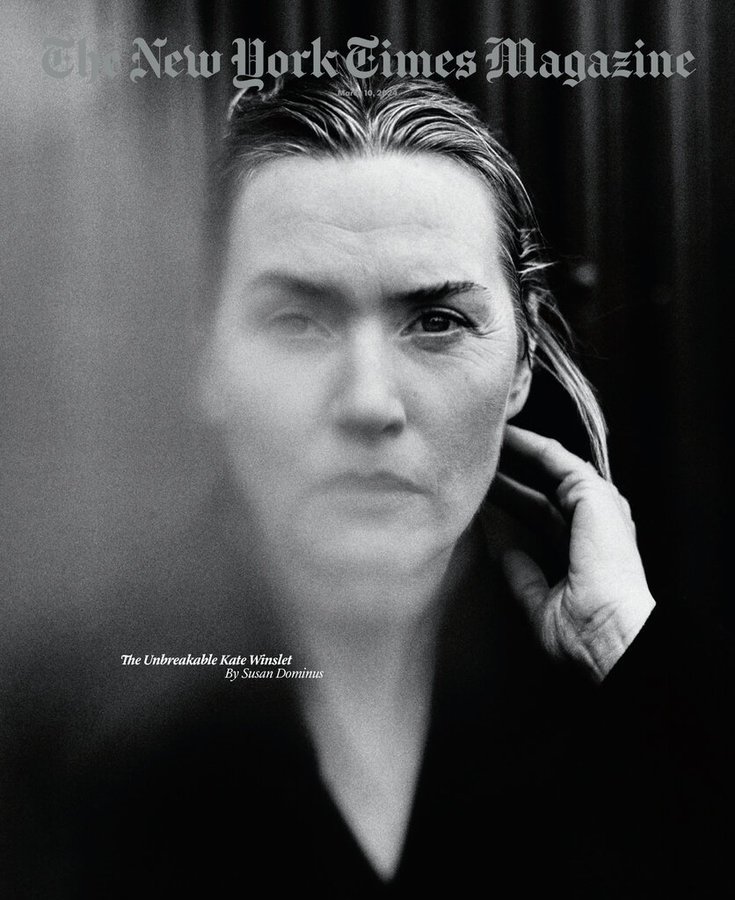
As a young star, she endured Hollywood’s brutal treatment of women. Now she’s putting her resilience and grit on full display.
Kate Winslet was standing in front of a microphone, breathing hard.Sometimes she did it fast; sometimes she slowed it down. Sometimes the breathing sounded anxious; other times, it was clearly the gasping of someone who was winded. Before beginning a new take, Winslet stood stock still, hands opening and closing at her sides; she looked like a gymnast about to bound into a floor routine. Every breath seemed high-stakes, even though she was well into a long day of recording in a dim, windowless studio in London.
France has often been the vanguard of leftist politics — but support in the streets doesn’t always translate to votes at the ballot box.
By Elisabeth Zerofsky
The signs that a protest is happening in Paris are nearly always the same: the quiet of blocked-off streets; the neat rows of police vans containing the gendarmerie stretching down the boulevard; the sound of drumbeats and whistles and the neon red flares that spit smoke into the sky. For six months last year, those signs were constant and ubiquitous, as furious, sometimes violent marches and general strikes protesting President Emmanuel Macron’s pension reforms brought Paris to a standstill. Students and activists, public-transit operators, custodial staff, medics, mechanics, teachers, oil-rig workers, writers and celebrities all gathered to rail against Macron’s plan to raise the national retirement age by two years, to 64.
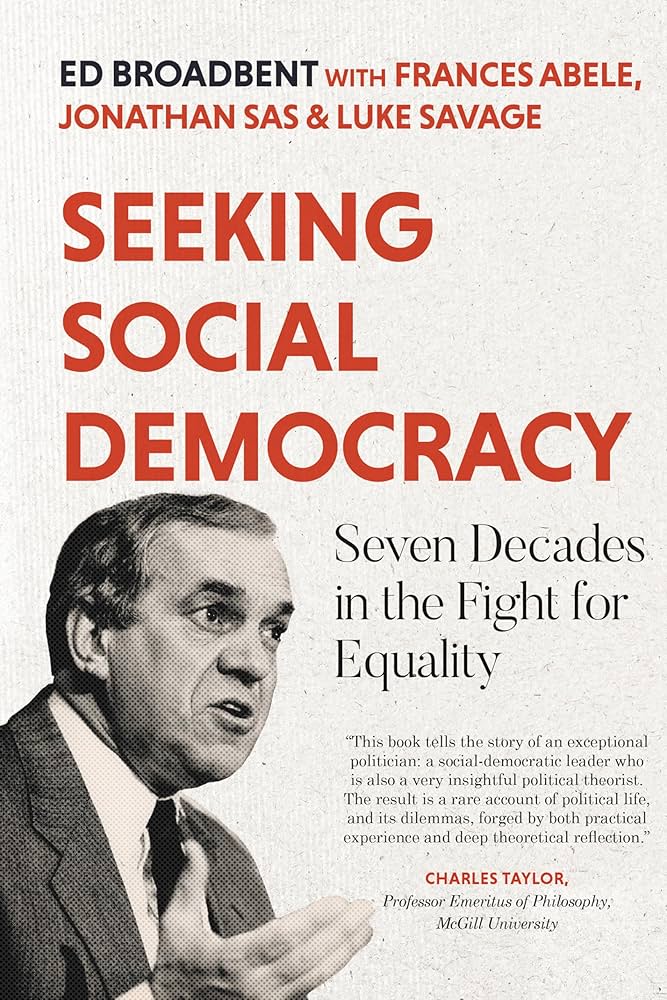
Seeking Social Democracy: Seven Decades in the Fight for Equality by Ed Broadbent, with Frances Abele, Jonathan Sas, and Luke Savage
On July 6, 1975, Ed Broadbent, then a thirty-nine-year-old member of Parliament from Oshawa, Ontario, delivered a speech at the New Democratic Party convention in Winnipeg, capping off his campaign to become just the third leader in the young party’s history. It was a tumultuous time. Across the rich world, the social democratic settlement that had been brought about by the twin catastrophes of the Great Depression and the Second World War was beginning to unravel with the collapse of the Bretton Woods monetary system, the oil shock precipitated by the Arab-Israeli conflict, the beginning of industrial decline, and the emergence of persistent inflation. The year before, the NDP had suffered a significant electoral setback when, after supporting the minority Trudeau government in Parliament since 1972, it lost almost half its seats despite seeing its vote share decline by only 2.4 percent.
Motor City Meltdown – Catherine Leroux’s alternative history
The Future by Catherine Leroux; Translated by Susan Ouriou
In The Future’s reimagined history, the French never ceded Fort Détroit to the British in 1760, and the British never ceded it to the United States as part of the Treaty of Paris in 1783. Instead, the community has remained proudly French Canadian for centuries. (“Never forget we were two shakes away from becomin’ American,” a current resident proclaims.) But while the Motor City was once “full of people, full of music, full of words,” it now struggles in economic ruin — ravaged by pollution, poverty, and crime. It is “a place devoid of faith or law,” with poison in the river and pictures of missing children posted everywhere.
Our annual ranking of the country’s Top 1,200 Financial Advisors finds a broader embrace of digital tools among advisors and clients alike. The result: more flexibility, potentially lower fees, and greater access to specialists.
Our annual ranking, now in its 16th year, finds an industry that has changed with the times. Here’s what investors need to know about the selection process.
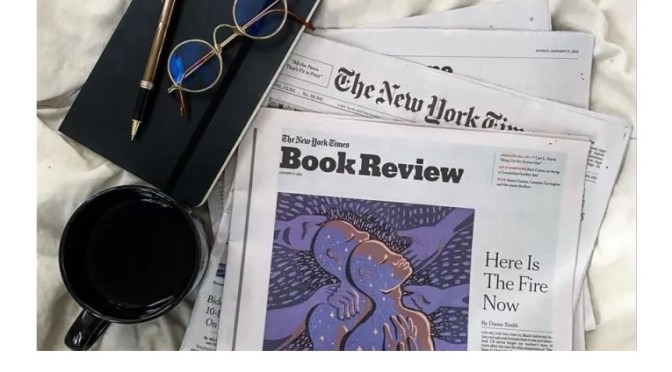
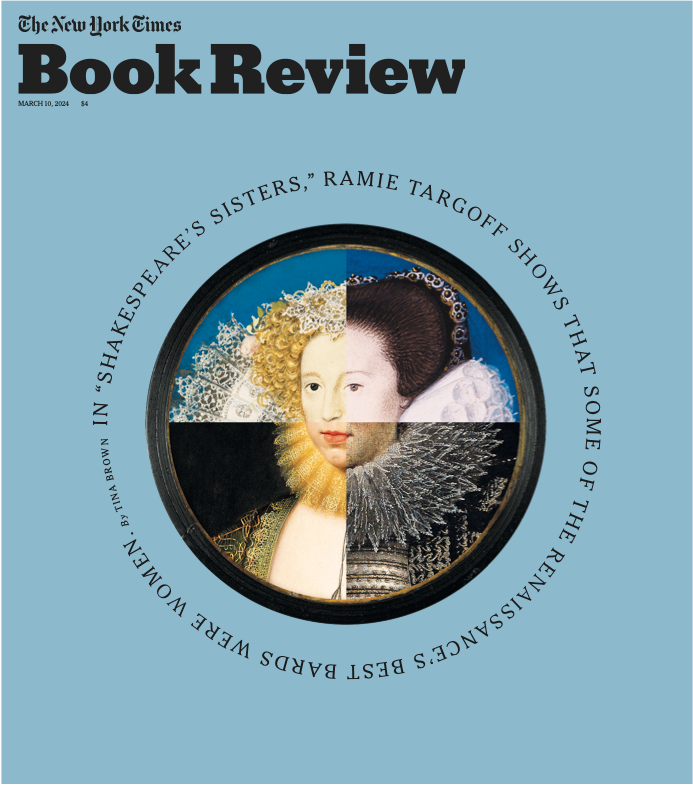
THE NEW YORK TIMES BOOK REVIEW (March ,8 2024): The latest issue featuresRenaissance scholar Ramie Targoff’s new book, “Shakespeare’s Sisters,” which sets out to show modern readers that the Elizabethan era did indeed produce its share of great women writers, and she details four of them across a range of disciplines.
In “Shakespeare’s Sisters,” the Renaissance scholar Ramie Targoff presents an astounding group of Elizabethan women of letters.
By Tina Brown
SHAKESPEARE’S SISTERS: How Women Wrote the Renaissance, by Ramie Targoff
Judith Shakespeare, Virginia Woolf’s imaginary sister of the Bard, was for years the accepted portrait of the nonexistent writer of Renaissance England. In “A Room of One’s Own,” her seminal feminist essay, Woolf concluded that any glimmer of female creativity in Shakespeare’s time would have been expunged by a pinched life as a breeding machine of children who so often died, disallowed opinions of her own. Had any woman survived these conditions, wrote Woolf, “whatever she had written would have been twisted and deformed, issued from a strained and morbid imagination.”
Using clever camera methods, a new photo book illuminates how honeybees see plants and flowers.
By William Atkins
In WHAT THE BEES SEE: The Honeybee and Its Importance to You and Me, Craig P. Burrows’s ultraviolet-lit photographs mimic the fluorescence his botanical subjects emit when exposed to sunlight, revealing colors and textures usually obscured by the dazzle of visible light. Because bees see in the ultraviolet spectrum, Burrows’s method can afford us a glimpse of the world as they perceive it: His portraits of plants are, in part, prompts for interspecies empathy at a time when bees are under attack on multiple fronts, from air pollution to pesticides.
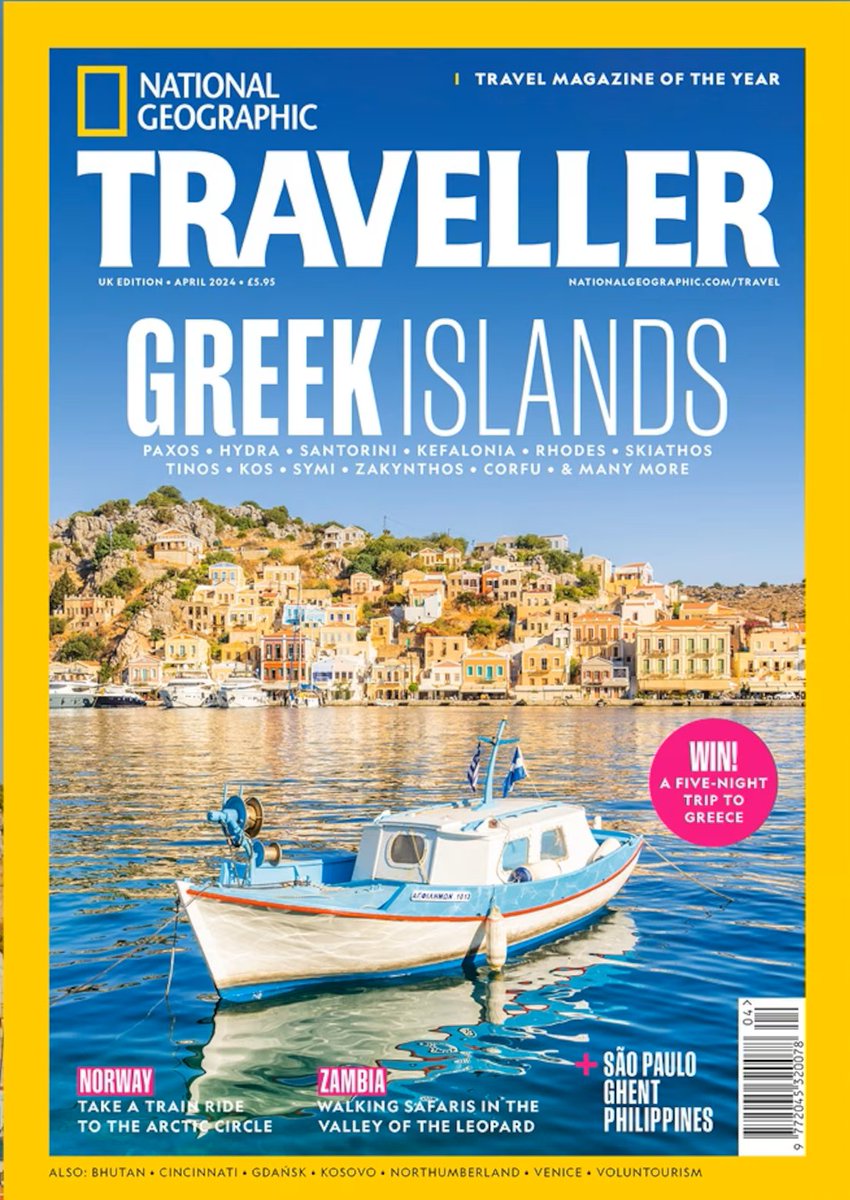
Zambia: Become one with the landscape on a walking safari in South Luangwa National Park.
Norway: Black coffee and crystalline fjords on a multi-day train tour beneath the midnight sun.
Bhutan: In this tiny Himalayan nation, valleys plunge, mountains soar and traditions bind.
Philippines: Plan the ultimate island-hopping adventure to the pearl of the Western Pacific.
São Paulo: In Brazil’s most populous city, every gig and gallery reflects the diversity of its people.
Ghent: With its innovative art spaces and left-field restaurants, this city’s rebel spirit lives on.
Kosovo: Explore the Balkan nation’s deep-forested hills, gushing waterfalls and fresco-adorned monasteries.
Cincinnati: German flavours abound in the bakeries and breweries of this Ohio city.
Vienna: From jazz age revamps to culinary havens, these hotels embrace the sound and flavour of the city.
Plus,picks from the 60thVenice Biennale; tours and tastings in England’s vineyards; the flavours of Provence; the best music hotspots in Bristol; where to stay in Denver; a family getaway in Sicily; a city break in Gdansk; a coastal escape in Northumberland; the best food and travel reads; and kit for campervanning.
We talk with author Adam Alexander and the hunt for Rajasthan’s lost chilli, and Simon Reeve on his latest TV series, the beauty of the wild and more. In our Ask the Experts section, the experts give advice advice on driving from London to Lake Garda, treehouse stays for UK bluebell season and family adventures in Sri Lanka. The Info delves into Walpurgis Night, while Hot Topic explores the end of the 100ml liquid rule in UK airports and the Report asks whether the voluntourism industry can truly help those in need.
The Economist Magazine (March 7, 2024): The latest issue features Three big risks that might tip America’s presidential election – Third parties, the Trump trials and the candidates’ age introduce a high degree of uncertainty; Xi Jinping’s hunger for power is hurting China’s economy; How to fix the Ivy League – Its supremacy is being undermined by bad leadership…
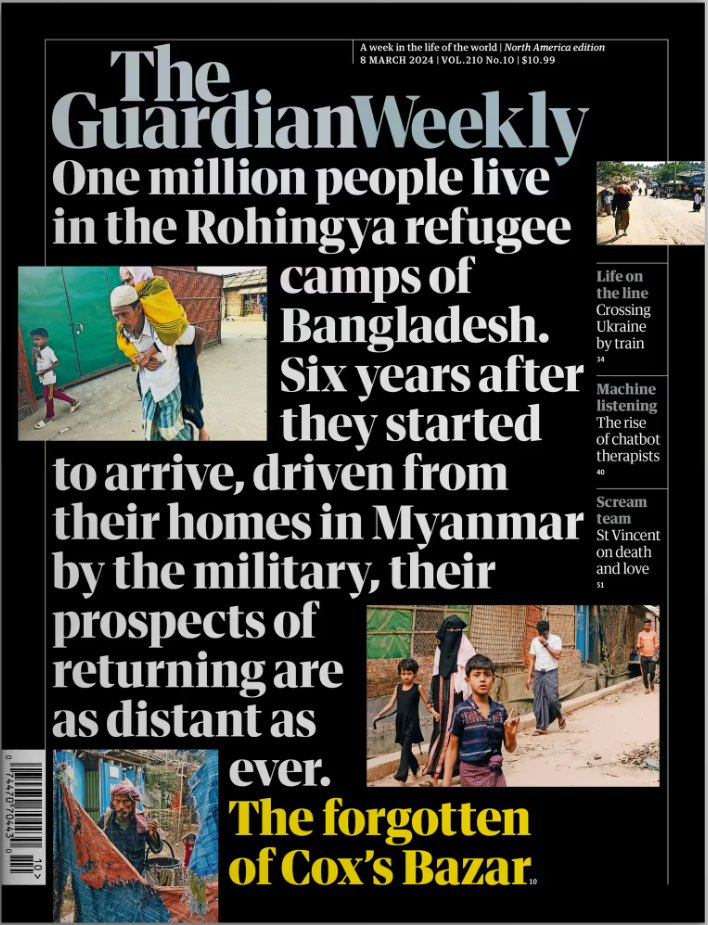
It was August 2017 when the world really started to take note of Myanmar’s Rohingya people. Descendants of Arab Muslims who speak a different language to most other people in Myanmar, the Rohingya had up to that point lived mainly in the northern Rakhine state, coexisting uneasily alongside the majority Buddhist population.
But the Rohingya were reviled by many as illegal immigrants and treated by the then government as stateless people. In 2017, when violence broke out in the north of the state, security forces supported by Buddhist militia launched a “clearance operation”that forced more than 1 million Rohingya people to flee their homes and the country, actions that many onlookers saw as ethnic cleansing. Most Rohingya were driven into vast refugee camps in the Cox’s Bazar region of Bangladesh, where they have remained ever since.
The Guardian global development reporter Kaamil Ahmed has been covering the Rohingya crisis for almost a decade, making multiple trips to the region. For this week’s Big Story, Kaamil returned to Cox’s Bazar where, in two moving reports, he details how disease and illness are widespread in the ramshackle camps, and how the desperation to escape has resulted in rich business for people traffickers.
And, with Myanmar now controlled by a military junta and introducing a deeply unpopular conscription drive (as Rebecca Ratcliffe and Aung Naing Soe report), the prospect of any Rohingya people being able to return home to Rakhine state remains as distant as it did in 2017.
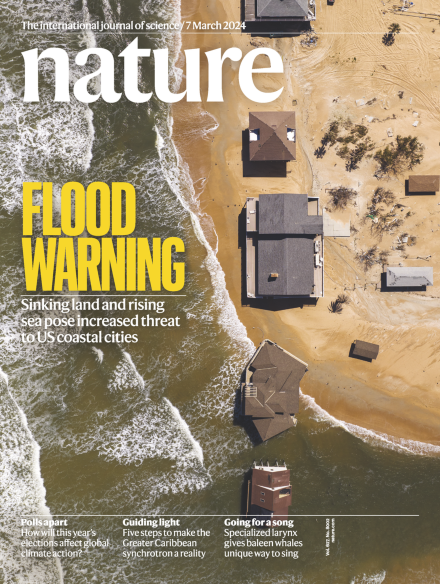
Nature Magazine – March 6, 2024: The latest issue cover features ‘Flood Warning’ – Sinking land and rising sea pose increased threat to US coastal cities.…
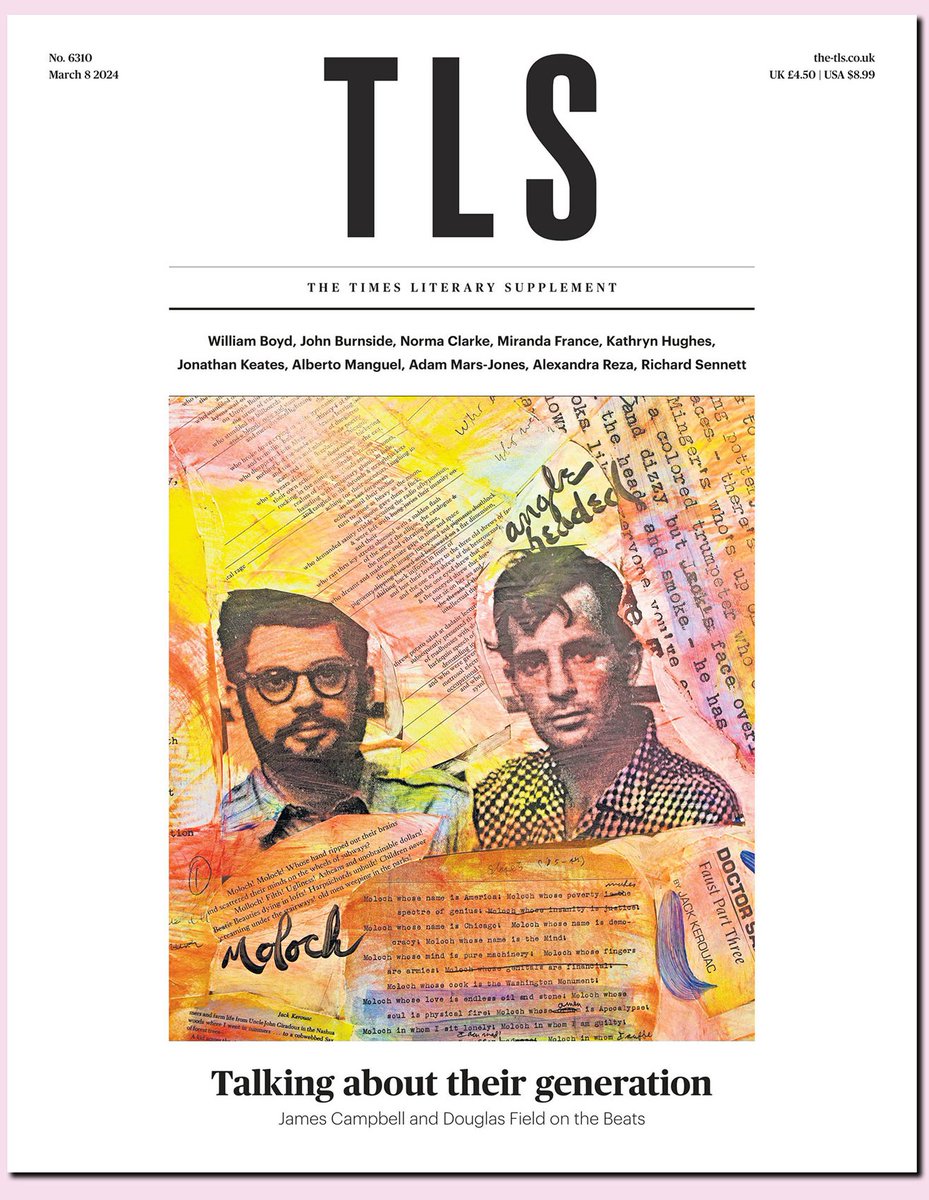
Times Literary Supplement (March 6, 2024): The latest issue features‘Talking about their generation’ – James Campbell and Douglas Field on the Beats including Jack Kerouac and Allen Ginsberg; Alexandra Reza on Frantz Fanon; Miranda France on Montserrat Roig….






















 Intellicurious