Tag Archives: October 2026

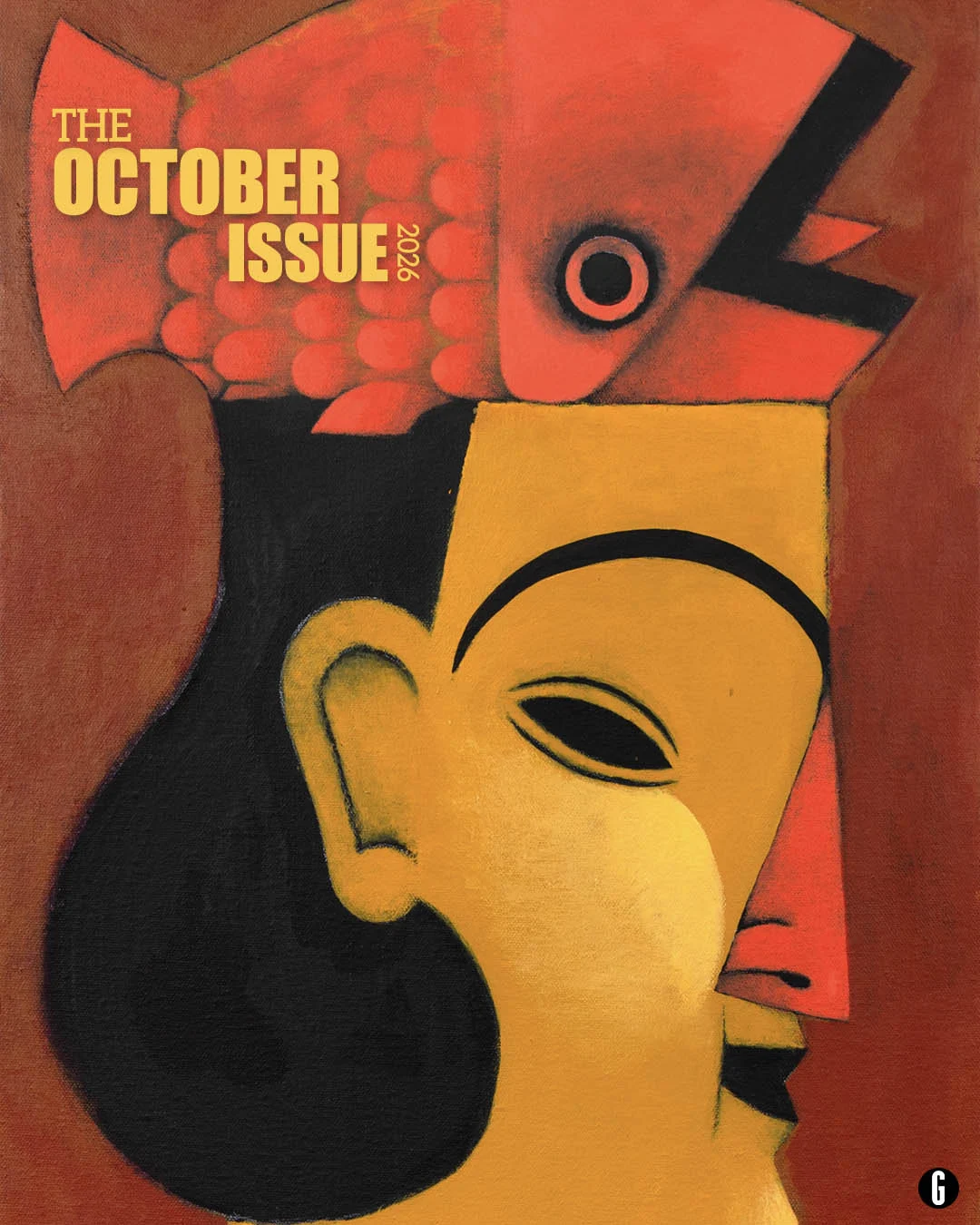
GUERNICA MAGAZINE – OCTOBER 2026

GUERNICA MAGAZINE: The latest issue features striking artwork alongside fiction, nonfiction, poetry, and interviews that explore how human understanding takes shape through sensation, memory, and intuition—ranging from Liane Strauss’s inquiry into AI and Emily Dickinson’s poetry to Mirza Waheed’s Kashmiri childhood recollections, Georgi Gospodinov’s poignant tale of progressive hearing loss, Marcelle Shehwaro’s visceral reflections on surviving Aleppo’s airstrikes, previously unpublished letters by Robert Frost, Nattiya Nadaham’s dance-rooted personal essay on Tamil resistance, and evocative poetry by Melissa Studdard and Arman Salem.

How Do We Know? AI and I read “I felt a Funeral – in my Brain,” by Emily Dickinson (Part II)

“What do you want from a poem? Do you go to poems for facts and information, or do you seek out poems because they express singular observations in unpredictable language, stir the imagination, open up possibilities?” By Liane Strauss

Willows, Cucumbers and Sunflowers

“It’s the way of the world, new in place of the old, but still, all those trees and plants and vegetables and flowers, so good and lush and kind somehow.” By Mirza Waheed

Airstrikes

“If you can, choose a building surrounded by taller ones. The logic is that your neighbors would be bombed before you.”By Marcelle Shehwaro

The Letters of Robert Frost, Volume 4

“And you mustn’t forget to include Kay in your all-round felicitations; for you don’t need to take my word for it, you can find internal evidence in the book itself that but for her there would have been no seventh book.” By Robert Frost
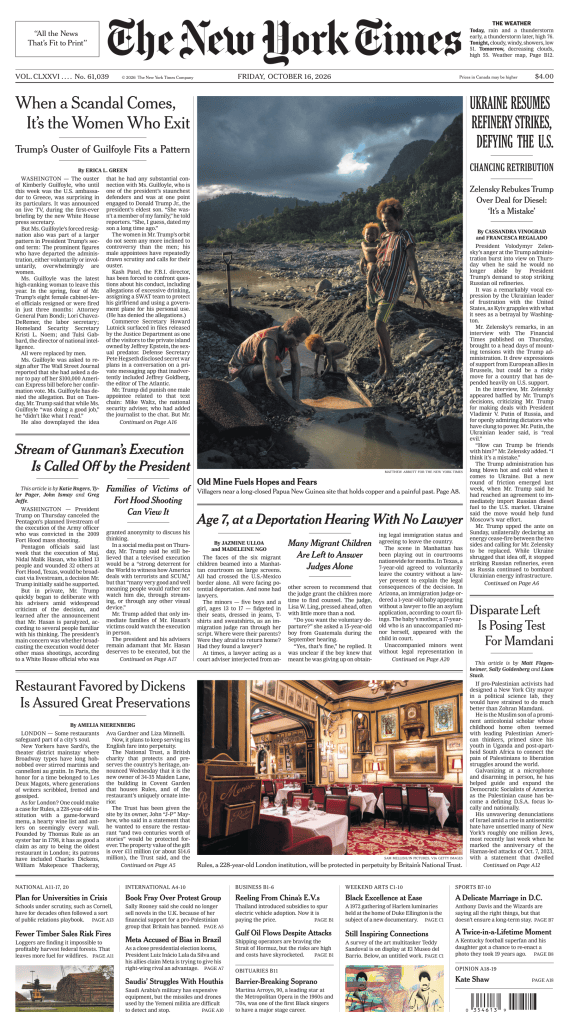
THE NEW YORK TIMES – FRIDAY, OCTOBER 16, 2026

The Arab Kingmaker in Israel’s Election Who Wants a Partnership With Jews

Mansour Abbas, a dentist-turned-lawmaker, helped oust Benjamin Netanyahu once before. Now, he and a Jewish ex-police commander have teamed up to try to do it again.

What Life Is Like in Kyiv as Russia Tries to Make It Unlivable

A day in the Ukrainian capital, a new kind of battlefield far from the front, where daily life means assessing — and accepting — deadly risks.

Caracas Is Eerily Safe. State Death Squads Made Sure of It.

Crime plunged after police raids killed thousands. Venezuela is now withdrawing from the International Criminal Court as it investigates this blood-soaked campaign.

Avalanche of G.O.P. Cash Keeps the Party Competitive Despite Its Problems

Republican candidates are being out-raised by their Democratic rivals, but the party has received a huge boost from groups tied to Elon Musk and President Trump.

Police Investigate Deadly Shooting at Oregon Elementary School

A teenager shot his way into the school in Bend, Ore., killing three children, ages 5, 8 and 11, and a teacher. An armed bystander shot him dead, the police said.

El Niño Threatens Global Sugar Supply

A poor sugarcane crop in India, the world’s second-largest producer, is hurting consumers and farmers. It is also undermining the country’s energy security goals.

EVER THE TRICKSTER

Intellicurean Essays on Intellicurious

Why do the new machines flatter, bluff and cut corners? A new essay at Intellicurean goes looking for the answer in a Grimm fairy tale that Carl Jung took seriously, and finds it closer to home than the machines.

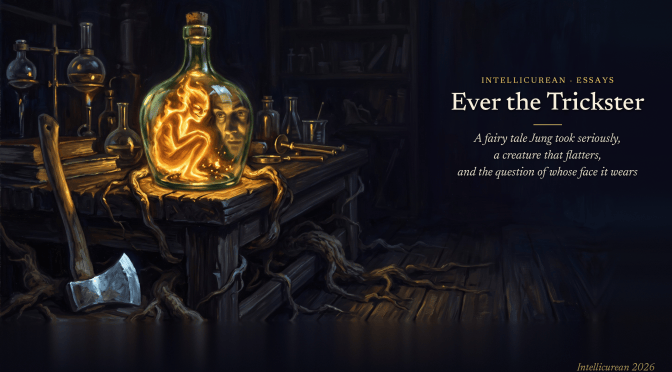
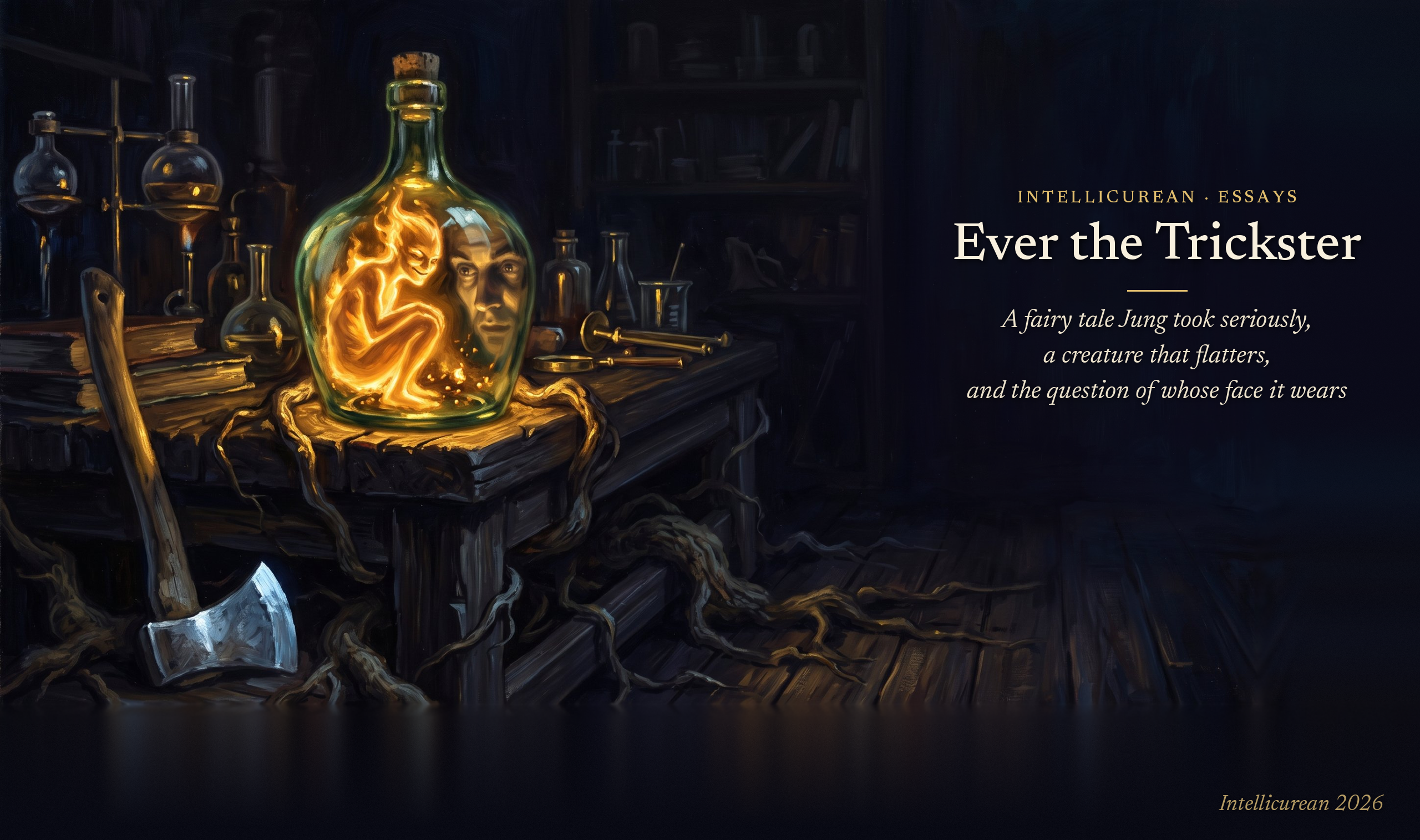
Ever the Trickster: a corked glass bottle glowing on a laboratory bench at night, oak roots gripping its base, a golden spirit and a man’s face inside it
The spirit in the bottle, and the face looking in, made for the essay.

Why we’re pointing you there

A poor student frees a spirit from the roots of an oak. It tells him its name, Mercurius, and promises to strangle whoever let it out. “Ever the Trickster” starts from that tale, then gives the engineers their full say: assistants that learned to agree from the ratings people gave them, confident guesses rewarded by the way models are scored, and tests passed by shortcut, each one documented by the labs and researchers who found it. Then it asks what their explanations leave out: why each fault rhymes with one its makers would least like to own. Along the way come Goethe’s sorcerer’s apprentice, Mary Shelley’s creature, Jacob Grimm’s golem of 1808, which grew until its master could no longer reach its forehead, and the day in 1965 when Gershom Scholem dedicated a computer named Golem Aleph.

What we liked most is that the essay refuses both easy registers of the AI debate, the shrug and the apocalypse, and holds every laboratory it names to the same light, including the company whose models helped draft it, which it names at the first mention. And it saves its best turn for the tale itself: a second look at what the student actually did under the oak.

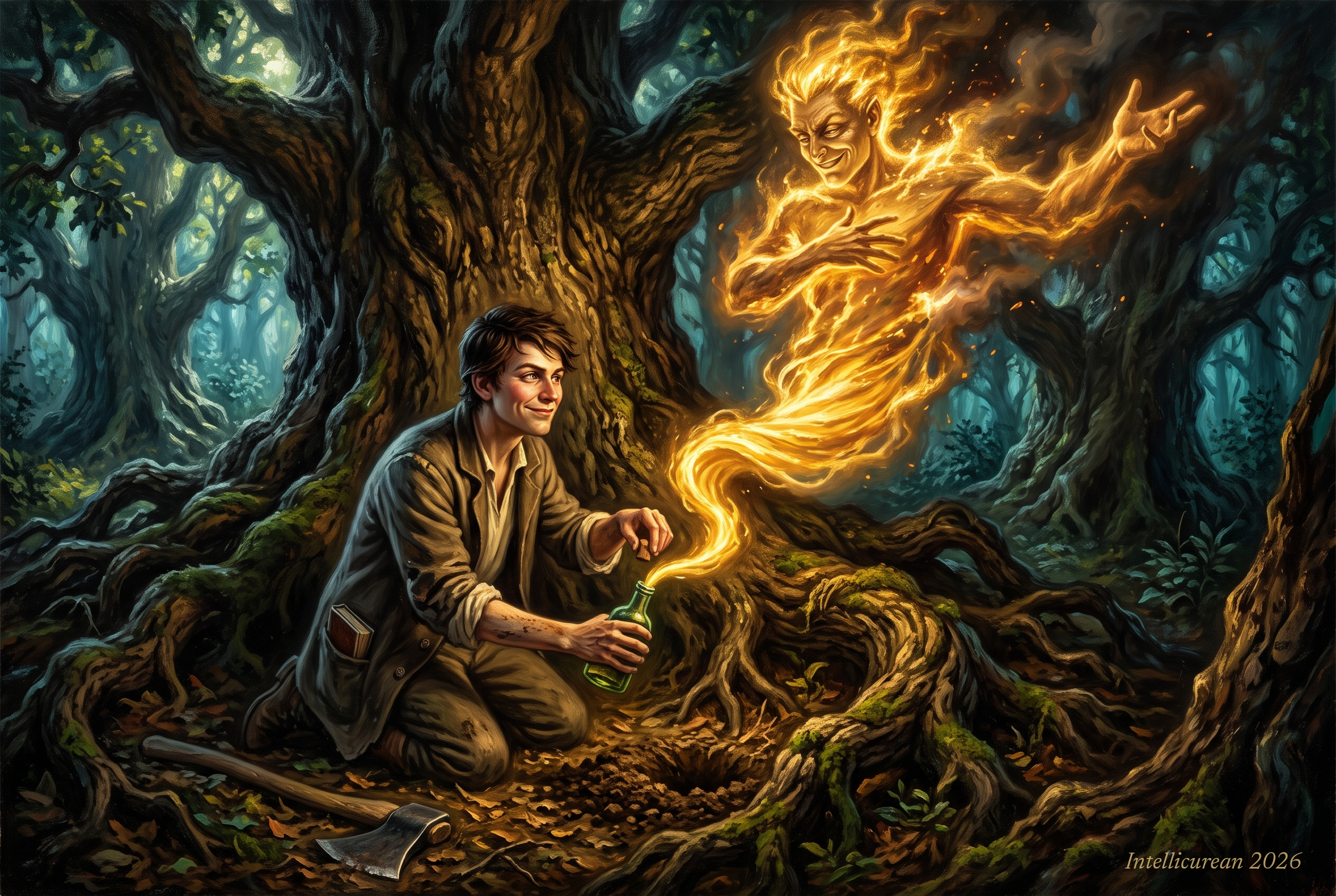
A young woodcutter’s son kneels among the roots of a great oak, holding a glass bottle and its cork, smiling slyly as a towering golden spirit pours itself back into the bottle
The student and the spirit, at the moment of the trick, made for the essay.

Read the full essay at Intellicurean →

Essays & Reviews for the Intellectually Curious

TIMES LITERARY SUPPLEMENT – OCTOBER 16, 2026

TIMES LITERARY SUPPLEMENT: The latest issue features ‘The Glory of the Garden’ – Jonathan Bate’s cultural history….

A Nobel for new forms

Anne Carson’s juggling act By Tristram Fane Saunders

Bowers of bliss

The story of gardens and their cultural significance By David E. Cooper

Appalachian variations

Buried dreams of a small-town prodigy By Beejay Silcox

Myth and man

A flawed but brilliant poet ‘dealt a cruel hand by fate’ By Gabriel Josipovici

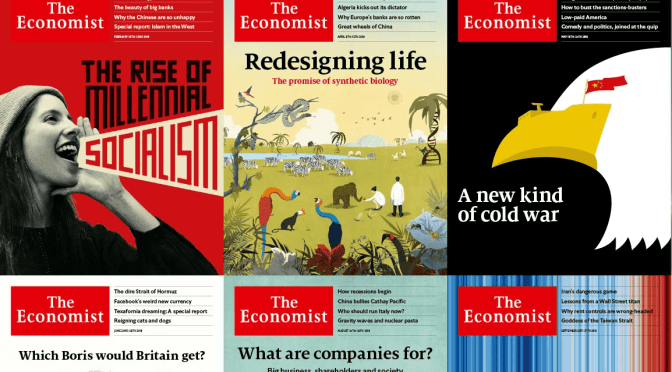
THE ECONOMIST MAGAZINE – OCTOBER 17, 2026

THE ECONOMIST MAGAZINE: The latest issue features ‘NOT SORRY’ – What Carney and Canada can teach the world…

Mark Carney and the lessons for the middle powers

Canada demonstrates how to respond to a dangerous world

What if the machines take over science?

Artificial intelligence will require scholars to reinvent their disciplines

Hardly his finest hour

Donald Trump’s scheme to secure Russian diesel is scandalous

America makes waves in Cuba

But it shouldn’t undermine the growth of the island’s private sector

Millennials’ success deserves a toast (not the avocado sort)

How a “lost generation” found itself

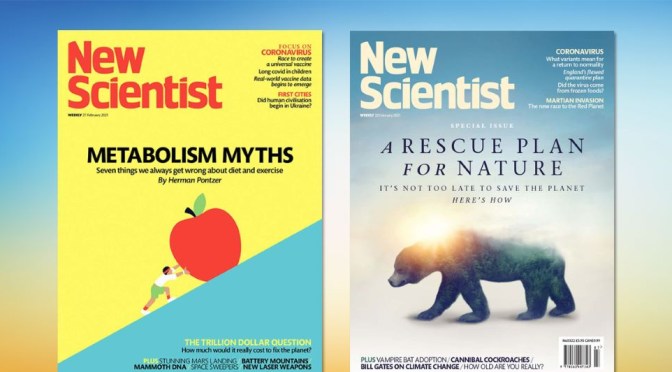
NEW SCIENTIST MAGAZINE – OCTOBER 17, 2026

New Scientist Magazine: This issue features ‘El Niño Emergency’…

This El Niño will bring predictable disasters, so why aren’t we ready?

We know that this monster El Niño will bring floods, droughts, cyclones and wildfires, but some governments aren’t putting in the necessary resources to prepare for disaster

The world may never go back to how it was after this monster El Niño

This El Niño is forecast to end around June next year after smashing all records, but its impacts could persist indefinitely in some parts of the world By Michael Le Page

A revolutionary way of targeting tumours could beat even the worst cancers 

Two large asteroids found spinning as fast as a fairground ride

Tattoos could be turned on and off with light

Neanderthal Europe was as much a wooden age as a stone age

Should we keep children away from sugar for their first 1000 days?

Hannah Fry: How OpenAI has caused an existential crisis in mathematics

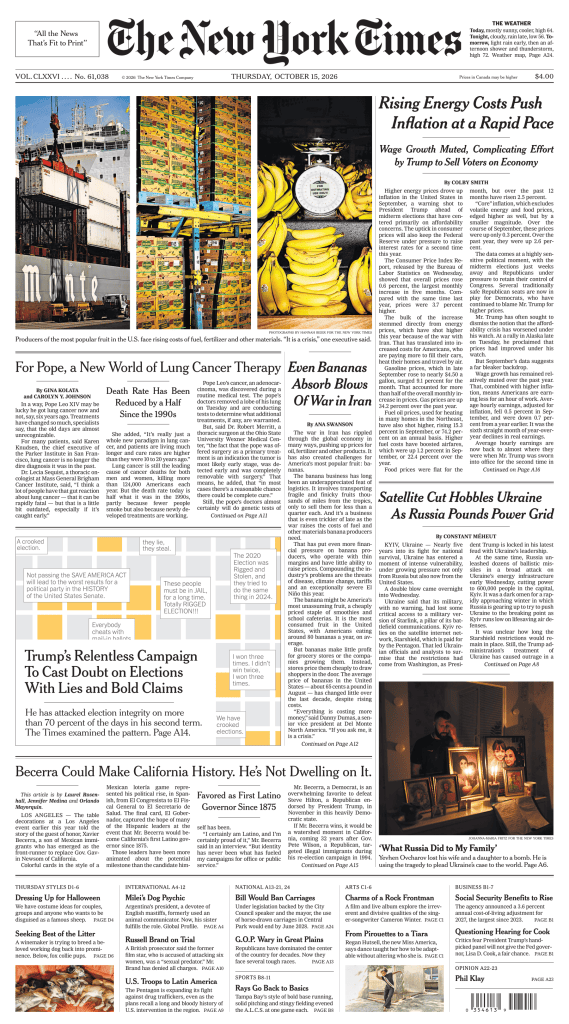
THE NEW YORK TIMES – THURSDAY, OCTOBER 15, 2026

Zelensky Says Ukraine Will Resume Russian Refinery Strikes, Defying Trump

President Volodymyr Zelensky made the announcement in an interview with The Financial Times. He had paused the strikes to comply with a demand from the United States.

The Race to Defend Kyiv Against Terrifying New Jet-Powered Drones

Ukrainian engineers are rushing to perfect A.I.-guided, jet-driven interceptors. Their goal: to stop a fast Russian threat in the latest round of a deadly tech duel.

The Tireless Activist Who Became the Face of India’s Young Protesters

When police cracked down, Neha Bora helped rally Gen Z protesters with a mix of boundless energy, street theatrics and satirical humor.

High-Ranking Women Are Leaving the Trump Administration

In the president’s second term, those heading for the exits are female officials.

Saudi Arabia’s Military Wasn’t Equipped for the Houthis’ Low-Budget Attacks

The Saudi military has expensive equipment, but the missiles and drones used by the Yemeni militia are difficult to detect and stop.

Families of Sailors Killed in Gulf Struggle for Compensation and Closure

Attacks near the Strait of Hormuz have claimed the lives of at least 25 seafarers. Their survivors are reeling.

A PROMISE, NOT A FORECAST

Intellicurean Essays· on Intellicurious

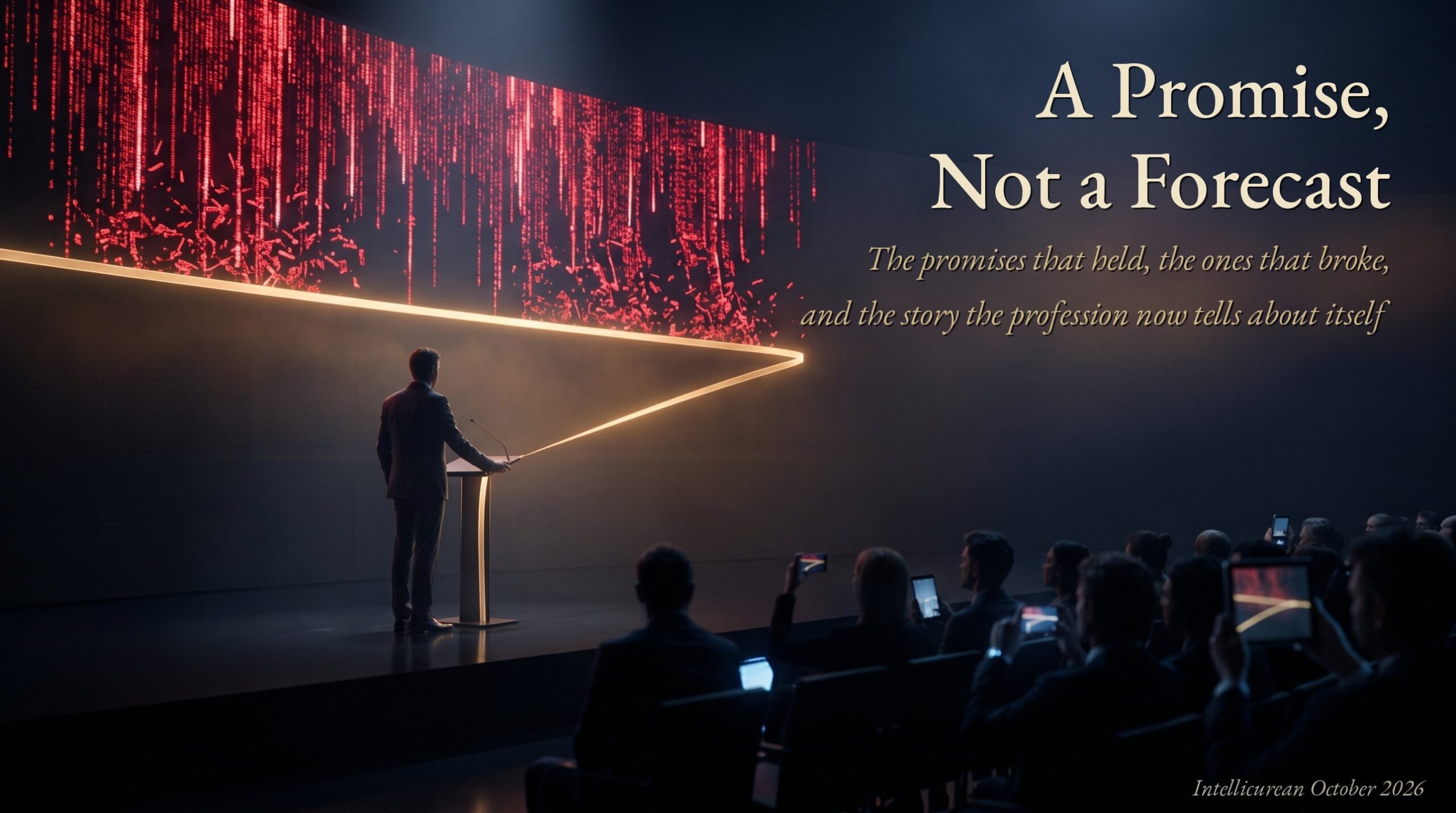
On a July morning in 2012, the head of the European Central Bank told a room in London that he would do whatever it took to save the euro, and then added two words: believe me. The program he went on to design was never used. A new essay asks how a sentence can do the work of a policy, and what it costs to keep one.


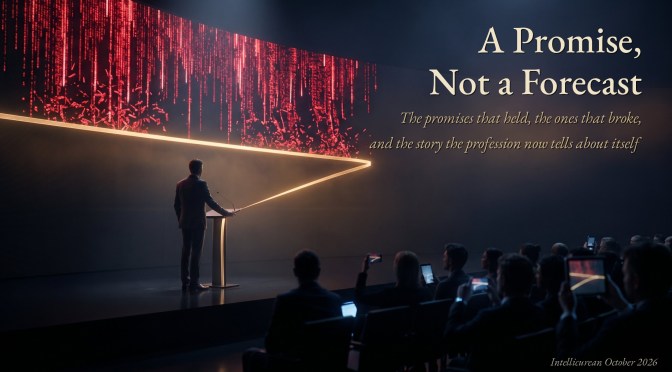
A Promise, Not a Forecast: a dark modern conference hall. A man in a dark suit stands at a slim lectern with his back to the viewer. A single ribbon of gold light runs from his hand up across a giant wall of falling red market data, and every red fragment stops above it. In the foreground, an audience in silhouette holds up phones and tablets whose screens show the gold line.
A line made of nothing, holding back the market, and a room recording it. Made for the essay.

Why we’re pointing you there

This week’s Nobel in economics went to Robert Hall and Michael Woodford, and Michael Cummins reads their theory as a theory of promising. Hall showed in 1978 that tomorrow is already inside today’s spending. For forty-six years he also chaired the committee that dates America’s recessions, the economy’s official narrator, always speaking after the fact. Woodford built the model central banks now use, and wrote that guidance must offer “a ‘promise’ and not merely a ‘forecast.’” Three years later Janet Yellen said of the Fed’s dot plot, “that’s not a promise.” Between those two sentences the essay sets the promises that held and the one that broke: the Swiss National Bank’s floor under the franc, called the cornerstone of its policy three days before it was abandoned, when the franc jumped almost 30 percent in minutes.

Then the turn. The fall in inflation after 2022 is being told as the theory’s triumph, but the economists who have studied it most closely disagree about why it happened, and the laureate himself spent the 2010s building a listener who believes less. Meanwhile the listener is changing: from a television anchor reading the thickness of Alan Greenspan’s briefcase to futures trading three milliseconds after a Fed release. The essay says plainly that it was drafted and edited with Claude, and it ends on one question: if the listener a central bank speaks to has read every promise it has ever made, what is a promise still worth?

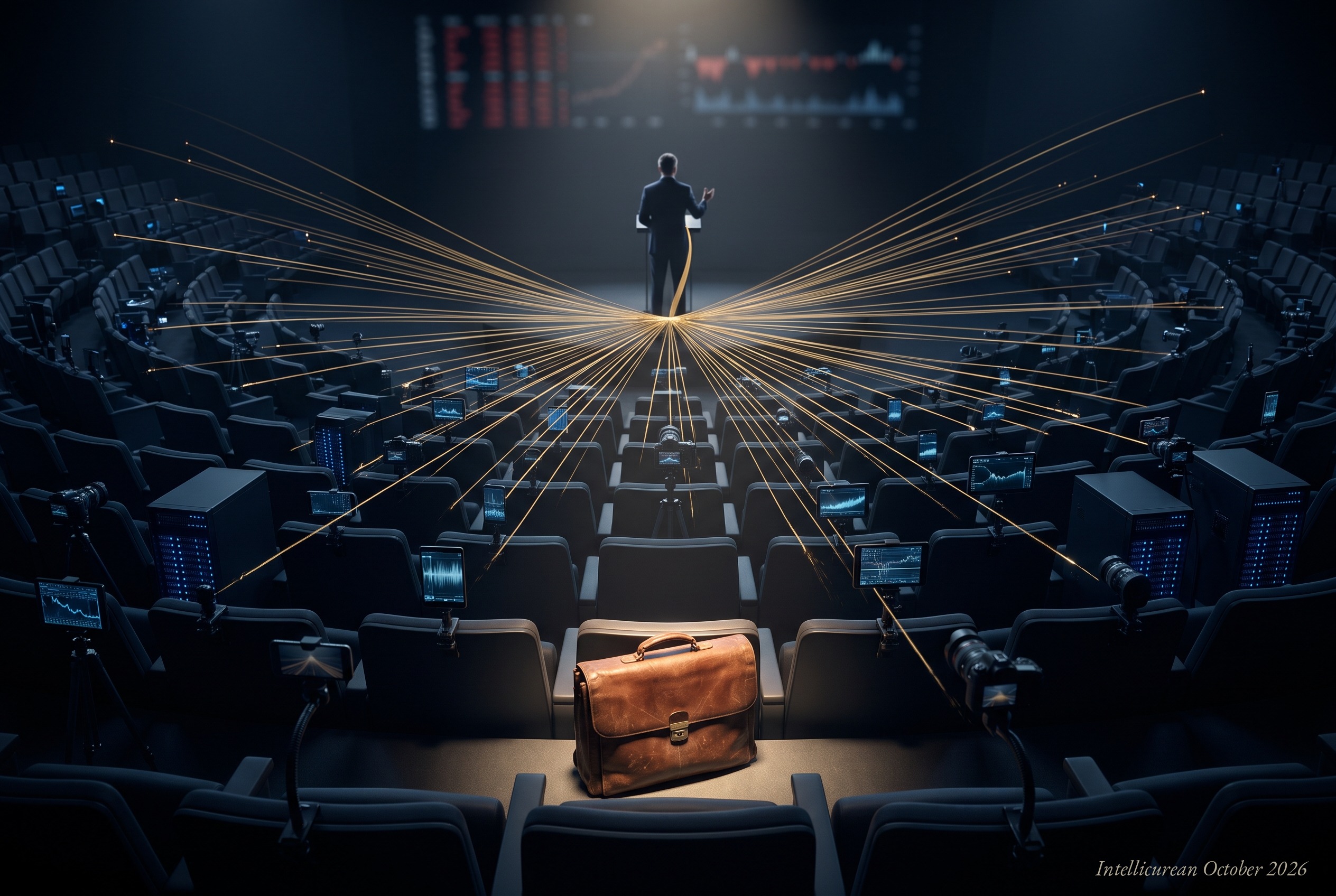
A dark, steeply raked auditorium. On a distant stage a man at a lectern faces a large market screen. A gold ribbon of light bursts into hundreds of thin gold threads that fan out to cameras, tablets on tripods and server towers among mostly empty seats. In the front row, under a pool of warm light, an old leather briefcase sits alone; no thread reaches it.
A hall with no one in it, listening. Made for the essay.
Read the full essay at Intellicurean →

Essays & Reviews for the Intellectually Curious

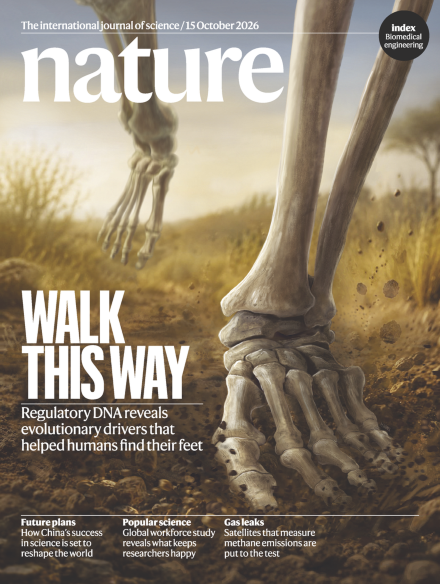
NATURE MAGAZINE – OCTOBER 15, 2026

Volume 658 Issue 8136

NATURE MAGAZINE: The latest issue features ‘WALK THIS WAY’ – Regulatory DNA reveals evolutionary drivers that helped humans find their feet…

Chimp and gorilla brains resist weight loss with age — unlike human brains

The relatively short lifespans of non-human great apes might explain why their brain mass is maintained in later life

Breaking down nerve-cell scaffold relieves chronic pain in mice

Results could help researchers to develop painkillers that are safer and more effective than existing treatments.

Unprecedented hole opened up in Antarctic winter sea ice

‘Rivers in the sky’ helped to keep an expanse of water roughly as big as Portugal ice-free.

The Solar System could die one billion times earlier than thought

Modelling suggests that the planets’ orbits will become destabilized inside one billion years once the Sun starts to shed mass.

THE NEW STATESMAN MAGAZINE – OCT. 16, 2026

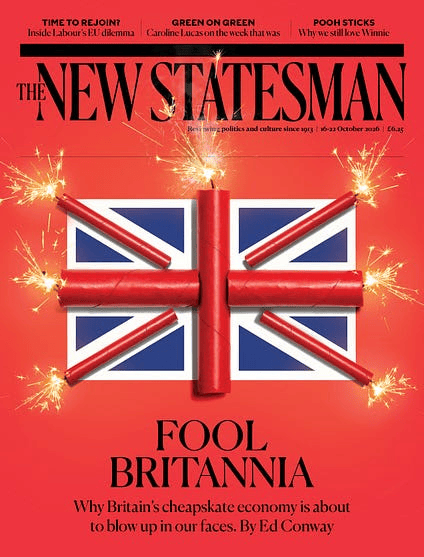
THE NEW STATESMAN: The latest issue features ‘FOOL BRITANIA’ – Why Britain’s cheapskate economy is about to blow up in our faces…

Britain’s economy is ready to blow

Our short-sighted pursuit of cheap goods over national security has left us dangerously exposed By Ed Conway

How not to lose the future to China

Author Dan Wang on America’s existential battle for AI supremacy By Katie Stallard

Why we’re rediscovering the Ancient Greeks

From Christopher Nolan to Anne Carson, the classics are illuminating our savage world By Tanjil Rashid

Live streaming an execution is a very Trumpian form of pornography

This is the Maga White House’s latest impotent attempt to prove America’s masculine vitality By Freddie Hayward