Category Archives: Reviews

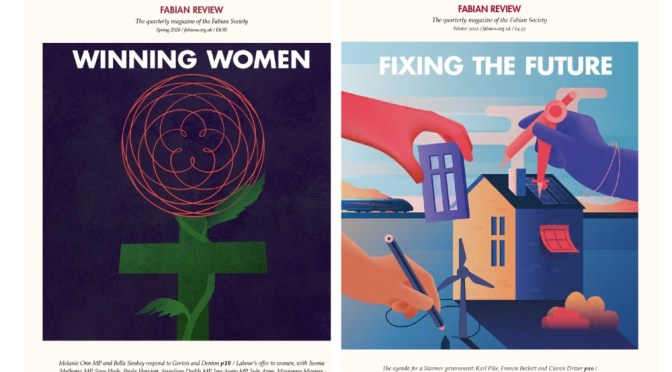
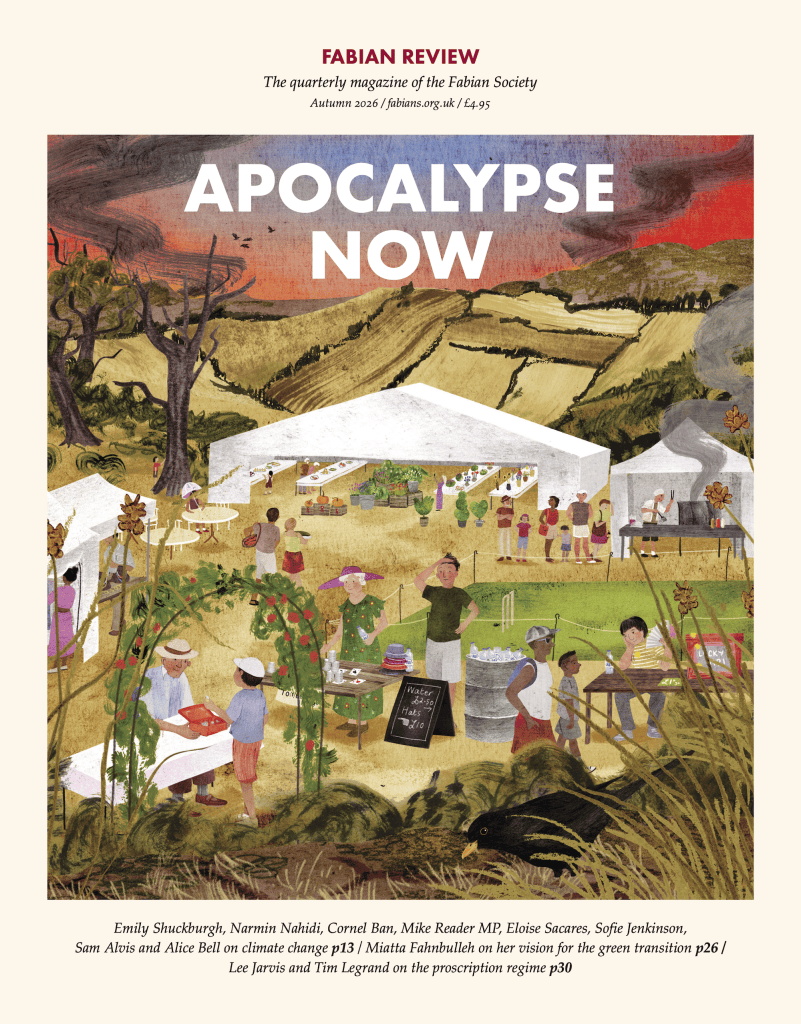
FABIAN REVIEW QUARTERLY MAGAZINE – AUTUMN 2026

FABIAN REVIEW QUARTERLY MAGAZINE: This edition of the Fabian Review centres on the global climate emergency, with contributions from climate experts and an interview with energy secretary Miatta Fahnbulleh MP, alongside pieces on Labour’s vision of freedom, the UK’s proscription regime, LGBTQ+ rights, education, AI in public services, higher education, and Britain’s relationship with Europe.

Cheap medicine

The NHS’s growing use of non-doctors risks creating a two-tier health service, argues Jatinder Hayre

After Aneurin Bevan created the National Health Service in 1948, the principle of universality became firmly embedded in the popular consciousness: illness would no longer divide the British people according to wealth, and the quality of care received in sickness would not depend upon the depth of one’s pockets. Bevan articulated another principle which receives rather less attention today: that the state might finance medicine, but it should not command medical judgement. Doctors needed sufficient professional independence to practise according to the needs of their patients rather than the administrative or financial convenience of the state. Both principles are now being tested – and in some cases, rewritten.

Across the NHS, work historically undertaken by doctors has increasingly been transferred to physician associates (PAs), advanced clinical practitioners (ACPs) and an expanding constellation of other roles. I use “Noctor” as an umbrella term for the phenomenon whereby non-doctors cease to complement doctors and begin to serve as a substitute for them.

The language surrounding this transformation is revealingly anaesthetic: “skill mix”, “workforce transformation”, “new models of care”. These phrases make a profound political choice sound like an administrative rearrangement. Beneath them sits a simple idea: medicine can be dismantled into tasks, those tasks redistributed amongst more rapidly trained practitioners, and the whole reconstructed without meaningful loss.

Green Room

Miatta Fahnbulleh is right about everything. Will it matter? She talks to Iggy Wood about her plan for a green transition that benefits all

In the not-so-distant past, consensus around the need to tackle climate change at least superficially encompassed the entirety of British society. It was the historic party of capital – the Conservatives – who enshrined net zero in law, eliminated coal from Britain’s energy mix, and committed to ending the sale of petrol and diesel cars. Some of the most important progress was made under Boris Johnson, who, while not on the right of the party per se, was a Brexit-supporting populist.

Grid system

Unglamorous electricity grid reforms could be the key to winning on the doorstep

Even Andy Burnham was surprised to get a standing ovation for taking VAT off electricity bills. His plans to address the plight of the industrialist seeking a grid connection did not meet with the same enthusiasm during his first Labour conference speech as prime minister. Yet faster grid access matters far more for bringing down Britain’s high energy costs.

On 29th September, the government announced GB Grid, a new entity under the government’s publicly-owned energy company, GB Energy. Seeded with £4bn of reallocated funding, GB Grid will be able to finance and build grid infrastructure and plans to compete with incumbent providers. Alongside GB Grid, the government announced it would expand self-build connections and accelerate competitive tendering for transmission projects, effectively increasing competitive pressure on networks. This is a refreshing approach to bringing down energy costs, combining a bold public ownership experiment with unglamorous but necessary competition reforms.
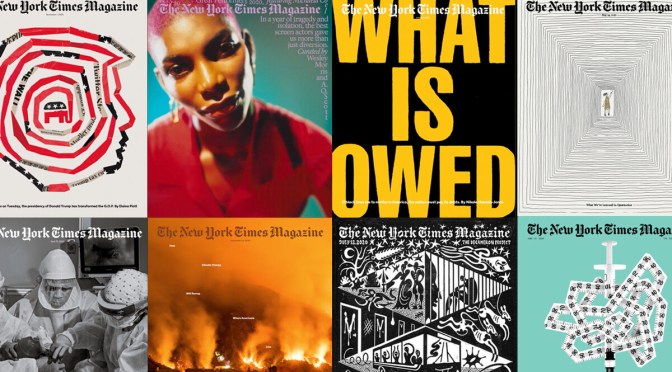
THE NEW YORK TIMES MAGAZINE-OCTOBER 11, 2026

Current cover

THE NEW YORK TIMES MAGAZINE: The 10.11.26 Issue features Daniel Kolitz on the rise of microdramas; Janet Reitman on a group of Texans accused of being Antifa terrorists; Marcela Valdes on the author Min Jin Lee; and more.

Secret Billionaires, Mafia Brides, Alpha Kings: The Insane World of Microdramas

Vertical soap operas for your phone have taken over film and TV production, and they may soon need no humans at all. By Daniel Kolitz

The Dirty Secret Behind the Farmed Fish You Eat

Forced labor, rancid waste, harmful chemicals. What to know about the seafood that could end up on your plate. By Ian Urbina

Every Generation’s Campus Rape Story Is New

Politics, technology and sexual norms change. But the power dynamics — and the outrage — are familiar. By Susan Dominus

Congress Is Supposed to Be More Powerful Than the Supreme Court. Why Isn’t It?

Trump and his allies in the Capitol have revealed a problem that has been developing for decades.

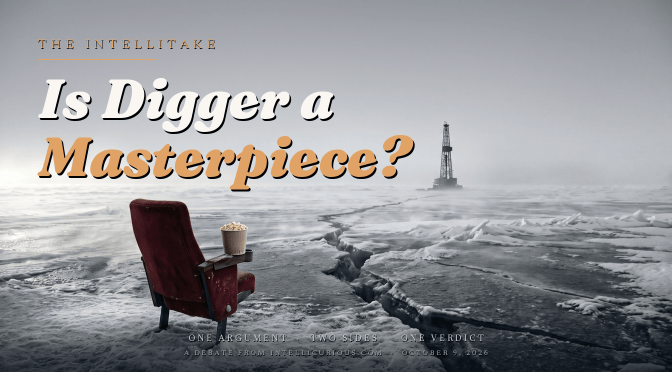
IS DIGGER A MASTERPIECE?

The Intellitake
ONE ARGUMENT · TWO SIDES · ONE VERDICT · DAILY
Friday, October 9, 2026 · The Digger Debate

THE OFFICIAL FINAL TRAILER · WARNER BROS. PICTURES

“

This is the first film I can think of that could be the last great film we may see.

THE THESIS — DAVID THOMSON, UNHERD

THE ARGUMENT

Digger, Alejandro Iñárritu’s $125 million satire, opened October 2 with Tom Cruise as an oil tycoon whose Arctic drilling sets off a planetary catastrophe. In UnHerd, the film historian David Thomson, author of The Biographical Dictionary of Film, calls it a flawed masterpiece and does not flinch from the flaws. The fable is “striking yet shallow.” Supporting characters are “introduced but not adequately explored.” Cruise, he writes, “is so terrified of being boring he cannot stoop to stillness or quiet.”

And yet. Thomson sees Cruise’s paunchy, manic Digger as a portrait of an age in which “the idiotic has become axiomatic,” a domineering, foolish authority convinced that power justifies whatever it wants. Beneath the performance is a look he finds more frightening than any horror film: “A look of gray ice pervades the movie; primary colors have been eliminated.” “There is no human touch any longer.”

A film about the end of the world, in other words, that looks the way the end of the world would look.

vs
THE ANSWER

Most American critics saw a different movie. At RogerEbert.com, Robert Daniels writes that “Digger chokes on its own ambitions, and very few of the picture’s participants emerge still breathing.” The film, he argues, never commits to its own high concept, and its dialogue preaches: “Every line explicitly explains the vapid evil espoused by craven industrialists against our fragile environment.”

William Bibbiani of TheWrap goes after the politics. A satire of billionaires that never threatens one is just flattery for the audience: “We are powerless to stop them, but we do get to point and giggle.” Of Cruise: he “hasn’t done this much caps-locked ‘ACTING’ in many years.”

On this reading, Digger is the thing it mocks: an expensive spectacle of the apocalypse that lets everyone go home feeling superior to it.

iC
THE INTELLITAKE

Read closely and the critics agree on every fact. The script is thin. Cruise is loud. The satire draws no blood. The look is extraordinary. The quarrel is over what a film is for. Daniels and Bibbiani grade Digger as an argument, and as an argument it fails: nobody leaves the theater changed about oil or billionaires. Thomson grades it as an artifact, something a future might dig up to learn what we looked like, and as an artifact it may be priceless.

Thomson’s tell is his title. He calls it the masterpiece “we deserve.” A culture that can only process its own ending as a $125 million entertainment starring Tom Cruise has made a film that is exactly that, and the film’s inability to be anything better is the most honest thing in it. The critics who wanted it to be smarter were asking the mirror to improve the face.

So: not a masterpiece, by the ordinary standard that a masterpiece knows what it is doing. But Thomson has the longer view, and he may be right that films of this scale and this nerve are ending. If so, Digger is less the last great film than the last great gesture, a studio spending a fortune to make a picture of the world with no human touch left in it. That is worth seeing, if only once.

TODAY’S PROVOCATION

Can a work of art about our stupidity be anything other than stupid, and would we recognize it if it were?

Read the originals: David Thomson, “Digger: the flawed masterpiece we deserve,” UnHerd, Oct. 2 · Robert Daniels, RogerEbert.com, Sept. 29 · William Bibbiani, TheWrap, Sept. 29.

— THE EDITORS, INTELLICURIOUS —

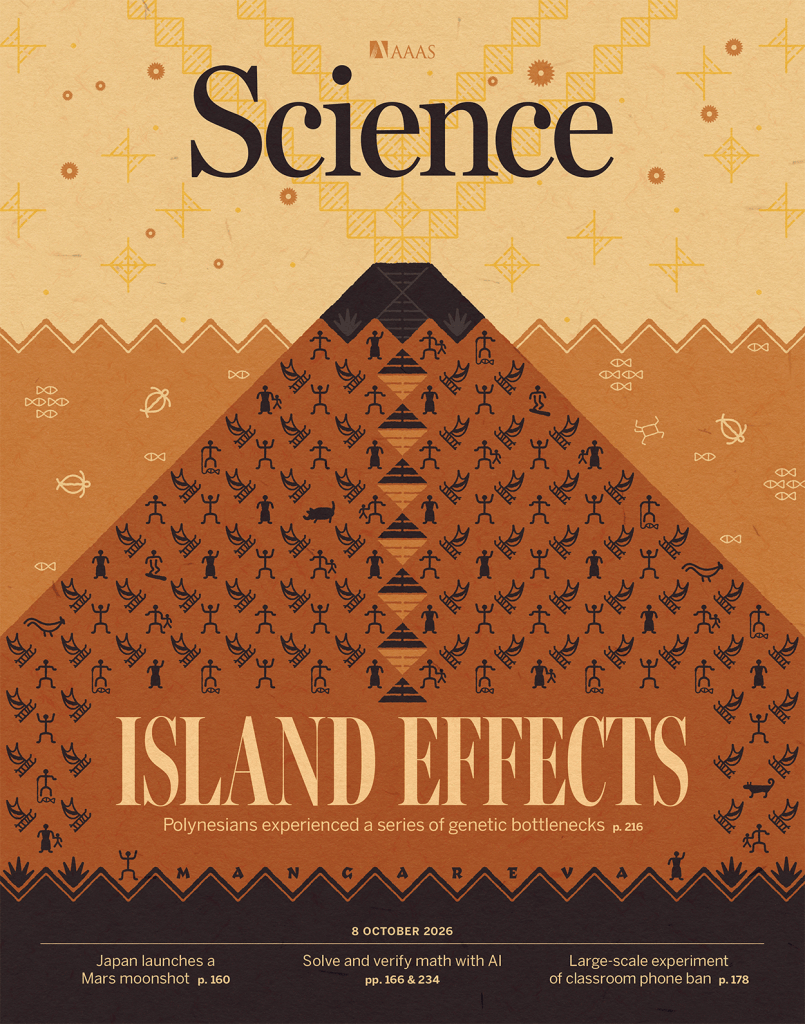
SCIENCE MAGAZINE – OCTOBER 8, 2026

SCIENCE MAGAZINE: The latest issue features ‘ISLAND EFFECTS’ – Polynesians experienced a series of genetic bottlenecks.

Menopause puts the brain at risk. Researchers are starting to learn why

Shifts in blood proteins could point to ways to fight menopause “brain fog” and prevent later dementia

Women are more likely than men to develop dementia, and not just because they tend to live longer. One reason may be menopause, the time in midlife when sex hormones drop and menstruation stops—and which some researchers are coming to see as a stress test for the brain.

Menopause “affects brain health, for sure,” says neurologist Riley Bove of the University of California (UC) San Francisco, who studies its impacts on multiple sclerosis and other neurological disorders. She and others want to protect the brain during and after this transition—but that means identifying just how menopause puts the brain at risk.

A study published last week in Nature Medicine has found clues in the blood of women in their 40s and 50s: proteins related to brain function, inflammation, and neurodegenerative disease that are elevated during menopause. Other ongoing studies are following groups of women over time—including during the lesser studied perimenopausal stage, from just before menstruation ends to 1 year after—to reveal processes leading to short- and long-term cognitive problems.

Nazi Germany had no hope of making an atomic bomb, uranium cubes reveal

Experimental reactor needed much more uranium and heavy water than the country could muster

Neanderthals were skilled woodworkers, first-of-its-kind tool trove reveals

Find in Spanish cave provides rare window into the domestic lives of our closest relatives

THE ECONOMIST MAGAZINE – OCTOBER 10, 2026

THE ECONOMIST MAGAZINE: The latest issue features ‘Will bonds blow up?’….

Will bonds blow up?

A government-debt crisis is looming

A selfish ploy to break up Pakistan

Its military chief wants lots of small provinces, to fragment the opposition

How Europe should deal with the new China shock

Amassing “second-strike” trade weapons is not enough

A no-rules approach to AI is mad politics and worse policy

Do not let it rip

Britain’s Greens have voted, shamefully, to say Zionism is racism

It is a damning moment for a political party with pretensions to power

Brazil is a right-wing country now

The Bolsonaro clan promises to align with Donald Trump, and to attack democratic institutions

WASHINGTON EXAMINER MAGAZINE – OCTOBER 7, 2026

October 7, 2026

WASHINGTON EXAMINER MAGAZINE: ‘ISRAEL AND ITS ENEMIES’ – Still under siege three years after Oct. 7….

In moral inversion, many refuse to see Jews as victims of 2023 Hamas attack

The past three years, including the highly destructive war in Gaza, have changed nothing in Palestinian attitudes or intentions. By Hugo Gurdon

It could have been Israel’s 9/11. The media called it a ‘midair altercation’

A FlyDubai flight headed toward Tel Aviv, Israel, nearly crashed on Wednesday after its Omani co-pilot allegedly stabbed… By Peter Cordi

The war on European Jews and the new reality of American Jewish life

By Daniel Ross Goodman

Israel’s long quest for defensible borders

By Sean Durns

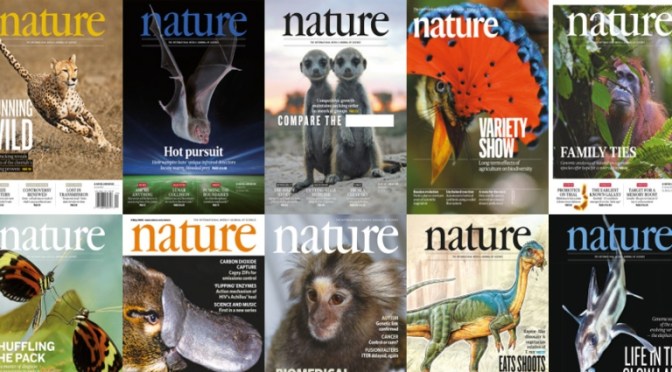
NATURE MAGAZINE – OCTOBER 8, 2026

Volume 658 Issue 8135

NATURE MAGAZINE: The latest issue features ‘Cortical Transfer’ – Human organoid replaces mouse cortex to make model for neurological disease.

Location, location, location: how to edit genes only in the cells you want

Gene-editing CRISPR enzymes controlled by light and sound target tissues of interest. Research Highlight

A black hole’s jets have a halo effect

Observations confirm jets’ expected effect on the gas cloud that surrounds a galaxy. Research Highlight

Who’s the loudest of them all? The bare-throated bellbird vies for the prize

The bellbird’s extra-large gape helps it to achieve pneumatic-drill-level volume. Research Highlight

Emissions after the Paris accord made Europe’s heatwaves more severe

A heatwave in 2025 would have been one-third of a degree cooler without the greenhouse gases released since 2015.

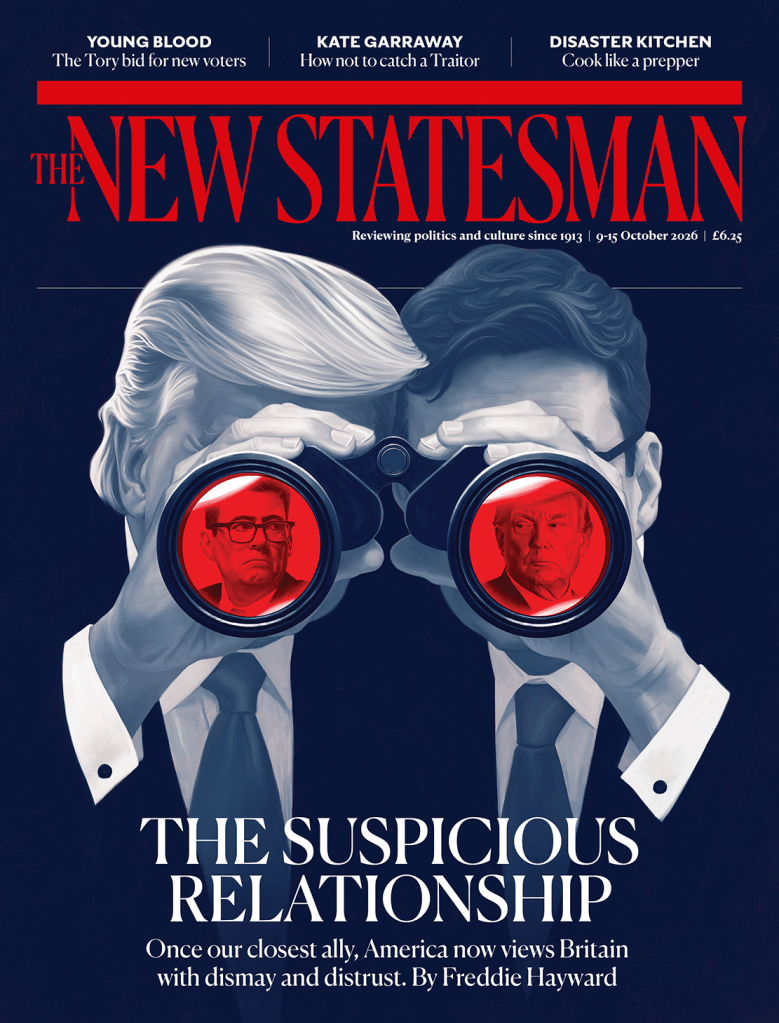
THE NEW STATESMAN MAGAZINE – OCTOBER 9, 2026

THE NEW STATESMAN: The latest issue features ‘The Suspicious Relationship’ – Once our closest ally, America now view Britain with dismay and distrust.

The suspicious relationship

White House insiders reveal what they really think of Andy Burnham’s Britain. By Freddie Hayward

Could I survive the apocalypse?

How to eat well during a national disaster. By Finn McRedmond

In Trump’s America, the death penalty has been resurrected

Christa Pike’s botched lethal injection is just one among many. As prisoners in Louisiana, we watch on as executions… By John Corley

Prepare for a hot El Niño summer

Next year is going to be hotter and, for you and everyone you know, dearer. By Oli Dugmore

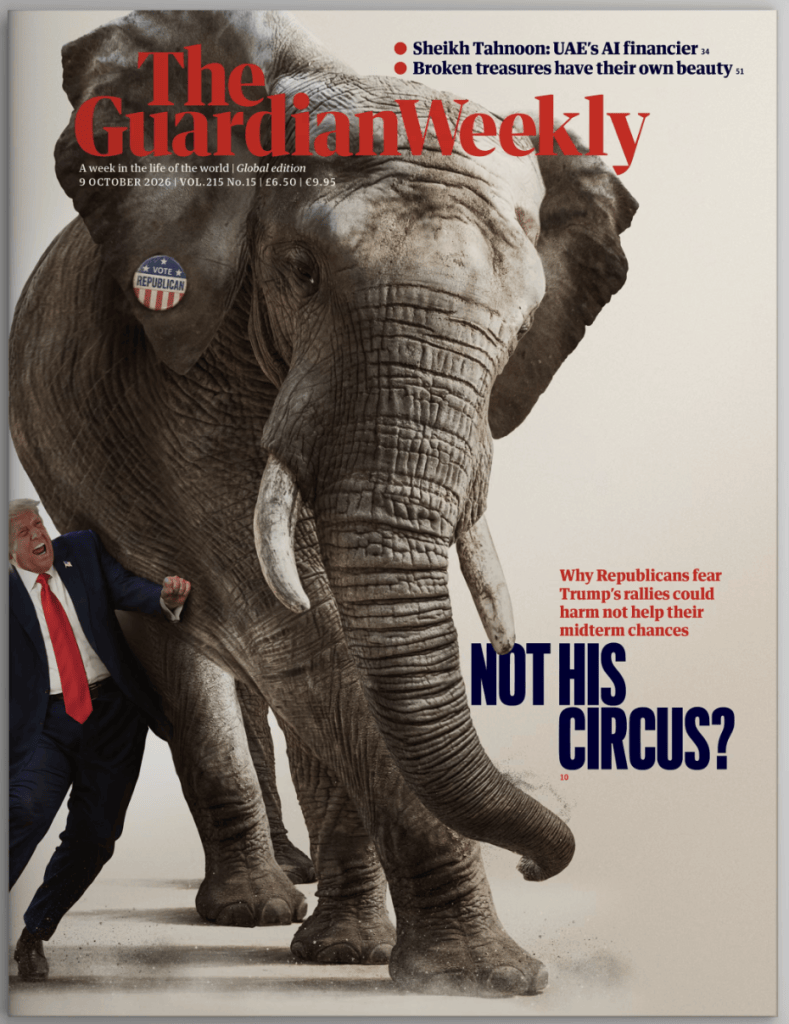
THE GUARDIAN WEEKLY – OCTOBER 9, 2026

THE GUARDIAN WEEKLY: The latest issue features ‘NOT HIS CIRCUS?’ – Why Republicans fear Trump’s rallies could harm not help their midterm chances….

With fewer than 30 days until the US midterm elections, Donald Trump seems determined to still be centre stage despite poll fears that after 3 November he may end up a lame-duck president as a Democratic blue wave sweeps the country. Our Washington bureau chief, David Smith, has been watching how the president is playing to Republican voters at the start of a blitz of cross-country rallies. It’s, at best, a mixed picture.

As David reports, Trump’s self-belief and message to voters to “pretend” his name is on the ballot reveal a man out of touch with ordinary Americans’ worries about the cost of living and whose promises that the war with Iran will soon be over ring ever more hollow. And then there are the candidates, more of whom are shying away from their earlier allegiances to a president whose approval ratings continue to slide.

Spotlight | An education crisis in France
As school and university protests intensify, Paris correspondent Angelique Chrisafis finds out why students feel the government is ignoring their complaints about the state of education

Spotlight | Green division and diversion
Peter Walker reports on the English and Welsh Green party’s annual conference in which a motion equating Zionism with racism was passed, and analyses how this reveals weaknesses in the way the party is run

Feature | The big business of porn
Why not analyse the porn industry just like any journalist would the oil business? That was the premise behind Patricia Nilsson’s new book. An approach that, as Amelia Gentleman finds out, yields new insights into how pornography’s imperatives have seeped into all our online lives

Opinion | Putin won’t bomb Ukraine into submission
Kyiv may now be under almost constant attack but, says Rajan Menon, history shows that bombing doesn’t crush morale

Culture | There’s beauty in bits and pieces
A novel exhibition in Florence puts broken sculptures on display and, as Philip Oltermann discovers, reveals their profound allure

ARCHITECTURE UNBOUND

MIT PRESS: The following books are highlighted for World Architecture Day 2026:

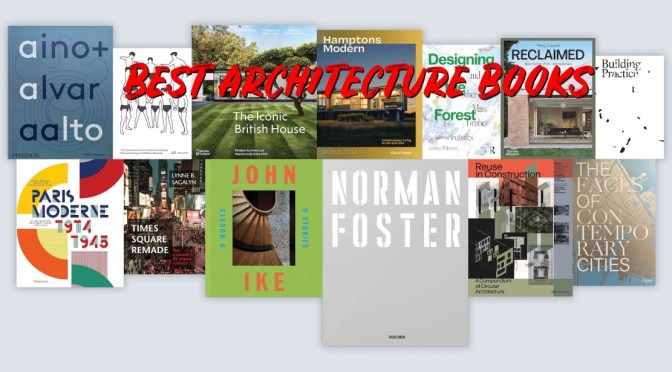
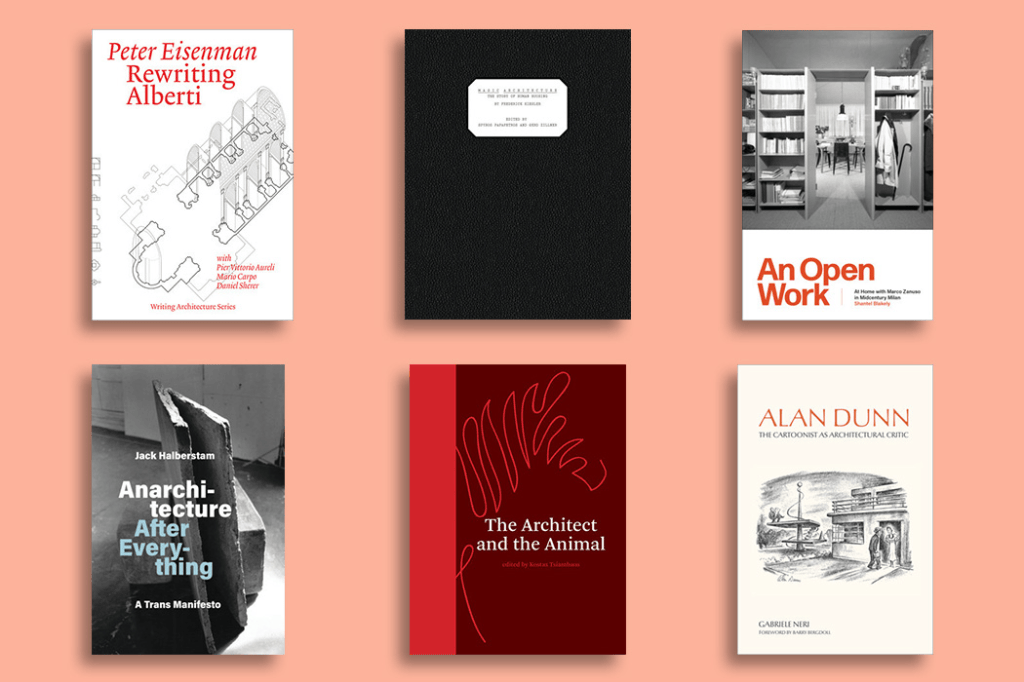
Since our founding in the 1960s, the MIT Press has been considered a premier publisher of architectural scholarship. To celebrate World Architecture Day, this year we are highlighting some of our latest books on architectural theory and practice—including a study of anarchitecture, an investigation of an enigmatic Italian architect-designer, and an abecedarium-style book exploring architect’s intersection with animal life.


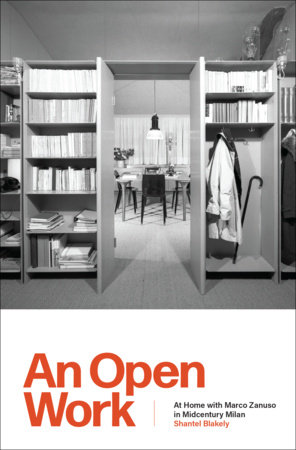
An Open Work: At Home with Marco Zanuso in Midcentury Milan by Shantel Blakely

An Open Work investigates the celebrated, enigmatic Italian architect-designer Marco Zanuso (1919–2001). Zanuso’s buildings were widely recognized in Italy, and today his object and furniture designs, which won many awards in their time, can be found in prestigious museums worldwide, yet few scholars have addressed the different scales he worked at as parts of a whole. This beautifully written, lavishly illustrated book opens the door to Zanuso’s acclaimed work, specifically his dual focus on architecture and industrial design, a form of practice that many architects in Milan pursued as the Italian economy rebounded in a surge of industrialization after World War II.


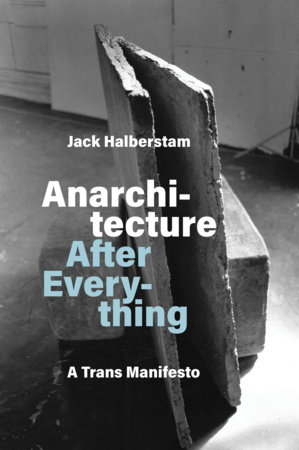
Anarchitecture After Everything: A Trans Manifesto by Jack Halberstam

Anarchitecture, a radical aesthetic practice of unmaking the built environment, staged a vigorous confrontation with urban renewal and gentrification projects in the 1970s. In Anarchitecture After Everything, Jack Halberstam identifies a powerful lexicon of transformation within anarchitecture, joining the movement’s practices of cutting and splitting with the destabilizing power of transness to detonate acts of formal violence in our time. By reading anarchitecture through transness and transness through anarchitecture, Halberstam helps us see the trans body as a space of radical unmaking and as a portal to new lexicons for transformation.


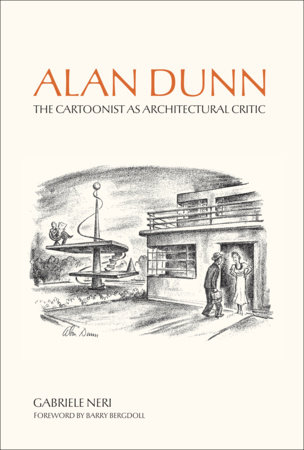
Alan Dunn: The Cartoonist as Architectural Critic by Gabriele Neri

Drawing on his pioneering expertise in the relationship between graphic satire and architecture, Gabriele Neri retraces Alan Dunn’s path from painter to renowned cartoonist, offering an unconventional perspective on architectural and urban transformations—and on their perception within society. Featuring 200 carefully selected images, including Dunn’s correspondence, unpublished cartoons, preliminary sketches, watercolors, and rare photographs, Alan Dunn demonstrates the critical potential of caricature and cartoons for architectural history. Through Neri’s deft analysis, the book also reveals the complex intersections of architecture with media, publishing, commerce, society, art, and politics.


The Architect and the Animal edited by Kostas Tsiambaos

In The Architect and the Animal, 26 different architects look at how 26 different animals, from A to Z, have found their way into modern architectural discourse. The animal was typically approached in this discourse not through its various cultural or symbolic identities but as a body examined under a formalistic scientific lens. In this volume, the authors explore a less operative—and more meaningful—understanding of animal references and representations in twentieth-century architecture. Both playful and serious, there is nothing quite like this book.


Magic Architecture: The Story of Human Housing by Frederick Kiesler

Magic Architecture was the architect Frederick Kiesler’s most ambitious book project, an epoch-spanning history of human housing from prehistory to the atomic era, submitted to editors after World War II but left unpublished. In its holistic view of habitation through the lens of anthropology, ecology, and the life sciences, Magic Architecture is one of the most extraordinary texts on architecture written in the twentieth century, now at last published in the twenty-first. Kiesler’s exploration of the effects of modern technology in combination with the alternative epistemology of “magical” practices associated with cave drawings and the first artifacts of human industry reflects his profoundly interdisciplinary perspective on the development of art, architecture, and design.


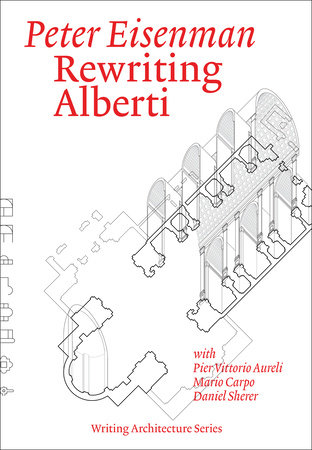
Rewriting Alberti by Peter Eisenman

Much has been written about Renaissance architect Leon Battista Alberti’s mantra of part-to-whole as one of the continuing conditions of architecture. While this underlying thesis has often been repeated in the annals of architectural history and theory, architects have rarely questioned the idea. In Rewriting Alberti, architect Peter Eisenman suggests, however, that Alberti provoked a radical discourse beyond the part-to-whole dialogue featured in his Ten Books of Architecture. Eisenman’s in-depth analysis of Alberti’s five built works reveals a disjunction between the architect’s buildings and theoretical writings, suggesting a new relationship of form to meaning based on the fragmentation of homogeneous space.