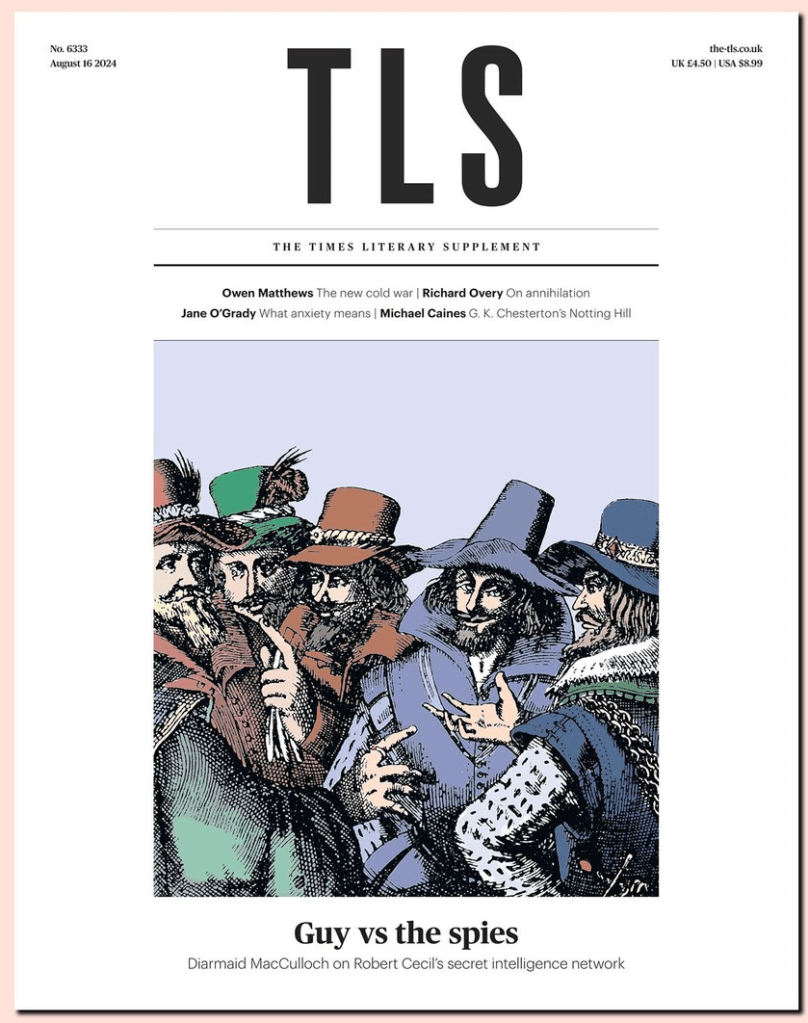
Times Literary Supplement (August 14, 2024): The latest issue features ‘Guy vs the Spies’ – Robert Cecil’s secret intelligence network; The new Cold War; On annihilation; What anxiety means; G.K. Chesterton’s Notting Hill…

Times Literary Supplement (August 14, 2024): The latest issue features ‘Guy vs the Spies’ – Robert Cecil’s secret intelligence network; The new Cold War; On annihilation; What anxiety means; G.K. Chesterton’s Notting Hill…

By James Butler
The first time the man heard God, he uprooted his entire life, though he was very old. Then God appeared to him in person, an event which would embarrass later thinkers. God made the man an impossible promise in the shape of a son. His wife was ninety, and she laughed. When the child arrived, it was hardly unreasonable to think it a miracle. They named the child after the laughter.
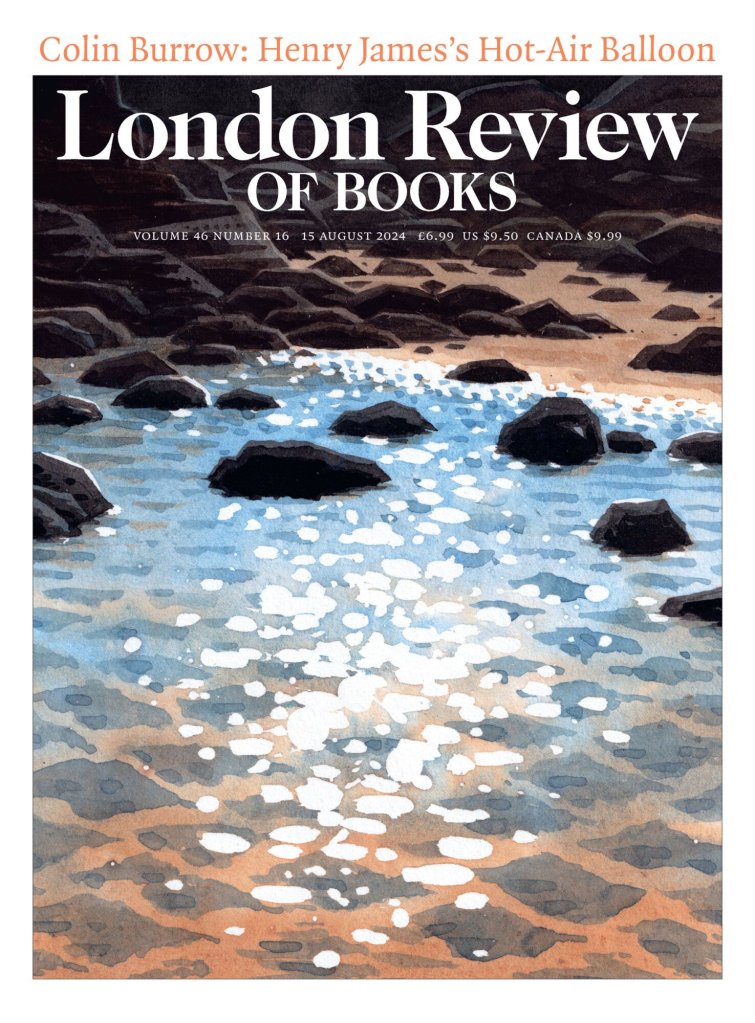
By Colin Burrow
In 1904 Henry James’s agent negotiated with the American publisher Charles Scribner’s Sons to produce a collected edition of his works. The New York Edition of the Novels and Tales of Henry James duly appeared in 1907-9. It presented revised texts of both James’s shorter and longer fiction, with freshly written prefaces to each volume. It didn’t include everything: ‘I want to quietly disown a few things by not thus supremely adopting them,’ as James put it. The ‘disowned’ works included some early gems such as The Europeans. The labour of ‘supremely adopting’ the stuff he still thought worthy was grinding. He worked on the new prefaces, which he described as ‘freely colloquial and even, perhaps, as I may say, confidential’ (though James’s notion of the ‘freely colloquial’ is perhaps not everyone’s) during the years 1905 to 1909. In some respects, the venture was not a success. ‘Vulgarly speaking,’ James said of the New York Edition, ‘it doesn’t sell.’
By Jean McNicol
A week before the start of the Paris Olympics, Shoko Miyata, the 19-year-old captain of the Japanese women’s gymnastics team, was forced to withdraw from the competition by her national association. She had been reported to the Japan Gymnastics Association for smoking and drinking (on separate occasions, once for each offence). The president of the JGA, Tadashi Fujita, announced that Miyata had been sent home, and bowed deeply.
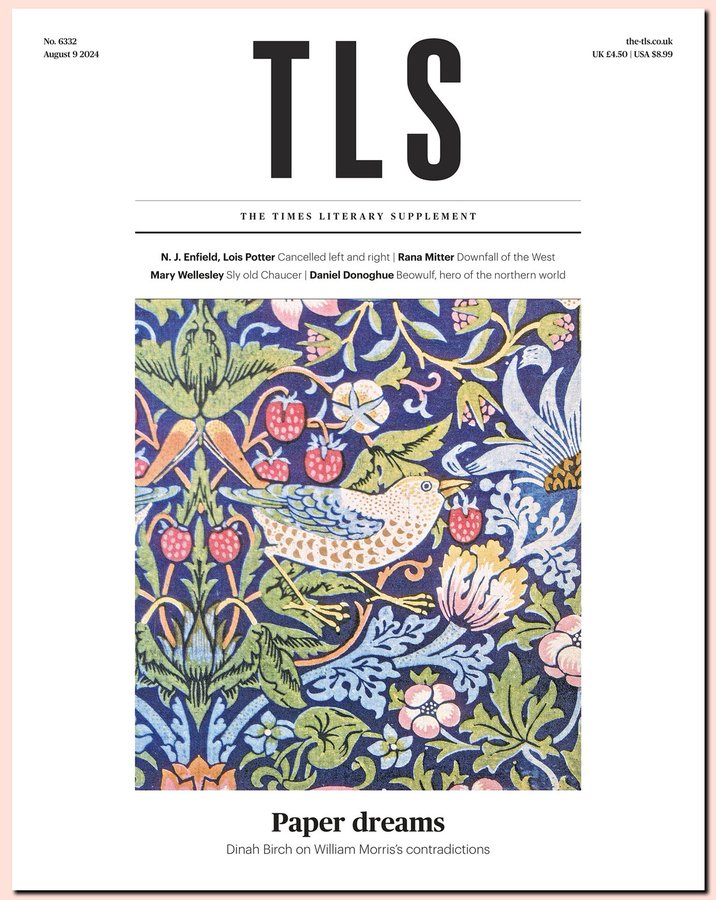
Times Literary Supplement (August 7, 2024): The latest issue features ‘Paper Dreams’ – Dinah Birch on William Morris’s contradictions; Cancelled left and right; Downfall of the West; Sly old Chaucer; Beowulf, hero of the Northern World….


Literary Review – August 3, 2024: The latest issue features ‘Rise and Fall of the Cromwells’; Thom Gunn’s demons; Prams and paintbrushes; Children of Atatürk; Friedrich in nature…


Times Literary Supplement (July 24, 2024): The latest issue features ‘Generation Anxious’ – Jonathan Haidt’s bleak vision of modern childhood; Rebuilding broken Britain; The woman who stalked the world; German Expressionism at Tate Modern and Twisters..

Times Literary Supplement (July 17, 2024): The latest issue features ‘World at War’ – Humanity’s appetite for organized violence; Should we have babies; Posture panic; The boy on the burning deck and Wales…

Stephen Sedley
Rae Armantrout
Thomas Meaney
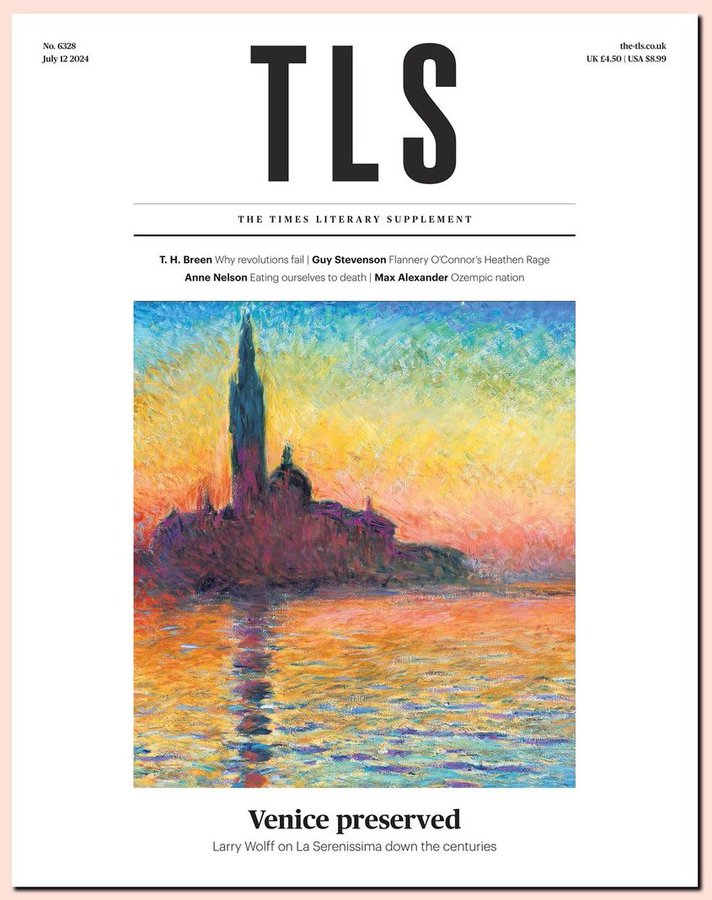
Times Literary Supplement (July 10, 2024): The latest issue features ‘Ven ice Preserved – La Serenissima down the centuries; Why revolutions fail; Eating ourselves to death and Ozempic nation…

Literary Review – July 2, 2024: The latest issue features ‘A Tale of Two Fabulists’, North America Ablaze, Pascal Decoded, League of Dictators and Roffey’s Rage…
American Civil Wars: A Continental History, 1850–1873 By Alan Taylor
A mountain of historical studies testifies to enduring interest in the American Civil War, a conflict still politically relevant in a nation riven over how to remember it. Those doubting that there is anything fresh to say about the bloodiest event in the republic’s history should read Pulitzer Prize winner Alan Taylor’s brilliant, panoramic account of the conflict.
Travellers in the Golden Realm: How Mughal India Connected England to the World By Lubaaba Al-Azami
One contender for the title of centre of the civilised world in the early 17th century is the Mughal Empire. Lubaaba Al-Azami describes it as ‘a global capital and commercial hub’. The Mughal Empire reached its zenith between the reigns of Babur, the first emperor, who established the ‘golden realm’ in 1526, and his great-great-great-grandson the sixth emperor, Aurangzeb, who died in 1707. This was a time when the artists of the fabulously wealthy Mughal dynasty were building the Taj Mahal and writing and illuminating the Padshahnama.
Vertigo: The Rise and Fall of Weimar Germany 1918–1933 By Harald Jähner (Translated from German by Shaun Whiteside)
Takeover: Hitler’s Final Rise to Power By Timothy W Ryback
The Weimar Republic (so called as the parliament which drafted its constitution in 1919 sat in Weimar owing to unrest in Berlin) lasted for fourteen years and four months, two years longer than the Third Reich that succeeded it. Its history is beset with ironies. Its first president, Friedrich Ebert, a social democrat (and a former innkeeper), turned out to be the embodiment of petit-bourgeois conservatism. Having ditched the monarchy, he made a bargain with the army: they would defend the nascent republic in return for maintaining the old officer corps. This enabled the regime to survive five chaotic years marked by numerous violent attempts to overthrow it from both the Left and the Right.
 Intellicurious