What’s the point of literary criticism? In June the University of Exeter announced plans that might make roughly a third of its English department – one of the best in the country – redundant. Other institutions, including Canterbury Christ Church University, have stopped offering English degrees altogether. Most mainstream publishers now wouldn’t dream of publishing a work of literary criticism, as they happily did in the 1970s and 1980s. Even literary biography, literary criticism’s previously marketable stepsister, no longer brings a gleam to a publisher’s eye. The grassroots of the subject are also suffering badly. Since 2000 the number of people taking A-level English literature in England has dropped by around a third, to around 36,000, with an even higher drop among male students.
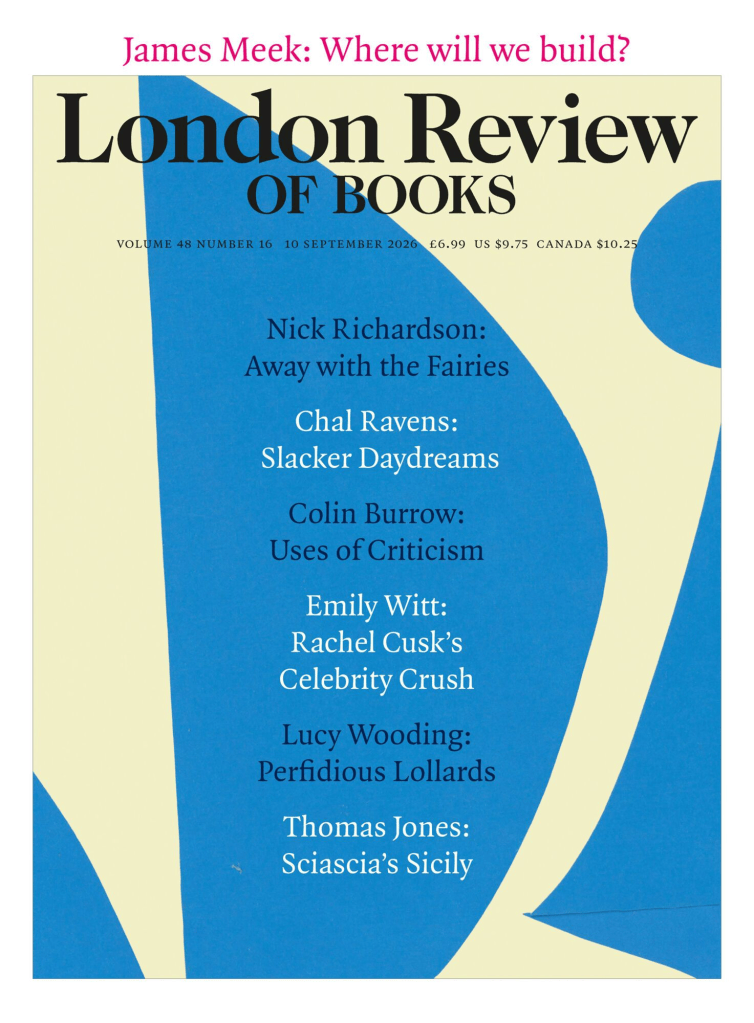
A Sicilian Man: Leonardo Sciascia, the Rise of the Mafia and the Struggle for Italy’s Soul by Caroline Moorehead
The Beast in the Clouds: The Roosevelt Brothers’ Deadly Quest to Find the Mythic Giant Panda by Nathalia Holt
The Twitnam Summer: Friendship, Satire and the Writing of ‘Gulliver’s Travels’ by Hester Grant
It’s getting on for twenty-four years ago that I first read Patricia Highsmith’s The Talented Mr Ripley (1955). Books tend to come to us when we need them, and it’s easy to see why Tom Ripley’s project of self-reinvention and triumphant class resentment was so appealing to me as a twenty-year-old undergraduate.
The Sea-King and the Sorceress: Life and Death in the Viking Age By Neil Price
Few groups in history have been so variously defined, quarrelled over, misrepresented and appropriated as the Vikings. Their identity elusive, they have been passed around like historiographical tokens to the detriment of a deeper understanding of their cultural and political milieu. Neil Price’s The Sea-King and the Sorceress sidesteps these often sterile debates by examining the lives – and deaths – of more than twenty figures from the Viking Age and using them to shed light on wider themes, a bottom-up approach which is both logical and engaging.
The Cauldron: The Making of the Modern Middle East By Simon Sebag Montefiore
A highly readable gallop through one of the world’s most complex political environments, The Cauldron is brilliant on narrative, weaker on analysis. Simon Sebag Montefiore has set himself a formidable task: to compress the modern history of a region extending from Morocco to Iran, and from the fall of the Ottoman Empire to the wars of 2026, into a single volume. The result is an exuberant pageant of sultans, shahs, kings, colonels, spies, revolutionaries and assassins. Few historians could move so confidently from the salons of Cairo to the palaces of Riyadh, from Atatürk’s Ankara to Khomeini’s Najaf, while keeping so many figures vividly in play.
All the Wrong Moves: How Three Catastrophic Decisions and Years of Sh*tshow Politics Led to Trump – and How We Find a Way Out By Anthony Scaramucci
When Donald Trump fired him after just eleven days as his director of communications, Anthony Scaramucci thought his career was over. He had become such an object of ridicule that a crisis PR adviser suggested he lie low for a few years before attempting to start again. Instead, the self-styled ‘front stabber’ from New York – who had naively assumed that a successful Wall Street career could equip him for the toxic political swamp of Washington, DC – launched himself into a round of media interviews, choosing to roll with the punches.
Dolly Parton belonged to a beloved category: the outlaw Christian, who loved Jesus and refused to hate anyone else.
Cinema Lessons from a Trash-Movie Auteur
Why do we love trash and hate slop? Neil Breen’s so-bad-they’re-great movies elucidate the difference.
The Floods Nepal Didn’t Cause
Flash floods, triggered by a glacial collapse in the Himalayas, have killed at least five hundred people in a nation that has contributed little to climate change but is disproportionately affected by it. By Ishaan Tharoor
How the Meta Settlement Could Change the Internet
Even while refusing to admit legal fault, the parent company of Facebook and Instagram has accepted, for the first time, that much of its business model is unacceptable for children. By Nathaniel Lubin
New Maps Show How Israel Has Thwarted Hopes for a Palestinian State
The breakneck expansion of settlements in the West Bank has rendered American talk of a two-state solution increasingly irrelevant.
The SAVE America Act is just one part of a package that includes an executive order and threats of prosecution, all in an effort to make Trump’s math work. By Amy Davidson Sorkin
The Big, Dumb, Gluttonous Fun of America’s Semiquincentennial
In D.C. and the Dakotas, at rodeos and powwows, celebrating the country means taking in pride and disappointment and fellow-feeling. By Rachel Monroe
The End of the European Summer
As extreme heat overwhelms the Continent’s great cities, they are racing to transform themselves for a climate that they were never built to withstand. By Eric Klinenberg
As Abdul El-Sayed, Michigan’s newly elected Democratic nominee for the U.S. Senate, put it, “People really effing hate data centers.” By Benjamin Wallace-Wells
The Delusions of John Roberts
The Chief Justice insists that his Supreme Court isn’t biased even as it keeps making dramatic leaps rightward. By Margaret Talbot
Are You a Human?
From branding irons to iris scans, the ancient business of proving who you are has never been stranger—or more lucrative. By Jill Lepore
Inside Russia’s New Gulag
Human-rights groups estimate that more than ten thousand Ukrainian civilians have disappeared into the Russian prison system. This is the story of one cell.
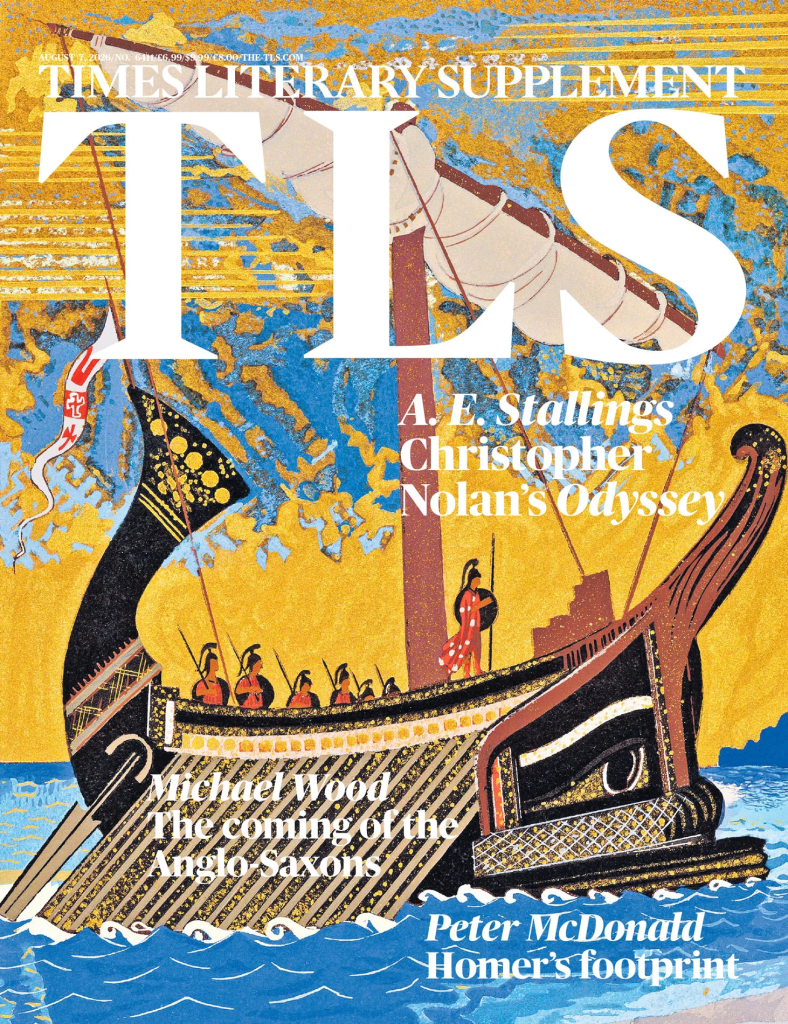
Christopher Nolan’s $250 million action movie version of Homer’s ancient Greek poem is an entertaining way to hide from the high temperatures for a few hours. Nolan’s trademark jumps and twists in the narrative structure are relatively easy to follow, and appropriate for The Odyssey, a narrative of tales nested in tales. My teenagers had a good time. Unlike some of Nolan’s other films, The Odyssey is not boring, thanks to the source material, which is impossible to mess up entirely. It’s a family-friendly audiovisual spectacle, like an elaborate Fourth of July fireworks display – and with about the same level of narrative and emotional depth.





 Intellicurious