Australia Interior Design: Wimbledon House Tour

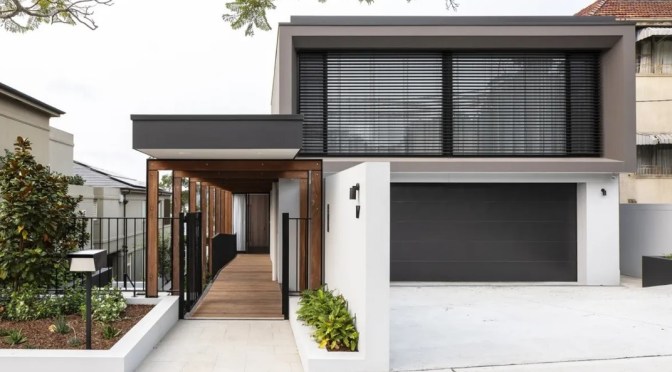
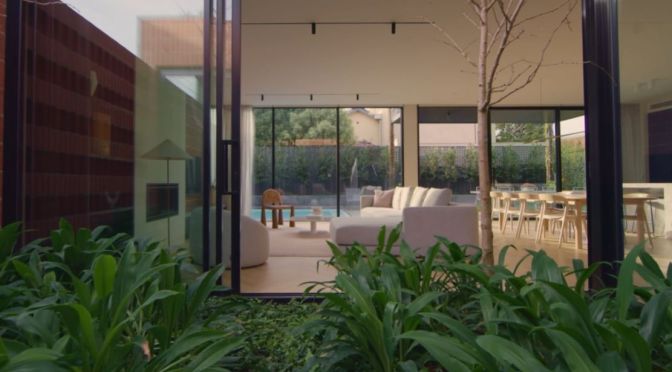
Channelling the sense of warmth that has long-defined the family concept, Wimbledon House befits its purpose as a modern family home. Crafted by Taylor Pressly Architects in collaboration with the clients, Dave and Katie Penfold of Penfold Property Group, the functional home provides a timeless environment for communal living.

Video timeline: 00:00 – Introduction to the Modern Family Home 00:24 – The Site of the Home 00:47 – A Two Level Space 01:27 – The Featuring of a Curved Staircase 01:48 – Bringing Warmth to The Home Through Materials 02:25 – Transparency Through The View Lines 02:50 – Creating a Central Heart to The Home 03:04 – The Key Feature Areas: Kitchen and Staircase 03:25 – Creating the Staircase 04:32 – Building a Functional Family Home

Situated at the junction between Elwood, St Kilda, Balaclava and Elsternwick, Wimbledon House reflects thorough consideration of local design heritage. Recycled red brickwork references the previous iteration of the house as well as the influential art deco movement, wrapping the lower half of the exterior and tracking its fluid curves with a stack bond format.

Occupying a central position in the spatial plan is a landscaped courtyard which opens onto a staircase, executed by S&A Stairs. The spiral staircase connects the levels of the modern family home with a smooth three-dimensional curve, painted white. The handrail, neatly attached to the primary architecture of the modern family home, represents a particular achievement of S&A Stairs. While the company of the past would have taken days or weeks to build the rail, the modern-day S&A Stairs draws upon its 102 years of experience in order to complete the work within hours, using 5-Axis CNC technology.

By accommodating a family with ease, Wimbledon House succeeds in what is considered its core function. Offering a modern family home, Taylor Pressly Architects associates the communal domestic experience with elevated living, during which occupants can enjoy pieces of luxury craftmanship.
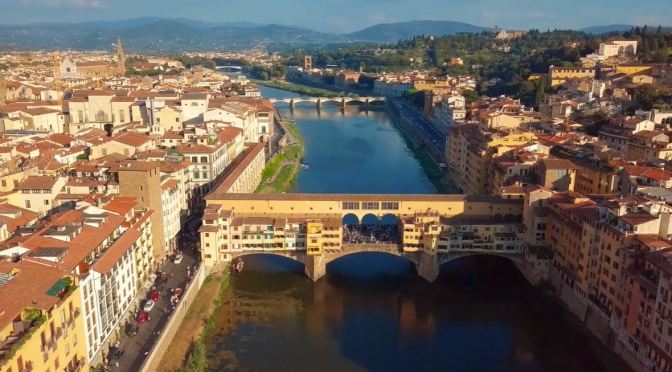

Fall 2022 Views: A Walk Through Florence, Italy

Florence, capital of Italy’s Tuscany region, is home to many masterpieces of Renaissance art and architecture. One of its most iconic sights is the Duomo, a cathedral with a terracotta-tiled dome engineered by Brunelleschi and a bell tower by Giotto. The Galleria dell’Accademia displays Michelangelo’s “David” sculpture. The Uffizi Gallery exhibits Botticelli’s “The Birth of Venus” and da Vinci’s “Annunciation.” 

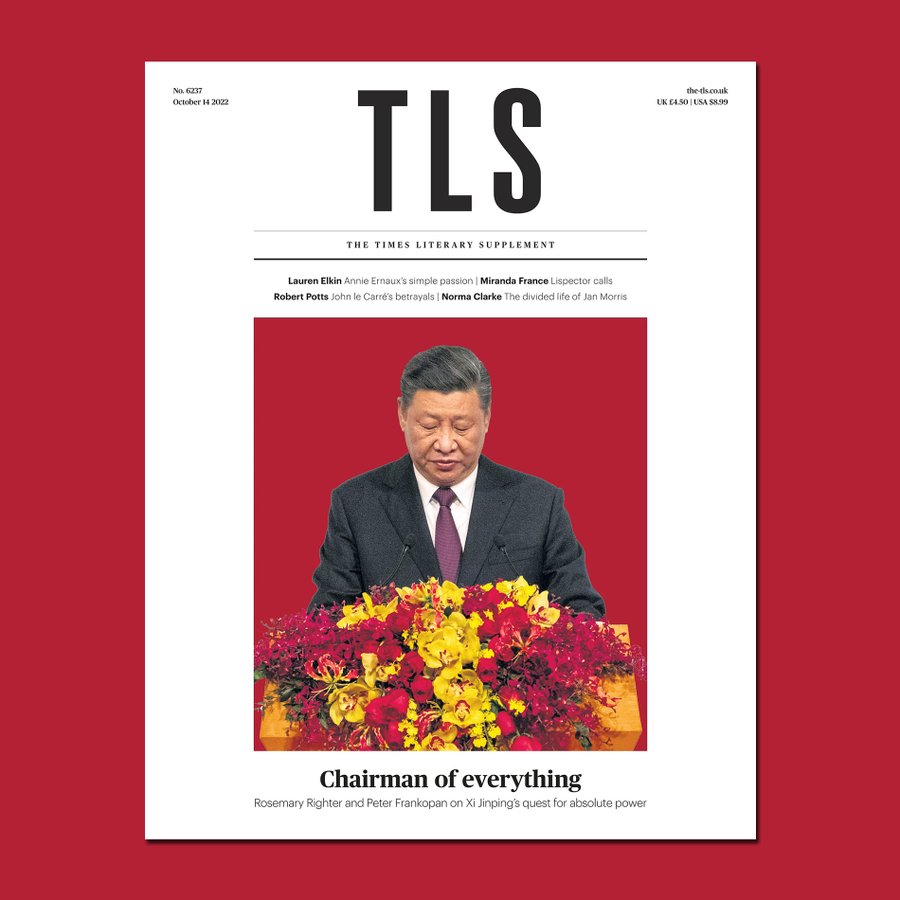
Previews: Times Literary Supplement – Oct 14, 2022

Image

This week’s @TheTLS , featuring Rosemary Righter and @peterfrankopan on Xi Jinping; @LaurenElkin on Annie Ernaux; @pottmeister on John le Carré; @MirandaFrance1 on Clarice Lispector; @Lordoflongitude on measurement – and more.

Times Literary Supplement (The TLS) Website

Front Page: The New York Times – October 12, 2022

Image

Pressure Grows on the West to Speed Air-Defense Systems to Ukraine

After Russia bombarded civilian targets, G7 leaders pledged “undeterred and steadfast” financial and military support for Kyiv.

The Hunt to Arm Ukraine Leads to Difficult Choices

The U.S. and NATO are scouring the world for new sources of old weapons to send to Ukraine. But it risks as much peril for some nations as it does promise for Kyiv.

Biden Vows ‘Consequences’ for Saudi Arabia After Oil Production Cut

Angered by the kingdom’s decision to team up with Russia, President Biden signaled openness to retaliatory measures, including a halt to arms sales and allowing price-fixing lawsuits.

Science: New Research Into Diseases Of The Brain

Take an animated look inside the neuron, and learn how scientists are addressing brain disease. With approximately 86 billion neurons in the brain, humans contain the most complex communications network imaginable. To address diseases of brain development and degeneration, neuroscientists are investigating how and why this network breaks down, and what can be done to repair it.

One area of study is dendrites, which are the tree-like structures of neurons, that receive electrical impulses. Researchers are carefully mapping out brain circuits and uncovering how connectivity changes can result in defects of the visual system or behavioral problems. The core section of the neuron is the cell body. Genetic engineering tools are revealing how mutations impact brain development and contribute to autism spectrum disorder or rare, inherited forms of neurological disease.

The transmission of nerve impulses occurs along the axon, which is insulated, much like an electrical wire, by a fatty layer called the myelin sheath. Scientists have invented a medicine to stop the immune system from mistakenly attacking this layer, which occurs during multiple sclerosis. Other molecules currently in development instruct the body to regenerate the sheath and repair damage. The axon also transports valuable cellular cargo, such as neurotransmitters, along tracks from one end of the neuron to the other.

Researchers are testing drug candidates for their ability to remove molecular traffic jams when this transport system fails, as often occurs in Parkinson’s and Alzheimer’s disease. The axon terminals make connections called synapses with other cells, using neurotransmitters as signals. Some scientists are evaluating how finely tuning the receptors for these chemicals could ease depression and anxiety.

Others are finding ways to promote the regrowth of lost synapses, which could halt neurodegeneration. From genetics to behavior, neuroscience is accelerating new interventions for the most challenging disorders of the nervous system.

Learn more: https://www.scripps.edu/

Australian Home Design: Mosman House In Sydney

On a steep slope in Mosman, on Sydney’s Lower North Shore, TKD Architects were asked not just to design a six-bedroom family home that took advantage of the views, but also to take charge of the interior architecture and styling – from the furniture and flooring right down to the artwork, bedding and even the cutlery. All their Shanghai-based clients needed to do was unlock the door and walk into their completely finished home.

Read more

Drought: How Las Vegas Conserves So Much Water

As severe drought in the West forces states to make drastic water cuts, Las Vegas offers a road map to making the most out of every drop of water. Since 2002, Southern Nevada has cut its Colorado River water use by 26% while its population has grown by 750,000.

Analysis: Saudi Arabia’s Hyper-Planned “Line City”

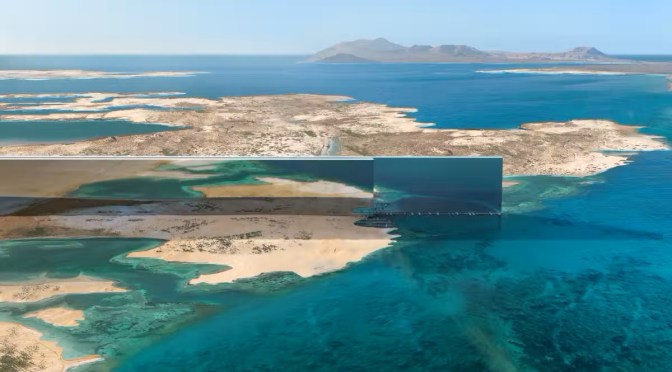
The Line is a proposed smart linear city in Saudi Arabia in Neom, Tabuk, currently under construction, which is designed to have no cars, streets or carbon emissions.

 The Line is being described as a one-building vertical city outfitted with exterior mirrors, big enough to house 9 million people — along with everything they need, from parks and waterfalls to flying taxis and robot maids. There are even plans to include an artificial moon for residents to gaze upon.

With its proposed width of only 656 feet, The Line will rely primarily on its height to encompass its residents and a host of modern trappings, such as a high-speed rail to connect sections of the 106-mile city. Saudi Arabian officials claim The Line will be otherwise devoid of roads, cars or emissions and will be powered strictly by clean energy (although details have not been released). Here are a few of most notable proposed features of The Line:

  • vertically layered homes, offices, public parks and public schools.
  • year-round climate control of all indoor and outdoor spaces.
  • high-speed rail that will transport residents from end-to-end in 20 minutes.
  • a five-minute walk to all amenities.
  • accessibility to parks and natural elements within a two-minute walk.

News, Views and Reviews For The Intellectually Curious