Category Archives: Reviews

World Economic Forum: Top Stories – April 8, 2022

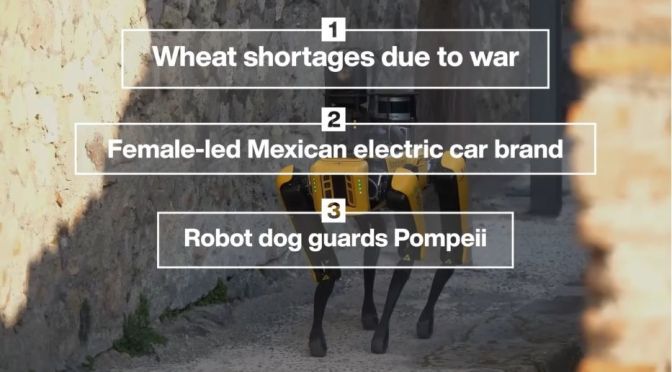
This week The World Economic Forum are highlighting 4 top stories – wheat shortages due to war, a female-led Mexican electric car brand, a robot dog guards Pompeii, and a plane fuelled by cooking oil.

Video timeline: 00:00 – Intro 00:15 – Wheat shortages due to war 02:17 – Female-led Mexican electric car brand 03:34 – Robot dog guards Pompeii 05:00 –

Plane fueled by cooking oil The World Economic Forum is the International Organization for Public-Private Cooperation. The Forum engages the foremost political, business, cultural and other leaders of society to shape global, regional and industry agendas. We believe that progress happens by bringing together people from all walks of life who have the drive and the influence to make positive change.
Reviews: The Week In Art

This week: Quiet as It’s Kept, the 80th edition of the Whitney Biennial, is now open to the public at the Whitney Museum of American Art in New York. 

The Art Newspaper’s associate editor Tom Seymour, Americas editor Ben Sutton and staff reporter Gabriella Angeletti gather to discuss it. As the latest incarnation of the show Afro-Atlantic Histories is unveiled at the National Gallery of Art in Washington DC, we speak to its curator, Kanitra Fletcher, about the gallery’s approach to this complex subject. And the National Gallery in London’s long-planned Raphael blockbuster, postponed due to the pandemic, is finally open, so for this episode’s Work of the Week, we speak to Tom Henry, one of the curators of the show, about the Self-Portrait with Giulio Romano (1519-20), one of the Renaissance master’s final paintings.

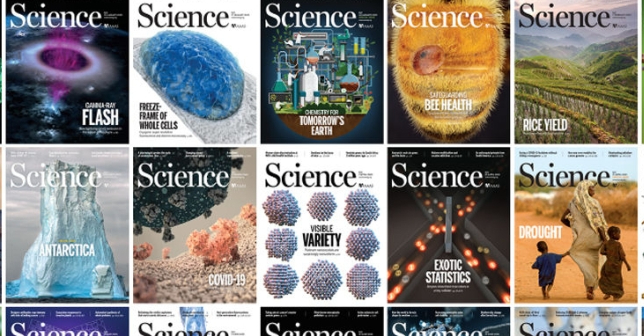
Cover Preview: Science Magazine – April 8, 2022

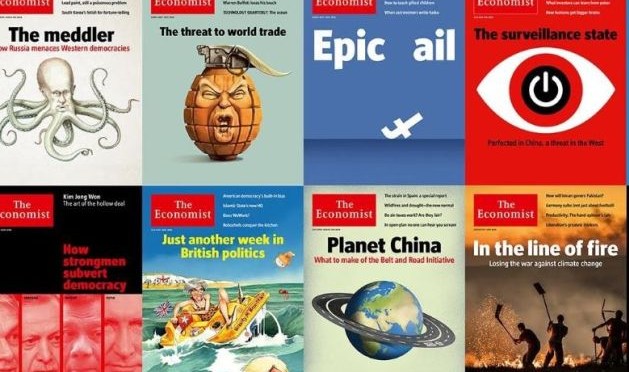
Previews: The Economist Magazine – April 9, 2022

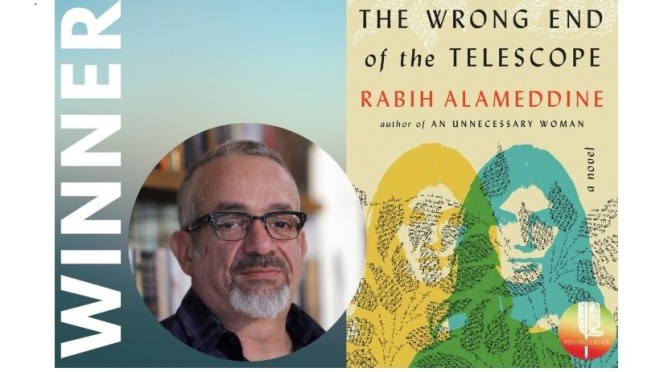
2022 Pen/Faulkner: Rabih Alameddine’s ‘The Wrong End Of The Telescope’

WINNER OF THE 2022 PEN/FAULKNER AWARD FOR FICTION

Mina Simpson, a Lebanese doctor, arrives at the infamous Moria refugee camp on Lesbos, Greece, after being urgently summoned for help by her friend who runs an NGO there. Alienated from her family except for her beloved brother, Mina has avoided being so close to her homeland for decades. But with a week off work and apart from her wife of thirty years, Mina hopes to accomplish something meaningful, among the abundance of Western volunteers who pose for selfies with beached dinghies and the camp’s children. Soon, a boat crosses bringing Sumaiya, a fiercely resolute Syrian matriarch with terminal liver cancer. Determined to protect her children and husband at all costs, Sumaiya refuses to alert her family to her diagnosis. Bonded together by Sumaiya’s secret, a deep connection sparks between the two women, and as Mina prepares a course of treatment with the limited resources on hand, she confronts the circumstances of the migrants’ displacement, as well as her own constraints in helping them.

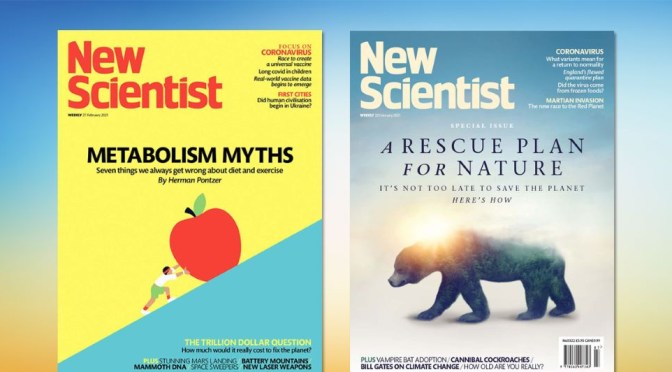
Preview: New Scientist Magazine – April 9, 2022

COVER STORIES

  • FEATURES An extreme form of encryption could solve big data’s privacy problem
  • FEATURES The replication crisis has spread through science – can it be fixed?
  • FEATURES How fossil footprints are revealing the joy and fear of Stone Age life

Previews: Times Literary Supplement – April 8, 2022

Analysis: Ukraine Victory Importance, Anti-Media In China, Social Influencers

A selection of three essential articles read aloud from the latest issue of The Economist. This week, why a Ukrainian victory would transform the security of Europe, a terrible plane crash prompts a revealing anti-media backlash in China (11:20) and the serious business of social influencers (18:30).

Science: Probing Earth’s Inner Core, Complete Read Of Human Genome

On this week’s show: A journey to the center of the center of the Earth, and what was missing from the first human genome project.

Staff Writer Paul Voosen talks with host Sarah Crespi about the many mysteries surrounding the innermost part of our planet—from its surprisingly recent birth to whether it spins faster or slower than the rest of the planet.

Next, Sarah chats with Adam Phillippy about the results from the Telomere-to-Telomere (T2T) Consortium, an effort to create a complete and detailed read of the human genome. Phillippy, a senior investigator and head of the Genome Informatics Section at the National Human Genome Research Institute, explains what we can learn by topping up the human genome with roughly 200 more megabases of genetic information—practically a whole chromosome’s worth of additional sequencing.

See all the T2T papers.

This week’s episode was produced with help from Podigy.

[Image: V. Altounian/Science; Music: Jeffrey Cook]

[alt: An array of the human chromosomes showing newly sequenced parts from the Telomere-to-Telomere Consortium with podcast symbol overlay]

Authors: Sarah Crespi; Paul Voosen

Episode page: https://www.science.org/doi/10.1126/science.abq1885