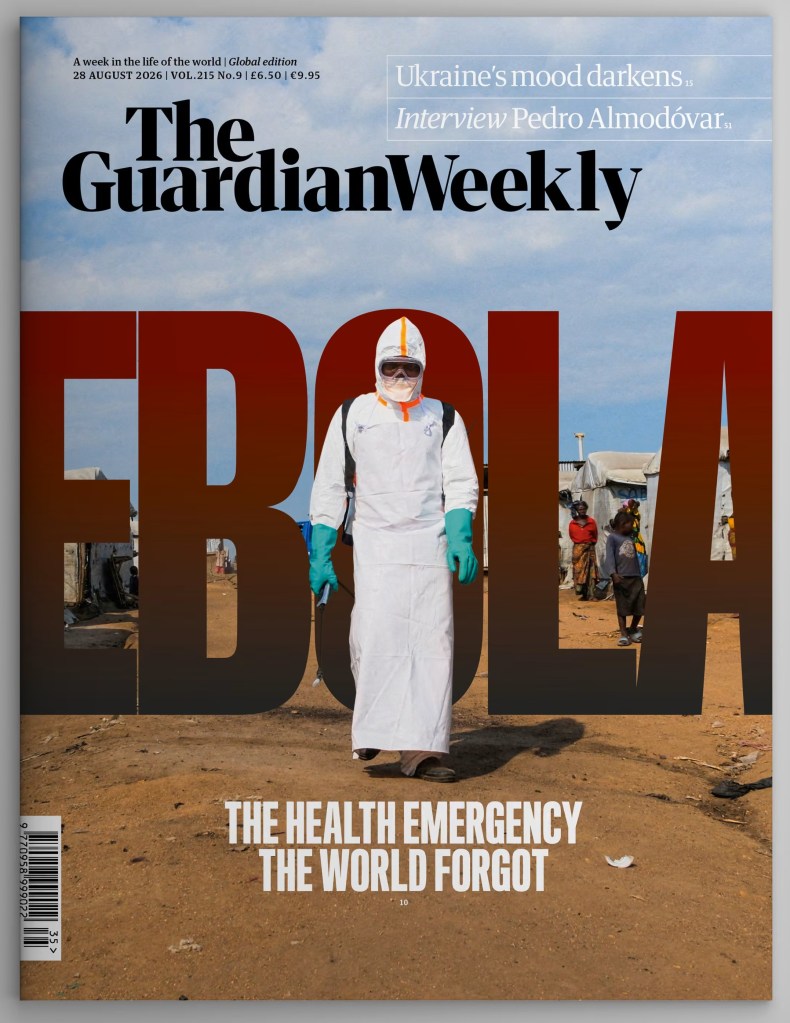
The Democratic Republic of the Congo has just passed the grim milestone of 100 days since it declared its 17th Ebola outbreak.
What is the fastest-growing Ebola outbreak on record could also become the world’s deadliest ever.
For our big story this week, Prosper Heri Ngorora and Rachel Savage report on the frontline health workers who say, as the disease spreads “exponentially”, they have been left unpaid and at risk of infection.
Explaining the figures behind the outbreak, and the race to find vaccines and treatments, global health correspondent Kat Lay answers five key questions.
And Jean Kaseya, director general of the Africa Centres for Disease Control and Prevention, and Tedros Adhanom Ghebreyesus, director general of the World Health Organization, write that tapping into community leadership and knowledge is essential to halting the virus’s spread.
Spotlight | ‘We will go on – but it will be more scary’ Dan Sabbagh reports from Kyiv where, as Russian missiles rain down, casualties are mounting and the mood is darkening
Environment | Killed by kindness Scientists were surprised to find all but two of 12 grizzlies died within a year of their “feelgood” release, unable to sustain their high-calorie diet and inclined to approach humans, writes Rebecca Ratcliffe
Feature | A family at war Meaghan Beatley tells the remarkable story of a young Argentinian activist who thought her father’s disapproval of her leftwing views was purely political. But one evening, a kiss goodbye sent her on a remarkable journey that continues today
Opinion | Marine Le Pen’s career resurrection No longer banned from next year’s presidential election, the far-right veteran is a bigger threat than ever, says Mujtaba Rahman
Culture | Playing the bad guy As his new film Bitter Christmas is released, legendary Spanish director Pedro Almodóvar talks to Ryan Gilbeyabout Donald Trump, Netflix – and being the villain in his own movie
MIT TECHNOLOGY REVIEW: The Kids issue features… What does growing up in an age of chatbots and agents mean for kids’ future? From the role AI plays in their day-to-day lives to how they cope with the existential dread that comes with climate change, young people are asserting their smarts to define their relationship with technology and the world around them. Plus!…
LLMs need vastly more data than children to learn language. Understanding why could help us create more efficient models—and reveal more about developing minds.
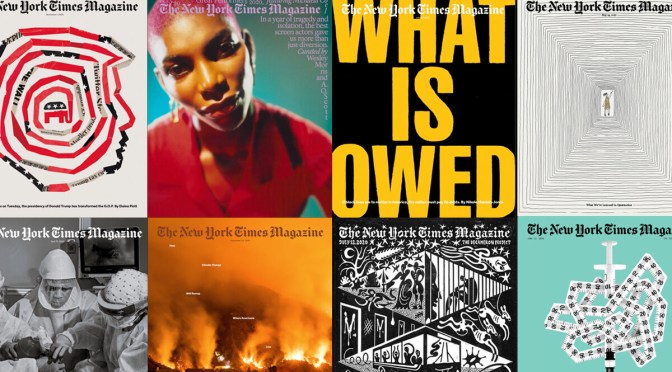
THE NEW YORK TIMES MAGAZINE:The 8.23.26 Issue features Christopher Cox on the fragility of American power grids; Christopher Payne’s images of transformers; Nicholas Casey on people who came to the U.S. and were deported to countries like Eswatini; and more.
In matters of work, school and even romance, we turn to A.I. chatbots. But what happens when the bots begin talking to one another? By Callie Holtermann
As the Trump administration sends a growing number of immigrants to countries they have no connection to, some find themselves imprisoned with no way out. By Nicholas Casey
For the thousands of foreign visitors who travelled behind the ‘bamboo curtain’ to visit Mao’s China, hospitality workers – guides, drivers, waiters, chambermaids – were unofficial ambassadors for the new socialist state, and the state knew it.
In 1943 letters reporting starvation and death in Bengal began to reach Indian soldiers serving the British overseas. Despite colonial censorship, their testimonies revealed the devastating reality of famine.
The Victorian reading public had access to a vast array of classical literature from Asia in multiple translations by experts and amateurs. What did they read, and why?











 Intellicurious