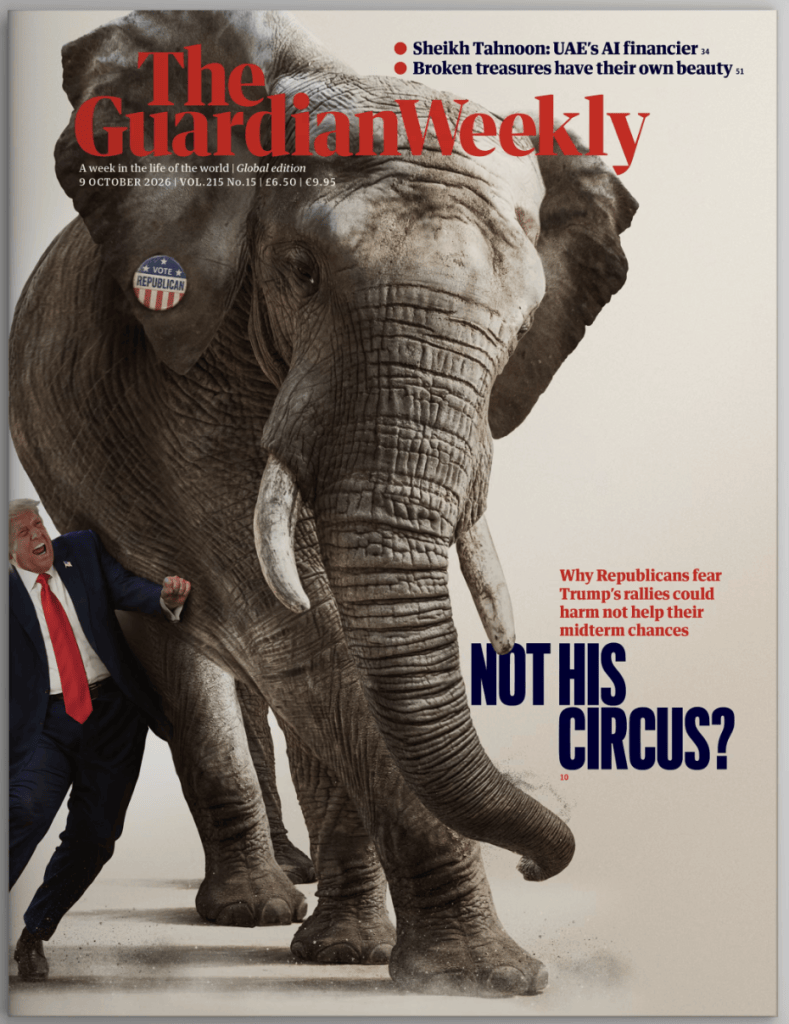
With fewer than 30 days until the US midterm elections, Donald Trump seems determined to still be centre stage despite poll fears that after 3 November he may end up a lame-duck president as a Democratic blue wave sweeps the country. Our Washington bureau chief, David Smith, has been watching how the president is playing to Republican voters at the start of a blitz of cross-country rallies. It’s, at best, a mixed picture.
As David reports, Trump’s self-belief and message to voters to “pretend” his name is on the ballot reveal a man out of touch with ordinary Americans’ worries about the cost of living and whose promises that the war with Iran will soon be over ring ever more hollow. And then there are the candidates, more of whom are shying away from their earlier allegiances to a president whose approval ratings continue to slide.
Spotlight| An education crisis in France As school and university protests intensify, Paris correspondent Angelique Chrisafis finds out why students feel the government is ignoring their complaints about the state of education
Spotlight| Greendivision and diversion Peter Walker reports on the English and Welsh Green party’s annual conference in which a motion equating Zionism with racism was passed, and analyses how this reveals weaknesses in the way the party is run
Feature| The big business of porn Why not analyse the porn industry just like any journalist would the oil business? That was the premise behind Patricia Nilsson’s new book. An approach that, as Amelia Gentleman finds out, yields new insights into how pornography’s imperatives have seeped into all our online lives
Opinion| Putin won’t bomb Ukraine into submission Kyiv may now be under almost constant attack but, says Rajan Menon, history shows that bombing doesn’t crush morale
Culture| There’s beauty in bits and pieces A novel exhibition in Florence puts broken sculptures on display and, as Philip Oltermann discovers, reveals their profound allure
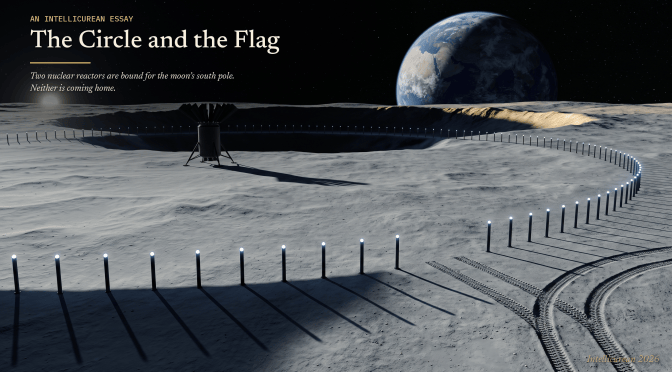
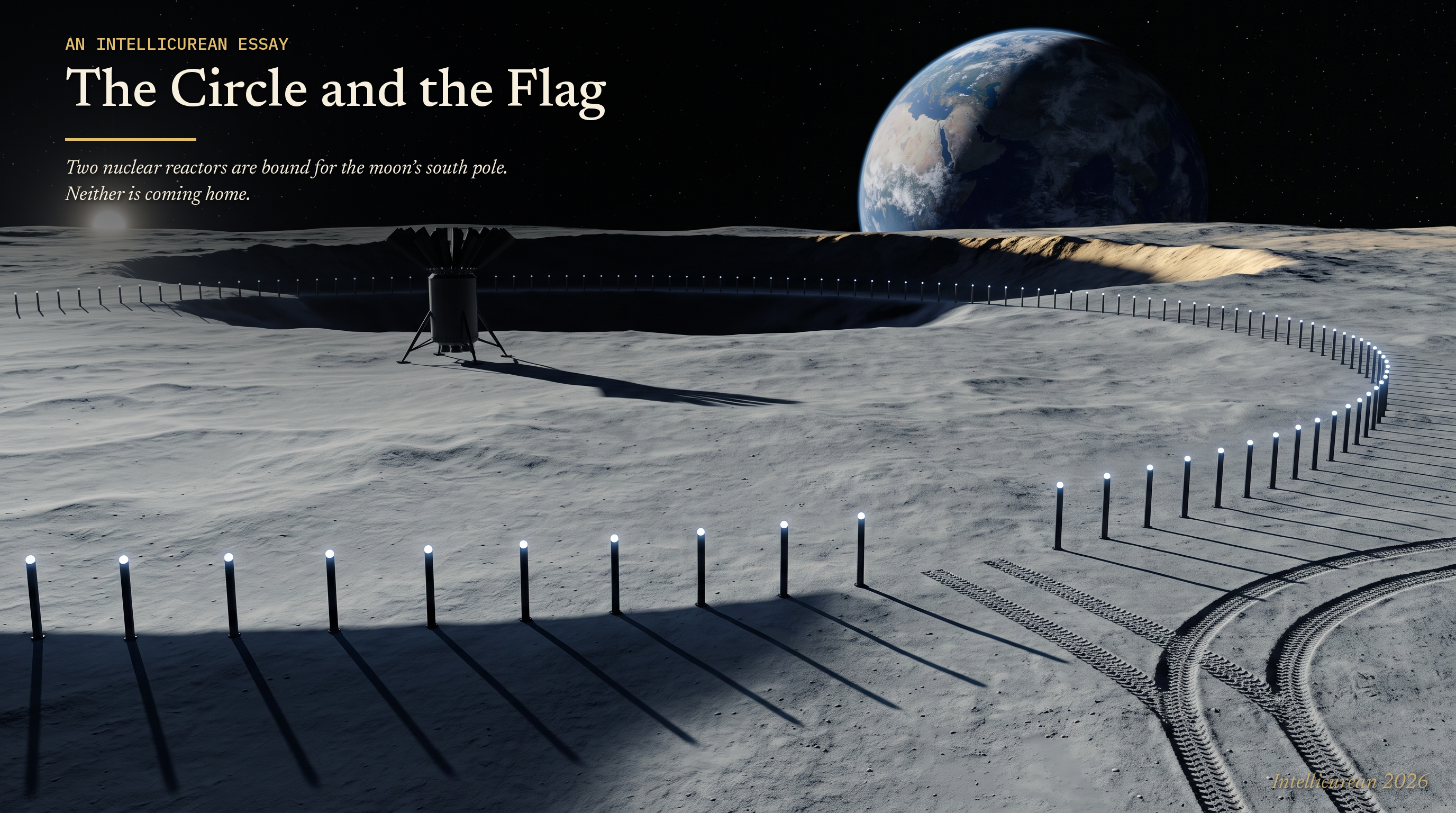
NASA wants a nuclear reactor running at the moon’s south pole by 2030. Russia promises one for China by 2036. When they stop, both say they will leave the radioactive material where it is. The treaty that governs the moon forbids planting a flag. It has nothing to say about drawing a circle.
The tracks come up to the line and turn away, made for the essay.
Why we’re pointing you there
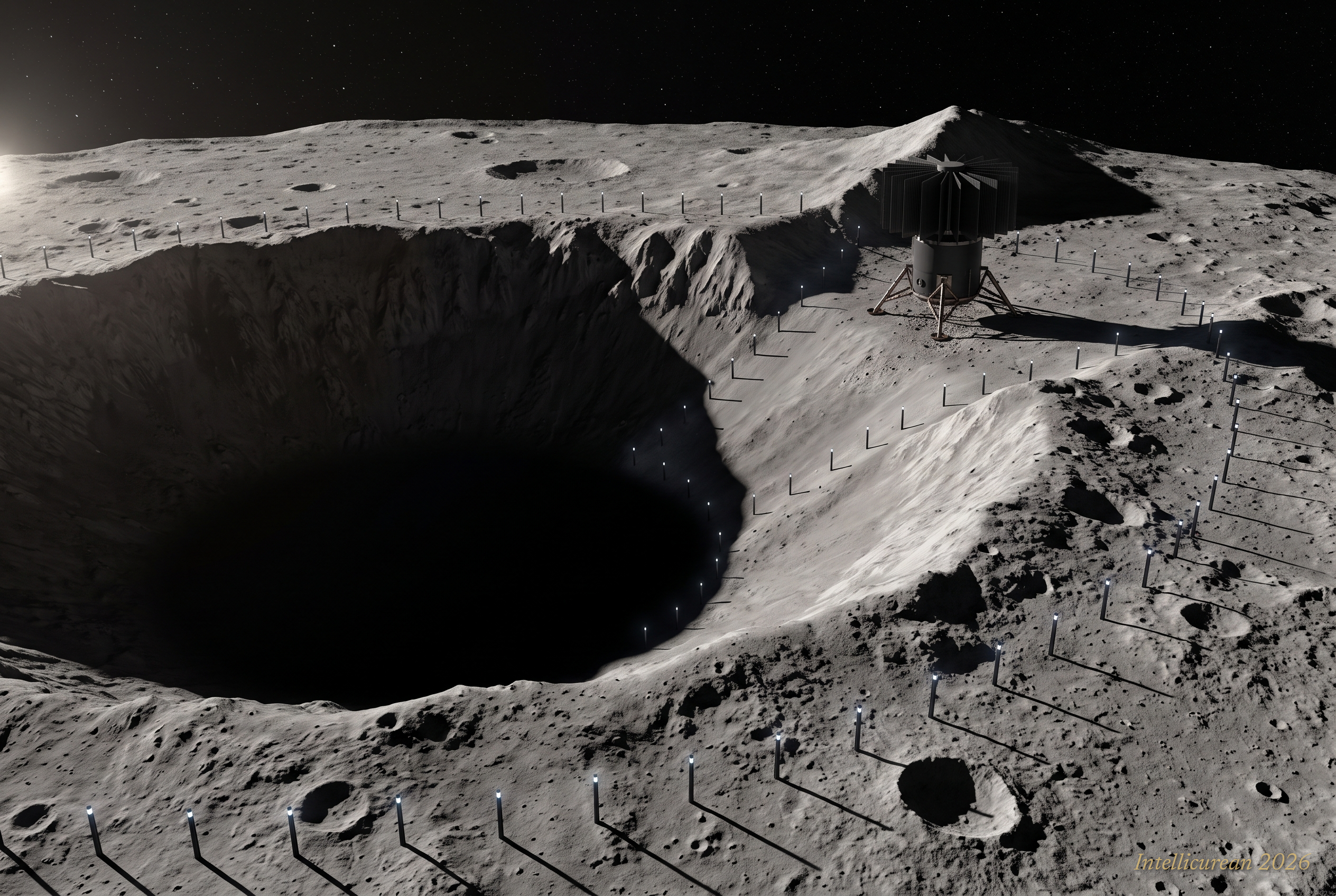
The essay starts from a report in the New York Times on the race to put reactors on the moon and asks a question the report doesn’t: what happens to the ground around a reactor that nobody intends to remove? A reactor at power can’t be approached without shielding, so it sits inside a no-go zone, and the few ridges near the pole with sunlight above and ice below are the only places anyone wants to go. The Outer Space Treaty forbids appropriating the moon by sovereignty, use or occupation. A zone takes nothing; it makes ground nobody’s. So the treaty doesn’t reach it.
What we liked most is that the essay gives the other side its full strength before answering it: the polar dark is real, a cold launch is safer, the Artemis Accords do promise zones will end, and radioactivity does decay. Then it goes to the one place on Earth that has lived with a reactor nobody could remove, and to a 1972 Soviet novel that imagined the shape of such a place fourteen years before it existed. It ends on a question rather than a verdict: whether a place no one can enter is owned, or only lost, and who gets to decide.
A zone on ground follows the ground, made for the essay.
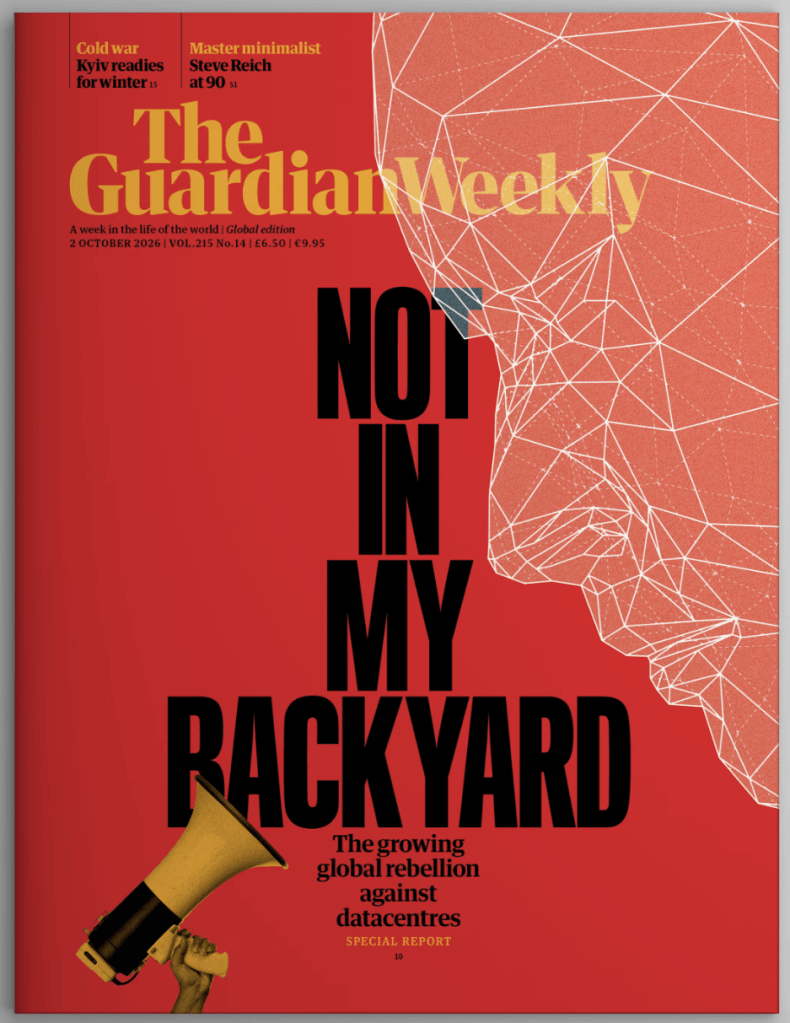
As the alarm bells sound ever louder about the potentially existential threat of breakneck AI development, people far removed from Silicon Valley debates about the future of the artificial intelligence revolution are voicing other more immediately tangible worries about the building of the vast datacentres that power these entities.
For this week’s cover story, economics and political writer Eduardo Porter, analyses why communities are pushing back against AI and the future that the big tech plutocrats want to create. These fears, based around environmental concerns over resource use and rapid societal change, are, he argues, far more complex than luddite attitudes or nimbyism.
It’s a position exemplified by reporting from two rural communities in India and the UK where vast datacentres are already under construction or being planned. As Hannah Ellis-Petersen and Aakash Hassan find out, the villagers of Tarluvada, in Andhra Pradesh, feel that government promises of a “golden age” that a hyperscale Google datacentre would bring them have been broken. Meanwhile, Sandra Laville meets protesters in Great Torrington, Devon, who sense that they are being kept in the dark about plans for an AI campus, one of Europe’s largest, in a Unesco-designated nature reserve.
Spotlight| Kyiv’s cold front is approaching Charlotte Higgins reports on how residents are preparing for winter, stocking up on food and determination, as Russia increases its attacks on energy infrastructure
Environment| What Nepal has taught Argentina What can the Patagonian town of El Chaltén at the foot of the Torre glacier do to avoid an event similar to the disaster in Nepal? María de los Ángeles Orfila finds out
Feature| Andy Burnham: a man with a plan As the first Labour conference with Andy Burnham as prime minister takes place, Hettie O’Brien finds out just how radical his policies could be
Opinion| Macron’s brave swansong In his final speech to the UN, Emmanuel Macron told the world how to stand up to Trump, says Steve Bloomfield
Culture| A minimalist at 90 As he prepares to celebrate a milestone birthday, Steve Reich tells Flora Willson how he developed his musical ideas and why he wants others to take up the baton of performing his works
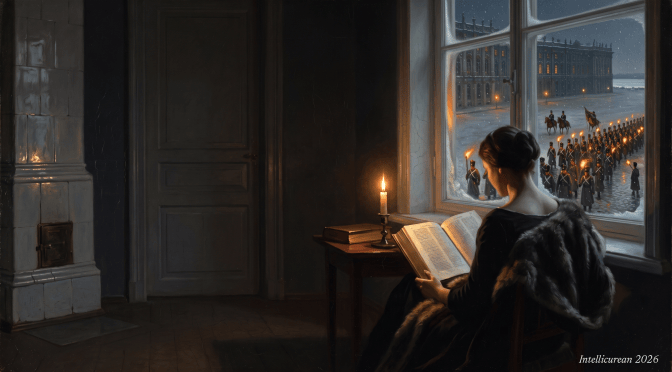
In the winter after her son was taken from her, the grand duchess who would become Catherine the Great read the Annals of Tacitus and wrote later that it caused “a singular revolution in my brain.” Seven years later she took a throne. What she learned from Tacitus was not how to seize one. It was who writes the record afterward.
In the winter after her son was taken from her, a grand duchess of twenty-five read the Annals and wrote later that it caused “a singular revolution in my brain.” Seven years later she took a throne. What she learned from Tacitus was not how to seize one. It was who writes the record afterward.
Catherine managed three documents about the coup of 1762: a manifesto that said she was compelled, a second that said her husband died of colic, and a long letter to a lover in Warsaw that told him everything, hour by hour, and told him colic too. A fourth document was found in her cabinet thirty-four years later: a note from Alexei Orlov confessing a drunken accident at Ropsha, which clears her of ordering the death, which survives only in a copy made in a quarter of an hour by a courtier of her son’s, and which the archive, when asked directly, cannot find.
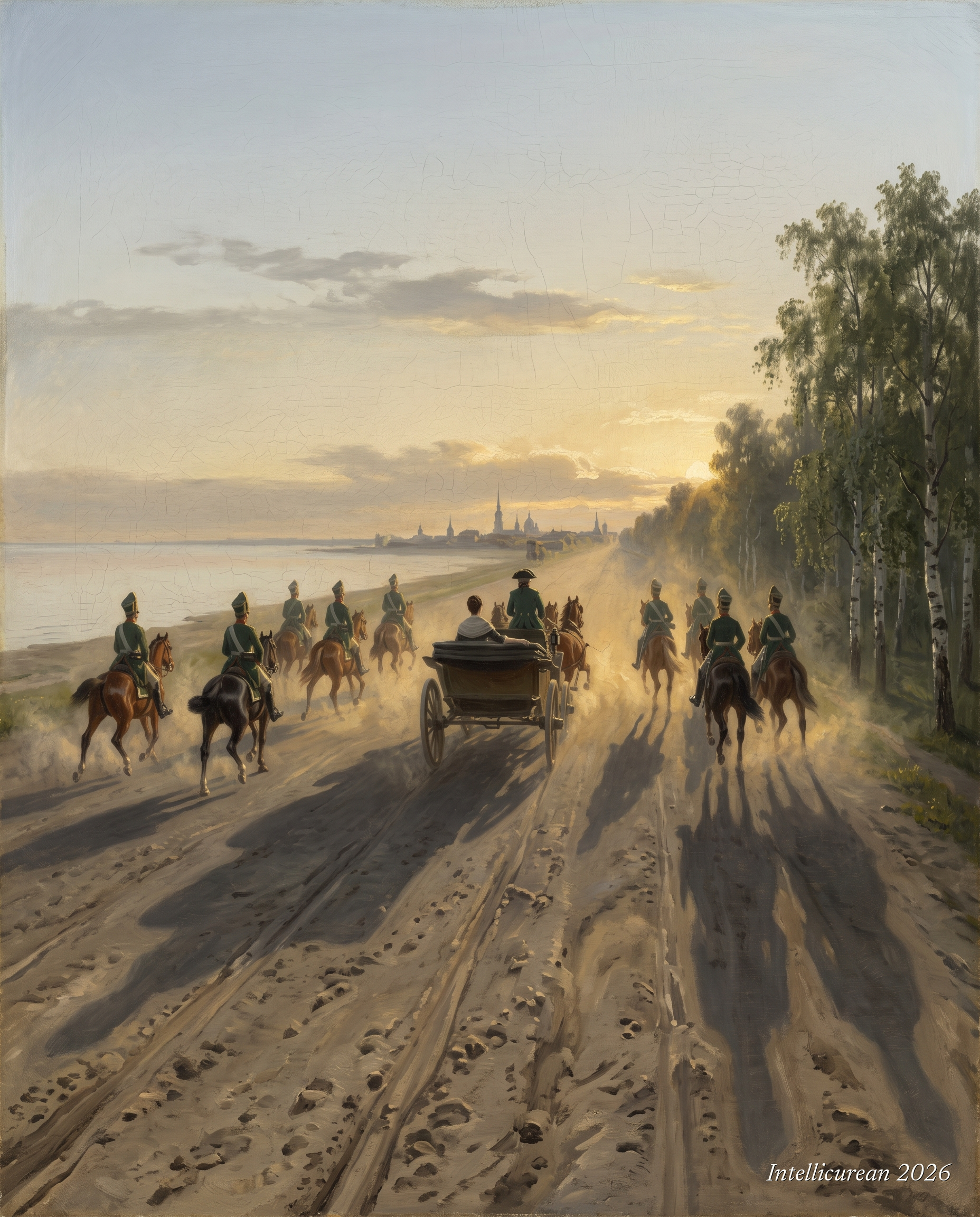
The Peterhof road, six in the morning, 28 June 1762, as the essay imagines it. A generated image, not a record.
Why we’re pointing you there
Michael Cummins reads the four documents the way Tacitus taught Catherine to read everything: as records made by parties with reasons. Herzen in 1858, Bain in 1902, a Russian archivist who counted the letters in the folder and found two, and a confession that got drunker with each printing. One guess, graded, about why she wrote her own account first; two readings of the forgery, if it is one; and an ending in a drawer that held either the proof of her innocence or nothing at all.
The reader of Tacitus was read, at the end, by Tacitus’s method. The method cannot tell which.
Friday, September 25, 2026 · The Missile Defense Debate
“
Geography no longer protects America. A shield over the homeland is not a provocation — it is a commitment to peace through strength.
The Thesis — Gen. Mike Guetlein, The Washington Post
THE ARGUMENT
In the Washington Post, Gen. Mike Guetlein — the U.S. Space Force general who directs Golden Dome for America — makes the program’s public case. For generations, he writes, Americans could believe that two vast oceans and friendly neighbors kept major conflict far from our shores; that era of quiet skies is over. His framing, consistent with his testimony to Congress: near-peer competitors, specifically China and Russia, are rapidly expanding and modernizing their strategic arsenals, while the old U.S. missile defense architecture was designed only for rogue-state threats. The shield — a network of sensors and interceptors against ballistic, hypersonic, and cruise missiles — is, in his words, a commitment to peace through strength and deterrence: raising the cost of attacking America until no adversary tries.
vs
THE ANSWER
Veteran nuclear-policy analyst Joe Cirincione, in the Bulletin of the Atomic Scientists, states the stability school’s counter-case: any missile defense stimulates an offensive arms race, because the cheapest answer to a shield is more spears — an adversary cannot assume the system will fail, so it must build enough missiles to overwhelm it. That, he notes, is precisely why Nixon and Kissinger paired the first offensive arms treaty with the ABM Treaty in 1972: you cannot limit offense without limiting defense. China’s missile buildup, on this view, is already partly a response to U.S. defenses — and analysts like Laura Grego add the arithmetic: intercepting even a handful of ICBMs could require tens of thousands of space-based interceptors. The shield, the critics conclude, doesn’t end the missile age; it accelerates it.
iC
THE INTELLITAKE
Both sides claim the same goal — deterrence — and prescribe opposites, because they disagree about what an adversary sees when it looks at a shield. Guetlein sees a wall that makes attack futile; Cirincione sees a promise that America means to strike first and block the reply, which makes an adversary build until the wall is irrelevant. This is not a new argument: it is the SDI debate of 1983 and the ABM debate of 1972, rerun with hypersonics and orbital interceptors. What is new is the author — not a columnist but the program’s own director, making his case to the public in a newspaper, which is itself a datum: shields need believers to deter. The unresolved question is the one the 1972 negotiators answered one way and this administration answers the other: is defense the end of the arms race, or its engine?
TODAY’S PROVOCATION
If a perfect shield existed, would you trust your own government more — knowing it could strike without fear of reply?
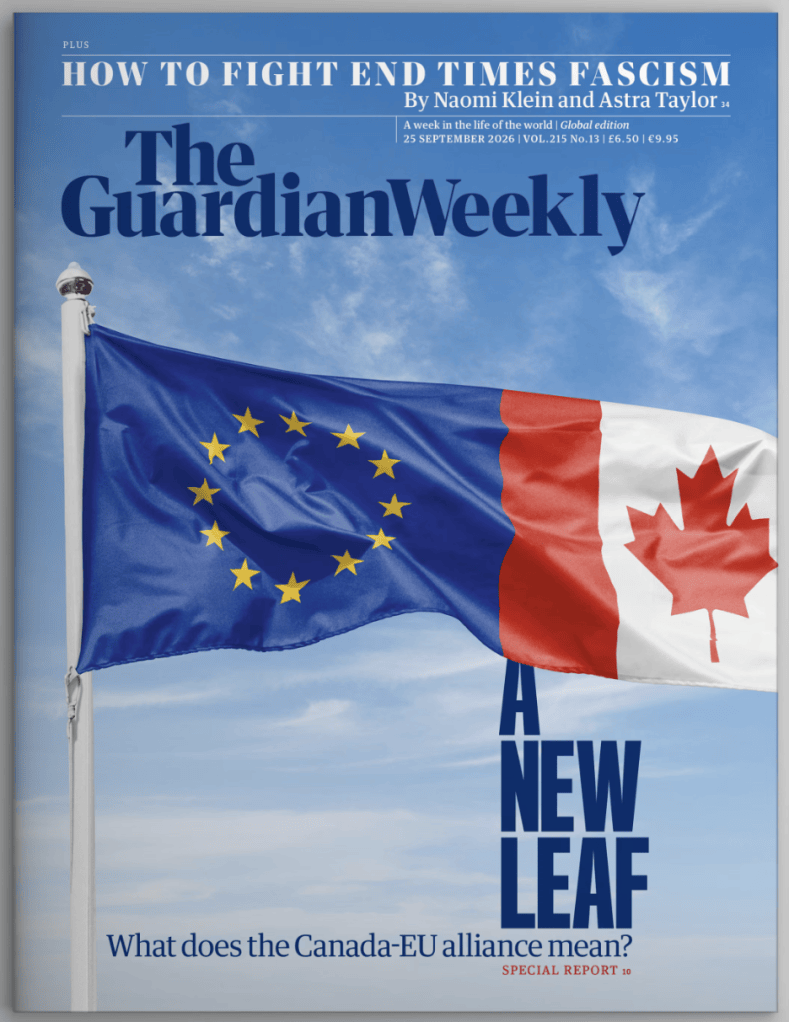
The European Commission president, Ursula von der Leyen, last week extended an unprecedented offer to Canada, inviting it to become the EU’s first “associate member”.
For our big story this week, Brussels correspondent Jennifer Rankin explores what the proposed alliance might mean. While there is a lot of common ground for the two parties, she writes, their agreement raises many questions and is clouded in uncertainty.
Meanwhile, senior correspondent Lisa O’Carroll examines the possible implications for the UK – asking whether it offers a blueprint for Britain, or a reminder it is out in the cold.
Then, former White House speechwriter Ted Widmer says Canadian prime minister Mark Carney’s remarks before the European parliament set out what a new west might look like, without its most powerful member – the US.
Spotlight| Yemeni families’ flight Fierce fighting has forced people to abandon their homes, leaving everything behind to seek shelter in refugee camps. Nasser Al-Sakkaf reports from Taiz
Science| ‘A map is never neutral’ The cartographers who took on centuries of western bias with the new Equal Earth projection speak to Oliver Holmes,Ana Lucía González Paz and Pablo Gutiérrez about their alternative to the 16th-century Mercator display
Feature| How to fight end times fascism An unholy alliance is working toward an apocalyptic future from which only a chosen few will emerge unscathed. It’s becoming clear how we stop them, say Naomi Klein and Astra Taylor
Opinion| This Israeli election could be the country’s last Spend time on the ground and you see how high the stakes are for next month’s contest – for Israelis and Palestinians alike, writes Jonathan Freedland
Culture| Present and correct Author Jonathan Franzen talks to Sophie McBain about a new TV adaptation of his bestseller The Corrections, the future of reading and why creating new work is “horrible”