We know that this monster El Niño will bring floods, droughts, cyclones and wildfires, but some governments aren’t putting in the necessary resources to prepare for disaster
This El Niño is forecast to end around June next year after smashing all records, but its impacts could persist indefinitely in some parts of the world By Michael Le Page
France has been rocked by huge youth protests in recent weeks over the state of high school education, bringing tens of thousands of people on to the streets.
The movement began with outrage over shoddy school conditions in a Paris banlieue, but has spread across the country as pupils voice their anger about a system they say is failing them.
For this week’s big story, Paris correspondent Angelique Chrisafis hears from protesters who feel abandoned by the French state. Angelique also looks at the evidence on students’ complaints of dilapidated buildings, teacher shortages, inequality and low investment.
Then, Alexander Hurst says fixing the broken education system should be just the start for an aloof political class if it is to finally pay attention to a generation who feel neglected.
Spotlight| The future of the death penalty Donald Trump has used the full might of the presidency to supercharge executions but, writes Ed Pilkington, an avalanche of mishaps has put the system’s flaws in the spotlight
Science| Sweet time A flurry of recent studies suggests that spending the first 1,000 days of life under sugar rationing may have left traces on people’s health more than seven decades later. Linda Geddes reports
Feature| The art of dismantling a second world war bomb British bomb disposal squads are being called to more unexploded devices than ever – and they risk their lives each time. Samira Shackle recounts the challenge they faced when two bombs were discovered on the same day
Opinion| A new era of instability The latest attack by Houthi rebels on Saudi Arabia may prove to be more calamitous for the region than the world imagines, says Nesrine Malik
Culture| Hungry like the werewolf Duran Duran talk to Alexis Petridis about 80s excess, tabloid scrutiny and their Halloween glow-up
In the early 2000s, geneticists Helen Hobbs and Jonathan Cohen at the University of Texas Southwestern Medical Center launched an ambitious effort to investigate cardiovascular health in Dallas County. Their study was unusual for the time. Rather than largely focusing on people of European ancestry, the Dallas Heart Study deliberately recruited a diverse population that reflected the region’s demographics.
QUICK TAKE
Rare genetic changes in a gene called PCSK9 help control low-density lipoprotein (LDL) cholesterol, the “bad” cholesterol linked to heart disease.
People who naturally make less of the PCSK9 protein have much lower LDL levels, pointing researchers toward new possibilities for lowering cholesterol.
That insight led to a new class of cholesterol-lowering drugs and showed how studying diverse populations can uncover important clues about disease.
I spent much of my childhood in Colorado, which means that I, like millions of others living in the American West, grew up hearing warnings about the dangers of plague. People often find it shocking to learn that Yersinia pestis, the bacterium discovered in 1894 that is believed to have caused the mid-14th-century Black Death and other plague pandemics, is still around and dangerous, but that is one of many misperceptions about plague that need correcting. Plague’s multiple pandemics were not limited to the Black Death nor to Europe. And it is not a disease that disappears simply because no human cases are being reported at epidemic levels. Plague is not a thing of the past, and infections most definitely occur to this day.
QUICK TAKE
For centuries, our understanding of plague was riddled with assumptions based on a few historical accounts and data from modern plague victims.
Advances in genomics and bioarcheology now allow us to tie historical plague pandemics to human remains and even reconstruct the full plague family tree.
These data tell a new, broader story in which plague arrives earlier, stays later, and lurks in rural animal reservoirs before spilling over into human populations.
Seeking and evaluating explanations can shape the very process of learning. Just like tasting the soup as you’re cooking can shift the final product toward a closer approximation of soupy perfection, explaining as you learn can change the course of learning itself, pushing you to find a closer approximation of a truly great explanation: one that covers all the relevant observations in the simplest way possible. But how does that work?
QUICK TAKE
The process of explaining is a powerful learning tool.From a young age, humans ask “why”; answering that question can reveal deeper meanings and reveal hidden patterns.
Explaining can unlock abstraction, a complex thought process that allows people to generalize from specific examples to identify common themes.
The need to know why can unlock learning, but it can also drive some people to latch on to patterns that do not exist, such as conspiracy theories.
Shifts in blood proteins could point to ways to fight menopause “brain fog” and prevent later dementia
Women are more likely than men to develop dementia, and not just because they tend to live longer. One reason may be menopause, the time in midlife when sex hormones drop and menstruation stops—and which some researchers are coming to see as a stress test for the brain.
Menopause “affects brain health, for sure,” says neurologist Riley Bove of the University of California (UC) San Francisco, who studies its impacts on multiple sclerosis and other neurological disorders. She and others want to protect the brain during and after this transition—but that means identifying just how menopause puts the brain at risk.
A study published last week in Nature Medicinehas found clues in the blood of women in their 40s and 50s: proteins related to brain function, inflammation, and neurodegenerative disease that are elevated during menopause. Other ongoing studies are following groups of women over time—including during the lesser studied perimenopausal stage, from just before menstruation ends to 1 year after—to reveal processes leading to short- and long-term cognitive problems.
With fewer than 30 days until the US midterm elections, Donald Trump seems determined to still be centre stage despite poll fears that after 3 November he may end up a lame-duck president as a Democratic blue wave sweeps the country. Our Washington bureau chief, David Smith, has been watching how the president is playing to Republican voters at the start of a blitz of cross-country rallies. It’s, at best, a mixed picture.
As David reports, Trump’s self-belief and message to voters to “pretend” his name is on the ballot reveal a man out of touch with ordinary Americans’ worries about the cost of living and whose promises that the war with Iran will soon be over ring ever more hollow. And then there are the candidates, more of whom are shying away from their earlier allegiances to a president whose approval ratings continue to slide.
Spotlight| An education crisis in France As school and university protests intensify, Paris correspondent Angelique Chrisafis finds out why students feel the government is ignoring their complaints about the state of education
Spotlight| Greendivision and diversion Peter Walker reports on the English and Welsh Green party’s annual conference in which a motion equating Zionism with racism was passed, and analyses how this reveals weaknesses in the way the party is run
Feature| The big business of porn Why not analyse the porn industry just like any journalist would the oil business? That was the premise behind Patricia Nilsson’s new book. An approach that, as Amelia Gentleman finds out, yields new insights into how pornography’s imperatives have seeped into all our online lives
Opinion| Putin won’t bomb Ukraine into submission Kyiv may now be under almost constant attack but, says Rajan Menon, history shows that bombing doesn’t crush morale
Culture| There’s beauty in bits and pieces A novel exhibition in Florence puts broken sculptures on display and, as Philip Oltermann discovers, reveals their profound allure
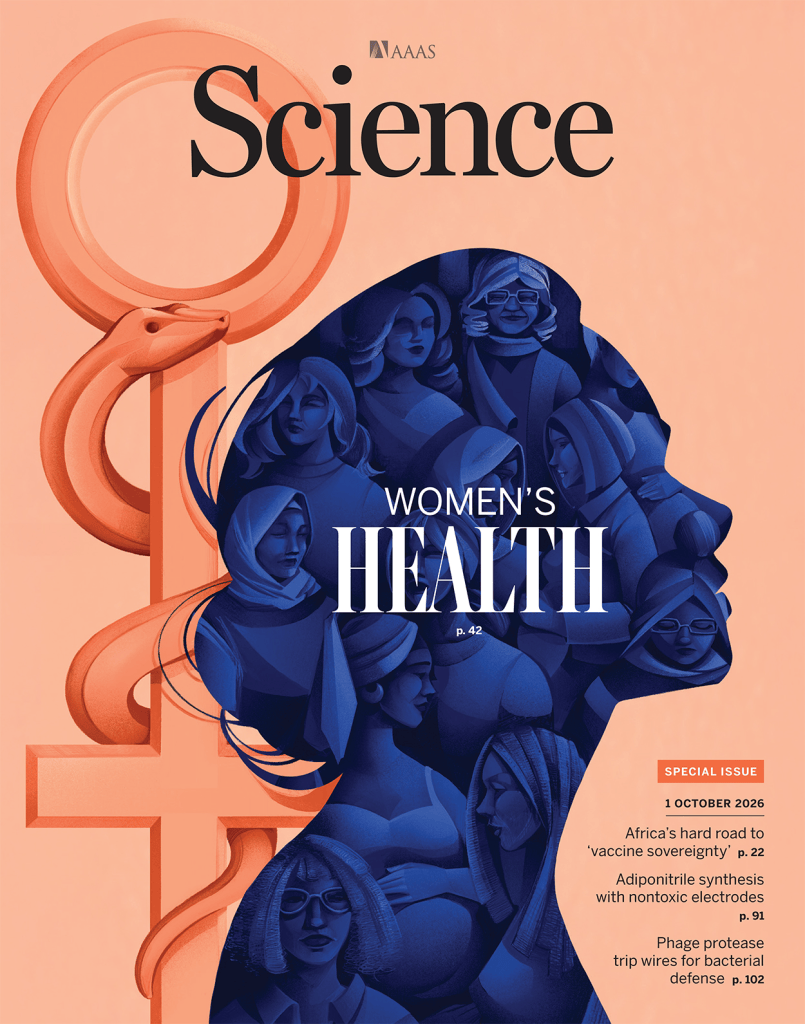
Historically, most human studies have involved male participants, and their findings were assumed to apply to women and children as well. Meanwhile, women’s health typically came up in the context of reproduction and childbearing, if at all. However, biomedical science has come a long way over the years, and it has become increasingly clear that there are sex-dependent differences in many diseases that do not involve reproduction and that occur at all ages. Across all areas of women’s health, including both reproductive and nonreproductive conditions, much remains to be learned about the underlying biology, effects of hormones and genetics, and potential therapeutic interventions.
Sex differences have traditionally been attributed to gonadal hormones, but accumulating evidence shows that sex chromosomes exert distinct, cell-autonomous effects on health, aging, and disease. XX and XY complements alter gene dosage, epigenetic programming, immune signaling, metabolism, and cellular stress responses, which shape aging and disease trajectories in women and men. This Review integrates mechanistic advances in sex chromosome biology—including escape from X chromosome inactivation, X reactivation, parent-of-X-origin, X-skew, X- and Y-linked gene functions, and Y loss—with aging, neurologic disease, immunity, cancer, and cardiometabolic disease. We highlight insights from mouse models, human studies, and emerging technologies that disentangle hormone-driven effects from chromosome-mediated effects and discuss translational implications for diagnostics, biomarkers, therapeutics, and clinical trial design, emphasizing the integration of sex chromosome biology into precision medicine.
Reframing menopause and menopause hormone therapy as opportunities for healthy aging
Menopause is an important biological transition with up to 72 symptoms that shapes aging trajectories across organs and encompasses ~40% of the female lifespan. Although menopause awareness is increasing, research on strategies for menopause symptom management and optimizing health in the postmenopausal period is lacking. This Review highlights that menopause characteristics, such as type, timing, and symptom burden, influence health outcomes and later-life disease risk. Similarly, menopause hormone therapy comes in >200 varieties that differ by dose, formulation of estrogens and progestogens, and timing, each with their own distinct risk-benefit profiles. These distinctions are often missed in the literature but have considerable repercussions for outcomes. Optimized menopause care necessitates a precision medicine approach that considers menopause symptoms, genetics, and previous hormone exposures.
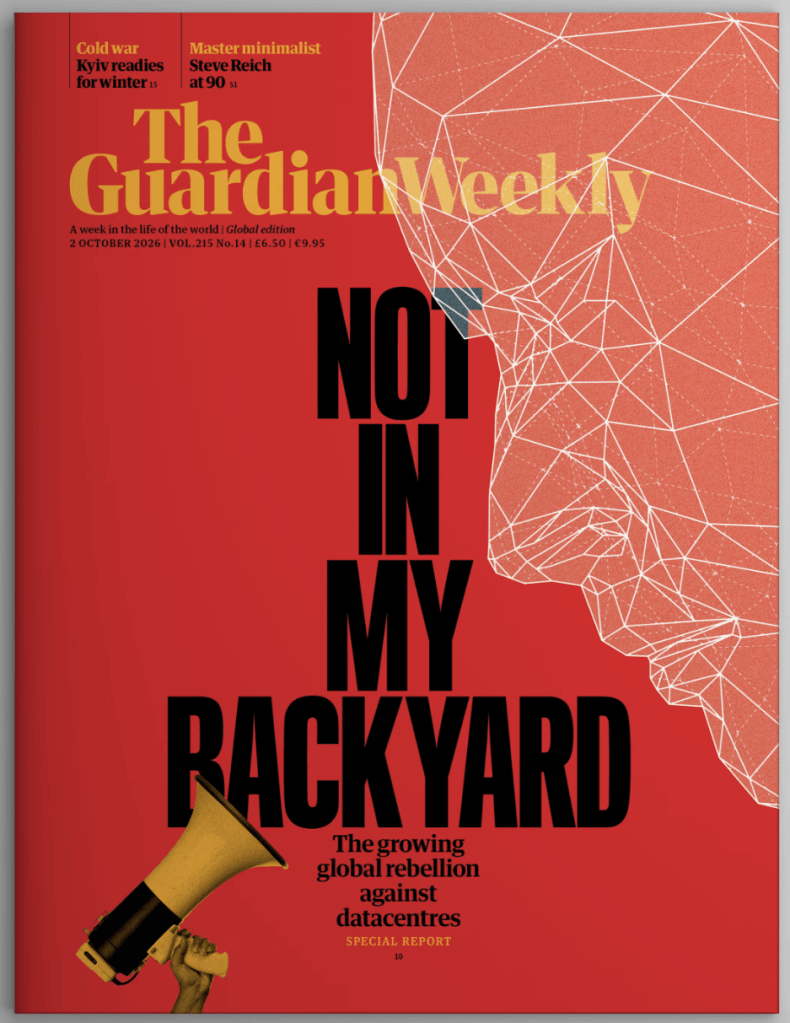
As the alarm bells sound ever louder about the potentially existential threat of breakneck AI development, people far removed from Silicon Valley debates about the future of the artificial intelligence revolution are voicing other more immediately tangible worries about the building of the vast datacentres that power these entities.
For this week’s cover story, economics and political writer Eduardo Porter, analyses why communities are pushing back against AI and the future that the big tech plutocrats want to create. These fears, based around environmental concerns over resource use and rapid societal change, are, he argues, far more complex than luddite attitudes or nimbyism.
It’s a position exemplified by reporting from two rural communities in India and the UK where vast datacentres are already under construction or being planned. As Hannah Ellis-Petersen and Aakash Hassan find out, the villagers of Tarluvada, in Andhra Pradesh, feel that government promises of a “golden age” that a hyperscale Google datacentre would bring them have been broken. Meanwhile, Sandra Laville meets protesters in Great Torrington, Devon, who sense that they are being kept in the dark about plans for an AI campus, one of Europe’s largest, in a Unesco-designated nature reserve.
Spotlight| Kyiv’s cold front is approaching Charlotte Higgins reports on how residents are preparing for winter, stocking up on food and determination, as Russia increases its attacks on energy infrastructure
Environment| What Nepal has taught Argentina What can the Patagonian town of El Chaltén at the foot of the Torre glacier do to avoid an event similar to the disaster in Nepal? María de los Ángeles Orfila finds out
Feature| Andy Burnham: a man with a plan As the first Labour conference with Andy Burnham as prime minister takes place, Hettie O’Brien finds out just how radical his policies could be
Opinion| Macron’s brave swansong In his final speech to the UN, Emmanuel Macron told the world how to stand up to Trump, says Steve Bloomfield
Culture| A minimalist at 90 As he prepares to celebrate a milestone birthday, Steve Reich tells Flora Willson how he developed his musical ideas and why he wants others to take up the baton of performing his works
News, Views and Reviews For The Intellectually Curious