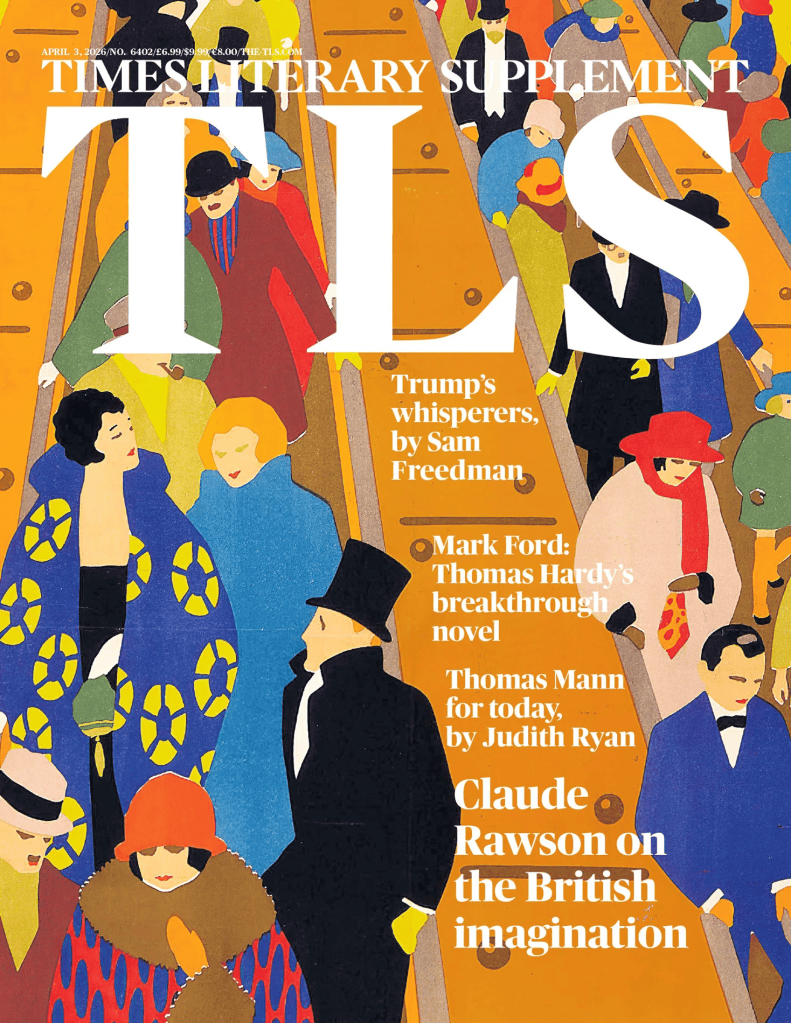
The argument of Peter Watson’s hugely ambitious The British Imagination: A history of ideas from Elizabeth I to Elizabeth II is that “The essential arc of British history – intellectual and creative history, just as much as political, economic and military history – is of a small, indeed tiny, country sequestered on the north-west coast of Europe that over the centuries would forge the largest and most unlikely empire the world has seen”. It may seem odd to be reading this in the present depressed state of the nation, although Watson stresses from the outset that the concept of “the British imagination” embraces its hospitality to foreign influences and eventually to the power of a wider “Anglosphere”.
English virtue battles the pagan
The genesis of Far from the Madding Crowd
The texture of etcetera
What smartphones can’t record
Freeing Thomas Mann
Modern English translations that do justice to the work
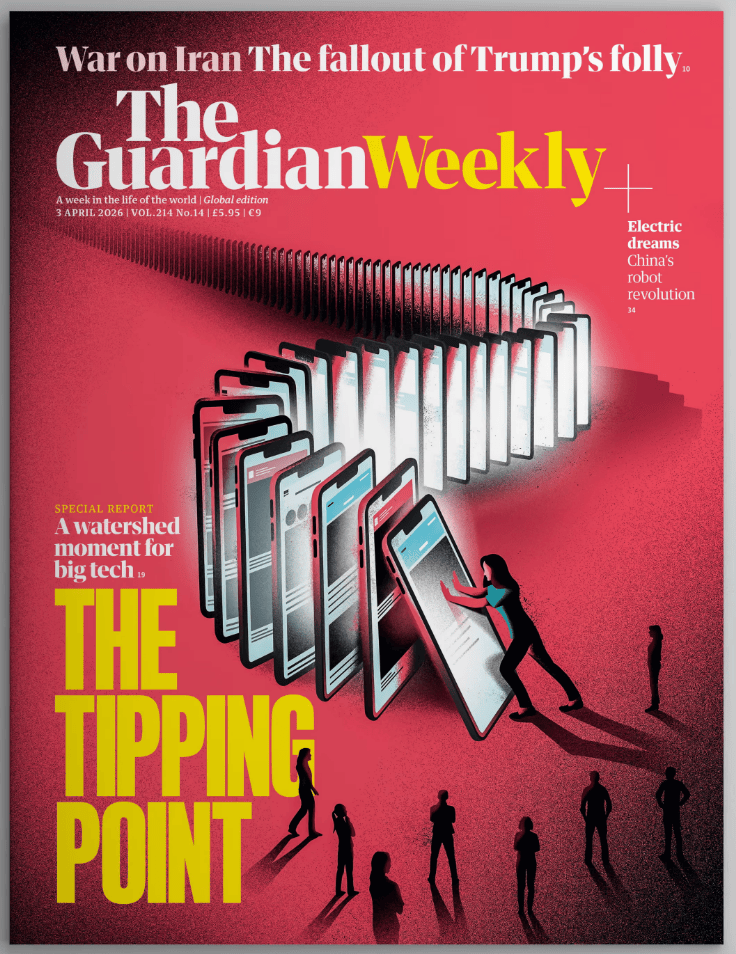
In a landmark case, a California jury last week found social media companies Meta and YouTube liable for deliberately designing addictive products. The ruling came the day after Meta, which owns Facebook and Instagram, was ordered to pay $375m after a jury in a separate trial in New Mexico found it misled consumers about the safety of its platforms.
Meta, YouTube, Snapchat and TikTok are facing thousands of similar lawsuits in US courts, while governments around the world are starting to introduce measures to curb social media’s grip on children’s attention.
Guardian technology editors Dan Milmo and Robert Booth assess whether what has been called a “big tobacco” moment for the industry will lead to significant change. And in our opinion section, Jonathan Freedland argues that the court verdicts must be just the start of a global fightback.
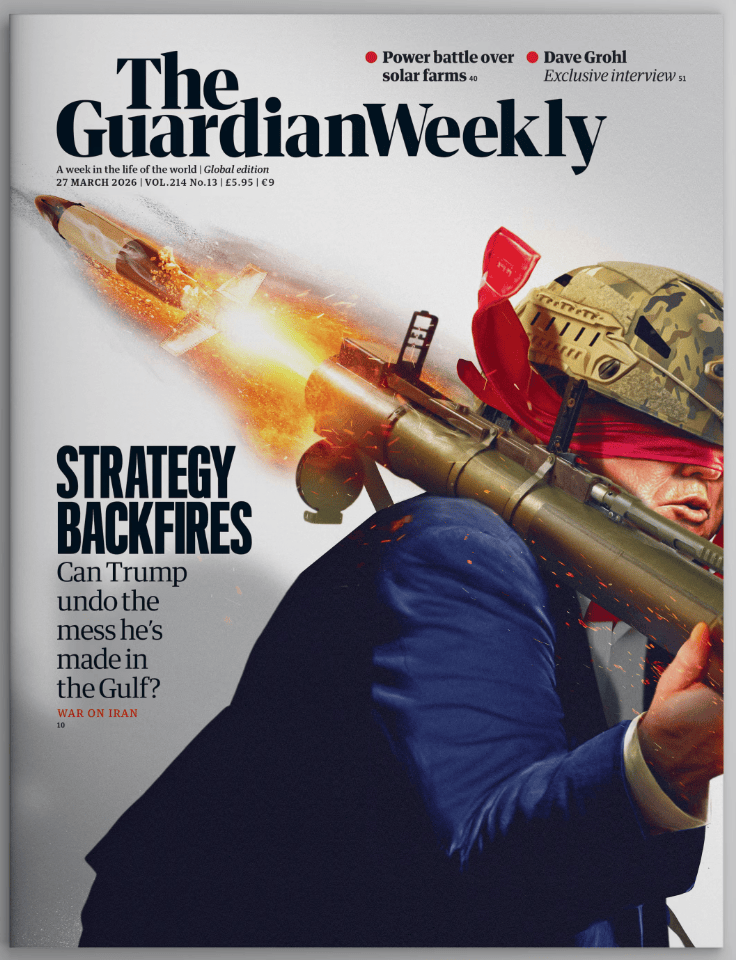
The big story | A war of regression Weeks into a war that was going to take days and has cost billions, Donald Trump has bombed the US into a worse position with Iran, writes Patrick Wintour
Science | ‘On the shoulders of giants’ Plant specimens and teaching materials that inspired Charles Darwin have been unearthed and will be used for the first time to teach contemporary students about botany, Donna Ferguson reports
Feature | Circuit training After touring 11 Chinese companies making humanoid robots, Chang Che asks: just how close are we to a robotic future?
Opinion | Labour needs a thinker Ed Miliband’s stock is rising in a party in need of an old-style intellectual heavyweight, argues Gaby Hinsliff
Culture | Gimme shelter Catherine Slessor visits Henry Moore’s former countryside home Hoglands, now home to studios and a vast sculpture garden, to learn about a new exhibition of the drawings he made as a war artist, capturing people as they took sanctuary from the blitz
The subject of this excellent biography wished to be remembered as Jan ‘Empire’ Morris, author of the great imperial trilogy Pax Britannica, but she correctly predicted that the valedictory headlines would read ‘Sex Change Author Dies’. As James Morris, he had won early fame as the Times reporter who broke the news of the conquest of Everest on Coronation Day, 1953. And Morris’s real distinction, as Sara Wheeler affirms, was as a travel writer. It was a term she loathed. (Wheeler follows Morris’s own lead in using male pronouns for the author’s early life and female ones after 1970, when transition was nearing completion.) But as a young man James had immersed…
Stalin’s Apostles: The Cambridge Five and the Making of the Soviet Empire By Antonia Senior
It may be thought that the notorious Cambridge spies – the majority of them members of the Apostles, that university’s secretive, elitist society – had been written out. But, as Stalin’s Apostles makes clear, such is not the case. Most of the books on what the KGB later called their ‘Magnificent Five’ – Kim Philby, Guy Burgess, Donald Maclean, Anthony Blunt and John Cairncross – have dwelt …
We Know You Can Pay a Million: Inside the Dark Economy of Hacking and Ransomware By Anja Shortland
Not so long ago, stories about powerful computer viruses apparently spreading around the world and threatening to bring modern life to a halt regularly filled the news. These days, cybercrime rarely makes the headlines, and most of us have become inured to warnings that our passwords have been found in a data leak. Yet ..
The present mess has roots in two entangled, defining White House projects: DOGE and the mind-bending expansion of ICE. By Benjamin Wallace-Wells
Trump’s War Hits the Chaiwalas
Restrictions and attacks in the Strait of Hormuz have made fuel prices rocket. Just ask the roadside tea venders in New Delhi. By Nathan Heller
He Helped Stop Iran from Getting the Bomb
A former C.I.A. officer says that he recruited scientists as part of the United States’ effort to disrupt Iran’s nuclear program. By David D. Kirkpatrick
THE NEW YORK TIMES MAGAZINE: The 3.29.26 Issue features Blair Braverman on leaving her life of dog sled racing; Maggie Shipstead on bringing her mother’s ashes to Antarctica; Kevin Fedarko on the Grand Canyon’s North Rim; Taffy Brodesser-Akner on teaching her son to take a vacation; and more.
It’s blunt instead of vague, brash instead of evasive, bold instead of cautious. And yet the word obfuscates as much as old defense jargon. By Nitsuh Abebe
Forty-three current and former C.D.C. employees on the changes they say are replacing science with ideology — and making Americans more vulnerable. By Jeneen Interlandi
The Epstein Scandal Has Reached the Far-Right Meme Stage
Once the Epstein files transitioned from an abstract concept to a real-world event, it became more difficult for fringe conspiracy theorists to control the story.
Brinkmanship, the ability to take countries to the edge of conflict, was a staple of cold war diplomacy. The remnants of that finely balanced standoff, bound by a rules-based order and spheres of influence, has given way to a world in freefall; to an ever-widening war in the Gulf where the aims are as unclear as the endpoint.
It is approaching a month since the US and Israel launched their attacks on Iran, arguing they were acting to remove the country’s nuclear threat, destroy its ballistic missile capability and free the populace of a tyrannical theocratic regime. Yet it seems it is these civilians and neighbouring Gulf countries who are bearing the brunt of the campaign while the Iranian regime’s willingness to escalate the war seems undimmed.
Spotlight | The ‘anyone but’ election Pippa Crerar looks ahead to local elections in the UK, where voters seem more concerned with who they want to keep out of political office than who they vote in
Science | Not-so silent nights Can a “vacuum cleaner turned the other way” become a popular solution to snoring disorders? Natasha May explores the rise of Cpap machines
Feature | Gamifying government Steeped in gaming and rightwing culture, Elon Musk’s Doge team set out to defeat the enemy of the United States: its people, write Ben Tarnoff and Quinn Slobodian
Opinion | Collateral damage Attacks on synagogues and Jewish shops in the UK, Europe and the US don’t hurt Benjamin Netanyahu, says Jonathan Freedland, they just hurt ordinary Jews
Culture | Rock return “Validation was an insatiable monster”: Dave Grohl talks to Ben Beaumont-Thomas about Foo Fighters, life after his infidelity and grief for bandmate Taylor Hawkins