
Category Archives: Intellicurean.com

ABOVE ALL PRICE

Intellicurean Essays on Intellicurious

A hospital administrator has a million dollars and a five-year-old who needs a new liver. When psychologists asked people to judge him, it mattered not only what he chose but how long he took to choose it.
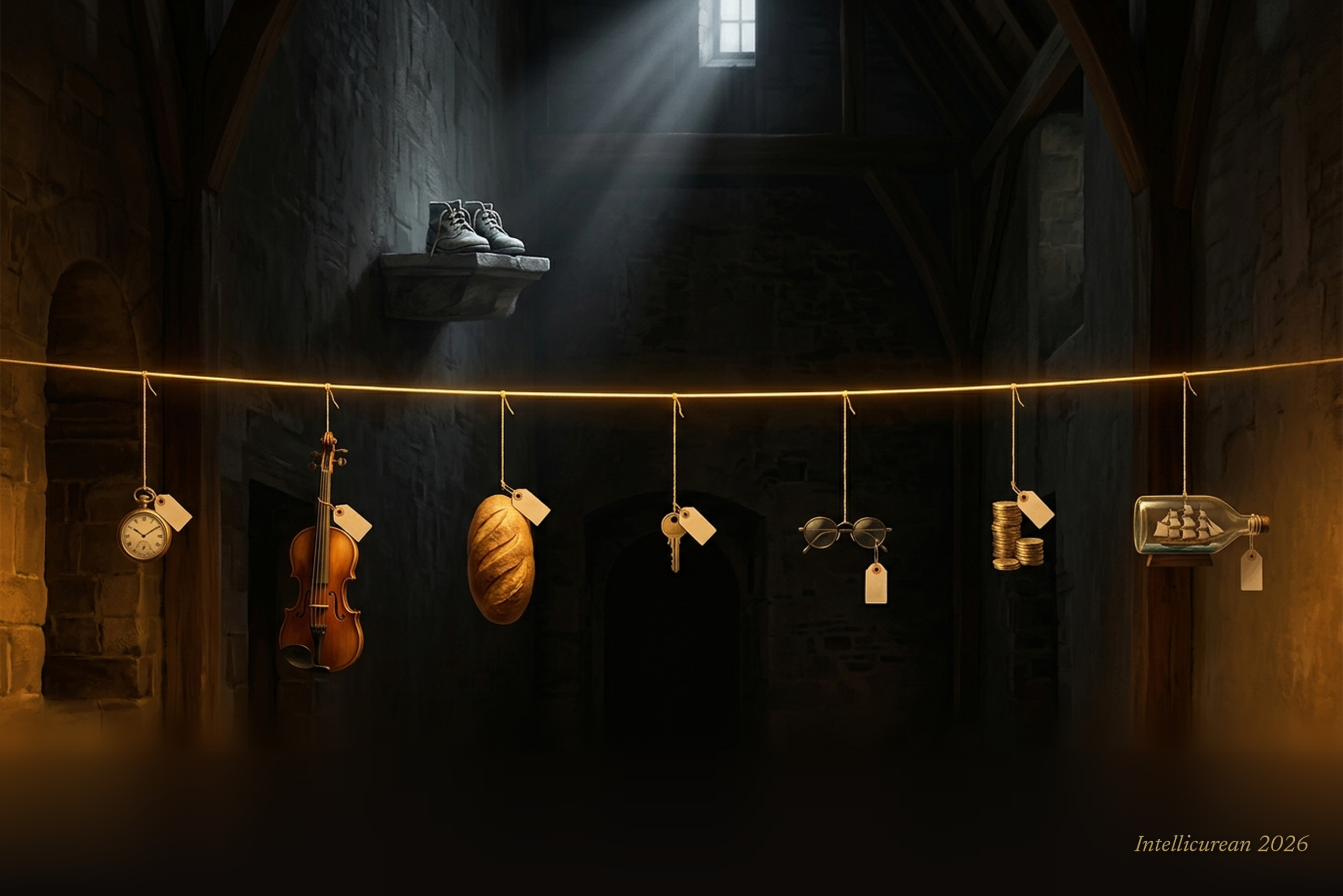
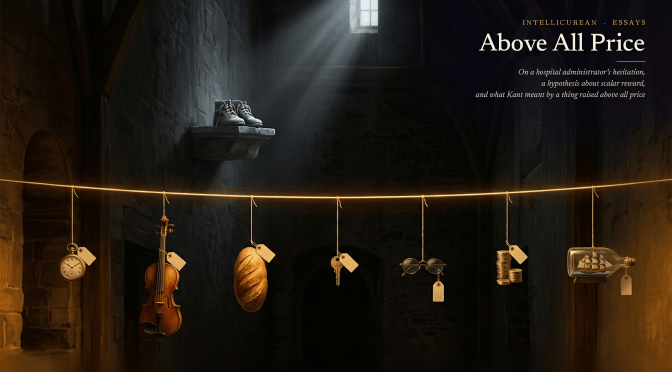
Header image for Above All Price, an Intellicurean essay

Intellicurean · Essays

Above All Price

On a hospital administrator’s hesitation, a hypothesis about scalar reward, and what Kant meant by a thing raised above all price

What has a price, and what is raised above it, made for the essay.

Why we’re pointing you there

The administrator, Robert, comes from Philip Tetlock’s research on “taboo trade-offs,” and his hesitation is where Above All Price begins. From there the essay sets a modern hypothesis against an old idea and lets a theorem judge between them. Richard Sutton’s reward hypothesis holds that every goal can be understood as maximizing a single number. Kant held that some things have no price at all, only a dignity “raised above all price.” A 2023 theorem shows that a single number cannot represent that kind of ranking. The essay then gives the other side its full due: the life-valuations that governments use in the open, precisely so that lives are not traded away in secret.

What we liked most is that it refuses the easy version of either side. It takes the arithmetic seriously, takes the numbers that keep public decisions honest seriously, and then asks a question neither can answer for itself: when a system is built to obey a number, who decides what the number is for?
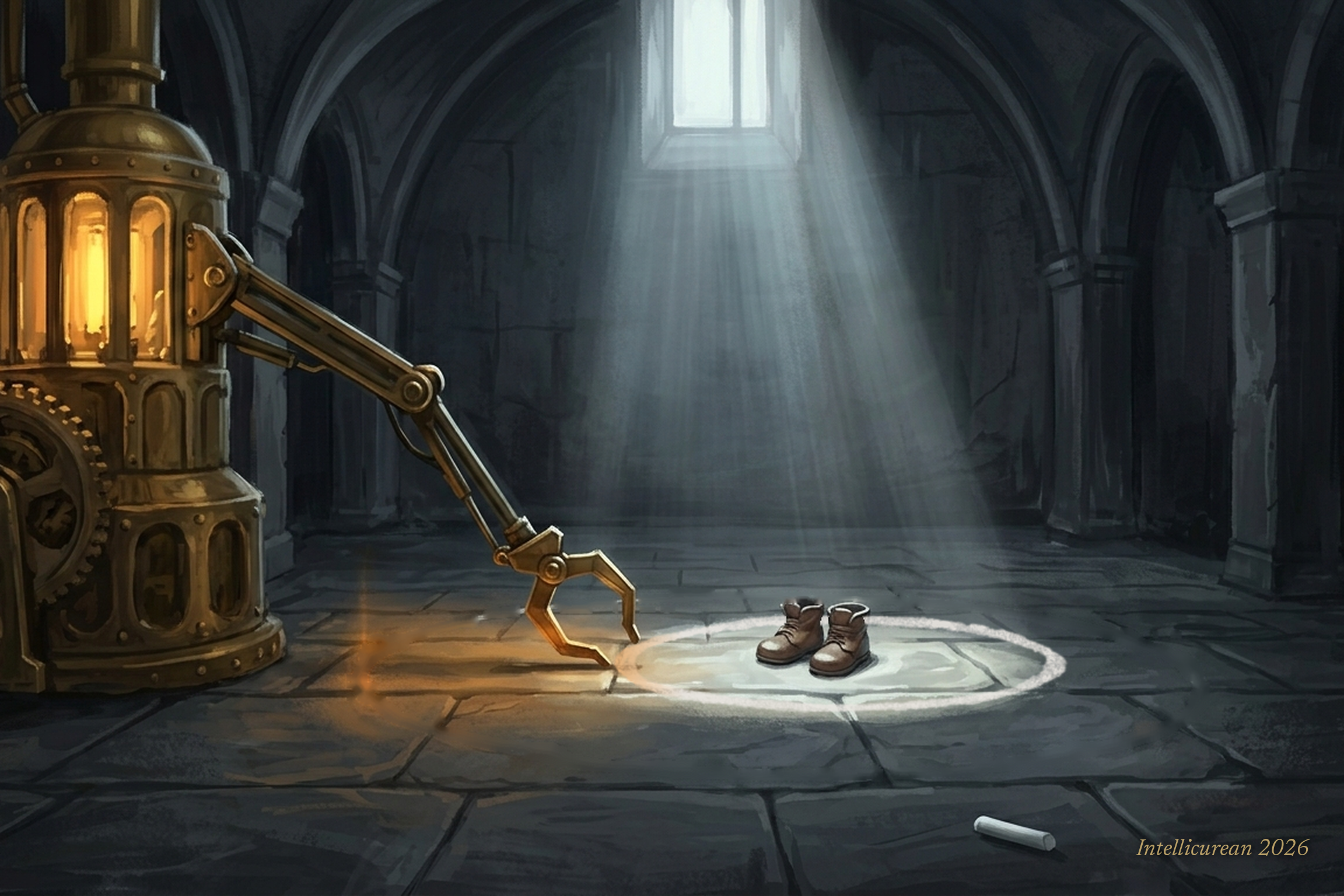
In a stone vault, a brass machine's mechanical arm reaches for a small pair of child's boots and stops at a hand-drawn chalk circle around them. A worn stub of chalk lies on the floor nearby.
A line the machine did not draw, made for the essay.

Read the full essay at Intellicurean →

Essays & Reviews for the Intellectually Curious
A FARM CALLED THE MANOR

Intellicurean Essays on Intellicurious

A Cotswold manor is for sale at £15 million, honey-coloured and perfectly symmetrical. Two centuries ago three sisters held it, in the very decade Jane Austen was writing about sisters who could hold no land.

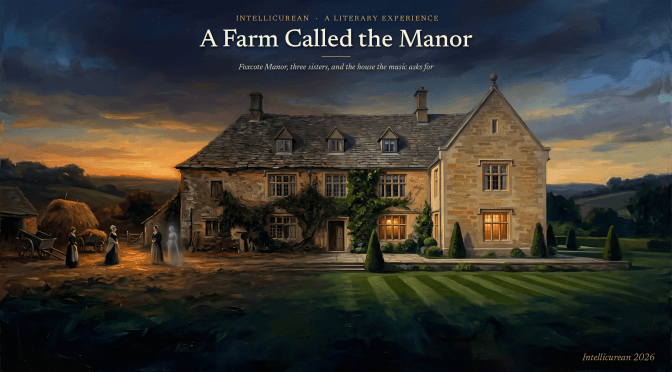
A Farm Called the Manor — painting of Foxcote Manor at dusk in two eras, an 1819 farmyard with three women, one fading, beside the composed front of today
Foxcote at dusk in two eras, made for the essay.

Why we’re pointing you there

Foxcote Manor, near Withington in Gloucestershire, came to market this autumn transformed, its ivy stripped and its rooms gone cream. Intellicurean’s first Literary Experience sets the sale beside the county history, the listing and two Austen novels, and finds that almost nothing in the picture is what it seems. A woman named Sarah Jordan left the manor to three nieces, a will that runs the other way from the one that opens Sense and Sensibility. William Cobbett rode through in 1826 and read the village church as proof of decline, and the census answers him. The symmetrical stone front turns out to be more than three hundred years of work, dressed to look like a single moment.

What we liked most is how carefully it listens to the record, and to its silences. Where the documents can correct what we see, they do, plainly. Where they fall quiet, about a bequest, two weddings and a third sister who simply disappears, the essay lets the music in and asks what that longing is worth.

Painting of a cream dining room staged for sale, its table set with blue-and-white china and white hydrangeas, where a translucent woman in an 1810s dress and shawl sits in warm candlelight; through the mullioned windows lies a muddy farmyard with a hay rick and cart.
A sale-staged dining room with a tenant the record lost, made for the essay.

Read the full essay at Intellicurean →

Essays & Reviews for the Intellectually Curious
WHO IS LEFT TO BE WRONG

Intellicurean Essays on Intellicurious

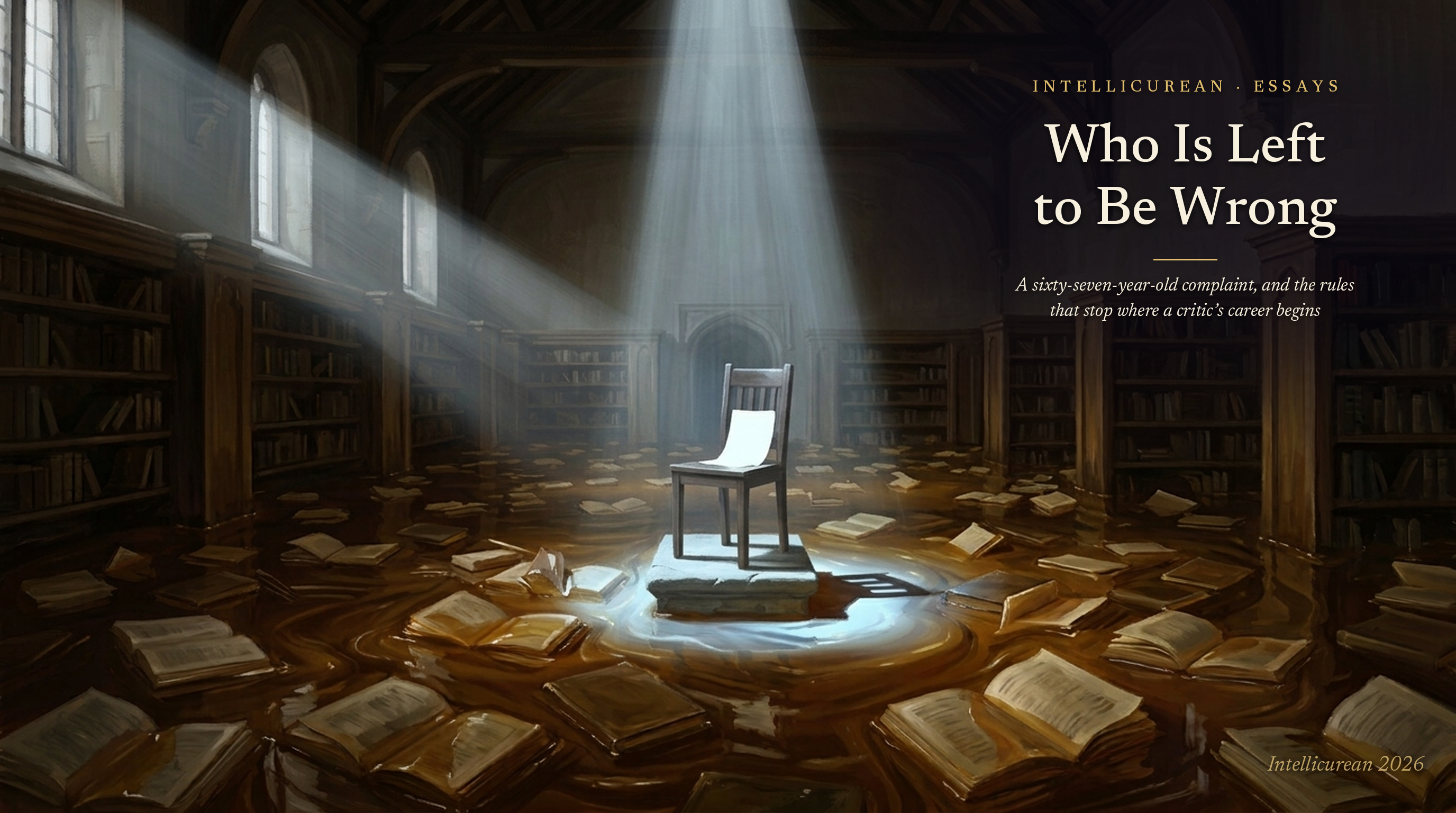
In 1959 Elizabeth Hardwick complained that American book reviews were drowning in praise. Sixty-seven years later the complaint still stands, and a new Intellicurean essay asks a harder question: who is left to be wrong?

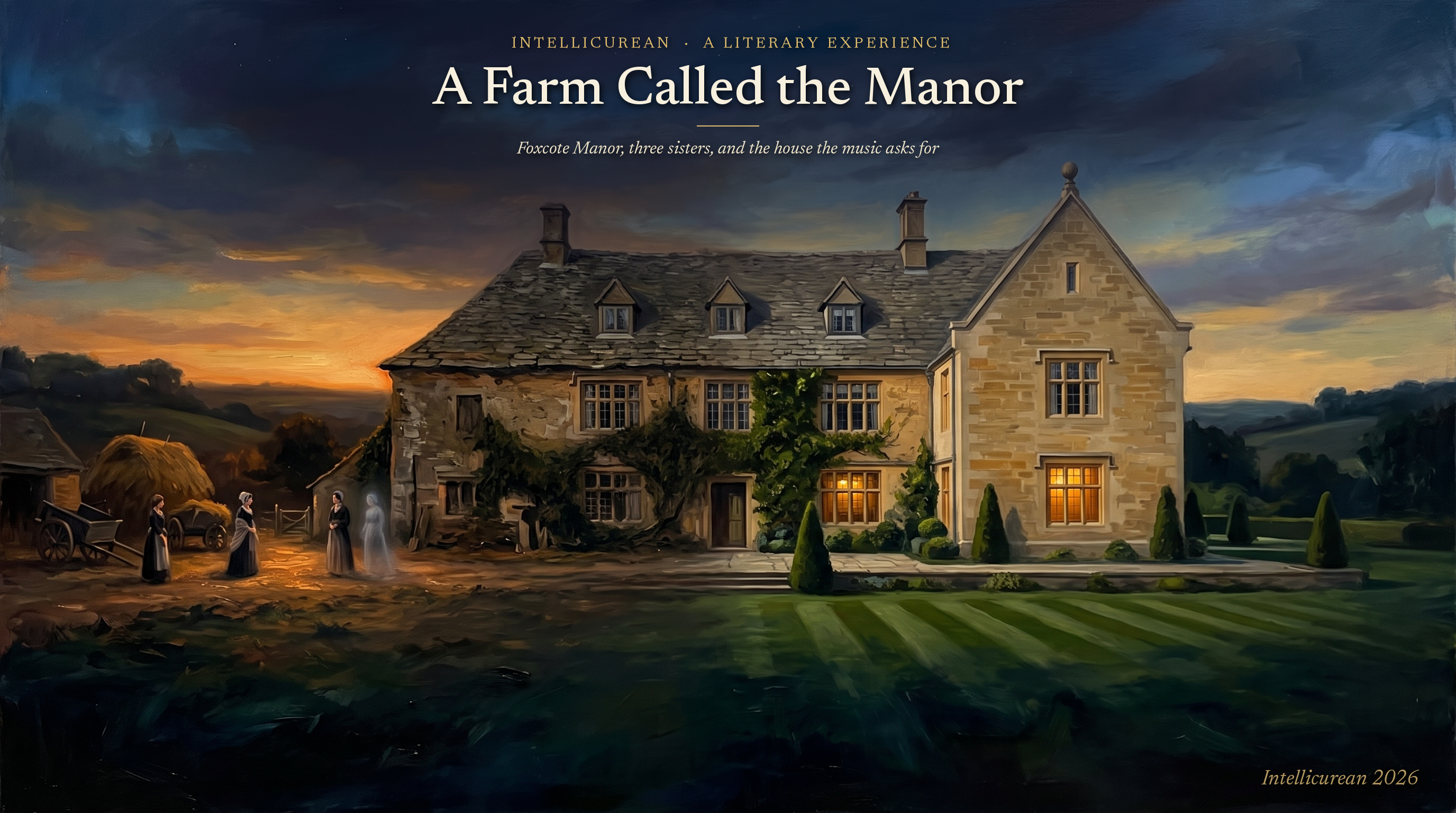
Who Is Left to Be Wrong — an empty chair on a stone plinth in a library flooded with amber syrup, lit by a single shaft of light
An empty chair above a flood of praise, made for the essay.

Why we’re pointing you there

Hardwick’s “The Decline of Book Reviewing” is the most famous complaint about soft criticism, and Who Is Left to Be Wrong begins by taking her at her word, numbers and all. From there it moves through Rosalind Krauss’s six-word claim about video, a BuzzFeed pledge borrowed from Thumper, and Edmund Wilson’s six-month public quarrel with Vladimir Nabokov. Then it opens the published guidelines of twelve leading review outlets to see what any of them actually says about judgment.

What we liked most is that the essay holds itself to its own standard. Its claim narrowed when the evidence came back against it, and it abandoned a count it couldn’t make honestly, saying so plainly at the end. Along the way it arrives at a sentence about favours that haven’t happened yet, and we haven’t stopped thinking about it.

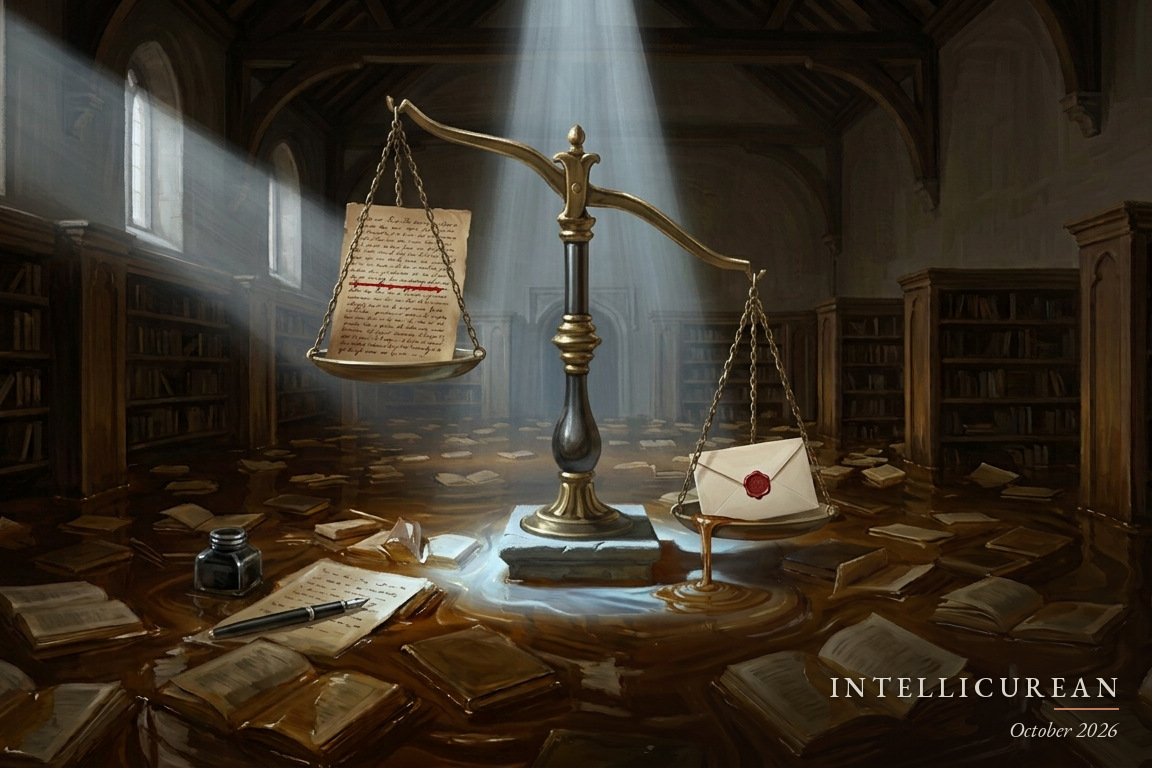
In a library flooded with amber syrup, a brass scale stands on a stone plinth under a shaft of light. A sealed, unopened envelope outweighs a handwritten page with one line struck through in red.
The weight of a favour not yet done, made for the essay.

Read the full essay at Intellicurean →

Essays & Reviews for the Intellectually Curious

WHAT MAKES AN ANSWER

Intellicurean Essays on Intellicurious

Socrates said written words can’t answer a question. Under a professor’s essay repeating his complaint, readers answered by the hundreds, and the professor answered them back, in writing.

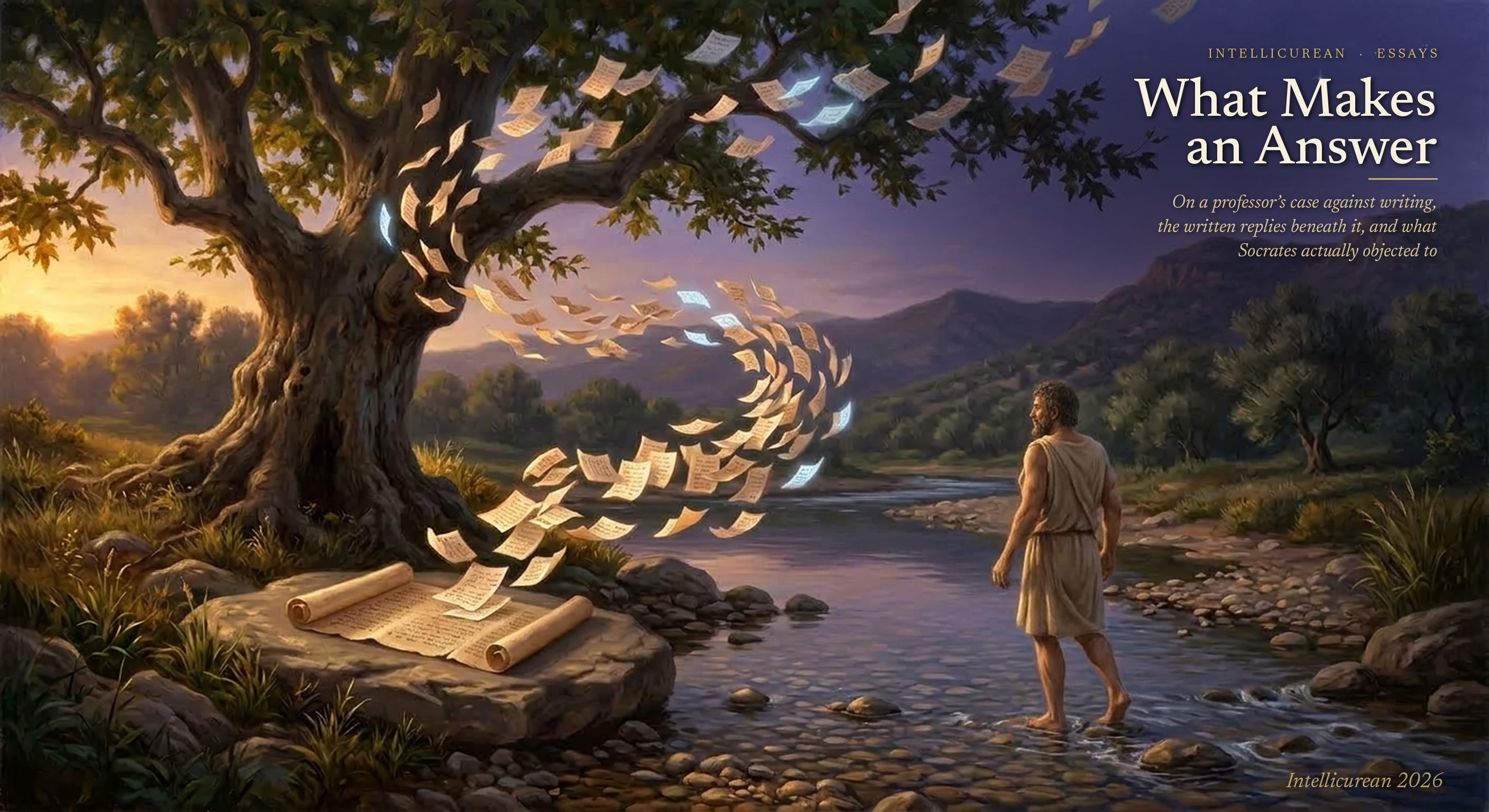
What Makes an Answer — at dusk, pages rise in a spiral from a scroll left on a stone beneath a great tree, while a barefoot man in a tunic stands in the shallows of a stream, turned back toward them
Pages taking flight, and a man turned back at the stream, made for the essay.

Why we’re pointing you there

On September 29 The New York Times ran a guest essay by Joe Cruz, who chairs philosophy at Williams College, arguing that writing isn’t as important as we think. He leaned on Plato’s Phaedrus, where Socrates says a written text can’t answer questions or defend itself. Within a day about 1,200 readers had written back. Michael Cummins returns to the dialogue and finds three objections there, not one. He gives Cruz his due on the oral exam and on why universities love the essay. Then he follows the most-recommended reply in the thread: if at least half the class did better aloud, as many as half did not.

What we liked most is watching a thesis improve in public. Pressed by his commenters, Cruz conceded that writing is “no small thing,” perhaps one of the most profound tools we have for abstract thought, and he conceded it in writing. The essay goes on to defend the revision Cruz calls a refuge. It ends at the river in the Phaedrus, where Socrates turns back without anyone asking him to. A machine that will answer anything has met Socrates’ first objection. The essay asks whether it could ever meet that one.

In a dusk-lit seminar room, a standing student argues while the others turn toward her; at the far end of the table a quiet student writes in a notebook whose glow is the room’s warm light
The other half, made for the essay.

Read the full essay at Intellicurean →

Essays & Reviews for the Intellectually Curious
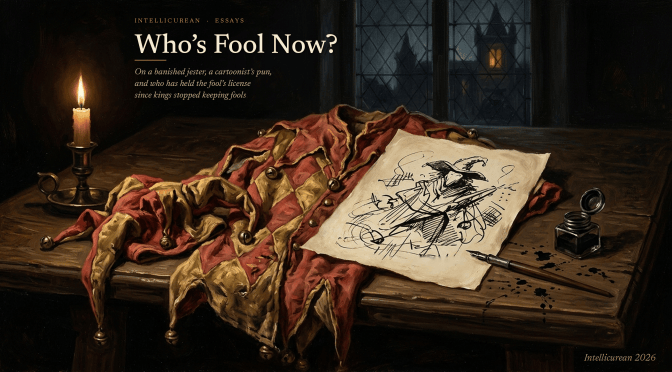
WHO’S FOOL NOW?

Intellicurean Essays on Intellicurious

In 1638 the king’s jester asked an archbishop, “Who’s fool now?” and was thrown out of court the same day. The fool’s license to mock has changed hands ever since. It has rarely been the fool’s to keep.

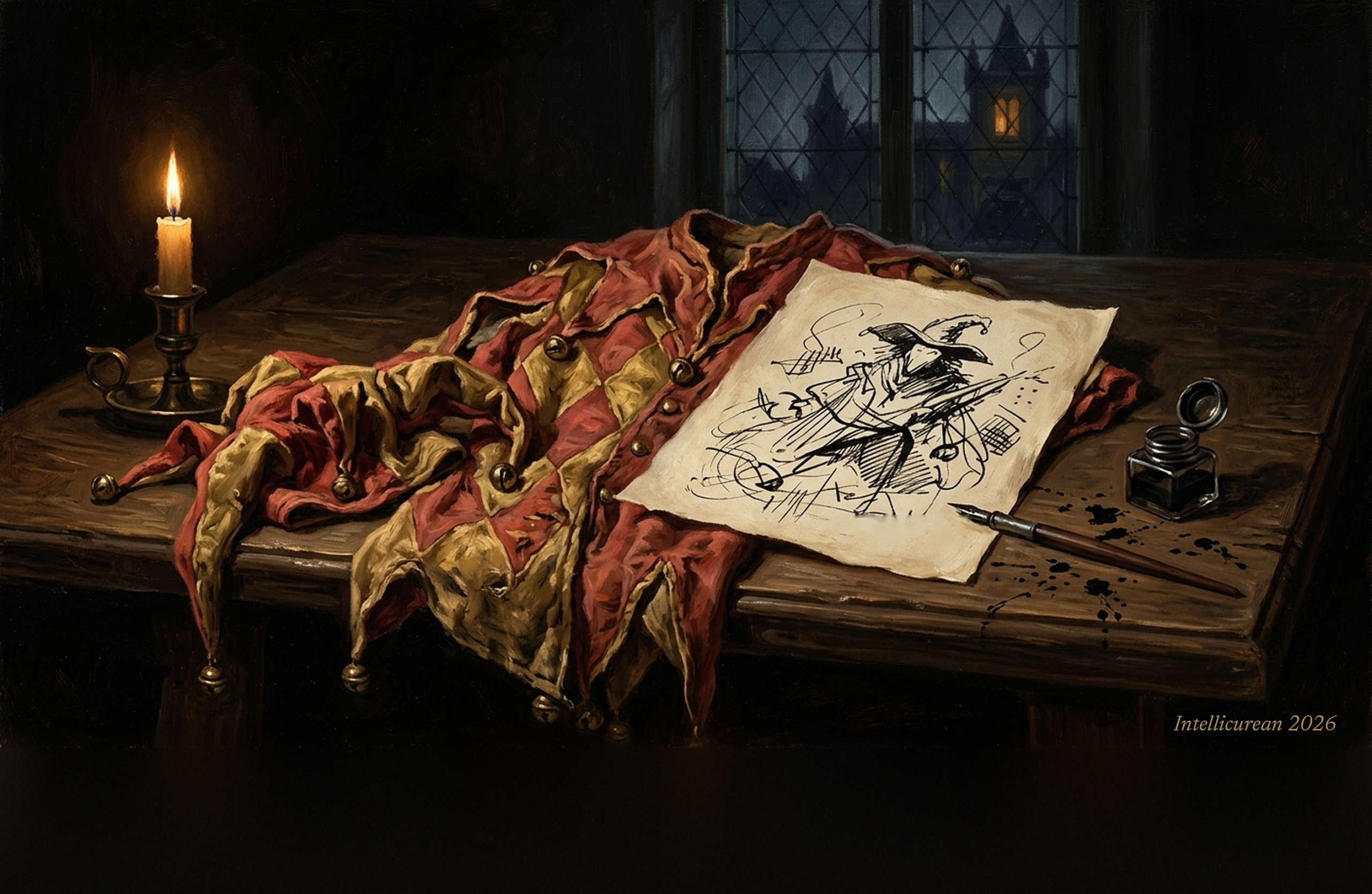
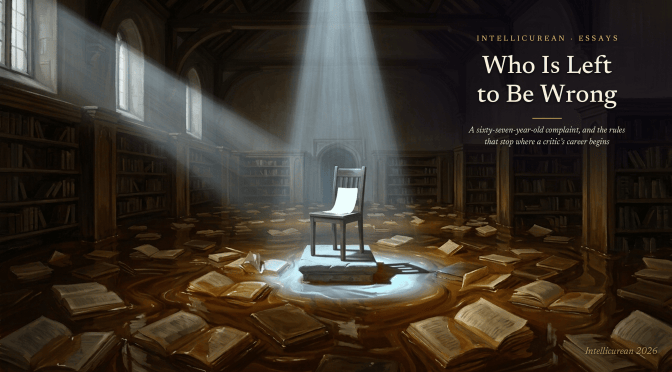
A jester’s red and gold motley coat thrown across a candlelit table beside an ink caricature, a pen and an inkwell, with a palace silhouetted through the window
The fool’s coat set down and the pen taken up, made for the essay.

Why we’re pointing you there

Archibald Armstrong had jested for two kings when he mocked Archbishop Laud over the Scottish prayer-book revolt. The Privy Council sentenced him to have his coat pulled over his head and be banished the court. Michael Cummins starts there and asks who has held the fool’s license since kings stopped keeping fools. He follows it through Shakespeare’s “allowed fool,” a caricaturist on a party pension, and a Victor Hugo play banned after a single night. Then a British cabinet minister takes a cartoonist to lunch, and in January 2025 a Pulitzer Prize winner walks out of the Washington Post.

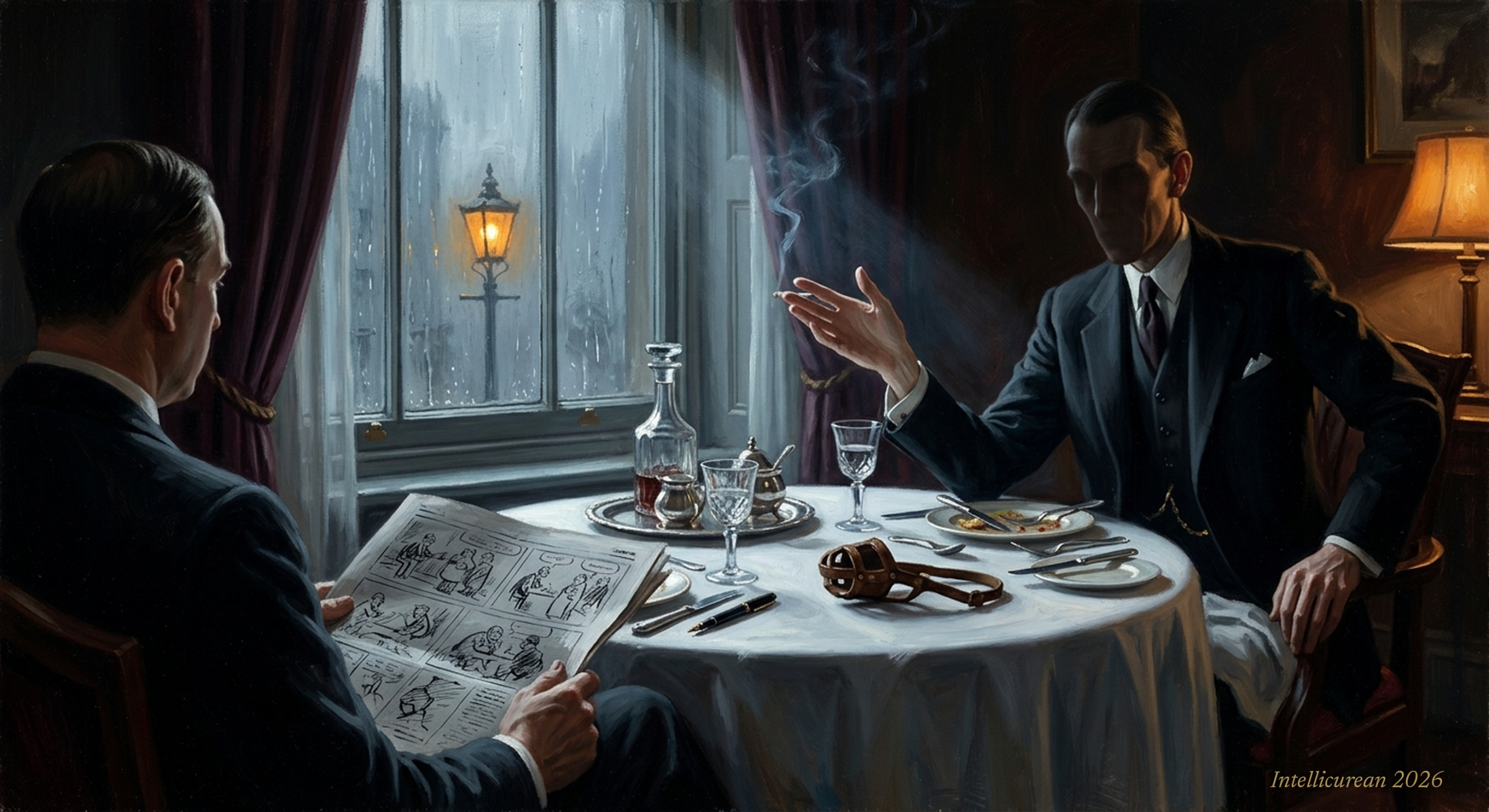
What we liked most is the centerpiece. In 1937 Goebbels complained about David Low’s cartoons, and Lord Halifax carried the complaint home. The newspaper said it couldn’t control Low, so the minister had to ask the cartoonist himself. Low agreed to ease off, and answered with a new character whose name was a pun on what had just happened to him. The essay grants that the cost of losing the license has fallen a long way since Armstrong’s day. It ends by asking whether a paying public is a freer master than a king, or only a larger court.

In a rain-dark London dining room, a tall man in a dark suit gestures across a lunch table toward a man reading a page of cartoons; a leather muzzle lies on the white cloth between them
A lunch in Bayswater, made for the essay.

Read the full essay at Intellicurean →

Essays & Reviews for the Intellectually Curious
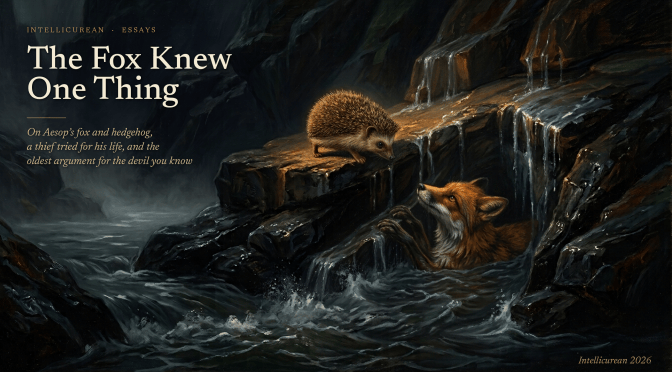
THE FOX KNEW ONE THING

Intellicurean Essays on Intellicurious

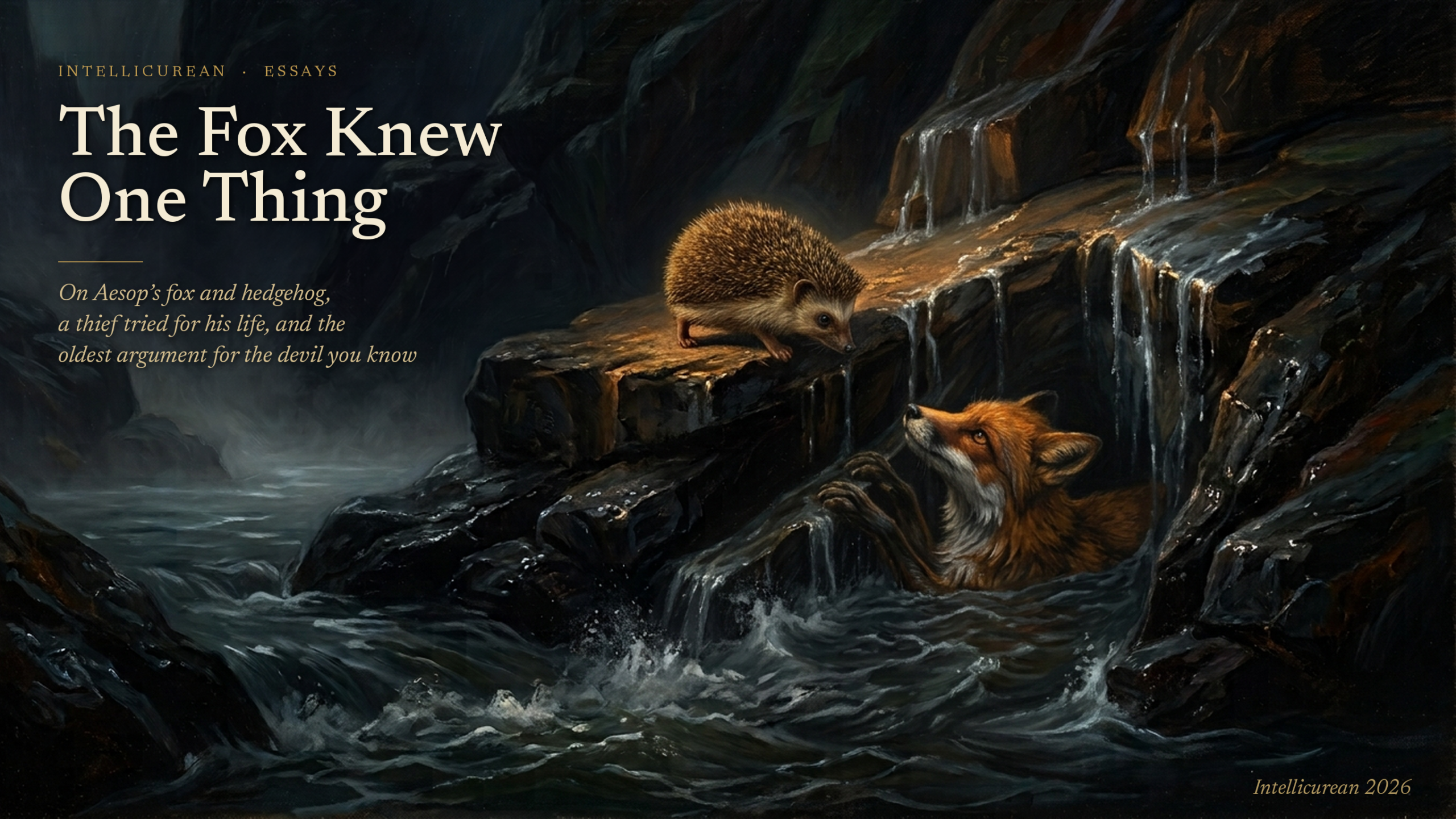
The fox knows many things, the proverb says, and the hedgehog knows one big thing. But in the oldest story we have of the two actually meeting, it is the fox who knows one big thing, and Aesop used it to plead for a thief’s life.

A soaked red fox trapped chest-deep in a hole in dark river rocks looks up at a hedgehog on the lit ledge above her
The fox in the hole and the hedgehog on the ledge, made for the essay.

Why we’re pointing you there

Isaiah Berlin made the fox and the hedgehog famous as two kinds of mind, and forecasters have since made the fox the one to be. Michael Cummins goes back to a story Aristotle preserved in his Rhetoric. A fox swept into a hole in the rocks is covered in fleas. A passing hedgehog offers to pick them off, and she refuses: these fleas are full, and new ones would be hungry. Aesop told it to an assembly on Samos to argue that a rich man on trial for his life should be spared, because a poor successor would steal more. Aristotle kept the speech and never recorded the verdict.

What we liked most is what the essay notices in the details. The fox’s refusal only makes sense because she can’t get out of the hole. Four centuries later, Josephus has the emperor Tiberius tell the same story to explain why he left his governors in place so long. The emperor’s version has no hole, and his reasoning is sharper than the fable’s. The essay says so plainly, and then shows what that sharper reasoning made possible. It ends on the hedgehog, the one character who never gets to answer. Every quotation from the ancient texts has been checked against the texts themselves.

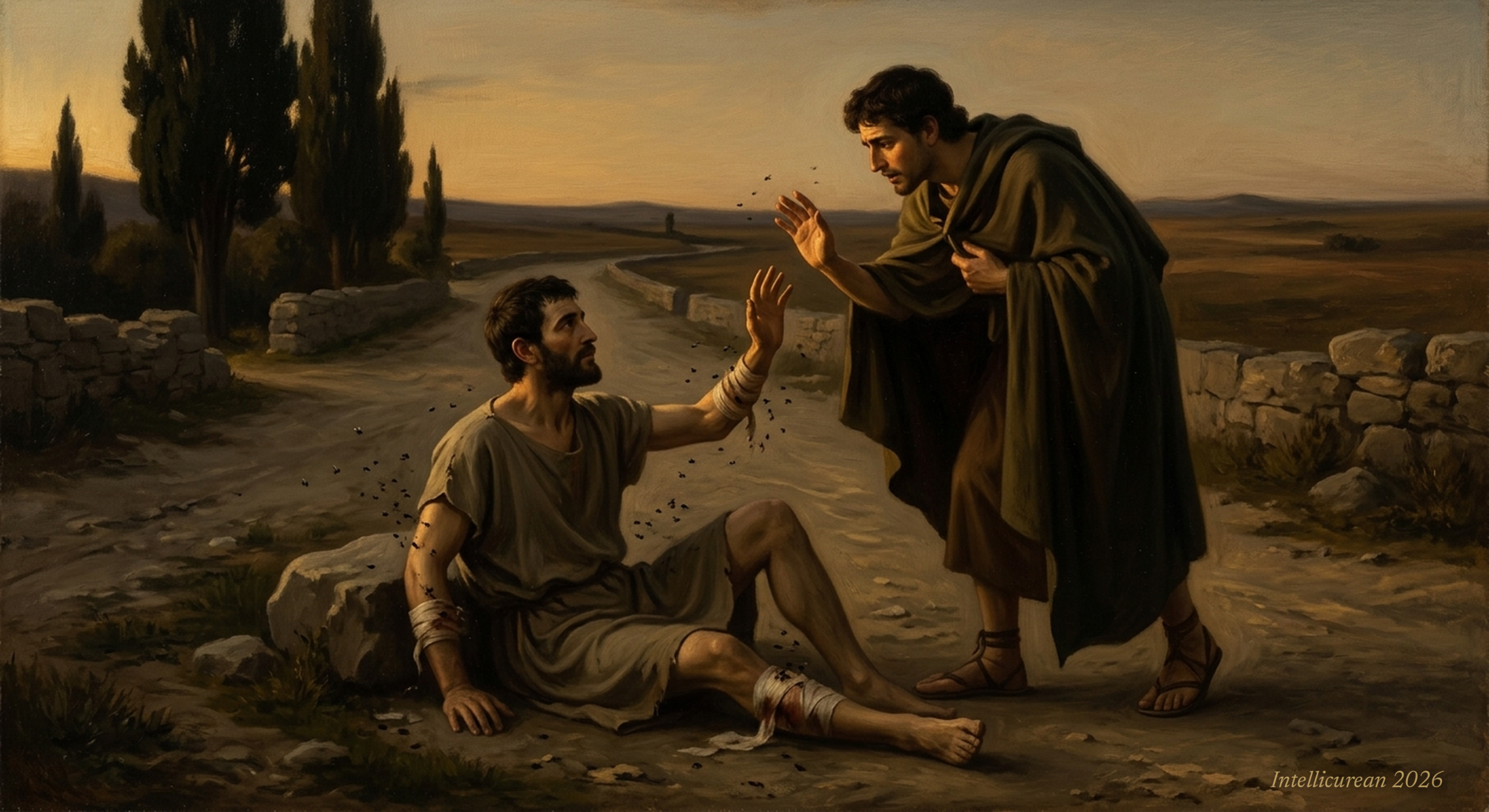
On an open country road at dusk, a wounded man sitting against a roadside stone raises his hand to stop a cloaked passer-by from waving away the flies around his bandages
A wounded man and a stander-by, made for the essay.

Read the full essay at Intellicurean →

Essays & Reviews for the Intellectually Curious
THE COST OF NOTHING – AN INTELLICUREAN ESSAY

Intellicurean Essays on Intellicurious

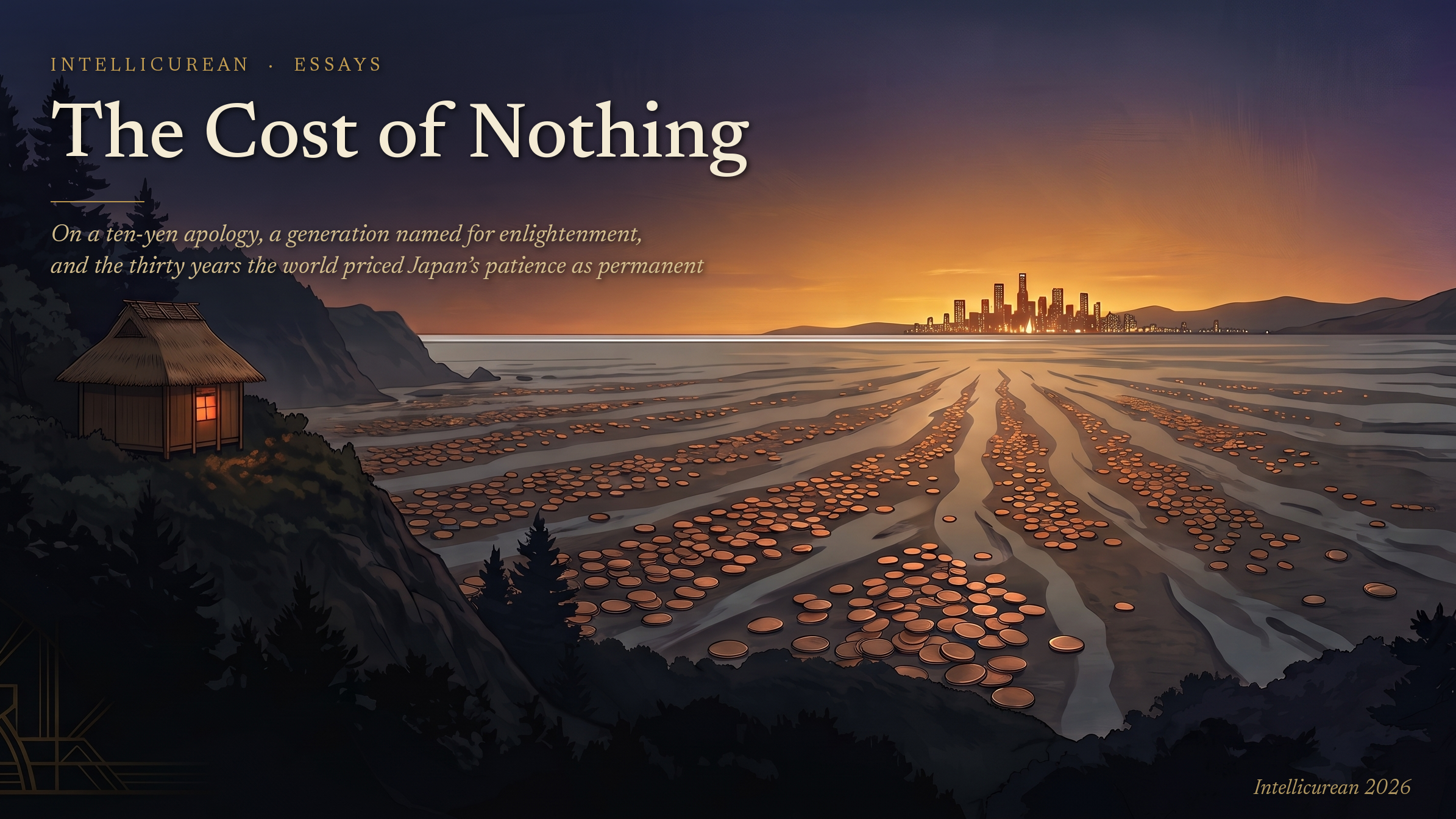
What nothing can cost: for thirty years Japan’s money was almost free to borrow, its young were told they had risen above wanting things, and the rest of the world quietly built on both. Now the tide is coming back in.

A tiny thatched hut with one lit window on a dark hillside, above a sea that has drawn far out, its bed covered in bronze coins leading to a distant glowing city
The hut, the coins and the city, painted for the essay. An invention, and disclosed as one there.

Why we’re pointing you there

A New York Times column this week warned that Japanese money, abroad for three decades, is starting to go home. Michael Cummins takes that market story and finds a second one underneath it. The same years that made yen the cheapest money on earth also produced a nickname for a whole generation: the satori sedai, the enlightened ones, young people said to want nothing. The essay is careful to keep the two apart. A central bank made the cheap money; a joke on an anonymous message board made the name. But the name was how the stillness got told, and the world priced it as if it would last forever.

What we liked most is how far back it reaches for its measure. It opens on an ice-pop company bowing on television to apologize for a ten-yen price rise, and it ends in a ten-foot hut built by a monk in 1212, who praised his reduced life and then, at the very end, doubted it. Between them come a young Natsume Sōseki translating that monk into English, a Texas hedge-fund manager ruined by being right too early, and one number about who owns Japan’s debt that explains three decades in a sentence. Both Japanese sources are translated fresh for the piece.

A lone figure in a dark suit bows deeply under a single spotlight, on a dark floor scattered with plain bronze coins
A bow over small change, painted for the essay.

Read the full essay at Intellicurean →

Essays & Reviews for the Intellectually Curious
LAST MAN SMIRKING

Intellicurean Essays on Intellicurious

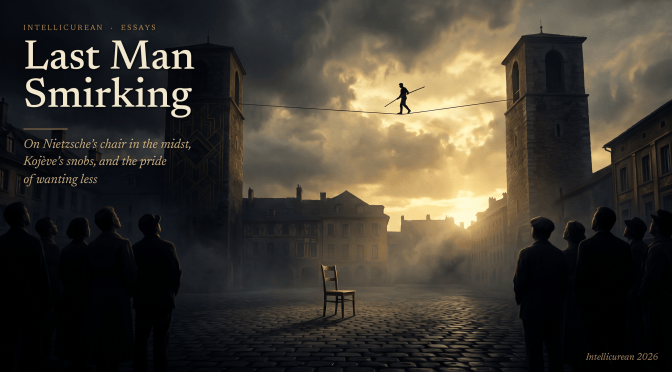
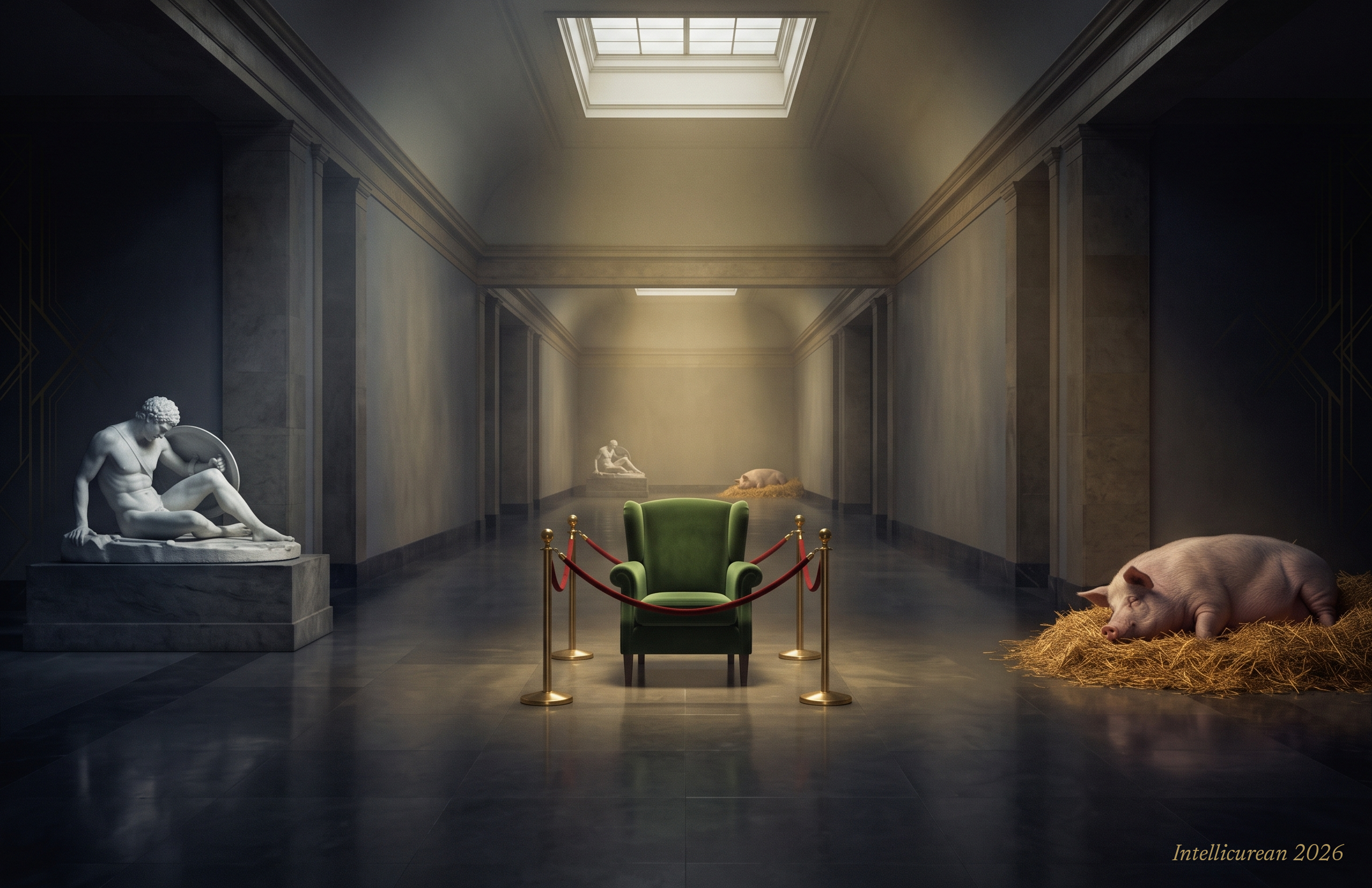
For thirty years we have pictured Nietzsche’s last man as a creature of comfort, blinking contentedly at the end of history. Read the page again and he is doing something else entirely. He is smirking. What if the people who want the least are the proudest people of all?

An empty velvet armchair roped off beneath a skylight, exactly midway between a marble statue of a gladiator and a sleeping pig in a museum gallery
The chair in the midst, painted for the essay. An invention, and captioned as one there.

Why we’re pointing you there

Francis Fukuyama made the last man famous in 1992, and in a new memoir he says we now live in the last man’s world. Michael Cummins agrees about the world and argues that Fukuyama has had the man wrong from the start. Fukuyama imagined someone who had lost the old hunger to be thought better than others. Cummins goes back to Zarathustra and finds a crowd vain about its culture, and a passage in which the small people boast of sitting precisely halfway between the gladiator and the pig. The hunger never left. It learned to pass for modesty.

What we liked most is that the essay won’t let anyone off. It uses Fukuyama’s own pages to explain why a democracy drives ambition into hiding, borrows Kojève’s discovery of Japanese snobbery and turns it inside out, and then gives Nietzsche’s rival snobbery of the heights its due, along with Fukuyama’s warning about the bored crowds of August 1914. It ends at Niagara, with a French acrobat and a chair, and the best last line we have run this year.

Read the full essay at Intellicurean →

Essays & Reviews for the Intellectually Curious
SHE READ TACITUS

Intellicurean Essays

New on Intellicurean

She Read Tacitus

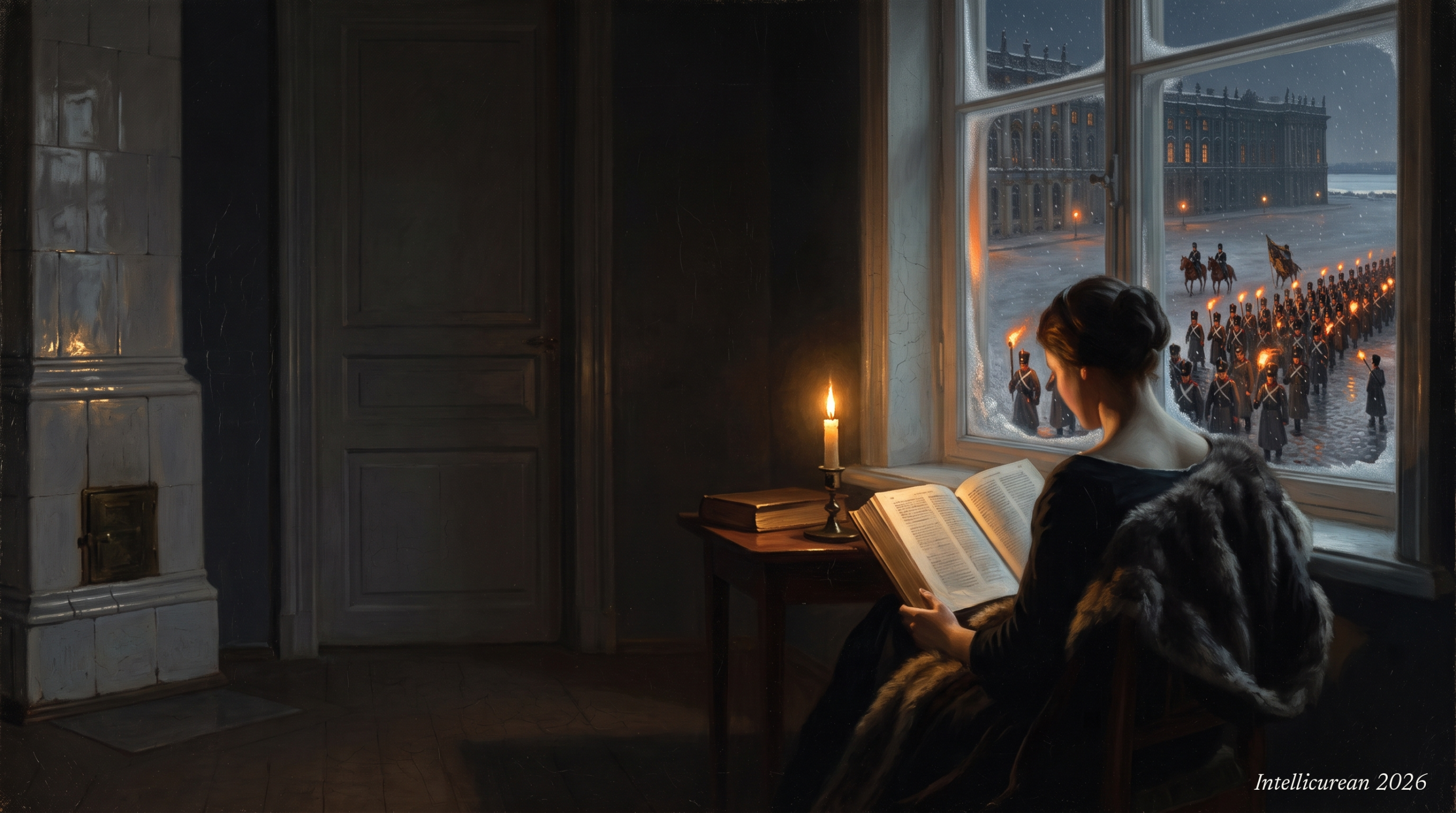
A young woman seen from behind, reading by candlelight at a winter window, while guardsmen with torches march through the snow below

In the winter after her son was taken from her, the grand duchess who would become Catherine the Great read the Annals of Tacitus and wrote later that it caused “a singular revolution in my brain.” Seven years later she took a throne. What she learned from Tacitus was not how to seize one. It was who writes the record afterward.

In the winter after her son was taken from her, a grand duchess of twenty-five read the Annals and wrote later that it caused “a singular revolution in my brain.” Seven years later she took a throne. What she learned from Tacitus was not how to seize one. It was who writes the record afterward.

Catherine managed three documents about the coup of 1762: a manifesto that said she was compelled, a second that said her husband died of colic, and a long letter to a lover in Warsaw that told him everything, hour by hour, and told him colic too. A fourth document was found in her cabinet thirty-four years later: a note from Alexei Orlov confessing a drunken accident at Ropsha, which clears her of ordering the death, which survives only in a copy made in a quarter of an hour by a courtier of her son’s, and which the archive, when asked directly, cannot find.

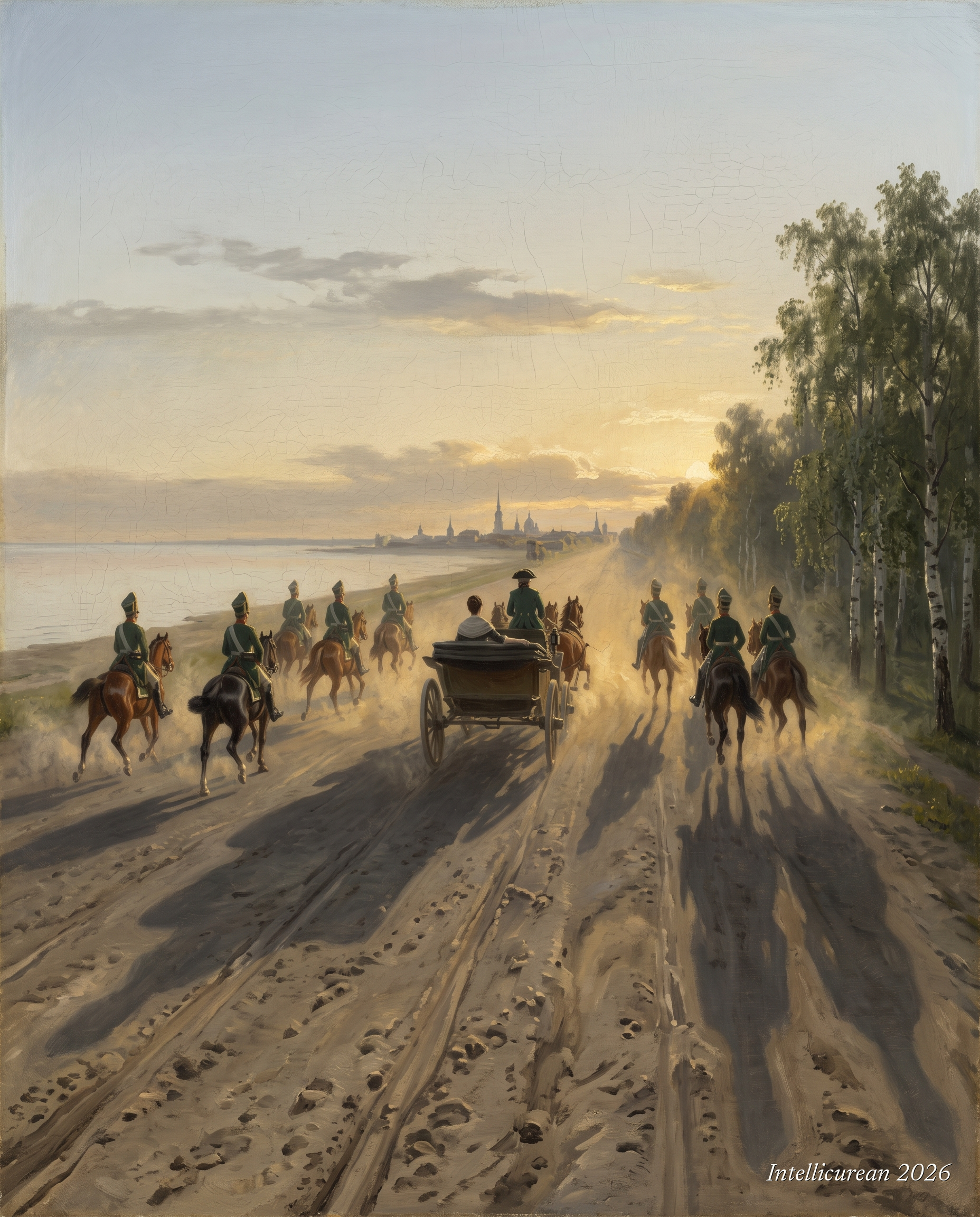
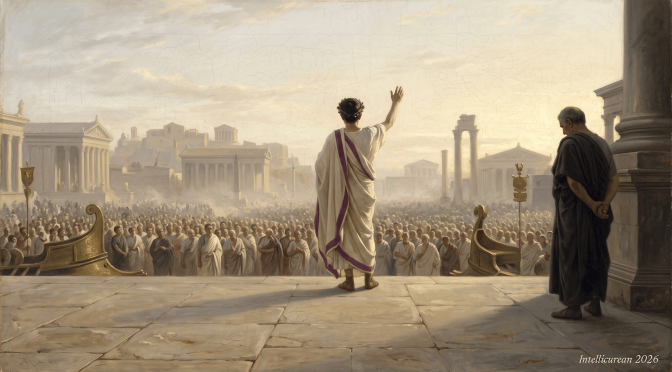
A carriage at a gallop on a dawn road along the sea, guardsmen closing round

The Peterhof road, six in the morning, 28 June 1762, as the essay imagines it. A generated image, not a record.

Why we’re pointing you there

Michael Cummins reads the four documents the way Tacitus taught Catherine to read everything: as records made by parties with reasons. Herzen in 1858, Bain in 1902, a Russian archivist who counted the letters in the folder and found two, and a confession that got drunker with each printing. One guess, graded, about why she wrote her own account first; two readings of the forgery, if it is one; and an ending in a drawer that held either the proof of her innocence or nothing at all.

The reader of Tacitus was read, at the end, by Tacitus’s method. The method cannot tell which.

Read the essay at Intellicurean →

Intellicurious points to the best of what we read and make. The full essay, with its sources and colophon, lives at intellicurean.com.

ANOTHER MAN’S ELOQUENCE

Intellicurean Essays

New on Intellicurean

Another Man’s Eloquence

In the autumn of 54 a boy emperor praised a dead man, and the crowd smiled at the wrong moment. The sentences were Seneca’s. What happens to a philosopher who spends eight years as someone else’s voice?

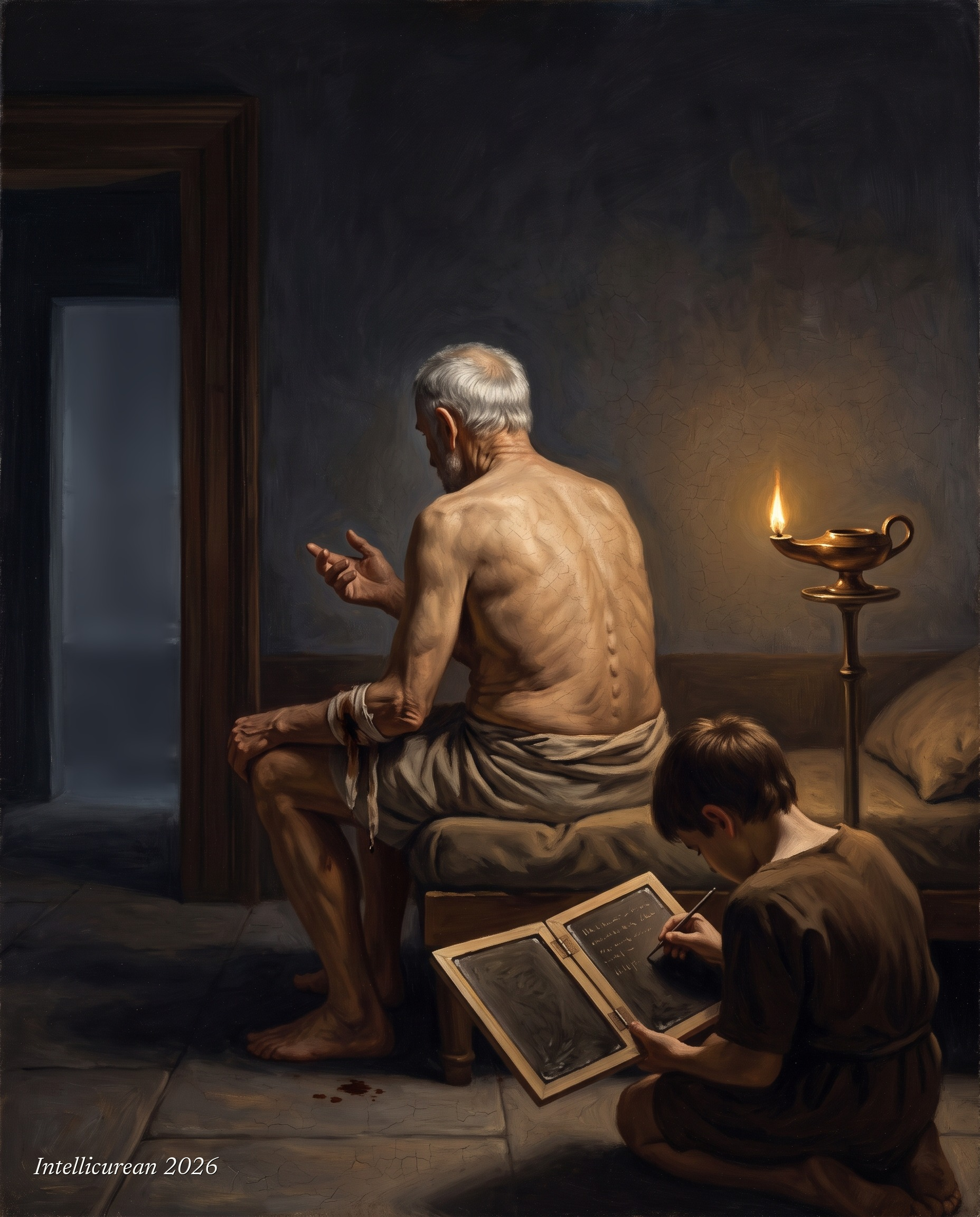
Seneca, seen from behind by lamplight, dictating to a single scribe

The dictation, AD 65, as the essay imagines it. A generated image, not a record.

Tacitus says the old men in the Forum noticed something new that day: Nero was the first ruler of Rome to need another man’s eloquence. Five years later the same man wrote the letter that explained a mother’s murder to the Senate, and the city blamed the ghost, not the emperor. Three years after that, the charge that ended his career was that he had claimed the credit. And in the first year he owned his own mouth, he wrote the most famous opening in Roman philosophy: set yourself free for your own sake.

Why we’re pointing you there

Michael Cummins follows the voice through four dates, 54, 59, 62 and 65, and finds one word doing the work: aliena, “another’s,” the word Tacitus used for Nero’s borrowed speech and the word Seneca used, in his own letters, for everything a man does not own. The essay makes one guess about what the throne cost him, grades it, and prints the two hostile witnesses who say it cost him nothing. It ends with the one text Seneca dictated as unmistakably his own, on the night he died, and why we don’t have it.

Every speechwriter since is Seneca, and the letter after the crime still gets written.

Read the essay at Intellicurean →

Intellicurious points to the best of what we read and make. The full essay, with its sources and colophon, lives at intellicurean.com.