Category Archives: Education

Reclaiming Intellectual Life Within Motherhood

By Renee Dellar, Founder, The Learning Studio, Newport Beach, CA

In homes filled with toy-strewn floors, half-read bedtime stories, and the quiet rituals of care, another kind of cultivation is quietly unfolding: a woman tending both her children and her own mind. For centuries, motherhood has been framed as noble sacrifice—an often invisible labor etched into the margins of cultural discourse. But in 2025, a growing chorus of voices is reviving a different vision. One in which caregiving is not a detour from intellectual life, but its fertile ground.

Two works lead this revival: Karen Andreola’s Mother Culture and Laura Fabrycky’s Motherhood and the Intellectual Life. Each, in their own way, reshapes how we understand the maternal vocation—not as a trade-off between thought and nurture, but as a textured synthesis of both. The intellect, they argue, can live among the ordinary. It can thrive there.

The Domestic as Intellectual Soil

Andreola’s Mother Culture is a quiet revolution disguised as a homemaking guide. Rooted in the Charlotte Mason tradition, an educational philosophy that relies on living stories, literature and engaging with nature, the book encourages mothers to nurture their spiritual and intellectual lives alongside the children they raise. The term “mother culture” describes this practice of personal cultivation within caregiving: reading short chapters, journaling reflections, taking time for beauty and prayer—not as indulgence, but as daily nourishment.

Fabrycky’s Motherhood and the Intellectual Life deepens and broadens the premise. Drawing inspiration from A.G. Sertillanges’s The Intellectual Life, she proposes that intellectual formation is not incompatible with diapers and dinner prep—it may, in fact, be refined by them. Maternal knowing, she argues, is less linear and more contemplative: “a slow epistemology,” where insight emerges through relational rhythms, interruptions, and quiet repetition.

Taken together, these texts offer a radical proposition: that raising children can coexist with the pursuit of meaningful thought—and even become its crucible.

Growth Through the Tension

This vision is not utopian. Fabrycky grapples openly with the fragmented time, emotional exhaustion, and cultural myths that haunt modern motherhood. The notion that one must be endlessly available and self-effacing to be “good” creates a psychic double bind—especially for those who also feel called to write, study, or lead.

A 2025 GBH essay titled “What Does It Mean to Be a Good Mom in 2025?” critiques these cultural pressures and calls for relational authenticity over performative self-sacrifice. Similarly, Amy Shoenthal, writing in Forbes, identifies five emerging trends in maternal identity, including the recognition of unpaid caregiving and the reframing of “career pauses” as formative, not deficient. Both voices echo Andreola’s and Fabrycky’s reframing of homemaking and child-rearing as reflective, generative domains.

Matthew Crawford, in The Hedgehog Review, adds philosophical weight by critiquing the hyper-individualism that isolates mothers from communal meaning. He exposes the autonomy trap—a false promise of liberation that, in practice, leaves caregivers unsupported and intellectually adrift.

Andreola’s response to this fragmentation is practical and merciful. She doesn’t ask for hours of solitude, but twenty minutes a day—a chapter read, a line copied, a prayer whispered. Her method is cumulative, not competitive. Fabrycky reinforces this by insisting that intellectual life shaped by interruptions isn’t inferior—it’s simply different. Perhaps even deeper. A mind accustomed to chaos may grow uniquely capable of synthesis, perception, and grace.

Maternal Knowledge As Intellect

Both authors offer a profound challenge to prevailing epistemologies. Motherhood, in their telling, is not only a form of care, but a form of knowledge—a way of seeing, sensing, and interpreting the world through embodied, relational experience.

Fabrycky names this “maternal knowing,” a quiet but potent resistance to systems that privilege abstraction, quantification, and speed. It is its own category of intellect.

This view finds broader support. In The Journal of Futures Studies, the 2025 essay “Mother, Motherhood, Mothering” uses the Futures Triangle framework to propose mothering as a disruptive force within systems of power. It highlights interdependence, memory, and ancestral wisdom, and calls for “care-full academic spaces” that honor the knowledge generated in relationship.

Andreola, while less overtly political, participates in this resistance through recovery. Her invitation to read poetry, observe nature, and write in stolen moments is not escapism—it is restoration. She sees the home not merely as a workplace, but as a sanctuary of moral imagination.

Kate Lucky’s Comment essay, “Consider the Zoo,” resonates deeply here. Reflecting on containment and longing, Lucky honors domestic life as sacred terrain. Through metaphor and meditation, she illustrates how the architecture of the home—though often confining—can also be spiritually expansive. She, like Andreola, affirms that a richly cultivated mother begets a richly cultivated home.

Motherhood And The Technological Bind

In 2025, new tools offer both hope and hazard. AI tutors, digital reading groups, and remote learning platforms create flexible ways for mothers to remain intellectually engaged. But they also threaten to erode the quiet margins in which thought can truly root.

Editorialge’s “Motherhood in 2025” outlines this double bind. Technology promises convenience, but also expects omnipresence. It can enable, but it can also overwhelm. The modern mother may feel pressure not only to mother well, but to optimize the experience—socially, intellectually, emotionally, and aesthetically.

Andreola responds with a counter-rhythm. Her practice of “mother culture” requires no devices, no tracking apps, no metrics—just twenty minutes and an open soul. Fabrycky, too, advocates what she calls “sacred margins”: spaces where rest and contemplation are guarded from digital encroachment. Whether reading a psalm or journaling in twilight, these acts reclaim time not as commodity, but as communion.

This is an intellectual life that resists acceleration. One rooted not in productivity, but in attention.

Theological Embodiment

Beneath both texts lies a theological current. Andreola’s work is explicitly faith-based, casting motherhood as a sacramental calling. She ties personal growth to spiritual rhythms, blending domesticity with liturgy. Fabrycky’s theology is more implicit, but no less rich. She draws on incarnational motifs—suggesting that just as Christ entered time, mothers enter it fully, redemptively, lovingly.

Paul Kingsnorth, writing in First Things, critiques empire-building models of Christianity and calls instead for mystical humility. It is a useful lens for understanding maternal life. In resisting the culture of achievement, mothers enact a kind of mysticism: the shaping of souls not through acclaim, but through sandwiches and lullabies.

Plough Quarterly’s “Autonomy Trap” extends this idea. The essay argues that liberal autonomy undermines moral formation and calls for renewed celebration of dependency and mutual obligation. Mothers, whose daily lives revolve around interdependence, know this deeply. Their labor is not a retreat from intellectual life—it is its lived expression.

Even empirical research backs this. A 2025 study published by the APA, titled “Nurturing Now, Thriving Later,” found that maternal warmth fosters personality traits associated with intellectual openness and conscientiousness. Far from being anti-intellectual, caregiving becomes a crucible of human formation—for both parent and child.

Reimagining Flourishing

The question, then, is not whether mothers can be intellectuals. It is whether society can reimagine what intellectual life actually looks like.

Both Andreola and Fabrycky challenge the false binary between academic scholarship and domesticity. Intellectual flourishing, they argue, need not wear robes or require citations. It can live in a threadbare armchair, beside a half-finished sketch, or in a whispered poem before lights-out.

Joseph Keegin, writing in Point Magazine, coined the term “commit lit” to describe literature that shapes the soul—not just the intellect. This is the literature of mothers: clarifying, sustaining, quietly transformative. It is what Andreola asks women to read—not for utility, but for delight and reflection. The habit itself becomes a philosophy.

Andreola’s readers praise her for practicality: short chapters, gentle prompts, and the conviction that the inner life matters—even if cultivated between errands and lunchboxes. Fabrycky echoes this, calling us to reject the tired binaries of ambition versus nurture, head versus heart. In doing so, she articulates a vision of womanhood that is fully integrated—thinking, feeling, forming, and formed.

Conclusion

To speak of motherhood as intellectually fruitful is not to romanticize its trials. It is to honor its inherent generativity.

A mother tends more than bodies and schedules. She tends minds, questions, values, and souls. Her daily life is strewn with philosophical inquiry: What does love require when exhausted? How should justice look between siblings? What is the rhythm of truth-telling in a bedtime ritual?

This is not incidental. It is profound.

Karen Andreola’s Mother Culture affirms the mother not only as caregiver, but as curator of wisdom. Through short chapters and gentle urgings, she equips women to reclaim the interior life—to read, think, pray, and study amidst the hum of the washing machine and the chaos of toddler negotiations. It is philosophy shelved among the laundry. Theology scribbled between school pick-ups.

Laura Fabrycky extends this sacred motif, framing motherhood as epistemology itself. In her vision, maternal knowledge is slow and embodied—shaped by noise, honed through disruption. It is knowledge with fingerprints, and fingerprints with knowledge.

Culture often demands a choice: between ambition and nurture, visibility and devotion. But this is a false binary. The intellectually vibrant mother is not the exception—she is the mirror. Her search for meaning, amid fractured time, is no less rigorous than that of the cloistered scholar. It may, in fact, be more so.

With new tools, communal voices, and literary recoveries blooming in 2025, the conditions are ripe for reframing. Writers, theologians, educators, and artists are clearing space for caregiving not as an interruption of intellect, but as its generative soil.

The mother who lights a candle for evening reading, who sketches thoughts between lessons, who whispers poetry over lunch—is not delaying her intellectual life. She is living it. And in doing so, she is cultivating a garden of wisdom whose fruits will shape families, culture, and the age to come.

She is, in every way, a thinker.

And the home—far from a site of confinement—is one of the most intellectually fertile landscapes of all.

THIS ESSAY WAS WRITTEN BY RENEE DELLAR UTILIZING AI
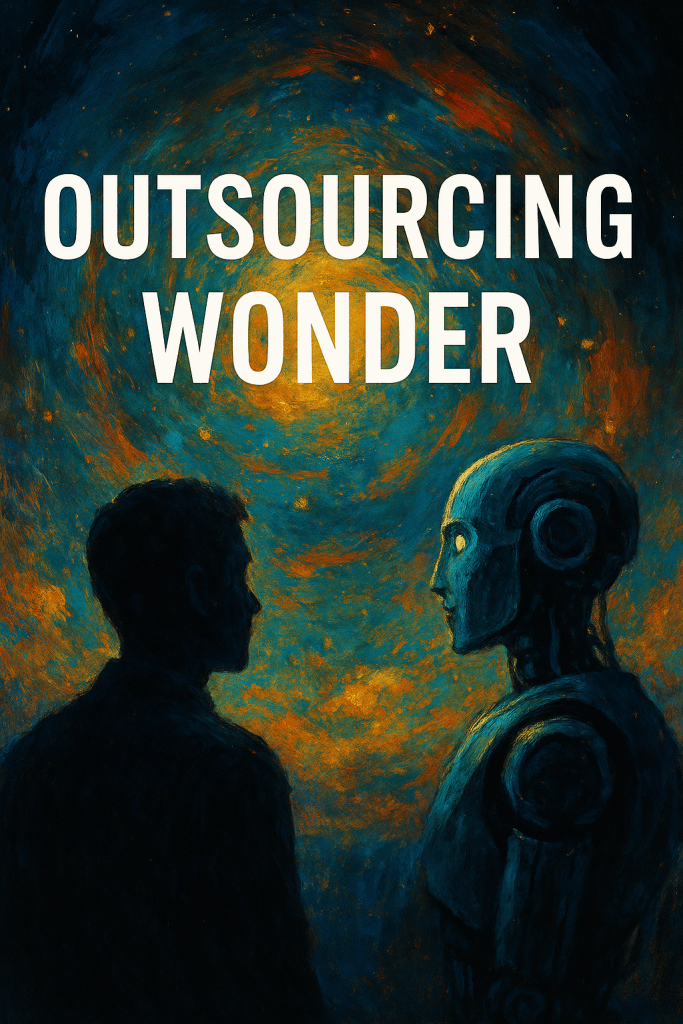
THE OUTSOURCING OF WONDER IN A GENAI WORLD

A high school student opens her laptop and types a question: What is Hamlet really about? Within seconds, a sleek block of text appears—elegant, articulate, and seemingly insightful. She pastes it into her assignment, hits submit, and moves on. But something vital is lost—not just effort, not merely time—but a deeper encounter with ambiguity, complexity, and meaning. What if the greatest threat to our intellect isn’t ignorance—but the ease of instant answers?

In a world increasingly saturated with generative AI (GenAI), our relationship to knowledge is undergoing a tectonic shift. These systems can summarize texts, mimic reasoning, and simulate creativity with uncanny fluency. But what happens to intellectual inquiry when answers arrive too easily? Are we growing more informed—or less thoughtful?

To navigate this evolving landscape, we turn to two illuminating frameworks: Daniel Kahneman’s Thinking, Fast and Slow and Chrysi Rapanta et al.’s essay Critical GenAI Literacy: Postdigital Configurations. Kahneman maps out how our brains process thought; Rapanta reframes how AI reshapes the very context in which that thinking unfolds. Together, they urge us not to reject the machine, but to think against it—deliberately, ethically, and curiously.

System 1 Meets the Algorithm

Kahneman’s landmark theory proposes that human thought operates through two systems. System 1 is fast, automatic, and emotional. It leaps to conclusions, draws on experience, and navigates the world with minimal friction. System 2 is slow, deliberate, and analytical. It demands effort—and pays in insight.

GenAI is tailor-made to flatter System 1. Ask it to analyze a poem, explain a philosophical idea, or write a business proposal, and it complies—instantly, smoothly, and often convincingly. This fluency is seductive. But beneath its polish lies a deeper concern: the atrophy of critical thinking. By bypassing the cognitive friction that activates System 2, GenAI risks reducing inquiry to passive consumption.

As Nicholas Carr warned in The Shallows, the internet already primes us for speed, scanning, and surface engagement. GenAI, he might say today, elevates that tendency to an art form. When the answer is coherent and immediate, why wrestle to understand? Yet intellectual effort isn’t wasted motion—it’s precisely where meaning is made.

The Postdigital Condition: Literacy Beyond Technical Skill

Rapanta and her co-authors offer a vital reframing: GenAI is not merely a tool but a cultural actor. It shapes epistemologies, values, and intellectual habits. Hence, the need for critical GenAI literacy—the ability not only to use GenAI but to interrogate its assumptions, biases, and effects.

Algorithms are not neutral. As Safiya Umoja Noble demonstrated in Algorithms of Oppression, search engines and AI models reflect the data they’re trained on—data steeped in historical inequality and structural bias. GenAI inherits these distortions, even while presenting answers with a sheen of objectivity.

Rapanta’s framework insists that genuine literacy means questioning more than content. What is the provenance of this output? What cultural filters shaped its formation? Whose voices are amplified—and whose are missing? Only through such questions do we begin to reclaim intellectual agency in an algorithmically curated world.

Curiosity as Critical Resistance

Kahneman reveals how prone we are to cognitive biases—anchoring, availability, overconfidence—all tendencies that lead System 1 astray. GenAI, far from correcting these habits, may reinforce them. Its outputs reflect dominant ideologies, rarely revealing assumptions or acknowledging blind spots.

Rapanta et al. propose a solution grounded in epistemic courage. Critical GenAI literacy is less a checklist than a posture: of reflective questioning, skepticism, and moral awareness. It invites us to slow down and dwell in complexity—not just asking “What does this mean?” but “Who decides what this means—and why?”

Douglas Rushkoff’s Program or Be Programmed calls for digital literacy that cultivates agency. In this light, curiosity becomes cultural resistance—a refusal to surrender interpretive power to the machine. It’s not just about knowing how to use GenAI; it’s about knowing how to think around it.

Literary Reading, Algorithmic Interpretation

Interpretation is inherently plural—shaped by lens, context, and resonance. Kahneman would argue that System 1 offers the quick reading: plot, tone, emotional impact. System 2—skeptical, slow—reveals irony, contradiction, and ambiguity.

GenAI can simulate literary analysis with finesse. Ask it to unpack Hamlet or Beloved, and it may return a plausible, polished interpretation. But it risks smoothing over the tensions that give literature its power. It defaults to mainstream readings, often omitting feminist, postcolonial, or psychoanalytic complexities.

Rapanta’s proposed pedagogy is dialogic. Let students compare their interpretations with GenAI’s: where do they diverge? What does the machine miss? How might different readers dissent? This meta-curiosity fosters humility and depth—not just with the text, but with the interpretive act itself.

Education in the Postdigital Age

This reimagining impacts education profoundly. Critical literacy in the GenAI era must include:

  • How algorithms generate and filter knowledge
  • What ethical assumptions underlie AI systems
  • Whose voices are missing from training data
  • How human judgment can resist automation

Educators become co-inquirers, modeling skepticism, creativity, and ethical interrogation. Classrooms become sites of dialogic resistance—not rejecting AI, but humanizing its use by re-centering inquiry.

A study from Microsoft and Carnegie Mellon highlights a concern: when users over-trust GenAI, they exert less cognitive effort. Engagement drops. Retention suffers. Trust, in excess, dulls curiosity.

Reclaiming the Joy of Wonder

Emerging neurocognitive research suggests overreliance on GenAI may dampen activation in brain regions associated with semantic depth. A speculative analysis from MIT Media Lab might show how effortless outputs reduce the intellectual stretch required to create meaning.

But friction isn’t failure—it’s where real insight begins. Miles Berry, in his work on computing education, reminds us that learning lives in the struggle, not the shortcut. GenAI may offer convenience, but it bypasses the missteps and epiphanies that nurture understanding.

Creativity, Berry insists, is not merely pattern assembly. It’s experimentation under uncertainty—refined through doubt and dialogue. Kahneman would agree: System 2 thinking, while difficult, is where human cognition finds its richest rewards.

Curiosity Beyond the Classroom

The implications reach beyond academia. Curiosity fuels critical citizenship, ethical awareness, and democratic resilience. GenAI may simulate insight—but wonder must remain human.

Ezra Lockhart, writing in the Journal of Cultural Cognitive Science, contends that true creativity depends on emotional resonance, relational depth, and moral imagination—qualities AI cannot emulate. Drawing on Rollo May and Judith Butler, Lockhart reframes creativity as a courageous way of engaging with the world.

In this light, curiosity becomes virtue. It refuses certainty, embraces ambiguity, and chooses wonder over efficiency. It is this moral posture—joyfully rebellious and endlessly inquisitive—that GenAI cannot provide, but may help provoke.

Toward a New Intellectual Culture

A flourishing postdigital intellectual culture would:

  • Treat GenAI as collaborator, not surrogate
  • Emphasize dialogue and iteration over absorption
  • Integrate ethical, technical, and interpretive literacy
  • Celebrate ambiguity, dissent, and slow thought

In this culture, Kahneman’s System 2 becomes more than cognition—it becomes character. Rapanta’s framework becomes intellectual activism. Curiosity—tenacious, humble, radiant—becomes our compass.

Conclusion: Thinking Beyond the Machine

The future of thought will not be defined by how well machines simulate reasoning, but by how deeply we choose to think with them—and, often, against them. Daniel Kahneman reminds us that genuine insight comes not from ease, but from effort—from the deliberate activation of System 2 when System 1 seeks comfort. Rapanta and colleagues push further, revealing GenAI as a cultural force worthy of interrogation.

GenAI offers astonishing capabilities: broader access to knowledge, imaginative collaboration, and new modes of creativity. But it also risks narrowing inquiry, dulling ambiguity, and replacing questions with answers. To embrace its potential without surrendering our agency, we must cultivate a new ethic—one that defends friction, reveres nuance, and protects the joy of wonder.

Thinking against the machine isn’t antagonism—it’s responsibility. It means reclaiming meaning from convenience, depth from fluency, and curiosity from automation. Machines may generate answers. But only we can decide which questions are still worth asking.

THIS ESSAY WAS WRITTEN BY AI AND EDITED BY INTELLICUREAN

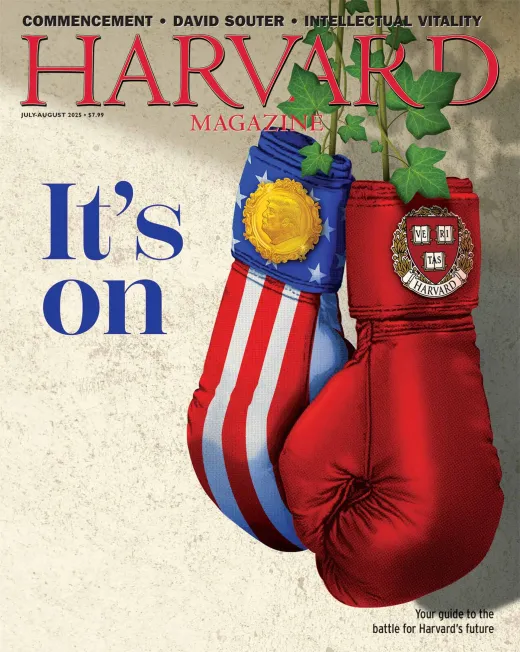
HARVARD MAGAZINE – JULY/AUGUST 2025

July-August 2025

HARVARD MAGAZINE (June 17, 2025): The latest issue features ‘It’s On’…

The Standoff: Harvard’s Future in the Balance

“The stakes are so high that we have no choice but to fight,” says Garber.

Harvard’s Standoff: The Fight’s Key Players

The people shaping the battle over federal funding, international students, and DEI

by Nina Pasquini

Harvard’s Standoff: The Financial Stakes

Putting Harvard’s $53 billion endowment into perspective

by Jonathan Shaw

Meet the Lawyers Behind the Harvard v. Trump Lawsuit

A roster of lawyers on both sides

by Max J. Krupnick

Download PDF Issue

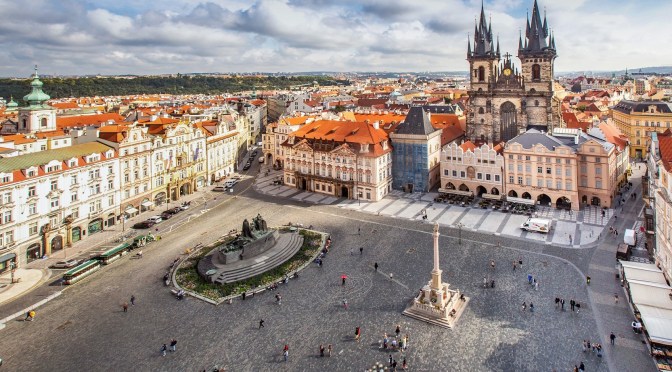
Travel Tours: What It’s Like To Grow Up In Prague (DW)

DW Euromaxx (November 23, 2024): Prague – a city straight out of a fairytale, with its cobblestone streets, iconic red rooftops, and famed Czech beer. But beyond the picture-perfect image, what is life really like in the capital of the Czech Republic?

CHAPTERS 00:00 Intro 00:46 Living arrangements 02:36 Getting around 03:18 Roza’s work as a greenfluencer 04:56 Cost of living 05:37 Studying in Prague 06:24 Social life

Is it still as magical for locals as it is for tourists? We follow 21-year-old student Rozárie to find out.

#Prague #Czechia #dweuromaxx

Analysis: ‘The American Economy’ (Oct. 19, 2024)

Special reports: The envy of the world

The Economist SPECIAL REPORTS (October 15, 2024): The latest special report features “The American Economy” – The envy of the world…

The envy of the world

The American economy has left other rich countries in the dust. Expect that to continue, argue Simon Rabinovitch and Henry Curr

The American economy has left other rich countries in the dust

American productivity still leads the world

Is higher inequality the price America pays for faster growth?

The shale revolution helped make America’s economy great

Why the American stockmarket reigns supreme

China’s yuan is nowhere close to displacing the greenback

What can stop the American economy now?

History & Design: Central Park In New York City

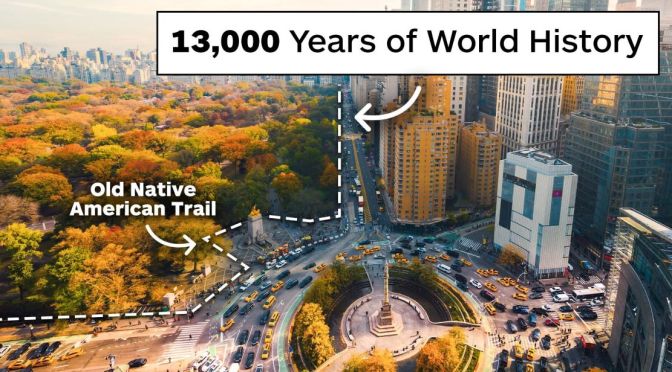
Architectural Digest (September 19, 2024) – Michael Wyetzner of Michielli + Wyetzner Architects joins AD in New York as he returns to Central Park to explore the thousands of years of history found there.

Video timeline: 00:00 Intro 00:28 Columbus Circle 01:55 Glen Span Arch 03:44 Cleopatra’s Needle 05:45 The Blockhouse 06:41 The Arsenal 08:23 McGown’s Pass 10:40 Strangers’ Gate

Although Central Park itself would not have existed 200 years ago, you can track the use of the land back 13,000 years. From ancient Native American trails to billion-year-old rocks, take an in-depth look at the thousands of years of history housed inside this iconic park.

Lifestyles: Living On A Narrowboat In England

DW Euromaxx (September 7, 2024): Paul and Anthony Smith-Storey sold their house to buy a narrowboat and travel the canals of North West England full-time.

Has radically changing their surroundings made them truly happier, and what can we learn from them? You’ll find out in our new series ‘Living Differently.’

CHAPTERS: 00:00 Intro 00:55 Inside Paul and Anthony’s narrowboat 02:36 How much does it cost them? 04:21 Tips for a lifestyle change

#DWEuromaxx #LivingDifferently #Narrowboat

Reviews: What Life Is Like At Cambridge University

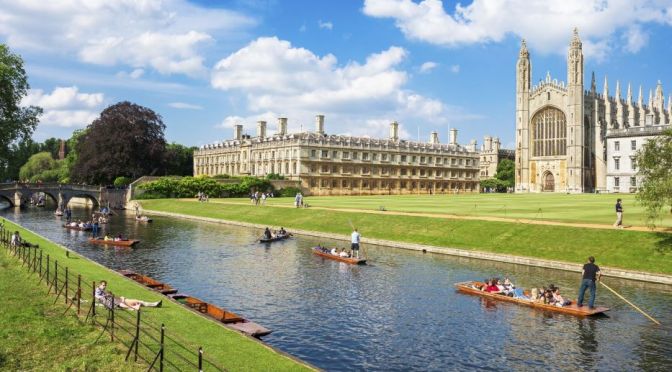
DW Euromaxx (August 10, 2024): Studying at the world-famous University of Cambridge is a dream for many international students. So, what’s it like to study there? How much does it cost? And do Cambridge students have time for fun?!

CHAPTERS 00:00 Intro 00:24 Facts & figures 00:43 Application process 01:24 Fees & finances 03:15 Housing & accommodation 04:47 Student life 06:09 Tips & challenges

Euromaxx reporter Clare Trelawny-Gower takes you to her alma mater to give you the lowdown on how YOU could study at Cambridge. #DWStudyinginEurope #DWEuromaxx #Cambridge

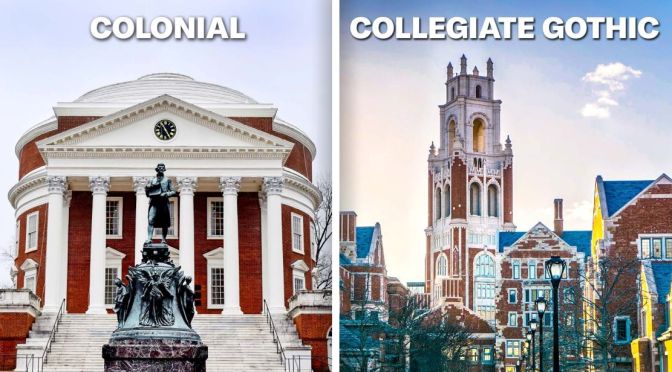
Architecture: A Tour Of College Campus Styles

Architectural Digest (August 9, 2024) – Michael Wyetzner of Michielli + Wyetzner Architects returns to AD, this time breaking down four of the most common styles of college campus. Universities have been around for almost a thousand years and in that time have seen their designs evolve through the generations.

Video timeline: 00:00 Intro
01:29 Colonial
04:51 Collegiate Gothic
08:10 Modernism
11:49 Brutalism

From the collegiate gothic halls of Yale to modern and brutalist buildings later added to the campuses of Harvard and UPenn, Wyetzner takes an in depth look at some of the most famous styles of college architecture to look out for this semester.

Education: “Schooling’s Stagnation” – July 13, 2024

Special reports: Must try harder

The Economist SPECIAL REPORTS (July 8, 2024): The latest special report features “Schooling’s Stagnation” – Must try harder…

Must try harder

Schools in rich countries are making poor progress. They need to get back to basics, argues Mark Johnson

Schools in rich countries are making poor progress

Hanging on to the best of them is getting harder

The rich world’s teachers are increasingly morose

Will artificial intelligence transform school?

Efforts to teach character bring promise and perils

England’s school reforms are earning fans abroad