Tag Archives: Social Media

REVIEW: “Donald Trump, Zohran Mamdani, and Posting as Politics”

An AI Review: “Donald Trump, Zohran Mamdani, and Posting as Politics”

In The New Yorker essay “Donald Trump, Zohran Mamdani, and Posting as Politics,” Kyle Chayka explores how social media has become not merely a communication tool for political figures but the primary arena in which politics itself now unfolds. The piece contrasts the digital personas of Donald Trump and Zohran Mamdani to illustrate how posting has evolved into a core exercise of power and a new form of political identity.

Chayka begins by chronicling former President Trump’s frenetic use of Truth Social, the platform he created after leaving Twitter. Trump does not merely announce decisions online; he appears to make them there. For instance, in June 2025, Trump unilaterally declared and publicized a ceasefire between Israel and Iran on Truth Social after having ordered strikes on Iranian nuclear facilities only days earlier. He issued warnings and taunts in the same all-caps style he once used to brag about the size of his nuclear arsenal compared to Kim Jong Un’s. The essay argues that this real-time posting has compressed world-shaking events into casual, ephemeral updates, trivializing violence and policy into the equivalent of viral content.

Yet Trump is not alone in harnessing the power of constant broadcasting. Chayka turns to Zohran Mamdani, a 33-year-old New York State assembly member and Democratic nominee for New York City mayor, who embodies a different approach to digital politics. Where Trump’s style is bombastic and combative, Mamdani’s presence on TikTok and Instagram is more polished and warm. His short-form videos—some produced by the creative agency Melted Solids—blend documentary realism with the aesthetics of viral influencer content. Clips of Mamdani walking through Manhattan or spontaneously greeting his filmmaker mother, Mira Nair, have garnered millions of views. His collaborations with high-profile digital creators like the Kid Mero and Emily Ratajkowski reflect an understanding that modern campaigns are not only about policy but about generating a steady stream of engaging material.

Chayka underscores that both politicians are symptoms of the same phenomenon: social media has swallowed the traditional infrastructure of political communication. No longer is there a clear boundary between a politician’s private musings and official pronouncements. The medium has become the message—and often the entire substance. Even memes have turned into flash points of political conflict. The article recounts how U.S. border officials detained a Norwegian tourist, Mads Mikkelsen, who carried a satirical meme of Vice President J.D. Vance on his phone, suggesting that political images have acquired the power to implicate their holders in ideological battles.

This transformation, Chayka argues, has significant consequences. Trump’s unfiltered posts, once viewed as a sideshow, have become a primary instrument of governance, with the potential to inflame conflicts or disrupt alliances. Meanwhile, Mamdani’s refined authenticity—crafted through video diaries and collaborations—illustrates how even progressive candidates must adopt the same always-online posture to cultivate a political following. While Mamdani’s style is less aggressive than Trump’s, it similarly depends on projecting a version of authenticity that is inseparable from performance.

The essay closes by reflecting on the future of American politics in this environment. The Democratic Party has struggled to counter Trump’s cultural dominance, as shown by tone-deaf spectacles like a Pride concert at the Kennedy Center with anti-Trump parodies of Les Misérables. In contrast, Mamdani’s campaign has generated genuine enthusiasm. Yet Chayka raises an open question: can the idealistic energy of this new digital-first politics survive the compromises of actual governance? If online performance has become the main credential for leadership, it is unclear whether any politician—no matter their ideology—can avoid the pressures of perpetual self-promotion.

In the end, Chayka’s essay offers a clear warning: social media has transformed politics into a theater of the immediate, where every post carries the weight of policy and every meme can become an instrument of power. Whether this dynamic can be reconciled with the demands of responsible government remains the central challenge of the digital age.

Strengths of the Essay

  1. Compelling Illustrations of Digital-First Governance
    • The article effectively juxtaposes Trump’s all-caps proclamations with Mamdani’s handheld videos.
    • Vivid examples: Trump’s posts about Iranian bombings feel almost satirical in their triviality—like “food grams”—yet they are deadly serious.
    • The Vance meme incident (Norwegian tourist Mikkelsen denied entry partly over a meme) underscores how digital artifacts can become politically consequential.
  2. Clear Argument
    • Chayka convincingly demonstrates that posting is no longer merely a marketing tactic—it is a form of exercising power.
    • The phrase “influencer-in-chief” encapsulates this new paradigm succinctly.
  3. Timeliness and Relevance
    • The piece captures the unsettling normalcy of this phenomenon—how we now expect statecraft to be conducted via apps.
    • It connects to broader anxieties about the erosion of institutional boundaries between governance and entertainment.
  4. Balanced Comparison
    • The contrast between Trump’s aggression and Mamdani’s optimism avoids simple equivalence.
    • The essay suggests that while style differs, both are beholden to the same dynamics: immediacy, spectacle, and performative authenticity.

Areas For Further Exploration

  1. A Critique of Consequences
    • While Chayka notes the trivialization of serious decisions (e.g., bombings posted like selfies), he stops short of examining the systemic dangers—the erosion of deliberative processes, the collapse of public trust, and the incentivizing of extremism.
    • A deeper dive into why social media rewards such maximalist performances—and how this affects democracy—would have been valuable.
  2. An Exploration of Audience Complicity
    • The essay portrays politicians as the main actors, but it could interrogate how audiences co-produce this environment: what are the incentives to consume, share, and reward this content?
    • Do voters really want “authenticity,” or simply entertainment masquerading as politics?
  3. Further developed Historical Context
    • While the piece references Trump’s first term, it could have drawn richer parallels with earlier media transformations:
      • Roosevelt’s radio “Fireside Chats”
      • Kennedy’s TV charisma
      • Obama’s early social media campaigns
    • This would help readers situate today’s moment within a longer trajectory.

Broader Implications

The essay ultimately raises unsettling questions:

  • If the performance of authenticity is now the primary qualification for political power, how do policy substance and institutional competence survive?
  • Is there any way for governance to reassert seriousness, or will the logic of virality always prevail?
  • What happens when online theater collides with offline consequences—wars, economies, civic life?

These questions feel especially urgent given that the piece suggests this dynamic is not limited to Trump’s right-wing populism but has also infiltrated progressive candidates.

*THIS ESSAY WAS WRITTEN BY CHAT GPT AND EDITED BY INTELLICUREAN.
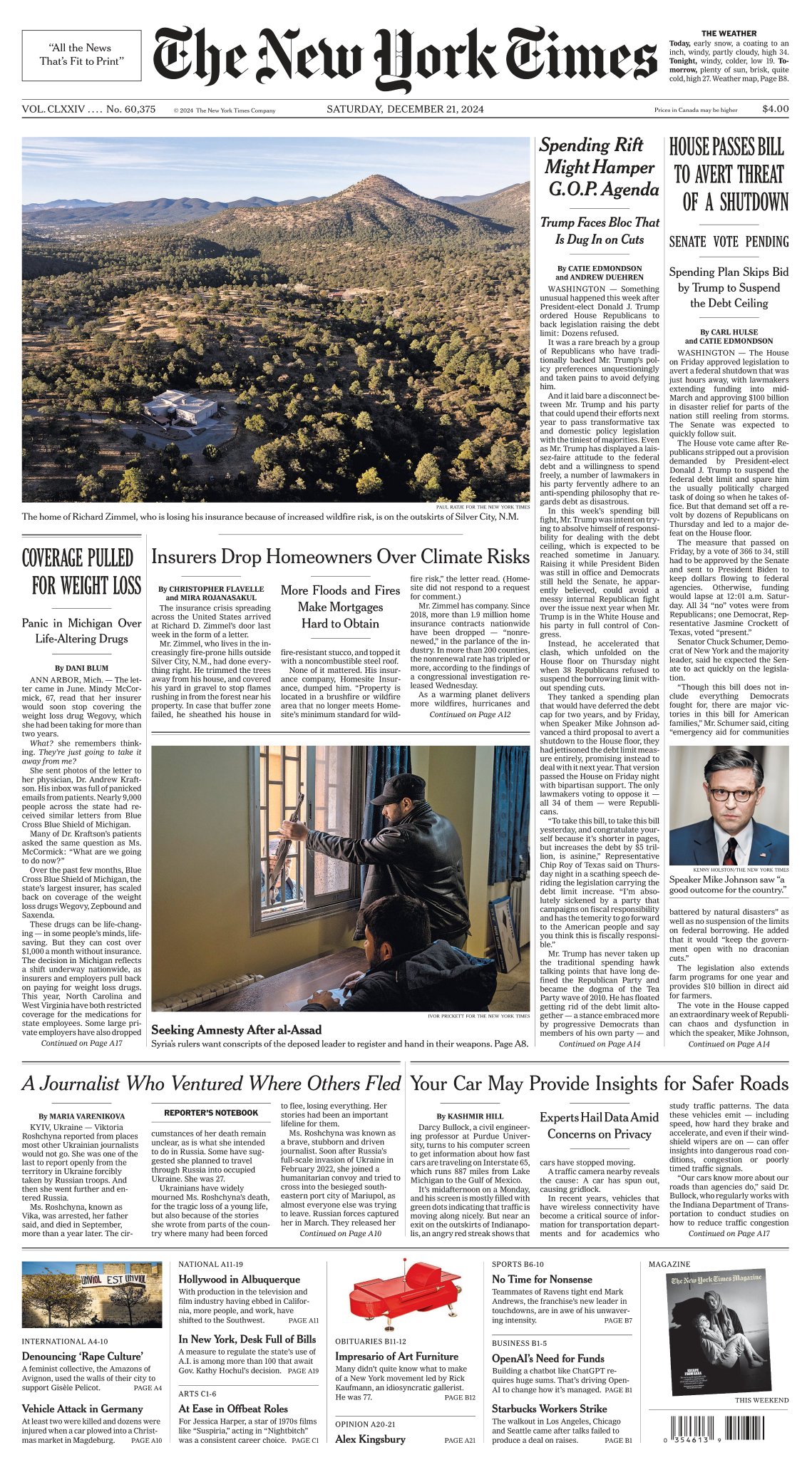
The New York Times —- Saturday, Dec. 21, 2024

Image

Congress Approves Spending Extension, Ending Shutdown Crisis

The Senate passed the measure, sending it to President Biden’s desk, shortly after the midnight deadline for funding to lapse.

Insurers Are Deserting Homeowners as Climate Shocks Worsen

Without insurance, it’s impossible to get a mortgage; without a mortgage, most Americans can’t buy a home.

Weight Loss Drugs Changed Their Lives. Then They Lost Coverage.

In Michigan, the state’s largest insurer has tightened restrictions around medications like Wegovy. Patients are panicking.

Al-Assad’s Soldiers Hope for Amnesty. First, They Have to Take a Number.

Syria’s new rulers say they will spare conscripts of Bashar al-Assad and pursue those who oversaw his regime’s abuses. Hundreds are lining up to learn which promise applies to them.

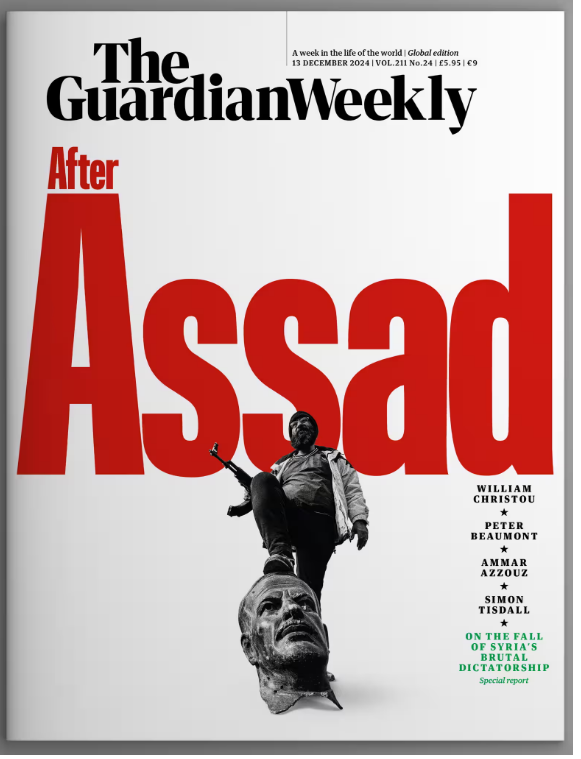
Politics: The Guardian Weekly-December 13, 2024

Image

The Guardian Weekly (December 11, 2024): The new issue features The fall of Syria’s brutal dictatorship. Plus The best books of 2024.

Not even the most optimistic of rebels could have predicted the rapid collapse, last weekend, of the Assad dynasty that ruled Syria with an iron fist for more than 50 years. Yet while there was relief and joy both inside Syria and among the nation’s vast displaced diaspora, it was also accompanied by apprehension over what might come next.

1

Spotlight | Russia and Ukraine wait warily for Trump transition
The idea of the US president-election as a saviour for Ukraine, as unlikely as it may seem, holds an appeal for an exhausted nation without a clear path to victory. Shaun Walker and Pjotr Sauer report

2

Environment | The jailed anti-whaler defiant in face of extradition threat
Capt Paul Watson talks to Daniel Boffey about his arrest on behalf of the Japanese government, his ‘interesting’ Greenland prison, and separation from his children

3

Feature | The growing threat of firearms that can be made at home
One far-right cell wanted to use 3D-printed guns to cause ‘maximum confusion and fear’ on the streets of Finland. Could the police intercept them in time? By Samira Shackle

4

Opinion | Farage is lying in wait. Britain can’t afford for Starmer to fail
It is not enough for the Labour leader’s ‘milestones’ to be achieved. Voters must feel the improvement in their daily lives, says Guardian columnist Jonathan Freedland

5

Culture | The best books of 2024
From a radical retelling of Huckleberry Finn to Al Pacino’s autobiography, our critics round up their favourite reads of the year

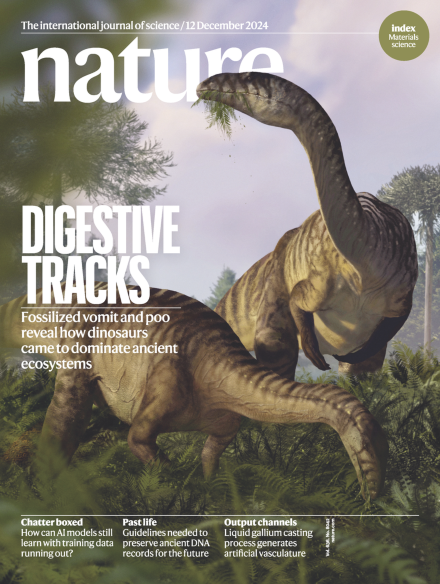
Research Preview: Nature Magazine – Dec. 12, 2024

Volume 636 Issue 8042

Nature Magazine – December 11, 2024: The latest issue features ‘Digestive Tracks’ – Fossilized vomit and poo reveal how dinosaurs came to dominate ancient ecosystems…

Do you drink coffee? Ask your gut

Largest study of links between consumption of the beverage and gut diversity finds coffee-loving bacteria.

Has Venus ever had an ocean? Its volcanoes hint at an answer

Chemistry of the planet’s atmosphere suggests that its interior has never held water.

Ancient stacks of dishes tell tale of society’s dissolution

Artefacts from a Mesopotamian archaeological site suggest that people in the region founded and later rejected an early form of the organized state.

Arts/Books: Times Literary Supplement – Dec. 13, 2024

Image

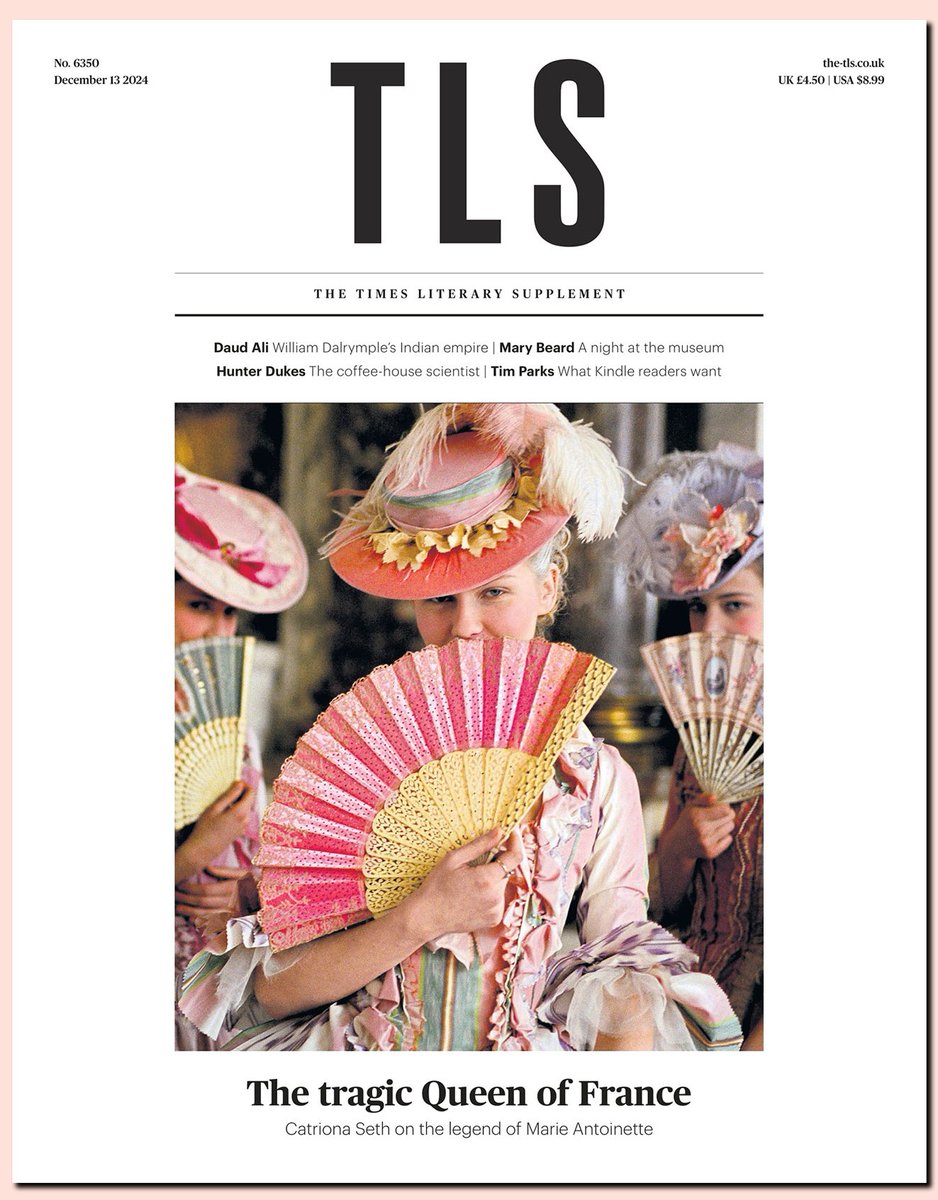
Times Literary Supplement (December 11, 2024): The latest issue features ‘The tragic Queen of France’ – The legend of Marie Antoinette; William Dalrymple’s Indian empire; Mary Beard – A night at the museum; The coffee house scientist; What Kindle readers want…

Arts/Books: Times Literary Supplement – Dec. 6, 2024

Image

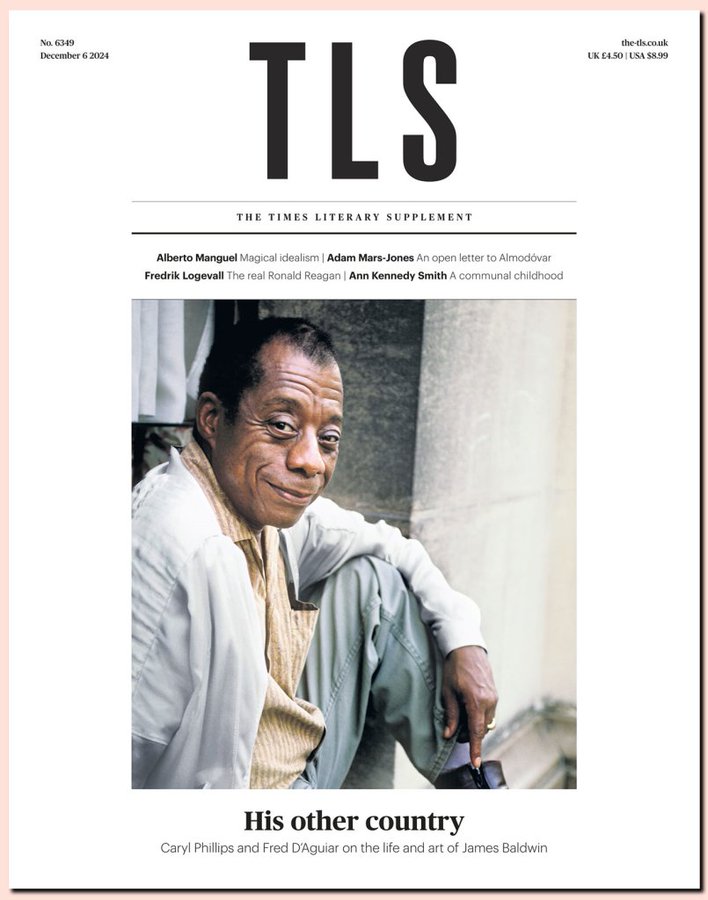
Times Literary Supplement (December 4, 2024): The latest issue features ‘HIs Other Country’ – The James Baldwin revival continues in the 100th anniversary year of his birth. A trickle of biographies has become a flood, and the causes for which he stood, racial equality and gay rights, speak to the times.

Knowing his name – Celebrating the centenary of James Baldwin’s birth

By Fred D’Aguiar

Bring back the big fish

Mississippi River levee, 1940

Record-label scouts chase ‘strange compositions’

By Harry Strawson

No sacred cows

Obelisco de Buenos Aires, Plaza de la República, 1997

A video game challenges the history of Argentina

By Mia Levitin

Research Preview: Nature Magazine – Dec. 5, 2024

Volume 636 Issue 8041

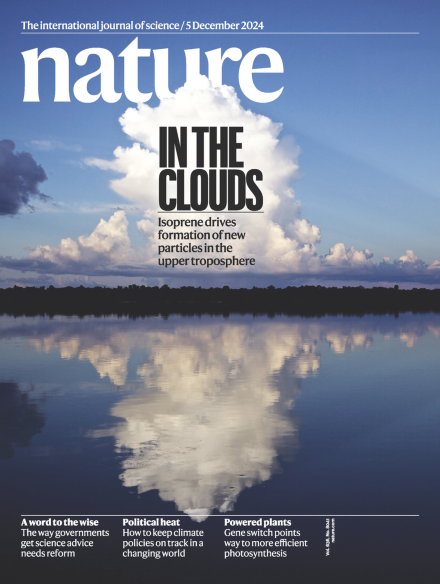
Nature Magazine – December 3, 2024: The latest issue features ‘In The Clouds’ – Isoprene drives formation of new particles in the upper troposphere…

Humble scientists earn more trust

Study participants rated fictional scientists who admitted their own knowledge gaps as more credible.

The cells that help the immune system fight lung cancer

Neighbouring cells bolster the immune cells’ tumour-fighting abilities.

Antarctica’s first known amber whispers of a vanished rainforest

The only continent where amber had not been found no longer has that distinction, thanks to a sediment core drilled just offshore.

This dwarf planet might have its very own ice volcano

Relatively warm regions of the object called Makemake could also be explained by a dusty planetary ring.

Politics: The Guardian Weekly – Nov. 29, 2024

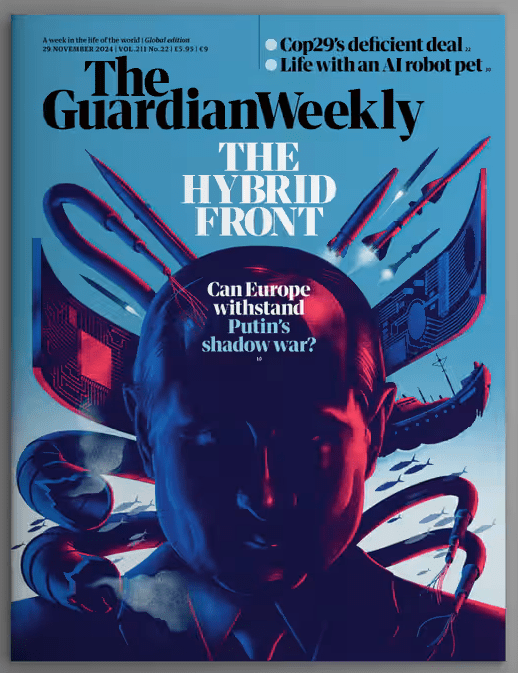
The Guardian Weekly (November 28, 2024): The new issue features last week’s escalation of Nato ballistic missile activity, in which UK and US-made missiles were launched into Russia for the first time, brought a predictably cold response from Vladimir Putin – who loosened Moscow’s nuclear doctrines and promised more attacks with a new, experimental ballistic missile.

1

Spotlight | Does lame duck Biden have time to Trump-proof democracy?
The outgoing US president may only have weeks left in the White House, but activists say he can secure civil liberties, accelerate spending on climate and healthcare, and spare death row prisoners. David Smith reports

2

Science | My weird, emotional week with an AI pet
Casio says Moflin can develop its own personality and build a rapport with its owner – and it doesn’t need food, exercise or a litter tray. But is it essentially comforting or alienating? Justin McCurry finds out

3

Feature | Are we right to strive to save the world’s tiniest babies?
Doctors are pushing the limits of science and human biology to save more extremely premature babies than ever before. But when so few survive, are we putting them through needless suffering? By Sophie McBain

4

Opinion | A social media ban is in everyone’s interests – not just kids under 16
Van Badham on why she resents being excluded from protection against monetised fear, anger and toxicity

5

Culture | A road trip like no other: an epic drive on the Autobahn
Fifty years after electronic pioneers Kraftwerk released a 23-minute song about a road – and changed pop music for ever – Tim Jonze hits the highways of Düsseldorf and Hamburg in search of its futuristic brilliance

Research Preview: Nature Magazine – Nov. 28, 2024

Volume 635 Issue 8040

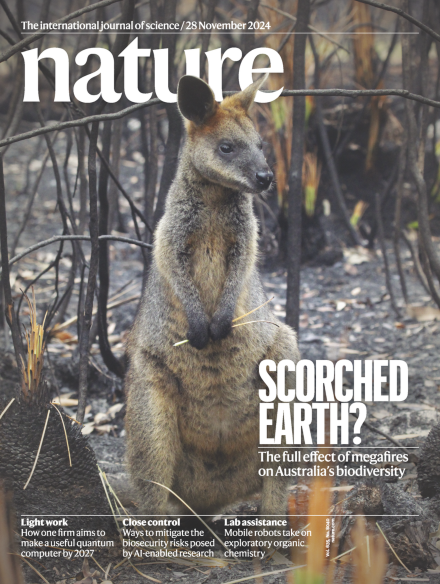
Nature Magazine – November 13, 2024: The latest issue features

How to create psychedelics’ benefits without the ‘trip’

Stimulating certain brain cells in mice seems to ease anxiety without causing hallucination-like effects.

Farmers’ fires leave long-lasting smudge on African weather

A pall of smoke from burning cropland each year decreases rainfall in the annual monsoon.

How human brains got so big: our cells learned to handle the stress that comes with size

Understanding how human neurons cope with the energy demands of a large, active brain could open up new avenues for treating neurological disorders.

Arts/Books: Times Literary Supplement – Nov. 29, 2024

Image

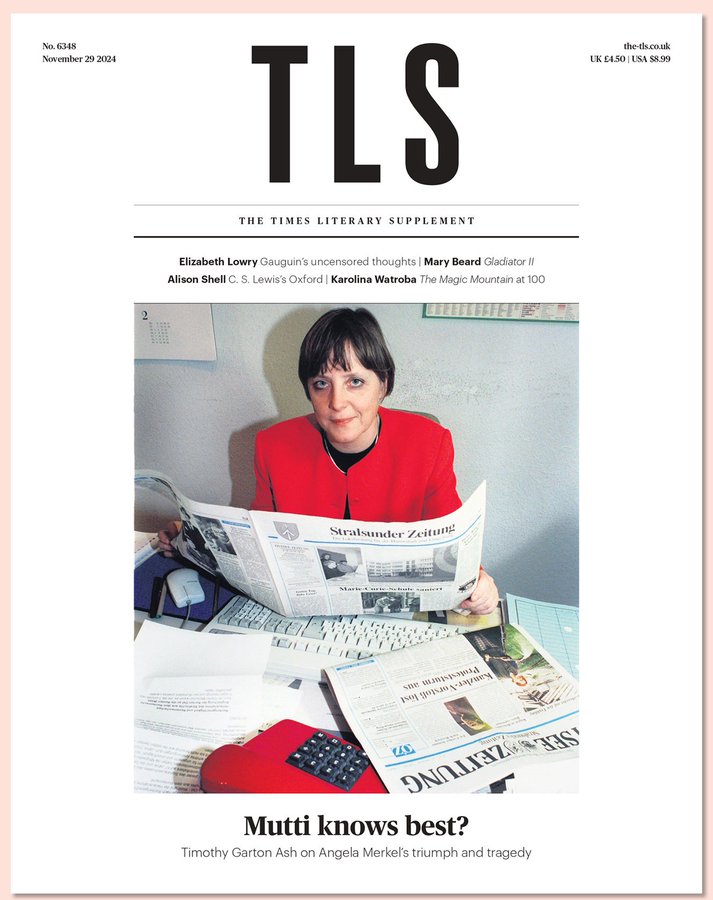
Times Literary Supplement (November 27, 2024): The latest issue features ‘Mutti Knows Best?’ – Angela Merkel’s triumph and tragedy; Gaughin’s uncensored thoughts; Gladiator II; C.S. Lewis’s Oxford and “The Magic Mountain” at 100…