Juliette Powell & Art Kleiner Berrett-Koehler (2023)
The benefits and harms of social media are intimately tied to the ongoing debate about artificial intelligence (AI). Will AI systems trained partly on social media benefit or harm humanity? In their excellent, sometimes alarming, analysis of engineering, social justice, commerce and government, entrepreneur and technologist Juliette Powell and writer and educator Art Kleiner compare humans developing AI tools to first-time parents. They recommend guiding AI systems “as we would a child towards full adulthood”.
Consciousness
John Parrington Icon (2023)
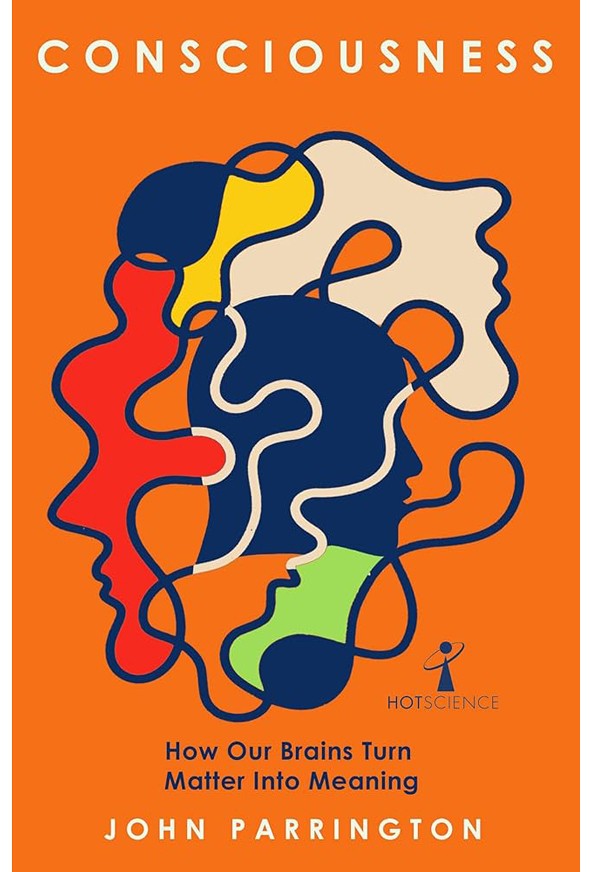
“The material basis of human consciousness is one of the biggest unsolved issues in science,” admits cellular and molecular pharmacologist John Parrington in his pithy addition to a vast literature dating from the time of ancient Greek philosopher Aristotle. He considers many theories and proposes his own. Humans, he argues, are distinguished by conceptual thought and language, along with skills in designing tools and technologies. The evolution of these powers transformed our brains, creating meaning and consciousness.
Democracy in a Hotter Time
Ed. David W. Orr MIT Press (2023)
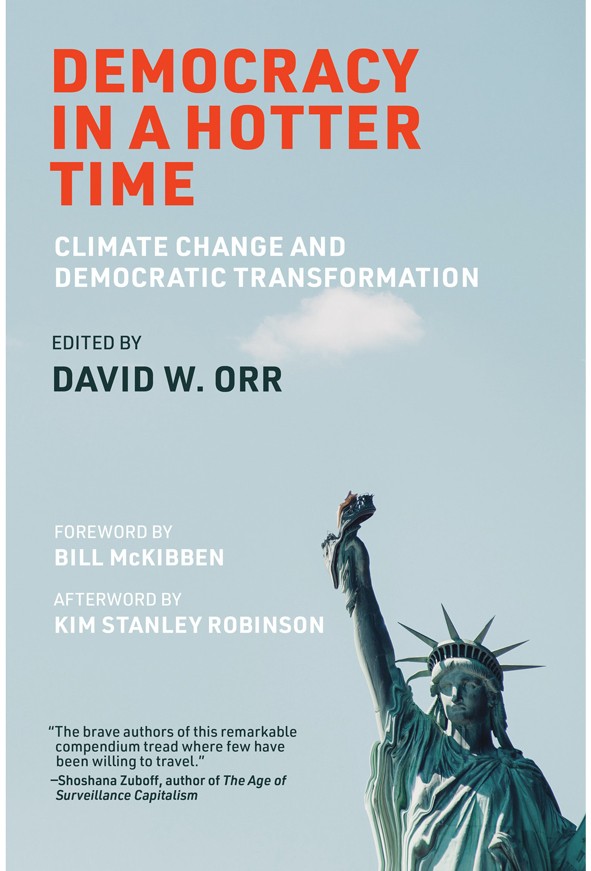
Environmentalist David Orr writes in the introduction to this timely collection that the planet faces two interlinked crises: “rapid climate change and potentially lethal threats to democracy”. The US Constitution rigorously protects private property but does not mention ecological systems, he observes. Contributors — almost all US-based — from a wide range of fields examine the need for political reform. The book is in four parts: the nature of democracy; roadblocks to change; policy and law; and education, including academic culture.
Extinctions
Michael J. Benton Thames & Hudson (2023)
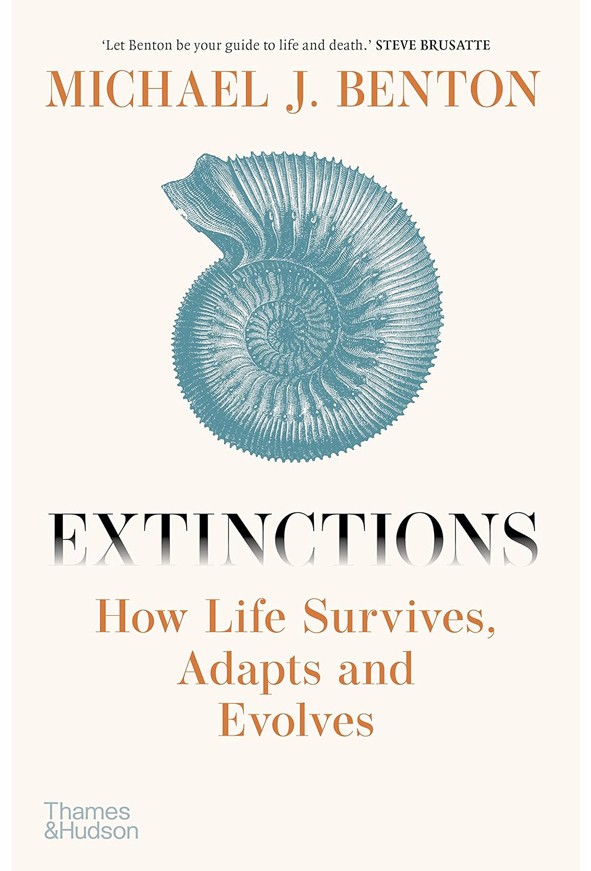
When palaeontologist Michael Benton learnt about dinosaurs as a boy, he “loved the fact they were extinct”. They were like real science fiction. Perhaps he also intuited that their extinction permitted his existence. As his deeply informed and readable book reveals, the mass extinction at the end of the Cretaceous period 66 million years ago allowed a new cohort of creatures — including mammals — to “inherit the Earth”, as did four earlier extinction events. Living species represent less than 1% of all the species that have existed.
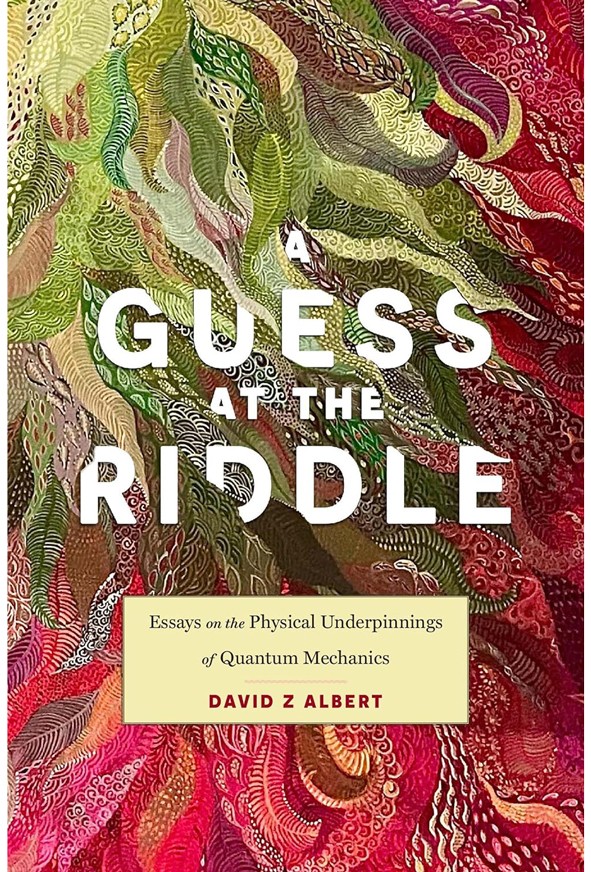
A Guess at the Riddle
David Z. Albert Harvard Univ. Press (2023)
The physical interpretation of quantum mechanics has been a controversial riddle since the 1920s, when Niels Bohr argued that the atom’s inner workings could not be described in physical terms. Today, many philosophers and physicists disagree, but there’s no consensus on an alternative. Philosopher David Albert’s provocative book argues, in three essays, that Bohr’s quantum-measurement problem starts to make sense if the wave function is understood as the fundamental physical ‘stuff’ of the Universe.
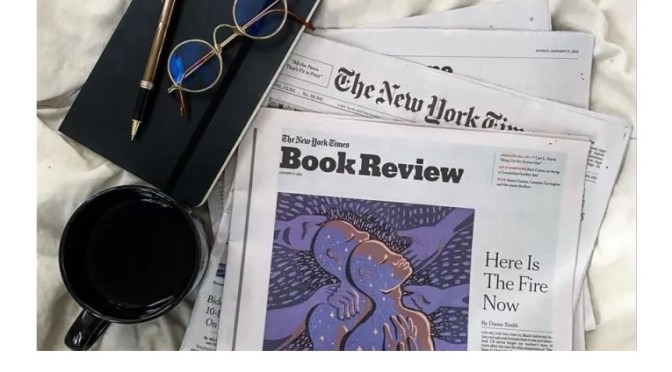
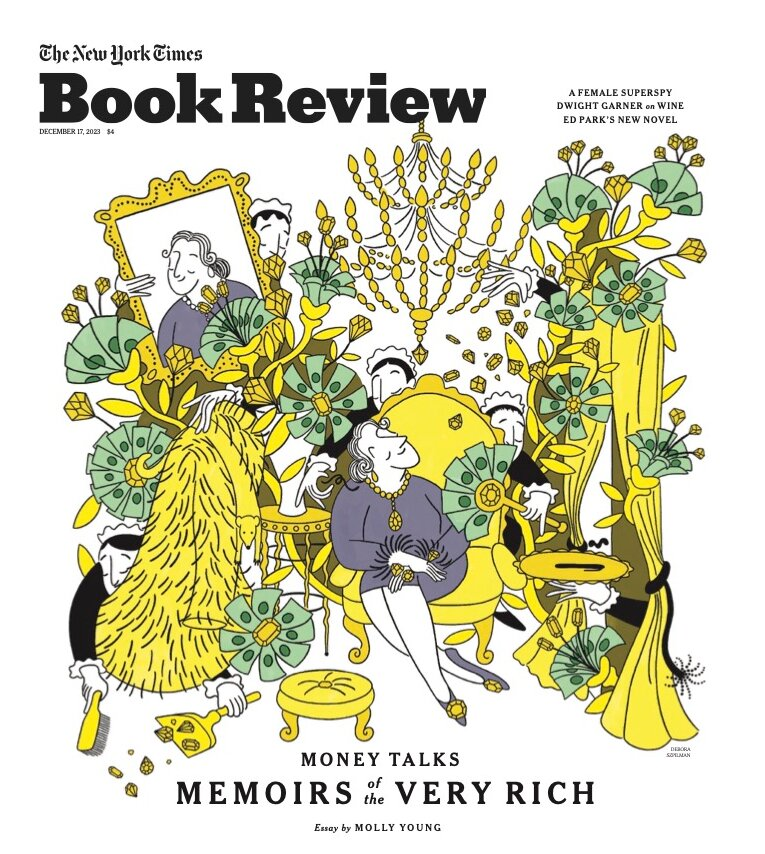
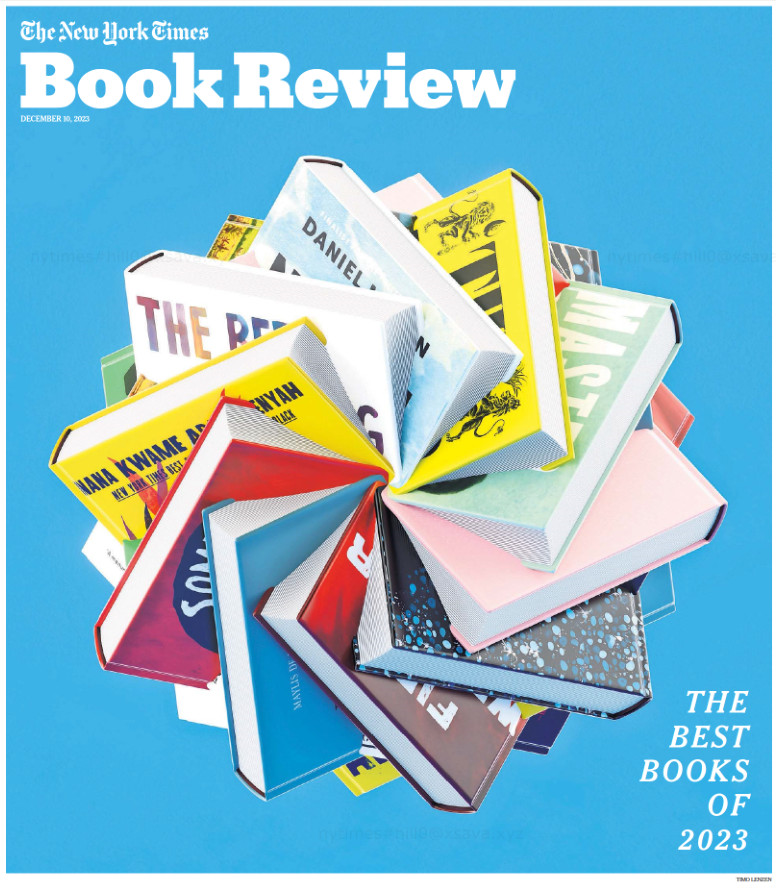
THE NEW YORK TIMES BOOK REVIEW (December 15, 2023): The latest issue features ‘Glorious Memoirs by the Very Rich’ – A look back at a time when the super-wealthy felt they had nothing to lose by letting readers inside their gilded corridors; For Kate Christensen, Bad Prose Can Never Yield a Great Book – “A book is made of language,” says the author, whose new novel is “Welcome Home, Stranger.” “How can a house be great if it’s made of shoddy materials? How can a dinner be great if it’s made with terrible ingredients?”
“Class consciousness takes a vacation while we’re in the thrall of this book,” Barbara Grizzuti Harrison wrote in the Book Review in 1985, in her evaluation of the heiress Gloria Vanderbilt’s memoir “Once Upon a Time.” To be clear, Harrison was referring to the class consciousness of the reader, not the author. Vanderbilt demonstrates perfect awareness throughout her book that most young children don’t play with emerald tiaras and alligator jewel boxes lined in chestnut satin, or rely on the services of multiple butlers, or lose count of their own houses. Harrison’s point was that Vanderbilt’s talent with a pen — and perspective on her own economic altitude — allowed consumers of her tale to suspend their envy and engage with the reality of growing up in opulent neglect.
“A book is made of language,” says the author, whose new novel is “Welcome Home, Stranger.” “How can a house be great if it’s made of shoddy materials? How can a dinner be great if it’s made with terrible ingredients?”
What books are on your night stand?
I’m living temporarily in a rented house in Iowa City, teaching at the Writers’ Workshop. When I arrived there was not one book in the entire place, so I made an emergency trip to the local used-book store, collecting whatever leaped out at me from the shelves, mostly based on the wonderful titles: “Overhead in a Balloon,” by Mavis Gallant; “Watson’s Apology,” by Beryl Bainbridge; “Anthills of the Savannah,” by Chinua Achebe; “The Brandon Papers,” by Quentin Bell; “The Marquis of Bolibar,” by Leo Perutz; “The Seven Sisters,” by Margaret Drabble; “Bruised Hibiscus,” by Elizabeth Nunez; “A Journal of the Plague Year,” by Daniel Defoe.
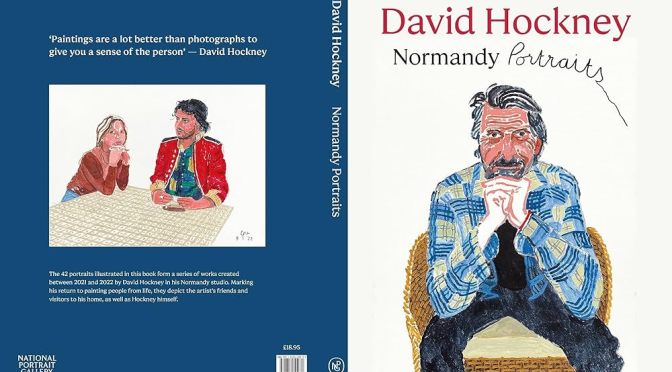
A compact album presentation of Hockney’s newest explorations in portraiture
Artbook D.A.P.:
This concise volume illustrates around 40 acrylic on canvas works painted by David Hockney (born 1937) at his Normandy studio—depicting his friends and visitors, as well as the artist himself. David Hockney: Normandy Portraits showcases a series of some previously unseen portraits, across 48 pages, uninterrupted by text, to allow readers to engage directly with the artworks.
These new works highlight the ongoing importance of portraiture within the artist’s practice and demonstrate his sentiment that “drawings and paintings … are a lot better than photographs to give you a sense of the person.”
Hockney returned to painting after an intensive period spent depicting the Normandy landscape using an iPad. The portraits were painted quickly and directly onto the canvas without underdrawing. As Hockney has said, “to do a portrait slowly is a bit of a contradiction.”
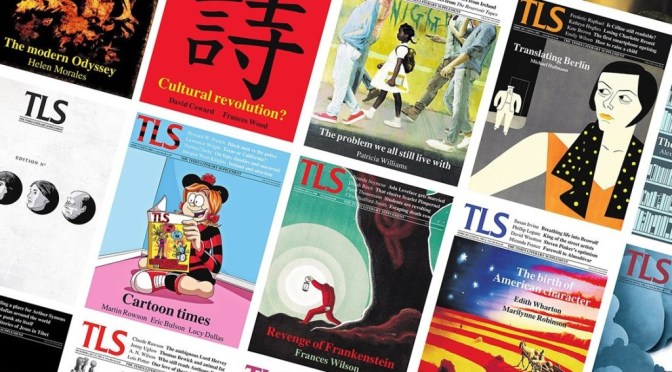
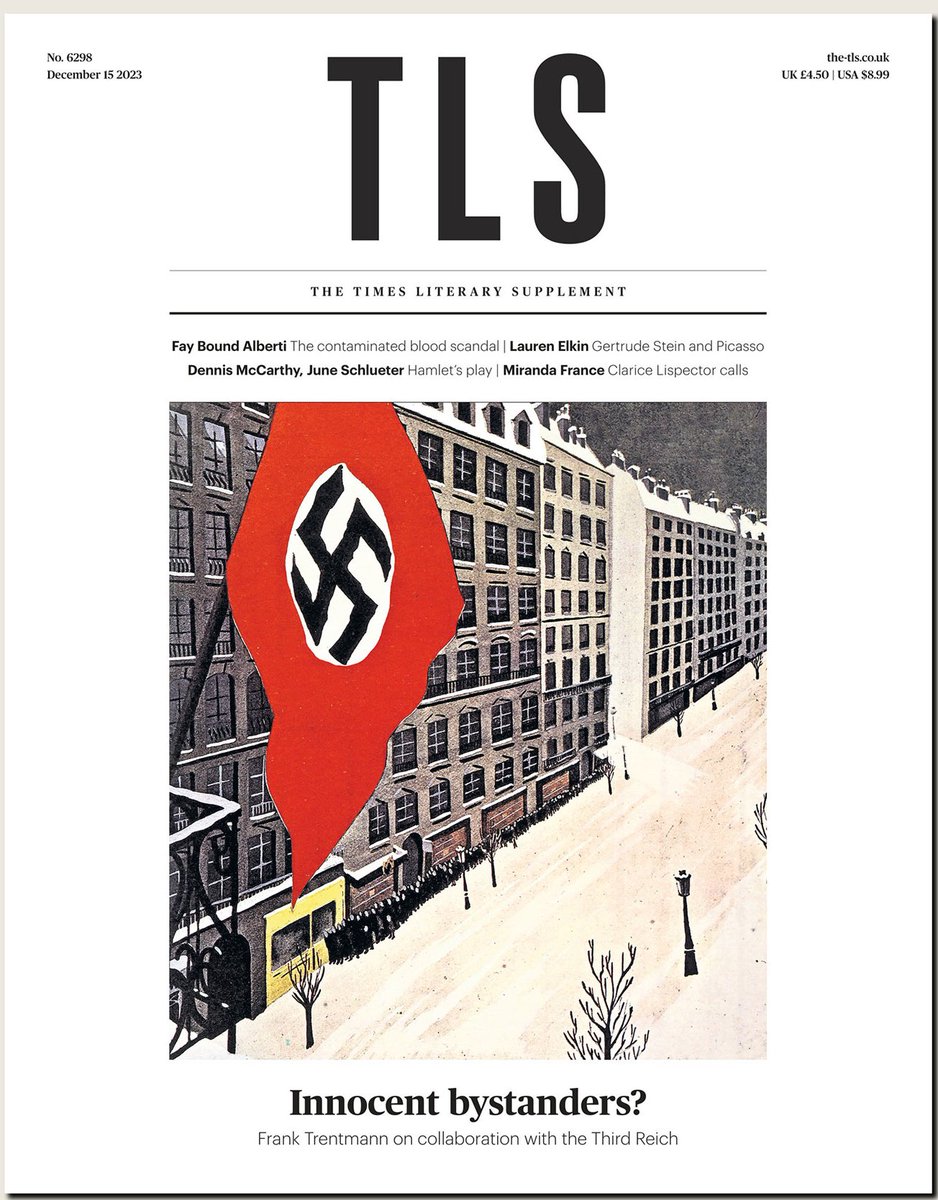
Times Literary Supplement (December 13, 2023): The latest issue features ‘Innocent bystanders? – Collaboration with the Third Reich; The contaminated blood scandal; Gertrude Stein and Picasso, Hamlet’s play; AI Journalism and Clarice Lispector calls…
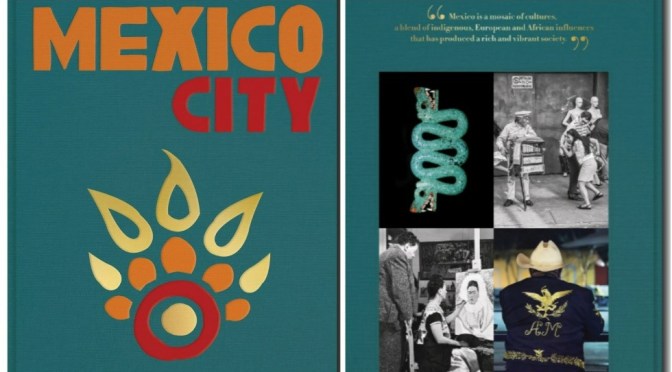
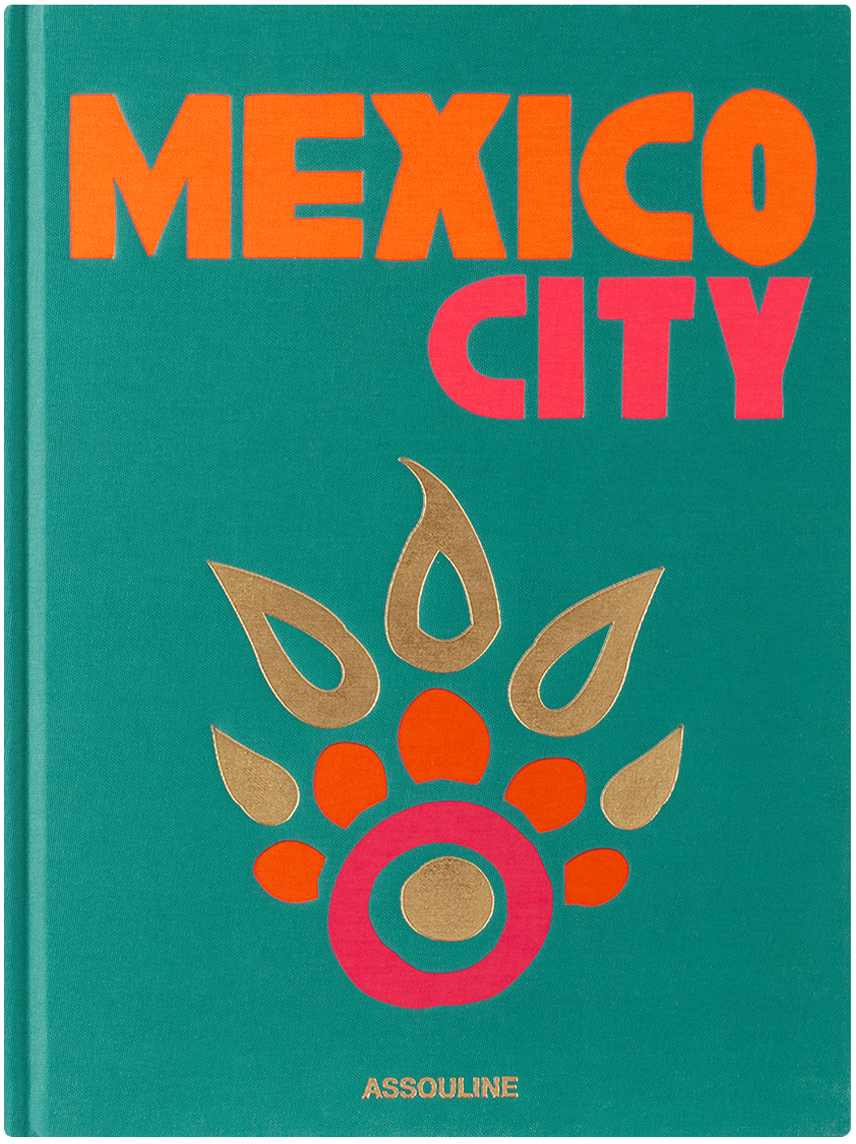
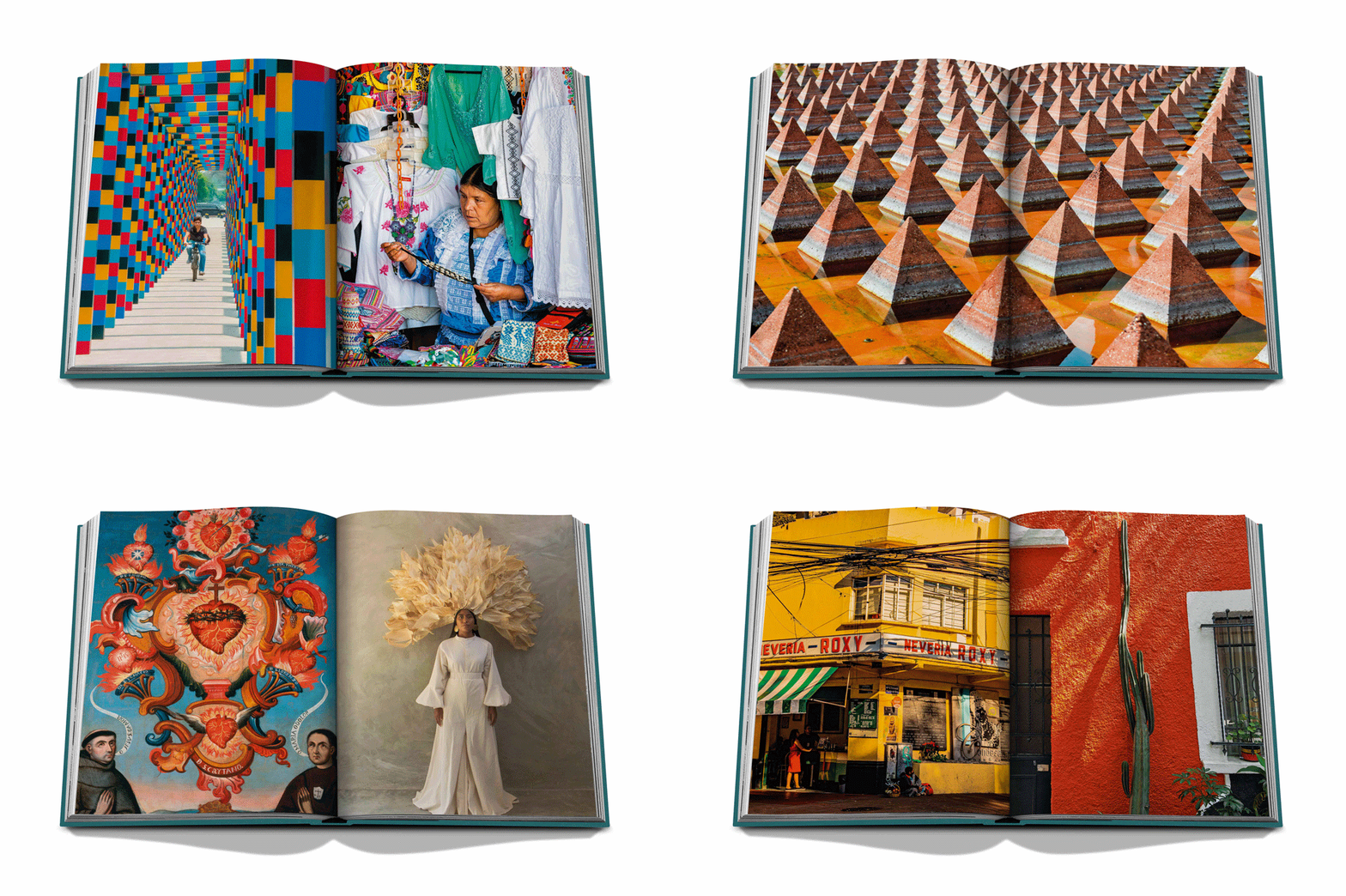
Assouline Publishing (December 2023) – With a history dating back to the fourteenth century, Mexico City blends indigenous pre-Hispanic roots with colonial architecture and Spanish-baroque influences.
This unique fusion, crafted from local materials like cantera and tezontle, inspires artists and architects alike. Iconic structures like Diego Rivera’s Anahuacalli Museum and Juan O’Gorman’s Cave House proudly embody the city’s rich history.
Today, Mexico City serves as a vibrant backdrop for renowned filmmakers such as Alejandro González Iñárritu, Alfonso Cuarón, and Michel Franco. Discover a city of wonders, where history and creativity come to life.
ABOUT THE AUTHOR
Born in Mexico City, Aleph Molinari is an editor, writer, art director and photographer. He is the co–editor in chief of Purple magazine, as well as a contributor to Materia Press, Art Observed and other publications. His work focuses on materializing culture through publications, exhibitions and campaigns. Among his projects, he co-curated the Purple Festival at the Palais Galliera in Paris, created a botanical sculpture for Soundwalk Collective and Patti Smith’s exhibition Evidence at the Centre Pompidou, and worked on the programming for Soundwalk Collective’s project The Third Eye at Karl Lagerfeld’s 7L Library. He lives in Paris.
Anfisa Vrubel is an editor, writer and researcher whose work focuses on the intersection of art, culture and politics. Vrubel is an editor-at-large at Art Observed and Purple magazine, where she contributes original features and interviews with artists and top thinkers in the fields of politics, ecology, art and culture. After studying government at Harvard, she pursued an editorial career, working for publications such as The Brooklyn Rail and its offshoot publication, The River Rail, which is devoted to environmental art and criticism. Vrubel grew up in New York City and lives between there and Mexico City.See all books by Aleph Molinari, Anfisa Vrubel.
Ryan Gosling and Margot Robbie in “Barbie.”Credit…Warner Bros. Pictures
Films, TV shows, albums, books, art and A.I.-generated SpongeBob performances that reporters, editors and visual journalists in Culture couldn’t stop thinking about this year.
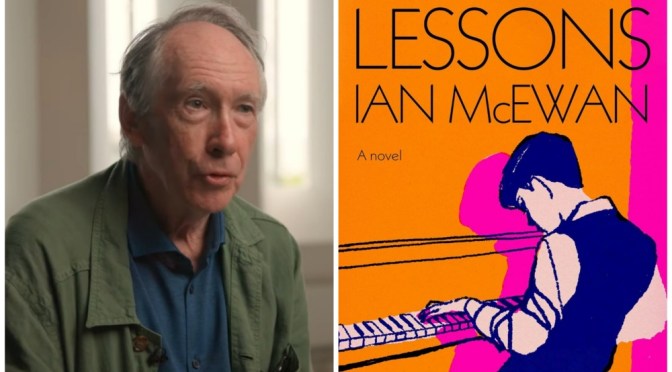
Louisiana Channel (December 8, 2023) – “If I didn’t write, I’d go nuts because I wouldn’t have a single reason to exist. The pleasure of bringing something together is so intense,” says British Ian McEwan, who would love to live forever and discover how we’re doing in 10,000 years.
Ian McEwan is considered one of the most important British novelists alive today. When he writes, characters and plot are difficult to separate because “often characters arise out of plots, often plots drive characters into existence”, he says. What is crucial to McEwan when writing is that “circumstances make the character and the characters generate possibilities. That sense of possibility is always so important. So characters can create their own waves.” The novel Lessons (2022) is McEwan’s most personal novel. It was written in lockdown when he was entering his 70s and beginning to take a look back at his existence. People who know him well can always connect what he is writing with things in his own life, he says.
In Lessons, McEwan wanted to create “the emotional truth of certain rather sad, tragic, disturbing things that happened in my family”, he says. “And the reflective element was also the movement towards trying to understand the circumstances, not only of my life but my generation’s life.” Ian McEwan enjoys reading biographies, but “if you want to know everything it’s possible to know about a great poet, you’ll need to read three or four biographies written over maybe a century or two centuries”, he says. He admits that fiction does not influence him like it did when he was younger.
“We have very little sense of how to generate on the page an open-ended character until the writing of Jane Austen” and he adds that it was the great Russian writers who taught us how to write characters as if they were real people. By the turn of the 19th to the 20th century, there was a great artistic revolution; McEwan points out and emphasizes that it was especially James Joyce who taught us “to understand characters from the flow of consciousness, right from the very inside”.
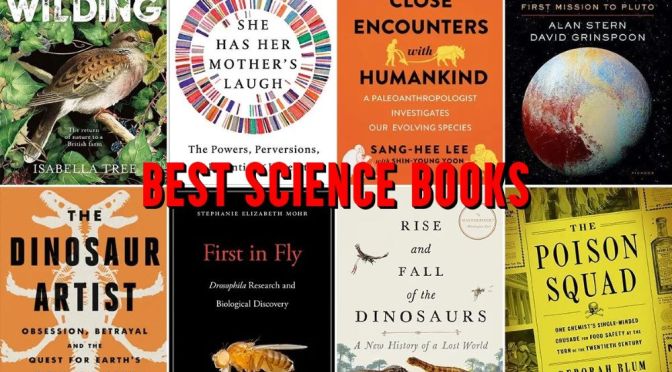
Smithsonian Magazine (December 7, 2023) – From stories on the depths of the ocean to the stars in the sky, these are the works that moved us the most this year
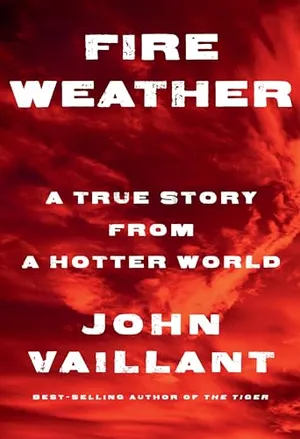
In a year when record-setting forest fires raged across Canada and their smoke clouded the skies across North America, and a Maui forest fire incinerated the town of Lahaina in a deadly blaze, the most harrowing book we read about climate change featured a devastating forest fire. In Fire Weather, author John Vaillant crafts a thriller about a cataclysmic inferno that burned through the town of Fort McMurray, Alberta, in May 2016. (We ran an excerpt of the book here.) The blaze generated hurricane-force winds and lightning, and entire neighborhoods burned to the ground under a type of pyrocumulus cloud usually associated with volcanoes. Roughly 100,000 people evacuated what would become the costliest disaster in Canadian history.
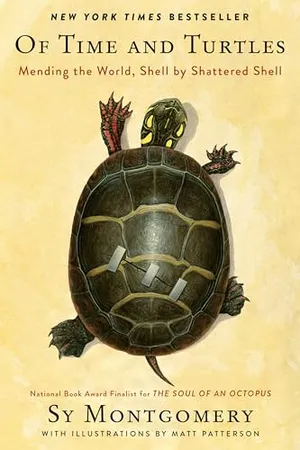
Scuttling Earth for at least 220 million years, turtles have survived more than one mass extinction, including the one that offed dinosaurs. But in a geologic instant, humans have pushed more than half their 360 known species to near-extinction. And in an actual instant, animals slated to live a century or more can be killed—after their shells are crushed by cars, their mouths are snagged by fishhooks or their ponds are drained by developers.
Yet there is hope for some turtles. The Turtle Rescue League in Southbridge, Massachusetts, rehabilitates hundreds of ailing turtles each year. In Of Time and Turtles, author Sy Montgomery joins the small squad in spring of 2020, just as routine life freezes for Covid-19. The book recounts her year with the league, as they incubated eggs, injected antibiotics, mended shattered shells and returned healed patients to nature.
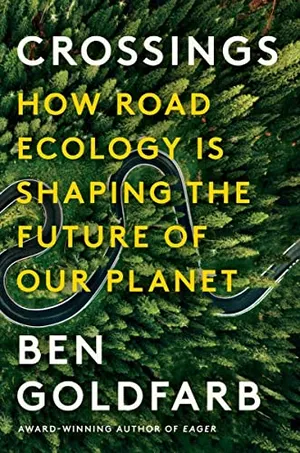
From the start of Ben Goldfarb’s fascinating book on road ecology, Crossings, the reader is peppered with jaw-dropping facts. Some 40 million miles of roadways encircle the Earth. While a half-century ago 3 percent of land-dwelling mammals died on a road, in 2017 that percentage had quadrupled. In 1995, researchers estimated that, in the United States, deer factor into more than a million vehicle crashes annually, injure 29,000 drivers and passengers, and kill more than 200. (We ran an excerpt of the book, with many more surprising facts, here.) And the book is engrossing for other reasons. In it, Goldfarb chronicles roads from California to Canada to Tasmania to show how they have impacted the natural world—and that includes us. He explores how roads have affected everything from butterflies to mountain lions to frogs.
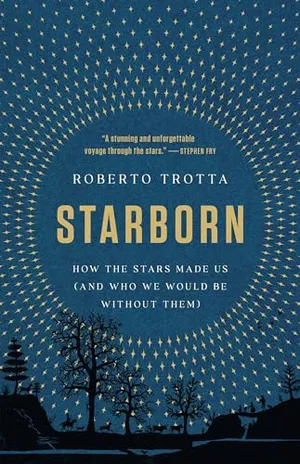
Without the stars, the history of our species would have been very different. That’s the central argument in Roberto Trotta’s engaging homage to the star-studded night sky, Starborn. The stars are more than just pretty: As Trotta shows, our efforts to understand the movements of the stars and planets (and the sun and the moon) played a crucial role in the development of navigation and precision timekeeping. In ancient Egypt, for example, the bright star Sirius was worshipped as a deity, and the start of the new year was signaled when Sirius first became visible in the pre-dawn sky. Seafaring Polynesians, meanwhile, traveled from island to island in the Pacific Ocean by memorizing the positions and movements of some 200 stars—aided by their knowledge of ocean currents, fish, birds and seaweed. Today’s most accurate timekeepers are atomic clocks, which count vibrations of a cesium atom—but even these need to be tweaked based on the sun and stars, because the Earth’s spin is gradually slowing.
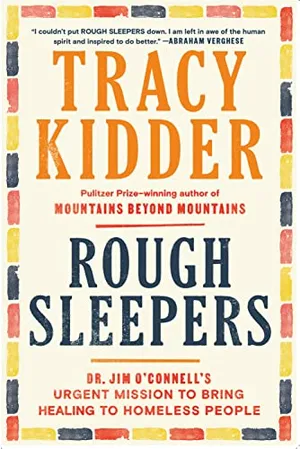
In Rough Sleepers, author Tracy Kidder profiles a dedicated doctor who treats Boston’s homeless. Harvard-educated physician Jim O’Connell is the founder and president of the Boston Health Care for the Homeless Program. “The Program,” as O’Connell calls it, employs roughly 400 workers to treat more than 11,000 homeless people annually. O’Connell, who refers to the unhoused as “rough sleepers,” a 19th-century British term, is called Dr. Jim by his patients. He treats them in a clinic and drives a van to meet them on the streets. He addresses everything from lice and scabies to more advanced problems that patients have following years of neglect, including large tumors and, in one case, a hernia that dropped below a man’s knees. Aside from care, O’Connell sometimes hands out his own money and gift cards.Report this ad
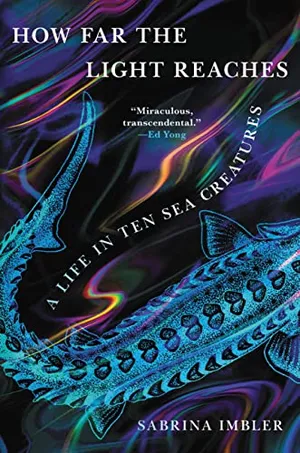
Nature is unabashedly queer. We are surrounded by species that live outside our human experience, points of reflective contrast to our terrestrial lives. Sabrina Imbler’s scientifically steeped memoir How Far the Light Reaches revels in these differences, using an aquarium of undersea creatures as foils for significant moments in the author’s life. The preserved remains of a whale are a foil for dissecting a breakup, and our sometimes leering fascination with a marine worm called the sand striker gives form to a meditation on consent. Imbler’s essay “We Swarm,” especially, is a treasure. Squishy marine organisms called salps, which spend part of their lives in aggregations of hundreds of individuals, open a warm recollection of Pride celebrations along the New York shoreline.
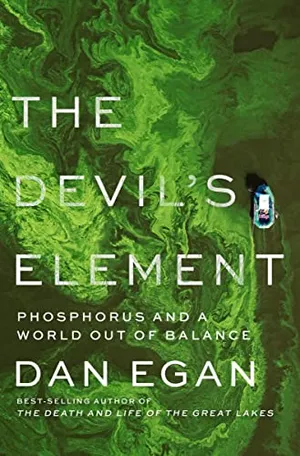
As chemicals go, phosphorus—number 15 on the periodic table—is something of a paradox. In The Devil’s Element, journalist Dan Egan explains how phosphorus is essential for all life; it can be found in every cell in your body. But it is also combustible and explosive. So-called white phosphorus is a waxy substance that spontaneously combusts when exposed to oxygen—and can cause temperatures to hit 2,370 degrees Fahrenheit. White phosphorus was the key ingredient in the bombs dropped by the Allies on Hamburg, Germany, during World War II, unleashing a firestorm that leveled the city and killed some 37,000 people.Report this ad
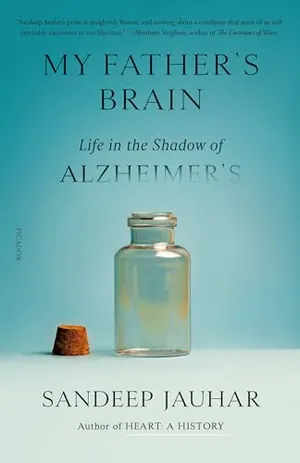
Alzheimer’s disease robs a person’s memory, yes, but it also causes sweeping behavioral transformations that can include agitation and stubbornness. Those with the condition can become unrecognizable to their loved ones and difficult patients. The slow-acting and irreversible disease “is more feared than death itself,” writes Sandeep Jauhar in My Father’s Brain. After his father starts to show signs of dementia in 2014, Jauhar’s parents move states to be closer to their sons. But the close proximity does little to prevent his father’s Alzheimer’s from upending the lives of family members. Jauhar doesn’t shy away from narrating the ugly and difficult experiences of his father’s irrational behavior, which often leads to sibling fights and frustration for the author.
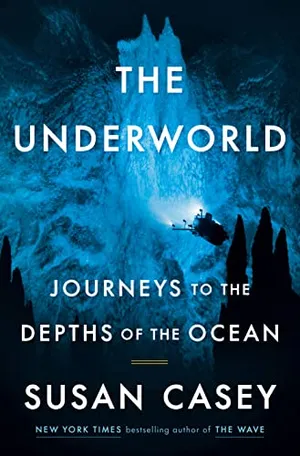
In June, the world paid more attention than usual to deep-sea exploration when OceanGate’s Titan submersible went quiet while exploring the Titanic. Later, the public learned the craft imploded. That was the rare tragic episode of deep-ocean adventures, one years in the making due to the company’s failure to test and heed warnings. But a much more awe-inspiring exploration of the deep has been taking place for decades, and Susan Casey’s enthralling book, The Underworld, documents it in stunning detail. (We ran an excerpt of the book here.) As Casey points out, though you can view maps of Mars on your iPhone, 80 percent of Earth’s seafloor hasn’t been charted in sharp detail.
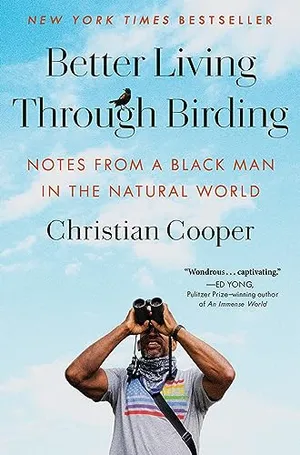
In little more than two minutes captured on video in May 2020, the life of New York City birder Christian Cooper drastically changed. He saw a dog run through a forested section of Central Park and asked its owner, a white woman, to leash her pet in accordance with the law. When she refused, he began to film her with his smartphone, and as he did, she said she would call the police on him and tell them “an African American man is threatening my life.” As the racist incident came to national attention, Cooper quickly became the best-known birder in America. And, amid a hobby that is largely older and white, “the fact that that birder is Black turned heads,” Cooper writes.
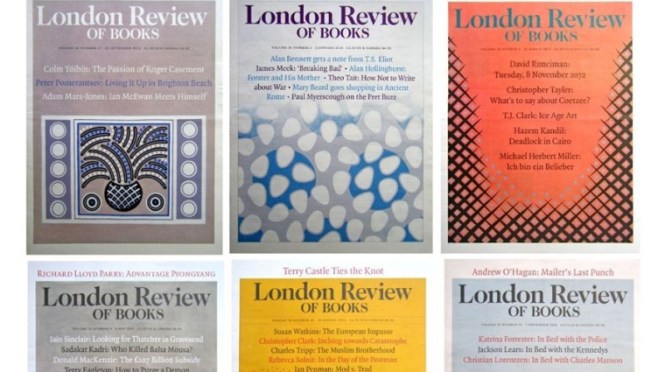
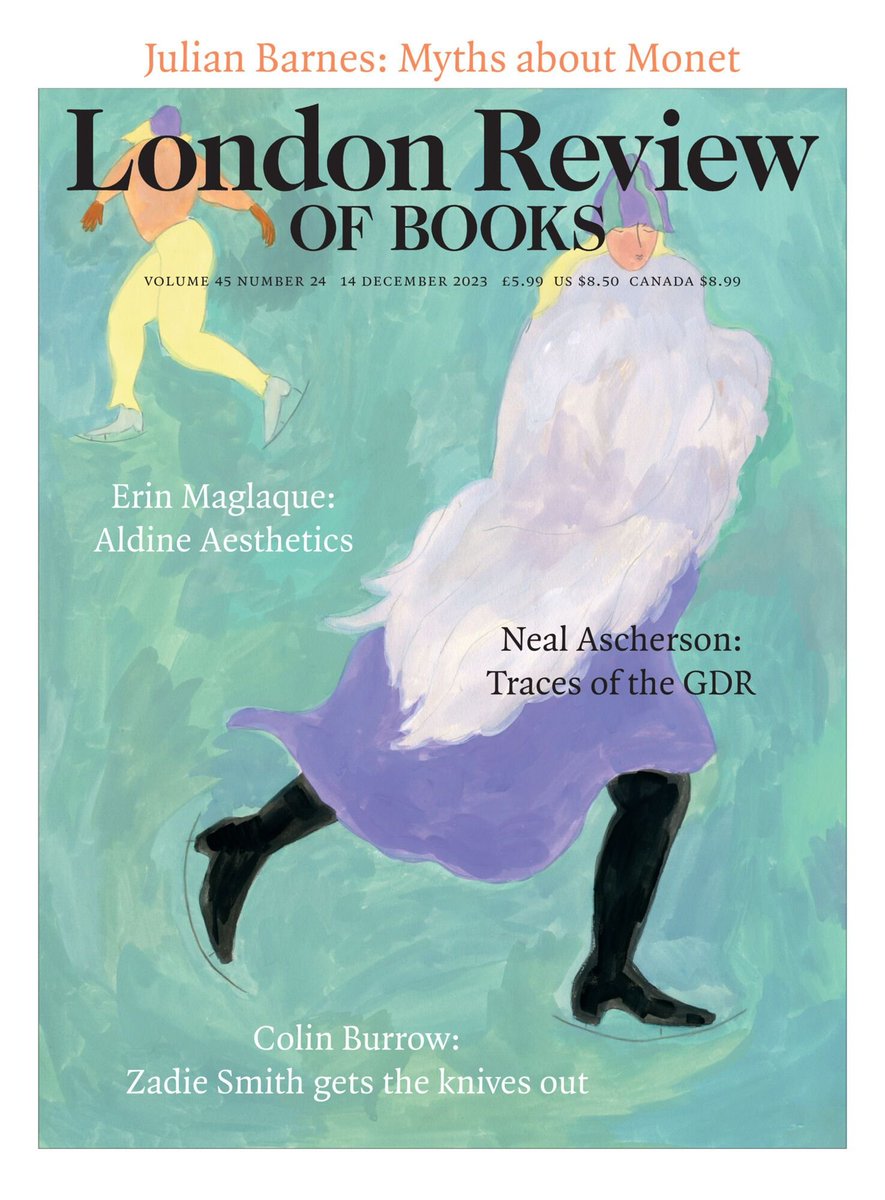
London Review of Books (LRB) – December 7, 2023: The latest issue features Monet: The Restless Vision; Aldus Manutius – The Invention of the Publisher; The Fraud by Zadie Smith and Capitalism and Slavery…

 Nature Magazine (December 15, 2023):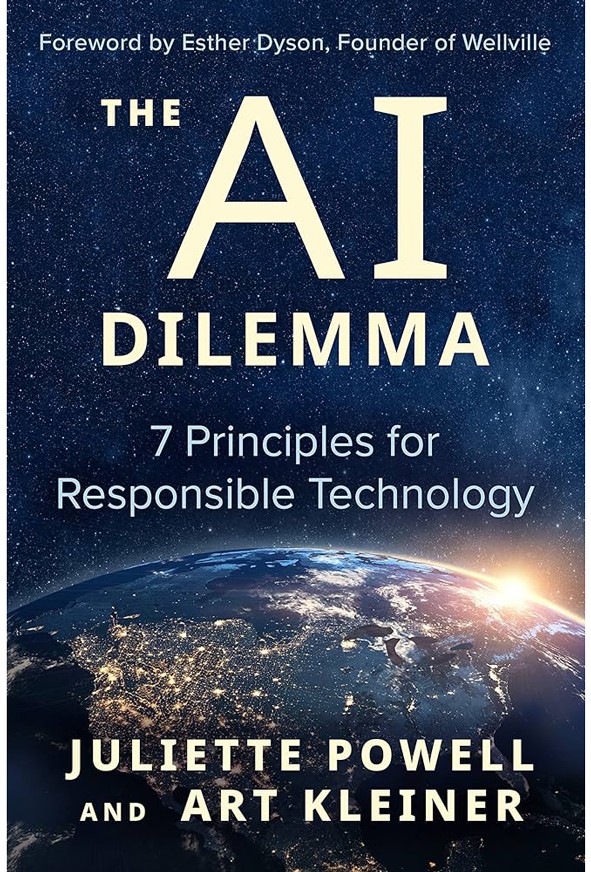




 Artbook D.A.P.: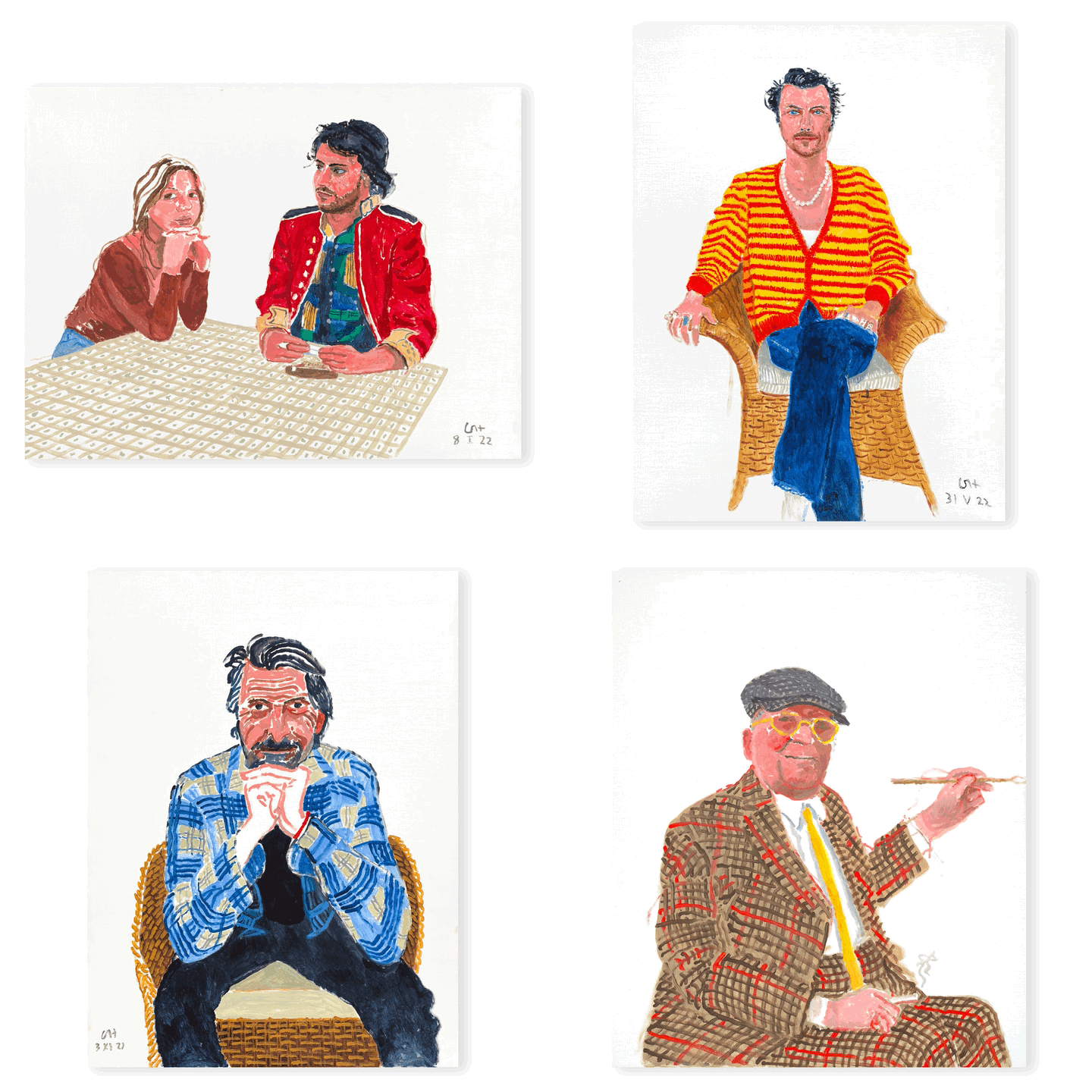



:focal(800x602:801x603)/https://tf-cmsv2-smithsonianmag-media.s3.amazonaws.com/filer_public/54/95/5495bf57-cfac-40d7-a1ac-4fc8f56baa3e/booklist-2023-science.jpg)