Architectural Remodels: North Adelaide House

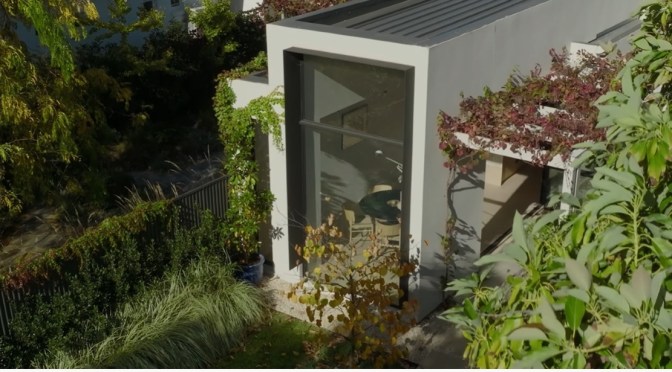
With calming detail and considered materiality, Williams Burton Leopardi transforms the heritage listed North Adelaide Residence into a modern home. Through the new expansions, different moods are evoked from room to room, seeing the modern home uplifted into a refined contemporary context.

Video timeline: 00:00 – Subscribe to The Local Projects Print Publication 00:13 – Introduction to North Adelaide Residence 00:38 – Single Fronted Cottages 01:07 – Bringing Grandness into A Workers Cottage 01:38 – Working with An Unusual Brief 02:13 – Creating Different Moods Throughout The Home 02:46 – The Separation of Old and New 03:17 – The Impact of A Narrow Site 04:00 – The Handmade Aspect to A Heritage Home 04:33 – The Materials Palette 05:18 – Subtle but Beautiful Details 06:02 – The Architects Favourite Aspects of The Home 06:49 – The Local Projects Print Publication

The infusion of muted natural light demarks the old from the new whilst material choices reference the original worker’s cottage. Inspired by a desire for simplicity and quality detail, the redesign of the modern home mirrors the original fabric of the residence. The choice to remove the third bedroom allows for an extra living area, whilst elongating the structure into the garden ensures the home aligns with the lifestyle of its occupants. The residence provides a visual experience with increased access to sunlight through integrated skylights and the introduction of natural materials.

The use of oak wood references the heritage sandstone exterior and grounds the modern home. Further echoing the outdoors is joinery toned to match the washed oak flooring and the Turco Argento limestone kitchen benchtops. By establishing an indoor-outdoor connection, a natural flow between the garden and the modern home is seamlessly achieved. Through folded doors and a large picture window, the inviting garden helps to enhance the liveability of North Adelaide Residence – where an intentional quality resonates through each material choice.


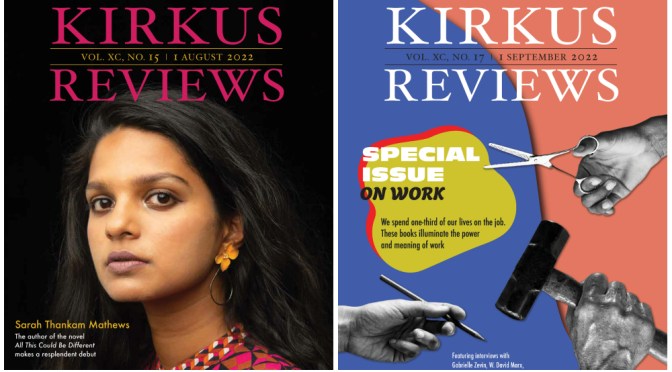
Books: Kirkus Reviews – September 15, 2022 Issue

Digital Issue XCVIEW DIGITAL ISSUE

An Athlete and Activist Shares His Story With Kids

Here is the truly amazing thing that few people besides Tommie Smith remember about his gold medal–winning 200-meter run in the 1968 Olympics: He broke the world record in just under 20 seconds on one good leg.

‘The Rushdie Affair,’ Back in the News

As we were editing our Sept. 15 issue in mid-August, news broke that author Salman Rushdie had been attacked at a lecture in western New York state. The story sent shock waves through the literary community—a stark reminder that violence can lurk in the corners of literary debate. Rushdie is the author of many works of fiction and nonfiction and is most celebrated for his 1981 novel, Midnight’s Children, a kaleidoscopic epic of Indian life after independence that won the Booker Prize as well as two subsequent honors, the Booker of Bookers in 1993 and the Best of the Booker in 2008.

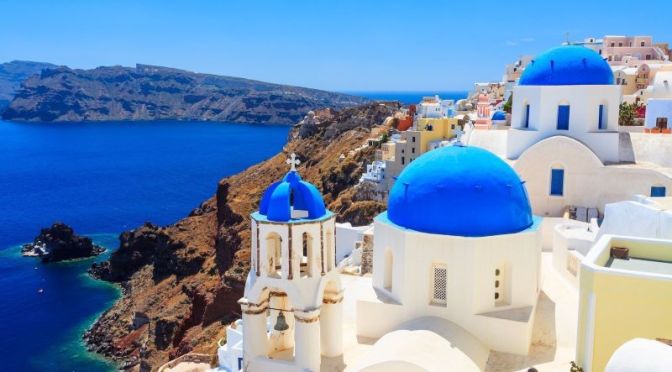
Summer Walks: Santorini In The Aegean Sea, Greece

Thera, Modern Greek Thíra, also called Santorin, or Santoríni, island, southernmost island of the Cyclades (Modern Greek: Kykládes) group, southeastern Greece, in the Aegean Sea, sometimes included in the Southern Sporades group. It constitutes a dímos (municipality) within the South Aegean (Nótio Aigaío) periféreia (region).

Geologically, Thera is the remaining eastern half of an exploded volcano. Its bow-shaped rim and the remnant isles of Thirasía and Aspronísi form an open lagoon that measures 37 miles (60 km) in circumference. In the centre of the lagoon are two active volcanic islets, Néa Kaméni (“New Burnt Island”) and Palaía Kaméni (“Old Burnt Island”). Thera proper consists largely of lava and pumice, the latter of which is the island’s main export. Red-wine grapes are also grown. The lagoon is rimmed by red-, white-, and black-striped volcanic cliffs rising to almost 1,000 feet (300 metres). The summit of Thera is the 1,857-foot (566-metre) limestone Mount Profítis Ilías in the southeast. The chief town, Thíra (locally called Firá), was badly damaged by an earthquake in 1956. Other settlements include Emboríon and Pírgos to the south and the port of Oía at the north entrance to the lagoon, which was destroyed by the 1956 earthquake.

News: Jinping’s ‘Concerns’ Regarding Putin’s War & U.S.-Australia-U.K. Alliance

The Globalist heads to Uzbekistan for the latest on the meeting between Xi Jinping and Vladimir Putin. Plus: the Aukus security pact, one year on; how the EU plans to manage big tech; and Andrew Mueller’s round-up of the week’s news.

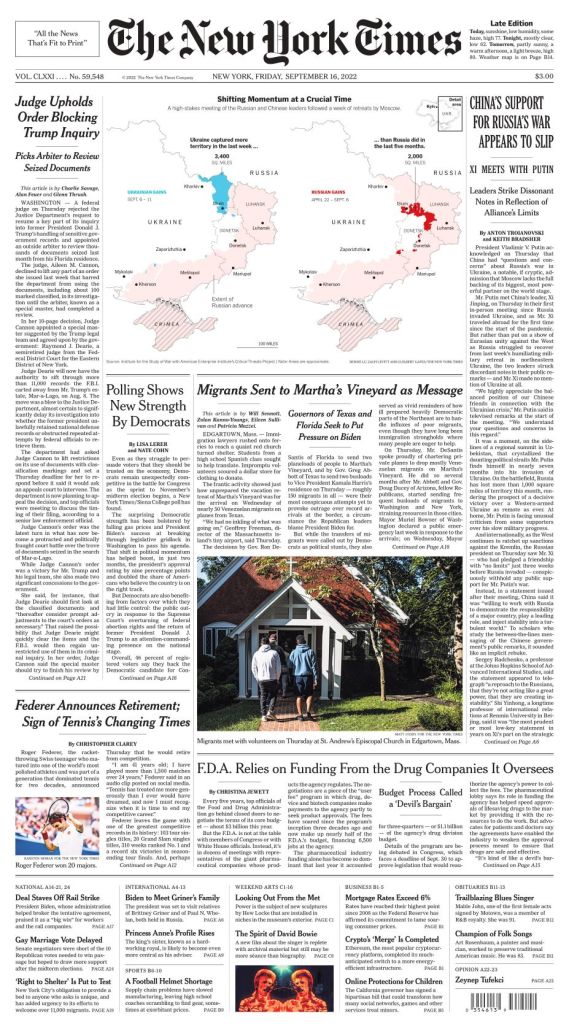
Front Page: The New York Times – September 16, 2022

Putin Nods to Xi’s ‘Concerns,’ and the Limits of Their Cooperation

The discordant messages of China’s president, Xi Jinping, and President Vladimir V. Putin of Russia suggested that despite an earlier pledge of “friendship,” Moscow does not have an unconditional ally in Beijing.

Judge Keeps Block on Inquiry Into Mar-a-Lago Files and Names Special Master

The Justice Department is planning to appeal, but the decision is likely to significantly delay its investigation into former President Donald J. Trump’s handling of government records.

Art Exhibitions: Pat Steir At Hauser & Wirth In NYC

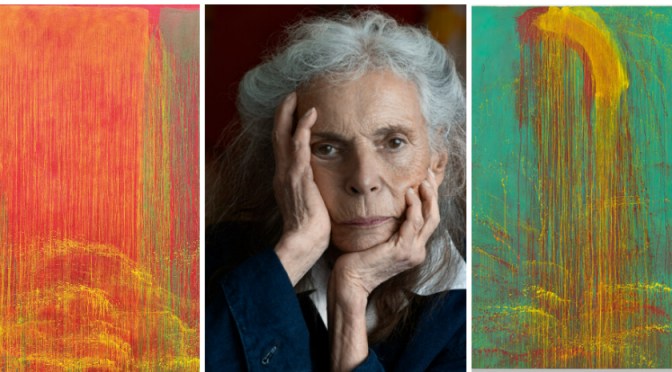
 Among the great innovators of contemporary painting, with a lifelong commitment to drawing and printmaking, Pat Steir first came to prominence in the late 1970s and early 1980s for her iconographic canvases and immersive wall drawings.

Pat Steir, Dragon Tooth Waterfall, 1990 © Pat Steir

Pat Steir, Middle Lhamo Waterfall, 1992 © Pat Steir

By the late 1980s, her inventive approach to painting—the rigorous pouring technique seen in her Waterfall works, in which she harnessed the forces of gravity and gesture to achieve works of astonishing lyricism—attracted substantial critical acclaim. Informed by a deep engagement with art history and Eastern philosophy, and a passion for artistic advocacy in the both the visual and literary realms, Steir’s storied five-decade career ­­continues to reach new heights through an intrepid commitment to material exploration and experimentation.

Read more

Research Preview: Science Magazine – Sept 16, 2022

Image

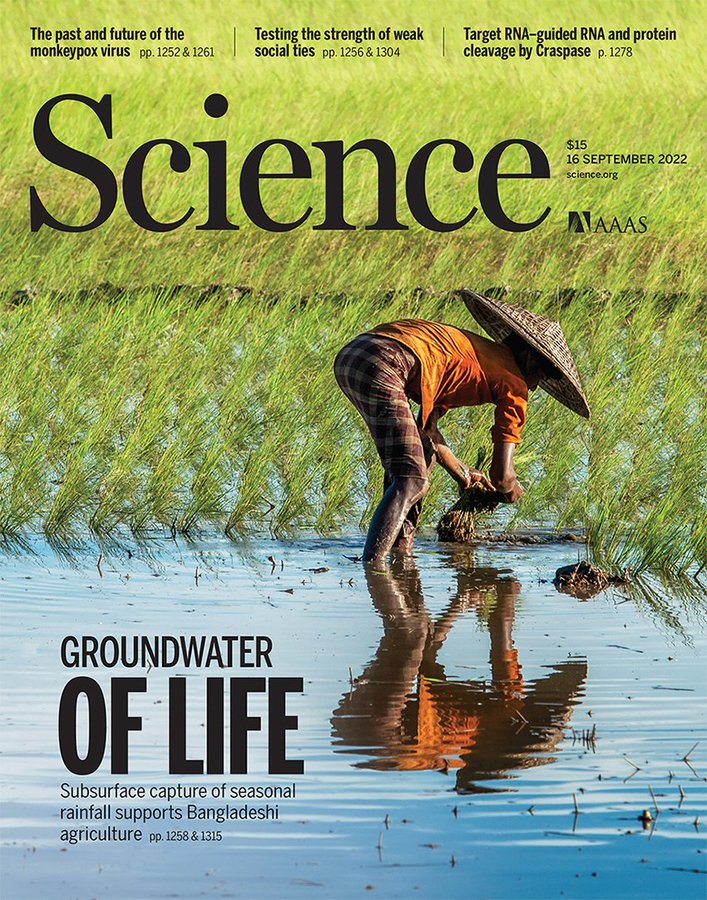
Seasonal monsoon rainfall replenishes groundwater reserves in the Bengal basin of Bangladesh thanks to the region’s seemingly counterintuitive intensive dry-season irrigation practices, a new Science study finds.

Europe’s energy crisis hits science hard

Supercomputing and accelerator centers struggle with surging gas and electricity prices

Private venture tackles Long Covid, aims to test drugs soon

Initiative to explore whether coronavirus lingers in patients

U.S. Antarctic Program has ignored sexual harassment

Decades of complaints have gone unheeded by NSF and contractors managing operations, employees say

Polio returns in rich countries, but big outbreaks are unlikely

As New York state declares an emergency, experts are far more worried about a resurgence in low-income countries

Read that and more in this week’s issue: https://fcld.ly/dt1xr77

Covers: New York Review Of Books – October 6, 2022

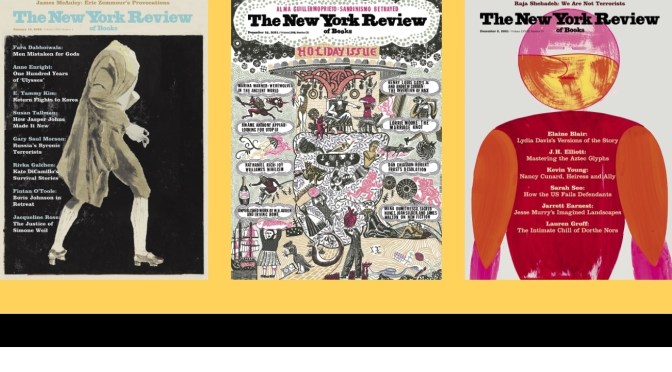
New York Review October 6, 2022 cover

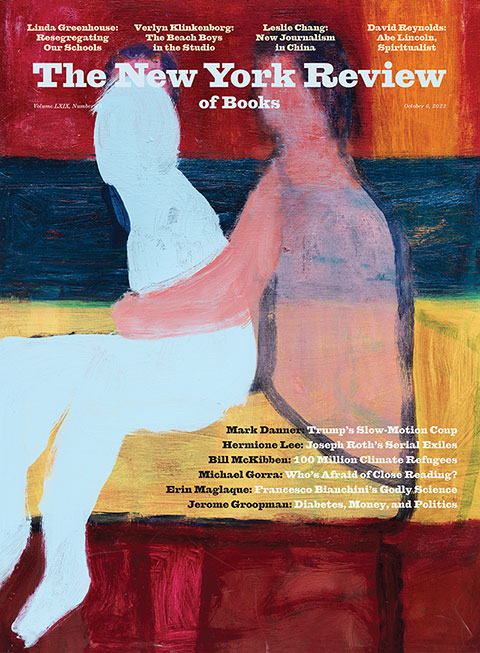
The October 6 issue is online now, with Bill McKibben on the climate refugee crisis, Hermione Lee on Joseph Roth’s violently mixed feelings, Linda Greenhouse on Justice Breyer’s most powerful dissent, Jerome Groopman on diabetes, Leslie T. Chang on narrative nonfiction in China, Ange Mlinko on H.D., David S. Reynolds on séances in the Lincoln White House, Verlyn Klinkenborg on the Beach Boys’ moment in the sun, Erin Maglaque on the pope’s astronomer, Mark Danner on the long, slow Trump coup, a poem by Vona Groarke, and much more.

Where Will We Live?

Three books on the movement, of both humans and wildlife, spurred by climate change illustrate the magnitude of the challenge before us.

Nowhere Left to Go: How Climate Change Is Driving Species to the Ends of the Earth – by Benjamin von Brackel, translated from the German by Ayça Türkoğlu

Nomad Century: How Climate Migration Will Reshape Our World – by Gaia Vince

Border and Rule: Global Migration, Capitalism, and the Rise of Racist Nationalism – by Harsha Walia

Poet of the Dispossessed

Joseph Roth was unwavering in his passion for the vanished Austro-Hungarian Empire, which inspired his greatest novel, his hatred of nationalism, and his prophetic and courageous loathing for the Nazis. About everything else, as a new biography shows, he had violently mixed feelings.

Endless Flight: The Life of Joseph Roth – by Keiron Pim

Ukraine Views: Inside The Recaptured City Of Izyum

Ukrainian forces have reclaimed large swaths of territory in the Kharkiv region. WSJ’s Stephen Kalin reports from the liberated city of Izyum, where Ukrainian President Volodymyr Zelensky traveled to assess damage on Wednesday.

Izyum, also spelled Izium, city, eastern Ukraine. Izyum is located 75 miles (120 km) southeast of Kharkiv on the Donets River. The earliest historical mention of it dates as early as 1571; it has been a city since 1639. Izyum is linked with Kharkiv and Luhansk by rail. Industries have included railroad repair, brick making, brewing, and optical equipment manufacture. 

News, Views and Reviews For The Intellectually Curious