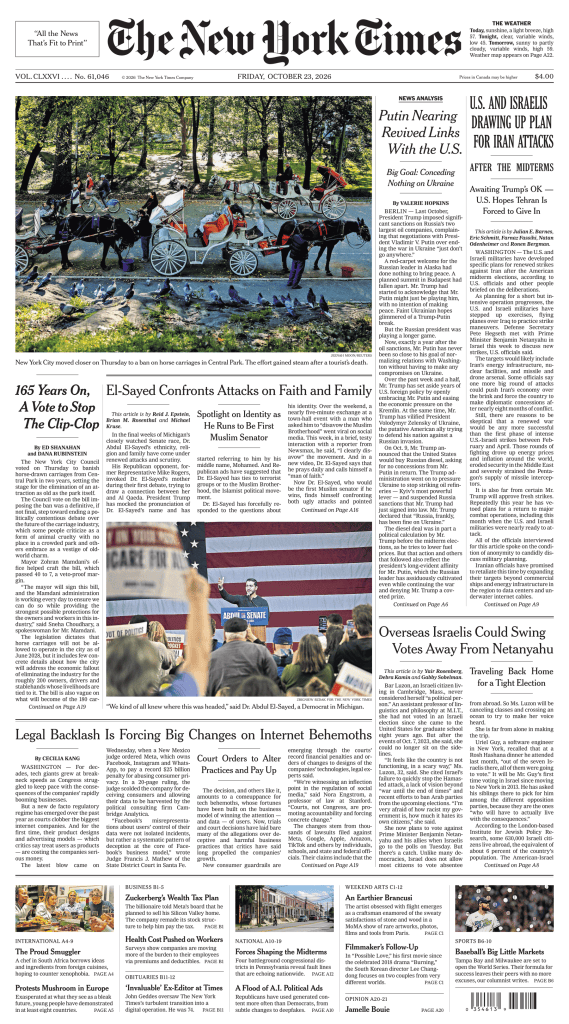
Five people were wounded in the attack, days before national elections, health workers said. The Israeli military said its soldiers had killed two assailants.
Mr. Eisenkot, an ex-military chief, is leading in the polls against Prime Minister Benjamin Netanyahu. But his campaigning style is worrying supporters.
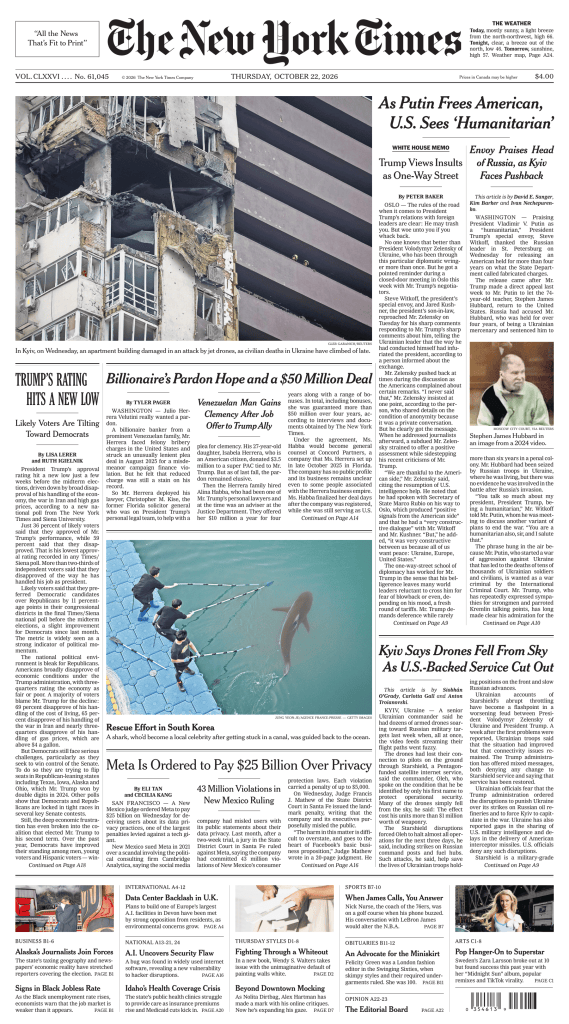
President Trump called Elon Musk, who owns the Starshield network, after officials in Ukraine reported that they found new limits on the use of military drones
The tax initiative is the most ambitious proposal that Dave Regan has ever qualified for the California ballot. Some Democrats hope it will be his final one.
The philosophies of AI and what they reveal about us.
We can’t predict the future of artificial intelligence, but we do know its origin: us. The models we use today were trained on unfathomably huge sums of human-generated text: our books and blogs, our science and myths, our jokes and lies. In the output of language models, we see glimpses of ourselves refracted through a strange new form of intelligence we’re only beginning to understand. This issue is an attempt to make sense of those refractions — to use philosophy to turn over hard questions until we start to see them more clearly.
AI will likely impact everything from the economy to the battlefield, but exactly how remains to be seen.
In November 2022, I took on a writing assignment that, looking back, may have had a bigger impact on my life than any other: interview ChatGPT. It was the first day that OpenAI’s tool was available to the public, and my goal was to try to make sense of the tech — and then help readers make sense of it — by asking it questions about itself.
Centrist rulers have fallen dangerously short—and are now paying the price
“The first steps into the Unrest seem straightforward enough—anger at the fall of real wages, at capitalist aggression, at the unwillingness of Parliament; anger fomented by agitators…reason wars with instinct.” Few of those who mobbed French cities this week would recognise those words. But many would agree with George Dangerfield, the British-American journalist who wrote them. The demonstrators were consumed by rage. Rage at the failure of the state and against the floundering centrist politicians who govern. Rage at high prices and economic dysfunction. And for some, rage against the idea of centrist politics at all.
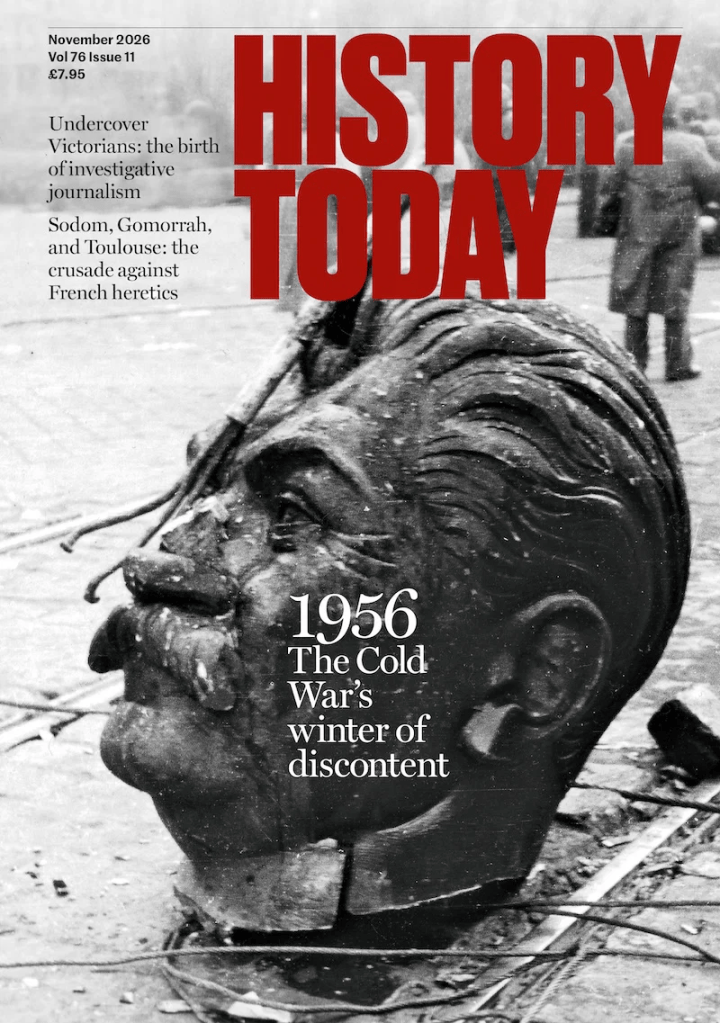
In late 1956 hundreds of thousands of Hungarians joined an uprising against the country’s Moscow-oriented government. 70 years on, the revolution’s meaning is still unclear.
For much of its modern history state lotteries were seen as antithetical to Britain’s moral values. The introduction of the Premium Savings Bond in 1956 was a major shift in government policy. What had caused it?
Renewed hostilities might not be any more successful than the war’s first phase, and President Trump has repeatedly canceled plans for a return to major combat.
Russia has sought to separate the war in Ukraine from potential business deals and diplomacy with the United States. Its efforts now appear to be working.
Since high school students began protesting in France in September, they’ve been joined by young demonstrators in at least seven other European countries.
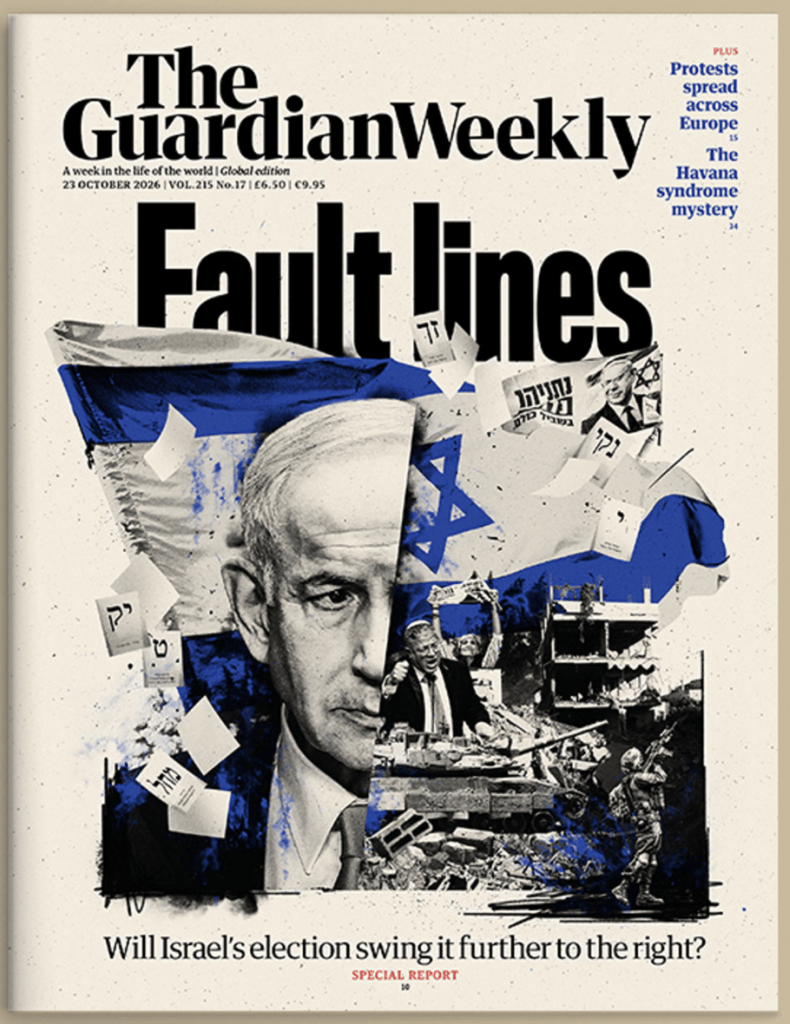
Israel is holding national elections next week, giving its citizens their first chance to pass judgment on Benjamin Netanyahu and his coalition since the Hamas-led attacks of 7 October 2023.
For our big story this week, chief Middle East correspondent Emma Graham-Harrison says that whether or not the prime minister can hold on to power, a more rightwing Knesset is expected to be voted in. More than half a million Israelis have reached voting age since the last election in 2022 and, according to polls, three-quarters of first-time Jewish voters define themselves as right or centre-right.
Peter Beaumont profiles opposition candidate Gadi Eisenkot. The former general contrasts with Netanyahu when it comes to style and character, he writes, yet on key policy points retains a studied ambiguity.
Then Israeli pollster and political analyst Dahlia Scheindlin argues that after three disastrous years, Israel needs to rethink itself, but only a clear opposition victory would let the country begin to heal, strengthen democracy and establish Palestinian rights.
Spotlight| ‘We are suffocating’ As protests that have convulsed Spain and France in recent weeks spill over to Italy and Portugal, Sam Jones reports on the rising wave of anger over the housing crisis and cost of living
Science| Taking a shot Could a drug to prevent shingles also protect our brains against dementia? The possibility, writes Ian Sample, is driving a boom in vaccinations
Feature| The Havana syndrome mystery Dozens of CIA officers have been afflicted by debilitating symptoms over the past decade. Are they the result of “mass hysteria” or are they from attacks with an energy weapon, asks Shaun Walker
Opinion| Another EU referendum? Not just yet The omertà on the UK rejoining has now been broken, but it would be folly to move too soon, says Polly Toynbee
Culture| Shygirl’s slog to the top She has opened for Beyoncé, writhed in a cubicle for Madonna – and is poised to take over the mainstream with her new rock sound. The pop auteur talks to Simran Hans about cash, class – and finding true love
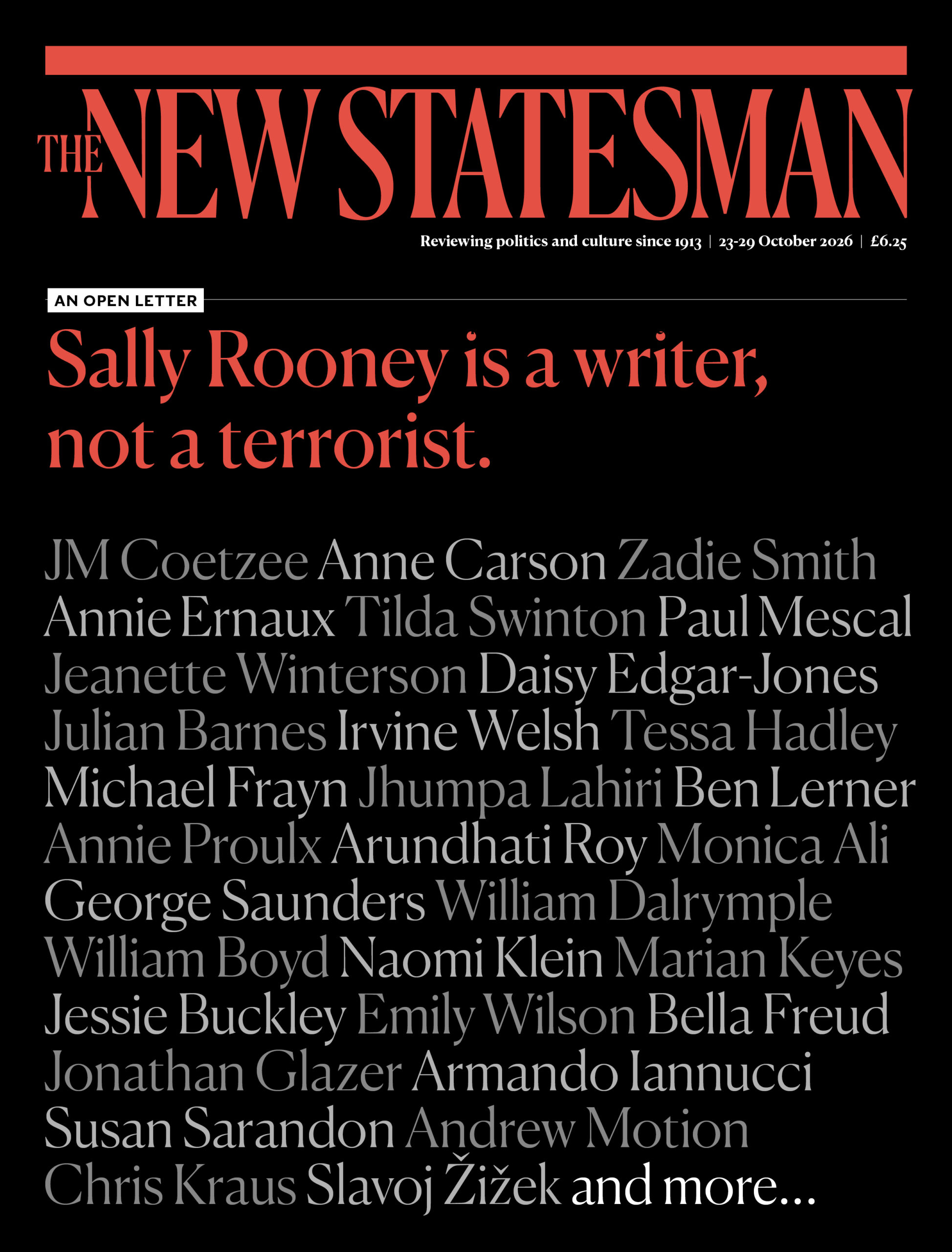
THE NEW STATESMAN: The latest issue features a sharp analysis of contemporary culture, politics, and media by critiquing public backlash against authors like Sally Rooney, examining systemic censorship through Tanjil Rashid’s commentary, and exploring intellectual viewpoints like Carlo Rovelli’s shifting perspectives and Martin Lewis’s reflections on his role as a public advocate, while simultaneously addressing major geopolitical developments including how trauma shapes the upcoming Israeli election and what Katie Zacharia’s departure reveals about women in Donald Trump’s political orbit.
An open letter to the government from leading authors, artists and public figures. By New Statesman
Sally Rooney is a writer, not a terrorist. Her books must be available to the public. Their withdrawal from sale, on the basis of ill-conceived and draconian anti-terror legislation, is an affront to basic principles of free speech and expression so long taken for granted in this country. We categorically reject censorship – whether direct or indirect – and urge the government to change course, amending the legislation which has led us to this point of repressive absurdity.
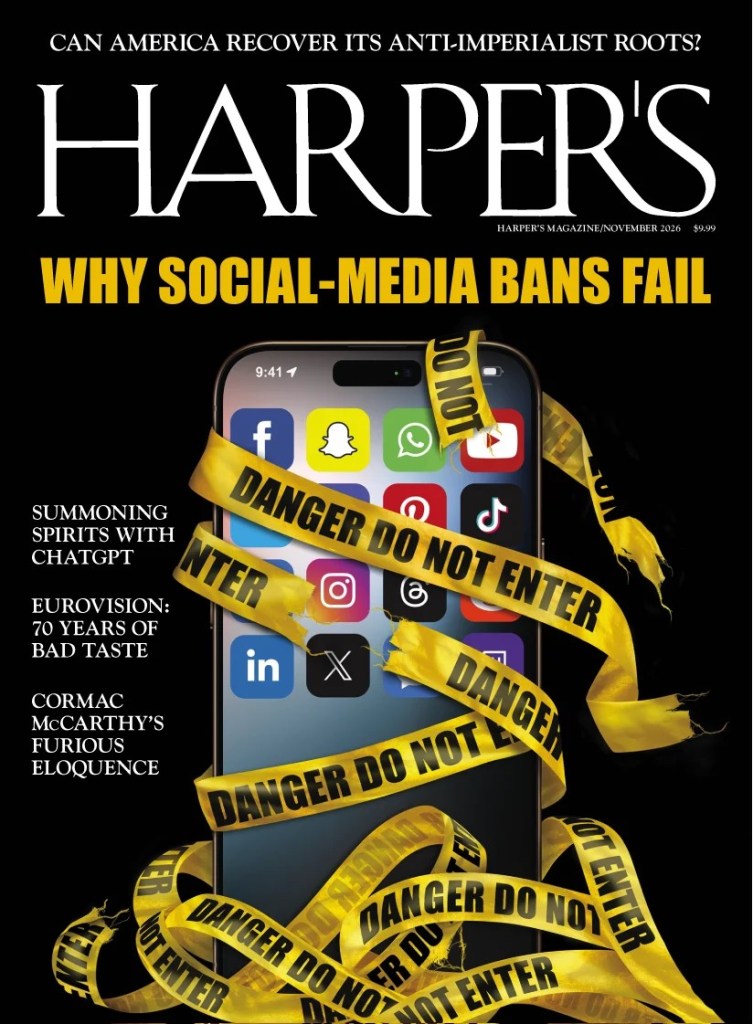
HARPER’S MAGAZINE: The latest issue features ‘WHY SOCIAL MEDIA BANS FAIL’, contemporary regulatory, ideological, and cultural shifts by featuring Oscar Schwartz’s investigative report on the making of Australia’s social-media restrictions, Jackson Lears’s historical essay advocating for a return to the nation’s foundational anti-imperialist principles, Sam Kestenbaum’s miscellany piece examining the intersection of artificial intelligence and spirituality at the dawn of a large language model New Age, a retrospective commemorating seventy years of bad taste at the Eurovision Song Contest, and a critical evaluation of Cormac McCarthy’s furious eloquence.
The making of Australia’s social-media ban by Oscar Schwartz
When I arrived last September at Northcote High, a public school perched on the grassy banks of Melbourne’s Merri Creek, I was surprised by how little had changed in the twenty years since I’d graduated from a high school nearby. The scene was intensely familiar: The girls with their long ponytails, hunched together in tight semicircles of avid conversation. The boys with their pimply faces, kicking balls or slouching against redbrick walls, their hands thrust deep into their pockets. The occasional shrieks, the awkward glances, the sexual frustration, the dim threat of violence—it was all the same.
Recovering America’s anti-imperialist roots by Jackson Lears
For many of the Founders of the American republic, the worst fate imaginable for the state they were envisioning was for it to become an empire. Republics and empires were fundamentally incompatible, they believed. Opposition to empire, in fact, was the keystone of their thought—but one would never know that from the hoopla surrounding America’s two-hundred-fiftieth birthday. The occasion provides an opportunity to celebrate the Founders’ ingenuity in fashioning a system of checks and balances and their audacity in claiming a universal right to “life, liberty, and the pursuit of happiness” in 1776—as well as to condemn their hypocrisy, especially with regard to racial equality. But in all the tumult of commemoration, rarely, if at all, have we heard of the Founders’ anti-imperialism.
Onstage before us is a man dressed in baggy raver pants, his blond hair slicked back. He has just sauntered in, waving, smiling, greeting the crowd of several hundred, and now stands in front of a dark-purple curtain that undulates in the air-conditioning. He settles into his seat and prepares to address the topic of today’s panel: artificial intelligence and the future of humanity.
News, Views and Reviews For The Intellectually Curious