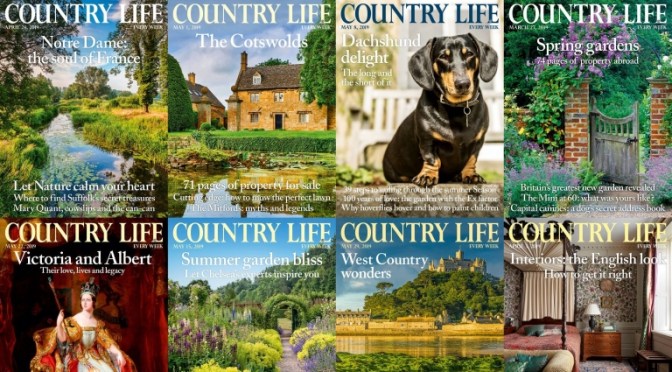
Country Life Magazine – February 21, 2024: The ‘The Fine Arts Issue’ – Artists who say it with flowers and the AI debate; Wig law, daffodils and how does your hedgerow grow?….
Artificial art
With the technology powering artificial intelligence advancing so rapidly, what can artists do to protect their original work?
Blooming marvellous
Michael Prodger examines how flowers have inspired artists for centuries, from the ancient Egyptians up to the present day
On a wig and a prayer
The periwigs that were a 17th-century status symbol are still a mainstay of our legal system, as Agnes Stamp discovers
Hedge of eternity
They have long been used to contain cattle or define boundaries, but hedges can be beautiful, too, argues Charles Quest-Ritson
Trumpet majors
Alan Titchmarsh takes a wander with Wordsworth as he dreams of spring daffodils ‘fluttering and dancing in the breeze’
Norman Foster’s favourite painting
The architect falls under the spell of a gritty, but humorous work
All in a day’s work
Jamie Blackett is ready to man the barricades to scupper plans for an unwanted national park
Brothers in art
John Goodall applauds the restoration of Leighton House in London, which formed the hub of a 19th-century celebrity circle
Man of the world
Mary Miers follows the globe-trotting Sir John Lavery from Ireland to Africa and beyond
Follow your art
An inspiring oil painting was at the centre of a heist with a happy ending, reveals Carla Passino
Where be dragons?
A protective force in China and Wales, but a symbol of greed and evil in England: Lucien de Guise delves into dragon lore
The good stuff
Hetty Lintell celebrates the best of the Art Deco era with earrings old and new, but always modern
Is this London’s most exquisite hotel room?
The astonishing King’s Lodge suite at The Connaught is fit for a monarch, finds Rosie Paterson
Interiors
Amelia Thorpe shares the very best of London Design Week
A seed of an idea
Tilly Ware meets the wild-seed pioneer ‘nurturing the future’
A tower of thorns
Ben Lerwill finds the salt of the earth on the coast of Scotland
Kitchen garden cook
Melanie Johnson on rhubarb
Love and marriage
A real-life couple are in harmony on stage, finds Michael Billington
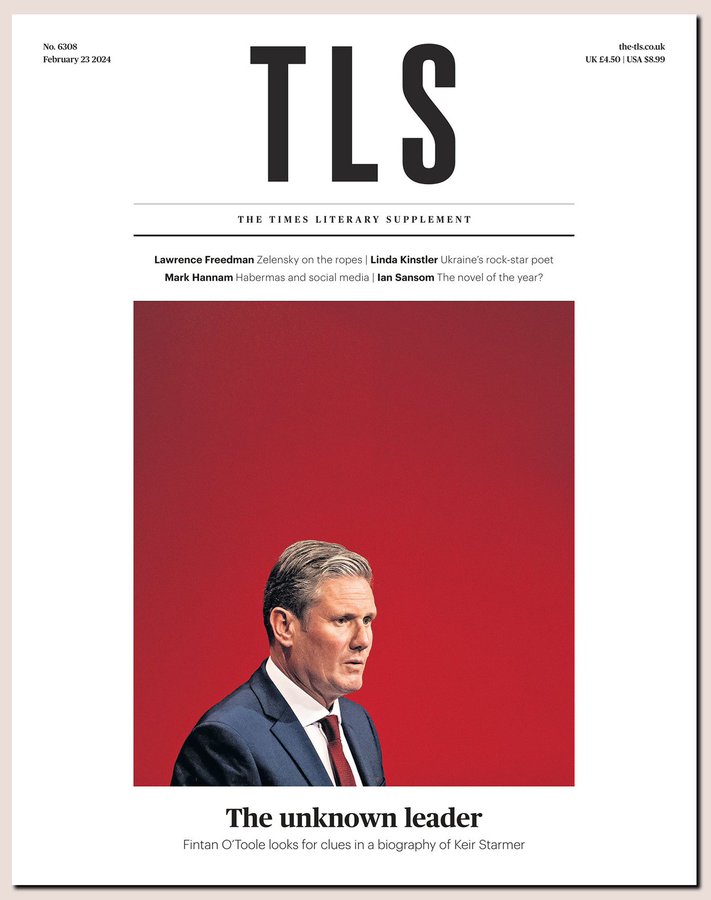
Times Literary Supplement (February 21, 2024): The latest issue features ‘The Unknown Leader’ – Fintan O’Toole looks for clues in a biography of Keir Starmer; Zelensky on the ropes; Ukraine’s rock star poet; Habermas and social media and The novel of the Year?….
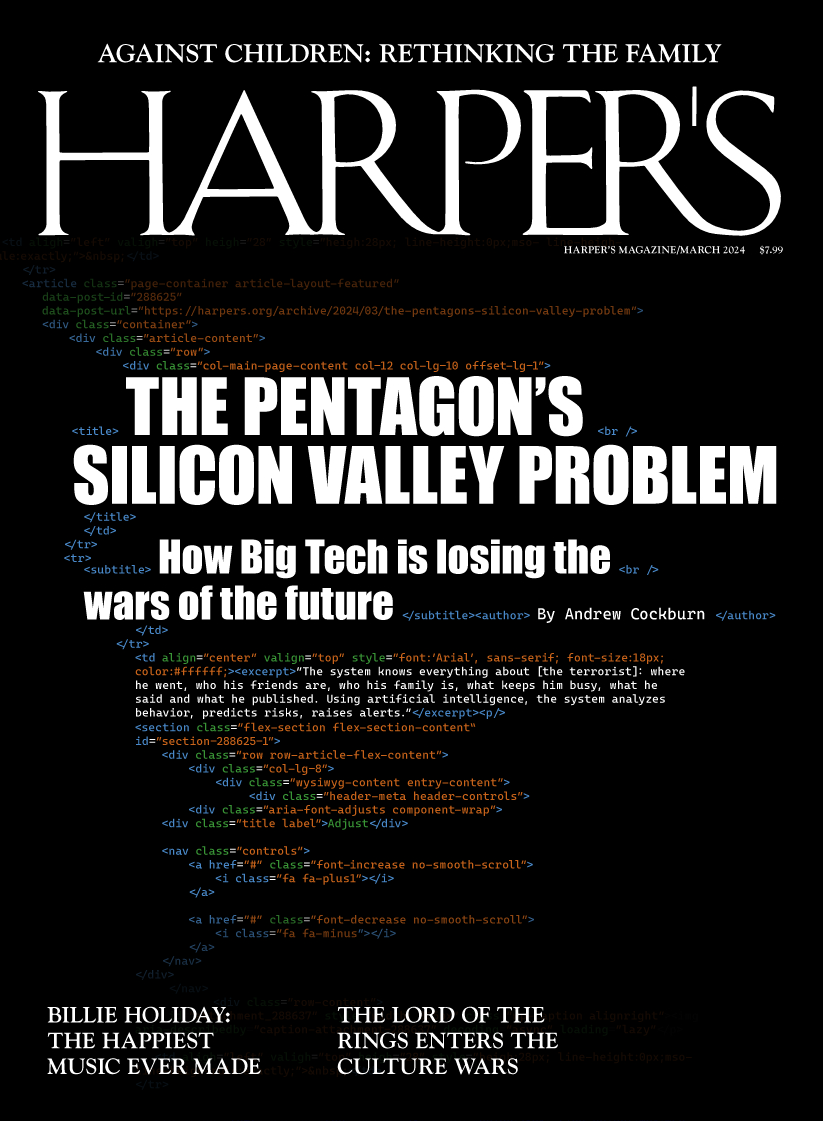
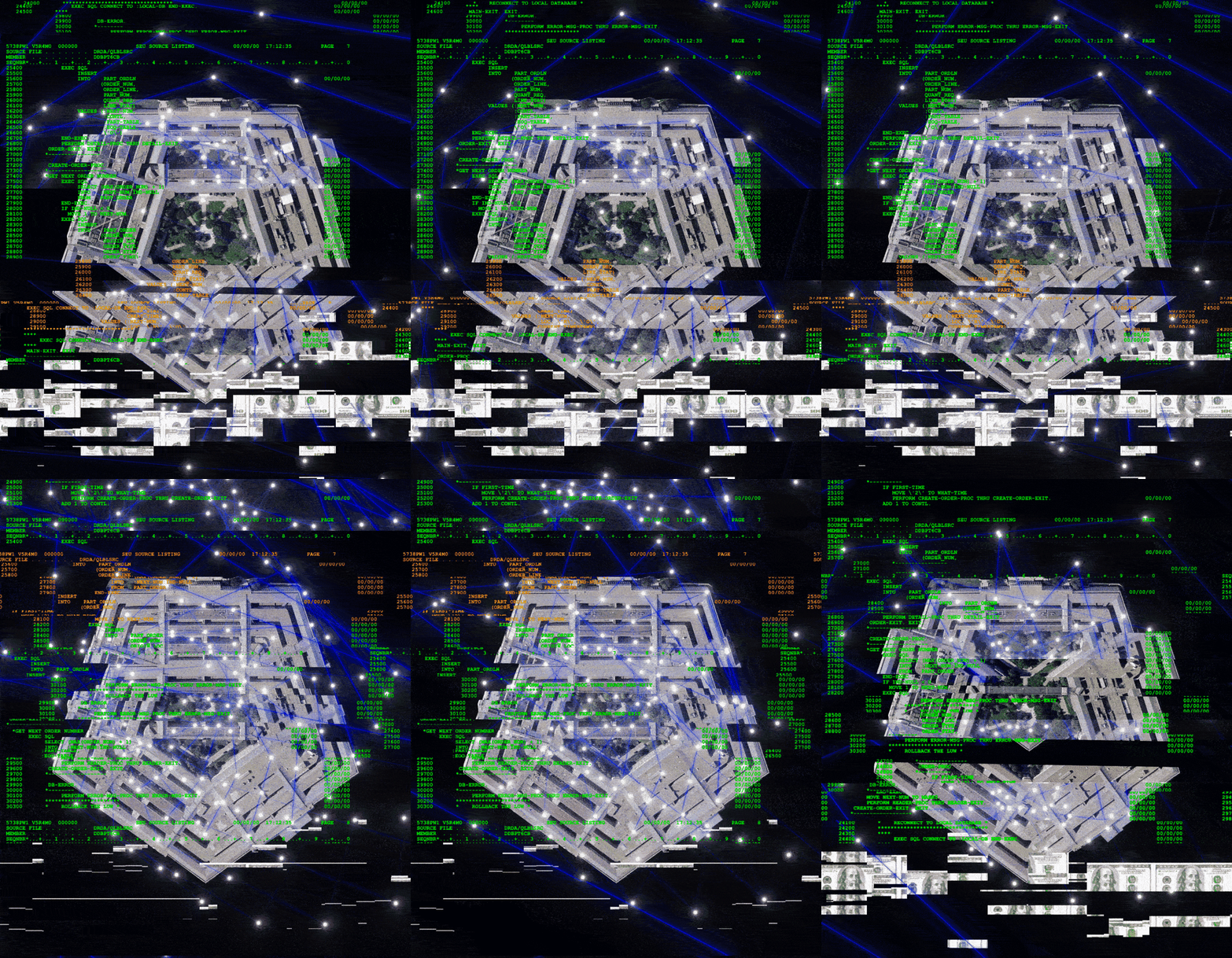
“Artificial intelligence may indeed affect the way our military operates. But the notion that bright-eyed visionaries from the tech industry are revolutionizing our military machine promotes a myth that this relationship is not only new, but will fundamentally improve our defense system—one notorious for its insatiable appetite for money, poorly performing weapons, and lost wars. In reality, the change flows in the other direction, as new recruits enter the warm embrace of the imperishable military-industrial complex, eager to learn its ways.”
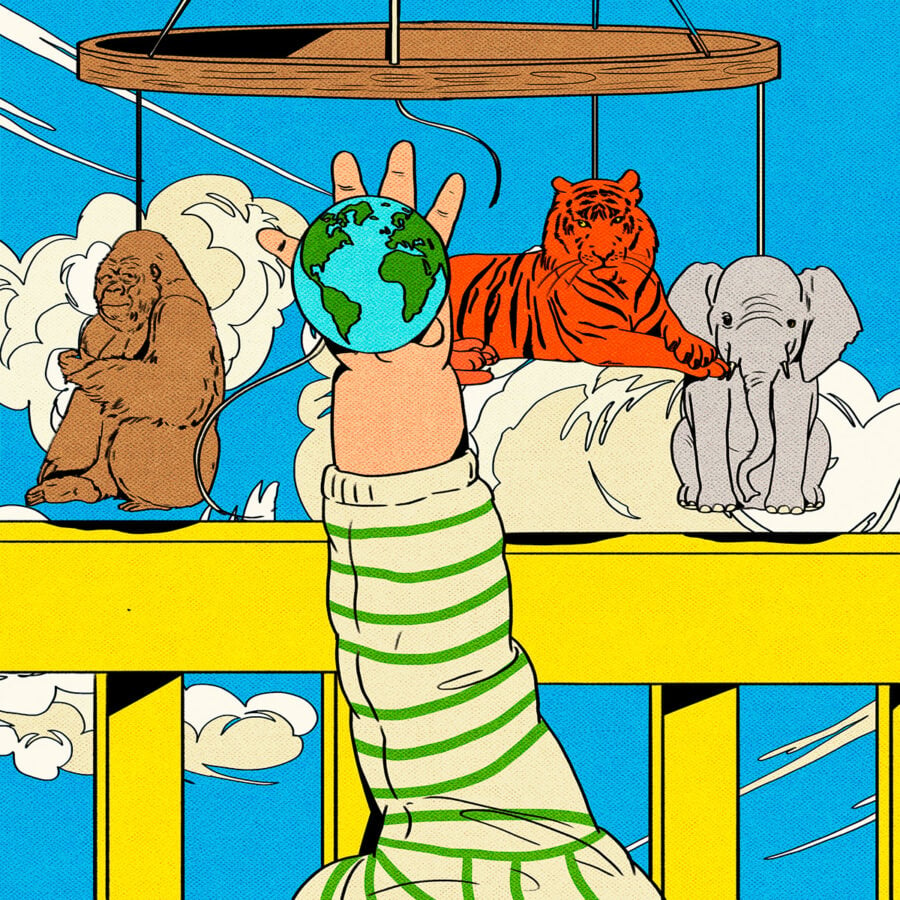
“People would rather be enthusiastic collaborators in a global project than be skeptics of its fundamental integrity. Antinatalism implies or counts on our eventual extinction, and thinking this way is painful.”
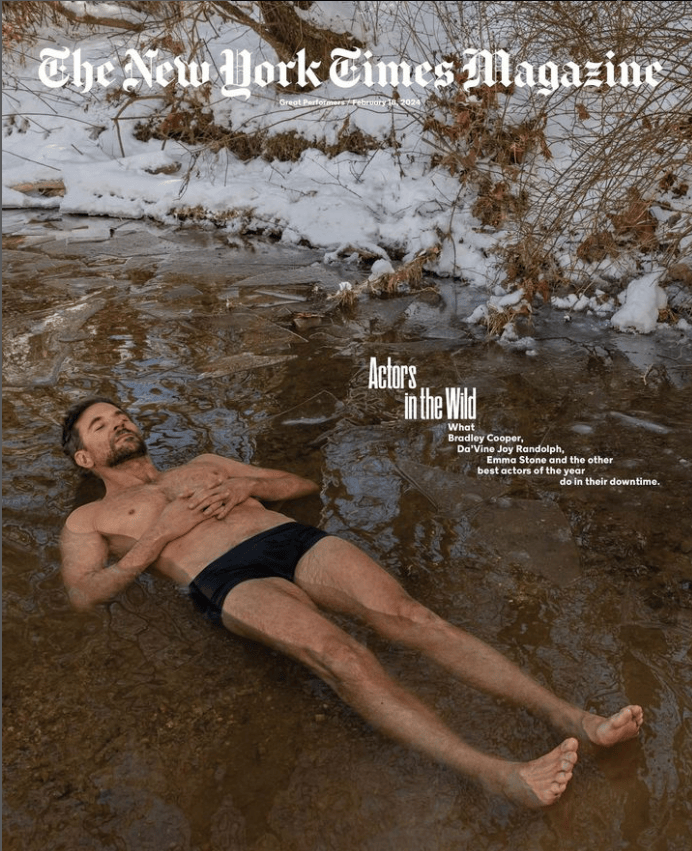
THE NEW YORK TIMES MAGAZINE (February 17, 2024): The new issue features ‘Actors in the Wild’ – The best performers of the year, when they’re not on film….
The best performers of the year — when they’re not on film.
James Nachtwey, an eminent photojournalist known for his intimate depictions of the front lines in places like Iraq, Afghanistan and Ukraine, had never photographed a movie star before. So for this year’s Great Performers issue, we asked him to capture a dozen of the world’s best actors away from the red carpets and awards ceremonies that often define how we see them. “My work has focused almost exclusively on conflicts and critical social issues, the polar opposite of what might be thought of as celebrity photography,” Nachtwey says. But he was intrigued by the challenge: “Art takes talent, but it’s also hard work, and exploring what actors practice in their daily lives to strengthen their art would be fascinating.”
Tubi Is Reviving a Lost Joy: Watching Really, Really Bad Movies
Their films have gone viral for their awful production values. But their success says fascinating things about what comes after prestige TV.
By Niela Orr
There’s a 2008 movie that offers an odd preview of today’s entertainment. In Michel Gondry’s “Be Kind Rewind,” a bizarre accident demagnetizes the entire inventory of a video rental store, so a clerk and his eccentric friend decide to remake all the films themselves, from “The Lion King” to “Driving Miss Daisy” to “2001: A Space Odyssey.” Their versions are 20 minutes long (at most), shot on an old hand-held video camera and produced in a delightfully quirky, ad hoc way: handcrafted props and sets, buddies working as extras, costumes from the local dry cleaner.
Israel’s eternal dilemma by Victor Davis Hanson Enrique Gómez Carrillo by Anthony Daniels The singularity of speech by Wilfred M. McClay A life in ballet by Peter Martins
New poems by Amit Majmudar, James Matthew Wilson & Michael Casper
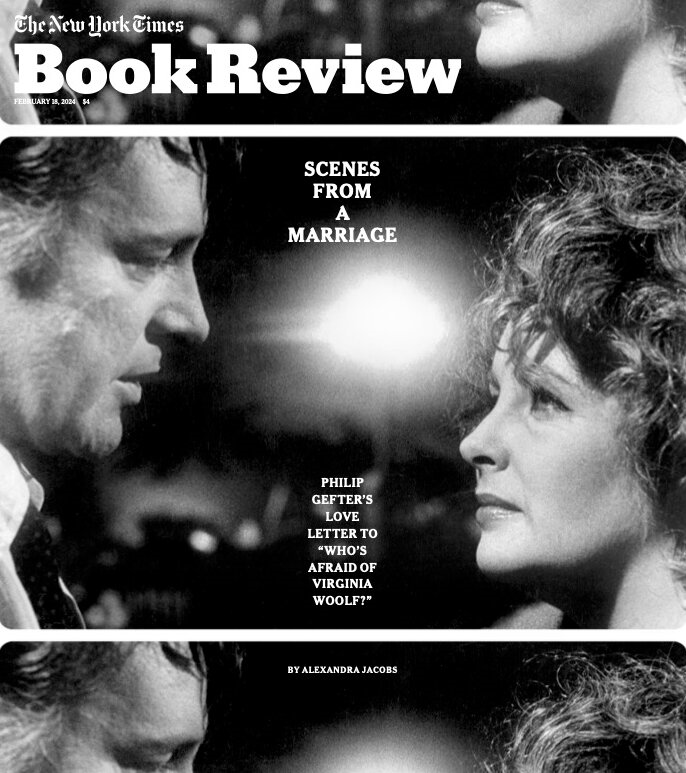
THE NEW YORK TIMES BOOK REVIEW (February 16, 2024): The latest issue features ‘Philip Gefter’s sizzling, “unapologetically obsessive” new book, “Cocktails With George and Martha: Movies, Marriage and the Making of ‘Who’s Afraid of Virginia Woolf?’” Our critic Alexandra Jacobs calls it “a shot glass filled with one work that, alongside contemporaneous books like Richard Yates’s novel ‘Revolutionary Road’ and Betty Friedan’s polemic ‘The Feminine Mystique,’ showed how the ‘cartoon versions of marriage’ long served up by American popular culture always came with a secret side of bitters.”
With Burton and Taylor as stars and a writer and director feuding, adapting the scabrous play wasn’t easy. “Cocktails With George and Martha” pours out the details.
‘Neighbors’ Opens the Door to a Literary Career Cut Short
A story collection from Diane Oliver, who died at 22, locates the strength in Black families surviving their separate but equal surroundings.
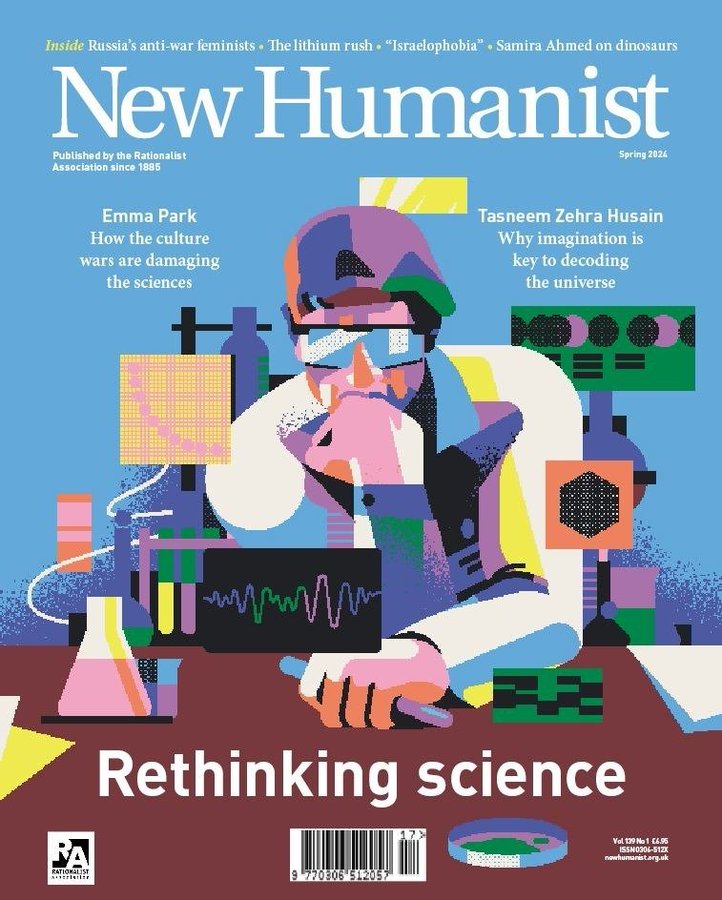
NEW HUMANIST MAGAZINE – SPRING 2024 ISSUE: The new issue features Emma Park on how the culture wars are damaging the sciences, theoretical physicist Tasneem Zehra Husain on why the imagination is key to decoding the universe, and Alom Shaha on what can be gained by thinking like a scientist…
Beyond the two cultures
Amid a polarised debate, science and art seem further apart than ever. Emma Park, editor of The Freethinker, explores what humanism has to teach us about the apparent conflict between these ways of thinking and how to bridge the divide.
“While humanities scholars are often (not without justification) accused of being Luddites, those on the science and technology side could also benefit from the knowledge that the humanities have accumulated over the centuries … [And] no intellectual activity worth the name can flourish in a politically repressive environment: freedom of expression and enquiry should be an issue to unite artists, scholars and scientists.”
The poetry of science
Metaphors are key to unlocking the secrets of the universe – scientists should do more to harness their power, writes acclaimed physicist Tasneem Zehra Husain.
“Metaphors aren’t only a means of description, they can also lead to revelations. Centuries ago, Newton was able to calculate the gravitational attraction between two objects … [but] would ‘feign no hypothesis’ as to why it was so. He had the equation, but he did not understand gravitation … With Einstein, we finally have a metaphor. When we picture space-time as a dynamic ‘fabric’ … we begin to understand what gravity means.”
Science Magazine – February 15, 2024: The new issue features ‘A record drought in October 2023 that lowered the Amazon River near the Brazilian city of Tefé, revealing sand dunes and forcing local fishing boats to compete for spots.




















 Intellicurious