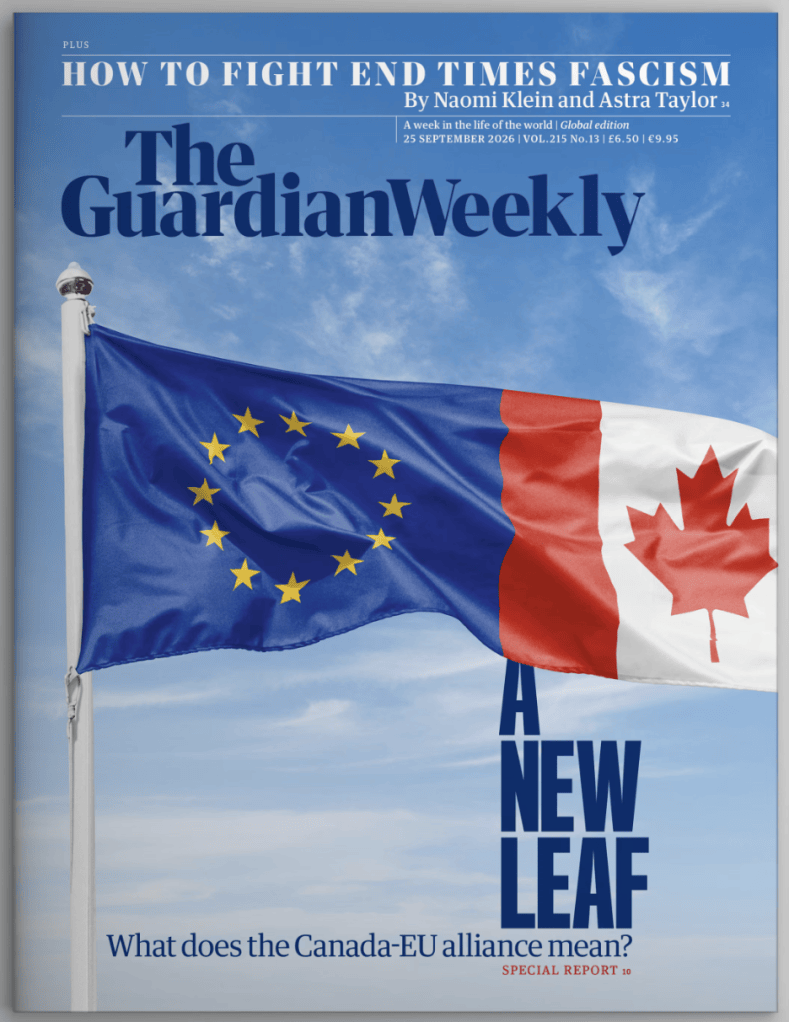
The European Commission president, Ursula von der Leyen, last week extended an unprecedented offer to Canada, inviting it to become the EU’s first “associate member”.
For our big story this week, Brussels correspondent Jennifer Rankin explores what the proposed alliance might mean. While there is a lot of common ground for the two parties, she writes, their agreement raises many questions and is clouded in uncertainty.
Meanwhile, senior correspondent Lisa O’Carroll examines the possible implications for the UK – asking whether it offers a blueprint for Britain, or a reminder it is out in the cold.
Then, former White House speechwriter Ted Widmer says Canadian prime minister Mark Carney’s remarks before the European parliament set out what a new west might look like, without its most powerful member – the US.
Spotlight| Yemeni families’ flight Fierce fighting has forced people to abandon their homes, leaving everything behind to seek shelter in refugee camps. Nasser Al-Sakkaf reports from Taiz
Science| ‘A map is never neutral’ The cartographers who took on centuries of western bias with the new Equal Earth projection speak to Oliver Holmes,Ana Lucía González Paz and Pablo Gutiérrez about their alternative to the 16th-century Mercator display
Feature| How to fight end times fascism An unholy alliance is working toward an apocalyptic future from which only a chosen few will emerge unscathed. It’s becoming clear how we stop them, say Naomi Klein and Astra Taylor
Opinion| This Israeli election could be the country’s last Spend time on the ground and you see how high the stakes are for next month’s contest – for Israelis and Palestinians alike, writes Jonathan Freedland
Culture| Present and correct Author Jonathan Franzen talks to Sophie McBain about a new TV adaptation of his bestseller The Corrections, the future of reading and why creating new work is “horrible”
Why can’t the people who produced the technology, which has already shown that a different world is possible, just do the things that would prevent extinction? By Gideon Lewis-Kraus
Students and faculty across the country were punished for their reactions to the conservative activist’s murder. A recent graduate of Texas Tech’s law school is still trying to clear her name. By Benjamin Wofford
One in 10 Americans experiences migraine headaches, which can be incapacitating. But there may be a light on the other side of your blackout curtains. Currently, doctors diagnose migraine based on patient description and treat the headaches based on frequency—episodic or chronic (more than 15 days per month). Treatment decisions are “worse than trial and error,” clinical professor of neurology Robert Cowan told Stanford Medicine. “It’s darts in the dark.” What’s more, guidelines recommend preventative, daily medication only for people with chronic migraine. But including severity may improve treatment options. In the largest study to date to categorize migraine patients, Cowan and data analyst Jaiashre Sridhar used functional MRI data to identify two biological subtypes. One group of patients had more severe headaches—they tended to last longer and caused more bothersome symptoms (nausea, noise sensitivity, etc.).
Biblio File: What to Read Now — Autumn 2026
New releases on our shelves and in our bookbags.
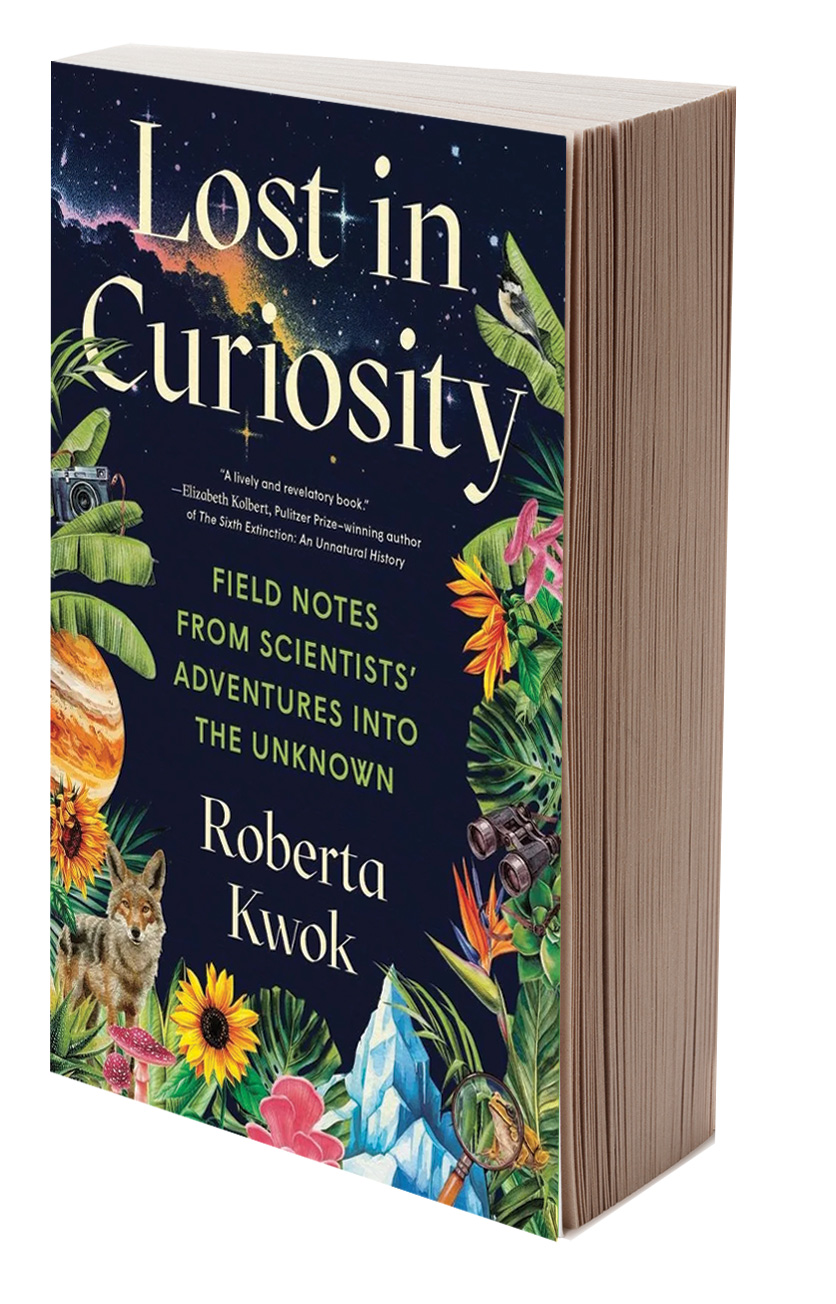
In Lost in Curiosity: Field Notes from Scientists’ Adventures into the Unknown(Sourcebooks), science journalist Roberta Kwok, ’00, witnesses the “messy middle” of science between researchers’ initial query and possible final discovery. The nine projects she investigates, from sex-role reversal in male guardian frogs to a quest to find an exomoon, depict the slow, frustrating, and focused work of scientists.
News, Views and Reviews For The Intellectually Curious