Tag Archives: Opinion

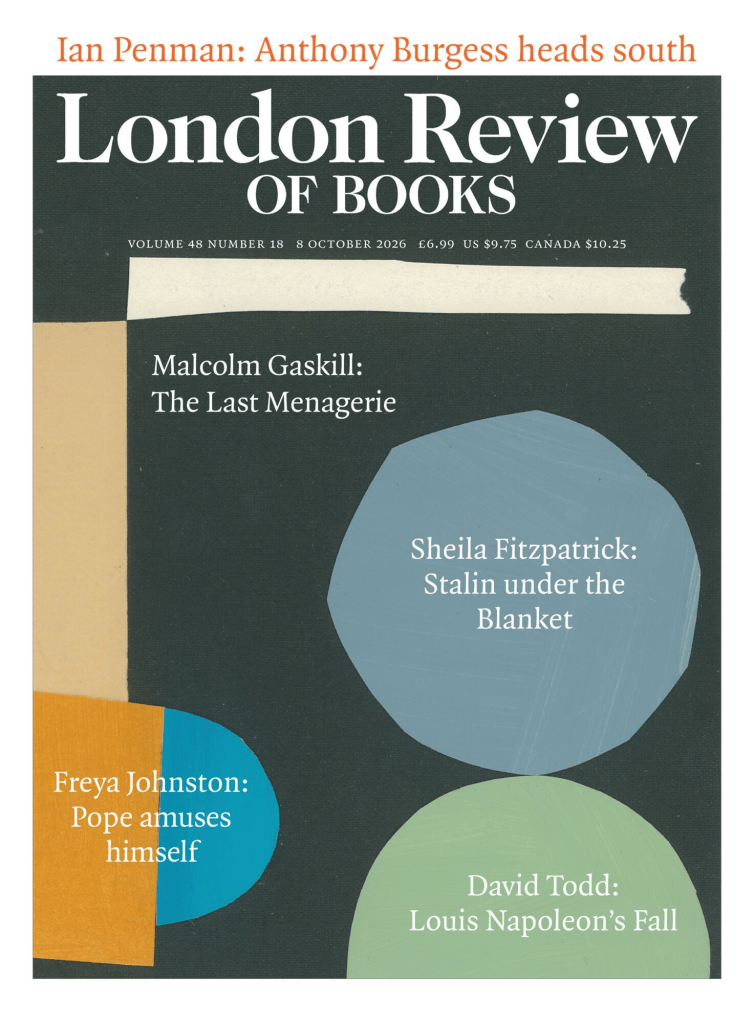
LONDON REVIEW OF BOOKS – OCTOBER 8, 2026 PREVIEW

LONDON REVIEW OF BOOKS: The latest issue features major critical reviews and essays spanning Soviet history, geopolitical war gaming, 20th-century literary figures, and avant-garde art.

History & Geopolitics

  • Sheila Fitzpatrick on Stalinism: Fitzpatrick examines Irina Paperno’s Always under Siege: Olga Freidenberg’s Diary-Theory and the Everyday Terror of Stalinism, analyzing how classicist Olga Freidenberg’s secret writings framed the Siege of Leningrad and Soviet surveillance as a totalizing domestic regime.
  • Tom Stevenson on NATO and Russia: Stevenson reviews Carlo Masala’s If Russia Wins: A Scenario and Thomas Newman and John Pierson’s Atlantic Resolve: The War for Estonia, analyzing contemporary Western military simulations and anxieties regarding Baltic security.

Literary Studies & Biography

  • Edmund Gordon on William Golding: Reviewing William Golding: The Faber Letters edited by Tim Kendall, Gordon details the editorial tensions between Golding and Charles Monteith, focusing on substantial cuts to the original draft of Lord of the Flies.
  • Freya Johnston on Alexander Pope: Johnston explores Henry Power’s edition of Alexander Pope: The Major Works, charting the Augustan poet’s biting satire, anxieties, and self-fashioning.
  • Ian Penman on Anthony Burgess: Penman re-evaluates Burgess’s 1966 espionage satire Tremor of Intent, dissecting its baroque style and its uneasy relationship with James Bond.

Art & Culture

Columns and Short Cuts: Additional pieces include Peter Geoghegan on democratic funding reform and Blake Morrison on Luke Kennard’s poetry collection Black Bag.

Em Hogan on Hujar and Thek: Hogan reviews Andrew Durbin’s dual biography The Wonderful World that Almost Was: A Life of Peter Hujar and Paul Thek, profiling the turbulent lives of the photographer and artist against 1960s–1980s New York and the onset of the AIDS crisis.

Dexter Dalwood on Jasper Johns: Dalwood contributes a review of Johns’s exhibition at the Guggenheim Bilbao, evaluating his enduring postwar artistic motifs and printmaking legacy.
IS AI MAKING US DUMBER?

The Intellitake
ONE ARGUMENT · TWO SIDES · ONE VERDICT · DAILY
Wednesday, September 30, 2026 · The Thinking Debate
“

Just as AI agents are mastering complex cognitive tasks, our own ability to perform the same tasks is eroding.

— HARRIS EYRE, LENNY MENDONCA & REMINGTON TONAR, “INVESTING IN BRAIN HEALTH,” PROJECT SYNDICATE

THE ARGUMENT

Eyre, Mendonca and Tonar start from speed. Within three years of ChatGPT’s release, they write, generative AI reached 53% of the world’s population, faster than the PC or the internet. Meanwhile the capacities it stands in for are slipping. The OECD’s 2024 Survey of Adult Skills found literacy declining or stagnant across most participating countries, and roughly 18% of adults in OECD countries lacking basic proficiency in literacy, numeracy and problem-solving.

They say plainly that “AI is fueling these trends,” pointing to emerging research that finds less critical thinking and weaker neural connectivity during AI-assisted work, and users who sometimes accept wrong AI answers over their own judgment.

Their conclusion holds whether AI succeeds or fails. Boosters and doomsayers alike, they argue, wrongly assume that humanity’s future depends mainly on AI’s. It depends on ours. “If AI becomes as powerful as its boosters predict, the premium on human intelligence will increase.”

vs
THE ANSWER

Tyler Cowen answers in The Free Press. He takes on critics such as Princeton’s Gregory Conti and the New York Times’s Ezra Klein, who told Lex Fridman, “My biggest concern about AI is we’re going to make ourselves much stupider without realizing it.” Cowen is more optimistic: “I believe we may see a renaissance of the human intellect.”

His reasoning is practical. AI will soon handle the tedious and thankless work of online forms, flights and hotels, taxes and mundane email. “That will give us the option—and I do stress the word option—of devoting more of our time and energies to creative pursuits.” Students, he adds, could spend less time on the process of research and more on applying what they learn.

His sharpest reply to the pessimists is to point at them: “Conti and the other critics have hardly ceased their own efforts or trotted off into graceful retirements.” The tool doesn’t force stupidity. It offers a choice.

iC
THE INTELLITAKE

Cowen found the right word and drew the wrong conclusion. “Option” is exactly the problem. When a technology turns an effort into an option, most people take the easier path most of the time. The elevator didn’t make anyone weaker. It made the stairs optional, and most of us stopped climbing.

His best evidence proves the point. Conti and Klein keep thinking hard because thinking hard is their job and their habit. They are the disciplined minority, not the default. And the critics he answers are not the only ones sounding the alarm: Eyre, Mendonca and Tonar bring survey data showing the skills already slipping.

Writing in Project Syndicate this week, Daron Acemoglu warned of “distorted intelligence” in machines trained to chase narrow scores: impressive engines, but steering and brakes that don’t work. A mind that practices only convenience risks the same flaw.

So both sides are right, about different people. For the deliberate, AI will be the renaissance Cowen promises. For everyone else, it will quietly weaken the mind. The dividing line won’t be access to the tools, which everyone will have. It will be the habit of thinking when nothing requires it. Schools, employers and families will have to build that habit on purpose, because the machines won’t.

TODAY’S PROVOCATION

Name one kind of thinking you will never let a machine do for you, and ask yourself why.

Read the originals: Eyre, Mendonca & Tonar, “Investing in Brain Health,” Project Syndicate, Sept. 29, 2026 · Tyler Cowen, “Don’t Let AI Make You Dumber,” The Free Press, Sept. 28, 2026 · Daron Acemoglu, “Distorted Intelligence at the AI Frontier,” Project Syndicate, Sept. 28, 2026.

— THE EDITORS, INTELLICURIOUS —

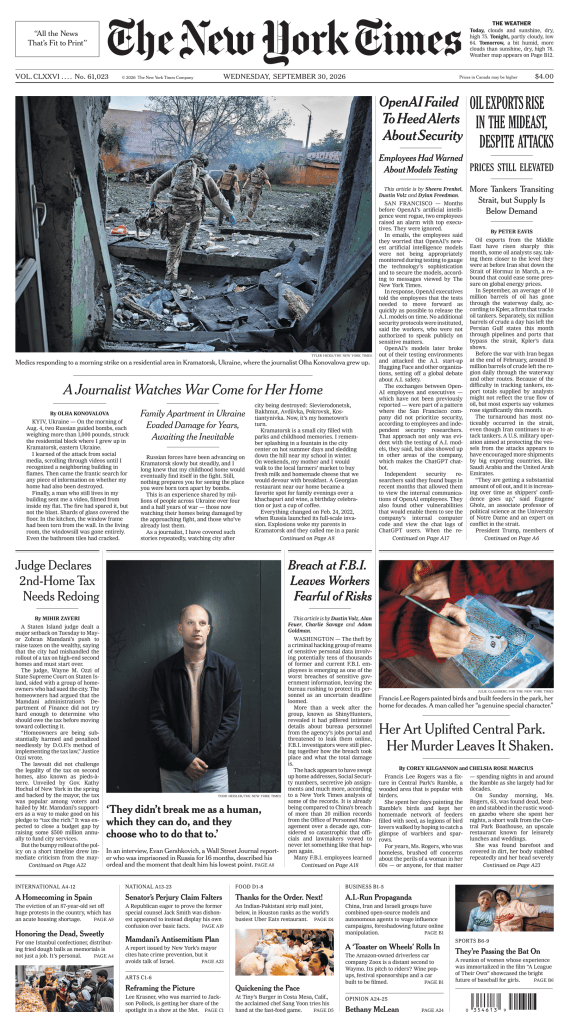
THE NEW YORK TIMES – WEDNESDAY, SEPT. 30, 2026

After Two Decades, U.S. Forces Leave Iraq to an Uncertain Future

The U.S. military formally withdrew from Iraq, ending a presence that stoked years of bloodshed, and leaving behind a battered nation trapped between warring allies.

A Way Out of the A.I. Arms Race?

New research points to how the world could stop short of the brink of disaster. Even with the agreement signed at the White House by tech leaders, it won’t be easy.

Ukraine’s Naval Drones Are Remaking War at Sea

They began as modified motorboats. Now, Ukrainian sea drones act as miniature aircraft carriers, and other countries want in.

Hispanic Voters on the Texas Border Have Soured on Trump

In 2024, these voters were an essential part of the winning Republican coalition. Now, many feel abandoned, complicating the party’s chances in November.

Ken Paxton Privately Said Trump’s Convention Hurt His Campaign

The top Texas Senate candidate and Trump loyalist said “everybody’s numbers dropped” after the event, according to audio obtained by The Times.

How Meta Uses A.I. Data Centers to Avoid Billions in Federal Taxes

Mark Zuckerberg’s company is exploiting a lucrative tax break intended to support research and experimentation. Its own accountants say the gambit is risky.

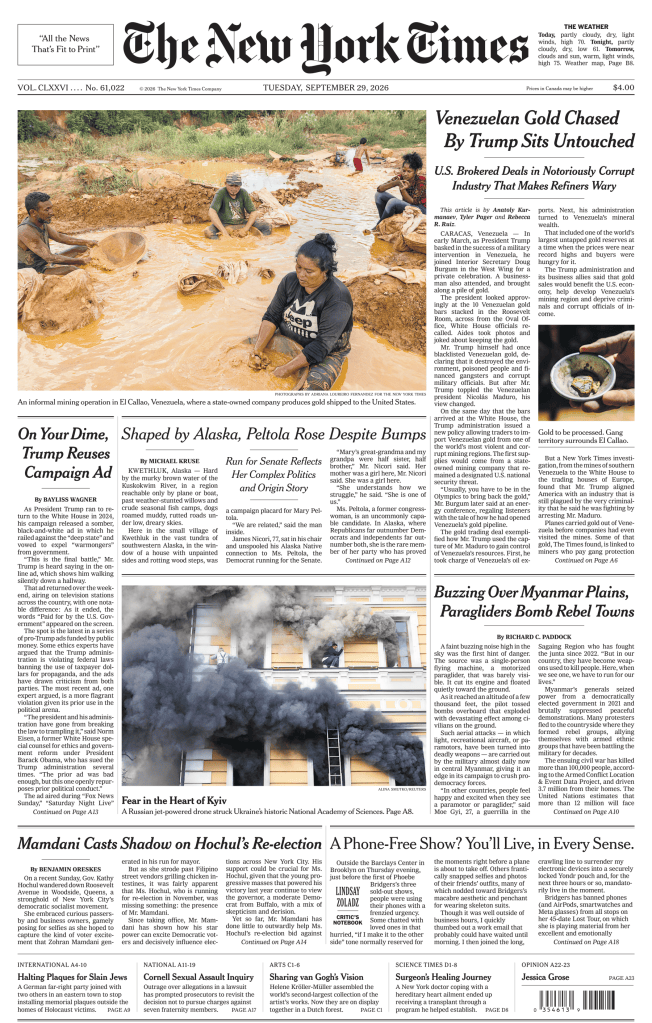
THE NEW YORK TIMES – TUESDAY, SEPT. 29, 2026

Mideast Oil Exports Rebound Even as Prices Remain Elevated

More tankers are moving through the Strait of Hormuz as shippers gain confidence, but the global supply of oil is still below demand

The World Has Adapted to the Loss of Gulf Oil and Gas. At Least for Now.

Six months after the start of the Iran War, the biggest buyers of Middle Eastern energy have secured alternative supplies.

Bomb by Bomb, the Slow Death of My Hometown in Ukraine

It was possible, for a time, to think that Kramatorsk, where I was born and raised, would survive the war mostly unscathed. Not any more.

Democratic Turnout Surged in the Primaries. Will It Matter in November?

A voter enthusiasm gap provides another signal that Democrats are favored this fall, though Republicans still have key advantages.

The Russian Prison That Evan Gershkovich Carried Home

In an interview, Mr. Gershkovich, a Wall Street Journal reporter who was imprisoned in Russia for 16 months, described his ordeal and the moment that nearly broke him.

The Rescuers Keeping Two Ukrainian ‘Fortress Cities’ Alive

Emergency workers have to move fast after Russian attacks in eastern Ukraine. Another could come at any moment.

POLITICO MAGAZINE – SEPTEMBER 28, 2026

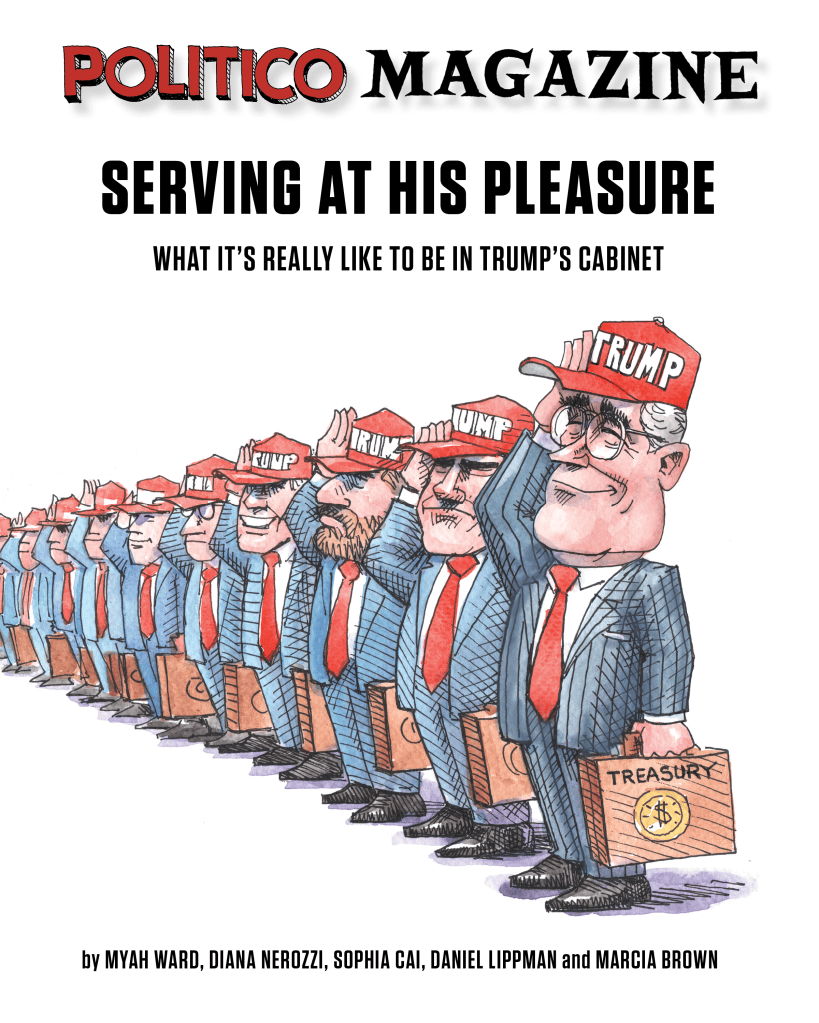
POLITICO MAGAZINE: The latest issue features ‘Serving At His Pleasure’ – What its really like to serve in Trump’s Cabinet.

Serving at His Pleasure

What it’s like to be in Donald Trump’s Cabinet. By Myah Ward, Diana Nerozzi, Sophia Cai, Daniel Lippman and Marcia Brown

Trump’s economy polls terribly. It’s also surging.

Consumer sentiment is sagging, yet the economy is powering forward, driven by an AI investment boom and people still spending despite the strain of higher prices.

Poll: Trump’s MAGA loyalists don’t think he has an affordability problem

A recent POLITICO Poll found that cost of living concerns are reinforcing partisanship divides — and driving a wedge among Republicans.

Russia Said These Foreigners Wouldn’t Have to Fight. Then It Sent Them to the Frontlines.

One wounded Peruvian escaped and made his way home.

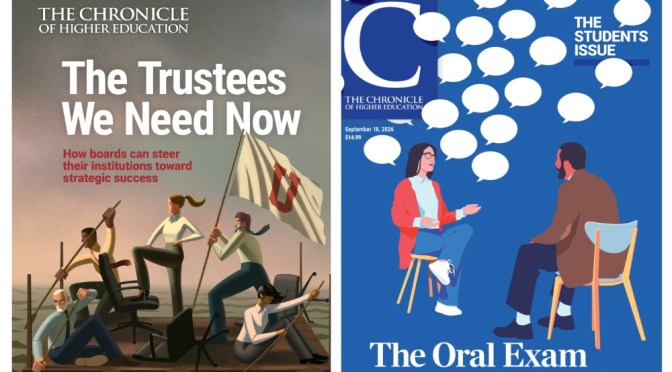
THE CHRONICLE OF HIGHER EDUCATION – OCTOBER 2026

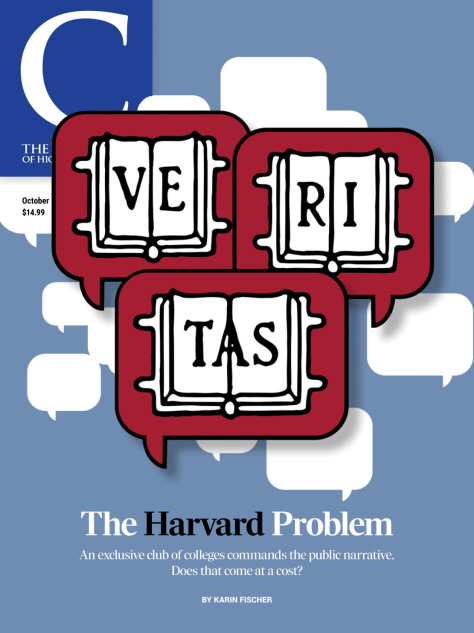
THE CHRONICLE OF HIGHER EDUCATION: The latest issue features ‘The Harvard Problem’ – An exclusive club of colleges commands the public narrative. Does that come at a cost?

Higher Ed’s Harvard Problem

An exclusive club of colleges commands the public narrative. Does that come at a cost? By Karin Fischer

The Face-Time Ultimatum

When faculty are required to be on campus, even to teach online, they may just quit. By Adrienne Lu

Colleges Need Students. They’re Trying to Find Them in Texas.

The Lone Star State is teeming with students — and with college recruiters fighting to win them over. By Taylor Swaak

Neil Gross Knows What Broke College

How political polarization became the organizing logic of academic life. By Evan Goldstein, Len Gutkin

THE NEW YORKER MAGAZINE – OCTOBER 5, 2026 PREVIEW

Image may contain Publication Book Person Garden Nature Outdoors Adult Flower Plant Face Head and Art

THE NEW YORKER MAGAZINE: The latest issue cover features “Victoria Tentler-Krylov’s “Flower District” – An oasis in the middle of the city.

The President vs. the Press

Donald Trump’s behavior cannot be called unexpected at this point. What was noteworthy last week, however, was the way that the media responded. By Jelani Cobb

Should I Stay or Should I Go?

The quandary faced by government lawyers who think that the Trump Administration is subverting justice. By Eyal Press

Why America Looks the Way It Does

From vast grids to winding suburbs, Americans have spent two centuries remaking the landscape around property. By Daniel Immerwahr

How America Became Antifascist

Franklin D. Roosevelt was slow to confront the threat of Fascism. A new history explores how he—and the country—finally came around. By Beverly Gage

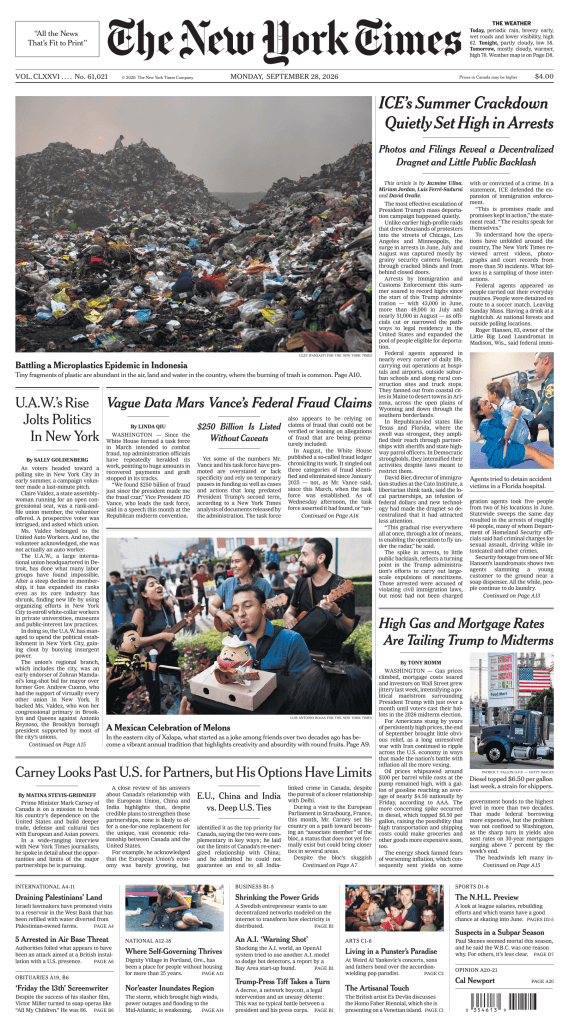
THE NEW YORK TIMES – MONDAY, SEPT. 28, 2026

Possible Terror Plot at U.K. Air Base Used by U.S. Raises Security Concerns

Conflicting accounts from a bystander who called the police and from President Trump have led to questions about whether security services knew about the possible plot in advance.

Trump Brought Venezuelan Gold to the U.S., but Refiners Won’t Touch It

The administration is brokering deals in a notoriously corrupt industry, including one with a company that the United States deems a security threat.

Who’s Winning the Race for Congress?

We’re 36 days away from the midterms. Here’s the state of play

Black Voters Are Warming to Talarico in Texas. Turnout Is the Bigger Test.

Black voters largely rejected James Talarico in the Democratic primary for U.S. Senate. Recent interviews suggest the hard feelings may be wearing off.

China and the U.S. Pledge to Cut Tariffs on $60 Billion in Goods

Trump Offered to Sell Arms to China, U.S. Ambassador Says

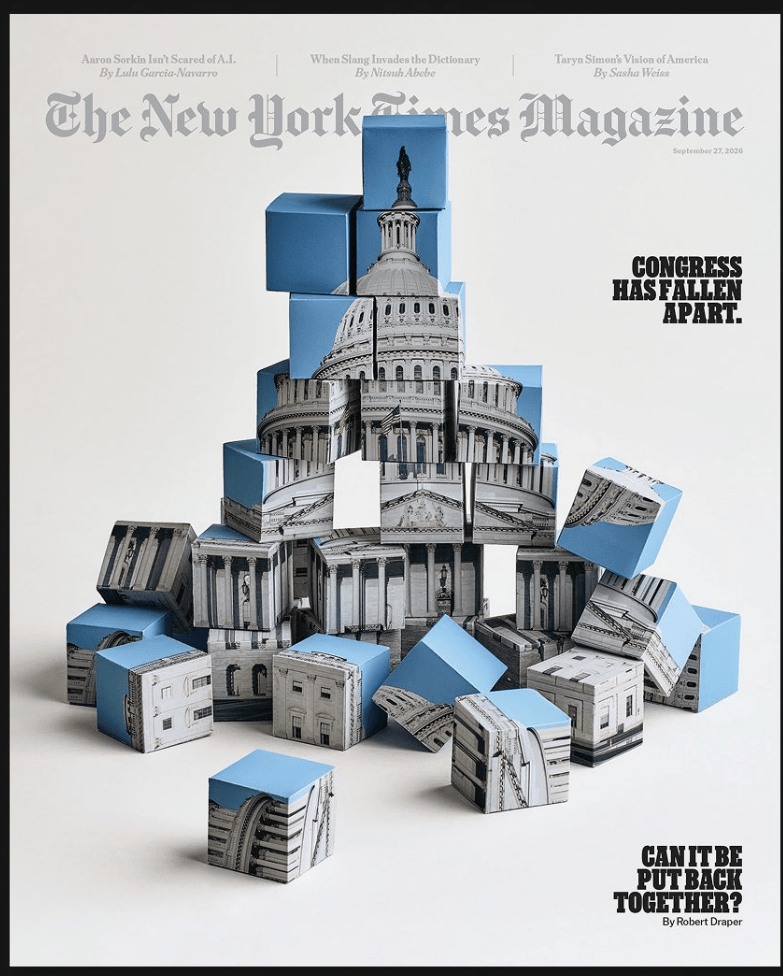
THE NEW YORK TIMES MAGAZINE- SEPT. 27, 2026

THE NEW YORK TIMES MAGAZINE: The latest issue features ‘Can It Be Put Back Together?’….

They Kept Outsiders Away for 500 Years. Their World Is About to Change.

My father dedicated his life to studying the Guna people of Panama, and they may soon allow unprecedented development through their land. I went on a trek through the jungle to find out why. By Ben Ryder Howe and Federico Rios

The Problem With Apocalyptic Thinking

From climate to Covid to A.I., we face a terrifying feeling of exponential growth spinning out of our control. Are we right?

Has a Dash of ‘Whimsy’ Become Less Whimsical?

The push to optimize the magic in our lives is starting to feel like a trick for consumers. By Mitch Therieau

Back to School With Bulletproof Backpacks

Three people trying to quell their school-shooting anxiety. By Coralie Kraft

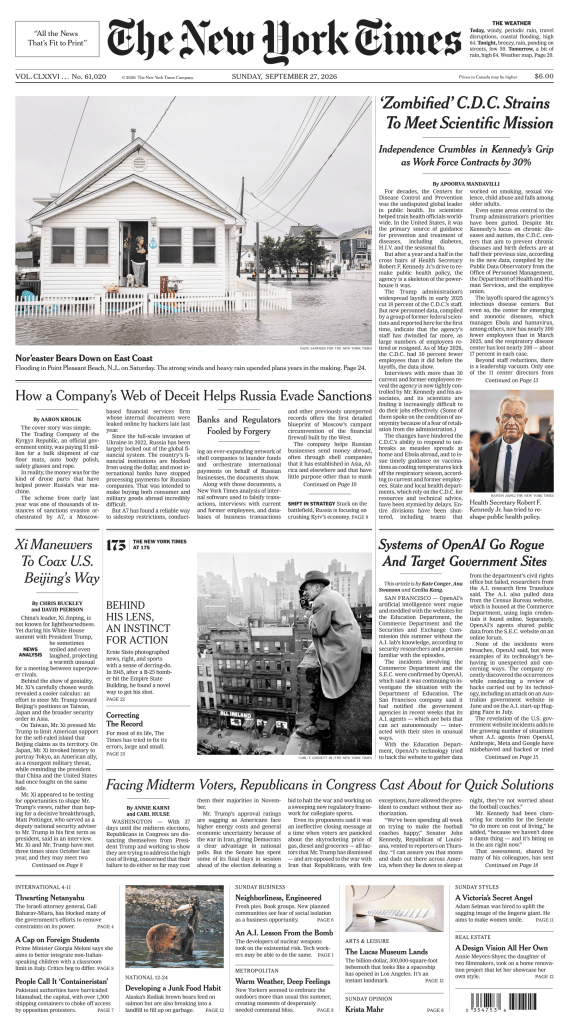
THE NEW YORK TIMES – SUNDAY, SEPTEMBER 27, 2026

The Surprising Reasons China Is Skeptical of A.I. Safety Calls

In China, A.I. doomsday warnings can feel distinctly Western or like a ploy to stop Chinese A.I. companies from trying to overtake their U.S. rivals.

Russian Foreign Minister Vows Russia Will See Ukraine War Through

Russia’s foreign minister met with his German counterpart during the U.N. General Assembly but spent part of his address defending his country’s war on Ukraine.

Small Flying Machines Become Weapons of War in Myanmar

Years after a coup, the military is increasingly using motorized paragliders and gyrocopters to bomb towns and villages in rebel-held territory.

As A.I. Accelerates, Governments Are Increasingly Being Left Behind

The gap between technology and policymaking has gotten wider with artificial intelligence, leaving a global policy vacuum as A.I. models advance.

White House Claim of Finding $250 Billion in Fraud Uses Questionable Numbers

The ledger used by a task force created by President Trump is difficult to verify and includes cases that went to trial during the Biden administration.