
History & Geopolitics
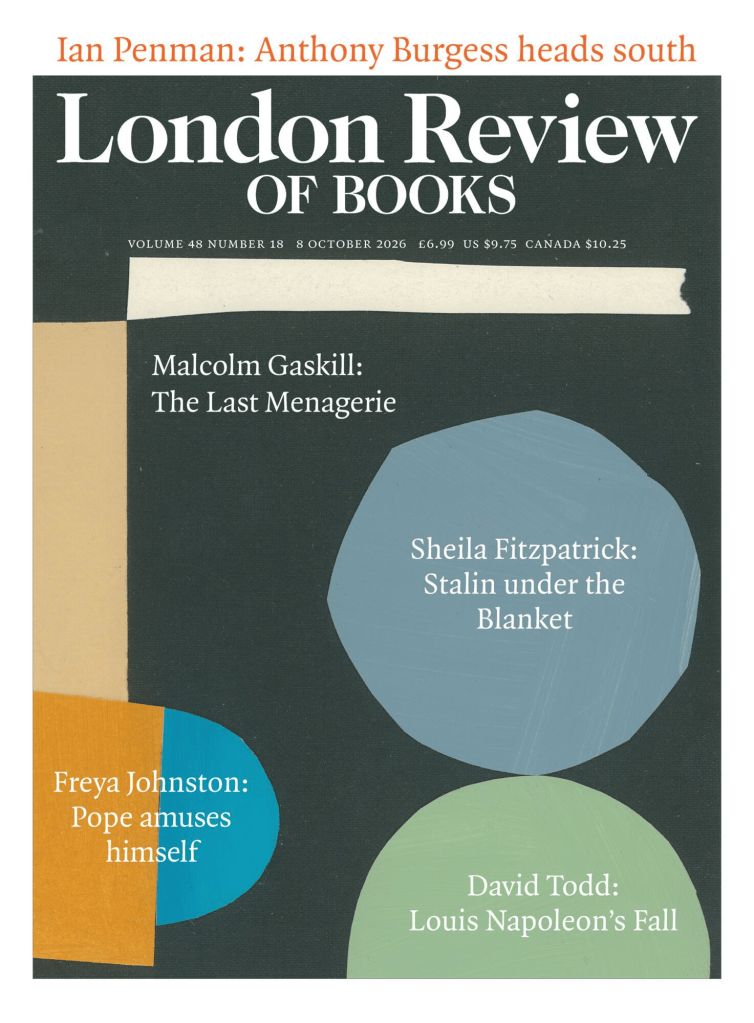
- Sheila Fitzpatrick on Stalinism: Fitzpatrick examines Irina Paperno’s Always under Siege: Olga Freidenberg’s Diary-Theory and the Everyday Terror of Stalinism, analyzing how classicist Olga Freidenberg’s secret writings framed the Siege of Leningrad and Soviet surveillance as a totalizing domestic regime.
- Tom Stevenson on NATO and Russia: Stevenson reviews Carlo Masala’s If Russia Wins: A Scenario and Thomas Newman and John Pierson’s Atlantic Resolve: The War for Estonia, analyzing contemporary Western military simulations and anxieties regarding Baltic security.
Literary Studies & Biography
- Edmund Gordon on William Golding: Reviewing William Golding: The Faber Letters edited by Tim Kendall, Gordon details the editorial tensions between Golding and Charles Monteith, focusing on substantial cuts to the original draft of Lord of the Flies.
- Freya Johnston on Alexander Pope: Johnston explores Henry Power’s edition of Alexander Pope: The Major Works, charting the Augustan poet’s biting satire, anxieties, and self-fashioning.
- Ian Penman on Anthony Burgess: Penman re-evaluates Burgess’s 1966 espionage satire Tremor of Intent, dissecting its baroque style and its uneasy relationship with James Bond.
Art & Culture
Columns and Short Cuts: Additional pieces include Peter Geoghegan on democratic funding reform and Blake Morrison on Luke Kennard’s poetry collection Black Bag.
Em Hogan on Hujar and Thek: Hogan reviews Andrew Durbin’s dual biography The Wonderful World that Almost Was: A Life of Peter Hujar and Paul Thek, profiling the turbulent lives of the photographer and artist against 1960s–1980s New York and the onset of the AIDS crisis.
Dexter Dalwood on Jasper Johns: Dalwood contributes a review of Johns’s exhibition at the Guggenheim Bilbao, evaluating his enduring postwar artistic motifs and printmaking legacy.

