


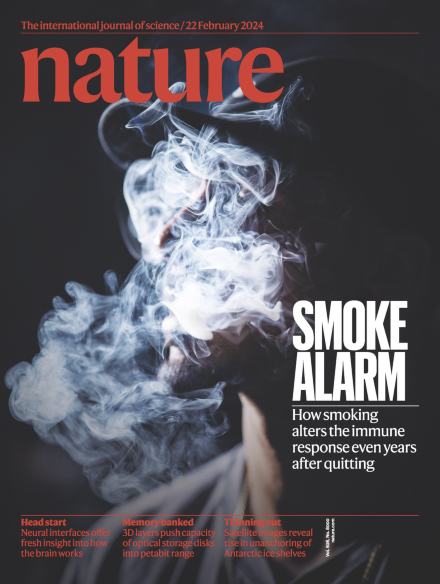

Megastructure stretching nearly 1 kilometre long is probably one of the oldest known hunting aids on Earth.
People infected with the virus that causes COVID-19 cleared the virus more quickly if they had high levels of certain immune cells.
The laboratory-grown food uses rice as a scaffold for cultured meat.

An evaluation of global dietary guidelines highlights the need for clearer warnings on what common foods fall under the ‘UPF’ banner. Some of them may surprise you. Today, Decomplicated examines what exactly defines ultra-processed foods, the impact they have on both society and the environment, and what can you do to minimize your consumption of them.


Country Life Magazine – February 21, 2024: The ‘The Fine Arts Issue’ – Artists who say it with flowers and the AI debate; Wig law, daffodils and how does your hedgerow grow?….
With the technology powering artificial intelligence advancing so rapidly, what can artists do to protect their original work?
Michael Prodger examines how flowers have inspired artists for centuries, from the ancient Egyptians up to the present day

The periwigs that were a 17th-century status symbol are still a mainstay of our legal system, as Agnes Stamp discovers
They have long been used to contain cattle or define boundaries, but hedges can be beautiful, too, argues Charles Quest-Ritson

Alan Titchmarsh takes a wander with Wordsworth as he dreams of spring daffodils ‘fluttering and dancing in the breeze’
The architect falls under the spell of a gritty, but humorous work
Jamie Blackett is ready to man the barricades to scupper plans for an unwanted national park
John Goodall applauds the restoration of Leighton House in London, which formed the hub of a 19th-century celebrity circle

Mary Miers follows the globe-trotting Sir John Lavery from Ireland to Africa and beyond
An inspiring oil painting was at the centre of a heist with a happy ending, reveals Carla Passino
A protective force in China and Wales, but a symbol of greed and evil in England: Lucien de Guise delves into dragon lore

Hetty Lintell celebrates the best of the Art Deco era with earrings old and new, but always modern
The astonishing King’s Lodge suite at The Connaught is fit for a monarch, finds Rosie Paterson
Amelia Thorpe shares the very best of London Design Week
Tilly Ware meets the wild-seed pioneer ‘nurturing the future’
Ben Lerwill finds the salt of the earth on the coast of Scotland

Melanie Johnson on rhubarb
A real-life couple are in harmony on stage, finds Michael Billington
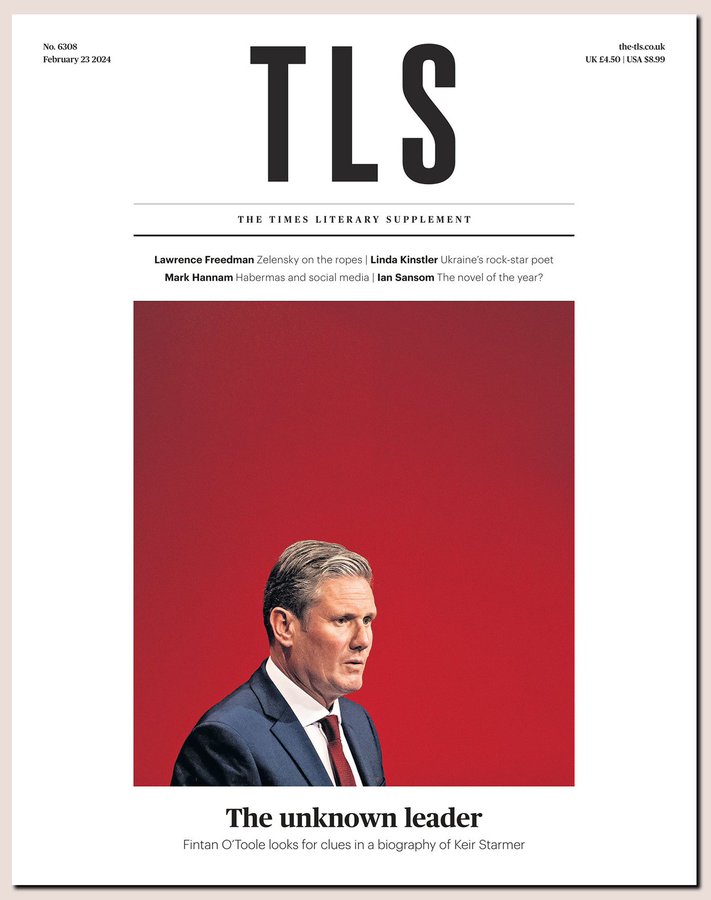

Times Literary Supplement (February 21, 2024): The latest issue features ‘The Unknown Leader’ – Fintan O’Toole looks for clues in a biography of Keir Starmer; Zelensky on the ropes; Ukraine’s rock star poet; Habermas and social media and The novel of the Year?….
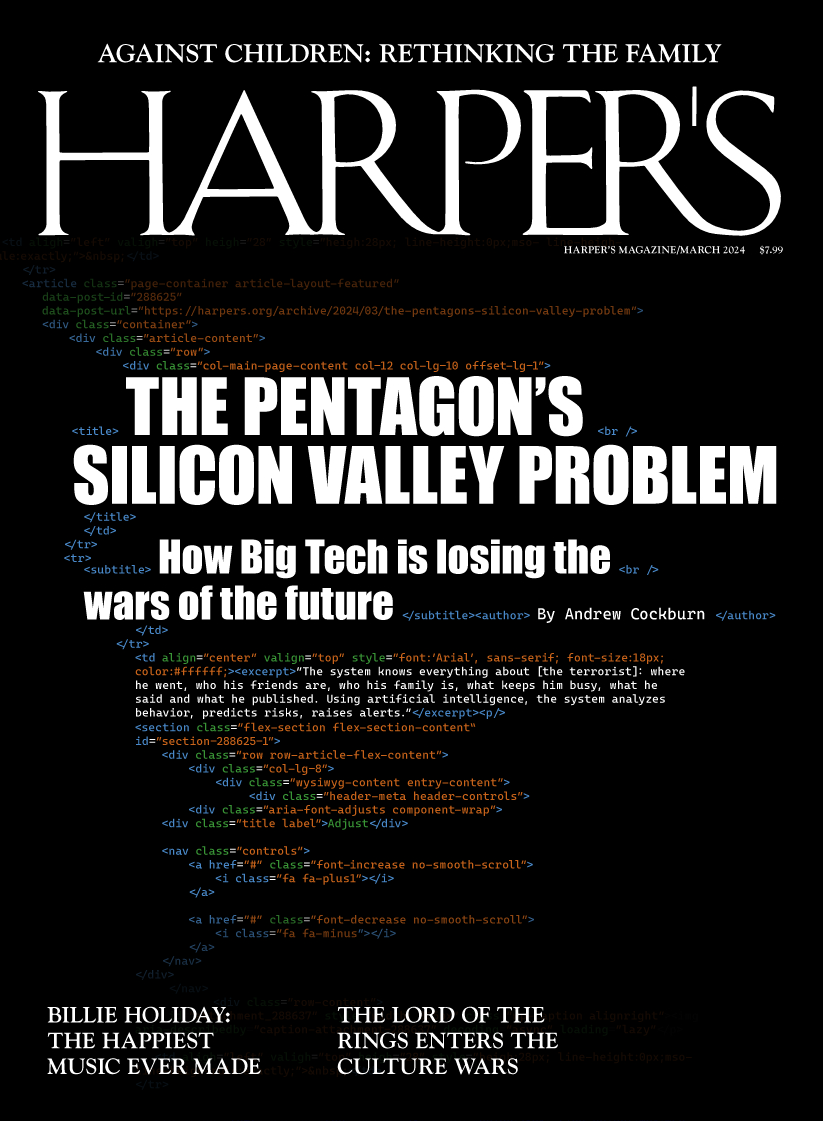

How Big Tech is losing the wars of the future

“Artificial intelligence may indeed affect the way our military operates. But the notion that bright-eyed visionaries from the tech industry are revolutionizing our military machine promotes a myth that this relationship is not only new, but will fundamentally improve our defense system—one notorious for its insatiable appetite for money, poorly performing weapons, and lost wars. In reality, the change flows in the other direction, as new recruits enter the warm embrace of the imperishable military-industrial complex, eager to learn its ways.”
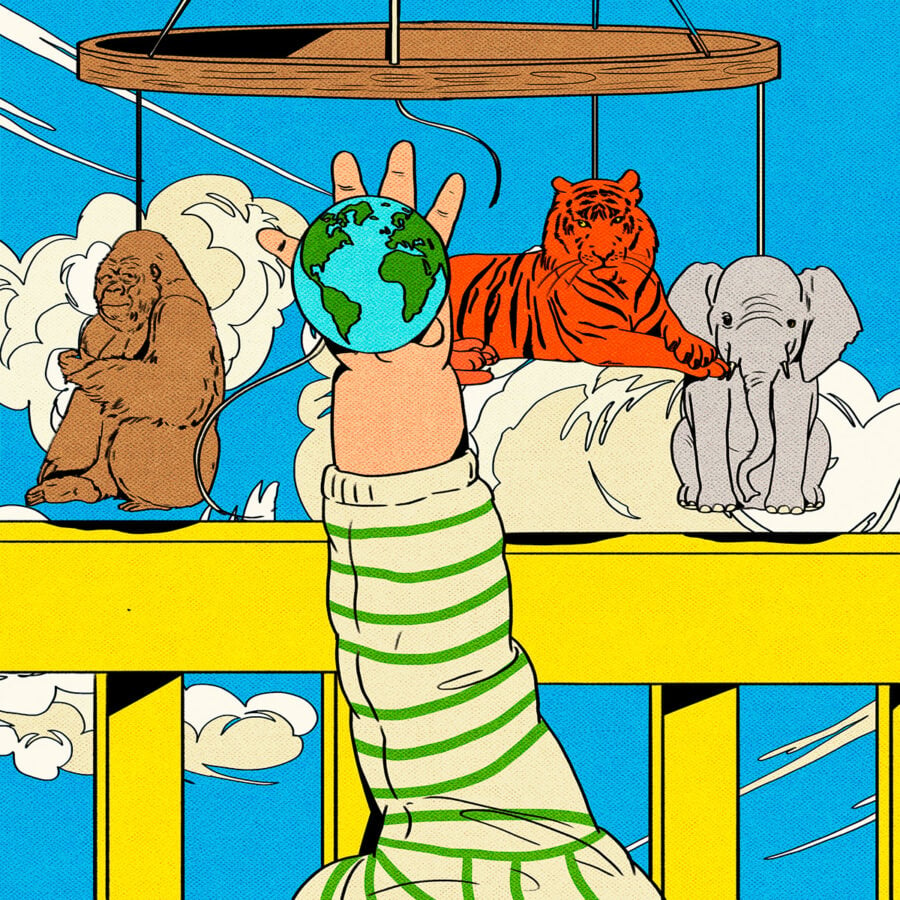
Among the antinatalists
“People would rather be enthusiastic collaborators in a global project than be skeptics of its fundamental integrity. Antinatalism implies or counts on our eventual extinction, and thinking this way is painful.”


Lawsuits. Unlicensed dispensaries. Corporations pushing to get in. The messy rollout of a law that has tried to deliver social justice with marijuana.

The Florida Republican is among the most brazen and controversial figures in Donald Trump’s G.O.P. He’s also among the most influential.
Representative Matt Gaetz arrived at the White House in the last days of 2020, amid a gathering national crisis. President Donald Trump had lost his bid for reëlection the previous month, and his allies were exploring strategies to keep him in office. Though only thirty-eight years old, Gaetz, the scion of a political family in Florida’s Panhandle, had become one of the Republican Party’s most prominent and divisive figures. His dark hair styled in a kind of bouffant, his lips often curled in a wry smile, Gaetz bore a resemblance to Elvis Presley, or, in the description of a Florida friend, “either Beavis or Butt-head.” He was quick-witted and sometimes very funny, and he loved to taunt his enemies, who were numerous, especially in his own party. “He’s the most unpopular member of Congress, with the possible exception of Marjorie Taylor Greene, and he doesn’t care,” a fellow-congressman told me.

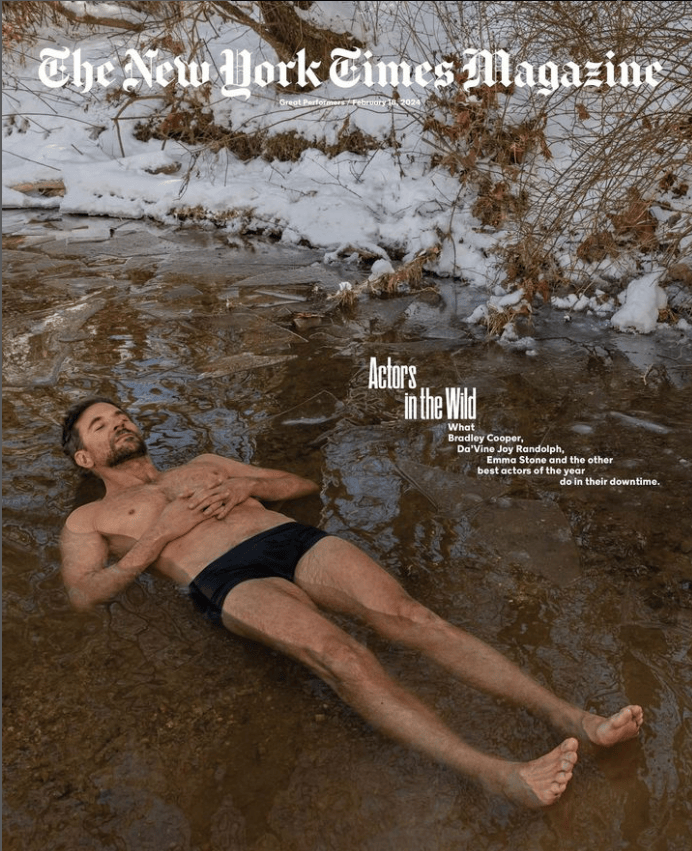

THE NEW YORK TIMES MAGAZINE (February 17, 2024): The new issue features ‘Actors in the Wild’ – The best performers of the year, when they’re not on film….

The best performers of the year — when they’re not on film.
James Nachtwey, an eminent photojournalist known for his intimate depictions of the front lines in places like Iraq, Afghanistan and Ukraine, had never photographed a movie star before. So for this year’s Great Performers issue, we asked him to capture a dozen of the world’s best actors away from the red carpets and awards ceremonies that often define how we see them. “My work has focused almost exclusively on conflicts and critical social issues, the polar opposite of what might be thought of as celebrity photography,” Nachtwey says. But he was intrigued by the challenge: “Art takes talent, but it’s also hard work, and exploring what actors practice in their daily lives to strengthen their art would be fascinating.”

Their films have gone viral for their awful production values. But their success says fascinating things about what comes after prestige TV.
By Niela Orr
There’s a 2008 movie that offers an odd preview of today’s entertainment. In Michel Gondry’s “Be Kind Rewind,” a bizarre accident demagnetizes the entire inventory of a video rental store, so a clerk and his eccentric friend decide to remake all the films themselves, from “The Lion King” to “Driving Miss Daisy” to “2001: A Space Odyssey.” Their versions are 20 minutes long (at most), shot on an old hand-held video camera and produced in a delightfully quirky, ad hoc way: handcrafted props and sets, buddies working as extras, costumes from the local dry cleaner.

BARRON’S MAGAZINE – FEBRUARY 19, 2024 ISSUE:

The candidates have divergent views on critical matters tied to economic growth. Why investors should pay attention.

Daleep Singh, a PGIM economist heading back to the White House, says the world’s challenges are going to require more fiscal spending.

A series of consequential elections around the world, including one in the U.S., could affect investors for years to come.Long read