NATURE MAGAZINE NOVEMBER 12, 2026

Volume 659 Issue 8140

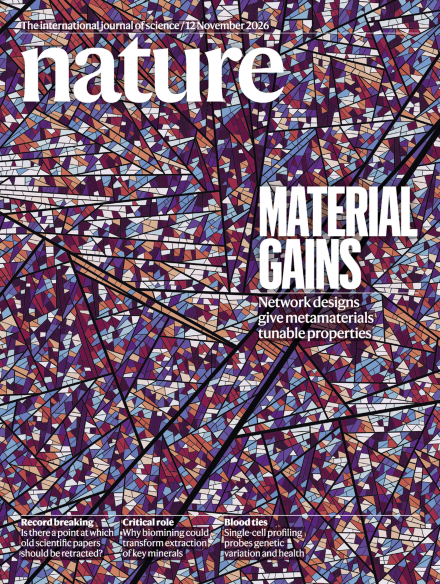
NATURE MAGAZINE: The latest issue features ‘MATERIAL GAINS’ – Network designs give metamaterials tunable properties….

Cholera bacterium’s good deed: inspiring a glue with rare properties

An adhesive that binds strongly even under water was inspired by a protein made by a feared pathogen.

First-of-its-kind planetary wreckage holds clues to our Solar System’s fate

Astronomers spot an unprecedented double disk of debris around a dead star.

Historic Marburg outbreak hints at long-term viral hideout

Sequencing of Marburg virus collected during Ethiopia’s first outbreak suggests that the pathogen is lurking in East and Central Africa.

Why not to wait even a few minutes before fleeing a tsunami

Simulation shows that hesitating can be the difference between making it to safety and not.

PROSPECT MAGAZINE – DECEMBER 2026

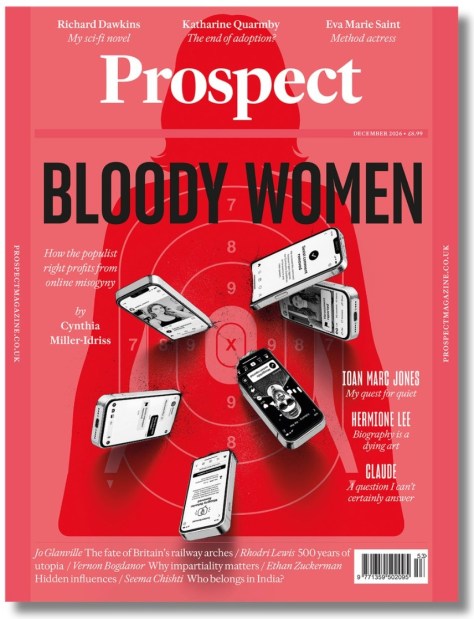
PROSPECT MAGAZINE: The latest issue features Bloody women: Cynthia Miller-Idriss on how online misogyny draws men to the populist right and extremism. Katharine Quarmby on adoption, Ben Ansell on Brexit, Ioan Marc Jones on quiet. Plus: John Berger, Richard Dawkins, de Kooning and Suchet

How the populist right profits from online misogyny

The global backlash against women demands urgent action By Cynthia Miller-Idriss

In April 2025 in Leeds, a 38-year-old man attacked two women with a crossbow after consuming immense amounts of misogynistic, anti-feminist and racist content online. He left behind a manifesto and an online footprint peppered with neo-Nazi and violent incel (involuntary celibate) references. Weeks earlier, UK police foiled a threatened Valentine’s Day massacre by a teenage boy, who was later sentenced for releasing personal information online, a practice known as “doxing”, to encourage attacks against his female classmates.

AI’s railroad to corruption

By concentrating so much power in the hands of the AI hyperscalers, we risk reviving the tainted democracy of the Gilded Age By Ethan Zuckerman

Claude: The AI chatbot reveals the book every child should read, its view on censorship and whether it’s conscious

Farage has been dealt a huge blow — the affair with Trump is over


The Reform leader needs to find a new object for his affections bY Alan Rusbridger

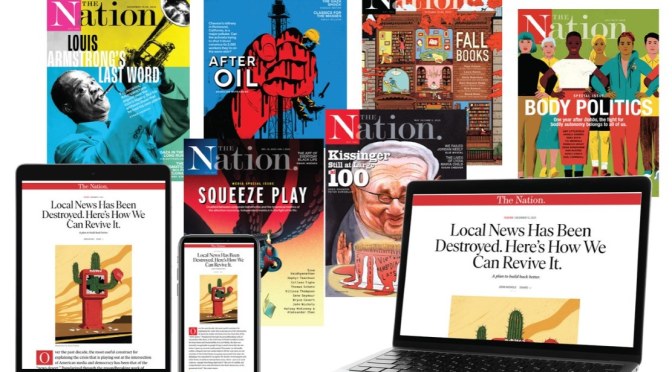
THE NATION MAGAZINE – DECEMBER 2026 PREVIEW

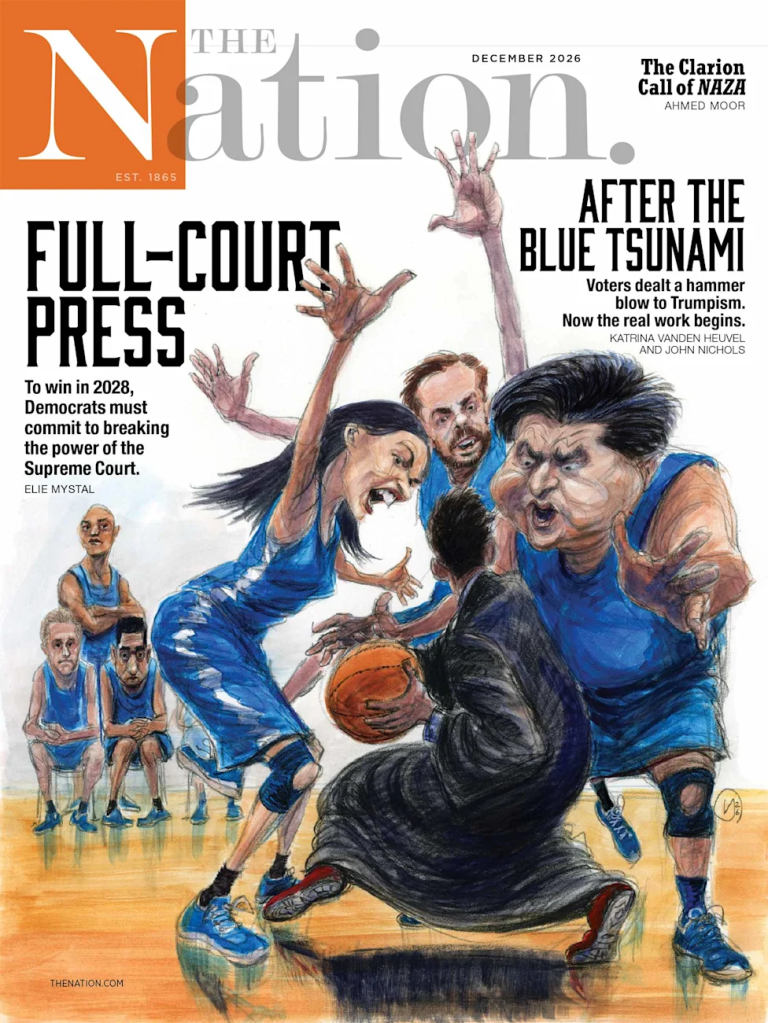
THE NATION MAGAZINE: The latest issue features ‘FULL COURT PRESS’ – To win in 2028, Democrats must commit to breaking the power of the Supreme Court.

Democrats Crushed Trump. Here’s What They Should Do Next.

Seeking facile compromises with Trump is a fool’s mission—and voters who are hungry for change will not accept half-measures.

Inside France’s Biggest Uprising Since 1968

Despite harsh reprisal from the government, students show no sign of stopping.

What We Can Learn From Lula’s Seismic Win

The Brazilian president looked headed for defeat. The Brazilian people had other ideas.

Kamala Harris on Expanding Democratic Power in the South

A conversation with the former vice president about the fight for Democrats in the too-long-neglected South.

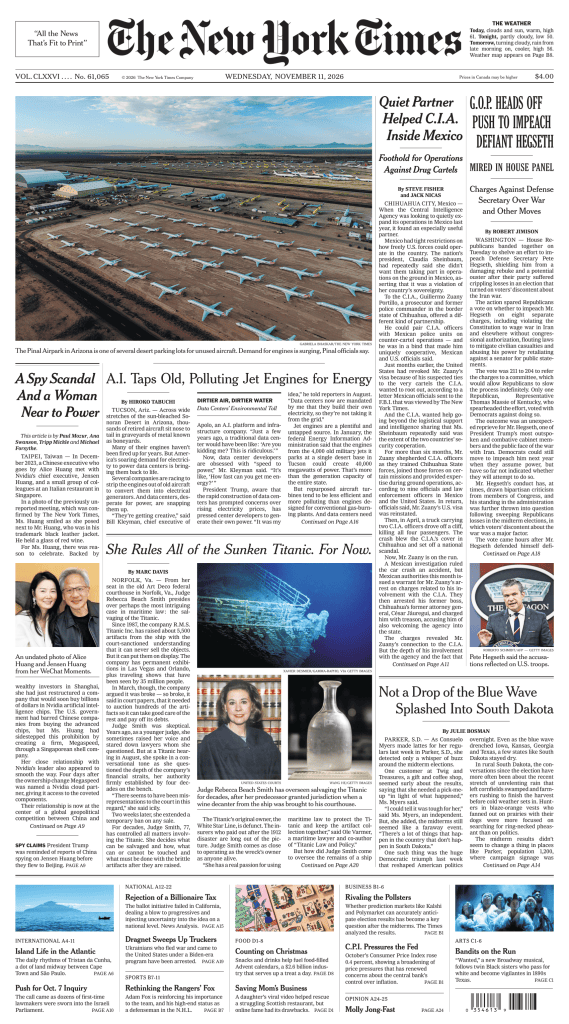
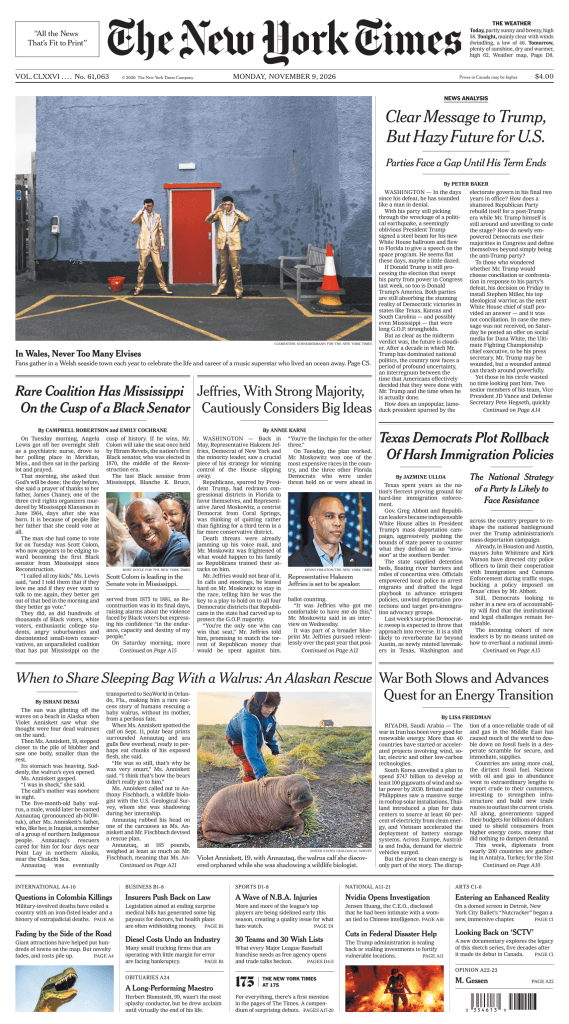
THE NEW YORK TIMES – WEDNESDAY, NOV. 11, 2026

The Fed Has to Raise Rates. Officials Are Divided Over How Fast to Go.

The Federal Reserve’s gradual approach to raising rates is being tested by intensifying price pressures.

Lebanon Faces Economic ‘Catastrophe’ After War and Years of Mismanagement

Hezbollah’s conflict with Israel and the U.S.-Israel war with Iran have made systemic problems worse, causing the cost of living to soar and driving many Lebanese to despair.

Rubio Says ‘Major Combat Operations’ in Iran Are No Longer Needed

The U.S. secretary of state said that American economic pressure is doing sufficient damage to the leadership in Tehran.

Democrats Pulled In Moderates. Can They Hold On to Them?

It’s not clear whether the party’s midterm success signals a broad realignment in American politics or a temporary turn away from an unpopular president.

A New Democratic-Tied Dark-Money Group Draws Scrutiny Over Midterm Spending

They’re in Ukraine. Why Do Their Phones Say They’re in Peru?

GPS-linked devices have been insisting that Ukrainians are in Lima, the Peruvian capital. The culprit is a jamming system built to thwart Russian airstrikes.

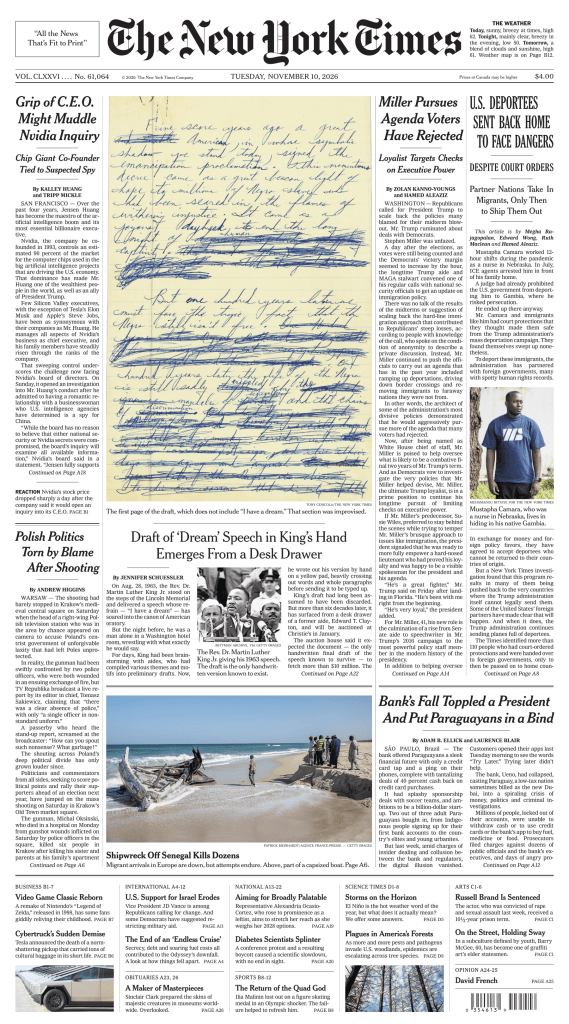
THE NEW YORK TIMES – TUESDAY, NOVEMBER 10, 2026

California Voters Reject Billionaire Tax That Divided Democrats

The measure would’ve created a first-of-its-kind wealth tax on the assets of billionaires. Its defeat could hinder the movement across the U.S.

Nvidia’s Board Has a History of Letting Jensen Huang Get His Way

Governance experts question whether the board, which is investigating Mr. Huang’s conduct, has been too deferential as he has turned Nvidia into a global giant.

Huang Told Trump He Did Not Know Chinese Woman Was Suspected Spy

Anthropic Targets Valuation of Up to $1.4 Trillion for Blockbuster I.P.O.

The A.I. company’s pricing would make it one of the biggest ever public listings. It comes at a volatile moment amid fears that the A.I. boom may not be sustainable.

The Man Who Helped the C.I.A. Secretly Operate in Mexico

President Claudia Sheinbaum drew a firm line barring U.S. forces from operating on Mexican soil. But in a northern border state, one local partner quietly helped the agency build a foothold.

Saudi Arabia Sentences Mother to 100 Lashes for Birth Outside Marriage

The kingdom’s promised reforms don’t always match the realities of its justice system. Unmarried women, particularly foreign workers, face unique perils.

Why U.S. Business Deals Are Unlikely to Get Putin to Give Any Ground

President Vladimir V. Putin of Russia has shown a willingness to endure a high price to get what he wants in Ukraine, and he sees little reason to stop fighting now, analysts say.

6m agoBy Paul Sonne

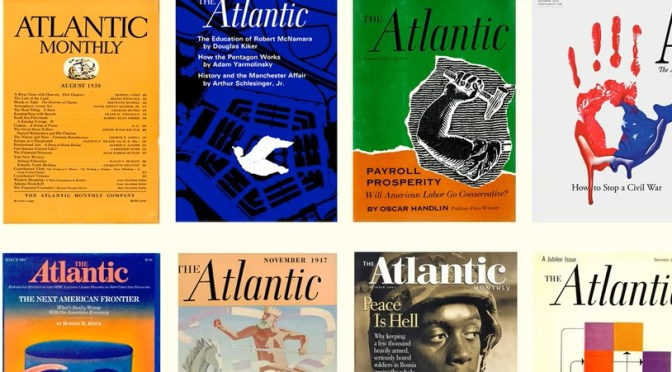
THE ATLANTIC MAGAZINE – DECEMBER 2026 PREVIEW

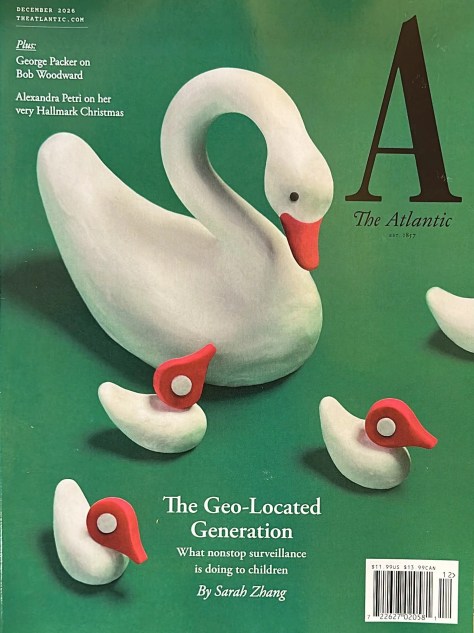
THE ATLANTIC MAGAZINE: The latest issue features “THE GEO-LOCATED GENERATION’ – What nonstop surveillance is doing to children….

What Constant Surveillance Is Doing to Children

And their parents. By Sarah Zhang

In The Atlantic’s December cover story, “The Geo-Located Generation,” staff writer Sarah Zhang explores how constant surveillance is stunting children and making parents paranoid. Parents today can functionally track their children 24/7 from the moment they’re born through adulthood, starting with products such as the Snoo Smart Bassinet and Apple’s AirTags sewn into toddler backpacks and moving to apps such as Find My Friends and Life 360. Zhang examines how this is affecting kids, and namely their resilience and independence––but also how it’s affecting their parents.

Biden: What Trump Did on January 6 ‘Should Follow Him to His Grave’

In an excerpt from his forthcoming book, the former president calls on Americans to defend their democracy. By Joe Biden

The Collapse of America’s Most Consequential Institution

Without a functional Department of Justice, no one can ensure that Americans will be treated equally under the law. By Rachel Maddow

The One Source Bob Woodward Can’t Get to Talk

In a new memoir, the legendary reporter reveals his methods—but little of himself. By George Packer

THE NEW YORKER MAGAZINE NOVEMBER 16, 2026 PREVIEW

Image may contain Edward Maya Beatriz Merino Book Publication Comics Person Baby Adult Face and Head

THE NEW YORKER MAGAZINE: The latest issue cover features ‘Barry Blitt’s “Sea Change”

Breaking the Decade-Long Trump Fever

The President’s unique brand of lurid authoritarianism has finally lost appeal, and he has lost the plot. By David Remnick

Can American Socialism Survive Its Success?

The movement has often seen its ideas flourish as its organizations withered. Will today’s resurgence follow the same course?

The Ubiquitous Melancholy of Max Richter

The composer’s song “On the Nature of Daylight” has popped up in countless sob fests including “Arrival” and “Hamnet.” With billions of streams, he’s become one of the most popular and successful composers of our time.

An N.B.A. Player Got Hooked on Sports Betting. Soon, He Became the Bet

Jontay Porter got deep into FanDuel, and in debt to the wrong people. The only way out, it seemed, was to gamble on himself.

THE NEW YORK TIMES – MONDAY, NOVEMBER 9, 2026

C.E.O.’s Grip on Nvidia Poses a Challenge to Its Board’s Investigation of His Affair

If the board decides to punish Jensen Huang, who admitted to a relationship with a woman suspected of being a Chinese spy, there is no obvious successor.

The Difficult Options Trump Is Weighing to Resolve the War in Iran

There are no good choices facing President Trump as he tries to find a way out of the deeply unpopular conflict.

Ukraine Peace Talks Are Restarting After 9 Months. Here’s What to Expect.

U.S.-led talks to end the war between Russia and Ukraine will resume this week in Abu Dhabi. A cease-fire won’t be on the table.

Immigrants Are Being Systematically Returned Home Despite Court Orders

Working with the Trump administration, foreign partners accept deportees, then ship them to nations where the U.S. itself would be prohibited from sending them.

Germans Miss Merkel, Their Old Chancellor, Though They Dislike Her Policies

Crowds have flocked to the stern, but reassuring, face of Angela Merkel in her official portrait, even as a backlash to her legacy roils German politics.

IMPRESSION, CENTENARY

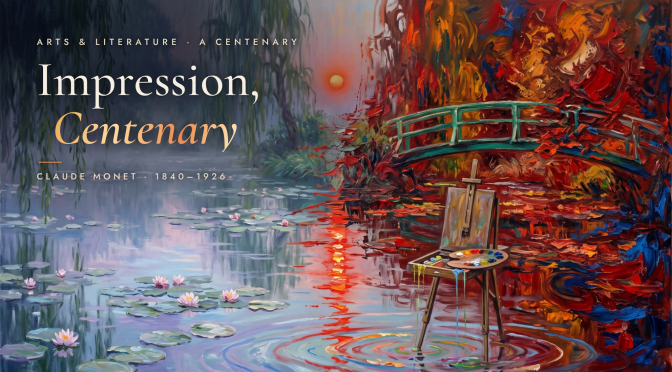
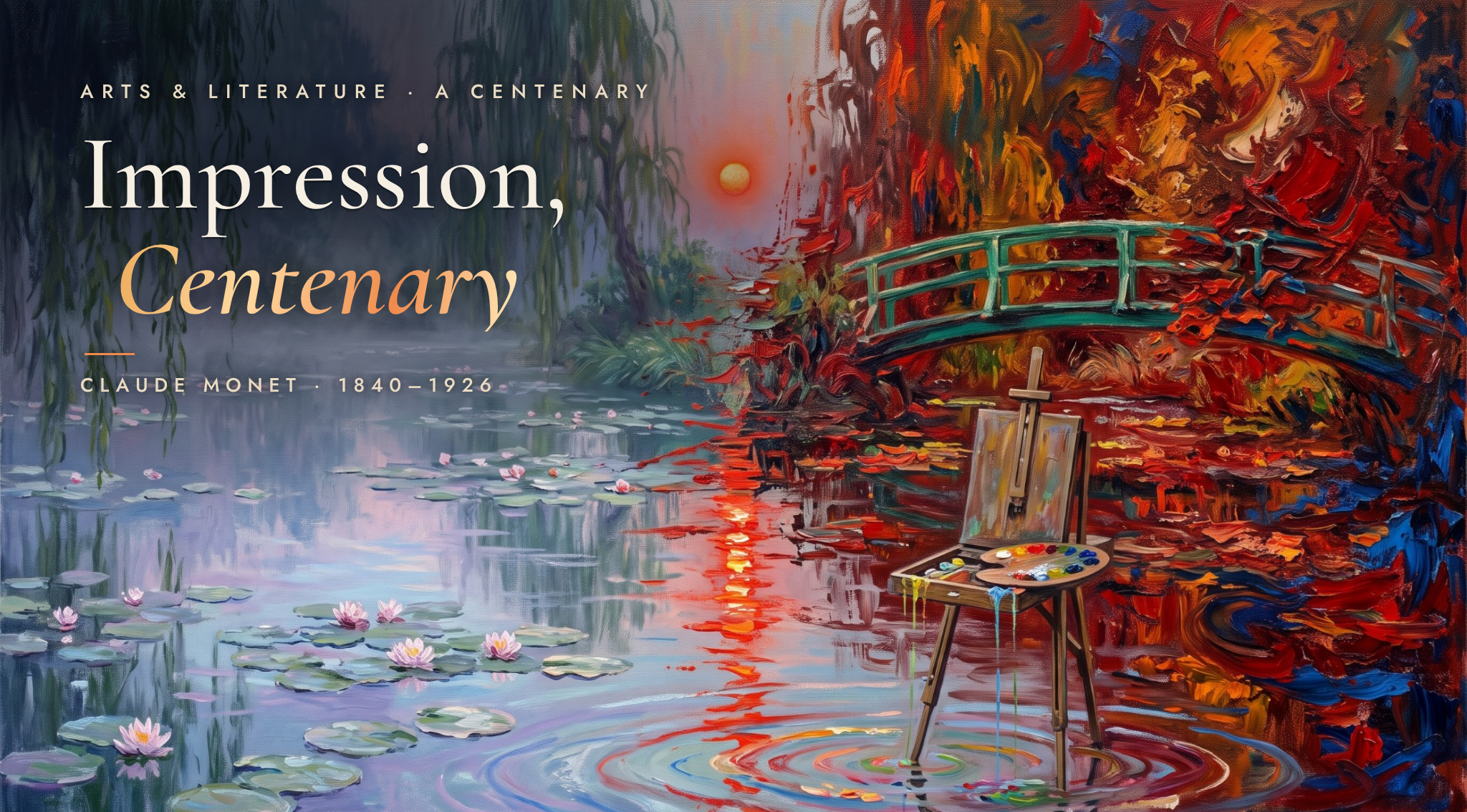
Impression, Centenary. Claude Monet, 1840–1926. Monet’s water lily pond at Giverny at dawn, calm on the left and dissolving into fiery late brushwork on the right, with an empty easel standing in the water.

Twelve paintings, one century, and the man who painted time

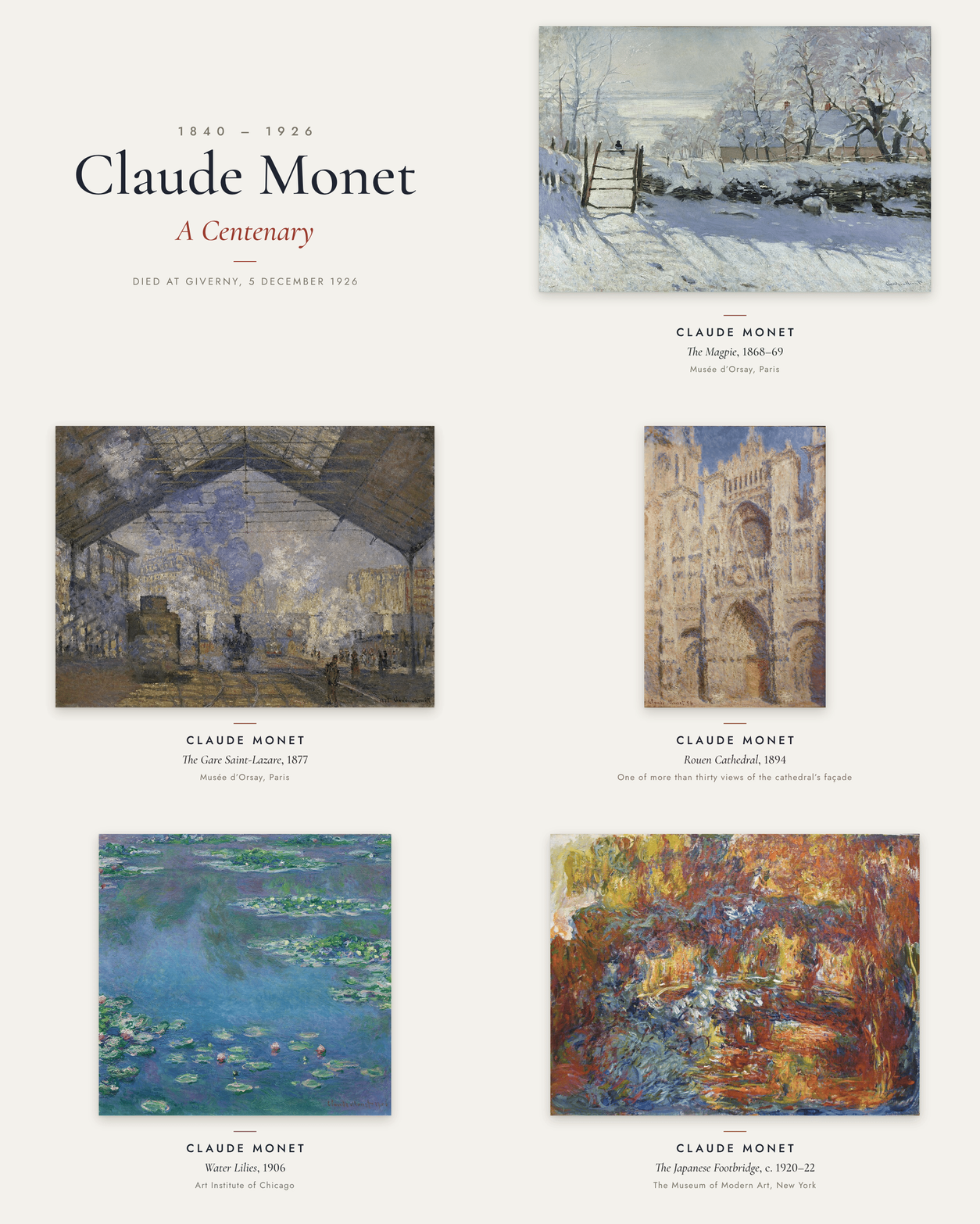
A gallery of twelve paintings by Claude Monet, from Impression, Sunrise (1872) to The Japanese Footbridge (c. 1920–22), each with its title, date and museum.
Twelve paintings by Claude Monet, 1868–1922. All are in the public domain.

On 5 December 1926, Claude Monet died at Giverny, aged 86, in the house where he had lived for more than forty years. A century later, the twelve paintings in our gallery show how one man taught the world to look at light instead of things.

It begins with a sunrise. In 1872 Monet painted the harbour at Le Havre in quick strokes: grey-blue mist, ghostly cranes and a small orange sun that seems to burn through the canvas. When he showed Impression, Sunrise at the first independent exhibition in 1874, the critic Louis Leroy mocked it in a review headlined “Exhibition of the Impressionists.” The insult stuck, and a movement had its name.

Earlier still, in The Magpie, he had painted snow in blue, violet and cream. The Salon jury rejected it in 1869. Then came the sunlit years at Argenteuil. In Poppy Field and Woman with a Parasol, the figures are his wife Camille and their son Jean, painted so quickly that the wind seems to move through the brushwork. In The Gare Saint-Lazare, Monet turned modern Paris into weather, making locomotive steam as beautiful as clouds.

In the 1890s he made his boldest discovery: the subject hardly mattered. He painted stacks of wheat near his home at every hour and season, then more than thirty views of Rouen Cathedral’s façade, its stone dissolving from dawn grey to noon gold. In London, working from St Thomas’ Hospital across the Thames, he painted Parliament as a dark silhouette against a burning sky. A building, a field or a river was only the occasion. The true subject was time.

At Giverny he built his own subject. He diverted a stream, dug a pond, planted water lilies and crossed it all with a Japanese bridge, then painted that garden for the rest of his life, some 250 canvases of lilies in all. On 12 November 1918, the day after the Armistice, he wrote to his friend Georges Clemenceau offering the nation water-lily paintings as a monument to peace. They were installed at the Musée de l’Orangerie in May 1927, five months after his death, in two oval rooms that surround visitors with water and sky.

The true subject was time.

The final picture in our gallery is the strangest. Cataracts had clouded Monet’s sight, and in The Japanese Footbridge, painted around 1920–22, the bridge almost disappears into blazes of red, ochre and blue. Critics once dismissed these late works as the failings of an old man. In the 1950s, as Abstract Expressionism rose in New York, they were rediscovered as visions of the future. Joan Mitchell later spent her last decades in Vétheuil, in a house overlooking the one Monet had rented in the late 1870s.

Paris is marking the centenary. Monet: Painting Time is at the Orangerie through January 25, and From Monet to Hockney is at the Musée Marmottan Monet, home of Impression, Sunrise, through January 31. Take the gallery above as an invitation. A hundred years on, Monet’s light has not finished changing.

The Gallery

  1. Impression, Sunrise, 1872 · Musée Marmottan Monet, Paris
  2. The Magpie, 1868–69 · Musée d’Orsay, Paris
  3. Poppy Field, 1873 · Musée d’Orsay, Paris
  4. Woman with a Parasol – Madame Monet and Her Son, 1875 · National Gallery of Art, Washington
  5. The Gare Saint-Lazare, 1877 · Musée d’Orsay, Paris
  6. Stacks of Wheat (End of Summer), 1890–91 · Art Institute of Chicago
  7. Rouen Cathedral, 1894 · One of more than thirty views of the façade
  8. Bridge over a Pond of Water Lilies, 1899 · The Metropolitan Museum of Art, New York
  9. The Houses of Parliament, Sunset, 1903 · National Gallery of Art, Washington
  10. Water Lilies, 1906 · Art Institute of Chicago
  11. Water Lilies, 1914–26 · Musée de l’Orangerie, Paris
  12. The Japanese Footbridge, c. 1920–22 · The Museum of Modern Art, New York

See it in Paris

Monet: Painting Time · Musée de l’Orangerie · through January 25, 2027

From Monet to Hockney · Musée Marmottan Monet · through January 31, 2027

— The Editors, Intellicurious —
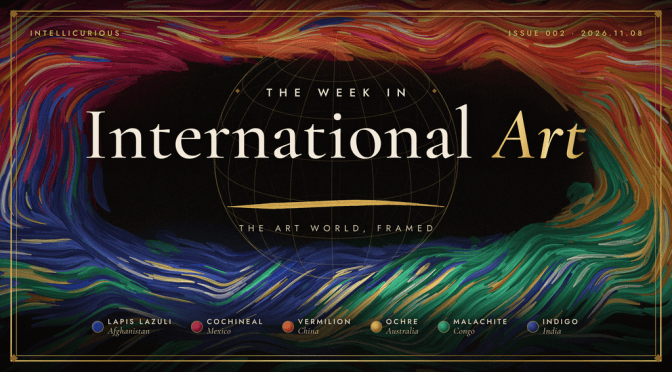
WHAT ARE WE LOOKING AT?

The Week in

International Art

The art world, framed
Collection · Saleroom · Trompe-l’œil · Afterimage

Sunday, November 8, 2026 · Issue No. 2

Covering November 1–7

The Permanent Collection — What will still matter in five years

1

A court unsells a Pissarro

On Thursday, a French court ordered that a Camille Pissarro painting sold at Sotheby’s in London be returned to the heirs of its prewar owner, and that the sale be cancelled. Darse de pêche et bassin Duquesne (1902), a view of the port of Dieppe, belonged from 1935 to Salomon Flavian, a Jewish banker. The court found that the Nazis looted it in Paris in 1941, as recorded in France’s 1947 register of looted property. A study backed by Sotheby’s and Mondex, a Toronto restitution firm, argued that the painting had left Flavian’s hands before the war. The court found no convincing evidence of that. Sotheby’s sold it in June 2024 for £1.2 million under a settlement that, according to the heirs’ lawyer, only two of Flavian’s relatives had signed. Under French law, cancelling the 1941 seizure voids every sale that followed. Sotheby’s now has two months to reveal the buyer’s full identity or pay €1,000 a day. The house says it is “disappointed,” disputes the court’s reach over a sale made in London, and is considering joining Mondex’s appeal. “It is a very important ruling,” said Corinne Hershkovitch, the heirs’ lawyer. Two days earlier, The Art Newspaper reported that Italy is moving toward a restitution panel of its own. A bill before parliament would create a five-member committee to rule, within 180 days, on art confiscated or sold under racial persecution between 1933 and 1945, with no statute of limitations. Italy has “barely scratched the surface” on Holocaust restitution, said Gideon Taylor of the World Jewish Restitution Organization.

Why it lasts: an auction sale used to be the end of a painting’s story. This ruling says a sale can be undone years later, in another country. If it survives appeal, anyone selling a work with a gap in its wartime history will have to weigh that risk.

2

The dead leave the display case

Glasgow’s Kelvingrove Art Gallery and Museum has taken the mummified remains of an Egyptian priest named Nekht off public view, and Glasgow Life, the charity that runs the city’s museums, has received a request to return them to Egypt. It hasn’t said who made the request. Under a draft policy, Glasgow will show human remains only with documented consent from the dead or, where appropriate, their descendants. Without that consent, a spokesperson said, removing ancient Egyptian remains from display is “more respectful to the deceased individuals.” A mummified head, foot and hand from the Valley of the Kings have also come down, and remains at the St Mungo Museum are next. At the University of Glasgow’s Hunterian, the open sarcophagus of Lady Shep-En-Hor has been covered. Not everyone agrees. Stuart Robertson, former director of the Charles Rennie Mackintosh Society, called the consent test “an absurd and impossible standard.” In Germany, on Tuesday, the Museum Wiesbaden will hand ten skulls to representatives of the Indonesian government. They were sent home in the 19th century by Ernst Albert Fritze, a military doctor from Hesse who served the Dutch in their East Indies colony from 1817. Hesse’s culture ministry says it is the first time human remains have been returned from Germany to Indonesia.

Why it lasts: for generations, mummies have been a staple of Western museums. The question now is not only who owns the dead but whether they should be looked at at all. Once one major city answers no, others will be asked the same question.

3

Rome plans a museum for a fascist modernist

Italy’s culture ministry has unveiled plans for a state museum devoted to Mario Sironi, a leading Italian modernist and a committed fascist. It is due to open next year in Rome, in the 1928 headquarters of the national association of disabled war veterans. That monumental fascist-era building already holds two Sironi frescoes, one of them showing Mussolini on horseback. The museum will show 30 works the ministry recently bought from the Mario Sironi Archive and 90 more on loan from it. Culture minister Alessandro Giuli calls it “the defining achievement of my term in office.” Sironi joined the fascist movement in 1919 and drew more than 1,700 cartoons and illustrations for Mussolini’s newspaper, Il Popolo d’Italia. His work runs from Futurism to the regime’s monumental commissions. Tomaso Montanari, an art historian on the museum’s scientific committee, doesn’t oppose the project. He says its materials “must make clear that there is no endorsement of fascism,” and that the ministry has only “partially” accepted his call to show work from other periods. Another committee member, Fabio Benzi, warned of “legitimising a certain authoritarian aesthetic under the guise of cultural rediscovery.” The museum’s press materials, The Art Newspaper notes, don’t mention fascism or Mussolini.

Why it lasts: every country with a dictatorship in its past has to decide how to show the art made for it. A state museum is the strongest statement a government can make about an artist, and the wall texts in Rome will be read closely, in Italy and abroad.

The Saleroom — Where collectors are betting

Two markets, one week

Christie’s first fine-art auction in Abu Dhabi, last Sunday, made $8.94 million with fees, from 70 works by 58 artists from 13 countries. The top lot, Monir Shahroudy Farmanfarmaian’s Variations on the Hexagon (2006), sold for $844,800 after almost seven minutes of bidding, more than three times its high estimate. Christie’s says 37 percent of those taking part were new to the house, and it announced nine auction records, though Art in Context points out that only three are outright artist records and four are artists’ first sales at auction. “This is only the beginning,” said Anthea Peers, Christie’s president for Europe, the Middle East and Africa. In Vienna, meanwhile, four galleries are closing or leaving, among them Exile, after 18 years, and Eva Presenhuber’s Vienna space. “There are simply no new collectors emerging,” said Exile’s Christian Siekmeier. Canada’s dealers are losing their biggest market. US tariffs of 50 percent on Canadian paintings, sculpture and prints, in force since August, have led Macaulay & Co to drop a Miami fair in December, and Vancouver’s Equinox Gallery expects its US sales, about 15 percent of the total, to fall to zero. The bigger test comes in New York, where the November auctions begin on November 16. At Christie’s the next night, a Kandinsky and a Klimt are each estimated at $60 million to $80 million.

What it’s worth: the money is moving, not disappearing. New buyers are turning up in the Gulf while the middle of the gallery business thins out in Europe and Canada. The New York sales will show whether the top of the market is as strong as Abu Dhabi suggests.

Trompe-l’œil — Looks new. Isn’t.

Picasso, in silver

In 1955, Picasso asked François Hugo, a goldsmith in Aix-en-Provence, to make plates in silver from designs Picasso had made for ceramics in Vallauris. Seventy years later, sets of those plates, and gold medallions too, keep appearing for sale, worth millions of euros in all. Sotheby’s London sold a complete set of 24 silver plates for £1.4 million in 2021. The first alarm came in 2023 from Mona, the museum in Tasmania, about plates it had bought at Sotheby’s. In March, Paloma Ruiz-Picasso filed a complaint on behalf of nine heirs alleging fraud, counterfeiting, forgery and concealment. It names no suspects. The Picasso Administration says it has found at least 17 suspect sets, hundreds of pieces in all, and a court in Aix-en-Provence has opened a preliminary criminal investigation, The Art Newspaper reported on Thursday. Nicolas Hugo, the goldsmith’s grandson, says the right to reproduce the pieces disappeared with them, and that anything from his father’s and grandfather’s time is too old to prosecute. It hangs here not because the sums are small. They aren’t. It hangs here because the complaint is eight months old, the investigation has barely begun and no one has been charged. For now, it is a story about how much a famous name can make a silver plate look like a Picasso.

Vernissage — Doors opening this week

Powerhouse Parramatta, Sydney. After nearly 15 years and A$915 million, Sydney’s new arts and science museum opened on Saturday on a former car park in the city’s west. More than 3,000 objects fill its column-free galleries in five opening shows, among them Es Devlin’s The Turning and Task Eternal, on flight and space, made with the Smithsonian and the British Museum. About 25,000 people registered for opening-weekend events, SBS reported. “This place will become a cultural backbone for Western Sydney,” said acting chief executive Abbie Galvin. She is acting because chief executive Lisa Havilah stepped down in August amid misconduct allegations, which she denies, while a law firm investigates a whistleblower’s claims about governance and procurement. The old Powerhouse in Ultimo closed in 2024 for a A$300 million rebuild.

Art Dhaka, Bangladesh. Bangladesh’s first art fair opened on Friday in Aloki, a former garment factory turned cultural hub, under the slogan “Art for All.” It runs until Tuesday. Dhaka has only a handful of commercial galleries, and the country is still settling after the 2024 fall of Sheikh Hasina’s government. “We don’t have a strong gallery system,” said co-founder Durjoy Rahman.

Farewells

Miquel Navarro, 81, died on November 1. Inspired by his hometown of Mislata, near Valencia, he built imaginary cities from hundreds of geometric forms that visitors could walk through. He represented Spain at the 1986 Venice Biennale, and his public sculptures include La Pantera Rosa (1984) in Valencia.

Fernando Calvillo, 45, community relations director of the Oklahoma Visual Arts Coalition, died in the October 28 high-speed train crash near Urda, in Spain’s Toledo province. Born in Aguascalientes, Mexico, he was an artist and a connector of artists in Oklahoma City. His husband, Lawrence Naff, survived.

Afterimage

John Berger was born a hundred years ago on Thursday. In Ways of Seeing, the 1972 book that grew out of his television series, he wrote that “the way we see things is affected by what we know or what we believe.” This week tested that sentence everywhere. The Pissarro view of Dieppe is the same canvas that sold in London in 2024. Now that a court has called it loot, it is a different object. In Rome, a fresco of Mussolini on horseback will read as history or as homage, depending on the words on the wall beside it. In Glasgow, a priest named Nekht, shown for years as an exhibit, is now treated as a person who never agreed to be seen. Even a silver plate looks different once you know who might have made it. Berger believed that looking is never innocent. A century after his birth, museums are starting to agree.

Before You Leave the Gallery

Once you know a painting’s history, can you ever see it the same way again?

Sourced this week from The Art Newspaper, ITV News, taz, The National, Art in Context, The Art Insider, ABC News, SBS News, Hyperallergic and Mexico News Daily.

— The Editors, Intellicurious —