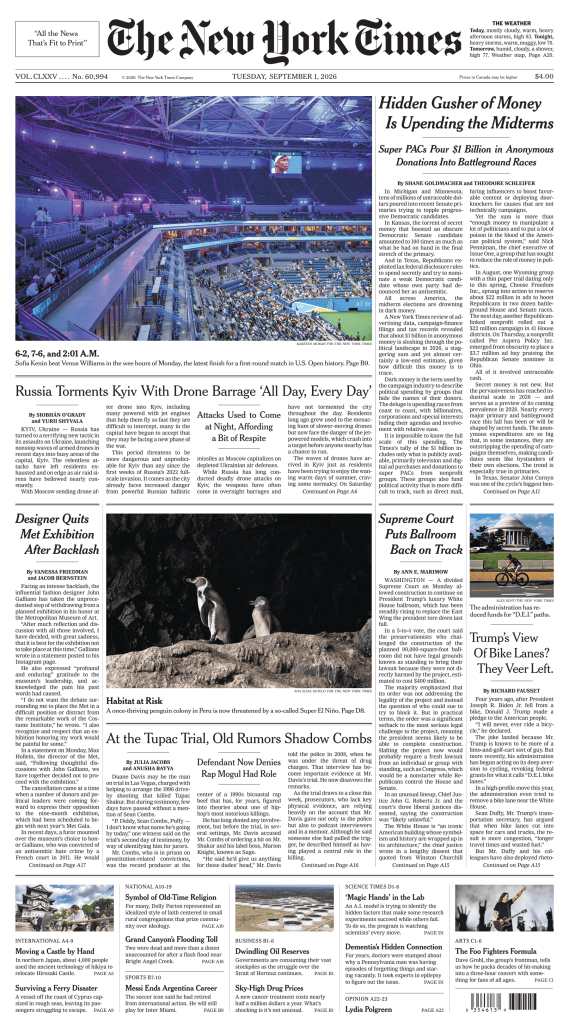
Iranian attacks have upended the Navy’s supply chain, causing a strain on the aircraft carriers, ships and destroyers that are being kept in the Middle East indefinitely.
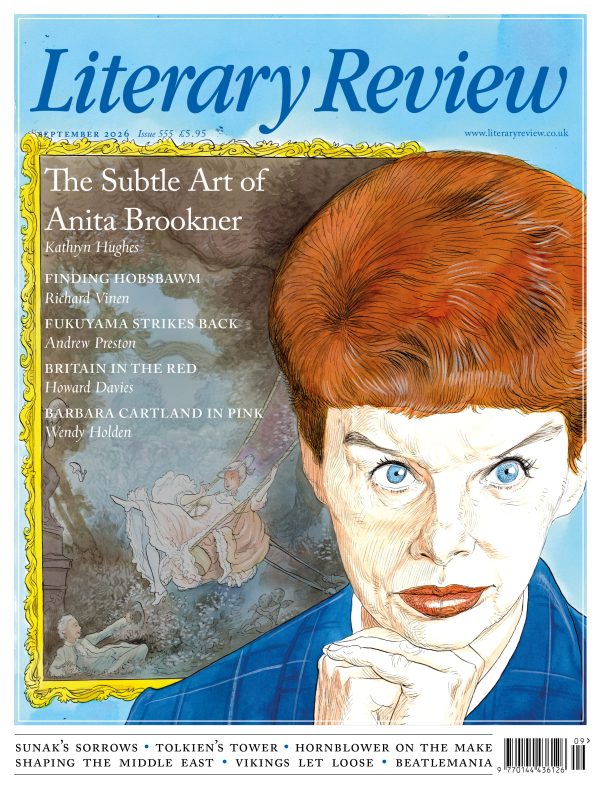
It’s getting on for twenty-four years ago that I first read Patricia Highsmith’s The Talented Mr Ripley (1955). Books tend to come to us when we need them, and it’s easy to see why Tom Ripley’s project of self-reinvention and triumphant class resentment was so appealing to me as a twenty-year-old undergraduate.
The Sea-King and the Sorceress: Life and Death in the Viking Age By Neil Price
Few groups in history have been so variously defined, quarrelled over, misrepresented and appropriated as the Vikings. Their identity elusive, they have been passed around like historiographical tokens to the detriment of a deeper understanding of their cultural and political milieu. Neil Price’s The Sea-King and the Sorceress sidesteps these often sterile debates by examining the lives – and deaths – of more than twenty figures from the Viking Age and using them to shed light on wider themes, a bottom-up approach which is both logical and engaging.
The Cauldron: The Making of the Modern Middle East By Simon Sebag Montefiore
A highly readable gallop through one of the world’s most complex political environments, The Cauldron is brilliant on narrative, weaker on analysis. Simon Sebag Montefiore has set himself a formidable task: to compress the modern history of a region extending from Morocco to Iran, and from the fall of the Ottoman Empire to the wars of 2026, into a single volume. The result is an exuberant pageant of sultans, shahs, kings, colonels, spies, revolutionaries and assassins. Few historians could move so confidently from the salons of Cairo to the palaces of Riyadh, from Atatürk’s Ankara to Khomeini’s Najaf, while keeping so many figures vividly in play.
All the Wrong Moves: How Three Catastrophic Decisions and Years of Sh*tshow Politics Led to Trump – and How We Find a Way Out By Anthony Scaramucci
When Donald Trump fired him after just eleven days as his director of communications, Anthony Scaramucci thought his career was over. He had become such an object of ridicule that a crisis PR adviser suggested he lie low for a few years before attempting to start again. Instead, the self-styled ‘front stabber’ from New York – who had naively assumed that a successful Wall Street career could equip him for the toxic political swamp of Washington, DC – launched himself into a round of media interviews, choosing to roll with the punches.
As Xi Jinping gathered with the leaders of Russia and Iran, Europe challenged the Trump administration at the G20, a split-screen view of a changing world.
Dolly Parton belonged to a beloved category: the outlaw Christian, who loved Jesus and refused to hate anyone else.
Cinema Lessons from a Trash-Movie Auteur
Why do we love trash and hate slop? Neil Breen’s so-bad-they’re-great movies elucidate the difference.
The Floods Nepal Didn’t Cause
Flash floods, triggered by a glacial collapse in the Himalayas, have killed at least five hundred people in a nation that has contributed little to climate change but is disproportionately affected by it. By Ishaan Tharoor
How the Meta Settlement Could Change the Internet
Even while refusing to admit legal fault, the parent company of Facebook and Instagram has accepted, for the first time, that much of its business model is unacceptable for children. By Nathaniel Lubin
New Maps Show How Israel Has Thwarted Hopes for a Palestinian State
The breakneck expansion of settlements in the West Bank has rendered American talk of a two-state solution increasingly irrelevant.
Islamist propagandists have bombarded Americans for two and a half decades, taking advantage of our tolerance, and have persuaded much of the decent public that criticizing, opposing, and pushing back against Islam is racist. By Hugo Gurdon
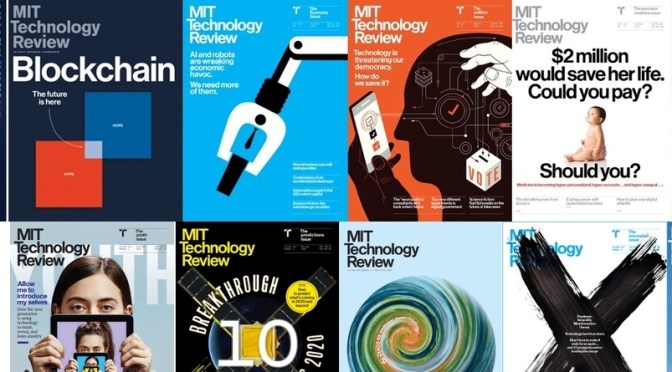
MIT TECHNOLOGY REVIEW: The Kids issue features… What does growing up in an age of chatbots and agents mean for kids’ future? From the role AI plays in their day-to-day lives to how they cope with the existential dread that comes with climate change, young people are asserting their smarts to define their relationship with technology and the world around them. Plus!…
LLMs need vastly more data than children to learn language. Understanding why could help us create more efficient models—and reveal more about developing minds.
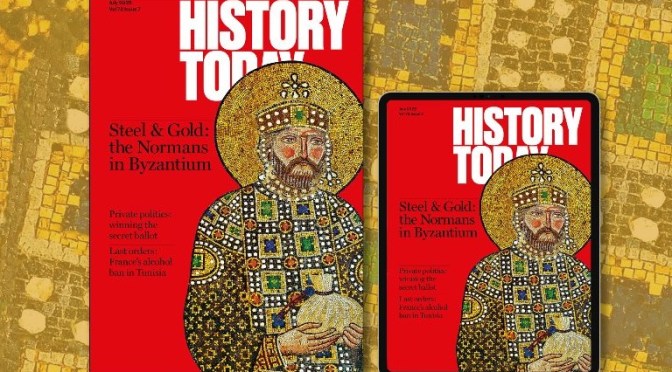
For the thousands of foreign visitors who travelled behind the ‘bamboo curtain’ to visit Mao’s China, hospitality workers – guides, drivers, waiters, chambermaids – were unofficial ambassadors for the new socialist state, and the state knew it.
In 1943 letters reporting starvation and death in Bengal began to reach Indian soldiers serving the British overseas. Despite colonial censorship, their testimonies revealed the devastating reality of famine.
The Victorian reading public had access to a vast array of classical literature from Asia in multiple translations by experts and amateurs. What did they read, and why?
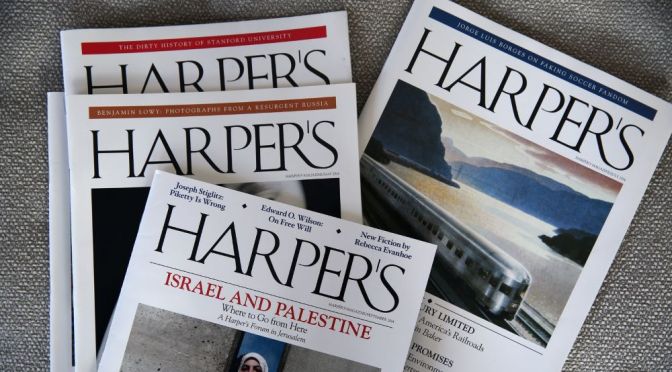
HARPER’S MAGAZINE:Erin Somers charts the rise and fall of cultivated meat, Barrett Swanson reports on the Ugly People Festival in Italy, Kyle Berlin on the French bestseller whose controversy divided the country, a pseudonymous memoir of a government official in Beijing, Finn Brunton on prediction markets and crypto-anarchism, Thomas Frank on the Obama Center, Kasia Boddy reviews William Kennedy’s Albany Trilogy, five stories from Diane Williams, and more.
Where’s The Beef?
The lab-grown-meat revolution that wasn’t by Erin Somers









 Intellicurious