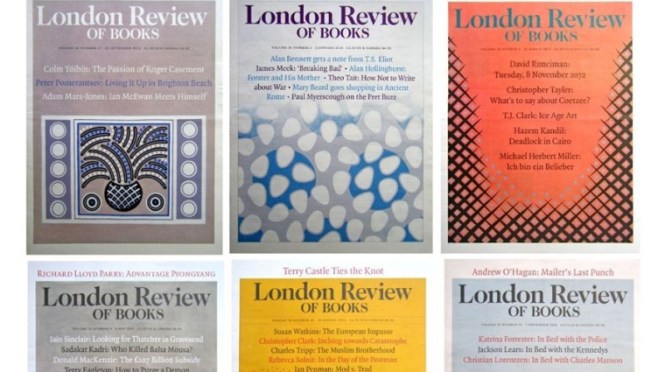

LONDON REVIEW OF BOOKS – JUNE 5, 2025 PREVIEW


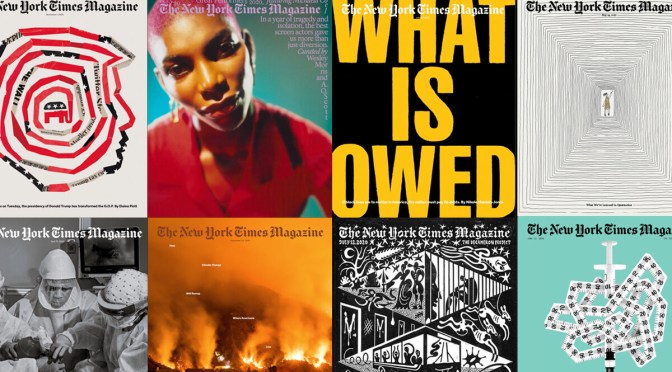
The Bumble CEO has returned to run the struggling company she founded, and says she has a plan for getting Gen Z back By Lulu Garcia-Navarro
His friend and fellow cop killed himself. Then he nearly became a statistic as well. Why do more police officers die by suicide than in the line of duty? By Jamie ThompsonCreditDanny Wilcox Frazier for The New York Times
Parents try everything to influence their children. But new research suggests brothers and sisters have their own profound impact. By Susan Dominus
In a wide-ranging interview, he explains his decision —

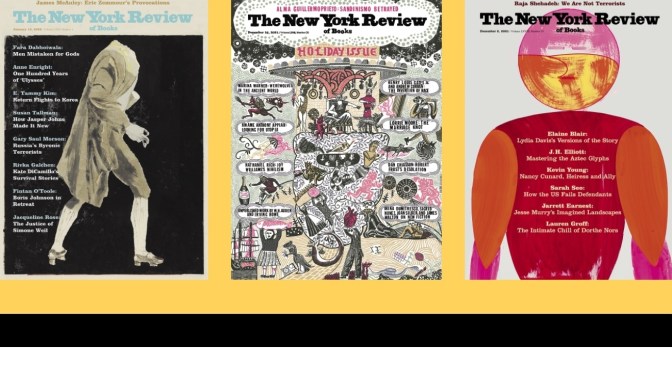
THE NEW YORK REVIEW OF BOOKS (May 8, 2025): The latest issue features…
What caused Venezuela’s collapse, and who is responsible? A recent memoir tells the story as so many families have lived it.
Motherland: The Disintegration of a Family in a Collapsed Venezuela by Paula Ramón, with translations by Julia Sanches and Jennifer Shyue
Things Are Never So Bad That They Can’t Get Worse: Inside the Collapse of Venezuela by William Neuman
The detailed information gathered by the French curator Rose Valland about the Nazis’ looting of artworks made it possible for the Allies to recover tens of thousands of them after World War II.
The Art Front: The Defense of French Collections, 1939–1945 by Rose Valland, translated from the French by Ophélie Jouan, with a foreword by Robert M. Edsel
An electoral coalition of the conspiracy cultures of both the Christian right and the countercultural left helped bring Donald Trump back to power, and now pseudoscience and paranoia are in the ascendant.
Conspirituality: How New Age Conspiracy Theories Became a Health Threat by Derek Beres, Matthew Remski, and Julian Walker
Fascist Yoga: Grifters, Occultists, White Supremacists and the New Order in Wellness by Stewart Home
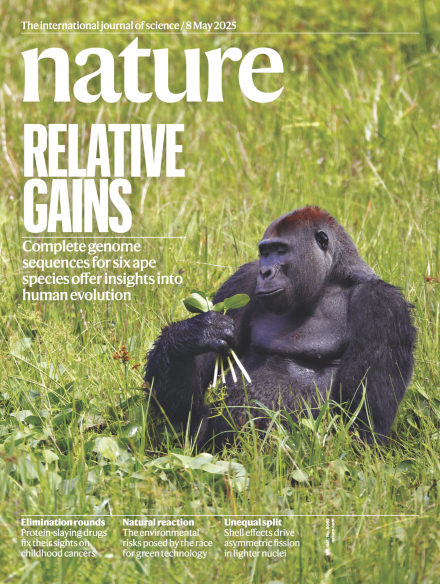
NATURE MAGAZINE (May 7, 2025): The latest issue features ‘Relative Gains’ – Complete genome sequences for six ape species offer insights into human evolution…
The treatment, which aimed to block production of a mutant protein, reduced the frequency of infant’s seizures, but did not improve neurological impairments.
The stone fragments had been discovered inside ‘Handprint Cave’ in Belize alongside other artefacts suggestive of ritual use.
Lithium that pooled in a volcanic caldera in the western United States had no way out, thanks to a lack of rivers.
Over time, young fringe-lipped bats learn how to distinguish the calls of palatable frogs from those of toxic ones.

TIMES LITERARY SUPPLEMENT (May 7, 2025): The latest issue features ‘The Other America’ – The Hispanic Achievement…
Why Anglo-American colonialism has no claim to moral superiority
The former editor of Vanity Fair looks back on an era of excess
Fantastic gloomth: Victor Hugo the artist
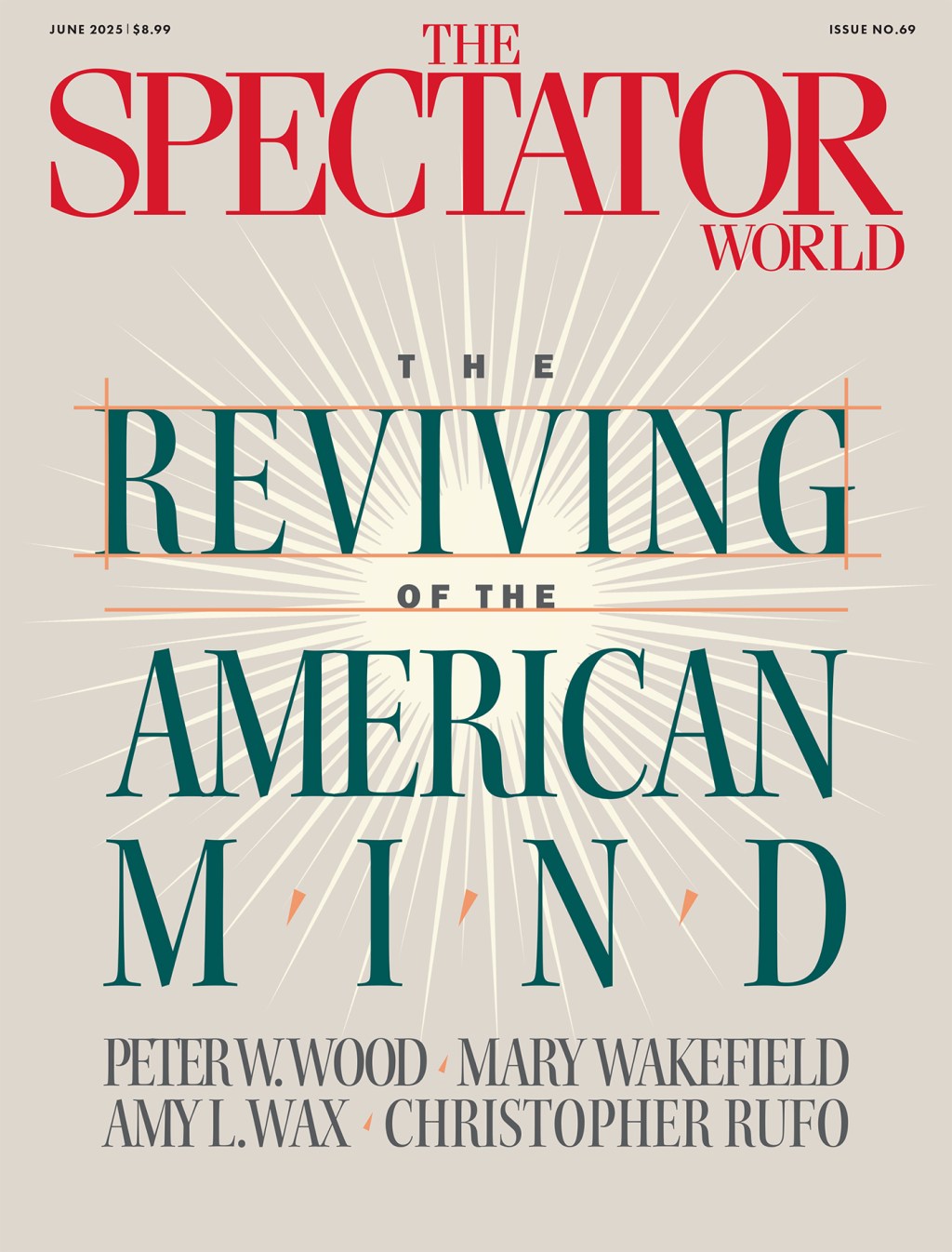
THE SPECTATOR WORLD (May 6, 2025): The latest issue features ‘The Reviving of the American Mind’…
For too long, academia has stifled intellectual originality
What if your first encounter with Shakespeare or Herman Melville was with an AI avatar in history class?
You can see how wrecked the place is, and how temporarily low the de jure population – but the clean-up and rebuilding are well under way
We may not be in a golden age, but we can see one on the horizon
What if your first encounter with Shakespeare or Herman Melville was with an AI avatar in history class?
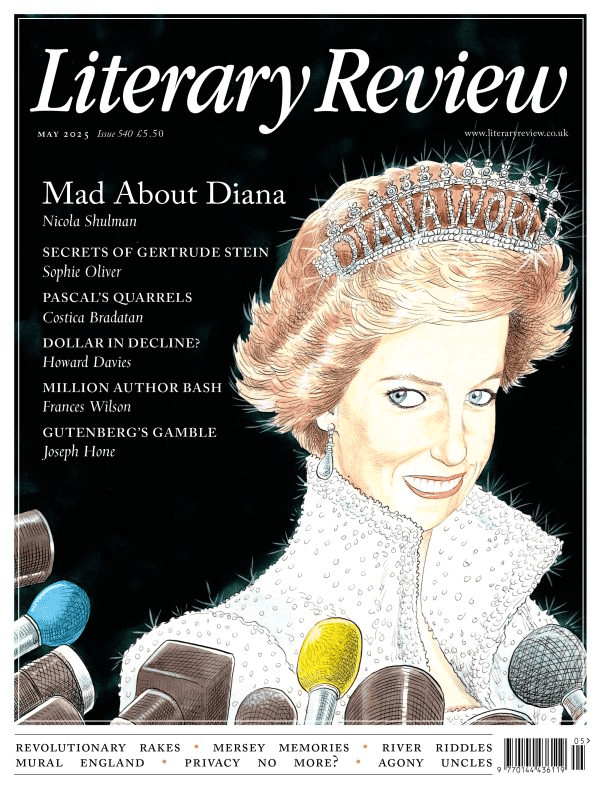
LITERARY REVIEW (May 1, 2025): The latest issue features ‘Mad About Diana’…
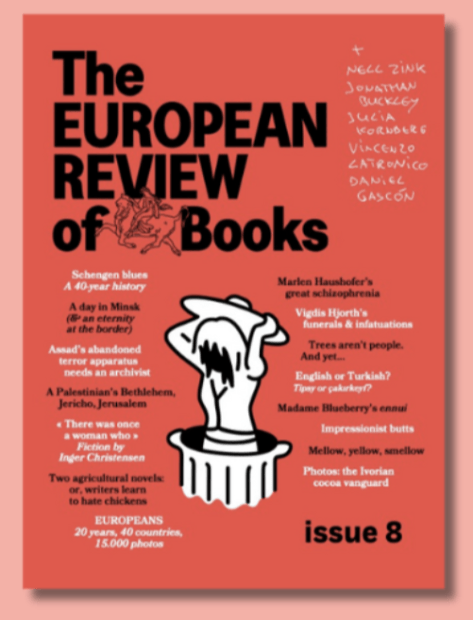
THE EUROPEAN REVIEW OF BOOKS (May 1, 2025): The latest issue features …Around the world in strawberry red. Schengen’s pseudo-borderless « Europe ». A day in Minsk & an eternity at the border. A trip through Syria’s now-uninhabited terror apparatus (archivists needed). Cocoa farmers in Côte d’Ivoire, agricultural-novelists in Switzerland & France, tree-huggers in The Hague…
Our first piece from Issue Eight, out from behind the paywall! « It’s best to go into Schengen’s history unshocked by contradiction. by George Blaustein
Travelogue of a day in Minsk & an eternity at the EU border. Paula Domingo Pasarin
Two novelists (one Swiss, one Spanish) sign up for agricultural jobs. Tania Roettger
A Palestinian writer mentally retreats to three unreadable cities. by Karim Kattan

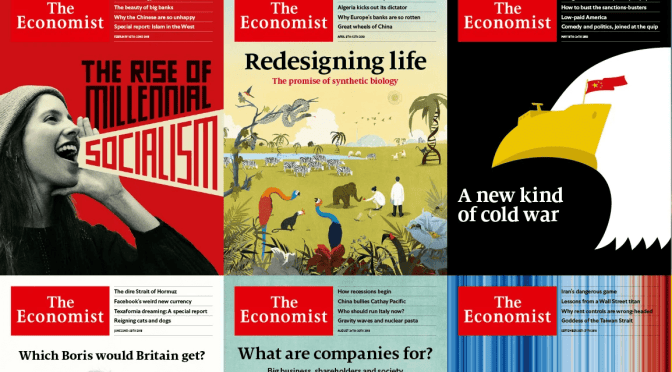
THE ECONOMIST MAGAZINE (May 1, 2025): The latest issue features ‘The Taiwan test‘….
China has a new chance to call America’s bluff
The relief they are banking on needs to come fast
It would then have every right to strike back

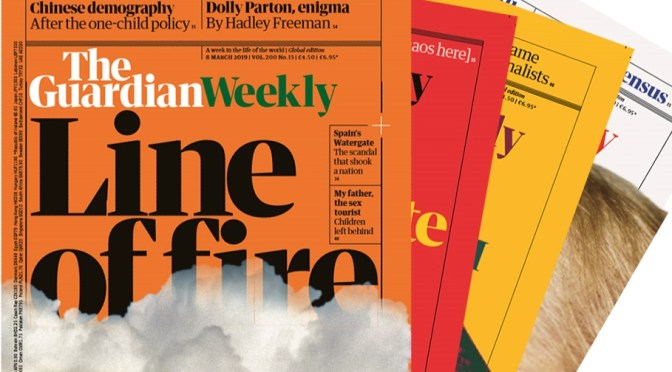
The North America edition showcases Mark Carney, the prime minister of Canada, who achieved a remarkable victory in Monday’s federal election. As our reporter in Ottawa Leyland Cecco explains, Carney reversed a huge Liberal party poll deficit after voters backed him over his conservative opponent, Pierre Poilievre, to stand up to the threats of Donald Trump. Can the dour but tough former central banker succeed in fending off the aggressive advances of his US counterpart?
The big story | Kharkiv suffers in the shadow of a peace deal
While US-led negotiations threaten to carve up Ukraine, deadly Russian attacks continue amid deep cynicism about the process. Luke Harding reports from a city under siege
Science | Why f ish farms on the moon aren’t such a wild idea
The Lunar Hatch project is studying whether aquaculture might be able to provide a source of protein for astronauts on space missions. Kim Willsher paid them a visit
Feature | The dirtiest race in Olympic history
How did the 2012 Olympics women’s 1500m get its reputation? Athletes cheated out of medals talk to Esther Addley about what happened – and how the results unravelled
Opinion | Will Pope Francis’s compassionate legacy endure?
Some, especially within the US, see the forthcoming conclave as an opportunity to establish a more conservative leader, says Guardian associate editor Julian Coman
Culture | The genius of Barrie Kosky and his Wagner phantasmagoria
He put Carmen in a gorilla suit and had Das Rheingold’s Erda represented by a naked elderly woman. What are the the opera director’s plans for his edge-of-the-seat Die Walküre? Fiona Maddocks finds out