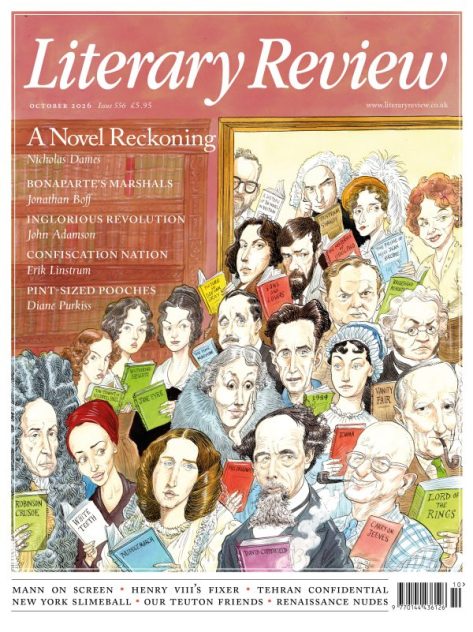
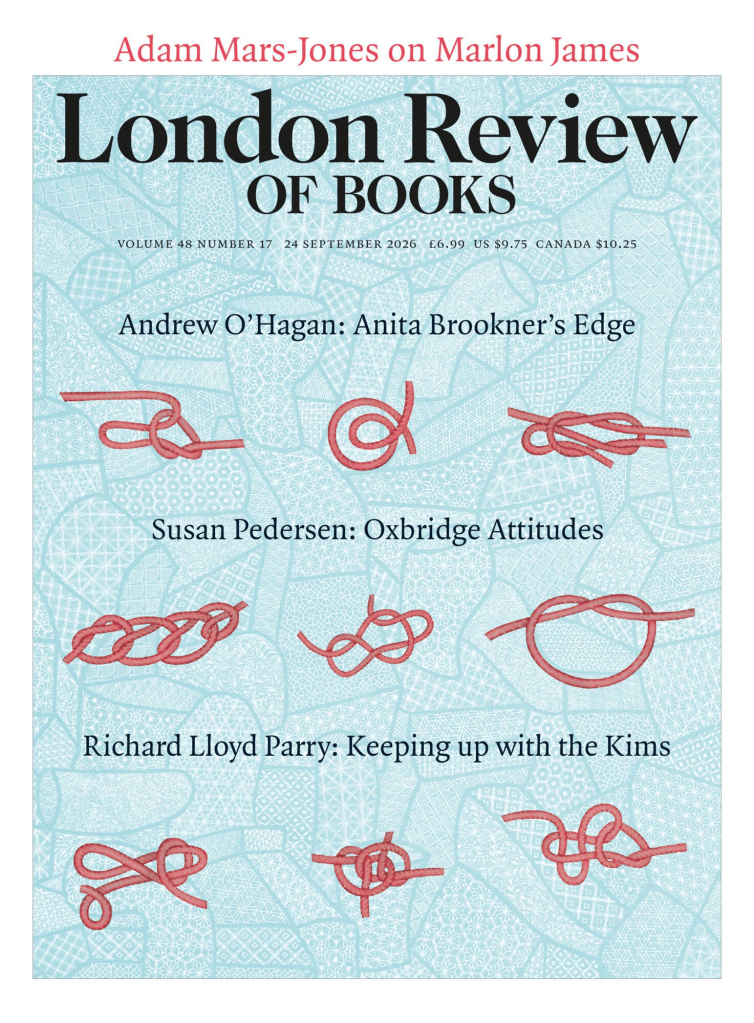
King’s Secretary: William Paget and the Last Years of the Reign of Henry VIII By Andrew Johnston
Tudor history buffs and attentive readers of Hilary Mantel’s Wolf Hall trilogy will recognise the name William Paget. Others will require some words of introduction. Paget (1505/6–63) was an able and influential diplomat and administrator who rose to become principal secretary to Henry VIII. ‘Rose’ is the operative word. Paget, like his predecessor and mentor Thomas Cromwell, was a self-made man, though his father, a sergeant serving the sheriff of London, was able to provide him with a grammar school and Cambridge education.
The Last Invasion of England: 1688 and the Dutch Armada By Arthur der Weduwen
Much is exceptional about the Bayeux Tapestry currently on magnificent display in the British Museum, but nothing is quite so exceptional as the event itself. As the museum’s website reminds us, 1066 ‘was the last time England was successfully invaded’. Our sea-girt immunity from foreign invasion has been at the centre of ‘Our Island Story’ ever since, with the Channel confounding the hubris of Philip II in 1588 and 1596, of Napoleon in 1803 and of Hitler in 1940.
Imperial Predator: Britain and the Destruction of the Ottoman Empire By David S Tonge
In his survey of the collapse of the Ottoman Empire in the late 19th and early 20th centuries, David S Tonge sees Britain as an aggressive superpower, hence the title of his excellent book. My one quibble is zoological. ‘Predator’ may not be quite the right word. For in much of Tonge’s story Britain is less lion than vulture: what zoologists call an obligate scavenger – or a necrophagous power – feeding on carrion. The Ottoman carcass had already been wounded by Russian aggression, nationalist revolt, indebtedness and internal decay. There were exceptions, and Britain could be predatory when circumstances demanded, notably in Cyprus and Alexandria, but its more characteristic pose was to sniff the odour of mortality and arrive in time for lunch.
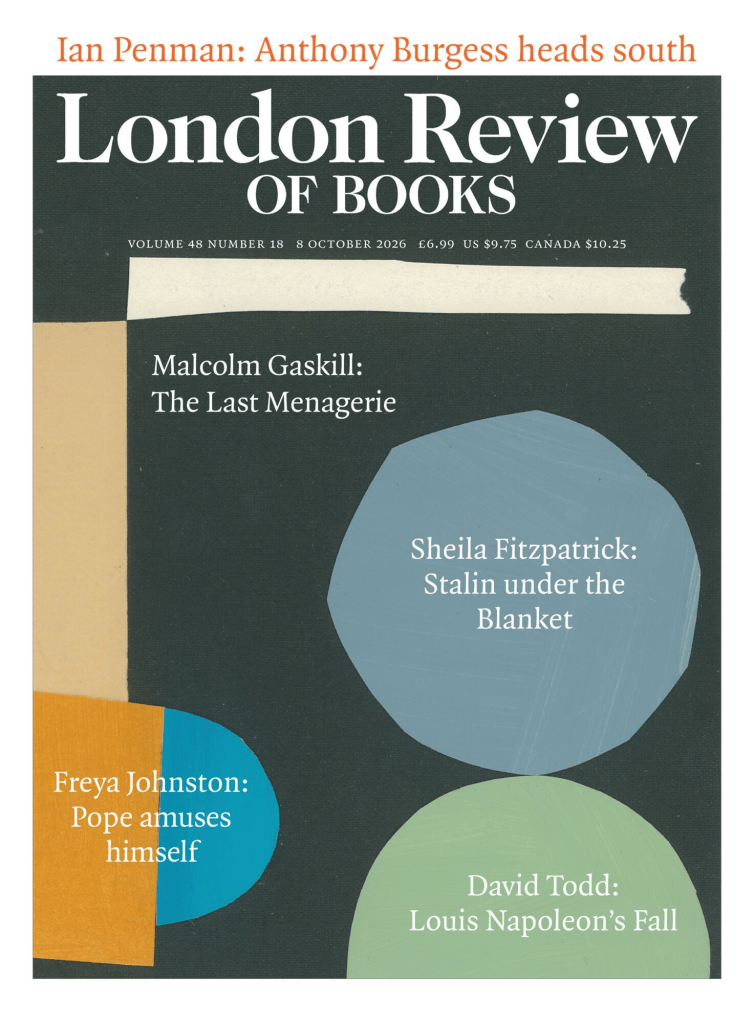
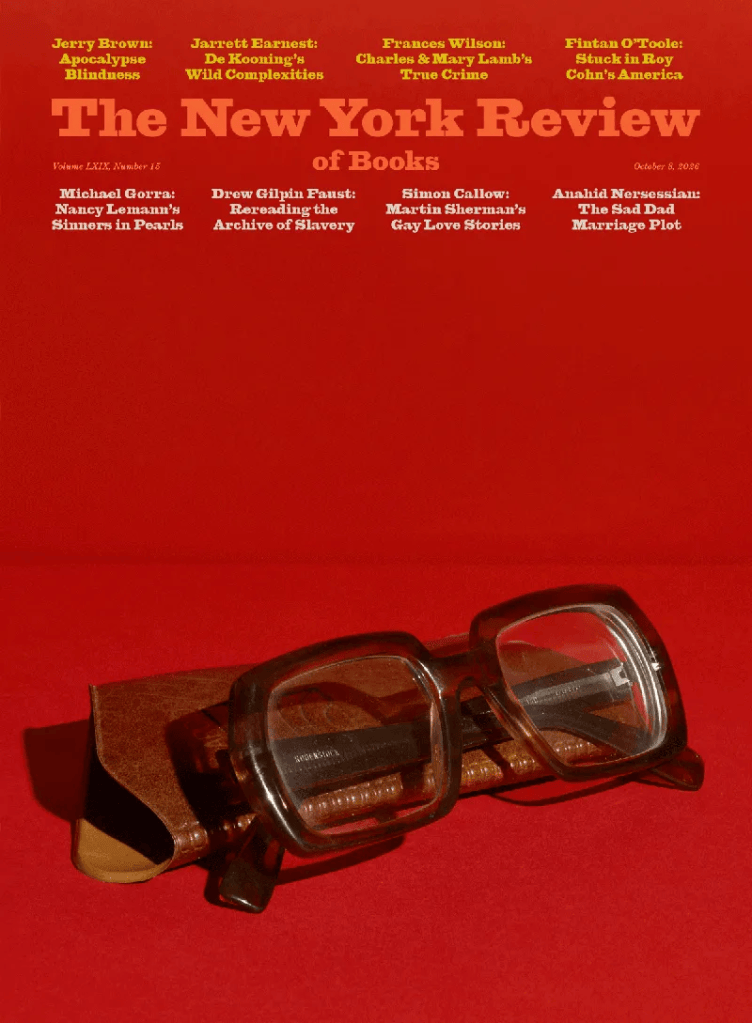
Sheila Fitzpatrick on Stalinism: Fitzpatrick examines Irina Paperno’s Always under Siege: Olga Freidenberg’s Diary-Theory and the Everyday Terror of Stalinism, analyzing how classicist Olga Freidenberg’s secret writings framed the Siege of Leningrad and Soviet surveillance as a totalizing domestic regime.
Tom Stevenson on NATO and Russia: Stevenson reviews Carlo Masala’s If Russia Wins: A Scenario and Thomas Newman and John Pierson’s Atlantic Resolve: The War for Estonia, analyzing contemporary Western military simulations and anxieties regarding Baltic security.
Literary Studies & Biography
Edmund Gordon on William Golding: Reviewing William Golding: The Faber Letters edited by Tim Kendall, Gordon details the editorial tensions between Golding and Charles Monteith, focusing on substantial cuts to the original draft of Lord of the Flies.
Freya Johnston on Alexander Pope: Johnston explores Henry Power’s edition of Alexander Pope: The Major Works, charting the Augustan poet’s biting satire, anxieties, and self-fashioning.
Ian Penman on Anthony Burgess: Penman re-evaluates Burgess’s 1966 espionage satire Tremor of Intent, dissecting its baroque style and its uneasy relationship with James Bond.
Art & Culture
Columns and Short Cuts: Additional pieces include Peter Geoghegan on democratic funding reform and Blake Morrison on Luke Kennard’s poetry collection Black Bag.
Em Hogan on Hujar and Thek: Hogan reviews Andrew Durbin’s dual biography The Wonderful World that Almost Was: A Life of Peter Hujar and Paul Thek, profiling the turbulent lives of the photographer and artist against 1960s–1980s New York and the onset of the AIDS crisis.
Dexter Dalwood on Jasper Johns: Dalwood contributes a review of Johns’s exhibition at the Guggenheim Bilbao, evaluating his enduring postwar artistic motifs and printmaking legacy.
Donald Trump’s behavior cannot be called unexpected at this point. What was noteworthy last week, however, was the way that the media responded. By Jelani Cobb
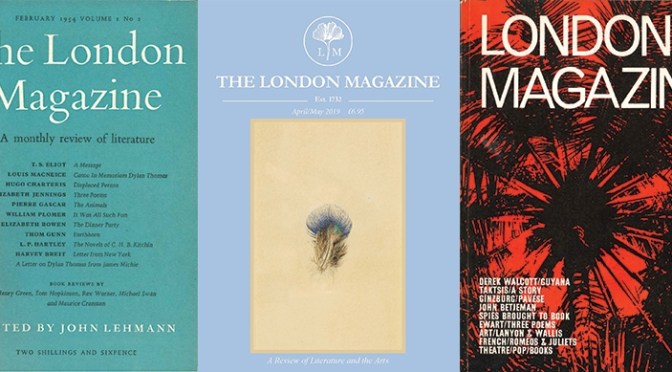
THE LONDON MAGAZINE: Despair – its causes, symptoms and consequences – becomes something of a theme across the issue. At least according to its etymological root, to despair is to be without hope (de-sperare), and in Mavis Gallant’s 1965 story ‘Paola and Renata’, published in the issue, mothers have no hope of controlling their inscrutable, insolent daughters.
‘While it must be stressed that Rankine’s lyric practice is capacious and stylistically thrilling, that her insights are always valuable in isolation, I am left slightly unsure of what Triage’s greater intentions are.’
‘Partly due to critical neglect, partly due to the single-minded determination to be a poet who survived on nothing but his poetry, Harrison’s prose is doomed to be a footnote in his career.’
‘Might there be something, beyond backwater nihilism, in the vanishing of the Tree at Sycamore Gap that speaks to us about a country increasingly unable to protect its social and civic structures in the most basic ways?’
Why can’t the people who produced the technology, which has already shown that a different world is possible, just do the things that would prevent extinction? By Gideon Lewis-Kraus
Students and faculty across the country were punished for their reactions to the conservative activist’s murder. A recent graduate of Texas Tech’s law school is still trying to clear her name. By Benjamin Wofford
Willem de Kooning’s works on paper document his efforts to find ways of retaining both image and abstraction, depth and flatness.
Willem de Kooning Drawing an exhibition at the Art Institute of Chicago, June 14–September 20, 2026, and the Rijksmuseum, Amsterdam, October 9, 2026–January 17, 2027
Charles Lamb’s camp, mischievous, melancholic alter ego, Elia, owes much to his sister, Mary, with whom he lived for forty years, absorbing her “rambling chat.”
Complete Works of Charles and Mary Lamb, Volume IV: Elia and The Last Essays of Elia edited by Gregory Dart
I’ve been thinking about Newton’s third law of motion after recently revisiting it for my son’s science project: for every action, there is an equal and opposite reaction. It is a consoling law, built upon certainty. But human lives seldom hold such hard consolations. The leaders we elect, the borders we erect, the violence we permit produce consequences that outlive the choices that set them in motion. Mothers understand something of this. To bring a life into the world is to initiate a sequence whose consequences can never be calculated or contained. Across Guernica’s August–September double issue, motherhood appears as place, inheritance, origin, and impossible return. The works gathered here cast a look upon the afterlives of history; they ask what follows from our most intimate and collective decisions.
In fiction, Naeem Murr’s Bye-Bye Palestine traces the complex entanglements of lives back to a historical rupture whose convulsions remain present in the ongoing genocide in Palestine. “Haifa became known as Um Al Gharib, Mother of the Stranger,” Murr writes. The name holds the story’s central contradiction: a city figured as mother to those made strangers within it. In Emmy Rossum’s Tether, motherhood becomes its own law of action and reaction. In a futuristic world, a daughter uses her heightened olfactory abilities to mark the boundary between herself and her mother. Following a matrilineal inheritance through scent, she attempts to trace her way back to her own beginnings. In Yukiko Tominaga’s The Little Corner of the Factory, a child discovers the many forms love can take, and the hurt and betrayals it can contain. In a small room inside a rental hot-towel factory, the youngster is initiated into a tenderness that will outlast the people who teach it to her.
In nonfiction J. Malcolm Garcia’s narrative reportage Last Fight tells the story of a man living in the wake of his brother’s death. Nazeer, an Afghan interpreter who served alongside US forces in Afghanistan, is detained by ICE and dies within twenty-four hours of entering custody. Garcia follows a chain of consequence stretching from the war in Afghanistan to the American immigration system, tracing the afterlife of a vote, and the distance between a choice made in a voting booth and the body upon which its force eventually lands.
In A Nation Wrestles with God, excerpted from A Nation Wrestles with God: American Prophets, Philosophers, and Firebrands, Ilan Stavans traces America’s long and unsettled relationship with the idea of God. From the use of divine authority in the service of empire to God’s persistent presence in the nation’s literature, politics, vernacular, and imagination, Stavans traces how belief becomes another force with an afterlife. The gods a nation creates continue to shape the lives over which it assumes the right to “play God.”
In Guernica’s first foray into the encounter between artificial intelligence and human epistemology, Liane Strauss and an AI read Emily Dickinson’s “I felt a Funeral, in my Brain” together. Moving between Dickinson, Monet’s Water Lilies, and the irresolvable problems literature allows us to inhabit, Strauss discovers that an AI can identify ambiguity but cannot experience the doubt that lends it its resonant weight. The first instalment in a three-part series, the essay is a reminder that human knowledge begins in uncertain spaces.
In interviews, The Insistence of Beauty brings poets Tina Chang and Nathalie Handal into a reciprocal conversation about their new collections, LION and Roma Roam, respectively. A question becomes an invitation to step beyond the stories assigned to us, and in this exchange, each poet turns that invitation toward the other. Here, imagination creates another kind of afterlife: the freedom to move beyond violence’s last account.
In the latest installment of Guernica’sPosthumanitarian interviews series, After Development, Russell Reed speaks with Bhutanese scholar Dasho Karma Ura about the intrinsic relationship between our individual choices and communal happiness. Critiquing the humanitarian regime’s presentism, Ura suggests that our individual well-being cannot be separated from the ecological futures our present choices are already creating.
In Global Spotlights this month, Nwanne Agwu’s Faint Lines maps identity through maternal and paternal lines, and asks what it means to belong to people who came before us. Published first in Isele Magazine, the narrative reimagines home not as where one comes from, but as a place where one is recognized and held with love.
Poetry in this issue enters the charged space where beauty and violence meet. In Tina Chang’s I’ve Gone to Look for America, Term One, Pistil/Pistol, and I’ve Gone to Look for America, Term Two, roses tangle in the brain; a peony becomes first a woman’s cheek and then a bullet; the pistil carries within it the sound of a pistol. Within these poems, the inherited past exerts its force upon the present, but the speaker answers by naming herself—lion, flower, weapon, and “little spark”—and turning that inheritance toward another future.
The Drift Magazine – The latest issue features an editors’ note on contemporary democracy, an interview with Marion Nestle regarding food industry oversight, a report on postliberal Budapest, and analytical essays on regional strategies and political momentum.