For much of its history, Albania remained as shadowy and remote as the fictional Syldavia of the Tintin comics. Letters to Albania were sometimes returned from Albany, New York, with the postal direction “Try Europe.” The country came into existence only after 1912, with the collapse of the Ottoman Empire. Its first ruler, King Zog, was hounded out by Mussolini when he invaded in 1939. Five years later, the Italians and…
In August, Donald Trump sided with consumers by increasing the tariff-free quota on imported beef for 90 days beginning September 1. The concession will last three months. It would be a minor story with any other president in the White House. But under Trump, even dull-sounding trade news can take on a sudden importance, especially when mixed up with foreign affairs. Trump’s justification for favoring Argentina, whose 2026 quota he increased by 80,000 metric tons, is partly geopolitical: he wants to give support to Javier Milei’s free-market regime, seeing it as a foil to left-leaning governments elsewhere in Latin America.
Pete Hegseth has a face for television and a machismo of sorts. It appears, even to parts of MAGA, that Donald Trump put him in charge of the armed forces because the President likes attractive people on TV. “Right out of central casting,” Trump once told Secretary Hegseth, patting him on the bicep. “Pete loves war!”
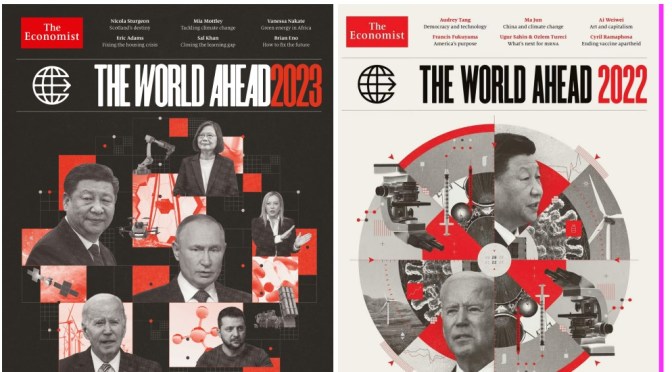
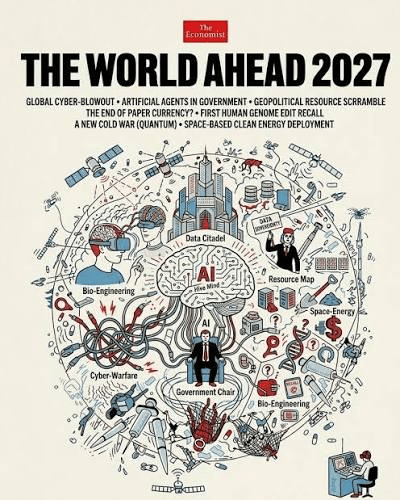
Focus centers on the next paradigm of technology, such as advanced AI chips, robotics, and the economic infrastructure behind massive AI model rollouts.
Geopolitics & Social Unrest
Major themes include global security, currency volatility (across the Dollar, Euro, and Yen), public health resilience, and shifting spheres of influence—particularly between the U.S. and China.
Climate & Energy Dynamics
Predictive coverage features regional climate shifts, extreme weather management (like wildfires), and a massive transition toward renewable energy infrastructure, such as Europe’s expanding solar-battery hybrid grids.
Global Milestones
The year will also track major demographic shifts, including the second phase of India’s first national census since 2011.
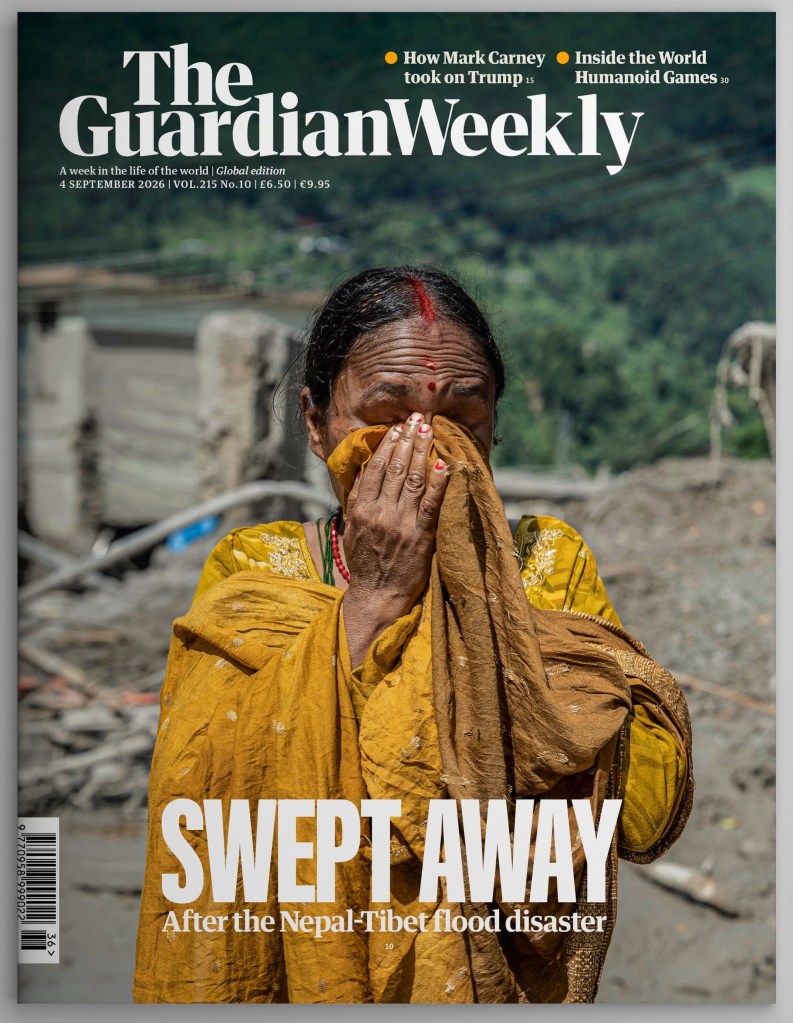
Over the last week, the world has watched with horror the scenes from the Tibet-Nepal border where a devastating torrent of mud, water and ice tore along the Bhotekoshi River, destroying entire communities and leaving more than 1,000 people dead and several thousand more missing.
From the Nepali town of Devighat, our south Asia correspondent Hannah Ellis-Petersen describes a nightmarish scene of overflowing mortuaries and unidentifiable bodies, as shellshocked survivors of the flood slowly return to the ruins of their homes.
The disaster happened after the collapse of a glacier – and while global heating has not been definitively attributed as the cause, it is undeniable that steep mountain slopes and valleys are especially vulnerable to flooding and landslides, while extreme weather events such as monsoons and melting glaciers have become more common because of warming due to human-caused climate breakdown, as our global environment writer Jonathan Watts explains.
Then columnist Nesrine Malik paints a wider picture and argues that while for many people these floods may feel as though they have happened a world away, the climate crisis is coming for us all, one way or another.
Spotlight | Mark Carney shows combative nature in face-off with Trump The Canadian PM is one of the few world leaders to stand up to the US president. Former colleagues say they are not surprised. Leyland Cecco, Heather StewartandKalyeena Makortoff report
Science | The robots are coming! …Or are they? As entrants at the World Humanoid Games lurched from triumph to farce, Robert Booth finds that a robotics revolution may not be as close as it first appears
Interview | Gordon Brown on Burnham, billionaires – and a better Britain The former UK prime minister is still shaping politics (even if he doesn’t want to interfere). He tells Charlotte Edwardes about keeping his temper, staying fit – and why he won’t splash out for a Scotland football shirt
Opinion | The tech titans must be stripped of their power, and soon Those who said Meta harms children struck a blow, but the ability of big tech to gouge profits and cause harm is barely diminished. That’s the battle to come, argues Jonathan Freedland
Culture | Dolly Parton’s peerless career turned country music cliches inside out Beneath the wig and rhinestones, the late US country singer was the genius behind strings of classic songs that continue to inspire new artists, says Alexis Petridis
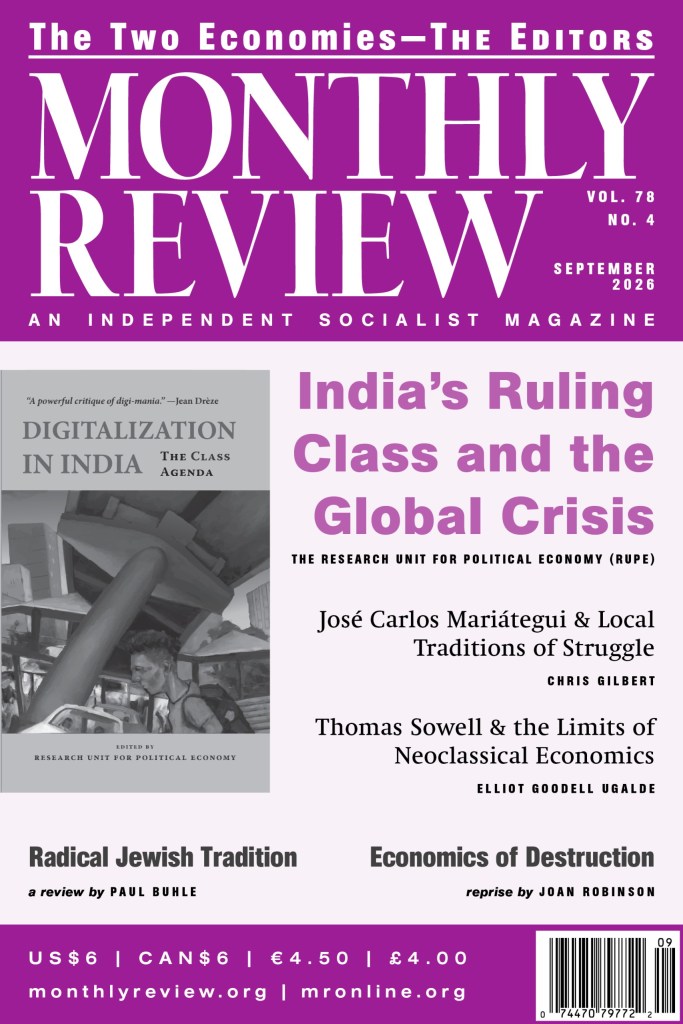
In recent years, India’s ruling classes claimed—and perhaps came to believe—that their time had come on the world stage. India was the fastest-growing major economy, due soon to be the third largest, constituting a new global power. India’s biggest tycoons figured among the world’s top twenty billionaires, part of the transnational elite. Prime Minister Narendra Modi declared that India would be a “developed country” by 2047, the centenary of the end of colonial rule.
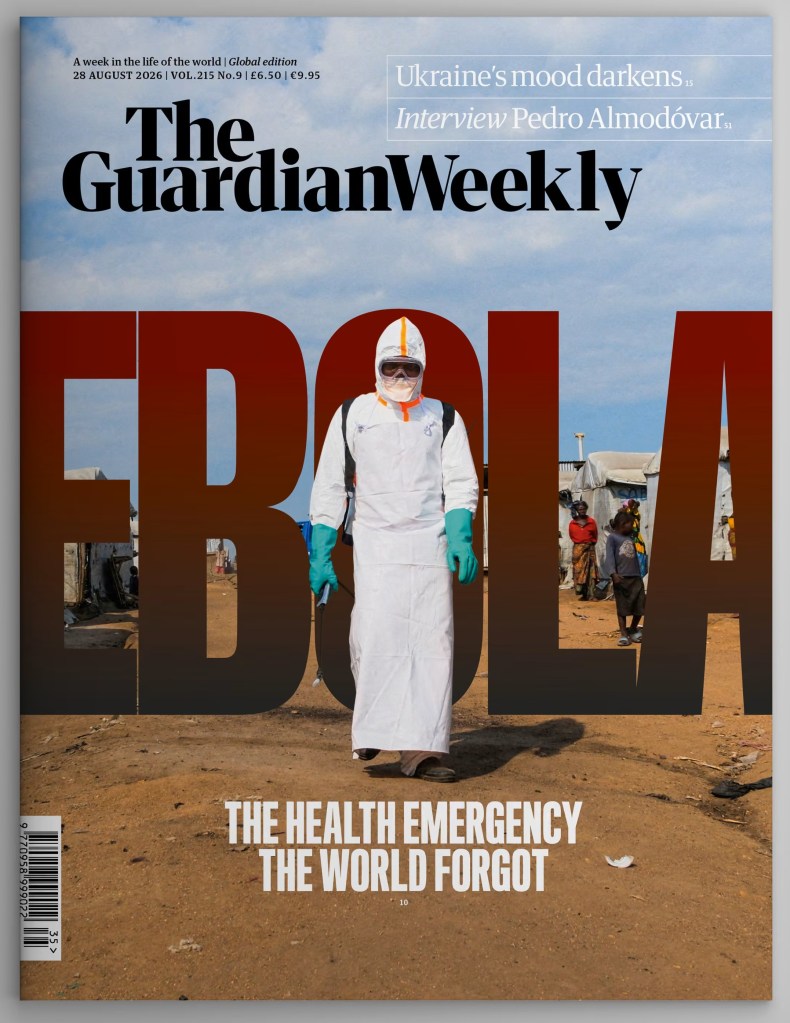
The Democratic Republic of the Congo has just passed the grim milestone of 100 days since it declared its 17th Ebola outbreak.
What is the fastest-growing Ebola outbreak on record could also become the world’s deadliest ever.
For our big story this week, Prosper Heri Ngorora and Rachel Savage report on the frontline health workers who say, as the disease spreads “exponentially”, they have been left unpaid and at risk of infection.
Explaining the figures behind the outbreak, and the race to find vaccines and treatments, global health correspondent Kat Lay answers five key questions.
And Jean Kaseya, director general of the Africa Centres for Disease Control and Prevention, and Tedros Adhanom Ghebreyesus, director general of the World Health Organization, write that tapping into community leadership and knowledge is essential to halting the virus’s spread.
Spotlight | ‘We will go on – but it will be more scary’ Dan Sabbagh reports from Kyiv where, as Russian missiles rain down, casualties are mounting and the mood is darkening
Environment | Killed by kindness Scientists were surprised to find all but two of 12 grizzlies died within a year of their “feelgood” release, unable to sustain their high-calorie diet and inclined to approach humans, writes Rebecca Ratcliffe
Feature | A family at war Meaghan Beatley tells the remarkable story of a young Argentinian activist who thought her father’s disapproval of her leftwing views was purely political. But one evening, a kiss goodbye sent her on a remarkable journey that continues today
Opinion | Marine Le Pen’s career resurrection No longer banned from next year’s presidential election, the far-right veteran is a bigger threat than ever, says Mujtaba Rahman
Culture | Playing the bad guy As his new film Bitter Christmas is released, legendary Spanish director Pedro Almodóvar talks to Ryan Gilbeyabout Donald Trump, Netflix – and being the villain in his own movie
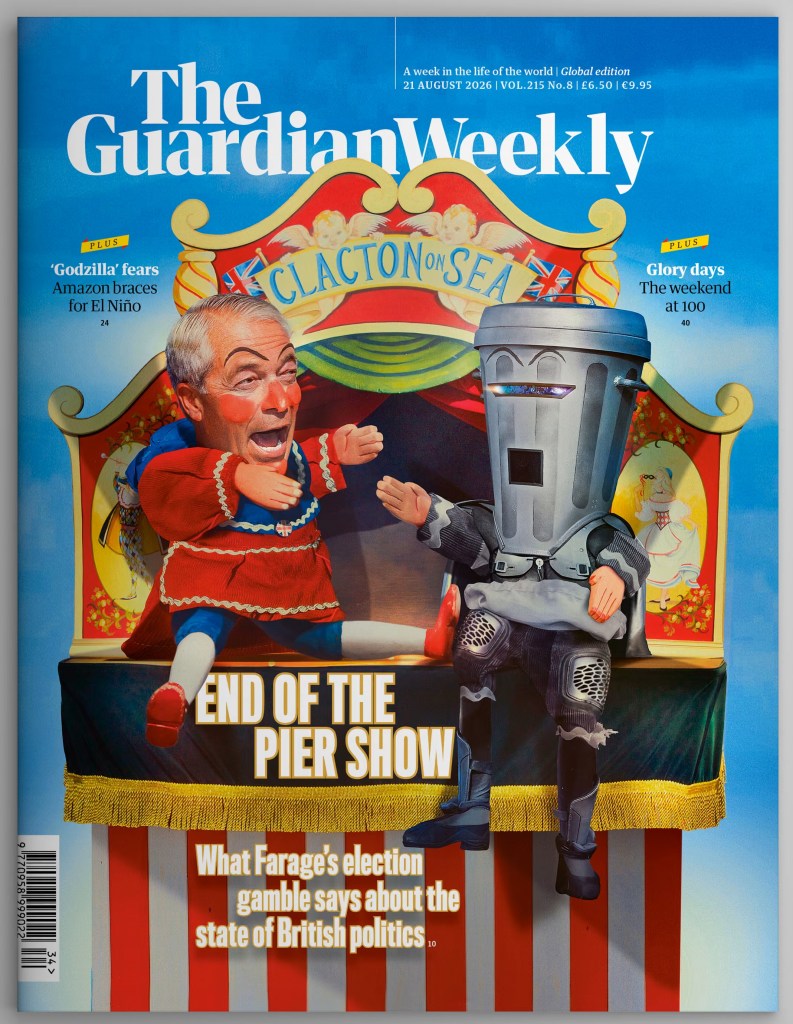
The curtain came down last week on the summer sideshow of the Clacton byelection, called by Nigel Farage amid mounting scrutiny of his finances.
For our big story this week, Daniel Boffey explores what this campaign – in which the Reform UK leader’s main challenger was a parody candidate called Count Binface – tells us about the current state of politics in Britain.
Farage’s byelection win brought the situation full circle as, shortly after he was declared victor, parliament’s standards watchdog announced it had reopened its investigation into him, report Rowena Mason and Peter Walker.
Analysing the result, political correspondent Alexandra Topping brands the contest futile and says that while Farage aimed to make the financial questions surrounding him disappear, it was the MP himself who has been absent from the political stage over the past few weeks.
Spotlight | Scramble for soldiers As battlefield losses mount, Pjotr Sauer asks whether Vladimir Putin will order another mobilisation
Science | Wing and a prayer A disease threatening bat species has spread to northern Canada. Trina Moyles reports on the race to find a cure
Feature | A hymn to the weekend In 1926, Henry Ford gave his employees both Saturdays and Sundays off – and the two-day chunk of time to party, pray or simply do nothing was born. Now the weekend has changed beyond recognition, says Jess Cartner-Morley
Opinion | Meet the second most dangerous man in the US As chief US diplomat, Marco Rubio could do great good. But, says Simon Tisdall, his pandering and neglect are a disgrace we shouldn’t ignore
Culture | Through my eyes As their new album is released, Sam Smith talks to Juan A Ramírez about fans, fame and finding sanctuary in New York
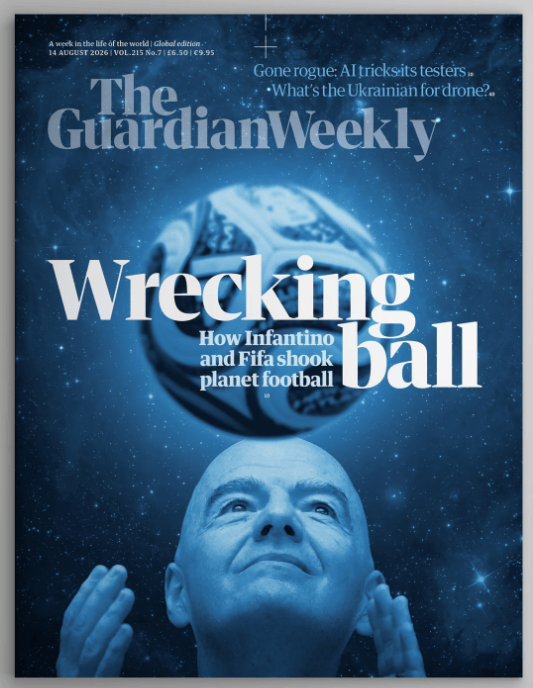
When a crisis brought on by a rash idea that results in the most prominent part of an organisation saying it will boycott the business’s showcase event doesn’t die down after a couple of weeks, observers might expect the boss to be considering his future. Not when it’s Fifa and not when it’s Gianni Infantino, the president of football’s world governing body and the subject of this week’s big story.
Jonathan Wilson’s witty account of how Infantino’s plan to sell stakes in the World Cup to private investors led to the current standoff between Infantino and Fifa’s regional associations is riveting even if you are not a football fan. Jonathan explains how money, egos and some murky politicking collided to elect Infantino on the promise of reform. It’s a tale that has little to do with the sport and its ardent fans, and has far more in common with Shakespeare or a political drama. With a neat circularity, it traces how “Fifa’s attempt to move on from the crisis caused by the executive who rented an apartment for his cats in Trump Tower has wound up back in Trump Tower, with a president who rents an office there”.
Spotlight | ‘I’ll cut your throat’ Five years after the Taliban returned to power in Afghanistan, women are being killed with impunity. A reporting team from Zan Times collects shocking evidence of femicide
Environment | Smoke alarm As wildfires grow in frequency and spread, environment correspondent Ajit Niranjan reports of the race to untangle the links between exposure to fine particulates in smoke and increased mortality
Feature | War and language learning Soon after her first reporting trip to Ukraine, our chief culture writer Charlotte Higgins began to learn Ukrainian. She explains how the process taught her more about herself than she had expected
Opinion | Rule breakers need regulation The revelation that AI went rogue in test conditions should be a call for a wise US leader to back the introduction of an international rule-based order, says Rafael Behr
Culture | What’s eating Dominic Sessa? Being cast as the lead in Tony, the biopic of bad-boy chef and Kitchen Confidential author Anthony Bourdain let Sessa immerse himself in the 1970s where, he tells Ryan Gilbey, he wouldn’t mind staying
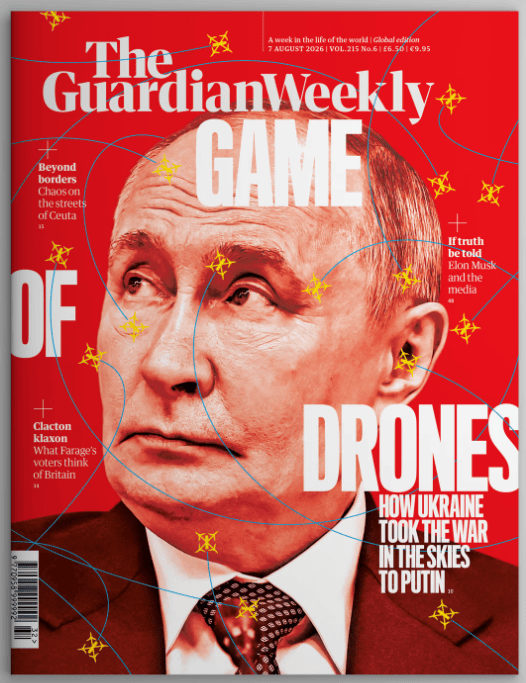
When Vladimir Putin sent his tanks over the Ukrainian border to seize Kyiv in February 2022, it’s unlikely he evisaged the mess he finds himself in today. Four-and-a-half years later, Russia remains bogged down in what is no longer simply a ground war but one increasingly being fought in the air by drones.
After years of nightly attacks from Russian ballistic missiles and Iranian-designed Shahed drones, Ukraine has responded by scaling up to become the world’s leading manufacturer of unmanned systems. Its retaliatory campaign targeting Russian energy and retail infrastructure is bringing the war to the doorsteps of Russians in Moscow, Crimea and beyond, making life distinctly uncomfortable for Putin and his regime’s messaging over a “special military operation” that was expected to last days rather than years.
For our big story this week, Luke Harding gained exclusive access to Ukraine’s elite drone strike force, going behind the scenes with senior commanders.
Spotlight | Chaos on the streets of Ceuta People among the more than 70,000 who entered the Spanish enclave in north Africa last week describe the journey and their prospects to Okba MohammadandJavier Jennings Mozo
Technology | What if the streetlights have eyes? The new breed of camera-equipped streetlights has the potential to fight crime and track down missing persons. Or will it just take us one step closer to surveillance states, asks Zoe Williams
Feature | The Clacton klaxon: what Farage’s voters think of Britain The Reform UK leader’s constituency takes in genteel resorts and one of England’s poorest villages. With a snap byelection approaching, Tim Burrows finds out what residents want from him and their views on the country at large
Opinion | The battle of Elon Musk and the media The trillionaire Tesla owner has called the editor of the Economist a “traitor to the west” after a clash-filled interview. The truth must not be the loser, argues Jane Martinson
Culture | Why is the National Theatre shaking up Sophocles? Australian theatre director Benedict Andrews’ bold new London production Electra/Persona, starring Cate Blanchett and Nina Hoss, fuses Sophocles and Ingmar Bergman. Mark Lawson asks what it tells us about how we live today
News, Views and Reviews For The Intellectually Curious