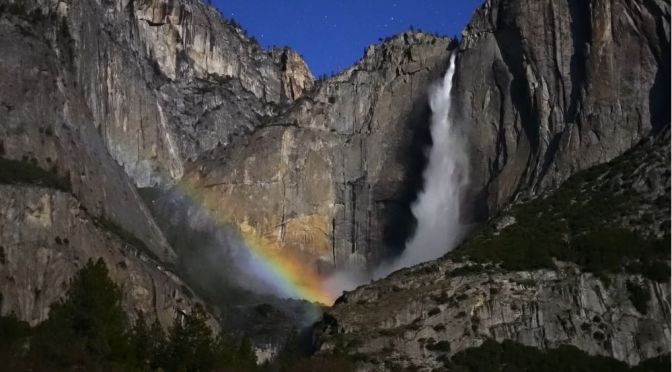
ShotbyDp (December 13, 2023) – A solo film photography trip to California’s Yosemite National Park.
As one of America’s most popular national parks, Yosemite boasts some of the best views, hiking trails, and family vacation opportunities in the country. It was America’s first land dedicated to recreation and enjoyment. Located in central California, Yosemite National Park was established in 1890 and draws four million annual visitors. Almost 95 percent of the park’s 747,956 acres (roughly the size of Rhode Island) is classified as wilderness.
The Local Project (December 15, 2023) – Distinctively robust and private, Cloister House I celebrates simple design and timelessness. MORQ creates a refuge inside a family home built around the idea of sanctuary, in a refreshing counterpoint to the busy street it sits upon.
Video timeline:00:00 – Introduction to the Family Home 01:23 – An Interesting Family Brief 02:09 – A Walkthrough of the Home 03:22 – Incorporating the Idea of Retreat and Refuge 04:29 – The Evocative Material Palette 05:45 – Design Properties of the Courtyard 06:26 – Aiming for Sustainable and Durable Design
“The idea of retreat is very much an aspect of the brief, and we felt that creating a fence and leaving the inside as a void creates a peaceful space,” says Andrea Quagliola, co-founder at MORQ. The home of grandparents, Cloister House I welcomes one inside a family home built around the notion of being able to comfortably house just two, as well as cater for lots of visitors. Inside a family home built around a courtyard, the architecture feels almost fortress-like from approach.
Its concrete structural face and concrete cladding comprise of steel that resembles the red earth that surrounds the Western Australia locale of Perth where the home sits, while the interior design combines Italian design nuances, as per Andrea’s roots. The home is split into two distinct volumes – a space for just two people that relates to the central courtyard and a space for visiting family that relates to the rear of the home. This architecture enables the house to feel appropriate in smaller and larger settings, and a customised glazing system allows one to open and close the spaces as desired.
The Globalist Podcast (December 15, 2023) –The latest on the battle for the White House as Donald Trump surges in key swing-state polls and Joe Biden grapples with inflation, as well as a looming impeachment investigation.
Then: Moncole’s Tokyo bureau chief, Fiona Wilson, discusses the political fallout from Japan prime minister Fumio Kishida’s latest scandal. Plus: Vladimir Putin’s Year of the Family 2024 agenda, a flip through the papers and Andrew Mueller’s take on the news of the week.
The call for a more targeted phase in the war appeared to be the most definitive effort yet by the United States to restrain Israel in its retaliation against Hamas for the attacks it led on Oct. 7.
The Bronx Defenders is one of the most influential public defense organizations in the United States. But allegations of antisemitism have dogged it and have grown louder since Oct. 7.
Who Gets the Water in California? Whoever Gets There First.
As the world warms, the state is re-examining claims to its water that have gone unchallenged for generations.
Losing Hair, Gaining Followers
Hair-loss influencers on TikTok say they are destigmatizing a common insecurity. Critics say they are cashing in on a vulnerable audience.
The Wall Street Journal (December 14, 2023) – As autonomous driving technology becomes more mainstream, automakers like Waymo and Geely are beginning to make crucial decisions about what their next generation of vehicles will look like.
Video timeline:0:00 The future of the car 0:51 Car seats and safety 3:51 Wheel and trust 5:11 Screens and sickness 7:15 Trusting autonomous cars
So could future driverless cars have no steering wheels? And what could the touchscreen dashboards look like? WSJ’s George Downs explores how the car could evolve when you don’t need to be behind the wheel. #Autonomous#Cars#WSJ
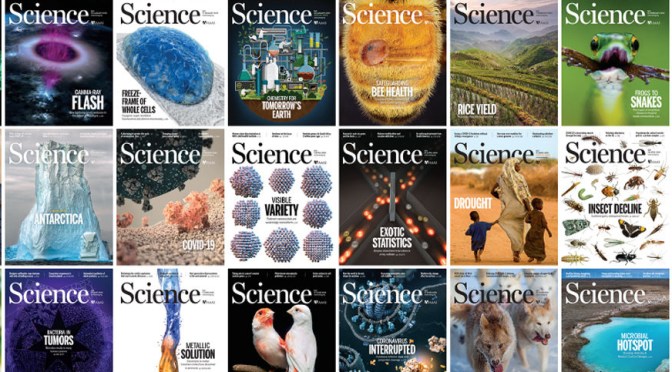
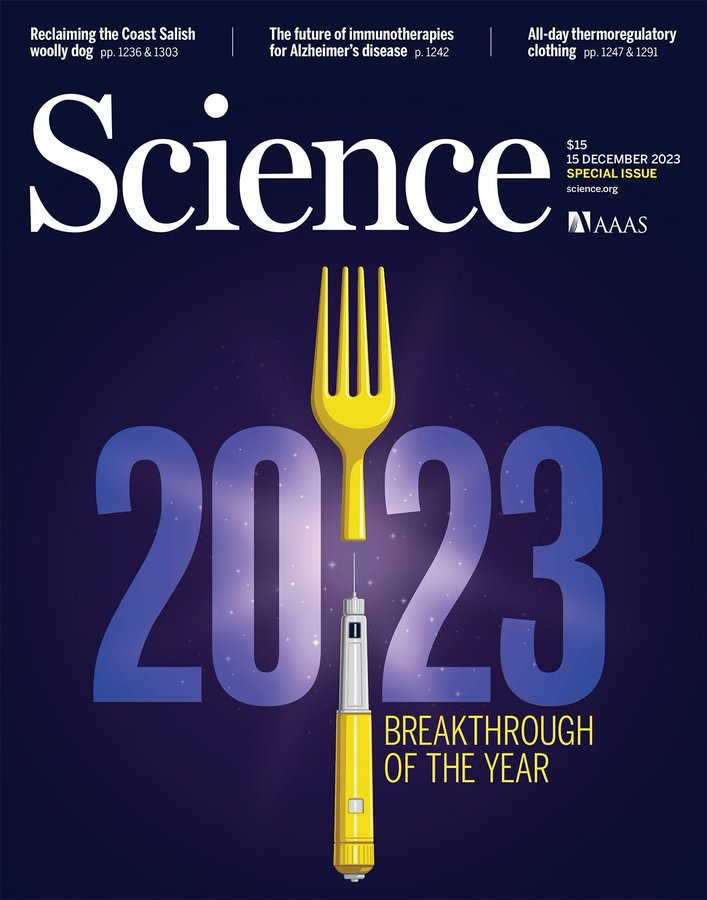
Science Magazine – December 14, 2023: The new issue cover features The 2023 Breakthrough of the Year: Obesity meets its match – Blockbuster weight loss drugs show promise for a wider range of health benefits; Runners-Up: At last, modest headway against Alzheimer’s; and Breakdowns of the Year – What went wrong in the world of Science….
Blockbuster weight loss drugs show promise for a wider range of health benefits
Obesity plays out as a private struggle and a public health crisis. In the United States, about 70% of adults are affected by excess weight, and in Europe that number is more than half. The stigma against fat can be crushing; its risks, life-threatening. Defined as a body mass index of at least 30, obesity is thought to power type 2 diabetes, heart disease, arthritis, fatty liver disease, and certain cancers.
Medicine has had little to offer the tens of millions of people worldwide with Alzheimer’s disease, and the few approved treatments have only targeted symptoms. But in January, U.S. regulators greenlit the first drug that clearly, if modestly, slows cognitive decline by tackling the disease’s underlying biology; a second, related treatment is close behind. Neither comes close to a cure, and both have serious risks, but they offer new hope to patients and families.
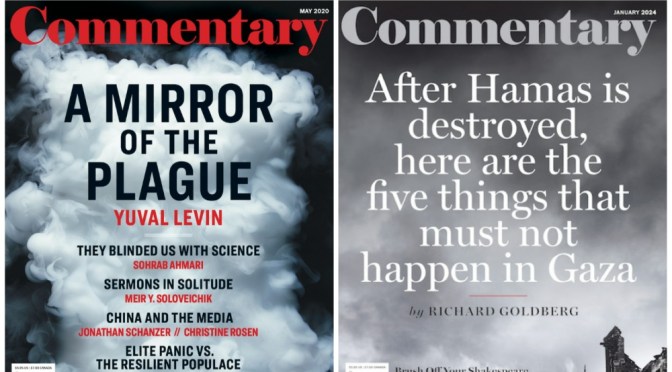
Israel is resolved to remove Hamas and its terrorist infrastructure from the Gaza Strip permanently, and for much of the world, its determination raises one question more than any other: What comes next in Gaza? For those who disapprove of Israel’s actions in the war or those who either passively or actively support the role of Hamas as the Strip’s governing authority, the lack of answers provides a pretext not only to demand a permanent cease-fire but to suggest (often quietly and with a furrowed brow indicating supposed realpolitik wisdom) that the path Israel seems to be making for itself is a dead end from which it needs to be saved.
In his new book, The Conservative Futurist: How to Create the Sci-Fi World We Were Promised,American Enterprise Institute scholar James Pethokoukis writes about the go-go years of the 1960s: Saturn V rockets were blasting to the moon, atomic power promised to make electricity “too cheap to meter,” and sci-fi TV shows like Star Trek depicted new marvels right around the corner.
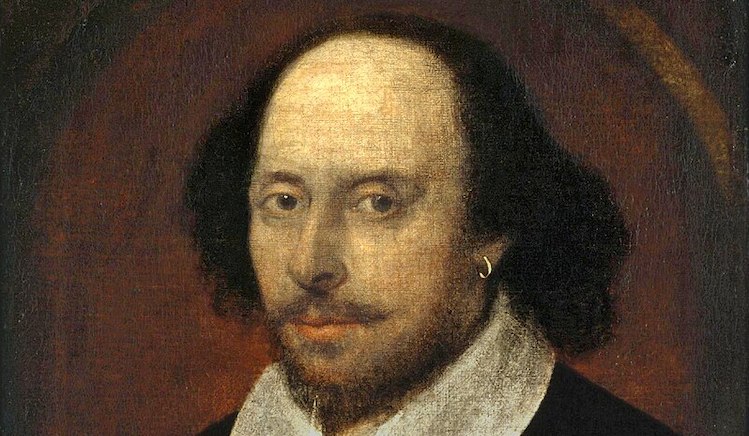
“Joseph,” my friend Edward Shils said to me, “we have spoken about many things, among them about various writers, but we are both too civilized ever to talk about Shakespeare. After all, what could one say?” Yes, what can one say? Over a long writing career, I have never written about Shakespeare, and, best I can recall, among the many millions of words I have produced, have never even quoted him. Truth is, I have long admired Shakespeare without being especially nuts about him.
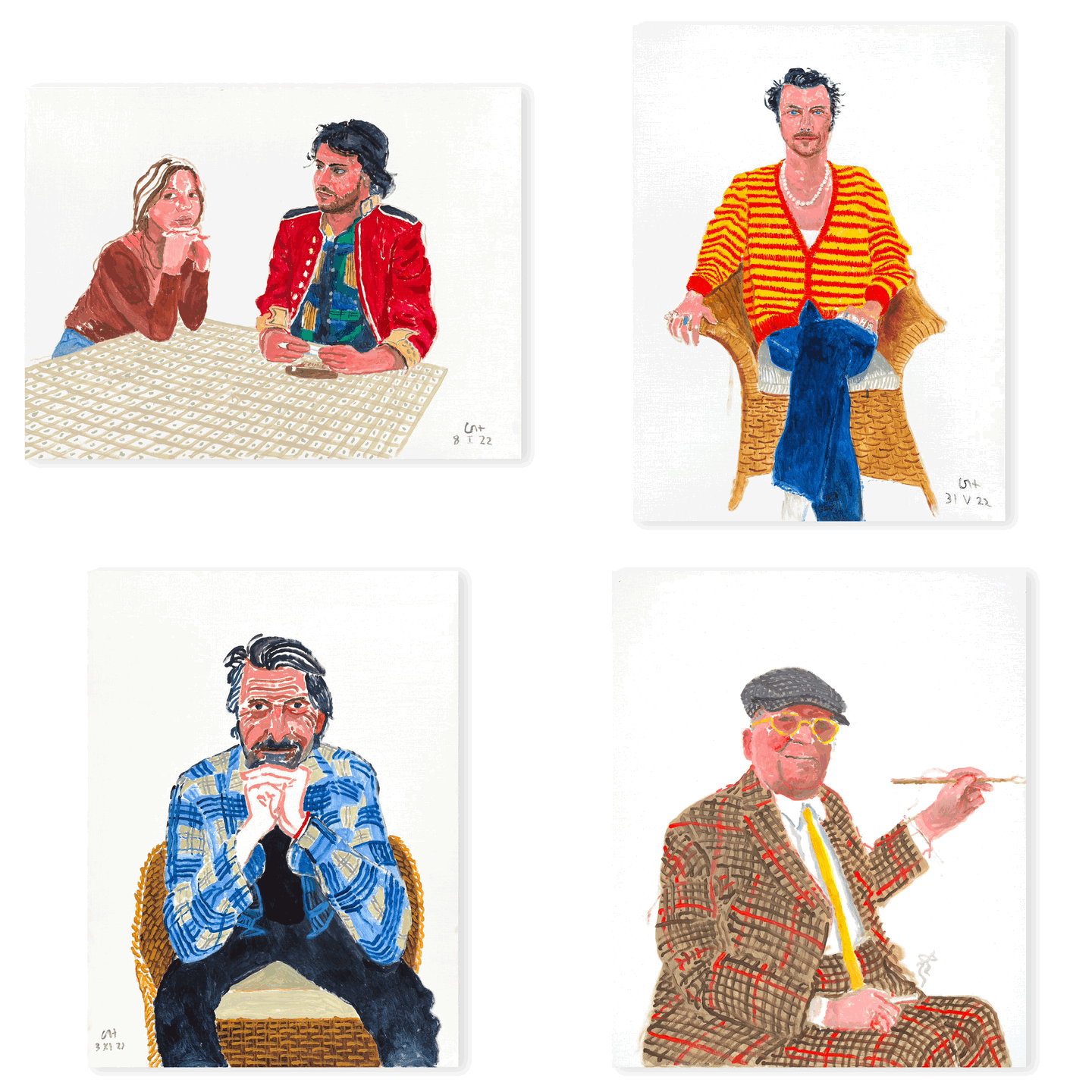
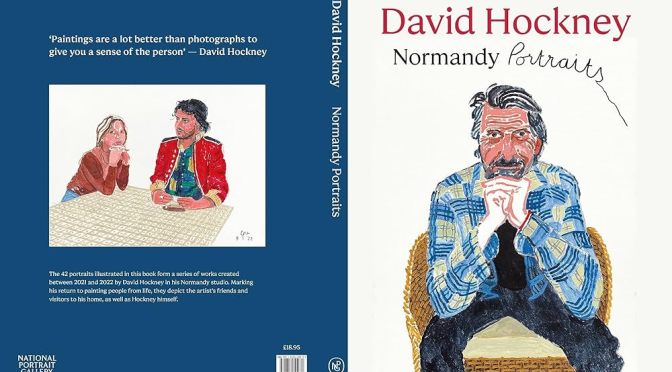
A compact album presentation of Hockney’s newest explorations in portraiture
Artbook D.A.P.:
This concise volume illustrates around 40 acrylic on canvas works painted by David Hockney (born 1937) at his Normandy studio—depicting his friends and visitors, as well as the artist himself. David Hockney: Normandy Portraits showcases a series of some previously unseen portraits, across 48 pages, uninterrupted by text, to allow readers to engage directly with the artworks.
These new works highlight the ongoing importance of portraiture within the artist’s practice and demonstrate his sentiment that “drawings and paintings … are a lot better than photographs to give you a sense of the person.”
Hockney returned to painting after an intensive period spent depicting the Normandy landscape using an iPad. The portraits were painted quickly and directly onto the canvas without underdrawing. As Hockney has said, “to do a portrait slowly is a bit of a contradiction.”
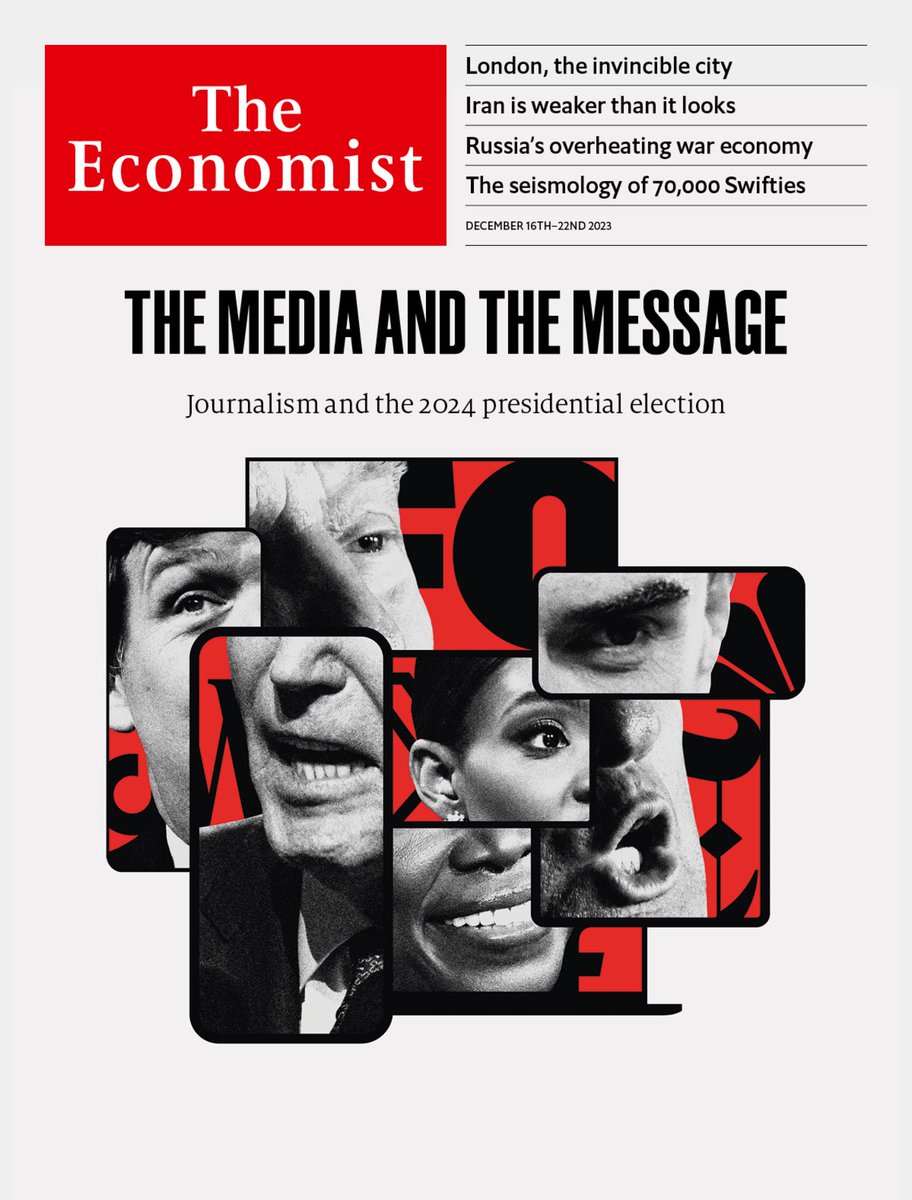
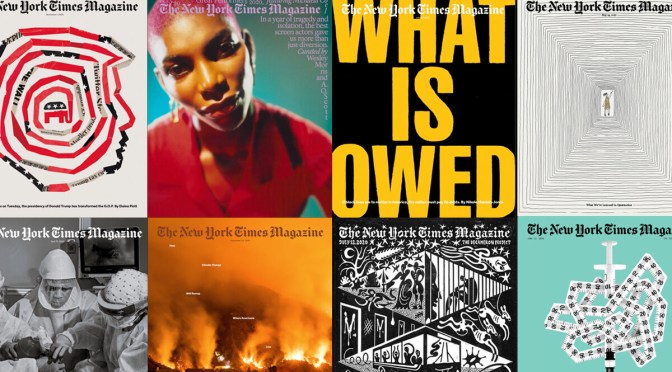
The Economist Magazine (December 14, 2023): The latest issue features ‘The media and the message’ – Journalism and the 2024 presidential election; ‘Can you have a healthy democracy without a common set of facts?; Iran’s regime is weaker than it looks, and therefore more pliable, and more…
America’s presidential election is a test of that proposition
Journalists should not spend much of their time writing about journalism. The world is more interesting than the inky habits of the people who report on it. But this week we are making an exception, because the discovery and dissemination of information matters a lot to politics. Don’t take our word for it: “A popular government,” wrote James Madison in 1822, “without popular information, or the means of acquiring it, is but a prologue to a farce or a tragedy; or, perhaps both.” Were Thomas Jefferson offered a choice between a government without newspapers and newspapers without a government, he said that he would choose the press (though that is probably going a bit far).
America should deter it from escalating the Gaza war, but also engage with it
Twelve months ago Iran was reeling from protests sparked by the death in custody of a young woman who had been arrested for showing too much hair. Its theocratic regime was increasingly isolated, as Arab states forged closer ties with its enemy, Israel. The economy was a mess, adding to popular anger at Iran’s ageing supreme leader and inept president. The Islamic Republic had not seemed so vulnerable in decades.
News, Views and Reviews For The Intellectually Curious




















 Artbook D.A.P.: