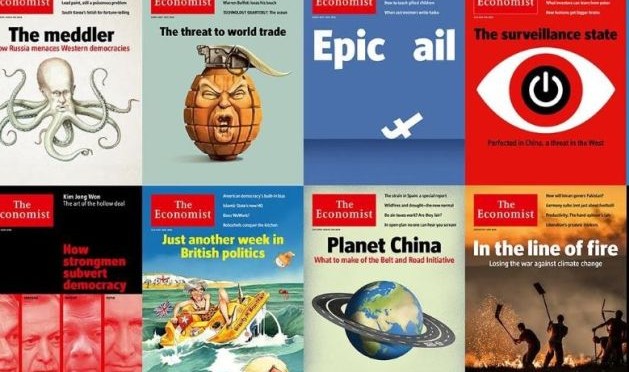
Fate, inheritance and pragmatic decisions have created a new opportunity in the next decade for India. It is Narendra Modi’s to squander. Our cover this week https://t.co/614niqPJIHpic.twitter.com/7Rcz04U7kh
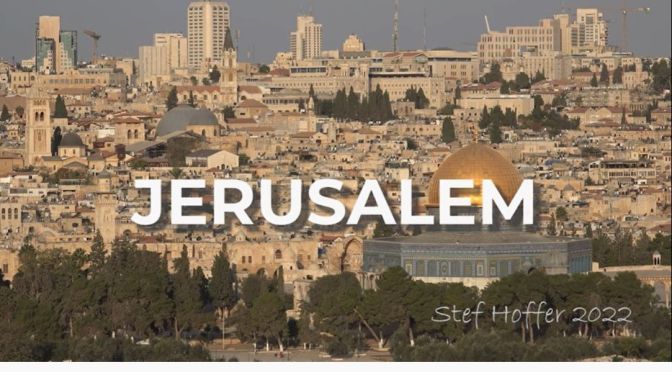
Israel, a Middle Eastern country on the Mediterranean Sea, is regarded by Jews, Christians and Muslims as the biblical Holy Land. Its most sacred sites are in Jerusalem. Within its Old City, the Temple Mount complex includes the Dome of the Rock shrine, the historic Western Wall, Al-Aqsa Mosque and the Church of the Holy Sepulchre. Israel’s financial hub, Tel Aviv, is known for its Bauhaus architecture and beaches.
On this journey, I’m traveling through the Holy Land, a region important to the three main monotheistic religions, and what is known today as Israel and Palestine. In this episode, I’m exploring Israel, a country that was established in 1948, but is located in a region that has been at the crossroads of religions and cultures for many centuries. From the beautiful beaches and dynamic streets of modern Tel Aviv, to the religious landmarks and atmospheric alleys of the Old City of Jerusalem. From the salty water of the Dead Sea to the surreal desert landscapes of the Negev. Along the way, I meet some of the people that live here, and taste some of the local food.
The White House faces pressure to protect abortion rights nationwide after legislation failed in the US Senate. And Las Vegas faces a series of violent school incidents involving both students and parents.
Research efforts to learn more about diseases of the human eye have been hampered as these organs degrade rapidly after death, and animal eyes are quite different to those from humans.
To address this, a team have developed a new method to revive retinas taken from donors shortly after their death. They hope this will provide tissue for new studies looking into the workings of the human eye and nervous system.
How did the earliest biochemical process evolve from Earth’s primordial soup? One popular theory is that life began in an ‘RNA world’ from which proteins and DNA evolved. However, this week a new paper suggests that a world composed of RNA alone is unlikely, and that life is more likely to have begun with molecules that were part RNA and part protein.
We discuss some highlights from the Nature Briefing. This time, the ‘polarised sunglasses’ that helped astronomers identify an ultra-bright pulsar, and how a chemical in sunscreen becomes toxic to coral.
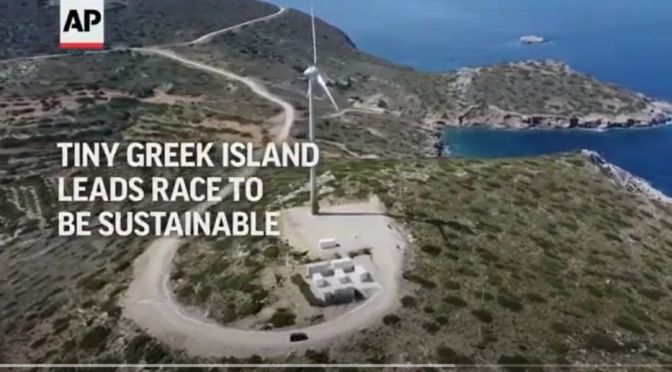
The remote Greek island of Tilos has pioneered a recycling plant that could act as a blueprint for other islands — including popular holiday destinations — that struggle with waste disposal. (May 11)
Tílos is a small Greek island and municipality located in the Aegean Sea. It is part of the Dodecanese group of islands, and lies midway between Kos and Rhodes. It has a population of 780 inhabitants.
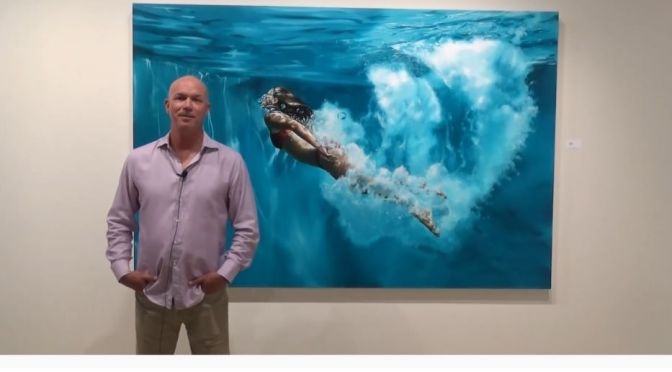
Gallery Henoch is pleased to present Rising, an exhibition of new paintings and resins by Eric Zener, which will run May 5 – 28, 2022.
Zener appropriates the natural world to portray moments of personal decision and change. “He uses vast expanses of water and sprawling forests as signifiers of this realm of forces greater than ourselves. In his canvases we find divers suspended midair or swimmers plunging into deep blue water. Each of these subjects are consumed by their activity, and we can savor this state of immersion vicariously through Zener’s work,” observes Peter Brock in the exhibition brochure.
The artist reveals little about the individuals appearing in his paintings: their faces are turned away or obscured. With the focus shifted away from their identity, we are encouraged to consider our relationship to their experience.
While many of the paintings depict figures situated in water, a number of them explore the mysteries of nature devoid of human presence. In these the viewer is introduced to a world characterized by densely forested views or disturbed water. In these works, Zener finds a “connection to an ephemeral experience” that transcends the personal.
Eric Zener lives and works in the Bay Area and has been exhibited in the United States and internationally for over 25 years.
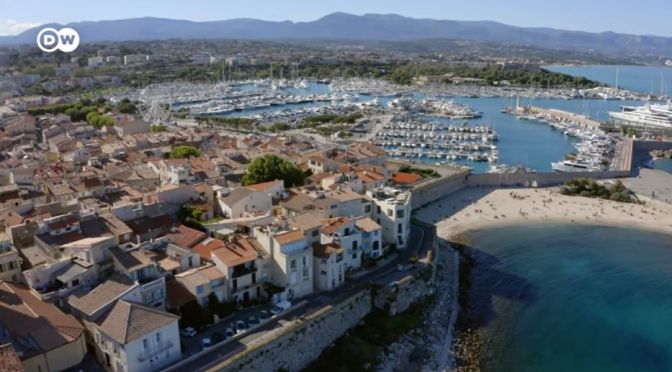
The Côte d’Azur stands for glamour and luxury, for film festivals and stars, for yachts and villas. The most famous personalities of the last century met here. The Côte owes its unique mythos to their loves and passions.
The Côte d’Azur boasts a breathtakingly gorgeous landscape. But its mythos is more than the sum of it beautiful parts. The whole world associates the narrow coastal strip on the French Mediterranean coast with sun, stars and scandals. In Saint Tropez, a former fishing town, a new and newly sensual art of living was popularized thanks to the young Brigitte Bardot.
On the eastern part of the coast, Oscar winner Grace Kelly conquered the principality of Monaco with her marriage to Prince Rainier. The matchmaker? The Greek shipowner Aristotle Onassis, who wanted to burnish the dwarf state’s image. One of the most glamorous film festivals in the world was established in Cannes. After that, it seemed everyone came to the Côte. At the Hôtel du Cap-Eden-Roc in Antibes, the paths of the famous crossed again and again.
For 150 years the hotel has been home to artists, queens and kings, divas and stars. Since 1969, the hotel has been owned by the German industrialist family Oetker. Maja Oetker describes her personal memories of the past 50 years. To this day, the Côte d’Azur has lost none of its appeal. It is more than just a place: it is an entire mythos.
News, Views and Reviews For The Intellectually Curious