Tag Archives: Opinion

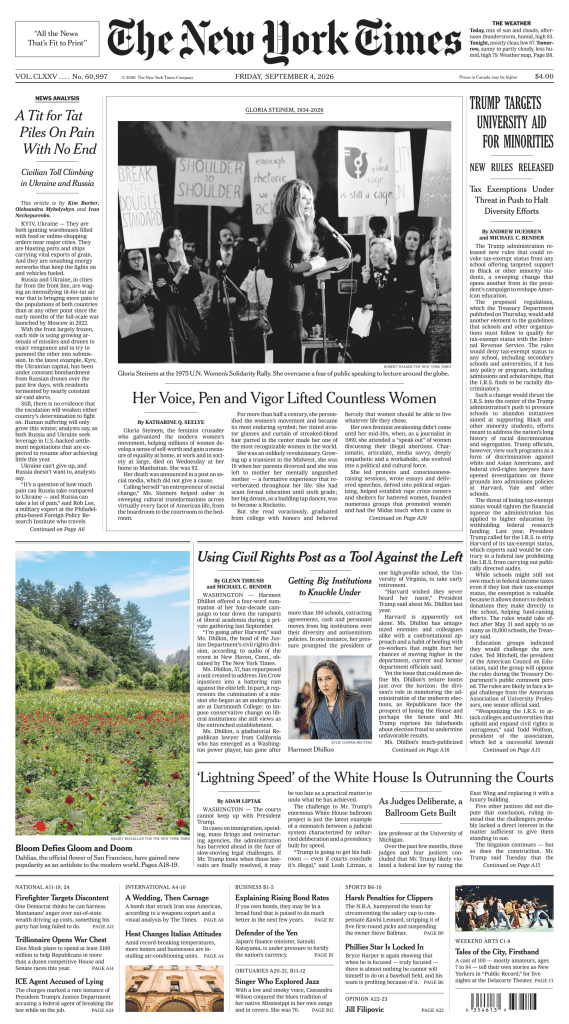
THE NEW YORK TIMES – FRIDAY, SEPTEMBER 4, 2026

U.S. Hiring Jumps, an Encouraging Sign for the Economy

Employers added 162,000 jobs in August, and the unemployment rate held steady at 4.1 percent.

The Bond Markets Are Pushing Up Rates. Will Central Banks Follow?

Dangerous Pattern of Russian Sabotage in Europe Risks Clash With NATO

Europe’s options are limited in responding to an unnerving series of plots and provocations. But the odds of unpredictable consequences are rising.

He Fought Russia Fiercely. Now He Wants to Forge Ukraine’s Path to Peace.

Germany’s Far Right, Edging Close to Power, Remains Close to Extremists

The Alternative for Germany party has tried to soften its hard-line image but is still privately working with extremists. It could win a state election on Sunday.

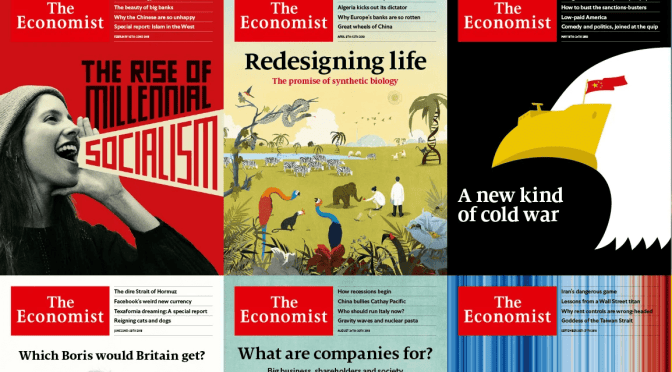
THE ECONOMIST MAGAZINE – SEPTEMBER 5, 2026

THE ECONOMIST MAGAZINE: The latest issue features ‘The Sorcerer Of Silicon’ – Jensen Huang, Nvidia and the future of AI…

Nvidia is driving the AI boom. Good

The chipmaker’s enormous bets are how capitalism is supposed to work

Bessent’s bond-market misadventures

America will regret the treasure secretary’s interventions

Carney v Trump

Canada’s prime minister must beware an all-out trade war with Donald Trump

A Sino-American tug of law

When obeying an American law means breaking a Chinese one

The world’s most famous bookshop

What Shakespeare & Co reveals about culture

How data centres became one of America’s hottest political issues

Growing hatred of the facilities is reshaping the midterm elections

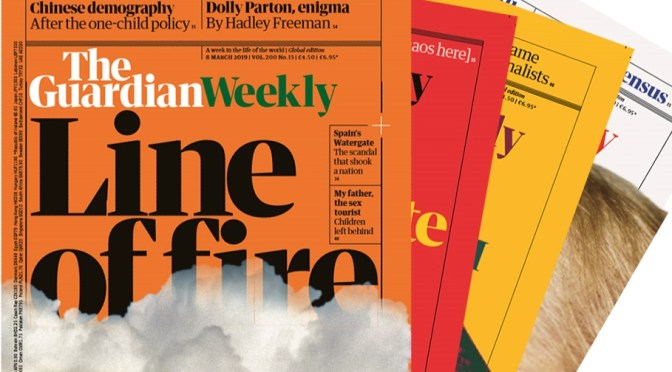
THE GUARDIAN WEEKLY – SEPTEMBER 4, 2026

THE GUARDIAN WEEKLY: The latest issue features ‘Swept Away’ – After the Nepal-Tibet flood disaster…

Over the last week, the world has watched with horror the scenes from the Tibet-Nepal border where a devastating torrent of mud, water and ice tore along the Bhotekoshi River, destroying entire communities and leaving more than 1,000 people dead and several thousand more missing.

From the Nepali town of Devighat, our south Asia correspondent Hannah Ellis-Petersen describes a nightmarish scene of overflowing mortuaries and unidentifiable bodies, as shellshocked survivors of the flood slowly return to the ruins of their homes.

The disaster happened after the collapse of a glacier – and while global heating has not been definitively attributed as the cause, it is undeniable that steep mountain slopes and valleys are especially vulnerable to flooding and landslides, while extreme weather events such as monsoons and melting glaciers have become more common because of warming due to human-caused climate breakdown, as our global environment writer Jonathan Watts explains.

Then columnist Nesrine Malik paints a wider picture and argues that while for many people these floods may feel as though they have happened a world away, the climate crisis is coming for us all, one way or another.

Spotlight | Mark Carney shows combative nature in face-off with Trump
The Canadian PM is one of the few world leaders to stand up to the US president. Former colleagues say they are not surprised. Leyland CeccoHeather Stewart and Kalyeena Makortoff report

Science | The robots are coming!
 Or are they? As entrants at the World Humanoid Games lurched from triumph to farce, Robert Booth finds that a robotics revolution may not be as close as it first appears

Interview | Gordon Brown on Burnham, billionaires – and a better Britain
The former UK prime minister is still shaping politics (even if he doesn’t want to interfere). He tells Charlotte Edwardes about keeping his temper, staying fit – and why he won’t splash out for a Scotland football shirt

Opinion | The tech titans must be stripped of their power, and soon
Those who said Meta harms children struck a blow, but the ability of big tech to gouge profits and cause harm is barely diminished. That’s the battle to come, argues Jonathan Freedland

Culture | Dolly Parton’s peerless career turned country music cliches inside out
Beneath the wig and rhinestones, the late US country singer was the genius behind strings of classic songs that continue to inspire new artists, says Alexis Petridis

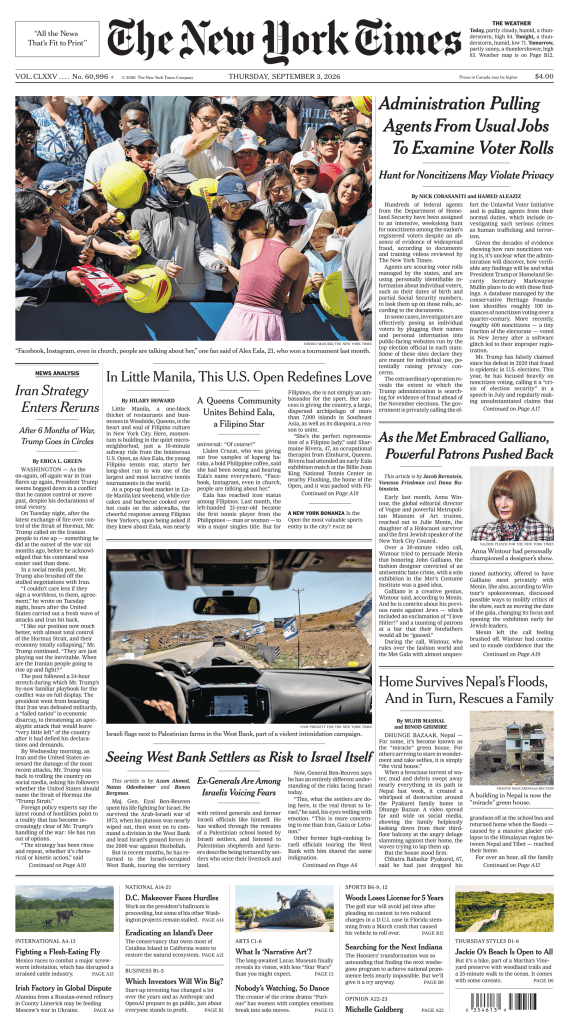
THE NEW YORK TIMES – THURSDAY, SEPT. 3, 2026

A Spiral of Escalation for Russia and Ukraine, With No End in Sight

Each side is using missiles and drones to try to pound the other into giving up. But there is no sign that either country’s determination will weaken.

The New Jet-Powered Drones That Are Breeding Anxiety in Ukraine

In a Small Iranian Town, a U.S. Attack Turns a Wedding Into a Tragedy

The bomb was American, according to a weapons expert and a visual analysis by The Times. It killed five people and wounded 67 others, the Iranian authorities said.

Oil Jumps for Fourth Straight Day and Diesel Nears Record High

Trump Puts Tariffs of Up to 100% on Foreign-Made Drones

In addition, the F.C.C. is weighing stiff restrictions on common drone technology such as thermal imaging and aerosol spraying.

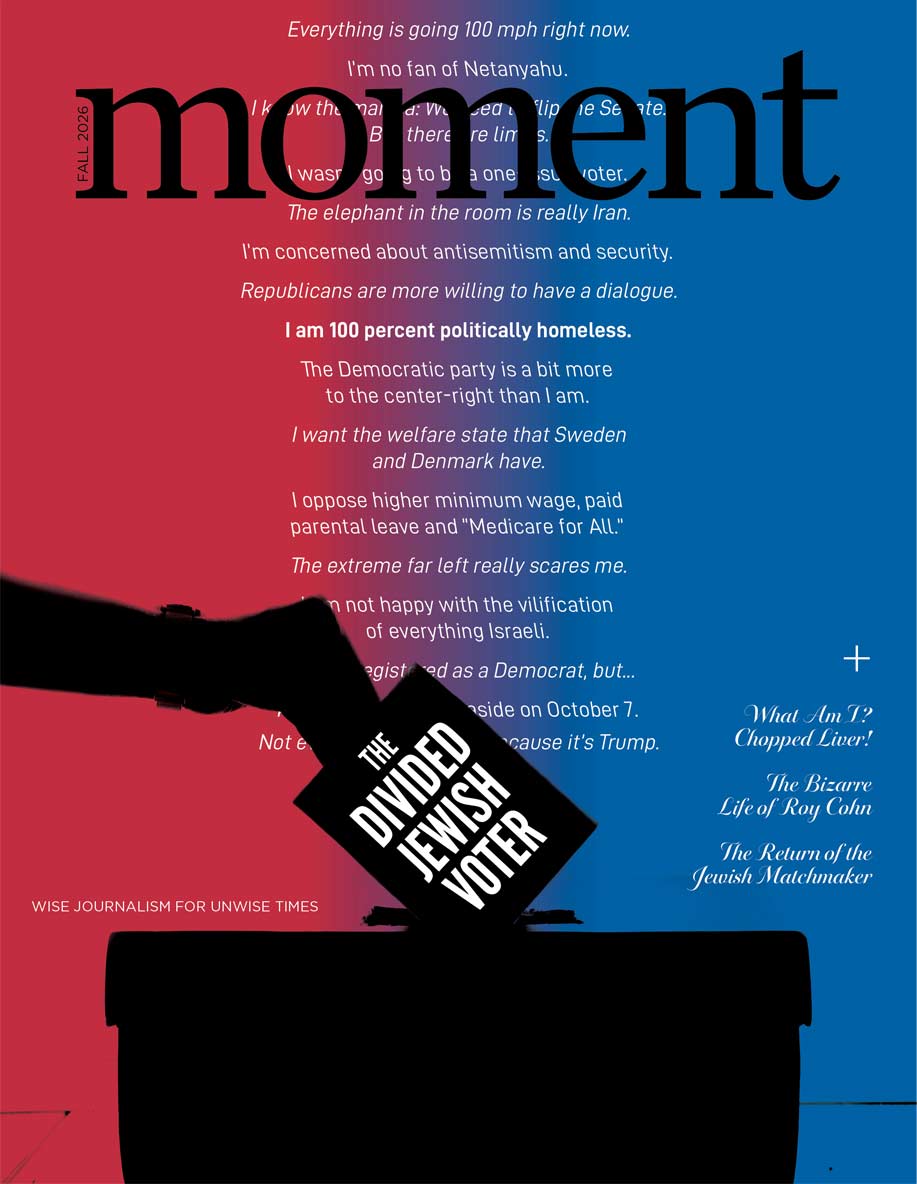
MOMENT MAGAZINE – FALL 2026 ISSUE PREVIEW

MOMENT MAGAZINE : The latest issue feature ‘The Divided Jewish Voter’…

The GOP’s Tucker Carlson Problem

Jewish Voters at Midterm: Emotional, Angry, Torn, Inspired—or All of the Above?

Yale University Press Decides 100 ‘Jewish Lives’ Are Enough

Can Jewish groups work with the Democratic Socialists of America?

TIMES LITERARY SUPPLEMENT – SEPTEMBER 4, 2026

TIMES LITERARY SUPPLEMENT: The latest issue features ‘Philip Zelikow and Anchit Sathi on progress, AI and the death of the author…..

A matter of life and death

When doctors and families fall out over medical intervention By Charles Foster

Ways of living

Looking at John Berger By Margaret Drabble

AI and the crisis of the author

Can literary culture survive in the era of machine intelligence? By Anchit Sathi

Letting go

Why nations win or lose the technological race By Philip Zelikow

LONDON REVIEW OF BOOKS – SEPTEMBER 10, 2026 PREVIEW

LONDON REVIEW OF BOOKS: The latest issue features

Good Weird or Bad Weird

By Colin Burrow

Inhabit the Poem: Last Essays by Helen Vendler.

What’s​ the point of literary criticism? In June the University of Exeter announced plans that might make roughly a third of its English department – one of the best in the country – redundant. Other institutions, including Canterbury Christ Church University, have stopped offering English degrees altogether. Most mainstream publishers now wouldn’t dream of publishing a work of literary criticism, as they happily did in the 1970s and 1980s. Even literary biography, literary criticism’s previously marketable stepsister, no longer brings a gleam to a publisher’s eye. The grassroots of the subject are also suffering badly. Since 2000 the number of people taking A-level English literature in England has dropped by around a third, to around 36,000, with an even higher drop among male students.


A Sicilian Man: 
Leonardo Sciascia, the Rise of the Mafia and the Struggle for Italy’s Soul by Caroline Moorehead


The Beast in the Clouds: 
The Roosevelt Brothers’ Deadly Quest to Find the Mythic Giant Panda by Nathalia Holt


The Twitnam Summer: 
Friendship, Satire and the Writing of ‘Gulliver’s Travels’ by Hester Grant

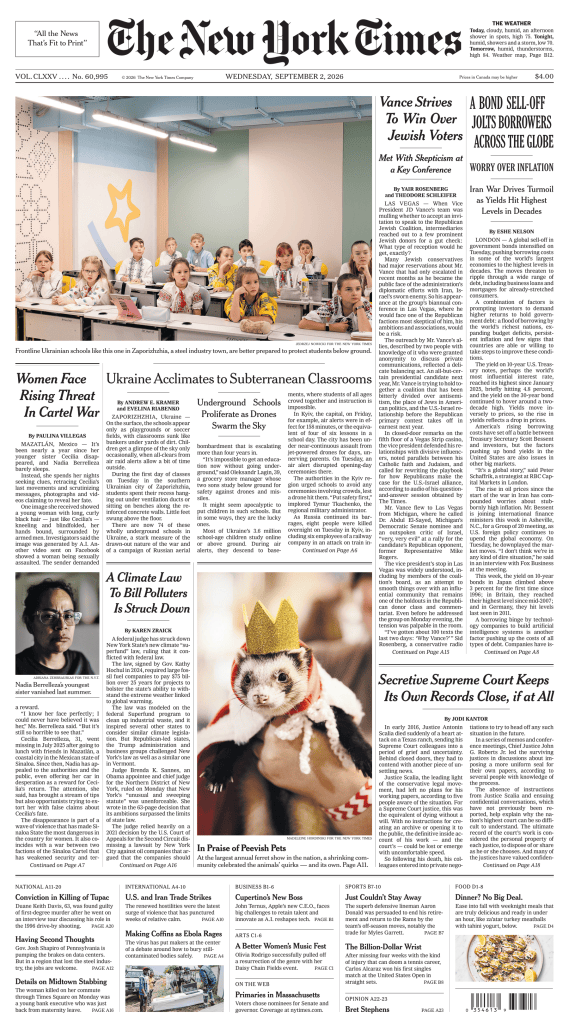
THE NEW YORK TIMES – WEDNESDAY, SEPT. 2, 2026

Allies Grumble That U.S. Is Hindering Global Economic Growth

At a summit meant to showcase President Trump’s economic policies as a model for the world, Europeans complained about tariffs and the war with Iran.

What Rising Global Bond Rates Mean for Your Money

Employer Health Costs in U.S. Are Expected to Spike in 2027

The Logistics Nightmare Facing U.S. Warships

Iranian attacks have upended the Navy’s supply chain, causing a strain on the aircraft carriers, ships and destroyers that are being kept in the Middle East indefinitely.

U.S. and Iran Survey the Damage After a Night of Intense Strikes

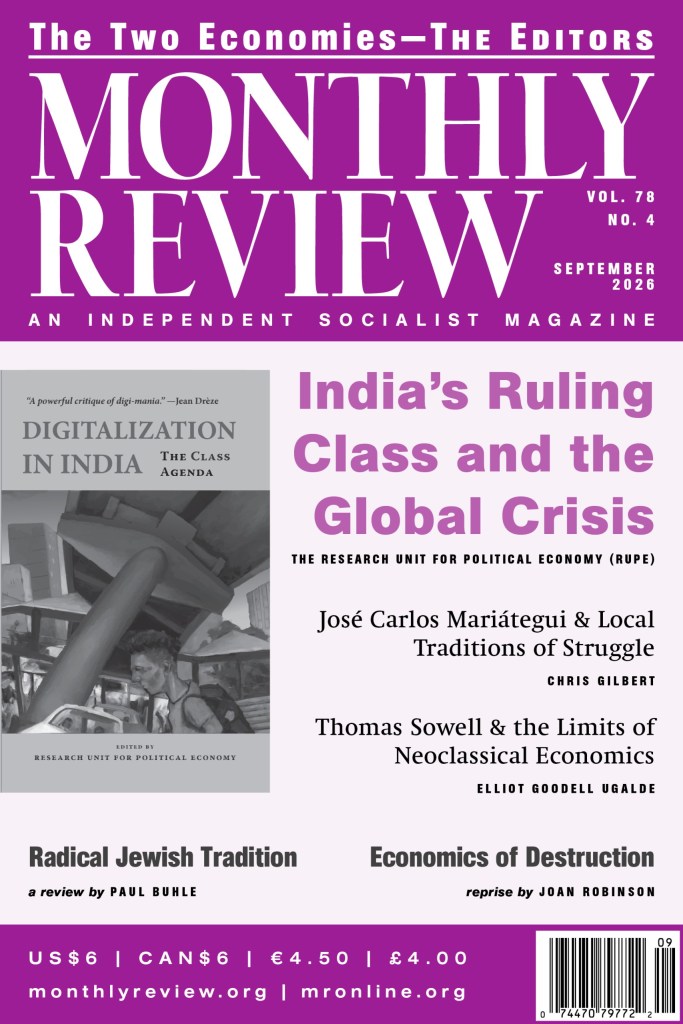
MONTHLY REVIEW MAGAZINE – SEPTEMBER 2026 PREVIEW

MONTHLY REVIEW MAGAZINE: The latest issue features ‘India’s Ruling Class and the Global Crisis’….

India’s Ruling Classes and the Global Crisis

In recent years, India’s ruling classes claimed—and perhaps came to believe—that their time had come on the world stage. India was the fastest-growing major economy, due soon to be the third largest, constituting a new global power. India’s biggest tycoons figured among the world’s top twenty billionaires, part of the transnational elite. Prime Minister Narendra Modi declared that India would be a “developed country” by 2047, the centenary of the end of colonial rule. 

Radical Jewish Tradition

The Economics of Destruction

Beyond Scarcity: Thomas Sowell and the Limits of Neoclassical Economics

José Carlos Mariátegui and Local Traditions of Struggle: The Vitality of Global South Marxism

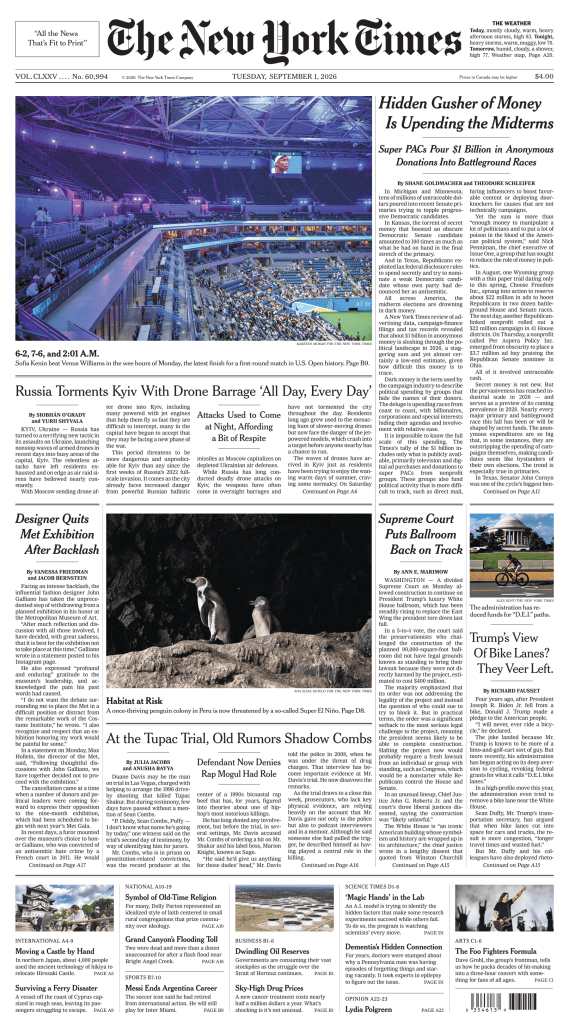
THE NEW YORK TIMES – TUESDAY, SEPTEMBER 1, 2026

China and the U.S. Offer Competing Showcases of Global Power

As Xi Jinping gathered with the leaders of Russia and Iran, Europe challenged the Trump administration at the G20, a split-screen view of a changing world.

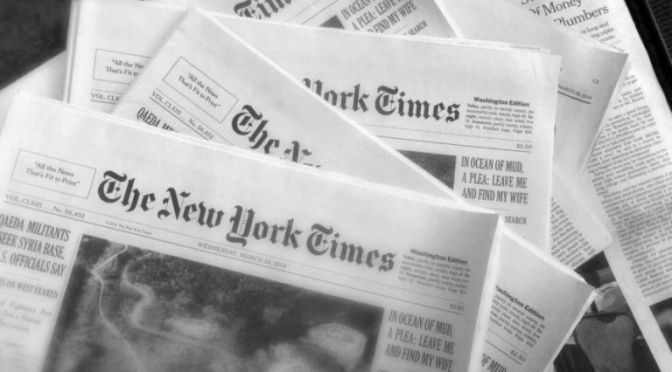
Global Bond Sell-Off Puts Investors on Edge

Government borrowing costs are hitting multi-decade highs around the world, reflecting anxiety about debt levels, deficits and inflation.

Punishment and Silence: China Pulls Out the Disaster Playbook in Tibet

While journalists can report freely on grief and anger in Nepal, China’s official media have presented a sanitized disaster aftermath in Tibet.

How the Pentagon Is Getting Into the Venezuelan Oil Business Under Trump

A Defense Department office, created by the Biden administration to bolster the U.S defense industry, is helping lead President Trump’s oil deal.

Whistle-Blower Says Trump Officials Are Defying Court Orders on Voting by Mail

A report detailed “grave concerns” that a new system being rushed into use by the U.S. Postal Service could imperil millions of mail ballots.