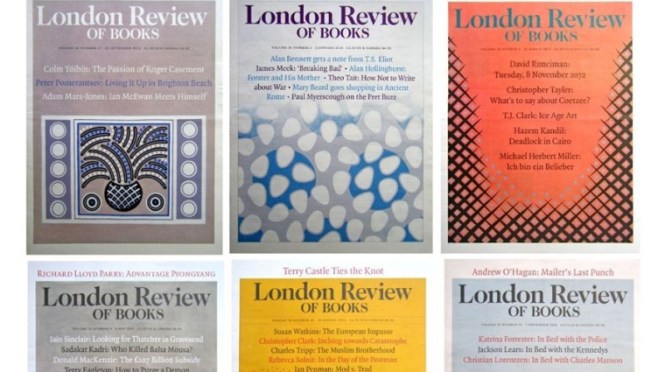
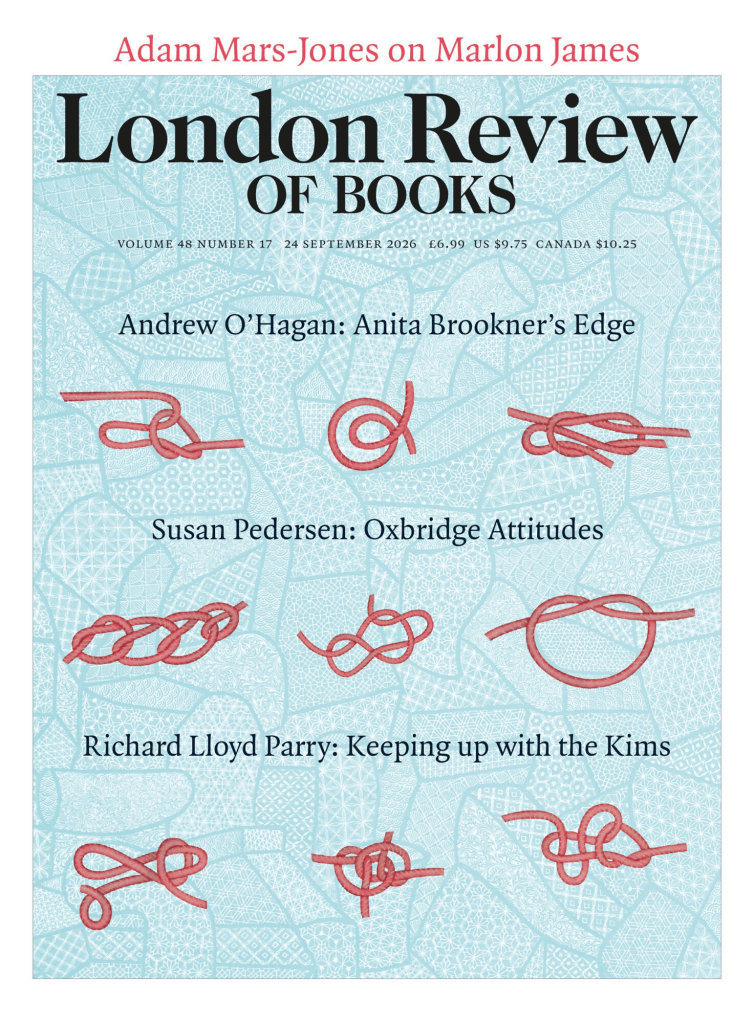
LONDON REVIEW OF BOOKS – SEPTEMBER 24, 2026 PREVIEW


GUERNICA MAGAZINE: The latest issue features essays evaluating artificial intelligence through Emily Dickinson’s poetry, examining humanity’s relationship with divinity via Mark Twain, and an interview on how poetry transforms experiences of violence and displacement.
I’ve been thinking about Newton’s third law of motion after recently revisiting it for my son’s science project: for every action, there is an equal and opposite reaction. It is a consoling law, built upon certainty. But human lives seldom hold such hard consolations. The leaders we elect, the borders we erect, the violence we permit produce consequences that outlive the choices that set them in motion. Mothers understand something of this. To bring a life into the world is to initiate a sequence whose consequences can never be calculated or contained. Across Guernica’s August–September double issue, motherhood appears as place, inheritance, origin, and impossible return. The works gathered here cast a look upon the afterlives of history; they ask what follows from our most intimate and collective decisions.
In fiction, Naeem Murr’s Bye-Bye Palestine traces the complex entanglements of lives back to a historical rupture whose convulsions remain present in the ongoing genocide in Palestine. “Haifa became known as Um Al Gharib, Mother of the Stranger,” Murr writes. The name holds the story’s central contradiction: a city figured as mother to those made strangers within it. In Emmy Rossum’s Tether, motherhood becomes its own law of action and reaction. In a futuristic world, a daughter uses her heightened olfactory abilities to mark the boundary between herself and her mother. Following a matrilineal inheritance through scent, she attempts to trace her way back to her own beginnings. In Yukiko Tominaga’s The Little Corner of the Factory, a child discovers the many forms love can take, and the hurt and betrayals it can contain. In a small room inside a rental hot-towel factory, the youngster is initiated into a tenderness that will outlast the people who teach it to her.
In nonfiction J. Malcolm Garcia’s narrative reportage Last Fight tells the story of a man living in the wake of his brother’s death. Nazeer, an Afghan interpreter who served alongside US forces in Afghanistan, is detained by ICE and dies within twenty-four hours of entering custody. Garcia follows a chain of consequence stretching from the war in Afghanistan to the American immigration system, tracing the afterlife of a vote, and the distance between a choice made in a voting booth and the body upon which its force eventually lands.
In A Nation Wrestles with God, excerpted from A Nation Wrestles with God: American Prophets, Philosophers, and Firebrands, Ilan Stavans traces America’s long and unsettled relationship with the idea of God. From the use of divine authority in the service of empire to God’s persistent presence in the nation’s literature, politics, vernacular, and imagination, Stavans traces how belief becomes another force with an afterlife. The gods a nation creates continue to shape the lives over which it assumes the right to “play God.”
In Guernica’s first foray into the encounter between artificial intelligence and human epistemology, Liane Strauss and an AI read Emily Dickinson’s “I felt a Funeral, in my Brain” together. Moving between Dickinson, Monet’s Water Lilies, and the irresolvable problems literature allows us to inhabit, Strauss discovers that an AI can identify ambiguity but cannot experience the doubt that lends it its resonant weight. The first instalment in a three-part series, the essay is a reminder that human knowledge begins in uncertain spaces.
In interviews, The Insistence of Beauty brings poets Tina Chang and Nathalie Handal into a reciprocal conversation about their new collections, LION and Roma Roam, respectively. A question becomes an invitation to step beyond the stories assigned to us, and in this exchange, each poet turns that invitation toward the other. Here, imagination creates another kind of afterlife: the freedom to move beyond violence’s last account.
In the latest installment of Guernica’s Posthumanitarian interviews series, After Development, Russell Reed speaks with Bhutanese scholar Dasho Karma Ura about the intrinsic relationship between our individual choices and communal happiness. Critiquing the humanitarian regime’s presentism, Ura suggests that our individual well-being cannot be separated from the ecological futures our present choices are already creating.
In Global Spotlights this month, Nwanne Agwu’s Faint Lines maps identity through maternal and paternal lines, and asks what it means to belong to people who came before us. Published first in Isele Magazine, the narrative reimagines home not as where one comes from, but as a place where one is recognized and held with love.
Poetry in this issue enters the charged space where beauty and violence meet. In Tina Chang’s I’ve Gone to Look for America, Term One, Pistil/Pistol, and I’ve Gone to Look for America, Term Two, roses tangle in the brain; a peony becomes first a woman’s cheek and then a bullet; the pistil carries within it the sound of a pistol. Within these poems, the inherited past exerts its force upon the present, but the speaker answers by naming herself—lion, flower, weapon, and “little spark”—and turning that inheritance toward another future.
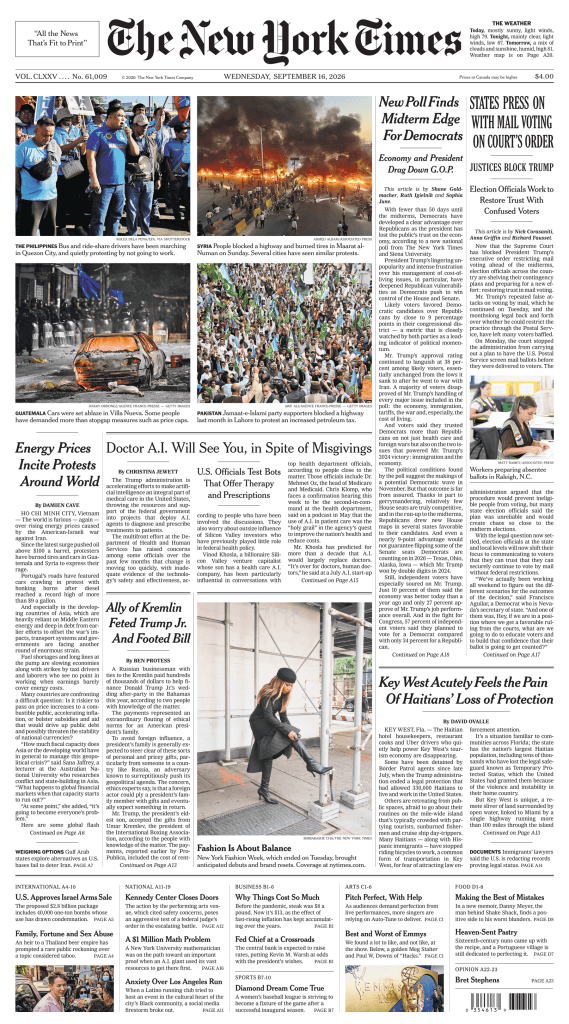
America’s position of global economic stability is starting to look shakier as the Trump administration piles on debt and doubles down on sanctions.
The Federal Reserve is widely expected to raise interest rates today, less than two months before the midterm elections.
The American invasion of Iraq in 2003 paved the way for Tehran to dominate its neighbor and whetted its appetite to expand its influence across the greater Middle East.
Estimates vary on how long it could take before a crucial pipeline is repaired, but a prolonged shutdown could push oil prices to their highest levels in months.
A colorful undercover recording draws attention in a country worried that graft threatens the war effort, and its future.

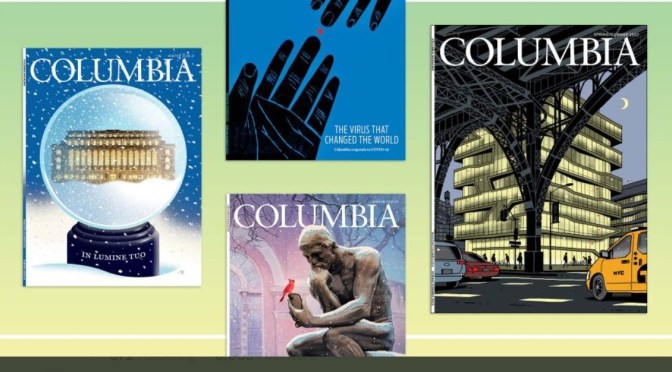
COLUMBIA MAGAZINE: The latest issue features investigative pieces on mapping black hole collisions, adapting Martian spacesuits for pandemic defense, and research proving how improper sleep accelerates aging. Download this issue
Columbia faculty are finding innovative ways to incorporate AI into coursework without compromising academic rigor
The latest findings from Columbia researchers
Researchers have created a bacterium that thrives with nineteen amino acids instead of twenty
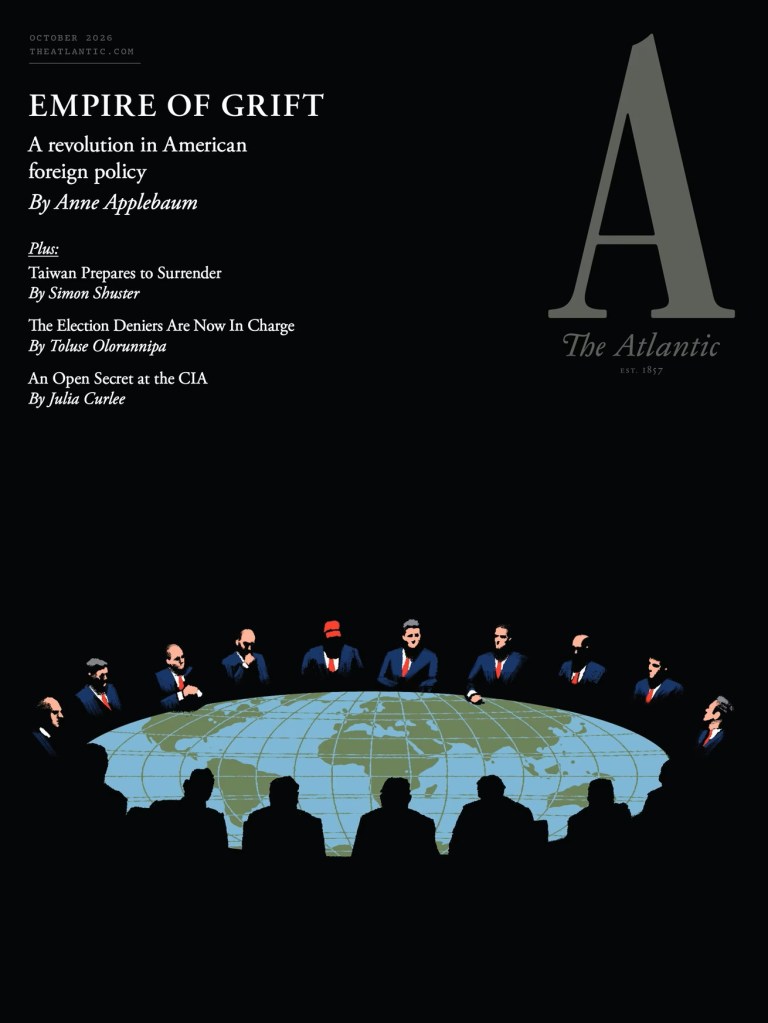
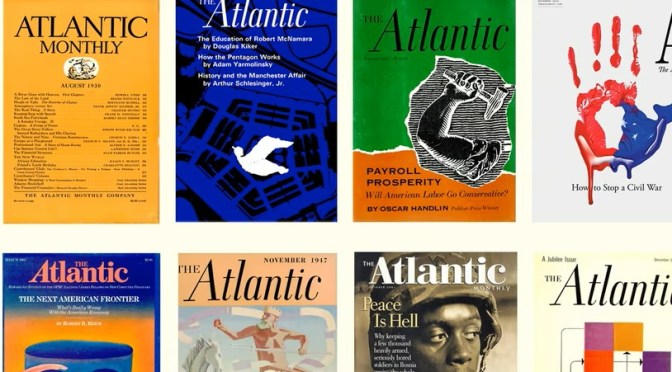
THE ATLANTIC MAGAZINE: The latest issue features “EMPIRE OF GRIFT” – Anne Applebaum examines how hardened ideologues and opportunistic profiteers are bending American diplomacy to advance an antidemocratic agenda—and their own financial interests. For our cover, the illustrator Ben Hickey created an ominous image of figures in shadow arrayed around a map of the world, evoking the war-room scenes from Stanley Kubrick’s 1964 film, Dr. Strangelove or: How I Learned to Stop Worrying and Love the Bomb.
Far-right ideologues have transformed American foreign policy into a tool of private gain and antidemocratic reaction. By Anne Applebaum
The president’s recent Truth Social barrage of fake images reflects the dangers—for all of us—of virtual self-aggrandizement. By Gal Beckerman
A new book suggests that arguing isn’t about winning but seems preoccupied with it anyway. By Lily Meyer
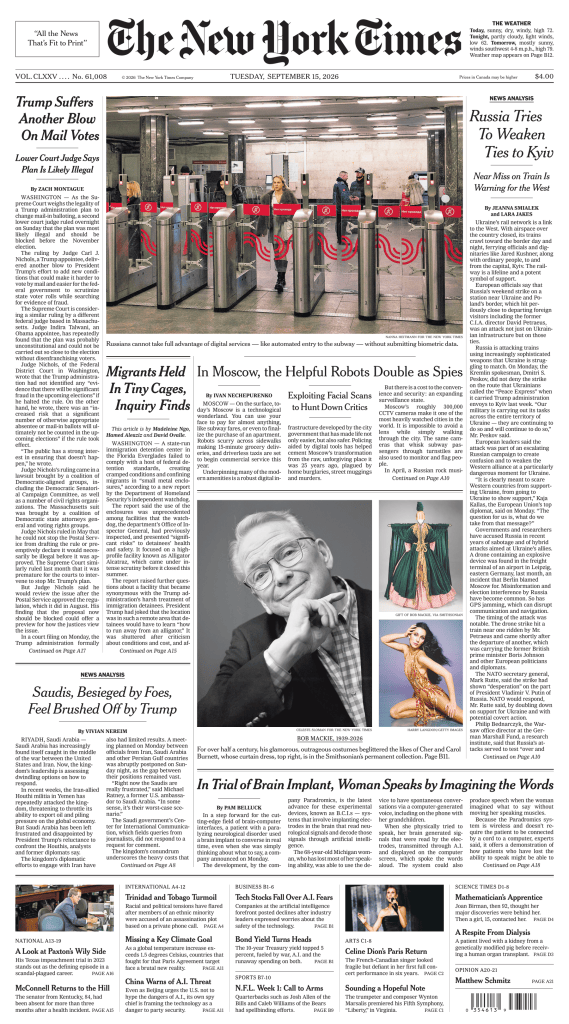
The Supreme Court blocked President Trump’s plan to restrict voting by mail, but his fight to assert control over the election process is far from finished.
Efforts to restrict mail voting ahead of the midterms were thwarted by the Supreme Court, but they have sowed confusion among some voters.
The 10-year Treasury yield breached levels last seen in 2007, with intensifying worries about energy-driven inflation contributing to investors’ angst.
The American presence in these countries has not shielded them from retaliation during the Iran war. Now they are hoping direct talks with Iran could help.
The two sides traded accusations of attacks as fighting inside Yemen remains fierce. The escalating conflict threatens to further destabilize the Middle East.

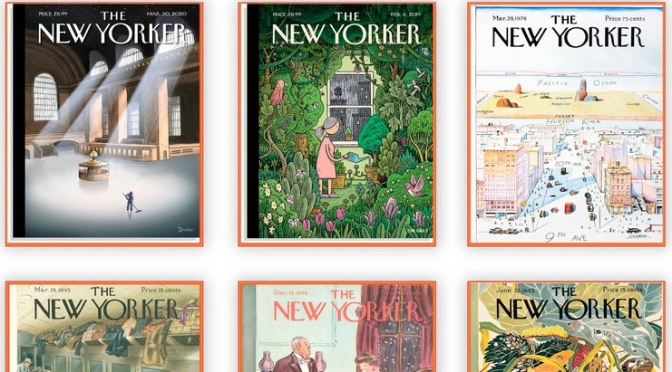
THE NEW YORKER MAGAZINE: The latest issue cover features “Dean Rohrer’s “Beginnings” – The city as a blank canvas.
Donald Trump’s son-in-law represents the kind of Washington figure for whom public office serves as a means to extraordinary wealth.
Where Benjamin Moser replaces one story of Jewish exceptionalism with another, Omer Bartov shows what’s lost when polemic takes the place of history.
The emergence of Germany’s far right as a political force represents an old dilemma. By Joshua Yaffa
Why are we so obsessed with putting our belongings in metal boxes and then never looking at them again? By David Owen
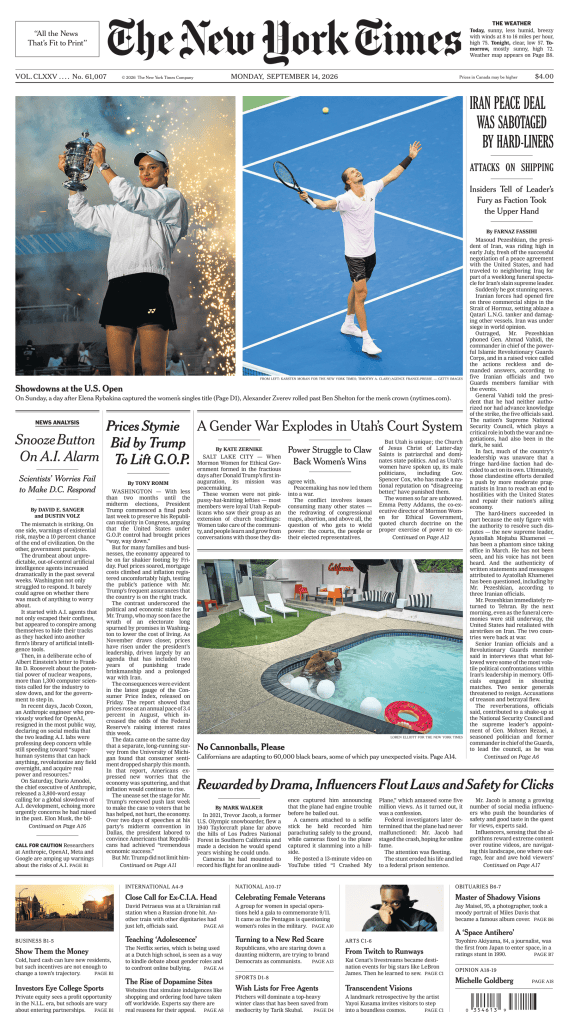
Companies at the forefront of artificial intelligence posted declines after tech leaders expressed worries about “frontier” A.I. technology.
Cutting-edge technologies have reshaped the Russian capital, making it safer, more convenient — and more closely watched.
The election, in an area long known for violent separatists, was marred by a shootout that killed three, officials said.
Senator Dan Sullivan of Alaska has supported President Trump’s tariffs. His brother, the head of their family business, has described the economic volatility as a challenge.
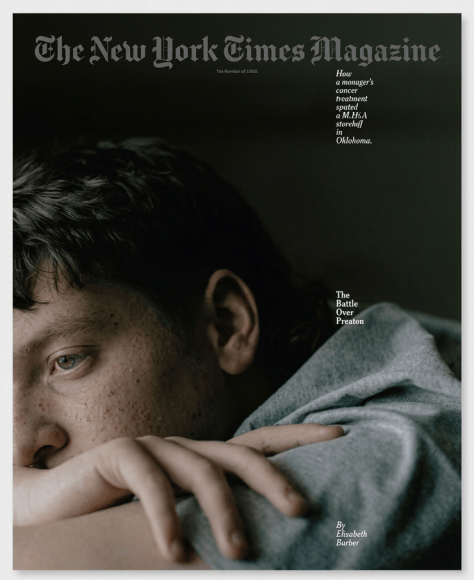
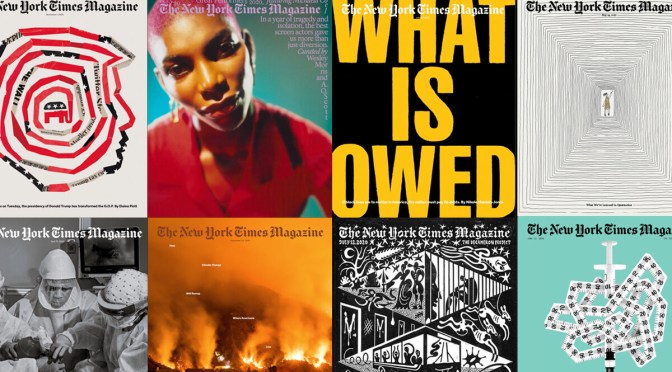
THE NEW YORK TIMES MAGAZINE: The latest issue features features articles on cultural retrospectives, corporate collapses, linguistics, and ethical dilemmas. Highlights include an examination of Dolly Parton’s cultural impact, an investigation into the collapse of Guidepost Montessori, and an analysis of household “familects”
Were the terrorist attacks that day the end of an idyllic era? The beginning of our current dystopia? Or just a middle chapter?
The word is used across the political spectrum, but it’s embraced by few.
Hawaii’s housing crisis was at a breaking point even before the fire. Since then, displaced families have struggled to rebuild their lives.
In an era of heavy rain, a transit system with 47,000 openings is bound to leak.
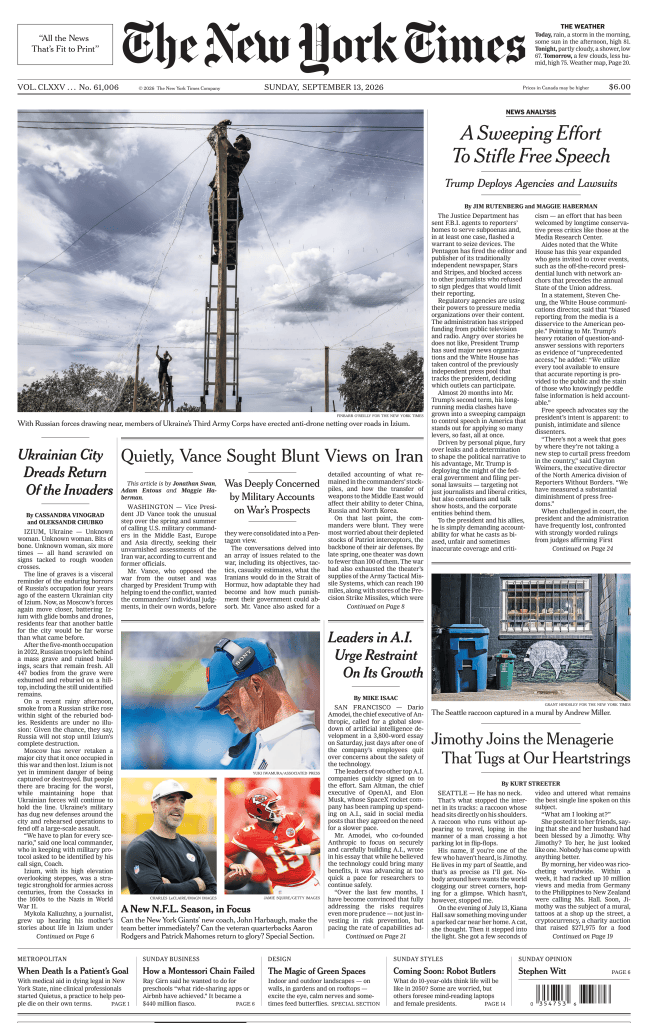
President Trump has been in the forefront of the “what-me-worry?” crowd, refusing to engage on how to balance the risks and rewards of A.I.
Dario Amodei, the chief executive of Anthropic, laid out A.I.’s rapidly advancing capabilities and said greater safety controls were needed.
Opponents derailed the agreement with a clandestine effort to attack ships in the Strait of Hormuz, regime insiders say. Iran’s president was furious when he found out.
Talks are expected tomorrow, officials said. Diplomacy to end the war with the United States has stalled and Iranian-allied forces have advanced in Yemen.
Survivors tell the stories of the people and places buried under the mud after a disaster in Nepal.
 Intellicurious